
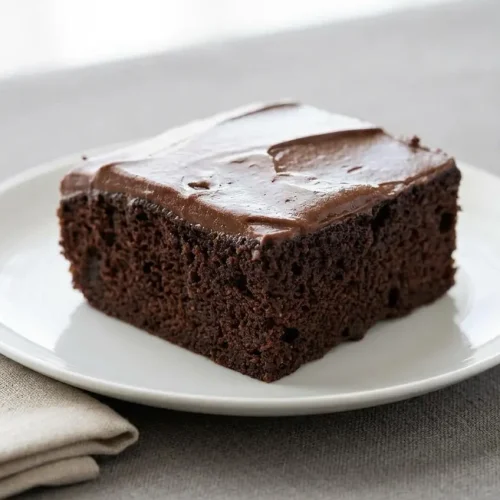
Chocolate Keto Cake

This Chocolate Keto Cake is rich, moist, and deeply chocolatey. Made with almond flour, it has a fudgy, tender crumb and a smooth chocolate frosting for a truly satisfying low-carb dessert.
Equipment
- Medium bowl
- Handheld mixer
- 8-inch square glass baking dish
- Large bowl
- Whisk
- Rubber spatula
- Offset spatula
Ingredients
Frosting
- 1/2 cup unsalted butter softened, not cold; 112 grams
- 1/4 cup heavy cream room temperature
- 1/4 cup unsweetened cocoa powder 20 grams, sifted
- 1 teaspoon vanilla extract
- 1 1/2 teaspoon stevia glycerite equals 1/2 cup powdered sugar
Cake
- 1 tablespoon unsalted butter for pan
- 4 large eggs
- 1/2 cup unsalted butter melted and slightly cooled; 112 grams
- 2 teaspoons stevia glycerite equals 2/3 cup sugar
- 1 teaspoon vanilla extract
- 1 cup almond flour 112 grams
- 1/2 cup unsweetened natural cacao powder 40 grams
- 1/4 teaspoon kosher salt
- 1/2 teaspoon baking soda
Instructions
- Make the frosting first by whisking the softened butter, room temperature heavy cream, sifted cocoa powder, vanilla extract, and stevia glycerite in a medium bowl until smooth, or beat with a handheld mixer on low speed for 1 to 2 minutes. The finished frosting should look fluffy and even, with no visible cocoa lumps or butter streaks.
- Heat the oven to 325°F and generously butter an 8-inch square glass baking dish, adding a parchment square on the bottom if you want easier removal. A well-greased pan helps this tender cake release cleanly after cooling.
- Whisk the eggs, melted and slightly cooled butter, stevia, and vanilla extract in a large bowl until the mixture looks glossy and well combined. You should not see separate streaks of egg or pools of butter at this stage.
- Add the almond flour and cocoa powder gradually, then whisk in the kosher salt and baking soda until the batter is fully mixed. The batter will be quite thick, closer to brownie batter than a pourable cake batter.
- Spread the batter into the prepared dish and smooth the top with a rubber spatula. An even surface helps the cake bake level and keeps the center from lagging behind the edges.
- Bake for 18 to 20 minutes, then check the center before pulling it out. The cake is ready when the edges pull away slightly, the center springs back lightly, and a toothpick shows moist crumbs rather than wet batter.
- Leave the cake in the pan to cool for about 1 hour before adding the frosting. If it is even a little warm, the frosting will soften and slide instead of sitting in a neat layer.
- Spread the frosting over the cooled cake with an offset spatula, or leave the cake plain and finish it with a dusting of powdered sweetener if you prefer. The frosting should glide on easily and hold soft swirls on the surface.
- Cut the cake into 9 squares and serve. The crumb should look rich and fudgy, with enough structure to lift each piece cleanly from the pan.
Notes
Don't Overbake: The cake is ready when a toothpick inserted in the center shows moist crumbs, not when it comes out perfectly clean. A clean toothpick usually means it's already overbaked. Cool Completely: The cake is fragile when warm. Let it cool in the pan for the full hour before frosting to prevent the frosting from melting and the cake from crumbling. Room Temperature Ingredients: For the smoothest frosting, make sure your butter is softened and the heavy cream is at room temperature. Cold ingredients can make the frosting lumpy. Storage: Keep the frosted cake in a covered container in the refrigerator. For the best flavor and texture, let slices sit at room temperature for a few minutes before serving. Nutrition information is an estimate based on common ingredients and serving sizes. Values may vary depending on brands, portions, and substitutions.