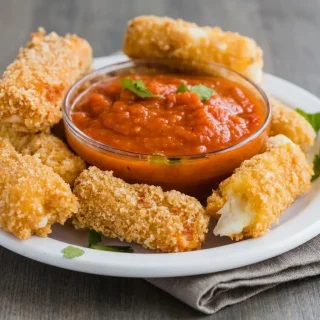
Keto Mozzarella Sticks

These keto mozzarella sticks coat halved string cheese in almond flour, egg, and a double layer of pork panko for a crunchy shell and gooey center, cooked from frozen in a skillet, oven, or air fryer.
Equipment
- Shallow bowls
- Baking tray
- Skillet
Ingredients
- 8 mozzarella cheese sticks (string cheese)
- 1/4 cup almond flour
- 2 eggs
- 1 1/2 cups pork panko
- Avocado oil for frying
Instructions
- Halve all the string cheese sticks crosswise and reserve the pieces for breading. Keep the pieces intact so each has a firm surface to coat.
- Build a three-bowl breading station, placing almond flour first, beaten eggs second, and finely ground pork panko third. The shallow bowls should give each piece enough room to roll without spilling the coatings.
- Roll one cheese piece through the almond flour before moving to the wet coating. A light dusting should cover the smooth surface without leaving thick clumps.
- Coat the flour-dusted piece with beaten egg. Look for an even film of egg across the sides and both ends.
- Cover the piece with pork panko, complete this first coating on every piece, then give each another egg dip followed by another pork panko coating, gently pressing the crumbs into place. The finished shell should cover the sides, corners, and cut ends without bare cheese or shiny patches of egg.
- Spread the breaded pieces across a lined baking tray without stacking, freeze for at least 2 hours and until completely solid, and leave them frozen until you begin your chosen cooking method below. Each stick should feel rigid throughout rather than soft beneath the coating.
- For skillet frying, warm avocado oil in a small skillet over medium heat, test a small uncrowded batch of frozen sticks, and fry for about 30-45 seconds while turning as needed; reduce the heat if browning happens too quickly, then lift them with a slotted utensil onto paper towels and allow a brief cooling pause. Look for a golden crust with the egg coating fully cooked and no wet patches remaining.
- For oven baking, heat the oven to 400°F, space the frozen sticks in a single layer on a lined baking sheet, and bake for about 6 minutes under close watch before removing them and letting them cool briefly. The coating should be cooked and the cheese softened; any filling beginning to escape means they need to come out immediately.
- For air frying, select 390°F, preheat if your appliance requires it, and cook the frozen sticks for about 3-4 minutes in a single spaced layer, checking early, working in batches when necessary, and allowing a brief cooling pause afterward. Stop when the coating has cooked and the center has softened, watching for the first small bead of cheese at a seam.
Notes
Ingredient tip: Use low-moisture, part-skim string cheese rather than fresh mozzarella packed in liquid, which releases extra moisture when heated and can loosen the breading.
Texture tip: Keep the breaded sticks frozen until completely solid before cooking, and press extra dry crumbs onto the cut ends and any shiny egg spots during the second coating to prevent leaks.
Doneness: When baking or air frying, watch closely and remove the sticks as soon as the center softens or the first small bead of cheese appears at a seam.
Storage: Freeze uncooked breaded sticks on a tray until solid, then store them in an airtight container with parchment between layers and cook directly from frozen. Refrigerate cooked leftovers covered with dipping sauces kept separate.
Nutrition information is an estimate based on common ingredients and serving sizes. Values may vary depending on brands, portions, and substitutions.