
Keto Pork Belly

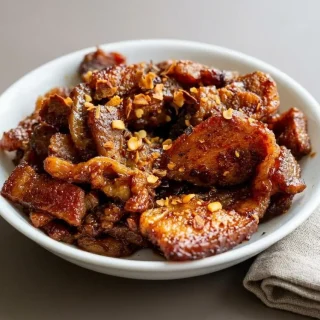
Simmer pork belly in seasoned broth until tender, then sear it in a skillet with a savory sugar-free glaze to achieve lightly crisp edges and a glossy, flavorful finish.
Equipment
- Medium pot
- Medium frying pan
- Mesh splatter screen
- Tongs
- Paper towels
Ingredients
- 1 lb Pork Belly
- 3 cups Chicken Stock
- 1 tsp Ground Ginger
- 3 cloves Garlic
- 1 tbsp Apple Cider Vinegar
- 1 tbsp sweetener
- 2 tbsp Olive Oil
- pinch Salt
- pinch Black Pepper
- 1 tsp Chili Pepper Flakes
- 1.5 tbsp sweetener
- 2 tbsp Soy Sauce Tamari or Coconut Aminos can be used as a substitute using the same quantity.
Instructions
Slow Cooked Pork Belly
- Slice the pork belly into evenly sized strips roughly the size of a finger. Similar thickness helps the meat soften at a consistent pace.
- Combine the chicken stock, ground ginger, garlic, apple cider vinegar, and first sweetener amount in a medium pot, then stir over high heat. The liquid should reach a boil before the pork goes in.
- Add the pork strips to the boiling stock, reduce the heat, and cover the pot for about 2 hours of gentle simmering. Maintain quiet bubbling rather than a vigorous rolling boil.
- Drain the pork after the simmer and cut the strips into bite-sized pieces. The meat should feel tender enough to cut without firm resistance.
Glaze
- Warm the olive oil in a medium frying pan and carefully place the pork pieces in the oil. The soft-looking pieces will begin to sizzle as their surfaces heat.
- Turn the pieces regularly to expose each side to the pan. Look for golden-brown patches across the meat rather than browning on only one face.
- Set a mesh splatter screen over the skillet as the fat begins to pop. The mesh catches droplets while letting steam escape.
- Add the soy sauce or listed substitute, salt, black pepper, chili pepper flakes, and second sweetener amount once the pork has browned. The sauce will initially loosen across the pan before reducing around the pieces.
- Continue turning the pork, lowering the heat when popping becomes excessive and raising it again as needed to maintain browning. The coating should thicken and cling without developing a burnt smell.
- Remove the skillet from the heat when the pork has a dark, sticky coating and lightly crisp edges. The finished pieces should look glossy rather than sit in a pool of watery sauce.
Notes
Moisture tip: Thoroughly blot the drained pork belly pieces dry with paper towels prior to frying. Wet meat will steam instead of brown and causes aggressive oil splatter. Splatter control: Keep a mesh splatter screen over the frying pan once the fat starts popping. A solid lid traps steam, which works against achieving crisp edges. Heat management: If the glaze darkens too quickly or the fat pops excessively, reduce the heat and keep the pieces moving so the coating thickens without scorching. Reheating: Warm leftovers using dry heat in an oven or air fryer with space between the pieces to restore crispness. Microwaving tends to soften the coating. Nutrition information is an estimate based on common ingredients and serving sizes. Values may vary depending on brands, portions, and substitutions.