Skip to content
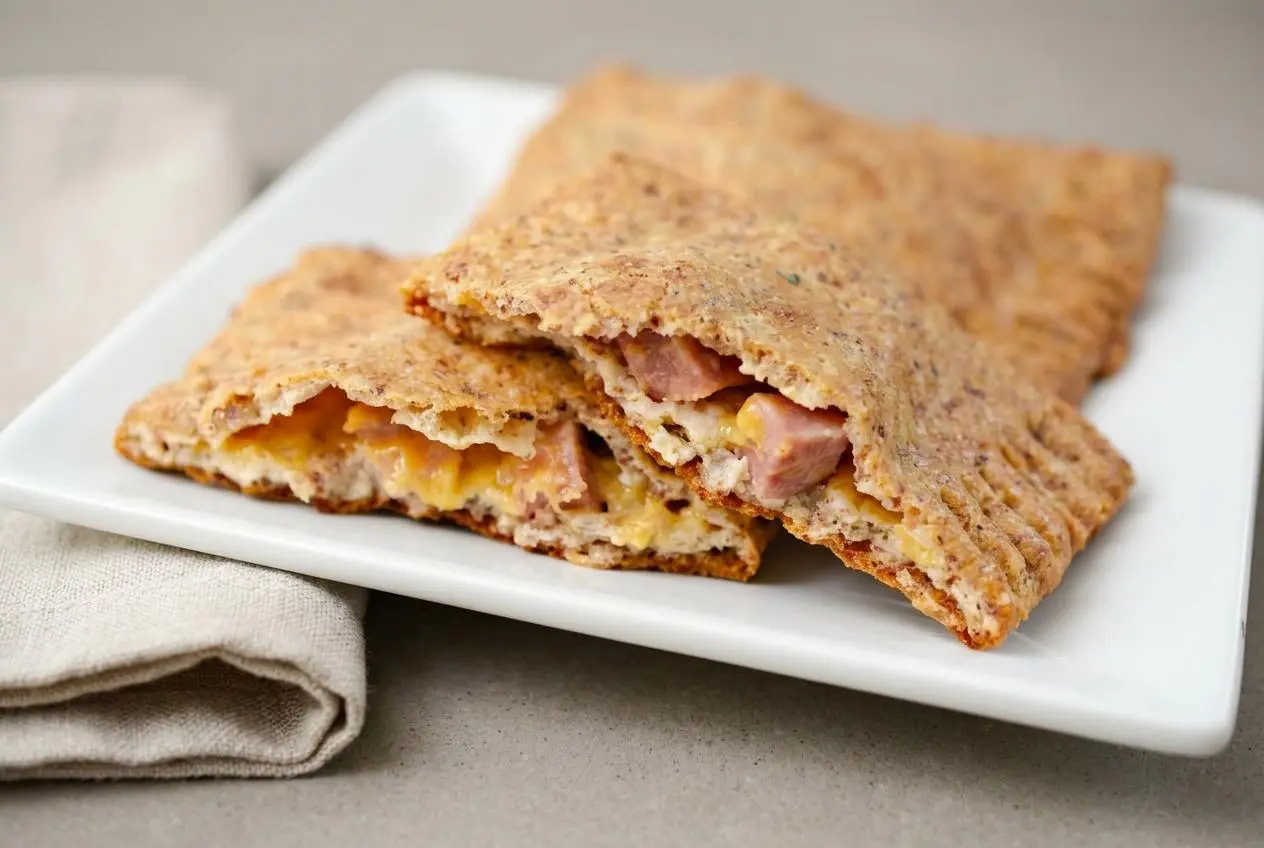
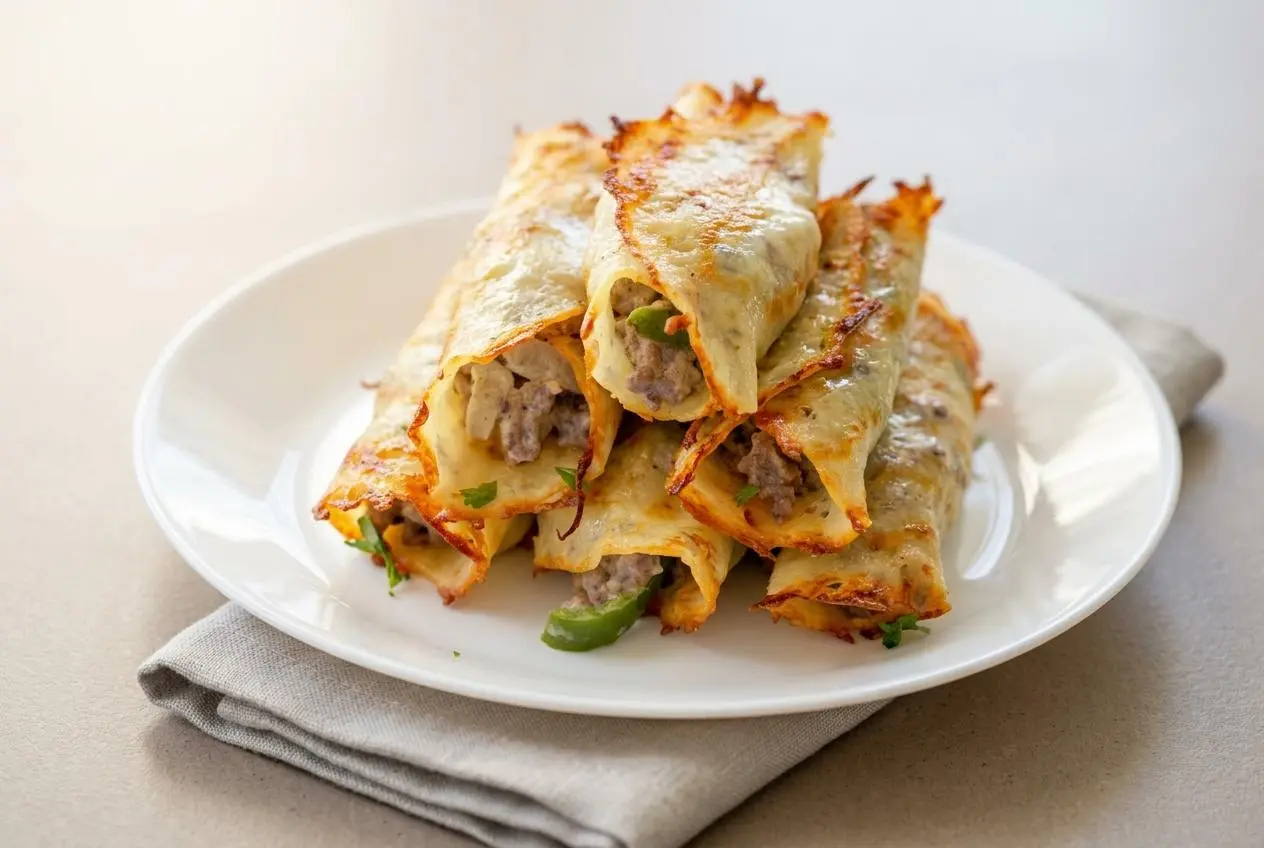
Keto hot pockets are handheld pastries made with almond flour and melted cheese dough, filled with ham and cheddar, then baked until golden. Chill the dough before rolling and crimp the edges firmly; the browned rim tells you when the crust is ready.
The filling is familiar and comforting, while the grain-free dough folds around it to make a sturdy pocket. Each bite brings savory ham, melted cheddar, and a lightly browned crust.
Temperature makes the dough easier to handle, so resist the urge to roll it while it’s warm. The cleanest folds start with a good chill.
Keep both sheets of parchment handy before the dough comes out of the freezer.
Essential Ingredients for Low-Carb Hot Pocket Dough
Each ingredient has a job: the cheeses give the dough structure and richness, almond flour forms its crumb, seasonings add aroma, and ham and cheddar make the filling savory and melty.
- 1 1/2 cups mozzarella cheese shredded
- 2 ounces cream cheese
- 1 cup almond flour
- 1/2 teaspoon garlic powder
- 1 teaspoon baking powder
- 1 teaspoon Italian seasoning
- 1 egg
- 3 ounces cubed ham fully cooked
- 1/4-1/2 cup shredded cheddar cheese
Melted mozzarella stretches enough to help the pastry bend without cracking, while cream cheese helps it come together. Fine almond flour gives the cheese dough substance; baking powder keeps the baked crust from feeling too dense. Garlic powder and Italian seasoning flavor the pastry itself, so the edges taste good even where there’s no filling.
Use fully cooked ham as listed, and keep the cheddar on the half of the dough you’ll fold over. That leaves room to press the edges closed.
I find the dough much easier to shape when the cheese is fully worked into the almond flour before the egg goes in. Look for a cohesive mass rather than loose, floury patches.
Step-by-Step Guide to Kneading, Rolling, and Baking Keto Hot Pockets
These pockets serve four. Work through the dough in order: melt the cheese, knead in the dry ingredients, mix in the egg, then chill before shaping. The cold dough is easier to cut and fold around the filling.
- Set the oven to 350°F.
It should be fully heated when the shaped pockets are ready to bake. - Microwave the mozzarella and cream cheese together in a microwave-safe bowl, stirring after each 30-second interval.
Stop when the cheeses are melted and blend into one smooth mixture. - Work the almond flour, garlic powder, Italian seasoning, and baking powder into the melted cheese by hand.
The mixture should gather into a cohesive dough without dry patches. - Transfer the dough to a mixing bowl, add the egg, and beat on high until incorporated.
The dough should look uniform throughout. - Chill the dough in the freezer for 30 minutes.
It should feel firmer and less sticky when handled. - Place the chilled dough between two sheets of parchment and roll it into a thin rectangle.
Keep enough thickness for the dough to lift and fold without breaking. - Neaten the rectangle with a pizza cutter.
Straight sides make the pockets easier to fold and seal. - Cut the dough into 4 long, narrow rectangles.
Each rectangle needs enough space on one half for filling and on the other half to fold over it. - Set some fully cooked cubed ham and shredded cheddar on one half of each rectangle.
Leave the outer edges clear for sealing. - Fold the bare half of each rectangle over its filling and press the edges shut with fork tines.
The crimped seams should hold together all the way around. - Bake the pockets for 20 to 25 minutes.
The crust and crimped rims should be browned and cooked through.
The crust will be hot when it leaves the oven, and the melted cheddar inside will be hotter than it looks. Let the pockets settle briefly before biting in so the filling stays put.
Troubleshooting Dough Texture and Preventing Leaks
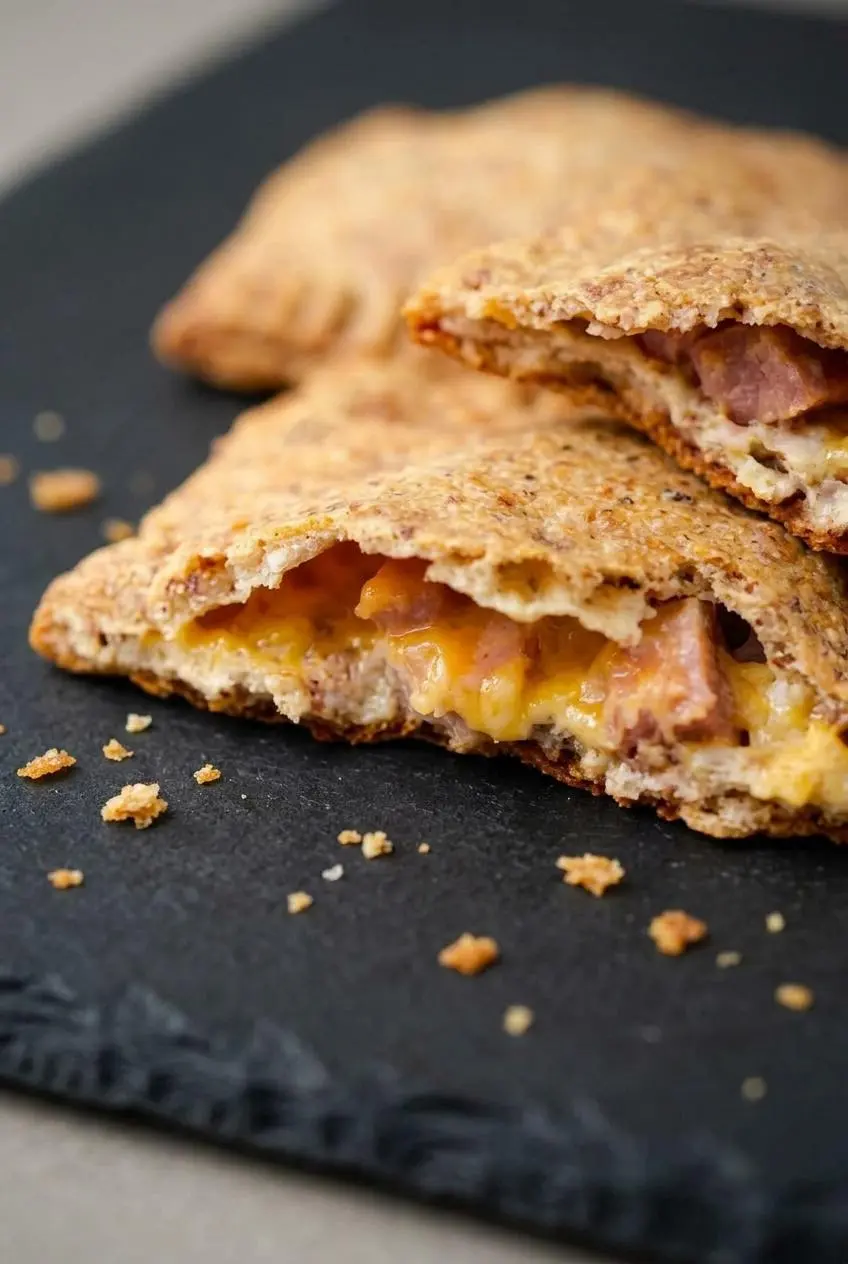
Cheese dough responds quickly to warmth. If shaping becomes frustrating, check its temperature and the space you’ve left around the filling before changing anything else.
- Sticky dough: The cheese has warmed while you worked. Return the dough to the cold until it firms up, then roll it between parchment rather than adding more almond flour.
- Tears when folding: The rectangle may be too thin or the filling may be pushing against it. Press a small tear back together and handle the dough gently; a larger tear is easier to repair before baking than after the cheese melts.
- Cheese escaping at the sides: Filling on the rim can keep the dough from touching itself. Move the filling inward and crimp the full seam firmly with a fork.
- A damp bottom crust: Steam can collect beneath a hot pocket left on the baking sheet. Move baked pockets to a wire rack so air can circulate underneath.
A shallow prick in the top can give steam a way out, but it is optional. Keep any opening small so melted cheese does not flow through it.
Delicious Low-Carb Filling Ideas
Ham and cheddar is the baked filling here. For a different flavor, treat these combinations as optional swaps, and keep sauces and cooked vegetables from making the dough wet. A modest mound of filling leaves the clearest path to a secure seal.
Pepperoni Pizza Pocket
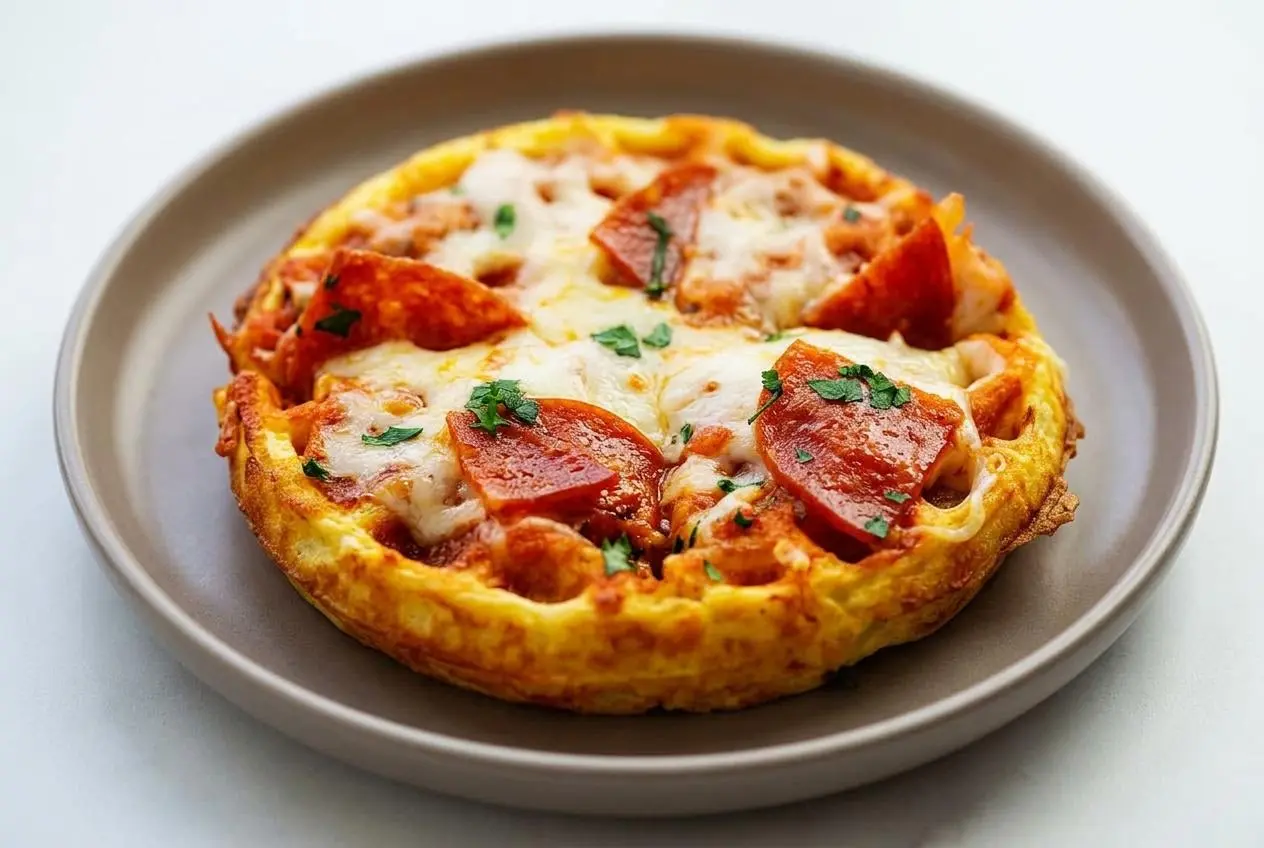
Try sliced pepperoni, mozzarella, and a little thick, low-sugar marinara for pizza flavor. Spread sauce away from the rim so the dough can seal against itself. If that combination hits the spot, keto pizza crust offers another way to enjoy it.
Breakfast Sausage and Egg Pocket
Cooked breakfast sausage, scrambled eggs, and cheddar make a savory morning variation. Let the eggs finish cooking before filling the dough, and avoid piling them so high that the top cannot fold over cleanly.
Cheeseburger Handheld Pocket
Use browned, seasoned ground beef, cheddar, and diced pickles for a burger-inspired pocket. Drain the beef and pickles well; excess liquid can soften the pastry and interfere with the crimped seam.
For other fillings, the same principle applies: cook ingredients that release moisture, drain them, and leave a clear border of dough. Delicate pastry has a much easier time holding a filling that stays where you put it.
Meal Prep, Storage, and Reheating Strategies
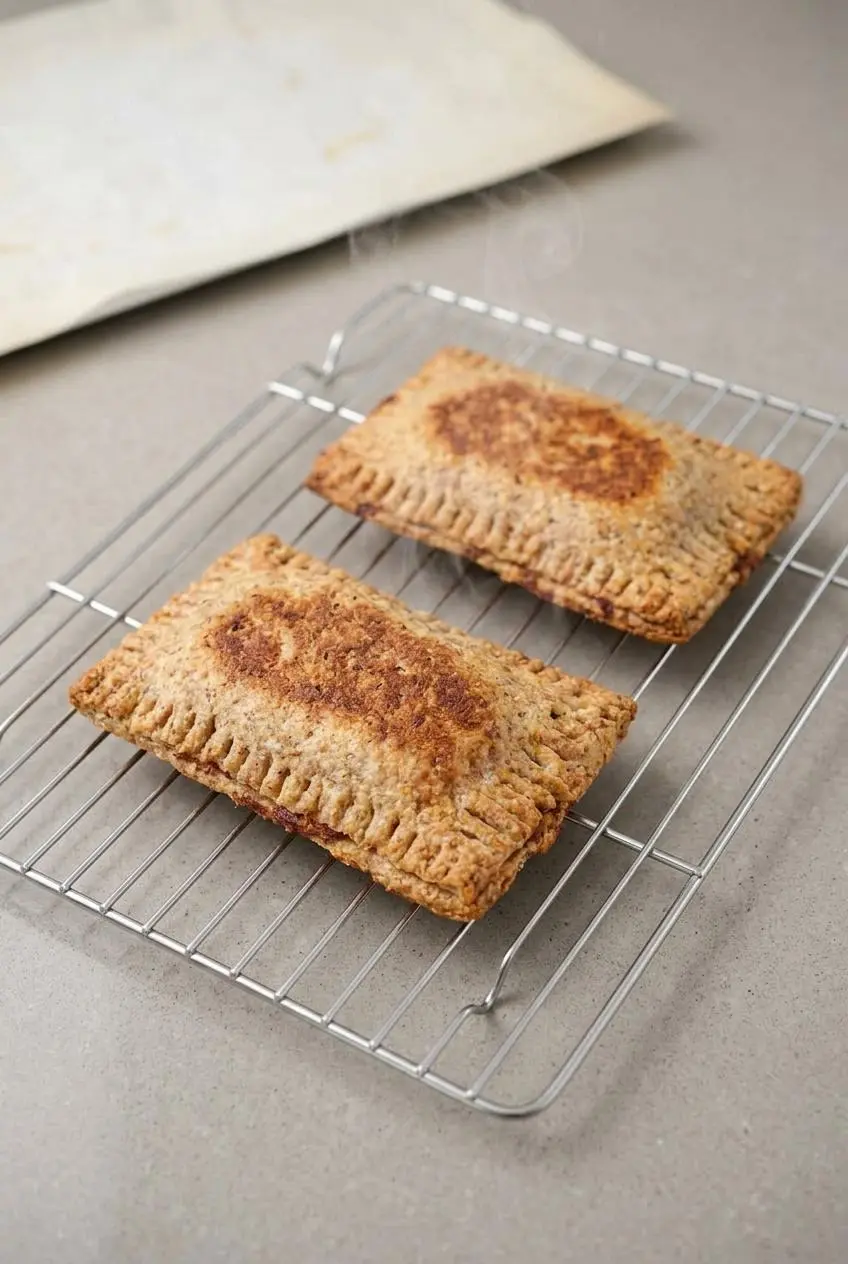
For a convenient lunch, let baked pockets cool on a wire rack before packing them. Air can reach the bottoms, while a closed container would trap steam against the crust. Once cool, place leftovers in an airtight container in the refrigerator.
Pack a dipping sauce separately if you’re taking a pocket to work or school. Keeping sauce off the crust until eating preserves more of that golden exterior.
Keeping the Dough Chilled Before Assembly
The recipe’s 30-minute freezer chill happens before rolling, not after the pockets are assembled. Have the parchment, cutter, ham, and cheddar ready so you can shape the firm dough while it handles well. If it grows sticky as you work, chill it again until it firms up.
Crisping in the Oven or Air Fryer
Dry heat is the better choice when you want to bring back some crust texture. Warm a refrigerated pocket in an oven or air fryer until it is heated throughout, checking it so the exterior does not brown too far. A microwave can heat it, but the crust will be softer.
Serving Suggestions and Low-Carb Pairings
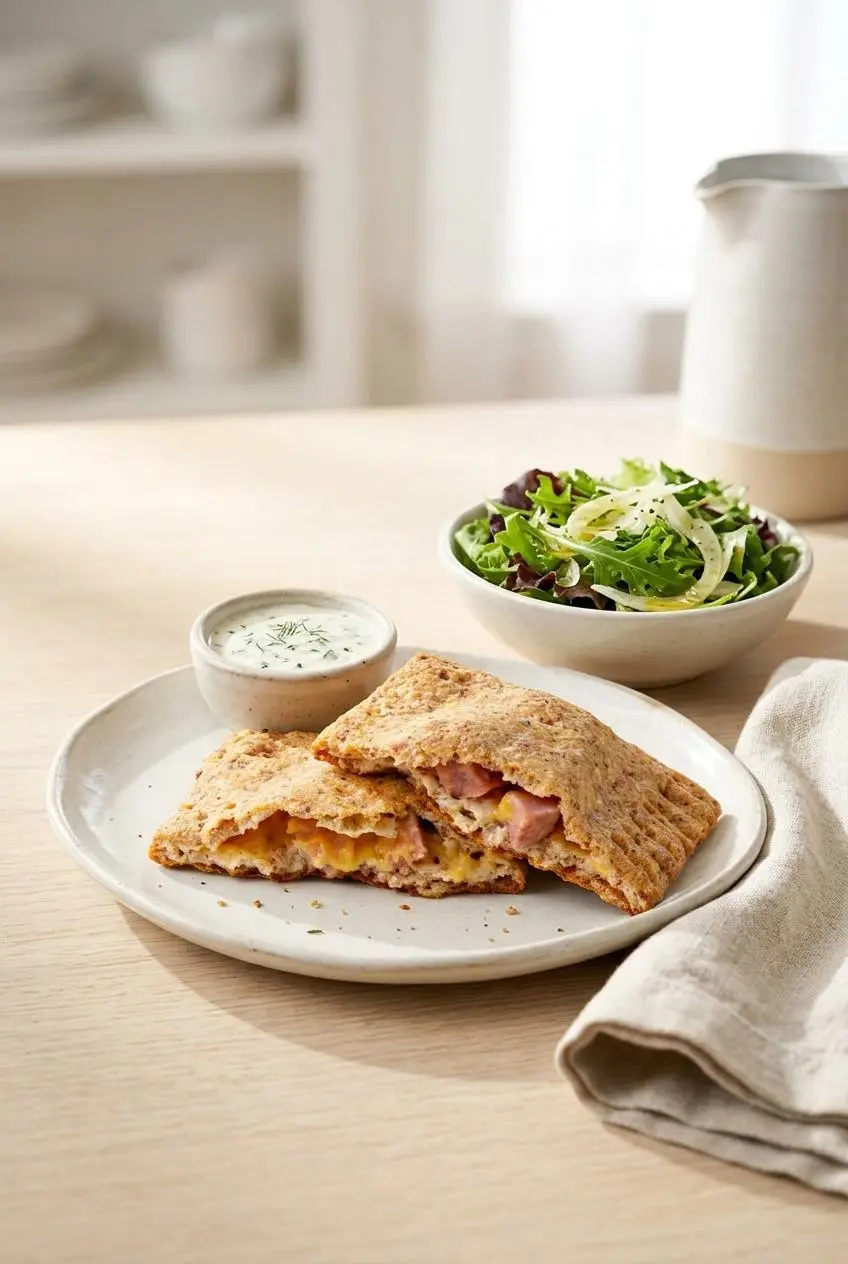
Serve the pockets warm, after the filling has settled enough to eat comfortably. A little unsweetened or low-sugar marinara works as a dip, as does herb ranch. Keep either in a separate bowl rather than pouring it over the pastry.
For a fuller meal, add crisp leafy greens with olive oil and vinegar. A fresh Greek salad brings a cool, crunchy contrast to the rich ham and cheese filling.
Bringing Golden Comfort Food Back to Your Low-Carb Routine
These ham and cheddar pockets bring together a browned almond flour crust and a melty center. Chilling the dough makes shaping easier, and a firm fork crimp helps keep the filling inside.
Once you’re comfortable with the fold and seal, you can explore other savory fillings while keeping them well drained. A golden pocket is worth the little bit of care at the edges.
Frequently Asked Questions
Why Is It Important to Chill the Dough Before Rolling?
Chilling firms the melted cheese dough so it sticks less and holds its shape when cut. Roll it between parchment after the recipe’s freezer chill, and return it to the cold if it becomes too soft to handle.
Can I Bake Keto Hot Pockets From Frozen?
This method chills the dough before assembly, but it does not specify a method for baking assembled pockets from frozen. For the stated baking time and doneness cues, shape and bake the pockets as directed above.
How Do I Keep the Bottom Crust From Getting Soggy After Baking?
Move the baked pockets from the baking sheet to a wire rack. Letting air circulate underneath helps prevent trapped steam from softening the bottom crust.
Can Keto Hot Pockets Be Part of a Weight-Loss Diet?
That depends on your overall eating plan and portion needs; a particular recipe cannot promise weight-loss results. Check the ingredients and calculate nutrition for the portions you actually make if you track specific dietary goals.
What Is the Best Appliance for Reheating Leftover Hot Pockets?
Choose an oven or air fryer when a crisper exterior matters, and warm the pocket until heated throughout. A microwave is an option when speed matters more, though it tends to leave the crust softer.
Keto Hot Pockets

Equipment
- Microwave-safe bowl
- Mixing bowl
- Parchment paper
- Rolling Pin
- Pizza Cutter
- Baking sheet
- Wire cooling rack
Ingredients
- 1 1/2 cups mozzarella cheese shredded
- 2 ounces cream cheese
- 1 cup almond flour
- 1/2 teaspoon garlic powder
- 1 teaspoon baking powder
- 1 teaspoon Italian seasoning
- 1 egg
- 3 ounces cubed ham fully cooked
- 1/4-1/2 cup shredded cheddar cheese
Instructions
- Set the oven to 350°F. It should be fully heated when the shaped pockets are ready to bake.
- Microwave the mozzarella and cream cheese together in a microwave-safe bowl, stirring after each 30-second interval. Stop when the cheeses are melted and blend into one smooth mixture.
- Work the almond flour, garlic powder, Italian seasoning, and baking powder into the melted cheese by hand. The mixture should gather into a cohesive dough without dry patches.
- Transfer the dough to a mixing bowl, add the egg, and beat on high until incorporated. The dough should look uniform throughout.
- Chill the dough in the freezer for 30 minutes. It should feel firmer and less sticky when handled.
- Place the chilled dough between two sheets of parchment and roll it into a thin rectangle. Keep enough thickness for the dough to lift and fold without breaking.
- Neaten the rectangle with a pizza cutter. Straight sides make the pockets easier to fold and seal.
- Cut the dough into 4 long, narrow rectangles. Each rectangle needs enough space on one half for filling and on the other half to fold over it.
- Set some fully cooked cubed ham and shredded cheddar on one half of each rectangle. Leave the outer edges clear for sealing.
- Fold the bare half of each rectangle over its filling and press the edges shut with fork tines. The crimped seams should hold together all the way around.
- Bake the pockets for 20 to 25 minutes. The crust and crimped rims should be browned and cooked through.