Skip to content

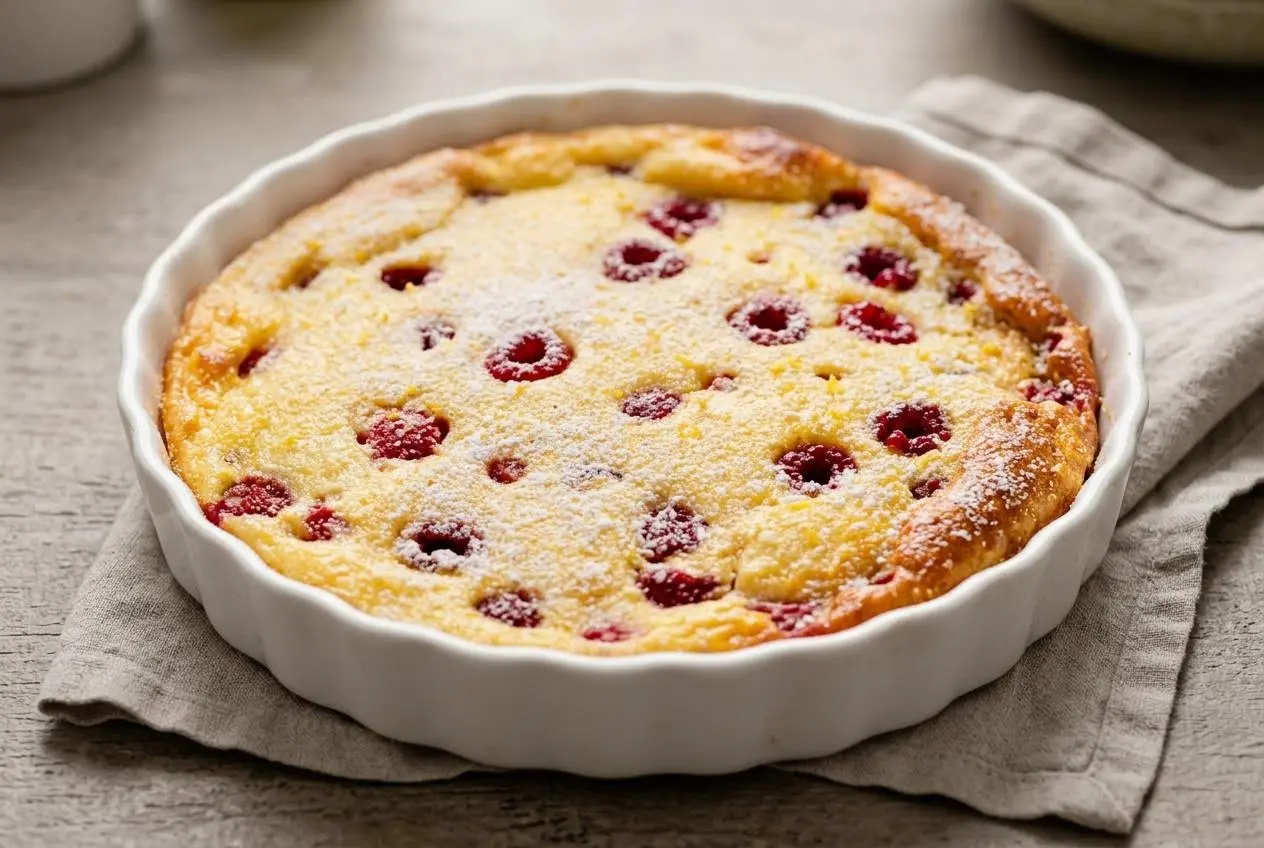
Make keto raspberry clafoutis by blending a custard batter, pouring it around raspberries, and baking until golden with a gently wobbling center. This quick blender dessert delivers velvety custard, tart fruit, and a choice of creamy or firmer texture.
This crustless French-style bake sits between a soft pancake and baked custard. Almond flour gives it body, while eggs and cream create the tender center surrounding the berries.
It works for brunch or dessert, and you can serve it lukewarm or chilled. The blender handles the mixing, leaving you to watch the oven. That little wobble matters.
I’d choose finely ground blanched almond flour here; its finer texture suits the delicate custard better than coarse almond meal.
Key Ingredients and Equipment for Low-Carb Clafoutis
Eggs provide structure, cream brings richness, and raspberries balance the custard with tartness. Flour and xanthan gum support the texture, while sweetener, vanilla, and optional lemon zest round out the flavor.
- 1 teaspoon butter (to grease pan or coconut oil)
- 1 cup raspberries (fresh (or 150g))
- 3 large eggs
- 7 ounces heavy cream ((or 200ml) or canned coconut milk)
- 4 tablespoons butter (melted or coconut oil)
- 3/4 cup almond flour ((or 75g) or 1/4 cup coconut flour)
- 1/4 teaspoon xanthan gum
- 5 tablespoons Monk Fruit Allulose confectioners ((or powdered allulose) (or 50g))
- 3/4 teaspoon baking powder
- 1 tsp vanilla extract
- 1 tsp lemon zest (optional)
Eggs do the main setting work. Heavy cream or canned coconut milk supplies moisture and richness, while melted butter or coconut oil adds tenderness. Almond flour gives the custard a delicate body; coconut flour absorbs more liquid, which explains its different quantity.
Baking powder provides a little lift rather than a cake-like crumb. Vanilla softens the egg flavor, and optional lemon zest brightens the raspberries without adding more juice. Use the measurements above and the baking directions below for either flour option.
Why Powdered Sweetener and Xanthan Gum Matter
Confectioners-style sweetener disperses more readily than coarse granules, helping the custard feel smooth. The listed allulose options also avoid the noticeable cooling sensation associated with erythritol. Granular erythritol can leave a crystalline texture, especially after chilling, so it isn’t a direct texture match.
Xanthan gum helps bind moisture and supports the batter around the fruit. Measure it carefully: adding extra can make the center gummy rather than creamy.
Choosing the Best Baking Dish: Ceramic vs. Glass vs. Cast Iron
- Ceramic: A shallow flan or pie dish offers gentle heating and enough surface area for the center to set without overly dry edges.
- Glass: A shallow glass pie plate works, but retains heat after leaving the oven, so watch the custard rather than waiting for a rigid center.
- Cast iron: A skillet holds heat strongly and can brown the edges more assertively; ceramic is the more forgiving choice for this delicate texture.
How to Make Keto Raspberry Clafoutis Step by Step
Allow 5 minutes for preparation and about 25 minutes for baking; the dish serves 6. Keep the raspberries separate from the blender batter so you can distribute them through the custard.
- Set the oven to 375°F / 190°C, or 170°C fan.
Let it reach temperature before the filled dish goes in so the custard begins cooking evenly. - Coat the bottom and sides of a 24 cm flan dish or 10-inch pie dish with the butter reserved for greasing.
A continuous coating helps the tender custard release when served. - Load the eggs, cream, melted butter, and vanilla into the blender before adding the dry batter ingredients and optional lemon zest, then stop blending as soon as everything combines.
The mixture should pour freely and look smooth, without a thick cap of foam. - Distribute two-thirds of the raspberries across the greased bottom, cover them with batter, and gently push the remaining berries into the surface.
This divides the fruit between the interior and top instead of concentrating it all underneath. - Check the custard after about 25 minutes of baking and remove it when the edges hold their shape but the middle still trembles gently.
For a firmer finish, allow 5 additional minutes, remembering that cooling will also strengthen the set.
What Is Keto Raspberry Clafoutis and How Does the Texture Compare to Flan?
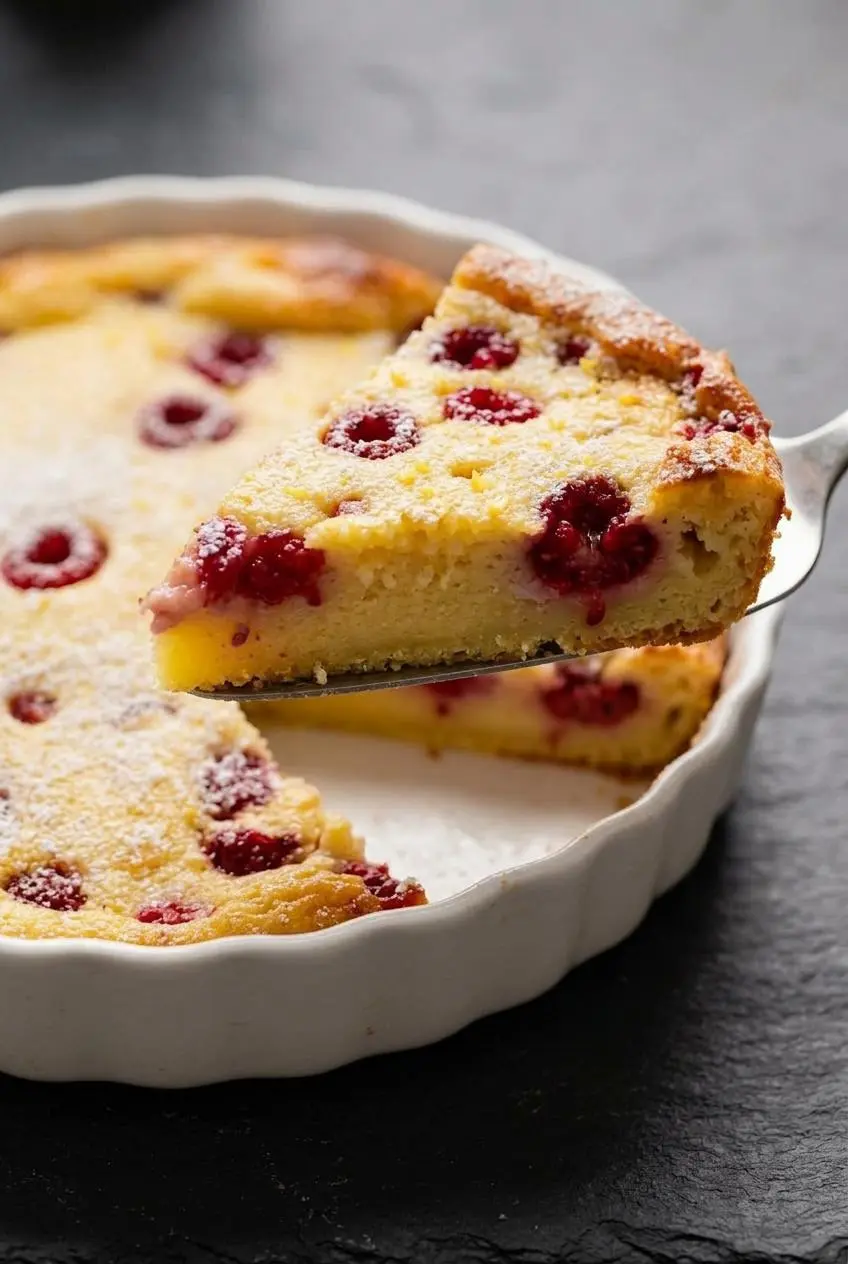
Clafoutis, pronounced “klah-foo-TEE,” is a rustic French fruit dessert baked in an egg-rich batter. Traditional versions feature cherries; raspberries bring tartness and tender pockets of fruit to this low-carb adaptation.
Expect a soft baked custard, not a fluffy cake. Lukewarm clafoutis feels creamy and yielding, while chilling makes it firmer and more flan-like. Unlike a low-carb berry trifle, the fruit and custard bake together rather than forming separate chilled layers.
Troubleshooting and Pro Tips for Perfect Custard Texture
Most texture problems come from flour fineness, excess moisture, or baking past the ideal set. Real eggs provide the custard structure; flax or chia substitutes won’t reproduce that same tender setting action.
How to Prevent a Soggy or Gritty Almond Flour Center
- Gritty custard: Coarse almond meal leaves noticeable particles; choose super-fine blanched almond flour, or briefly pulse coarse meal in a dry blender before starting the batter.
- Flour stuck beneath the blades: Dry ingredients loaded first can cling to the blender; adding liquids first helps them circulate.
- Foamy batter that sinks unevenly: Extended blending introduces excess air; stop once the batter looks uniform.
- Wet-looking slices: A deep dish or immediate slicing can leave a weak center; use the specified shallow dish and let the custard settle before cutting.
Fresh vs. Frozen Raspberries: Managing Moisture
- Fresh berries: Dry them gently after rinsing so surface water doesn’t thin the batter.
- Frozen berries: They can release more juice and soften more than fresh fruit; avoid adding loose ice or accumulated berry liquid.
- Already thawed berries: Drain and gently blot them rather than pouring their juice into the custard.
The Center Jiggle Test and Foil Tenting Trick
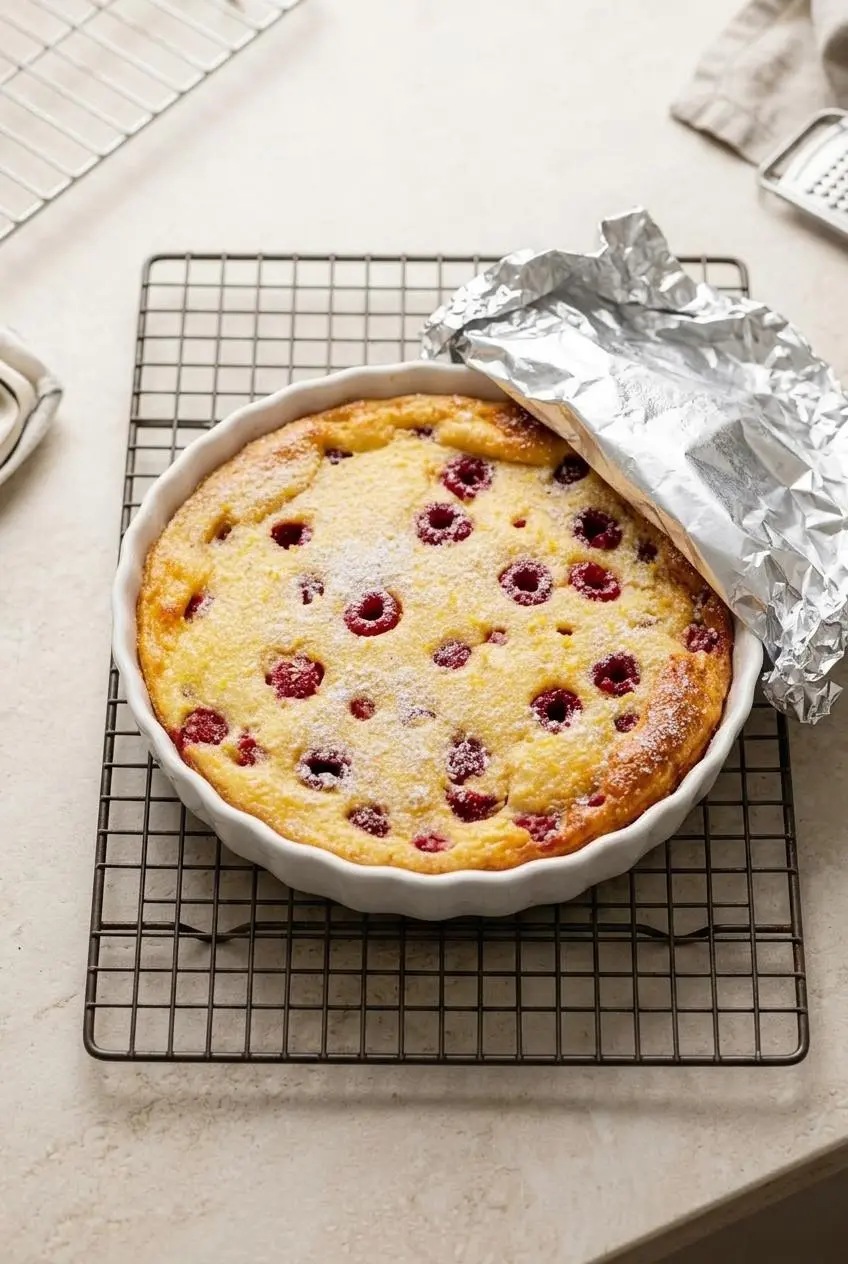
- Golden top, unsettled center: Loosely tent the dish with foil to limit further browning while the middle finishes baking.
- Rubbery custard: Baking until the entire surface becomes rigid can dry the eggs; look for set, slightly puffed edges with a small gelatin-like wobble in the middle, not liquid sloshing.
Dietary Swaps and Flavor Variations
Keep the listed coconut substitutions separate from more experimental additions. Cream cheese, yogurt, and different fruit can change the batter’s balance, so don’t expect identical results.
Dairy-Free Coconut Milk Keto Clafoutis
Choose canned coconut milk instead of heavy cream and coconut oil instead of butter, including for greasing. This gives the custard a coconut background while keeping its richness. Use dairy-free coconut yogurt if you’d like a topping.
Cream Cheese or Greek Yogurt Cheesecake-Style Clafoutis
Cream cheese offers a richer, tangier direction, while Greek yogurt adds a lighter tartness. Neither is a measured substitution here, and either can change the set. For a cream-cheese-centered bake with its own proportions, try keto egg loaf.
Nut-Free Coconut Flour Swap
Use the coconut flour alternative listed above rather than replacing almond flour cup for cup. Its stronger absorbency gives the custard more body. If avoiding nuts for an allergy, check ingredient labels for your individual requirements.
Mixed Berry and Stone Fruit Adaptations
- Blackberries: Add a deeper berry flavor and more noticeable seeds.
- Sliced strawberries: Bring a sweeter aroma, with moisture control still important.
- Blueberries: Create small bursts of sweetness rather than raspberry tartness.
- Cherries or peaches: Offer a seasonal direction, but change the carbohydrate profile and aren’t interchangeable for strict keto planning.
- Almond extract with lemon zest: Adds an optional aromatic accent; keep the almond flavor restrained so it doesn’t overwhelm the fruit.
Serving Suggestions: Warm vs. Chilled
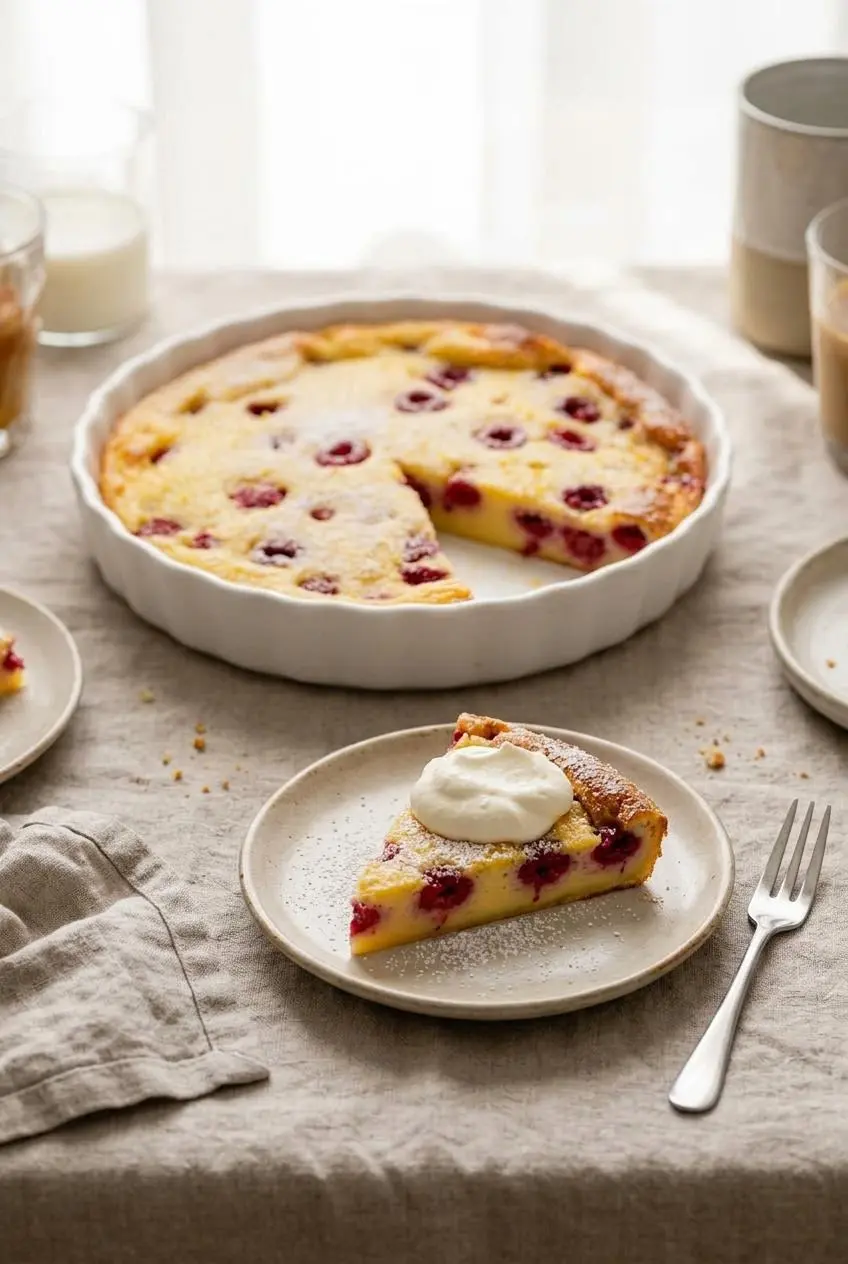
Let the custard settle before cutting so the wedges hold together more neatly. Serve lukewarm for a soft, creamy center or chilled for a firmer, flan-like slice.
- Light finish: Dust with powdered sweetener just before serving.
- Creamy topping: Add sugar-free whipped cream, Greek yogurt, or coconut yogurt.
- Warm-and-cold contrast: Pair a lukewarm wedge with keto ice cream.
Storage, Make-Ahead, and Reheating
Keep leftovers covered in the refrigerator. Let excess steam escape before covering, rather than trapping condensation against the surface, and avoid leaving the dish on the counter for extended cooling.
For advance serving, plan around the chilled texture and add toppings at the table. If you prefer it warm, gently heat an individual portion in short microwave bursts, checking between them to avoid toughening the custard.
Final Thoughts on Making Keto Raspberry Clafoutis
This blender clafoutis brings together tart raspberries and golden, velvety custard without a crust or elaborate mixing.
Watch for that gentle center wobble, then let the texture settle. Try it lukewarm and chilled to find the finish you enjoy most.
Frequently Asked Questions
Do You Eat Keto Raspberry Clafoutis Warm or Cold?
Either works: lukewarm servings have a softer, creamier center. Chilled servings hold a firmer, more flan-like shape.
Can I Make Keto Raspberry Clafoutis Dairy-Free With Coconut Milk?
Yes, use the canned coconut milk and coconut oil alternatives listed in the ingredients. Choose coconut yogurt rather than dairy toppings.
Can I Use Frozen Raspberries Instead of Fresh?
Yes, but fresh berries give more predictable moisture and shape. Avoid loose ice and drain any liquid from berries that have already thawed.
Can I Add Cream Cheese to Keto Raspberry Clafoutis?
It offers a tangier, cheesecake-style direction, but isn’t a measured swap in this recipe. Adding it changes the batter’s thickness and may change how the custard sets.
Why Did My Almond Flour Clafoutis Turn Out Gritty or Soggy?
Grittiness usually points to coarse almond meal rather than finely ground flour. A wet center can come from juicy berries, a deep dish, or cutting before the custard settles.
How Long Can I Store Leftover Clafoutis and Is It Safe to Reheat?
Keep leftovers covered and refrigerated; no guaranteed shelf life applies regardless of handling. If reheating, warm individual portions gently as described above, and discard leftovers if their storage history is uncertain.
Keto Raspberry Clafoutis

Equipment
- Blender
- 10-inch pie dish or 24 cm flan dish
Ingredients
- 1 teaspoon butter (to grease pan or coconut oil)
- 1 cup raspberries (fresh (or 150g))
- 3 large eggs
- 7 ounces heavy cream ((or 200ml) or canned coconut milk)
- 4 tablespoons butter (melted or coconut oil)
- 3/4 cup almond flour ((or 75g) or 1/4 cup coconut flour)
- 1/4 teaspoon xanthan gum
- 5 tablespoons Monk Fruit Allulose confectioners ((or powdered allulose) (or 50g))
- 3/4 teaspoon baking powder
- 1 tsp vanilla extract
- 1 tsp lemon zest (optional)
Instructions
- Set the oven to 375°F / 190°C, or 170°C fan. Let it reach temperature before the filled dish goes in so the custard begins cooking evenly.
- Coat the bottom and sides of a 24 cm flan dish or 10-inch pie dish with the butter reserved for greasing. A continuous coating helps the tender custard release when served.
- Load the eggs, cream, melted butter, and vanilla into the blender before adding the dry batter ingredients and optional lemon zest, then stop blending as soon as everything combines. The mixture should pour freely and look smooth, without a thick cap of foam.
- Distribute two-thirds of the raspberries across the greased bottom, cover them with batter, and gently push the remaining berries into the surface. This divides the fruit between the interior and top instead of concentrating it all underneath.
- Check the custard after about 25 minutes of baking and remove it when the edges hold their shape but the middle still trembles gently. For a firmer finish, allow 5 additional minutes, remembering that cooling will also strengthen the set.