Skip to content
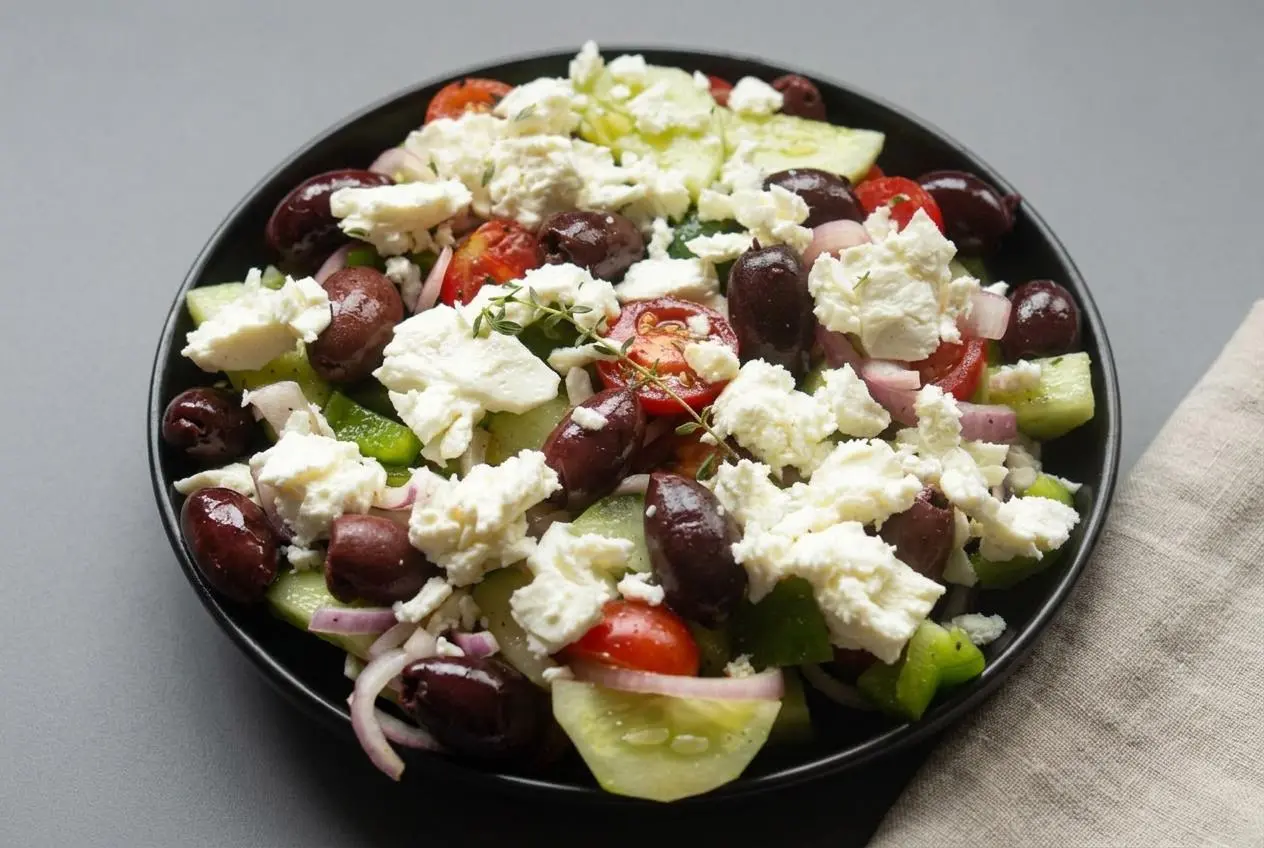
This keto greek salad pairs cool cucumber, juicy tomatoes, bell pepper, Kalamata olives, feta, and a tangy oregano vinaigrette for a crisp, low-carb Mediterranean side.
A keto greek salad works beautifully when you want a substantial salad without relying on leafy greens. Chunky vegetables bring the crunch, while salty olives and feta make every bite feel satisfying.
The dressing is bright, savory, and free of added sugar. Keep the components separate for a crisp meal-prep lunch, then toss them when you are ready to eat. The feta finish makes it special.
Dry the cut vegetables well before mixing, especially the cucumber and tomatoes, so the dressing stays glossy instead of watery.
Low-Carb Ingredients and Fresh Mediterranean Veggies
Each ingredient contributes something distinct: crispness from cucumber and pepper, juicy acidity from tomatoes, briny depth from olives, creamy richness from feta, and a sharp herbal balance from the vinaigrette.
- 200 grams Cucumber
- 50 grams red onions
- 100 grams Cherry Tomatoes
- 50 grams Green Bell Pepper
- 50 grams Kalamata Olives
- 100 grams Feta Cheese
- 2 tbsp olive oil
- 1 tbsp red wine vinegar
- Salt to Taste
- Pepper to taste
- 1 tsp fresh thyme or oregano
Cucumber, tomatoes, bell pepper, and red onion all contribute carbohydrates, so their portions matter when you track daily intake. Cucumber and bell pepper provide most of the bulk and crunch, while tomato and onion bring more concentrated sweetness and sharpness.
Choose extra virgin olive oil with a grassy, peppery flavor because it carries the vinegar and herbs across the vegetables. For feta, a block packed in brine has a moist, creamy texture that pre-crumbled cheese often lacks. Cube it for clean white pieces or crumble it lightly for softer pockets throughout the bowl.
I prefer feta in brine for this salad because it stays creamy against the sharp vinegar and does not turn dry or chalky after tossing.
Step-by-Step Keto Greek Salad Preparation and Dressing
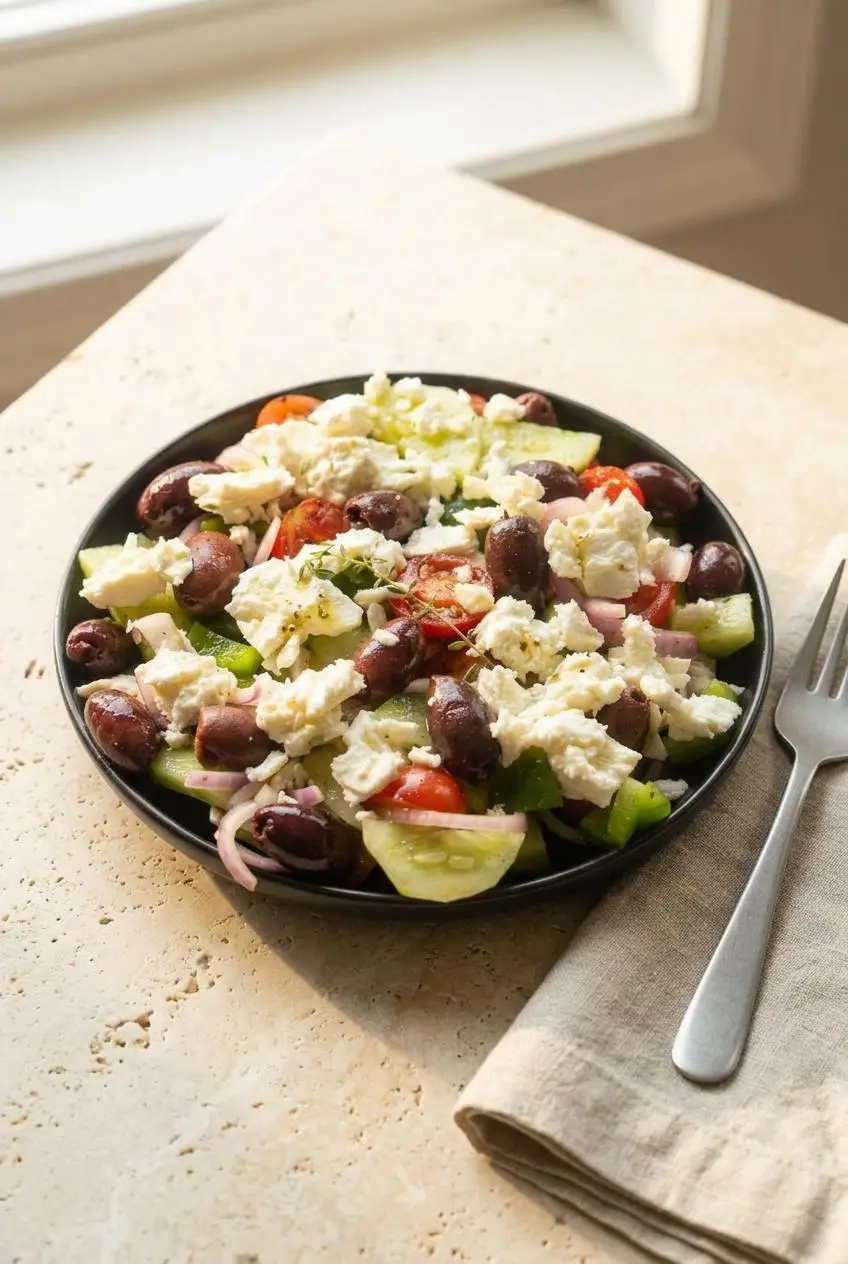
Uniform vegetable cuts make the salad easier to eat and help the dressing coat each piece evenly. Whisk the oil and vinegar until they look slightly thickened and unified, then toss gently so the feta keeps its shape.
- Peel the cucumber, cut it lengthwise, divide each half into quarters, and chop into chunky pieces.
The pieces should be substantial enough to stay crisp once coated with dressing. - Halve the cherry tomatoes and slice the red onions into thin half-moons.
The tomato cut sides should be clean, while the onion slices should remain fine and flexible. - Cut the green bell pepper into pieces similar in size to the cucumber, then combine all the prepared vegetables in a large bowl.
Matching shapes create an even crunch in each forkful. - Pour the olive oil into a separate bowl, then add the red wine vinegar, thyme or oregano, salt, and pepper.
Whisk vigorously until the vinegar no longer sits in a separate puddle beneath the oil. - Drizzle the vinaigrette over the vegetables and fold gently until coated.
The vegetables should look lightly glossy rather than submerged in dressing. - Place the feta over the salad as a slab or crumble it over the top just before serving.
Keep the cheese distinct and creamy instead of stirring it until it disappears.
The Secret to Perfecting Raw Red Onions
Raw red onion can dominate a salad if its bite is too sharp. After slicing, soak it briefly in ice water with a splash of vinegar, then drain and pat it dry before adding it to the bowl. The onion keeps its crisp texture but tastes milder and more balanced.
You can also let the slices sit in the red wine vinegar while you prepare the other vegetables. This softens the harsh edge and gives the dressing a little extra onion flavor. Do not leave excess liquid clinging to the onions, or it can dilute the vinaigrette.
Supercharge Your Kitchen Prep
Work from firm vegetables and cut them with a sharp knife. A fresh cucumber and thick bell pepper should give a clean snap as you slice them. Keep the tomato halves and pepper pieces close in size to the cucumber, so no single ingredient overwhelms the bite.
If the tomatoes look especially juicy, place the cut sides facing up on a clean towel while you make the dressing. That small pause limits pooling at the bottom of the serving bowl without changing the salad’s fresh character.
The Tradition of Greek Horiatiki Salad
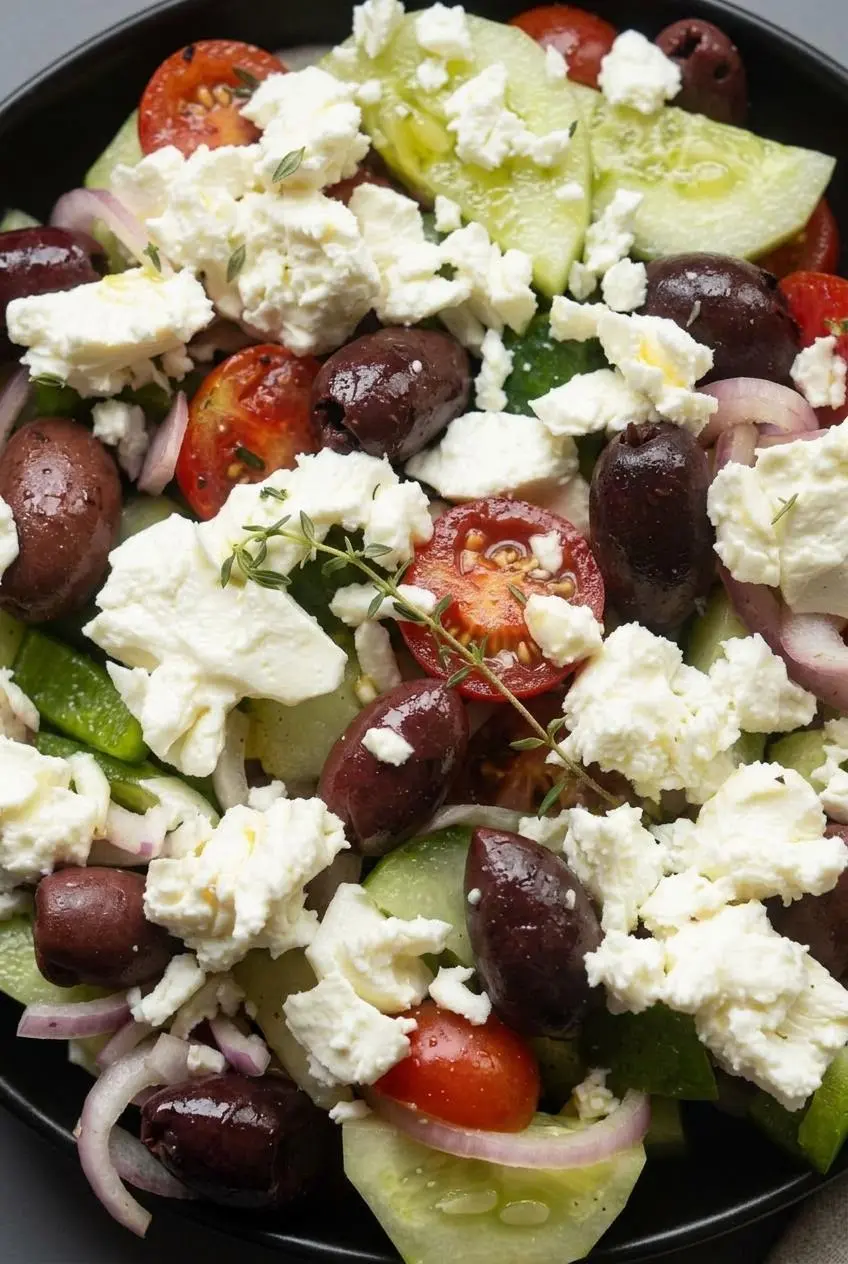
Traditional Greek Horiatiki is a village-style salad built around ripe vegetables, olives, olive oil, and feta, with no lettuce. Its sturdy, lettuce-free structure suits this salad well because cucumber, tomatoes, peppers, and onion bring enough color and texture on their own.
American-Greek salads often add romaine or mixed greens for volume. That version can be delicious, but it changes the character and becomes more vulnerable to wilting once dressed. A whole slab of feta is the classic dramatic finish; crumbled feta is equally practical when you want a little cheese in every forkful.
Cucumbers on a Keto Diet
Cucumber gives this salad its cool, clean backbone while keeping the texture light. English and Persian cucumbers are useful choices because they have thin skins and relatively small seed cavities. If you use either type for an optional variation, leaving the peel on adds color and extra crunch.
This method peels the cucumber for a smoother, more uniform bite. Either way, choose firm cucumbers with no soft spots, and keep the pieces chunky. Salting them in advance can draw out moisture, so skip that step here and dry them well instead.
Balancing Your Keto Macros
This salad can fit a keto eating pattern when you account for the vegetables and portion it according to your own daily targets. Tomatoes and red onions are the ingredients most likely to raise the carbohydrate total, while cucumber and green bell pepper provide volume with a lighter flavor.
Olive oil and feta bring the rich, high-fat character that makes the salad satisfying. For tighter personal macro planning, use the nutrition information for the exact brands and vegetables in your kitchen, especially feta and olives, since sodium and carbohydrate values can vary.
A homemade vinaigrette also gives you control over the flavor. Olive oil, red wine vinegar, herbs, salt, and pepper create a clean, savory dressing without a sweetener. If you choose to experiment beyond this recipe, a touch of mustard can help oil and vinegar stay blended, but it is optional and changes the flavor slightly.
Mediterranean Variations and Protein Additions
Keep the core salad intact, then adjust it to suit the meal in front of you. These are optional directions, not changes required for the main recipe.
Keto-Friendly Substitutions and Additions
- Use Persian cucumbers when English cucumbers are unavailable. Their small size and thin skins bring a similarly crisp bite.
- Swap the green bell pepper for another bell pepper color if you prefer a sweeter or fruitier flavor.
- Add grilled chicken, steak, or skewered shrimp to turn the salad into a fuller main dish.
- Serve it alongside keto salmon patties for a satisfying seafood dinner with bright, briny contrast.
- Offer keto naan bread at the table for scooping up the oregano dressing and feta.
Authentic Lettuce-Free Horiatiki
For the most traditional approach, keep the salad focused on chunky cucumber, tomatoes, bell pepper, onion, olives, dressing, and feta. The absence of lettuce gives the vegetables room to shine and keeps the texture bold rather than leafy.
Volume-Boosted Romaine Greek Salad
If you want a larger bowl, add crisp romaine or spring mix as an optional foundation. Keep the greens dry and add the dressing only at serving time, since they soften much faster than the sturdy vegetables.
Gourmet Mediterranean Artichoke and Pepper Salad
For a more elaborate Mediterranean direction, add artichoke hearts, banana peppers, or pepperoncini. Each brings extra tang and a stronger pickled character, so taste before adding more salt. These additions move the salad away from classic Horiatiki, but they make a lively dinner-party variation.
Meal Prep Tips and Mason Jar Layering
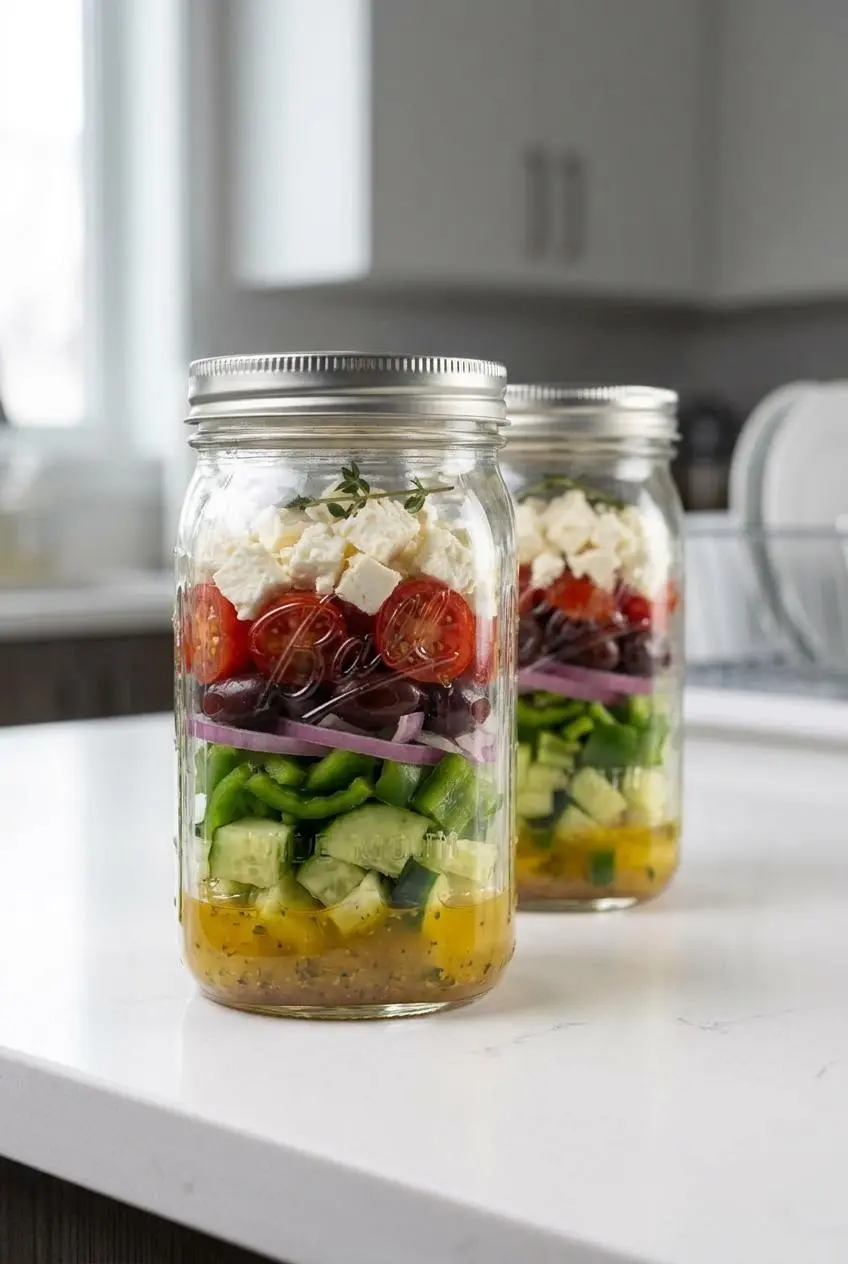
For the best texture, store chopped vegetables and dressing in separate airtight containers and combine them close to serving. Keep the feta separate as well, especially if you want neat cubes rather than small crumbles throughout the salad.
Chill the prepared components promptly and keep them cold. If the vegetables release liquid, drain that liquid before dressing the salad. This avoids a diluted vinaigrette and keeps the cucumber and pepper from tasting limp.
Mason Jar Meal Prep Stack
For a portable layered lunch, place the vinaigrette at the bottom of a clean jar. Add the sturdy cucumber next, followed by bell pepper, onion, olives, and tomatoes. Keep feta at the top, where it stays away from the dressing until you turn the jar into a bowl.
Use a tight-fitting lid and avoid packing the jar so tightly that the vegetables bruise. For another chilled lunch option in your rotation, keto chicken salad offers a different texture while keeping the same practical approach.
Enjoying Your Fresh Mediterranean Salad
Serve this salad alongside grilled lamb kebabs, lemon chicken, roasted fish, or breakfast eggs. Its cool cucumber, salty feta, and red wine vinegar dressing cut through richer foods particularly well.
Whether it lands on the table as a side dish or the center of a protein-packed lunch, this is the kind of fresh Mediterranean salad that stays bright, crunchy, and welcome. Toss gently, add the feta last, and enjoy every briny bite.
Frequently Asked Questions
Can I Eat Greek Salad on a Keto Diet?
Yes, Greek salad can fit a keto diet when you account for the ingredients and your serving size. Cucumber, bell pepper, olives, feta, and olive oil are common choices for a lower-carb salad. Tomatoes and red onion contribute more carbohydrates, so adjust those portions to suit your own daily limits. Check the labels on feta, olives, and any packaged dressing if you track closely.
Is Feta Cheese Allowed on Keto?
Feta can fit many keto meal plans because it adds richness and moderate protein with very little preparation. Choose block feta in brine for a creamier texture and cleaner flavor. Nutrition varies by brand, so check the package when calculating your own intake. Use feta as a flavorful component rather than assuming all cheese products have the same carbohydrate profile.
Does Traditional Greek Salad Contain Lettuce?
No. Traditional Greek Horiatiki does not include lettuce. It relies on chunky cucumber, tomatoes, bell pepper, red onion, olives, olive oil, and feta for body and texture. Romaine is an optional American-Greek adaptation, not a requirement for the classic village-style salad.
How Can I Prevent My Prepped Greek Salad From Getting Soggy?
Keep moisture and dressing under control until serving. Store the dressing separately from the chopped vegetables whenever possible. Dry cucumber and tomatoes after cutting, then drain any liquid that collects before tossing. For jar meals, layer dressing at the bottom and keep feta at the top. Add greens, if using, only when you are ready to eat.
Keto Greek Salad

Ingredients
- 200 grams Cucumber
- 50 grams red onions
- 100 grams Cherry Tomatoes
- 50 grams Green Bell Pepper
- 50 grams Kalamata Olives
- 100 grams Feta Cheese
- 2 tbsp olive oil
- 1 tbsp red wine vinegar
- Salt to Taste
- Pepper to taste
- 1 tsp fresh thyme or oregano
Instructions
- Peel the cucumber, cut it lengthwise, divide each half into quarters, and chop into chunky pieces. The pieces should be substantial enough to stay crisp once coated with dressing.
- Halve the cherry tomatoes and slice the red onions into thin half-moons. The tomato cut sides should be clean, while the onion slices should remain fine and flexible.
- Cut the green bell pepper into pieces similar in size to the cucumber, then combine all the prepared vegetables in a large bowl. Matching shapes create an even crunch in each forkful.
- Pour the olive oil into a separate bowl, then add the red wine vinegar, thyme or oregano, salt, and pepper. Whisk vigorously until the vinegar no longer sits in a separate puddle beneath the oil.
- Drizzle the vinaigrette over the vegetables and fold gently until coated. The vegetables should look lightly glossy rather than submerged in dressing.
- Place the feta over the salad as a slab or crumble it over the top just before serving. Keep the cheese distinct and creamy instead of stirring it until it disappears.