Skip to content
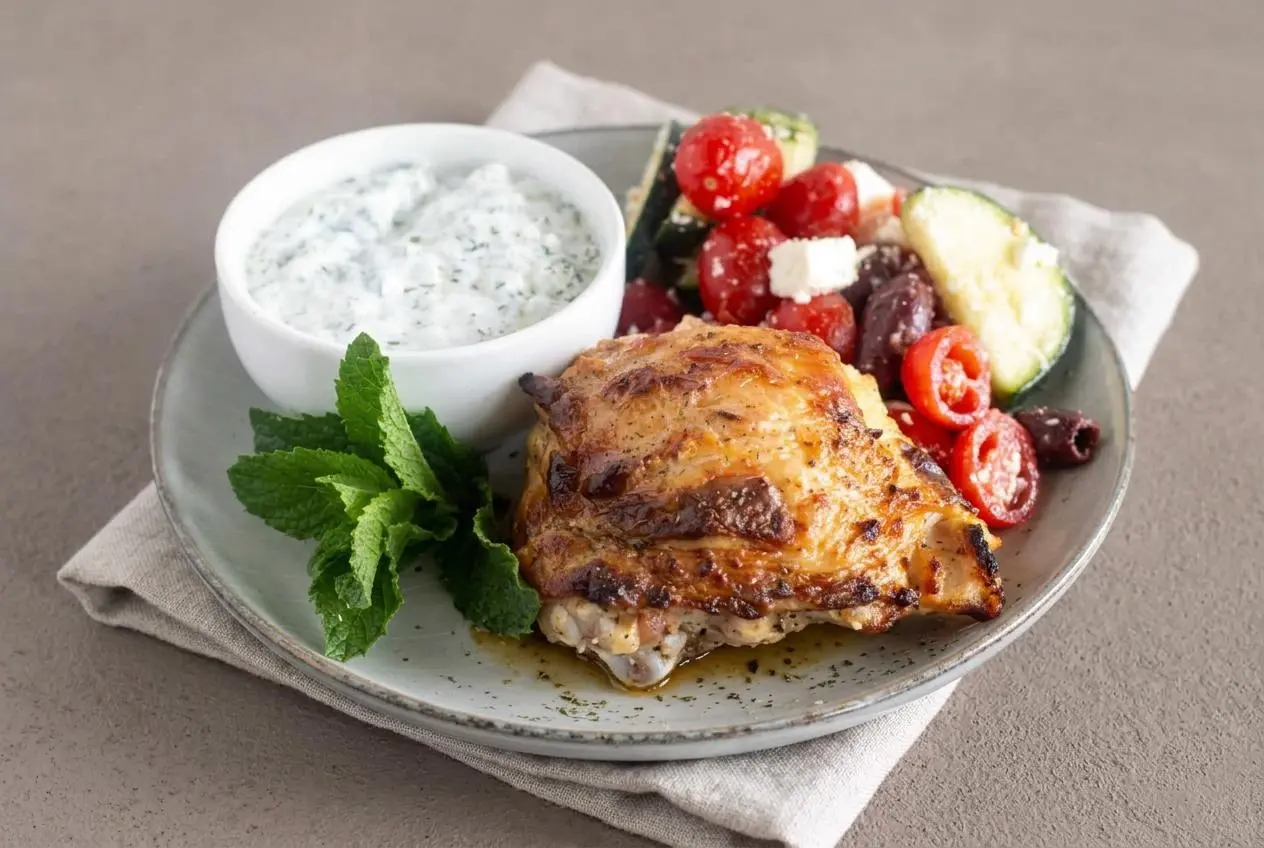
This keto greek chicken recipe pairs tender bone-in thighs with a tangy sour cream, lemon, garlic, and oregano marinade, then roasts them until the skin is crisp and golden.
This keto greek chicken recipe brings bright Mediterranean flavor to a hearty low-carb dinner. Sour cream keeps the marinade rich while lemon and garlic cut through the savory chicken.
The elevated rack is the small detail that keeps rendered fat from turning that beautiful skin soft. Listen for the final sizzle.
Set the chicken skin-side up with space between each piece so heat can circulate instead of trapping steam.
Essential Ingredients for an Authentic Low-Carb Greek Marinade
Each ingredient builds a distinct part of the finished dish: juicy chicken, rich marinade, citrus lift, savory depth, and the fragrant oregano-garlic finish that makes the skin especially appealing.
- 6 Bone-In Skin-On Chicken Thighs
- 1 Cup Sour Cream
- 1 Tablespoon Dried Oregano
- 1 Tablespoon Lemon Juice (fresh is best)
- 1 teaspoon Sea Salt
- 1/2 teaspoon Black Ground Pepper
- 4 Cloves Garlic (minced)
- 1/4 Cup Avocado Oil Or Olive Oil
Selecting Quality Bone-In Chicken Thighs
Bone-in, skin-on thighs are ideal here because the darker meat stays succulent during high-heat roasting, while the skin renders into a savory, crisp layer. Choose pieces with intact skin and similarly sized thighs so they brown at a similar pace.
The Flavor Trio: Dried Oregano, Lemon, and Fresh Garlic
Dried oregano brings the unmistakable Greek-style herbal edge, while fresh lemon juice adds brightness and minced garlic gives the marinade its pungent backbone. Use fresh lemon juice when possible, since bottled juice can taste flatter after roasting.
Cultured Dairy as a Flavor Carrier and Tenderizer
Sour cream gives the marinade body and helps oregano and garlic cling to the chicken. Its gentle tang complements the lemon rather than overwhelming it, and its fat carries those herb aromas into the meat. Avoid sweetened or flavored dairy products, which can change both the flavor and carbohydrate balance.
I prefer a full-fat sour cream here because it coats the chicken evenly and creates a more substantial, savory crust than a thin dairy mixture.
Step-by-Step Keto Greek Chicken Preparation Guide
The method is straightforward, but the order matters: fully combine the marinade, give it time to season the chicken, then roast on an elevated surface so the skin can crisp from underneath as well as on top.
- Whisk the sour cream, oregano, lemon juice, salt, pepper, minced garlic, and oil in a large bowl or resealable bag until the mixture looks smooth and evenly seasoned.
The marinade should have no dry pockets of oregano or streaks of oil sitting apart from the sour cream. - Add the chicken thighs and turn them until every surface is coated, then cover and refrigerate for 24 hours, or for at least 3 hours.
The chicken should sit fully covered in the thick, herb-speckled marinade. - Heat the oven to 425°F, line the lower portion of a broiler pan with foil, and lightly oil the upper rack.
The rack should sit above the lined pan so drippings can collect below the chicken. - Arrange the thighs skin-side up on the prepared rack and roast for 45 minutes, until the internal temperature reaches 165°F.
Insert the thermometer into the thickest part of a thigh without touching bone, and look for deeply golden skin with rendered fat beneath it. - Serve the chicken while hot after removing it from the roasting pan.
The skin should be crisp at the edges and the juices should settle back into the meat before carving.
Troubleshooting Common Pitfalls With Dairy Marinades
Avoiding Soggy Skin Through Proper Airflow
- Problem: pale, soft skin. A heavy layer of marinade or chicken sitting in its drippings can trap moisture. Let excess marinade fall away before placing the thighs on the rack.
- Problem: the underside stays soft. A flat pan blocks heat circulation. Use a broiler pan or a heat-safe wire rack set inside a rimmed baking sheet.
- Problem: the thighs steam instead of roast. Crowding creates a humid pan. Leave a little room around each piece so the hot air can move freely.
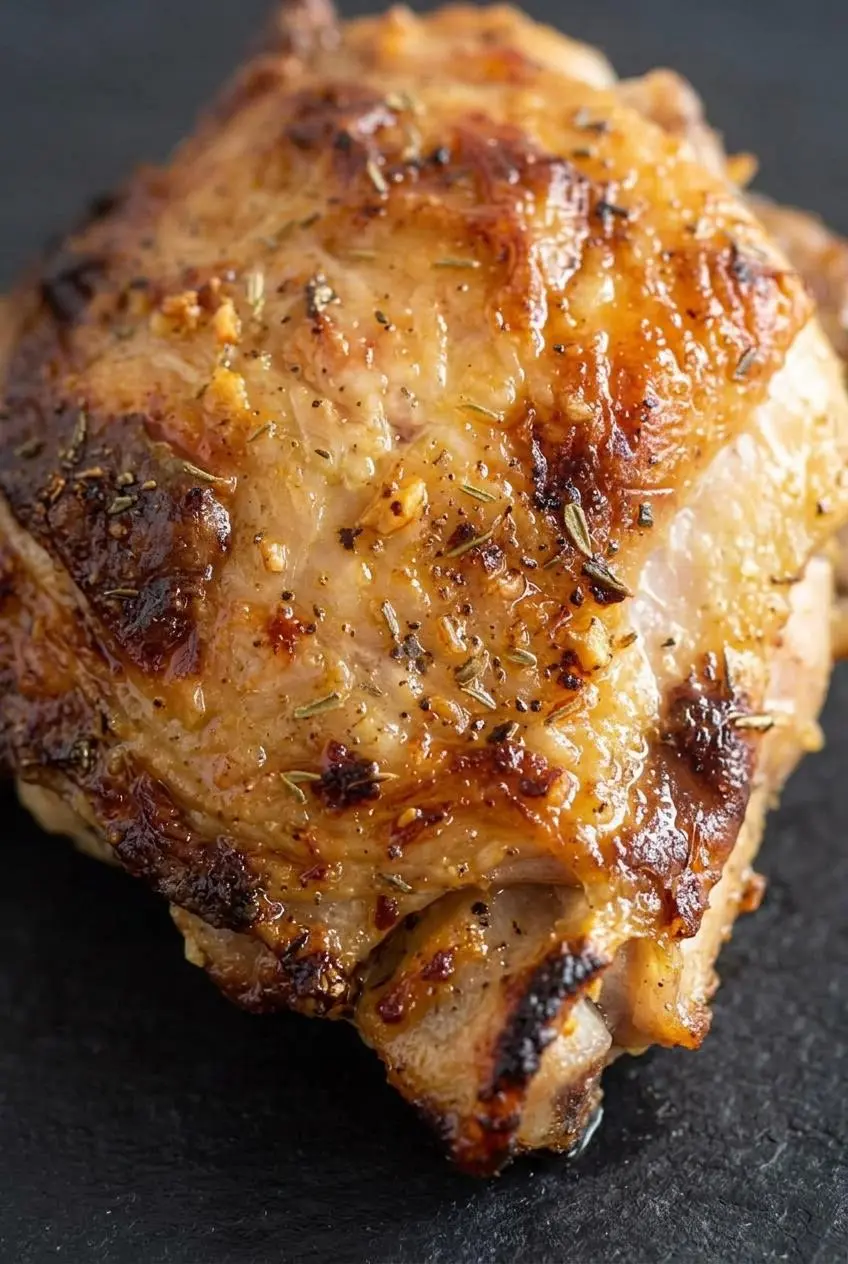
Crisp skin looks blistered and golden, with translucent rendered fat just beneath the surface. Steamed skin looks pale, damp, and slightly rubbery.
Preventing Dairy Scorching at High Oven Heat
Sour cream browns quickly when it collects in thick patches. Leave a light coating on the chicken for flavor, but shake off any heavy clumps before roasting. Golden brown spots and a roasted garlic aroma are desirable; dark, dry patches that smell bitter mean the coating has gone too far.
Flavor Variations and Cut Adaptations
Keep the main recipe as written for its crisp skin and rich texture, then use these ideas when you want a different format or flavor direction.
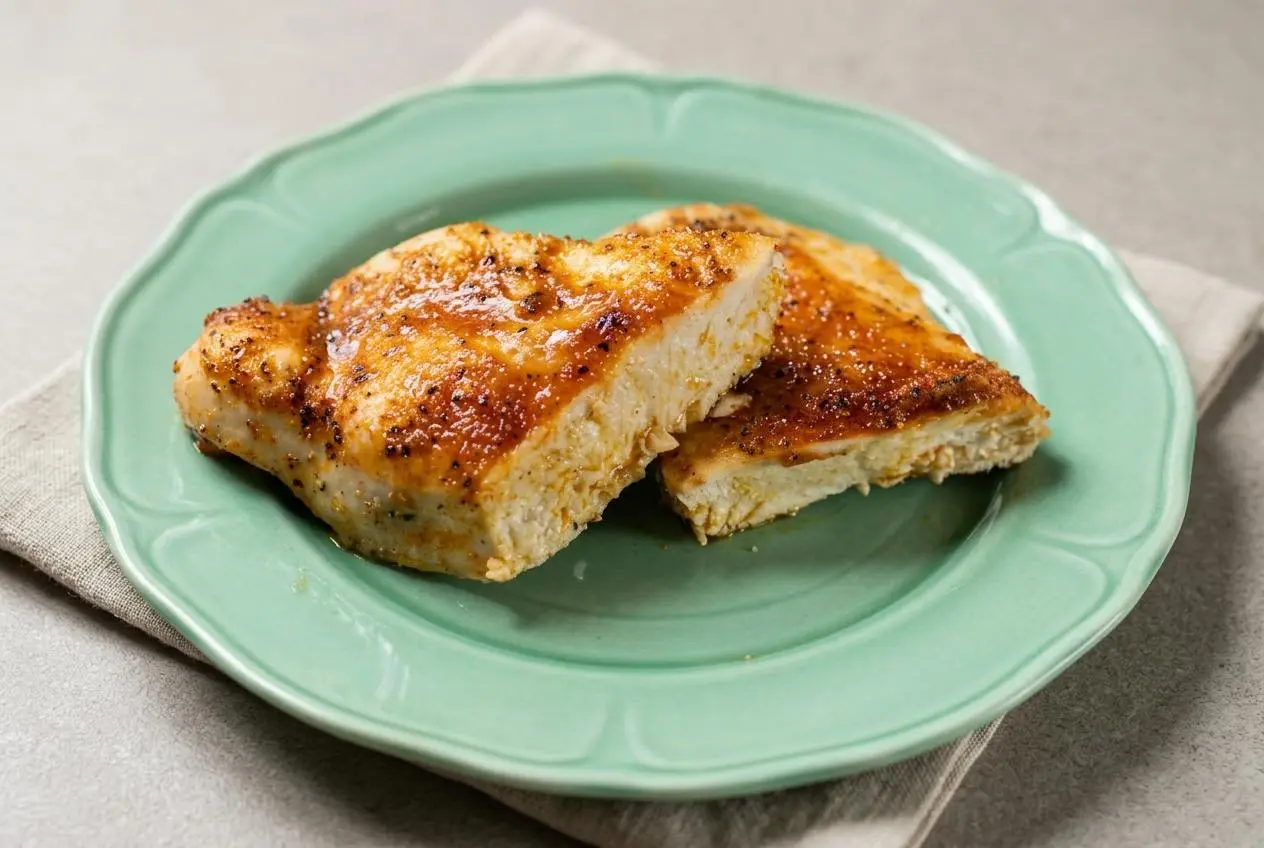
Boneless Skinless Chicken Breast Adaptation
Boneless, skinless breasts are leaner and cook differently from bone-in thighs, so they benefit from gentler handling and close attention to doneness. The sour cream, lemon, and oregano profile still works beautifully, but expect a softer exterior rather than crackling skin. For another bright lemon-garlic white-meat dinner, try this keto chicken piccata.
Dairy-Free Coconut Cream Greek Chicken
For a dairy-free variation, use unsweetened coconut cream as the rich base, or make a thick olive oil and lemon emulsion with the oregano and garlic. Coconut cream adds a faint tropical note, while the olive oil option keeps the flavors sharper and more herb-forward.
Mediterranean Vegetable Sheet Pan Addition
Zucchini rounds or cauliflower florets make useful low-carb additions, but roast them separately if crispy chicken skin is the priority. Vegetables release moisture as they cook, and that steam can soften the chicken when everything shares one crowded pan. Kalamata olives or sliced pepperoncini can add a briny, piquant finish at serving time.
Storage and Reheating for Better Texture
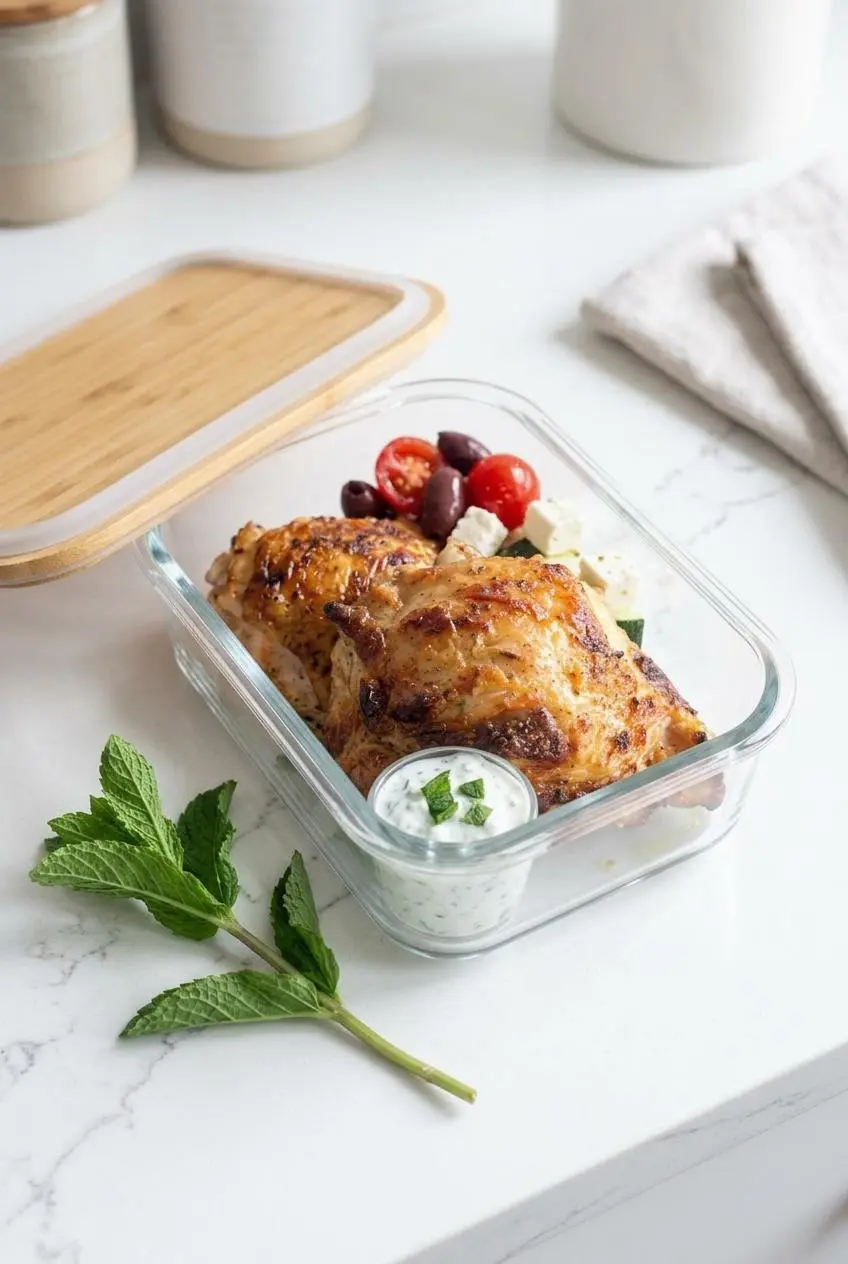
For planning, marinate the chicken only within the stated recipe window and keep it chilled until it goes into the oven. After cooking, cool leftovers before placing them in an airtight container, keeping the chicken separate from wet salad or tzatziki so the skin does not become soggy.
Reheat chicken in the oven or a skillet rather than the microwave when crispness matters. Warm only the portion you plan to eat, with the skin exposed to dry heat. Chilled leftover chicken can also be pulled from the bone and used in a keto chicken salad for a cold lunch.
Ketogenic Alignment and Mediterranean Dietary Context
This dish fits a low-carb Mediterranean-style meal because the main flavors come from poultry, sour cream, olive or avocado oil, oregano, garlic, and lemon rather than sugary sauces or breading. The skin and oil add satisfying richness, while the lemon and herbs keep each bite lively.
Garlic and lemon juice contribute some incidental carbohydrates, so overall meal planning depends on the portions and sides you choose. Pair the chicken with non-starchy vegetables, olives, feta, and a modest serving of creamy sauce if you are following a strict keto approach.
Low-Carb Greek Serving Suggestions and Pairings
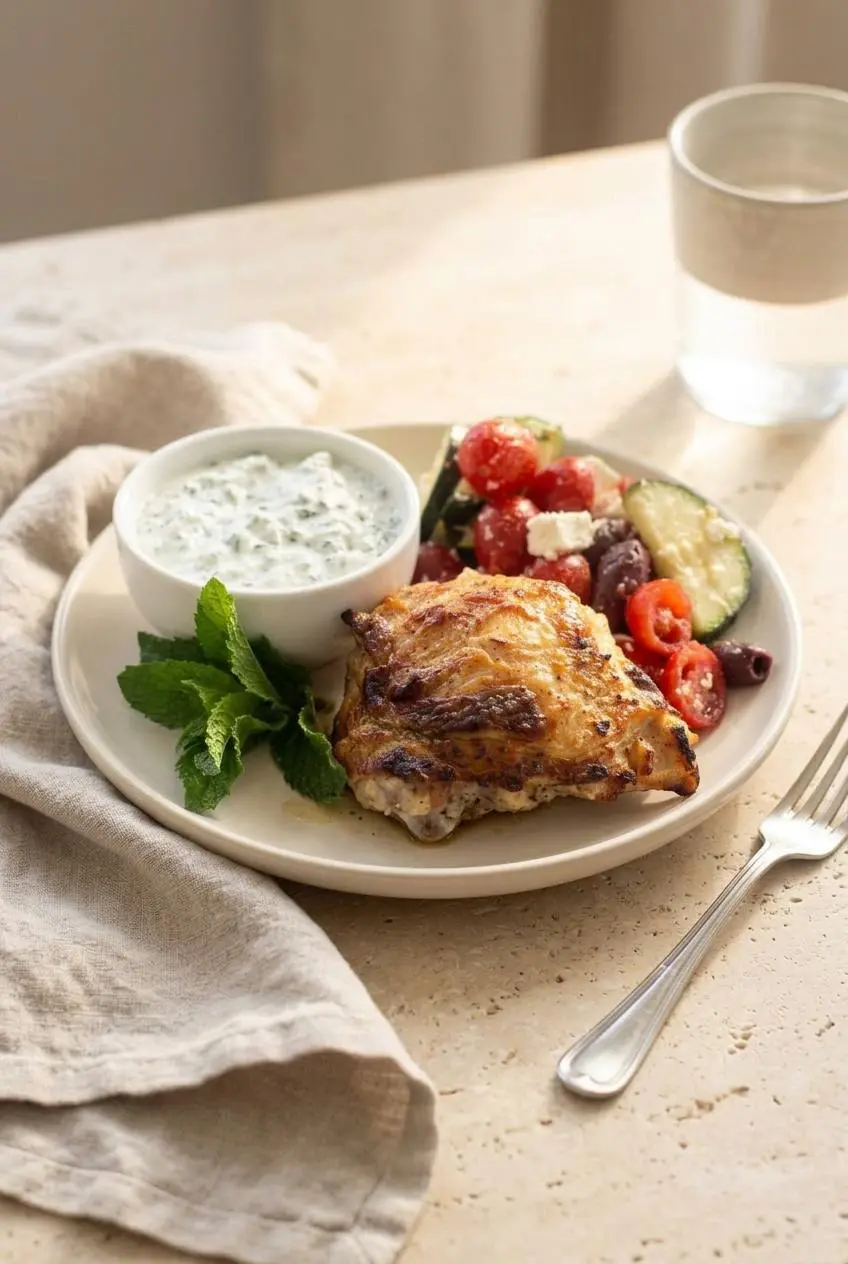
Cool, crisp sides make a great counterpoint to the warm garlic-oregano chicken and its crackly skin.
Cooling Cucumber Dill Tzatziki
Tzatziki made with whole-milk Greek yogurt, cucumber, garlic, dill, and a little olive oil brings a creamy, cool contrast to the roasted chicken. Keep it chilled and add it at the table so the chicken skin stays crisp.
Traditional Chopped Salad With Feta and Olives
A chopped salad of cucumber, Kalamata olives, crumbled feta, and olive oil adds briny freshness without competing with the marinade. A keto Greek salad makes the meal feel complete while keeping the flavors firmly Mediterranean.
Low-Carb Warm Sides: Sautéed Greens and Cauliflower Rice
Sautéed leafy greens cooked in olive oil are especially good for catching the savory chicken juices. Mild cauliflower rice is another flexible choice when you want a warm base that lets the lemon, garlic, and oregano remain the focus.
Bringing Mediterranean Savor to Your Low-Carb Table
This chicken delivers the flavors that make Greek-inspired cooking so satisfying: bright lemon, pungent oregano, savory garlic, and rich roasted poultry. The sour cream marinade gives the thighs a tangy depth while the elevated rack encourages a crisp finish.
Give the chicken enough space on the rack, watch for deep golden skin, and serve it with something cool and fresh. That contrast turns a practical dinner into a meal worth lingering over.
Frequently Asked Questions
Can I Use Greek Yogurt Instead of Sour Cream in This Marinade?
Yes. Plain whole-milk Greek yogurt can replace sour cream for a tangy cultured-dairy marinade. Greek yogurt usually tastes brighter and may brown a little differently, while sour cream gives a richer finish. Choose unsweetened, unflavored yogurt to keep the flavor aligned with the lemon, oregano, and garlic.
How Do I Make the Chicken Skin Extra Crispy if I Do Not Have a Broiler Pan?
Set a heat-safe wire cooling rack inside a rimmed baking sheet. Oil the rack lightly so the skin releases cleanly. Arrange the thighs skin-side up and leave room between them for heat circulation. Let thick excess marinade drip away before the chicken goes into the oven.
How Long Should Greek Chicken Marinate for the Best Flavor?
Marinate the thighs for at least 3 hours for noticeable lemon, garlic, and oregano flavor. The stated 24-hour marination gives the flavors more time to work through the chicken. Keep the chicken covered and chilled while it marinates.
Can I Freeze Chicken in the Greek Marinade for Meal Prep?
For this recipe, use the refrigerated marination method given above rather than relying on an unlisted preservation method. Prepare the marinade and chicken close to the time you plan to cook it, keeping everything covered and chilled. For cooked portions, airtight storage and dry-heat reheating will protect the best texture.
Is Greek Chicken Suitable for Strict Keto Meal Plans?
The chicken, sour cream, oil, herbs, and seasonings fit a low-carb eating pattern more readily than breaded or sweetly glazed chicken. Carbohydrate intake still depends on the serving size and what accompanies the chicken. Choose vegetable sides, olives, feta, and unsweetened tzatziki to keep the meal aligned with your own keto plan.
Keto Greek Chicken Recipe

Equipment
- Broiler pan or rimmed baking sheet with wire rack
- Large mixing bowl
- Whisk
- Meat thermometer
Ingredients
- 6 Bone-In Skin-On Chicken Thighs
- 1 Cup Sour Cream
- 1 Tablespoon Dried Oregano
- 1 Tablespoon Lemon Juice fresh is best
- 1 teaspoon Sea Salt
- 1/2 teaspoon Black Ground Pepper
- 4 Cloves Garlic minced
- 1/4 Cup Avocado Oil Or Olive Oil
Instructions
- Whisk the sour cream, oregano, lemon juice, salt, pepper, minced garlic, and oil in a large bowl or resealable bag until the mixture looks smooth and evenly seasoned. The marinade should have no dry pockets of oregano or streaks of oil sitting apart from the sour cream.
- Add the chicken thighs and turn them until every surface is coated, then cover and refrigerate for 24 hours, or for at least 3 hours. The chicken should sit fully covered in the thick, herb-speckled marinade.
- Heat the oven to 425°F, line the lower portion of a broiler pan with foil, and lightly oil the upper rack. The rack should sit above the lined pan so drippings can collect below the chicken.
- Arrange the thighs skin-side up on the prepared rack and roast for 45 minutes, until the internal temperature reaches 165°F. Insert the thermometer into the thickest part of a thigh without touching bone, and look for deeply golden skin with rendered fat beneath it.
- Serve the chicken while hot after removing it from the roasting pan. The skin should be crisp at the edges and the juices should settle back into the meat before carving.