Skip to content
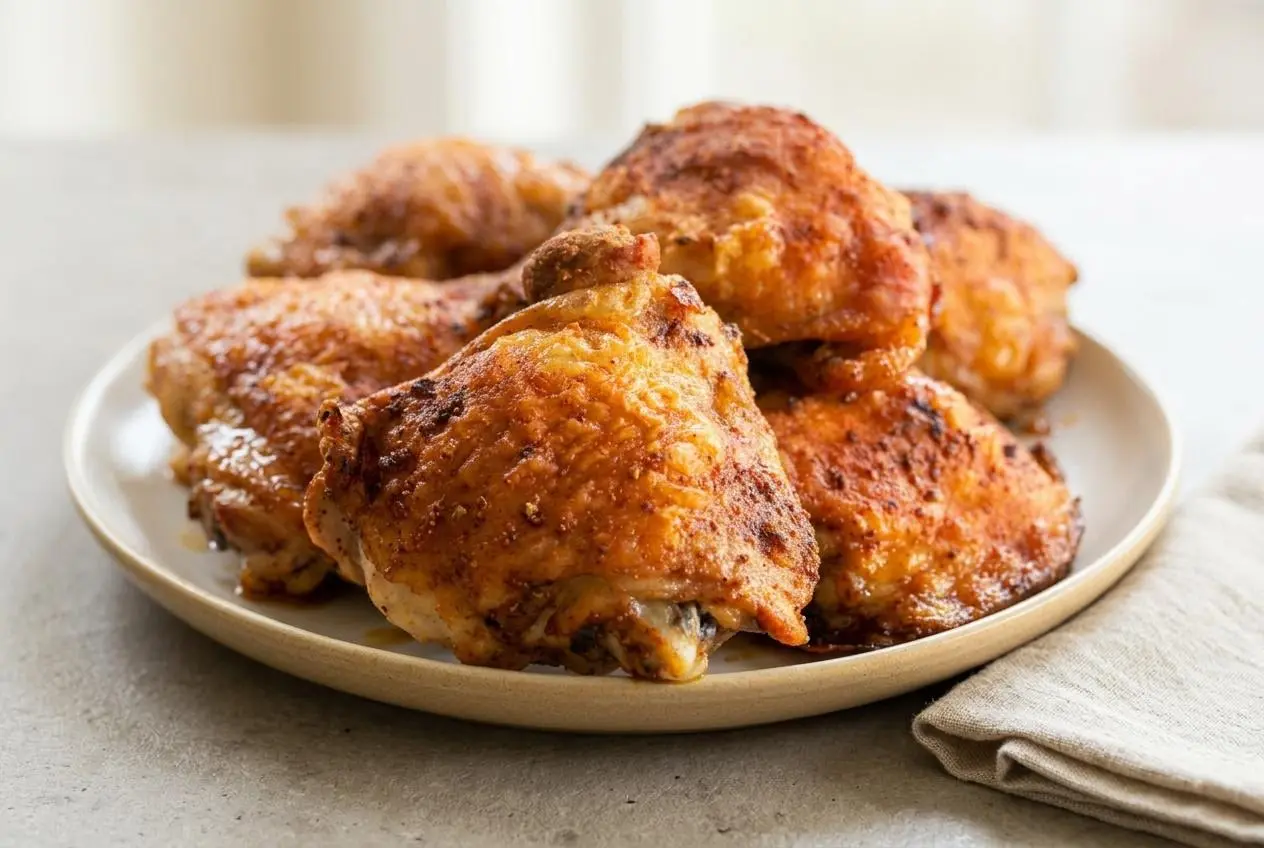
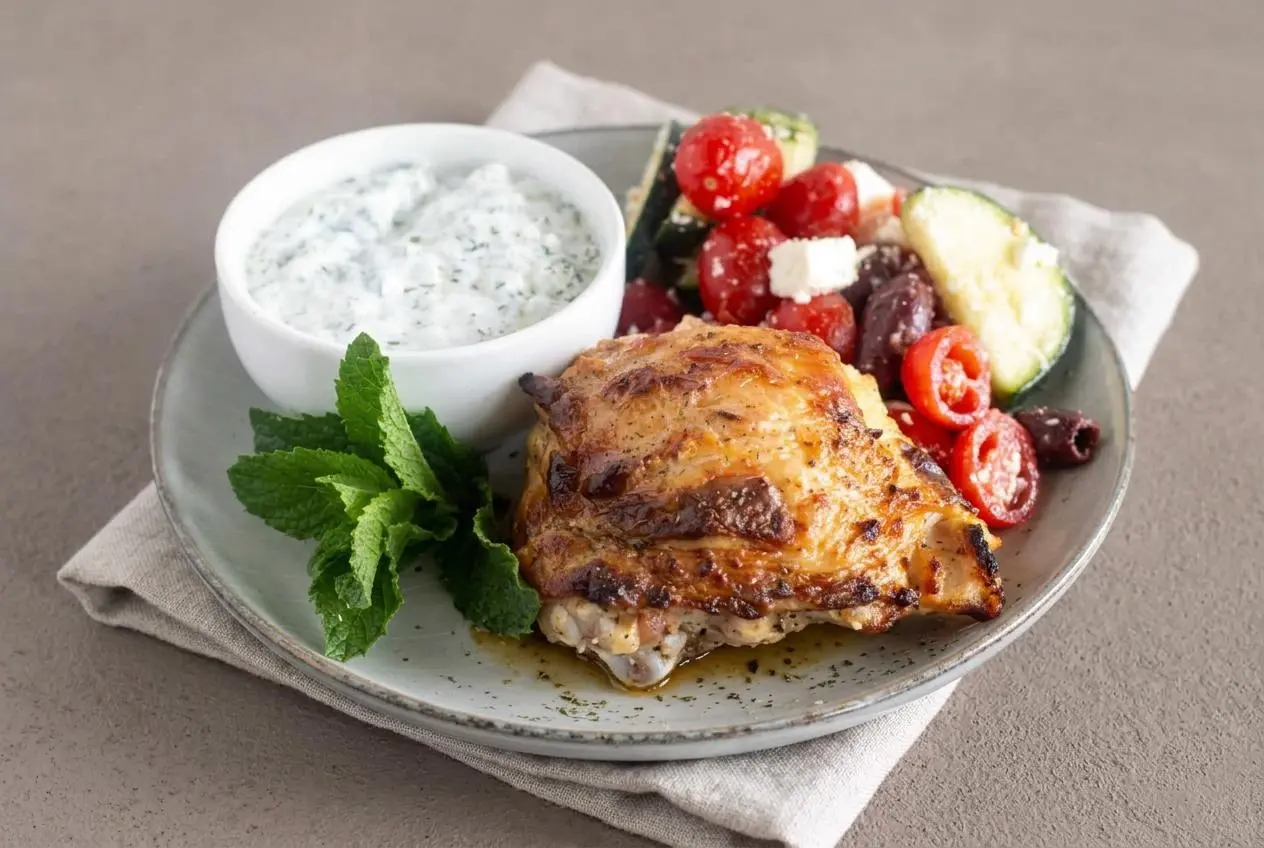
These keto baked chicken thighs roast at high heat with olive oil, savory spices, and baking powder for tender dark meat beneath crisp, crackling skin.
Keto baked chicken thighs are a flavorful low-carb dinner built around bone-in, skin-on chicken and a dry seasoning rub. There is no breading, flour, or sugary glaze to get in the way of that deeply roasted chicken flavor.
The skin sizzles as the fat renders, while the meat stays rich and juicy near the bone. The small baking-powder trick makes a noticeable difference.
Pat the chicken exceptionally dry before adding oil, because moisture on the skin is the fastest route to a soft finish.
Essential Ingredients for Crispy Seasoned Poultry
Each ingredient supports the final texture and flavor: dark meat brings richness, olive oil helps the rub cling, baking powder encourages crispness, and the spices build savory color and aroma.
- 6 chicken thighs skin on bone in
- 1 tbsp olive oil
- 1/2 tsp onion powder
- 1/2 tsp garlic powder
- 1/2 tsp baking powder
- 1/2 tsp paprika
- 1/4 tsp oregano
- 1/8 tsp black pepper
- 1/8 tsp salt
Bone-in, skin-on thighs are especially forgiving in the oven because the bone and skin help protect the dark meat as it roasts. Olive oil lightly coats the surface so the seasoning stays put rather than falling into the pan.
Use aluminum-free baking powder, not baking soda. Baking powder helps the skin brown and blister without flour, while baking soda consists solely of sodium bicarbonate, whereas baking powder combines sodium bicarbonate with acids to produce a staged leavening reaction. The garlic, onion, paprika, oregano, pepper, and salt give the chicken a warm, savory crust.
How to Make Keto Baked Chicken Thighs
- Heat the oven to 400°F.
Start with a fully heated oven so the chicken begins rendering fat as soon as it goes into the pan. - Blot the chicken thighs thoroughly with paper towels, then place them in a large bowl.
The skin should feel dry rather than slick before you season it. - Pour the olive oil over the chicken, then mix the seasonings and baking powder in a separate small bowl before adding them.
Turn the thighs until every surface has an even, speckled coating of spices. - Arrange the seasoned thighs skin-side up in a foil-lined 9″ x 13″ baking pan.
Leave space between the pieces so hot air can circulate instead of trapping steam. - Roast for about 40-50 minutes, until the chicken reaches an internal temperature of 165°F.
Insert a thermometer into the thickest part of the meat without touching bone, and remove the thighs once the skin is crisp and deeply golden.
For extra-crisp skin underneath, set an oven-safe wire rack inside the lined pan before arranging the thighs. The elevated setup keeps the chicken above rendered fat, while a flat pan can leave the bottom skin sitting in juices.
Why Chicken Thighs Are the Ultimate Keto Dark Meat
Skin-on chicken thighs fit naturally into a low-carb eating pattern because they bring together satisfying dark meat and rich rendered fat without relying on breading or sweet sauces. Their fuller flavor also means a modest dry rub goes a long way.
The skin helps shield the meat from direct oven heat, which is why these thighs stay moist while the exterior develops its crackly finish. Keep the preparation low-carb by choosing unsweetened seasonings and skipping flour-based coatings or thickened gravies.
I prefer thighs with evenly sized pieces and intact skin, since mismatched sizes make it harder to pull every piece when the skin is crisp and the meat is done.
Crucial Techniques to Prevent Soggy Skin and Overcooking
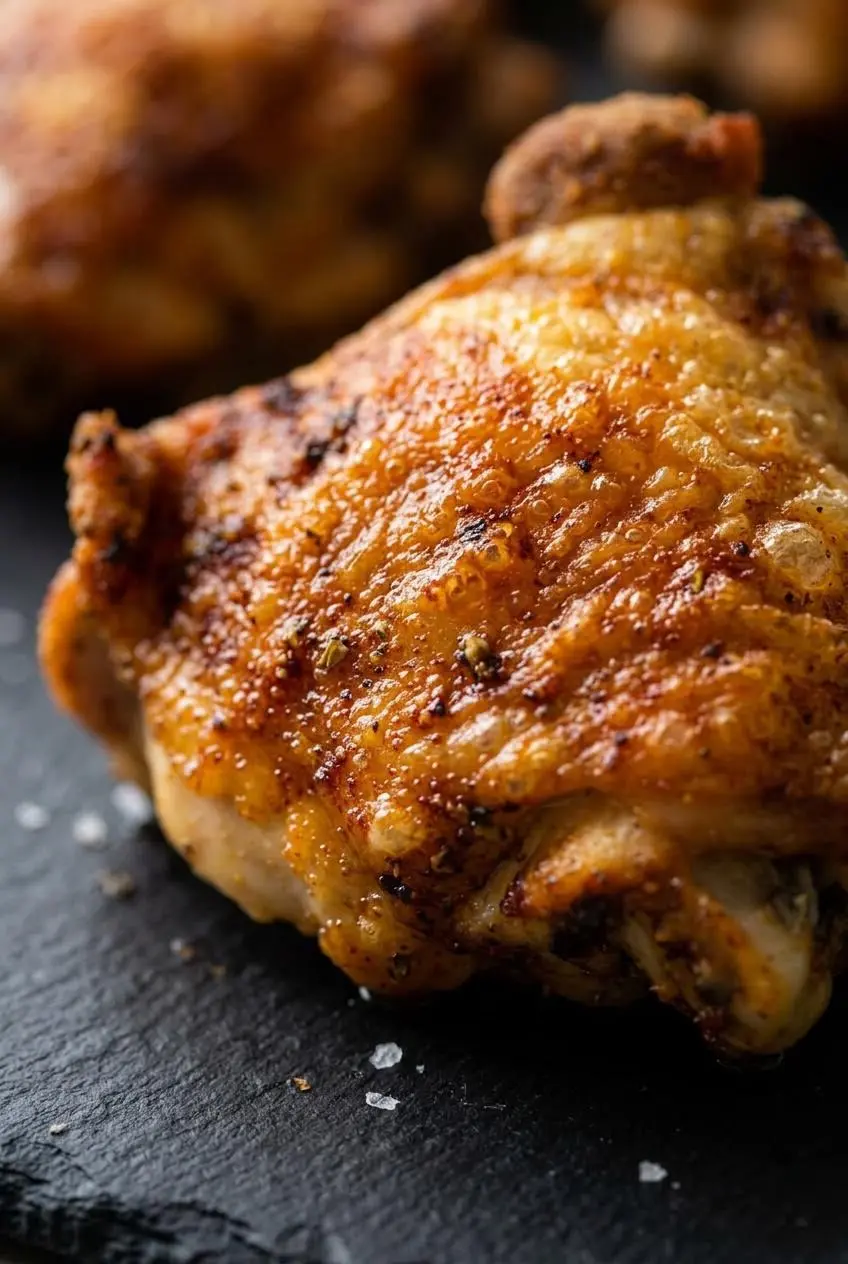
Crisp chicken comes down to managing moisture, airflow, and doneness rather than chasing extra oven time.
Eliminating Trapped Steam and Moisture
- Pale or rubbery skin: Surface moisture or a crowded pan is usually the culprit. Dry the chicken thoroughly and leave open space between thighs.
- Soft skin on the bottom: Rendered fat can collect under the chicken. Use an elevated rack when you want air to reach all sides.
- Steamed texture: Do not cover the pan during roasting. Foil over the chicken holds in steam and works against browning.
The same dry-surface approach works well for crispy chicken wings, where airflow and an uncovered pan matter just as much as seasoning.
The Importance of Post-Bake Resting
Move the cooked thighs to a board or serving platter and let them sit briefly before cutting. That pause gives the juices time to settle into the meat instead of spilling out at the first slice. The skin should remain firm enough to tap lightly with tongs.
Controlled Broiler Finishing for Blistered Skin
If the chicken is cooked through but the skin needs more color, place the pan under the broiler for a closely watched finish. Stay nearby, since paprika and garlic powder can darken quickly. Pull the pan as soon as the skin turns evenly amber-golden and blistered.
Flavorful Low-Carb Seasoning Variations
Keep these changes optional and use them in place of the main dry rub when you want a different direction. Dry seasonings protect crispness better than wet marinades, which can leave skin damp.
Garlic Parmesan and Herb Crust
Use dried Italian seasoning, crushed herbs, garlic, and finely grated hard cheese for a savory crust with a Mediterranean feel. Add the cheese lightly so it browns without forming a heavy layer over the skin. For another cheesy dinner idea, try garlic parmesan chicken.
Smoky Cajun-Style Seasoning Blend
Build a bolder rub with paprika, cayenne, garlic granules, thyme, and cracked peppercorn. It gives the chicken a smoky, warm heat while keeping the exterior dry enough to crisp. Adjust the cayenne to match your heat tolerance.
Boneless Skinless Chicken Thigh Adaptation
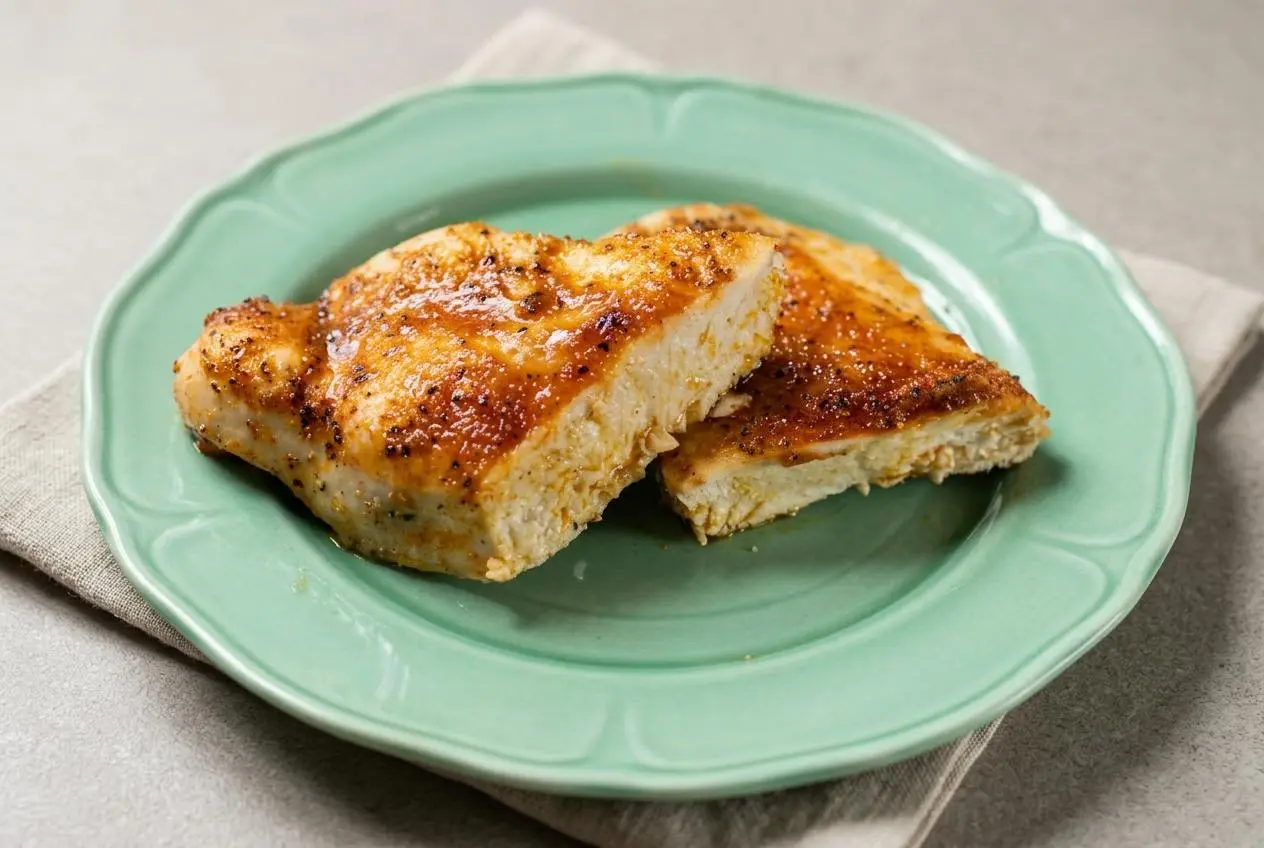
Boneless, skinless thighs work when you want a leaner dark-meat option, but they cook more quickly and will not produce crackling skin. Keep the same flavor profile, start checking them earlier than bone-in thighs, and use a thermometer rather than relying on the clock.
Low-Carb Side Dishes and Pan Dripping Ideas
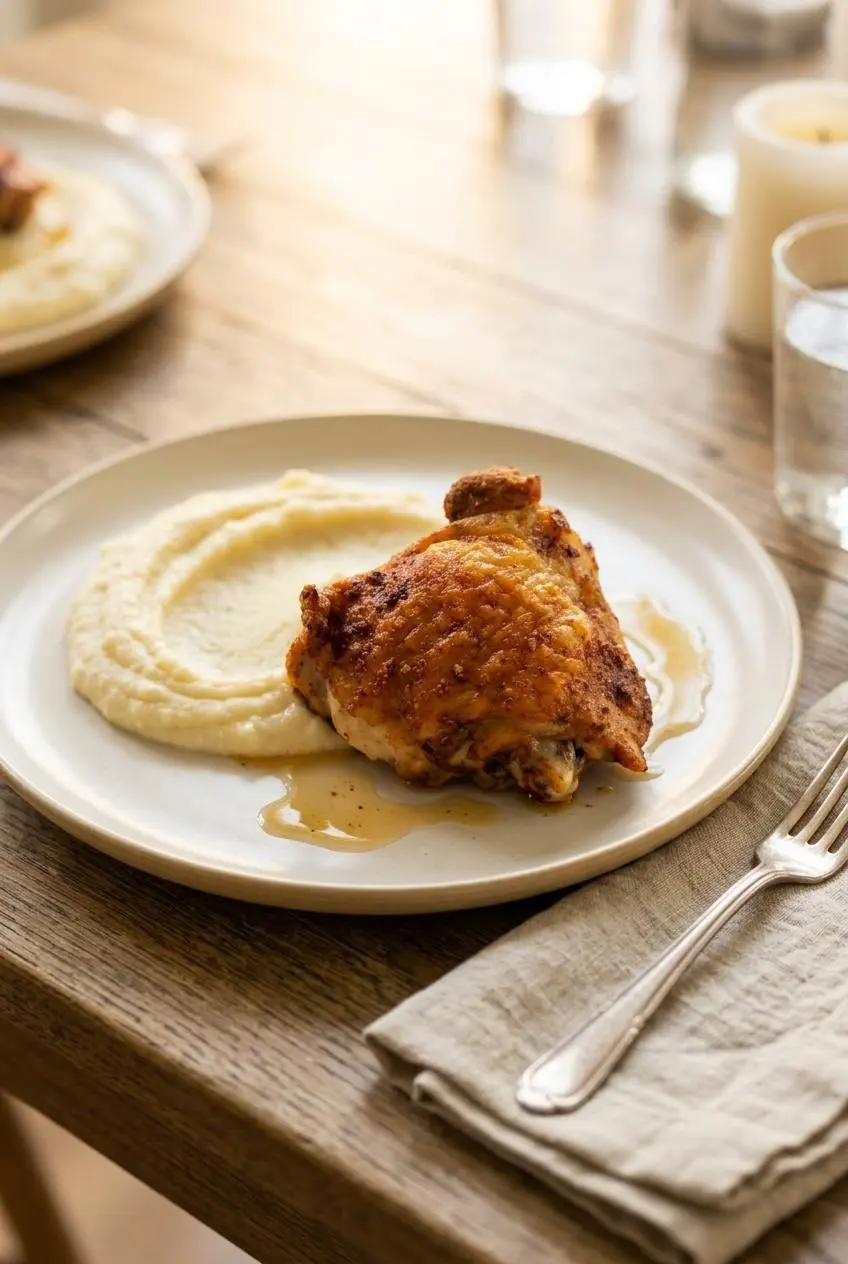
Serve the thighs straight from the oven while the contrast between crisp skin and tender meat is at its best.
Velvety Low-Carb Cauliflower and Vegetable Sides
- Serve the chicken with creamy cauliflower mash to catch the savory roasting juices.
- Pair it with roasted asparagus for a fresh, slightly charred vegetable contrast.
- Add buttered green beans or a chopped salad with a tangy herb dressing to balance the richness of the dark meat.
Creating an Instant Pan Sauce from Roasting Juices
Carefully spoon off some of the pan juices after roasting, leaving behind excess fat if desired. Whisk the savory drippings with butter or cream over gentle heat until the mixture looks glossy and lightly thickened. A rich keto gravy is another good option when you want a more substantial sauce without flour or cornstarch.
Storage, Meal Prep, and Reheating Instructions
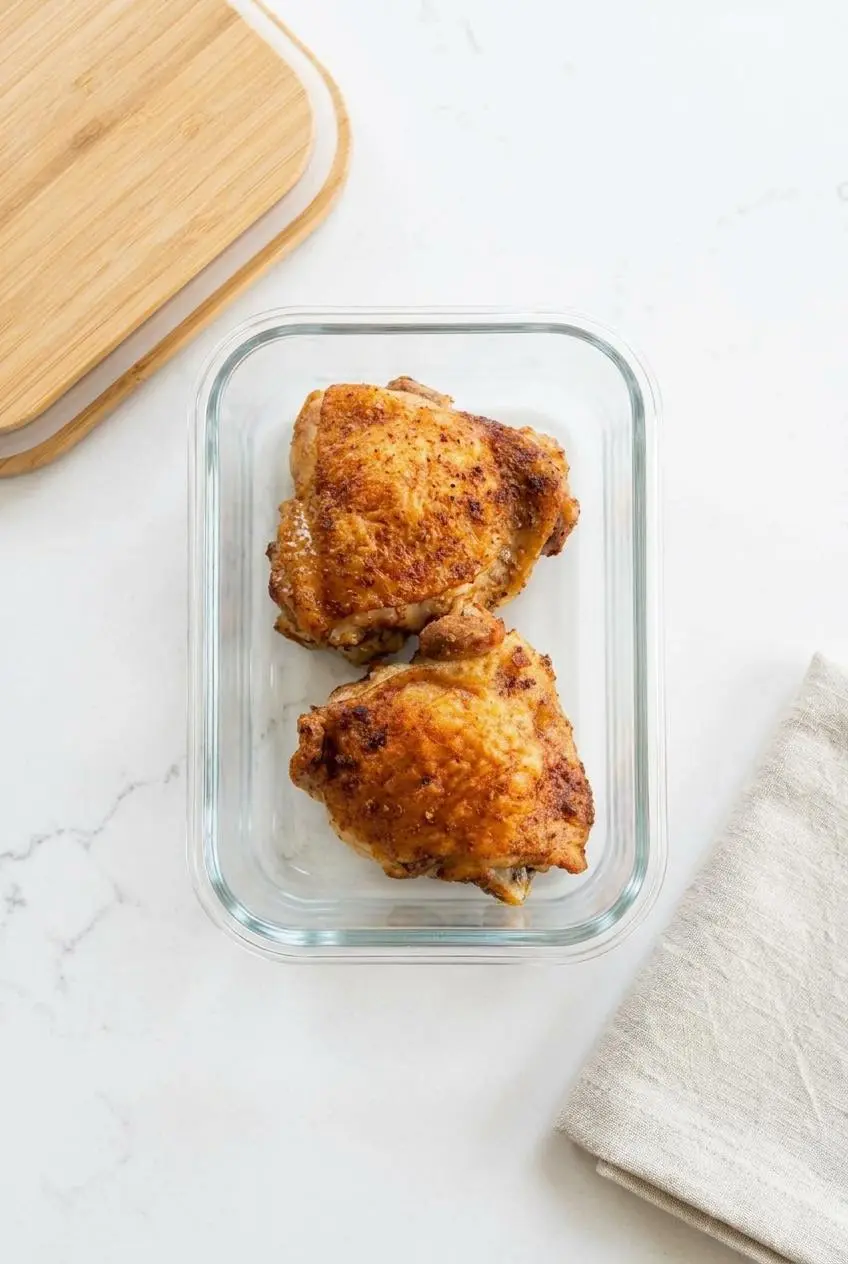
Leftovers can still be enjoyable, though the skin needs dry heat to regain its best texture.
Proper Cooling and Refrigeration Guidelines
Let cooked chicken cool completely before transferring it to airtight containers and keeping it chilled. Store the thighs in a single layer when possible, since stacking them can trap moisture against the skin. Keep sauces and pan juices separate until serving if crispness matters.
Oven and Air Fryer Reheating Protocols
Reheat portions in an oven, toaster oven, or air fryer until hot throughout and the skin firms up again. A microwave is convenient for warming meat, but its trapped steam makes crisp chicken skin soft and rubbery. Reheat only what you plan to serve so the remaining portions stay in better condition.
Achieving Foolproof Crispy Chicken Thighs Every Time
Dry skin, uncovered high-heat roasting, and room for air to circulate are the essentials behind chicken thighs with a crisp exterior and succulent dark meat. Use the thermometer as your final check, then judge the skin by its even golden color and firm texture.
Once you have the technique down, swap in sugar-free spice blends to match the rest of your meal. A well-seasoned thigh with crackling skin makes dinner feel like more than a routine.
Frequently Asked Questions
Are chicken thighs good for a keto diet?
Yes. Chicken thighs can work well for low-carb meals because they contain naturally rich dark meat and need no flour-based breading. Keep the seasoning free of added sugar and serve them with low-carb vegetables or cauliflower mash.
Is It Better to Bake Chicken Thighs at 350 or 400 Degrees?
For this recipe, 400°F is the better choice because it helps render the fat beneath skin-on thighs and encourages browning. A lower oven temperature can cook the chicken, but it is less effective when crisp skin is the goal.
How Long Does It Take to Bake Skinless Chicken Thighs at 400 Degrees?
Skinless thighs cook faster than bone-in, skin-on thighs because there is less insulation around the meat. Begin checking them earlier and use a thermometer to confirm they are fully cooked without drying them out.
How to Bake Chicken Thighs So They Are Crispy?
Pat the skin dry, coat it with oil and dry seasonings, and roast uncovered at high heat. For the crispest underside, use an oven-safe wire rack set inside the baking pan so rendered fat can drain away.
How Should Leftover Baked Chicken Thighs Be Reheated to Stay Crispy?
Use an oven, toaster oven, or air fryer to warm the chicken and re-firm the skin. Avoid microwaving when crispness matters, because the moist heat softens the exterior.

Keto Baked Chicken Thighs

Equipment
- 9×13-inch baking pan
- Mixing bowls
- Meat thermometer
Ingredients
- 6 chicken thighs skin on bone in
- 1 tbsp olive oil
- 1/2 tsp onion powder
- 1/2 tsp garlic powder
- 1/2 tsp baking powder
- 1/2 tsp paprika
- 1/4 tsp oregano
- 1/8 tsp black pepper
- 1/8 tsp salt
Instructions
- Heat the oven to 400°F. Start with a fully heated oven so the chicken begins rendering fat as soon as it goes into the pan.
- Blot the chicken thighs thoroughly with paper towels, then place them in a large bowl. The skin should feel dry rather than slick before you season it.
- Pour the olive oil over the chicken, then mix the seasonings and baking powder in a separate small bowl before adding them. Turn the thighs until every surface has an even, speckled coating of spices.
- Arrange the seasoned thighs skin-side up in a foil-lined 9″ x 13″ baking pan. Leave space between the pieces so hot air can circulate instead of trapping steam.
- Roast for about 40-50 minutes, until the chicken reaches an internal temperature of 165°F. Insert a thermometer into the thickest part of the meat without touching bone, and remove the thighs once the skin is crisp and deeply golden.