Skip to content
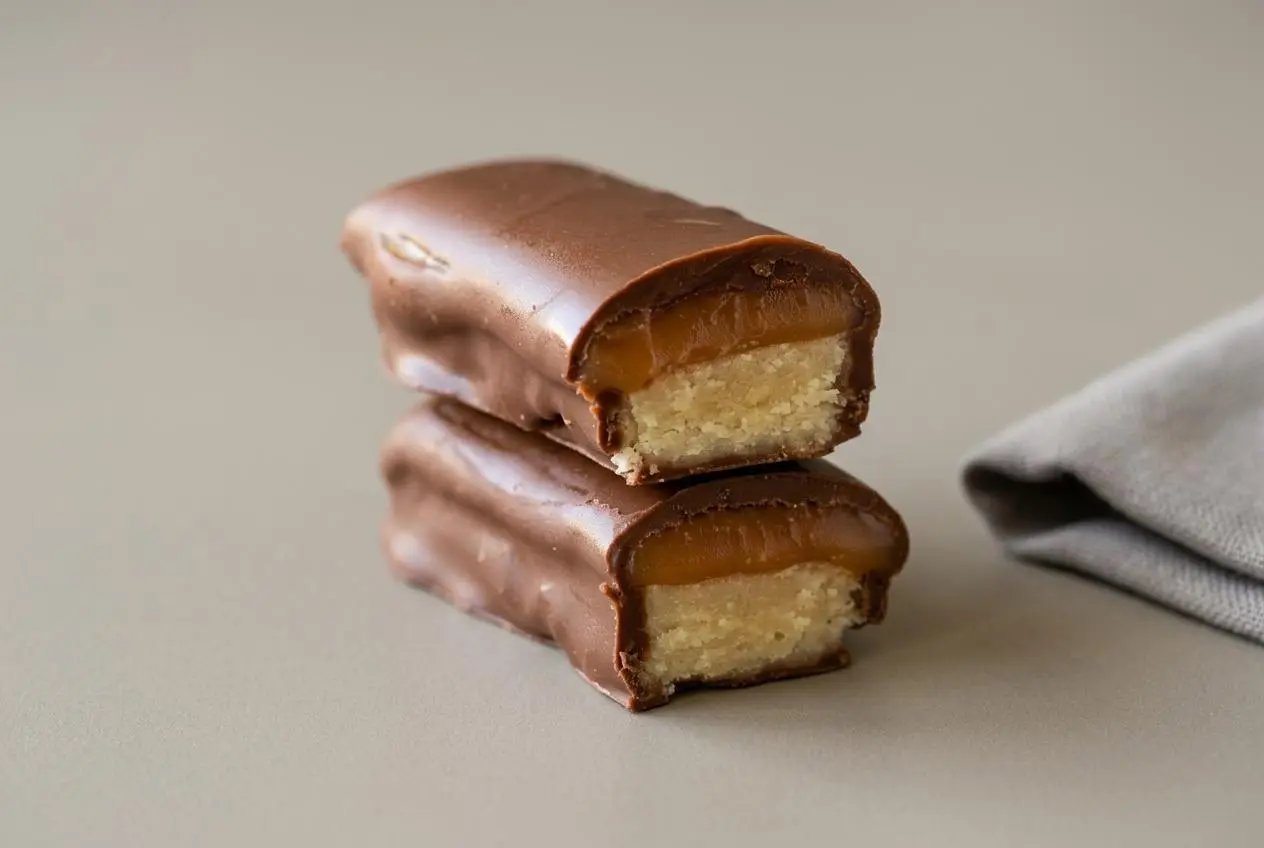
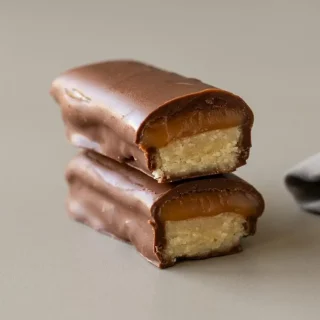
Make these keto Twix bars by baking an almond flour shortbread crust, covering it with golden allulose caramel, chilling until firm, then coating each bar in melted sugar-free chocolate.
These keto Twix bars bring together a crisp, buttery shortbread layer, a soft caramel center, and a snappy chocolate shell. Each bite has the familiar crunch-and-chew contrast that makes layered candy bars so satisfying.
The key is patience between layers: cool the crust, cool the caramel, then chill the assembled slab until it feels firm. Clean slices are waiting.
Let the baked shortbread cool completely before adding caramel so the warm layer does not soften the crust.
Key Ingredients for Perfect Low-Carb Twix Bars
Every ingredient has a clear job here: almond flour gives the crust structure, butter adds richness, allulose creates chew, cream rounds out the caramel, and chocolate forms the firm outer layer.
- 1 cup blanched almond flour
- 1/4 cup salted butter (softened)
- 5 tbsp salted butter
- 3/4 cup granulated allulose sweetener
- 1/2 cup heavy cream
- 1 1/2 cups sugar-free chocolate chips (melted)
The Almond Flour Shortbread Foundation
Fine blanched almond flour gives the shortbread a delicate, buttery crumb without wheat flour. Softened salted butter binds it into a pressable dough and adds enough richness to keep the baked layer from tasting dry.
Press the dough firmly and evenly into the pan, paying attention to the corners. A compact crust is far less likely to break when the chilled slab is lifted, sliced, and dipped. Watch closely near the end of baking: the edges should turn lightly golden while the center stays pale and feels set.
Allulose: The Secret to Chewy Caramel
Granulated allulose is especially useful for this caramel because it dissolves into a smooth syrup and stays softer after chilling. Erythritol can recrystallize as it cools, which may leave a caramel layer grainy, opaque, or unexpectedly crunchy.
Butter and heavy cream turn the dissolved sweetener into a rich caramel with body. As it simmers, the mixture will foam before the bubbles become smaller and the color deepens to warm gold. That shift signals that the caramel is concentrating and thickening.
I prefer allulose for candy-style fillings because the chilled caramel keeps a more pleasant chew instead of turning sandy against the smooth chocolate.
Selecting the Best Sugar-Free Chocolate
Choose sugar-free chocolate chips you enjoy eating on their own, since the coating is a major part of every bite. They should melt into a fluid, glossy mixture without a stiff or chalky texture. Keep the bars thoroughly chilled before dipping so the caramel stays in place and the chocolate begins to firm quickly on contact.
How to Make Keto Twix Bars Step by Step
Build the bars in three distinct stages: bake the crust, cook and chill the caramel layer, then coat the firm bars in chocolate. The pauses between stages protect the crisp shortbread and give every layer a clean edge.
- Heat the oven to 325°F and line an 8×8-inch pan with parchment paper. Combine the almond flour and softened butter in a bowl until the mixture forms a cohesive dough.
Press the dough across the pan in an even layer, then bake for about 10 minutes until the edges are lightly golden and the center feels firm. - Leave the baked shortbread in the pan until it has cooled completely. The crust should feel solid rather than warm before it meets the caramel.
- Melt the 5 tbsp salted butter in a saucepan over low heat, stir in the allulose until dissolved, then add the heavy cream and raise the heat to medium. Simmer for 10–15 minutes, stirring occasionally, until the caramel is thick and golden.
The caramel may foam while it cooks; the bubbles settle as it cools, and the sauce becomes more viscous as it stands. - Spread the cooled caramel evenly over the cooled shortbread and refrigerate for 45 minutes to 1 hour, until firm. Lift the set slab from the pan, cut it in half, then cut each half into 10 bars for 20 total.
The caramel should hold its shape cleanly at the cut edges instead of flowing or pulling away from the crust. - Dip each chilled bar in the melted sugar-free chocolate, then place it on wax or parchment paper and refrigerate until the coating sets. The chocolate should become firm and opaque around the cold caramel layer.
Troubleshooting Caramel and Assembly Challenges
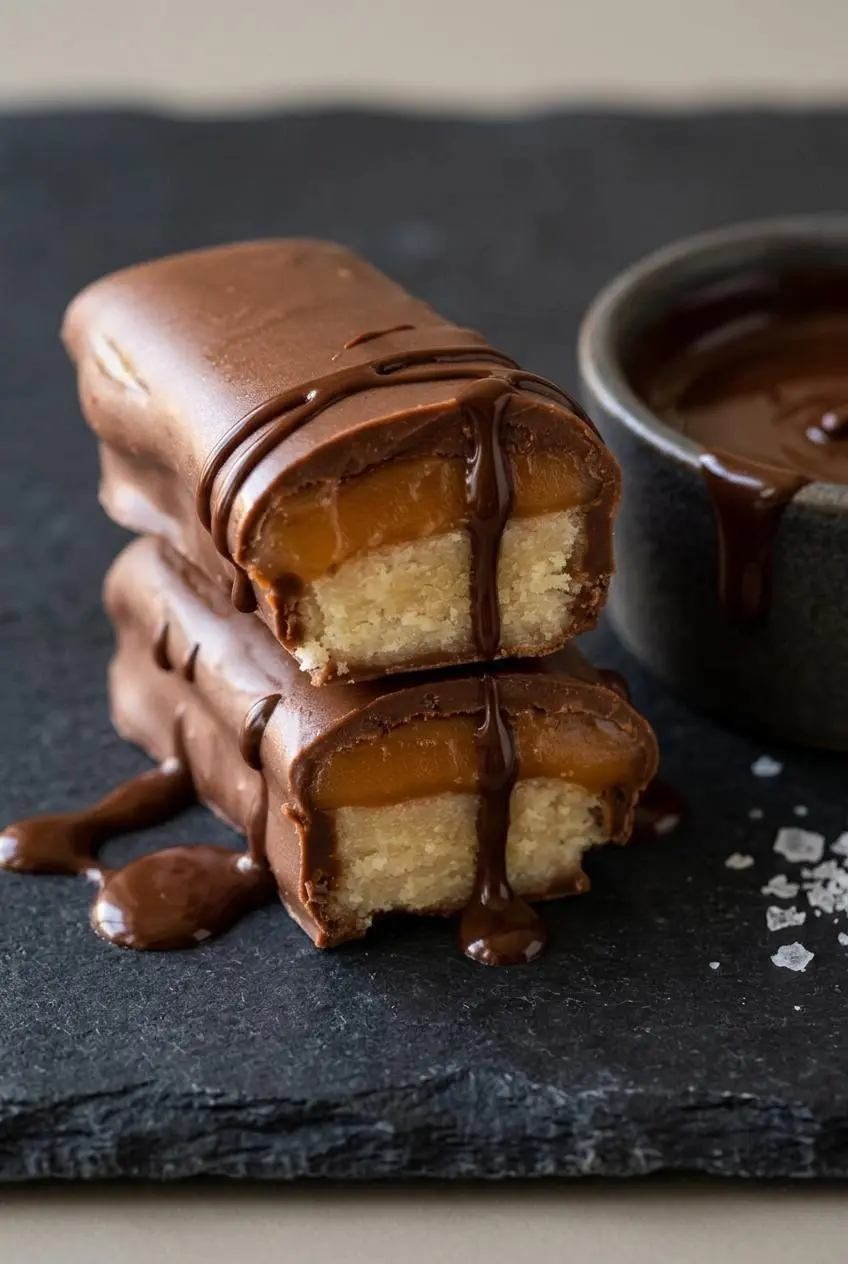
Layered bars reward a calm pace. If something looks off, most problems can be corrected before the chocolate coating goes on.
- Caramel looks oily or separated: Remove the saucepan from the heat and whisk vigorously. A small splash of warm heavy cream can help bring the butterfat back into a glossy, unified caramel.
- Caramel stays loose: It likely needs more gentle simmering to concentrate. Continue cooking until it darkens slightly and coats the spoon with a thicker layer, then let it cool before judging the final texture.
- Shortbread turns soft: Warm caramel was probably poured onto a warm crust. Cool both components before layering, then chill the caramel-topped crust until firm.
- Bars crack while slicing: Use a gently warmed sharp knife, wipe it clean between cuts, and press straight down rather than sawing through the chocolate.
- Chocolate coating becomes messy: Individual dipping gives full coverage but requires very cold bars and a light touch. For a faster finish, arrange the bars on a wire rack and drizzle chocolate over the tops, accepting that the bottoms will remain uncovered.
Flavor Variations and Dietary Adaptations
Keep the official version intact, then use these ideas as optional directions when you want a different flavor or need to work around an ingredient preference. Changes to the crust or caramel can alter how firmly the bars set.
Nut-Butter Infused Caramel
Stir creamy peanut butter, almond butter, or another smooth nut butter into the finished caramel for a deeper roasted flavor. The caramel becomes richer and more fudge-like, so chill it until completely firm before slicing. For another buttery nut-forward dessert, try these keto pecan cookies.
Nut-Free Sunflower Seed Flour Base
Finely ground sunflower seed flour can replace almond flour for a nut-free shortbread direction, but it behaves differently and may produce a darker crust with a more earthy flavor. Press it firmly, bake only until set and lightly colored, and allow full cooling before adding caramel. This adaptation may suit some dietary needs, but check individual packaged ingredients carefully for allergens.
Sugar-Free White Chocolate Enrobing
Use melted sugar-free white chocolate instead of darker chocolate for a sweeter, creamier coating. It gives the bars a pale candy-shell finish and lets the caramel flavor stand out more strongly. This butter-and-cream version is not dairy-free; a dairy-free approach needs separately tested swaps for both components, and coconut oil will create a different texture from butter.
Storage and Freshness Guidance
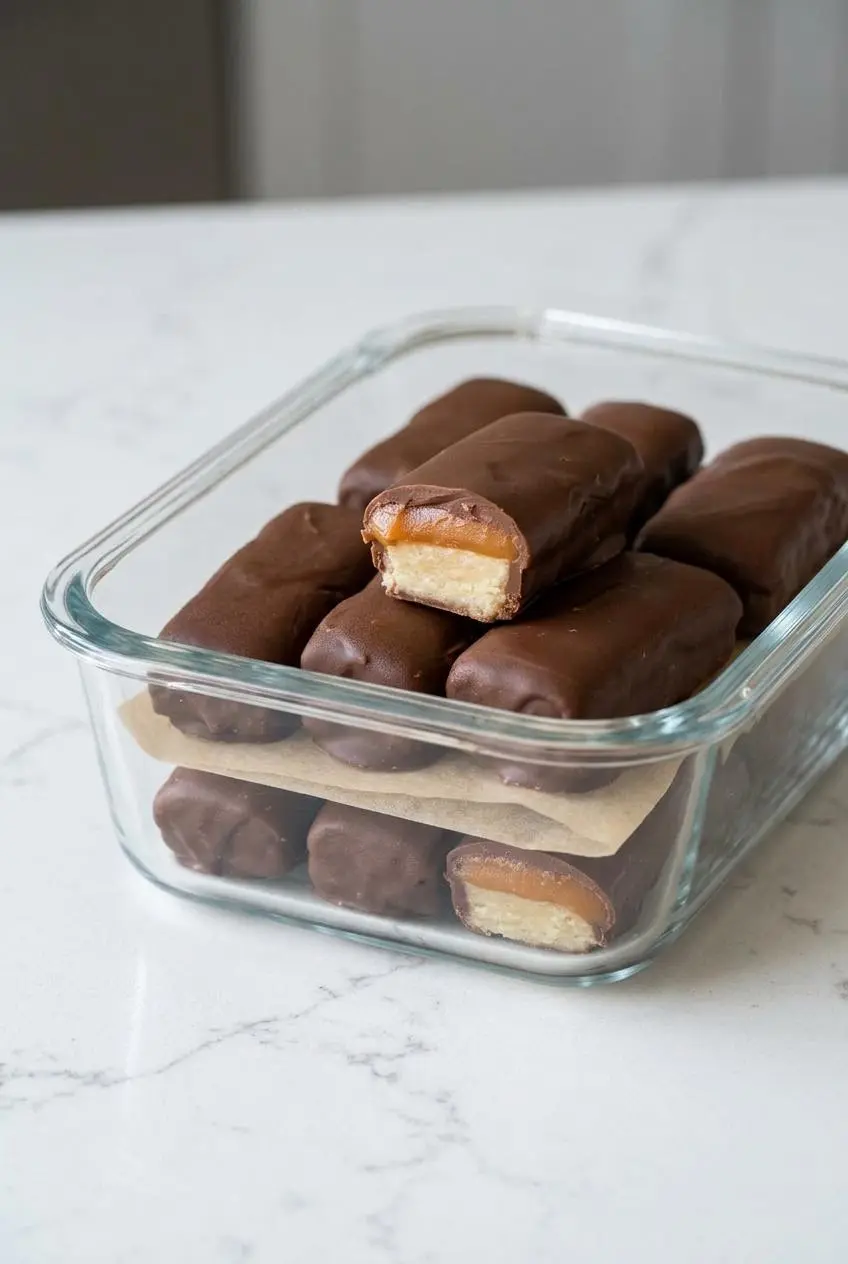
Keep the finished bars chilled in an airtight container so the caramel stays firm and the chocolate coating does not soften. Place parchment paper between layers if stacking them to prevent the chocolate from sticking or scuffing.
For the best contrast between crisp crust and chewy caramel, serve the bars straight from the refrigerator or let them sit only briefly while plating. Avoid leaving the butter-and-cream caramel at room temperature for extended periods.
Serving Suggestions and Presentation
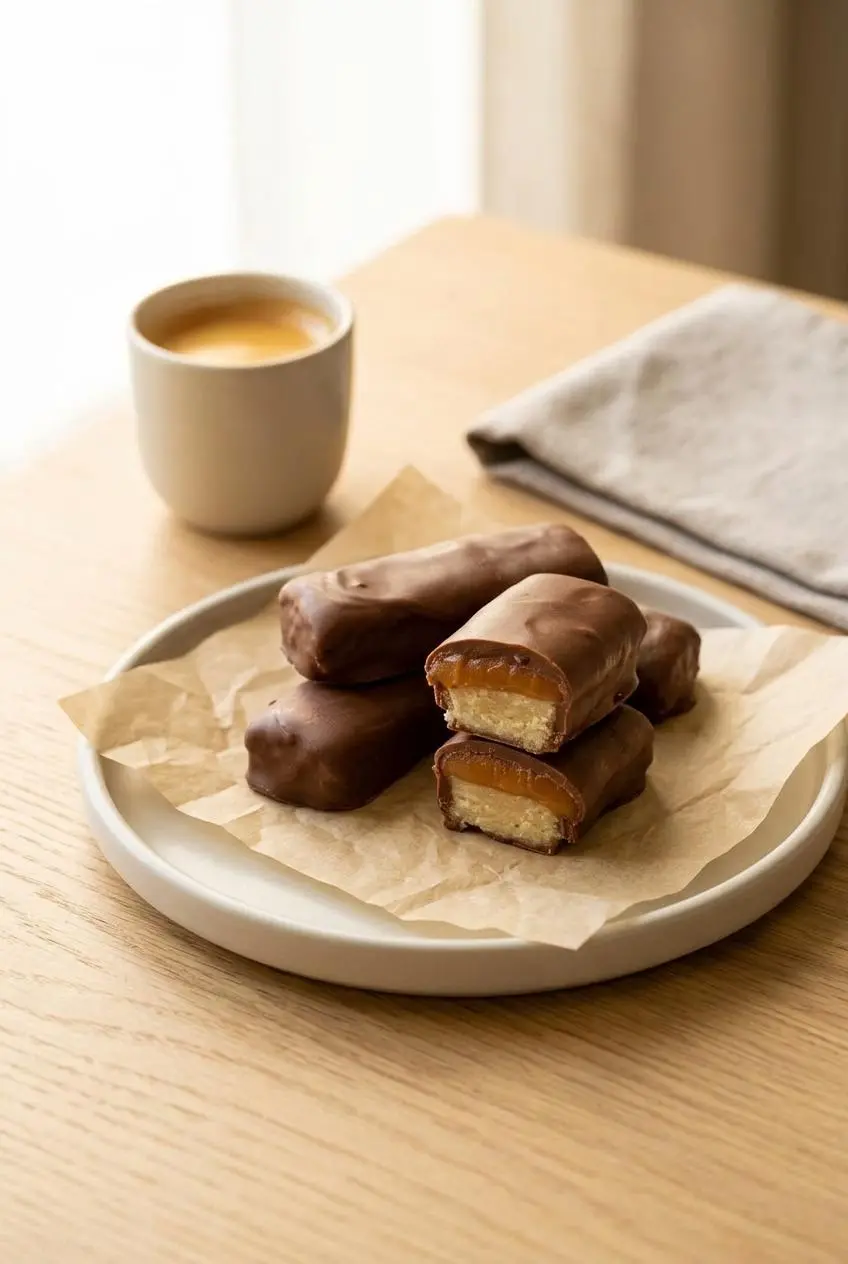
Serve these bars chilled on a parchment-lined platter so they stay neat enough to pick up without leaving caramel behind. Their rich layers pair particularly well with unsweetened cold brew, black coffee, or a small espresso.
- Cut the bars into smaller squares for a party dessert platter where guests can sample more than one treat.
- Set out a plate alongside fudgy keto brownies for a chocolate-focused spread with contrasting textures.
- Offer a bar with hot espresso when you want the coffee’s bitterness to balance the sweet caramel.
Enjoying Homemade Low-Carb Confections
These bars deliver the good part of a classic candy bar experience: buttery shortbread, soft golden caramel, and a firm chocolate finish. Each layer stays more distinct when you give it time to cool and chill before moving to the next step.
Once you get comfortable with allulose caramel, its smooth chew can become a useful technique for other chilled treats. Keep the knife warm and clean for tidy slices, then enjoy that crisp first bite.
Frequently Asked Questions
Can I Use Erythritol Instead of Allulose for the Caramel?
You can use erythritol, but the finished caramel may become grainy or crunchy after chilling. Allulose is the better choice for a smoother caramel with a softer, chewier pull.
Why Did My Keto Shortbread Crust Crumble?
Almond flour has no gluten, so the dough needs to be pressed firmly into an even, compact layer before baking. Let the crust cool completely before adding caramel and before slicing, which allows the butter to firm up and support the layers.
How Do I Fix Caramel That Has Separated and Turned Oily?
Take the pan off the heat and whisk the caramel firmly to bring the butterfat back into the sauce. If needed, whisk in a small splash of warm heavy cream until the caramel looks glossy and cohesive again.
Is It Better to Dip the Bars or Drizzle the Chocolate Over Them?
Dipping creates the classic fully coated candy-bar finish, but the bars need to be very cold so they do not bend or break. Drizzling over a wire rack is faster and tidier, though the underside remains uncovered.
Do These Bars Need to Stay Refrigerated?
Yes. Keep them in an airtight container in the refrigerator to maintain a firm caramel layer and stable chocolate coating. Separate stacked bars with parchment paper and serve chilled for the cleanest texture.
Keto Twix Bars

Equipment
- 8×8-inch pan
- Parchment paper
- Saucepan
- Mixing bowl
Ingredients
- 1 cup blanched almond flour
- 1/4 cup salted butter softened
- 5 tbsp salted butter
- 3/4 cup granulated allulose sweetener
- 1/2 cup heavy cream
- 1 1/2 cups sugar-free chocolate chips melted
Instructions
- Heat the oven to 325°F and line an 8×8-inch pan with parchment paper. Combine the almond flour and softened butter in a bowl until the mixture forms a cohesive dough. Press the dough across the pan in an even layer, then bake for about 10 minutes until the edges are lightly golden and the center feels firm.
- Leave the baked shortbread in the pan until it has cooled completely. The crust should feel solid rather than warm before it meets the caramel.
- Melt the 5 tbsp salted butter in a saucepan over low heat, stir in the allulose until dissolved, then add the heavy cream and raise the heat to medium. Simmer for 10–15 minutes, stirring occasionally, until the caramel is thick and golden. The caramel may foam while it cooks; the bubbles settle as it cools, and the sauce becomes more viscous as it stands.
- Spread the cooled caramel evenly over the cooled shortbread and refrigerate for 45 minutes to 1 hour, until firm. Lift the set slab from the pan, cut it in half, then cut each half into 10 bars for 20 total. The caramel should hold its shape cleanly at the cut edges instead of flowing or pulling away from the crust.
- Dip each chilled bar in the melted sugar-free chocolate, then place it on wax or parchment paper and refrigerate until the coating sets. The chocolate should become firm and opaque around the cold caramel layer.