Skip to content
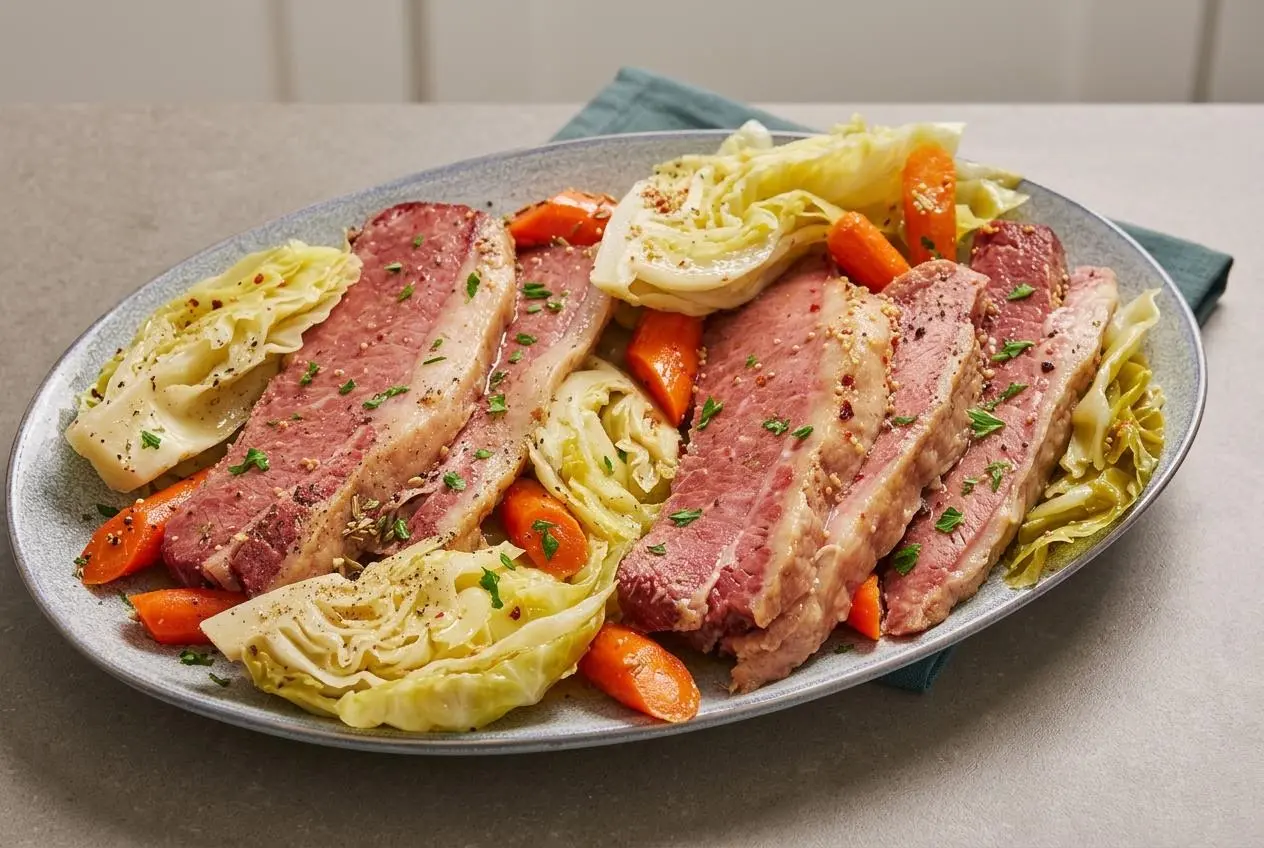
Make keto corned beef and cabbage by gently simmering cured brisket with aromatics, then adding cabbage and carrots during the final cooking stage. Leave out the potatoes and serve with Dijon vinegar sauce and caper mayonnaise for a savory dinner with tender slices and flavorful cabbage.
This keto corned beef and cabbage recipe keeps the familiar Irish-American boiled dinner format: peppery beef, broth-soaked vegetables, and plenty of mustard flavor. Pickling spices give the pot its savory aroma while the brisket slowly becomes tender.
The cooking happens in stages, so the cabbage doesn’t spend the entire braise softening beside the meat. Sharp Dijon sauce and creamy caper mayonnaise bring contrast to every bite. Keep room for both sauces.
Choose a pot roomy enough to hold the brisket, covering water, and cabbage wedges without crowding the lid.
Essential Ingredients for Flavorful Keto Corned Beef
Each ingredient contributes to the finished dinner: cured beef supplies savory richness, aromatics and pickling spices season the broth, and cabbage and carrots add texture and sweetness. Mustard, vinegar, capers, mayonnaise, and parsley create bright, creamy contrasts, while salt and pepper finish the seasoning.
- 3 lb. (or more) corned beef
- 2 onions, quartered
- 4 celery stalks, quartered crosswise
- 1 package pickling spices
- Kosher salt
- Black pepper
- 1 medium green cabbage, cut into 2″ wedges
- 2 carrots, peeled and cut into 2″ pieces
- 1/2 c. Dijon mustard
- 2 tbsp. apple cider vinegar
- 1/4 c. mayonnaise
- 2 tbsp. capers, roughly chopped, plus 1 tsp brine
- 2 tbsp. parsley, roughly chopped
Choosing Between Flat Cut and Point Cut Brisket
A flat cut generally has a more even shape and leaner interior, making it convenient for neat slices. A point cut usually carries more internal fat and has a less uniform shape, giving it a richer texture but making carving slightly trickier. Either may have a substantial exterior fat cap.
Choose packaged corned beef rather than fresh, uncured brisket. Products labeled “uncured” can still be seasoned and cured using different ingredients, so read the preparation directions and nutrition label rather than relying on that word to predict flavor, color, or saltiness.
I prefer a flat cut when tidy platter slices matter most; its shape makes the grain easier to follow.
Aromatics, Pickling Spices, and Brassicas
Onions and celery flavor the liquid throughout the beef’s long simmer. The pickling spice packet supplies the characteristic peppery, fragrant seasoning, while black pepper adds another savory edge.
Cabbage absorbs the seasoned broth, and carrots bring a sweeter contrast. Keep the wedges intact as you handle them: loose leaves soften and separate more readily than substantial wedges. Kosher salt finishes the flavor, but the cured meat already contributes salt to the pot.
Crafting the Dual Keto Dipping Sauces
The Dijon and apple cider vinegar mixture is a sharp, mustard-forward dipping sauce rather than an oil-based vinaigrette. Its acidity balances the richness of the beef without hiding the pickling spices.
Mayonnaise gives the second sauce its creamy body. Chopped capers provide briny bursts, their brine carries that flavor through the sauce, and parsley adds freshness. Taste before seasoning because mustard, mayonnaise, and capers vary in saltiness by brand.
How to Make Keto Corned Beef and Cabbage
The stovetop method gives the brisket its long, gentle simmer before the vegetables join the pot. Allow about 5 hours total, including 15 minutes of preparation; this recipe serves 6.
- Set the corned beef in a large pot with the onions, celery, and pickling spices, then pour in water until its surface sits 2 inches above the meat and season with salt and pepper.
The brisket should sit beneath the water with room around it for the aromatics. - Heat the pot until the water boils, then turn the heat to low, cover, and cook at a gentle simmer for 3 to 3 1/2 hours.
A fork should enter the beef with little resistance when it becomes very tender. - During the braise, whisk the Dijon mustard with the apple cider vinegar in a small bowl and season with salt and pepper.
The finished sauce should look uniform and have a sharp, tangy flavor. - Stir the mayonnaise, chopped capers, caper brine, and parsley together in another bowl, then season with salt and pepper.
The mixture should remain creamy, with capers and parsley distributed throughout. - Lower the cabbage and carrots into the pot and keep simmering for another 45 minutes to 1 hour, until the cabbage is tender.
The cabbage leaves should soften and become more translucent while the wedges retain enough structure to lift out. - Transfer the beef, cabbage, and carrots out of the broth, then carve the meat across the grain and finish with salt and pepper to taste.
The slices should hold together while yielding easily when cut with a fork. - Set both dipping sauces beside the beef and vegetables for serving.
The mustard sauce will be sharp and smooth, while the mayonnaise sauce will be creamy and flecked with herbs and capers.
Why Corned Beef and Cabbage Fits the Ketogenic Lifestyle
Leaving out the traditional potatoes makes this dinner easier to fit into low-carb meal planning. Whether a serving fits your ketogenic diet still depends on your portions, the packaged ingredients, and the rest of your meals.
Cabbage provides vegetable bulk and fiber, but the complete dinner isn’t carbohydrate-free. Include the onions, carrots, cabbage, and sauces when tracking carbohydrates. Check the corned beef and condiment labels for added sugar rather than assuming every brand has the same profile.
No calculated nutrition values are provided here, so use your actual ingredients and serving sizes to estimate net carbs. For another way to enjoy cabbage in a low-carb dinner, try cheesy cabbage casserole.
Culinary Troubleshooting: Avoiding Tough Meat and Mushy Cabbage
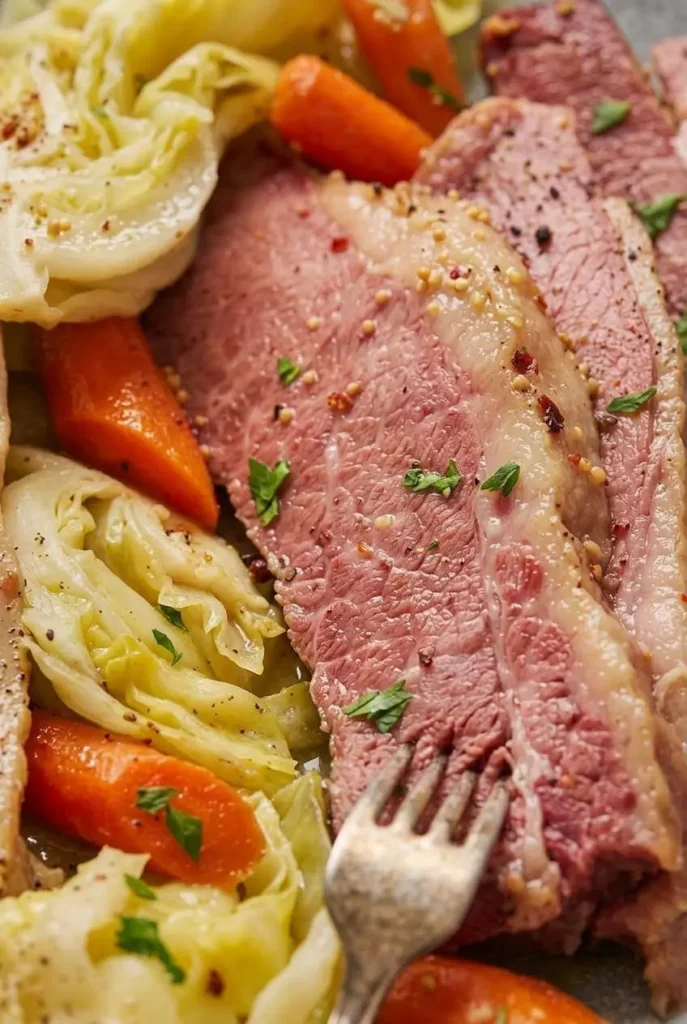
Texture problems usually come from heat, vegetable timing, or carving direction. Check those before changing the seasoning.
- Firm brisket: Tough connective tissue may need more gentle cooking; keep the meat covered by liquid and continue simmering until a fork enters easily.
- Dry edges: A hard boil or exposed meat can work against a succulent result; reduce the heat and check that the brisket remains submerged.
- Collapsed cabbage: Adding it with the raw brisket gives it far too much cooking; keep it for the final stage and lift the wedges out carefully once tender.
- Stringy slices: Cutting along the fibers leaves long strands in each bite; rotate the beef and slice across them.
Managing Brine Sodium and Saltiness
Read the package directions before opening the brisket, and check whether the spice packet contains salt or just spices. Don’t taste the raw meat or curing liquid to assess seasoning.
If the package recommends rinsing, or you prefer to remove surface brine, use cold water gently and minimize splashing; clean the surrounding sink area afterward. This can remove surface cure, but it doesn’t make the beef salt-free. Season the broth cautiously, then taste the cooked liquid and sauces before adding more salt.
Mastering the Cross-Grain Carving Technique
Look for the parallel lines running across the cooked meat. Those lines show the direction of the muscle fibers. Turn the brisket so your knife cuts across them rather than following them.
Use a sharp knife and steady strokes to make thin slices. If the grain changes direction, particularly in a point cut, reposition the meat as needed. Tender beef can still seem chewy when each slice contains long, uncut fibers.
Cooking Appliance Adaptations: Slow Cooker and Pressure Cooker
These optional approaches keep the same central rule: tenderize the meat first, then cook the vegetables. Use appliance-specific directions for liquid requirements, capacity, and operating settings rather than transferring the stovetop water level or timing directly.
Slow Cooker Keto Corned Beef and Cabbage
Slow-cook the brisket with the onions, celery, pickling spices, and water using a suitable corned beef program or manufacturer-supported method. Keep the cabbage and carrots out until the meat is tender.
Add the vegetables near the end and cook until tender, avoiding unnecessary stirring that breaks the cabbage wedges. If the cooker lacks room, simmer the vegetables separately in transferred cooking broth. Make the sauces separately as directed.
Instant Pot Pressure Cooker Method
Use a pressure-cooker corned beef method suited to the brisket’s size, following the appliance’s liquid and fill limits. Cook the meat and aromatics first, without the cabbage or carrots.
Release pressure as directed before opening the lid, then remove the tender beef and use a separate vegetable cycle in the seasoned liquid. This prevents the cabbage from undergoing the prolonged cooking needed by the brisket. No pressure-cooking time is specified here because the stovetop schedule isn’t a direct conversion.
Turnip or Radish Low-Carb Potato Swap
For an optional potato-style addition, choose vegetables that suit your carbohydrate plan and check their tenderness independently.
- Peeled turnips: Give the platter a firm root-vegetable bite and absorb the savory broth.
- Radishes: Soften during cooking and lose some of their raw peppery intensity.
- Cauliflower florets: Offer a milder alternative, but need separate attention because they can fall apart.
- Extra cabbage: Keeps the focus on the familiar boiled-dinner flavor without adding another root vegetable.
Storage, Meal Prep, and Reheating Instructions
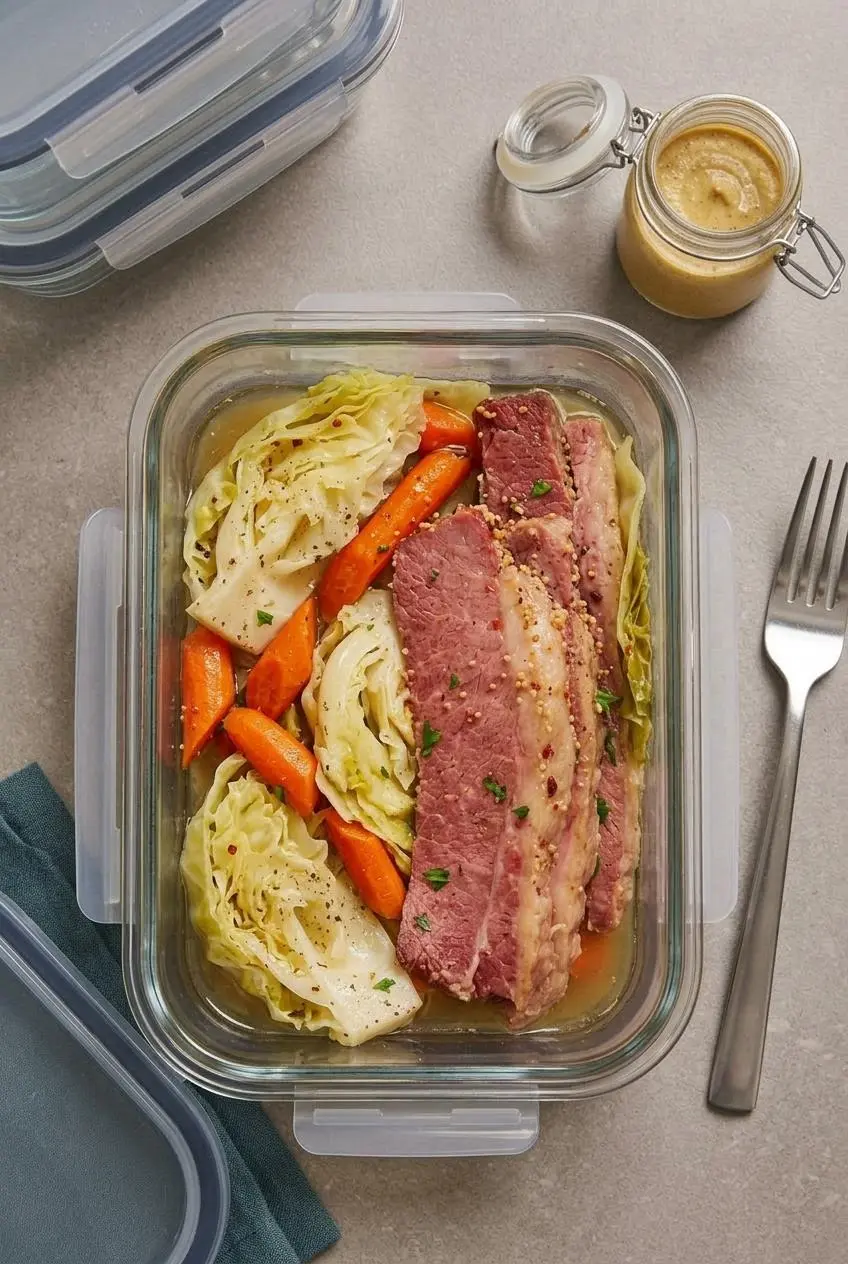
Protect leftover brisket from drying out by packing slices with reserved cooking broth in airtight containers and refrigerating promptly. Use shallow containers rather than leaving the entire hot dinner in its deep cooking pot to cool.
For portioned meals, keep the cabbage and carrots separate from the beef, and refrigerate each sauce in its own covered container. That lets you warm the meat without repeatedly cooking the vegetables or heating the mayonnaise sauce.
Reheat the beef gently in a covered pan with cooking liquid to keep its surface moist. Warm the vegetables separately just until ready to serve. If using a microwave, cover the meat and pause to redistribute the slices rather than heating one spot aggressively.
Serving Suggestions and Low-Carb Pairings
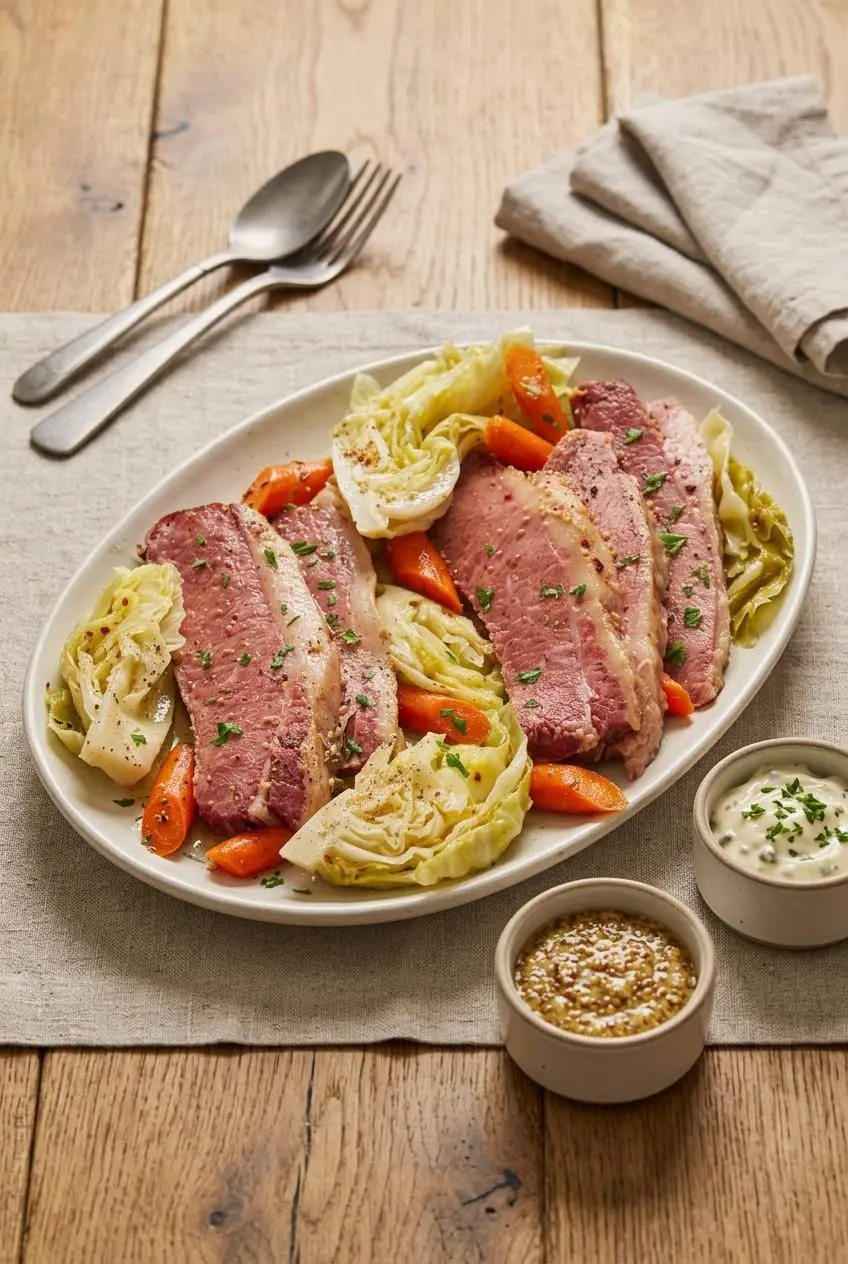
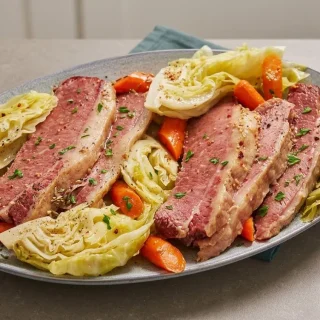
Arrange the carved brisket on a warm platter with intact cabbage wedges and carrots beside it. Serve the sauces in separate ramekins so everyone can choose sharp mustard, creamy capers, or both.
- Cabbage wraps: Tuck leftover sliced or shredded beef into flexible cabbage leaves and add a little dipping sauce.
- Radish skillet hash: Cook diced radishes until tender, then add chopped cooked beef toward the end so it doesn’t dry out.
- Low-carb sandwiches: Layer warm beef on toasted keto bread with a spread of either sauce.
Bringing the Classic Low-Carb Boiled Dinner Together
A gentle simmer, late vegetable addition, and cross-grain carving give this dinner its best texture. Let the brisket become truly tender before moving on to the cabbage.
The finished platter brings together savory beef, broth-flavored vegetables, and contrasting sauces without the traditional potatoes. Serve it warm, and pass both bowls of sauce around the table.
Frequently Asked Questions About Keto Corned Beef and Cabbage
Can You Eat Corned Beef and Cabbage on a Keto Diet?
Yes, it can fit a ketogenic meal plan when prepared without potatoes and portioned to match your carbohydrate goals. Count the vegetables and sauces, and check packaged beef and condiment labels rather than treating the dinner as carb-free.
Why Do You Have to Cook Cabbage Separately or Add It Late?
Cabbage softens much sooner than brisket, so cooking them together from the start can leave the leaves collapsed. Add cabbage during the final stage, or cook it separately in the seasoned broth, to preserve its structure.
Should I Rinse the Corned Beef Before Cooking?
Follow the package directions; a gentle cold-water rinse is optional when you want to remove surface brine. Minimize splashing and clean the surrounding area afterward, and remember that rinsing doesn’t remove all the salt within the meat.
How Do You Slice Corned Beef So It Isn’t Tough?
Find the direction of the muscle fibers and cut perpendicular to them with a sharp knife. Make thin slices, and remember that carving can’t compensate for brisket that hasn’t cooked until tender.
What Can I Replace Potatoes With in This Recipe?
Optional choices include peeled turnips, radishes, cauliflower florets, or extra cabbage. Cook each until tender and account for the portion in your carbohydrate plan; these swaps aren’t part of the main ingredient list.
Keto Corned Beef and Cabbage Recipe

Equipment
- Large Pot
- Small bowls
- Carving knife
Ingredients
- 3 lb. (or more) corned beef
- 2 onions, quartered
- 4 celery stalks, quartered crosswise
- 1 package pickling spices
- Kosher salt
- Black pepper
- 1 medium green cabbage, cut into 2″ wedges
- 2 carrots, peeled and cut into 2″ pieces
- 1/2 c. Dijon mustard
- 2 tbsp. apple cider vinegar
- 1/4 c. mayonnaise
- 2 tbsp. capers, roughly chopped, plus 1 tsp brine
- 2 tbsp. parsley, roughly chopped
Instructions
- Set the corned beef in a large pot with the onions, celery, and pickling spices, then pour in water until its surface sits 2 inches above the meat and season with salt and pepper. The brisket should sit beneath the water with room around it for the aromatics.
- Heat the pot until the water boils, then turn the heat to low, cover, and cook at a gentle simmer for 3 to 3 1/2 hours. A fork should enter the beef with little resistance when it becomes very tender.
- During the braise, whisk the Dijon mustard with the apple cider vinegar in a small bowl and season with salt and pepper. The finished sauce should look uniform and have a sharp, tangy flavor.
- Stir the mayonnaise, chopped capers, caper brine, and parsley together in another bowl, then season with salt and pepper. The mixture should remain creamy, with capers and parsley distributed throughout.
- Lower the cabbage and carrots into the pot and keep simmering for another 45 minutes to 1 hour, until the cabbage is tender. The cabbage leaves should soften and become more translucent while the wedges retain enough structure to lift out.
- Transfer the beef, cabbage, and carrots out of the broth, then carve the meat across the grain and finish with salt and pepper to taste. The slices should hold together while yielding easily when cut with a fork.
- Set both dipping sauces beside the beef and vegetables for serving. The mustard sauce will be sharp and smooth, while the mayonnaise sauce will be creamy and flecked with herbs and capers.