Skip to content

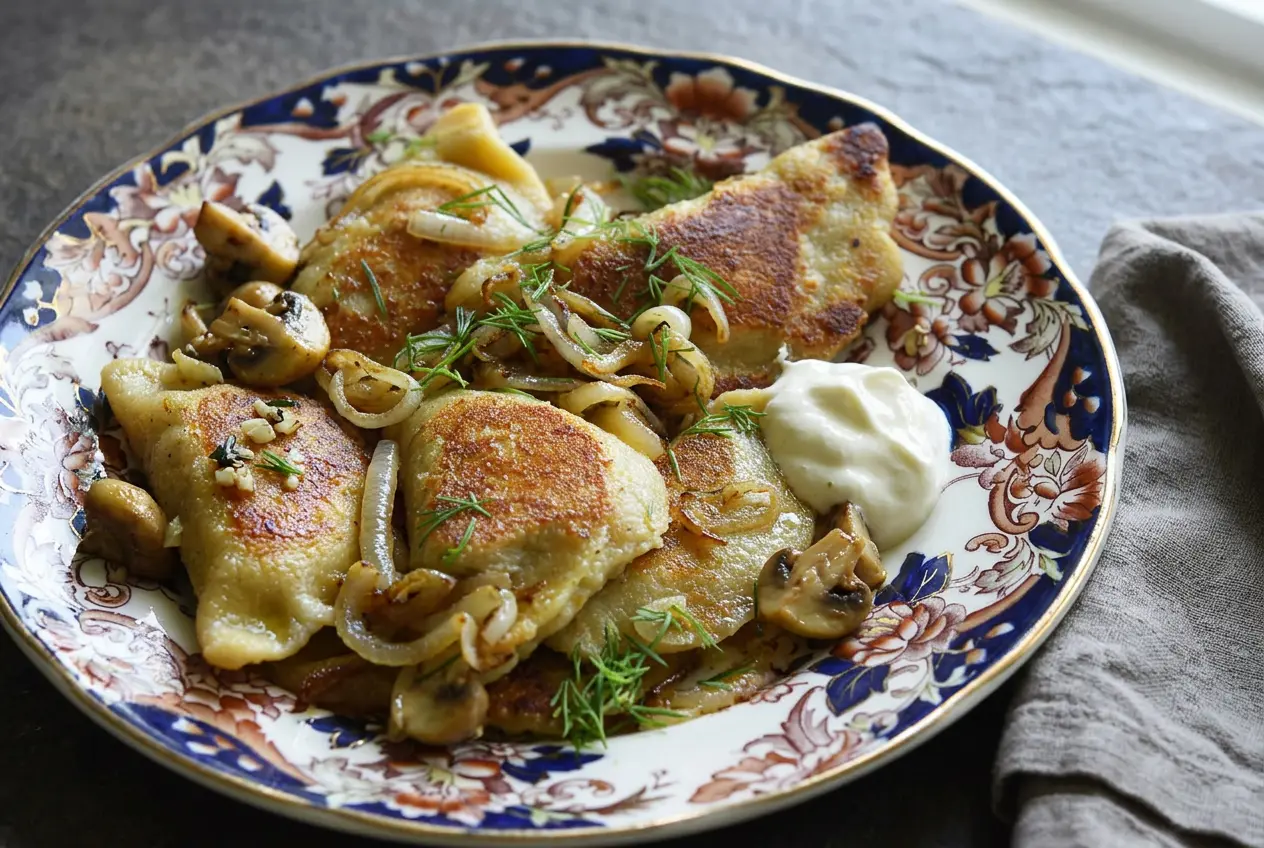
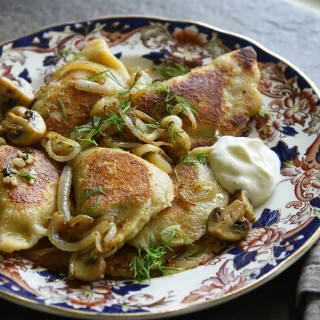
These keto pierogi wrap mushrooms and cottage cheese in almond flour, mozzarella, and psyllium dough. Chill the half-moons, brown them in butter, then finish in the oven for a crispy golden exterior, a chewy savory center, and a topping of buttery onions.
These stuffed dumplings bring Polish-inspired comfort to a cheese-based wrapper without wheat flour or potato filling. Garlic and thyme give the mushrooms depth, while cottage cheese adds a creamy contrast.
The shaping takes patience, and the refrigerator rest means planning ahead. But parchment makes rolling manageable, and the skillet supplies those golden edges. Leave room for the onions.
Set out two sheets of parchment before mixing the dough so you can roll it while it’s pliable.
Key Ingredients for Low-Carb Dumplings
Each ingredient contributes flavor or structure: mushrooms provide savory depth, strained cottage cheese keeps the filling creamy without excess liquid, and the cheese-and-almond wrapper supplies chew. Butter adds browning, while onion, sour cream, and dill balance the richness.
- 2 tablespoons unsalted butter
- 8 ounces button mushrooms (quartered)
- 1/4 teaspoon salt
- 1/8 teaspoon black pepper
- 2 cloves garlic (minced or crushed)
- 1 teaspoon minced fresh thyme
- 4 tablespoons cottage cheese (the dry kind or with the liquid strained out)
- 1 teaspoon instant yeast
- 2 tablespoons warm water
- 1 1/4 cups almond flour
- 1 1/2 teaspoons psyllium husk powder
- 1 teaspoon baking powder
- 1 1/2 cups shredded low-moisture part-skim mozzarella cheese
- 1 ounce cream cheese
- 1 large egg (beaten)
- 1/2 tablespoon avocado oil (for oiling your hands)
- 1/4 onion (thinly sliced)
- 4 tablespoons sour cream (for serving)
- A small handful of fresh dill (for serving)
Garlic and thyme season the mushrooms without overpowering them. Choose dry cottage cheese or strain away the liquid so the filling stays inside the sealed edges.
Low-moisture mozzarella supplies stretch; cream cheese softens the dough. Almond flour gives it body, psyllium helps bind it, and the egg holds everything together. Yeast contributes savory aroma, baking powder provides lift, and avocado oil keeps your hands from sticking.
Butter for cooking: The mushroom filling uses the butter listed above; the pan-browning stage calls for an additional 2 tablespoons unsalted butter.
How to Make Keto Pierogi Step by Step
Allow 60 minutes for prep and 25 minutes for cooking, plus the required refrigerator rest. This makes 8 servings, with one filled dumpling and toppings per serving.
For the Mushroom Filling:
- Cook the mushrooms with the butter, salt, and pepper in a large nonstick skillet over medium-high heat for 5 to 7 minutes, stirring occasionally and easing back the heat if needed.
Look for golden surfaces rather than pale mushrooms sitting in liquid. - Reduce the burner to low and stir the garlic and thyme through the mushrooms for 2 minutes, then set the filling aside to cool while preparing the dough.
The garlic should smell fragrant without turning dark.
For the Dough:
- Combine the warm water and yeast in a small bowl and leave for 5 to 10 minutes.
A foamy surface signals that the yeast mixture is ready. - Blend the almond flour, psyllium husk powder, and baking powder with a whisk in a medium bowl.
The dry mixture should look evenly combined, without concentrated pockets of powder. - Microwave the mozzarella and cream cheese in a large microwave-safe bowl for 60 seconds, stir, then use 20-second bursts with stirring until fully melted.
A glossy, cohesive cheese mixture should replace the separate shreds and cream cheese pieces. - Work the yeast mixture into the melted cheese, follow with the beaten egg, then incorporate the dry mixture.
The mixture should gather into dough rather than remain a loose cheese mixture. - Coat your hands with the avocado oil, knead a couple of times, divide into 8 equal balls, and roll each between two sheets of parchment into a circle about 5 inches across.
A smooth, even wrapper should peel away from the paper without stretching into holes. - Distribute the cooled mushrooms among the circles, keeping a 1-inch border clear, and add 1/2 tablespoon cottage cheese over each portion.
The uncovered edges should remain free of filling so they can stick together. - Bring one side of each wrapper over the filling and gently press the curved edges together.
Each dumpling should form a closed half-moon with no filling caught in the seam. - Arrange the dumplings on a plastic-wrap-lined plate, cover with plastic wrap, and refrigerate for at least 12 hours, up to 3 days.
The rested wrappers should feel firmer and hold their folded shape.
To Cook the Pierogis and Onion Topping:
- Set the oven to 300°F when you’re ready to cook.
This gentle oven finish warms the centers after the skillet browns the wrappers. - Melt 2 tablespoons unsalted butter in a large nonstick skillet over medium-high heat and brown the chilled dumplings for 2 to 3 minutes per side, turning once.
Check the underside for golden patches before flipping. - Move the browned dumplings to a baking sheet and place in the oven for 5 to 10 minutes while preparing the onions.
The exterior should retain its browned surface as the filling heats through. - Cook the sliced onion in the same skillet over medium heat for 5 to 7 minutes, stirring occasionally.
Stop when the slices soften and begin developing caramel-colored edges.
To Serve:
- Plate the warm dumplings with the cooked onion, sour cream, and dill.
The cool sour cream and fresh herbs contrast with the buttery crust.
Best Low-Carb Dough Options for Dumplings
This modified fathead dough gives you a rolled, filled dumpling rather than a crisp cheese shell. Mozzarella supplies elasticity, almond flour adds body, and psyllium supports a cohesive, chewy wrapper. Yeast adds a bread-like aroma without requiring a separate dough rise.
- Cheese-based dough: Choose this for pliable wrappers that brown in a skillet and finish in the oven.
- Whey, flax, or lupin doughs: These use different protein or gum binders and need their own formulas; don’t assume they cook like mozzarella dough.
- Provolone slices: These skip dough mixing but produce a more distinctly cheesy shell.
Don’t boil this mozzarella wrapper. Hot water can soften the cheese and undermine the dumpling’s structure. For another rolled-and-filled option, try homemade keto ravioli, following its own cooking method.
Pro Tips & Troubleshooting for Perfect Low-Carb Dumplings
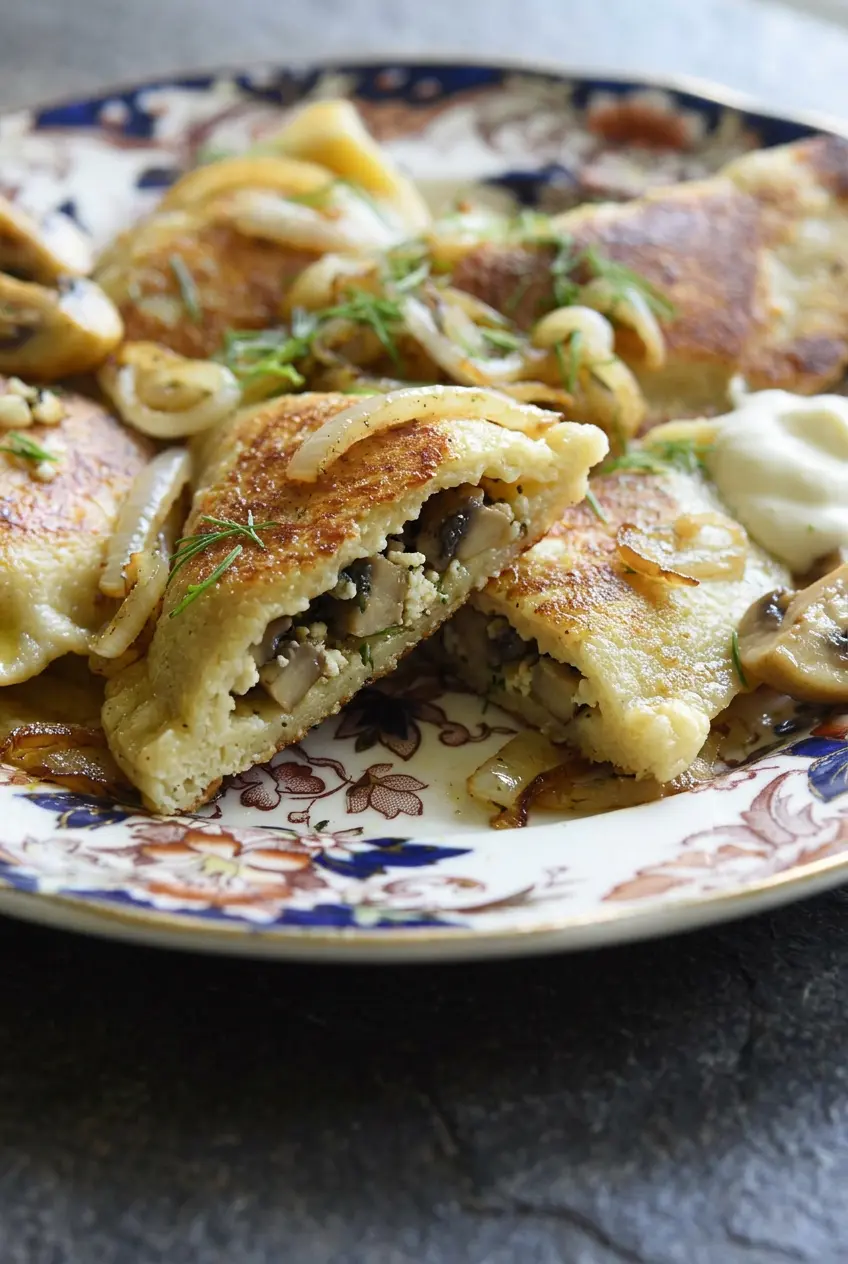
Match a pliable wrapper with a cool, well-drained filling. Most shaping problems start when either part is too wet, too hot, or too stiff.
- Sticky dough: Use parchment and lightly oiled hands rather than extra almond flour, which can make the wrapper dry.
- Cracked edges: The cheese dough may have cooled too much; gently rewarm the unfilled dough until workable.
- Floppy circles: Overly warm dough needs chilling until it feels manageable again.
- Split seams: Wet cheese or warm filling can weaken the join; drain the cottage cheese, cool the mushrooms completely, and keep the border clean.
- Torn wrappers: Avoid translucent patches when rolling; an even thickness supports the filling better.
- Misshapen dumplings: Don’t skip the refrigerator rest, which firms the cheese-based wrapper before frying.
I’d prioritize a clean sealing border over squeezing in extra filling; a generous-looking dumpling isn’t worth an open seam.
Traditional Fillings & Low-Carb Variations
These optional ideas change the filling or format, not the mushroom-and-cottage-cheese method above. Keep any stuffed variation thick enough to sit in a mound without releasing liquid.
Keto Cauliflower & Cheese (‘Potato’ Ruskie) Filling
Well-drained cauliflower mash echoes the soft texture of potato-and-cheese pierogi. Sharp cheddar adds tang, farmer cheese brings a curdy texture, and ricotta gives a softer result. Caramelized onion rounds out the flavor; drain softer cheeses and keep the mash thick, not spoonably loose.
Flourless Baked Provolone Slice Pierogi Shortcut
Baked deli-sliced provolone offers a flourless shell around a savory filling without kneading or rolling. Expect a pronounced cheese flavor and firmer edges rather than the chewy dough texture here. Its pliable stage is brief, so use a dedicated provolone-shell recipe.
Traditional Polish Sauerkraut & Mushroom or Savory Meat Fillings
Sauerkraut and mushrooms bring tangy, earthy flavor, while seasoned ground meat and onion make a heartier filling. Both pair well with sour cream. Drain sauerkraut thoroughly and avoid loose juices or excess rendered fat in meat fillings.
Keto Lazy Pierogi (Pierogi Leniwe) & Deconstructed Skillet/Soup
Polish pierogi leniwe mix curd cheese directly into dough instead of enclosing a filling. A keto adaptation needs its own formula, much like chewy keto gnocchi. For an unshaped meal, cauliflower, cheddar, onion, bacon, and kielbasa can carry similar flavors in a skillet bowl or creamy soup.
Traditional Toppings & What to Serve with Low-Carb Dumplings
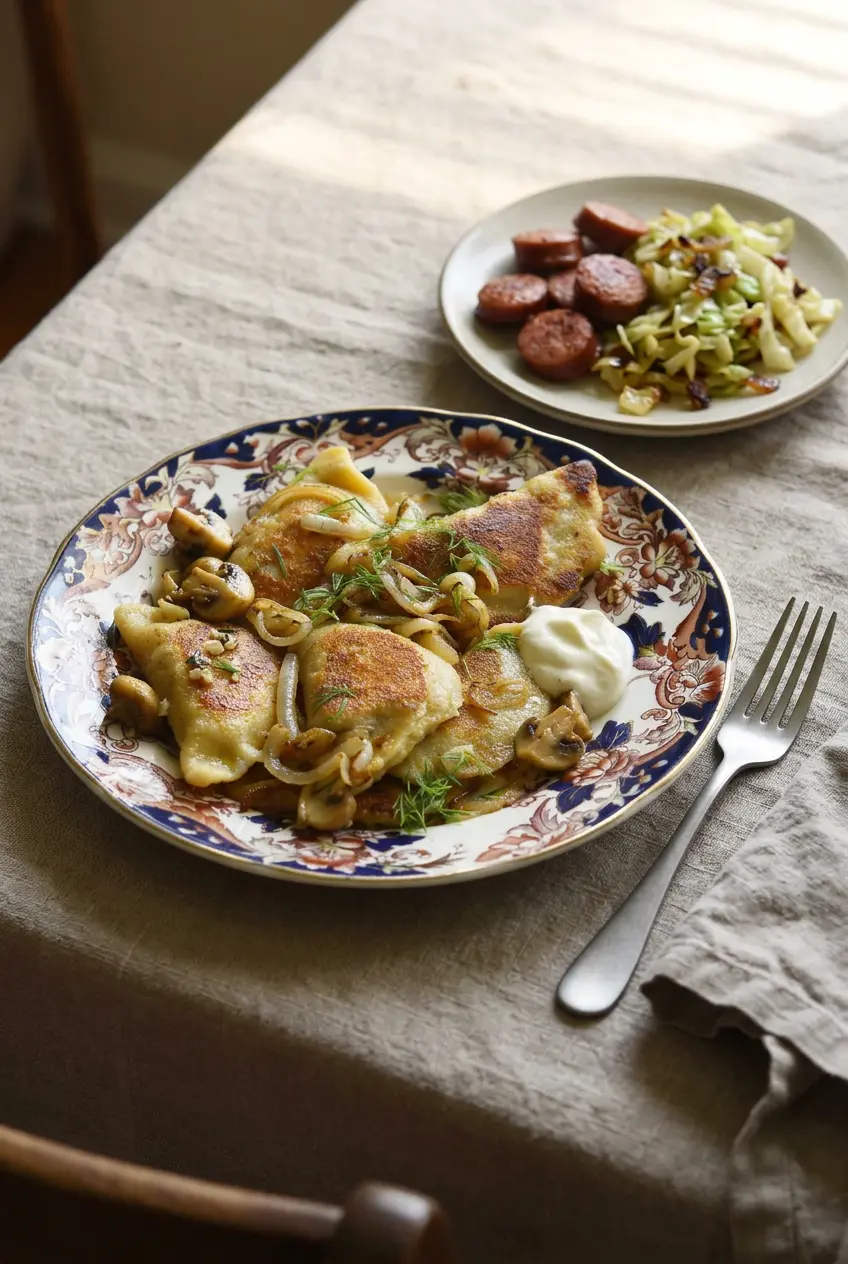
Keep toppings balanced so the mushroom filling still comes through.
- Classic finish: Buttery onions, sour cream, and dill give sweetness, tang, and freshness.
- Extra crunch: Optional crispy bacon and chopped chives add contrast.
- Hearty plate: Browned kielbasa or chicken sausage pairs with sautéed green cabbage.
- Fresh contrast: A crisp green salad balances the rich wrapper.
For meat-filled variations, a spoonful of savory keto gravy makes an optional alternative to sour cream.
Make-Ahead and Storage Guide
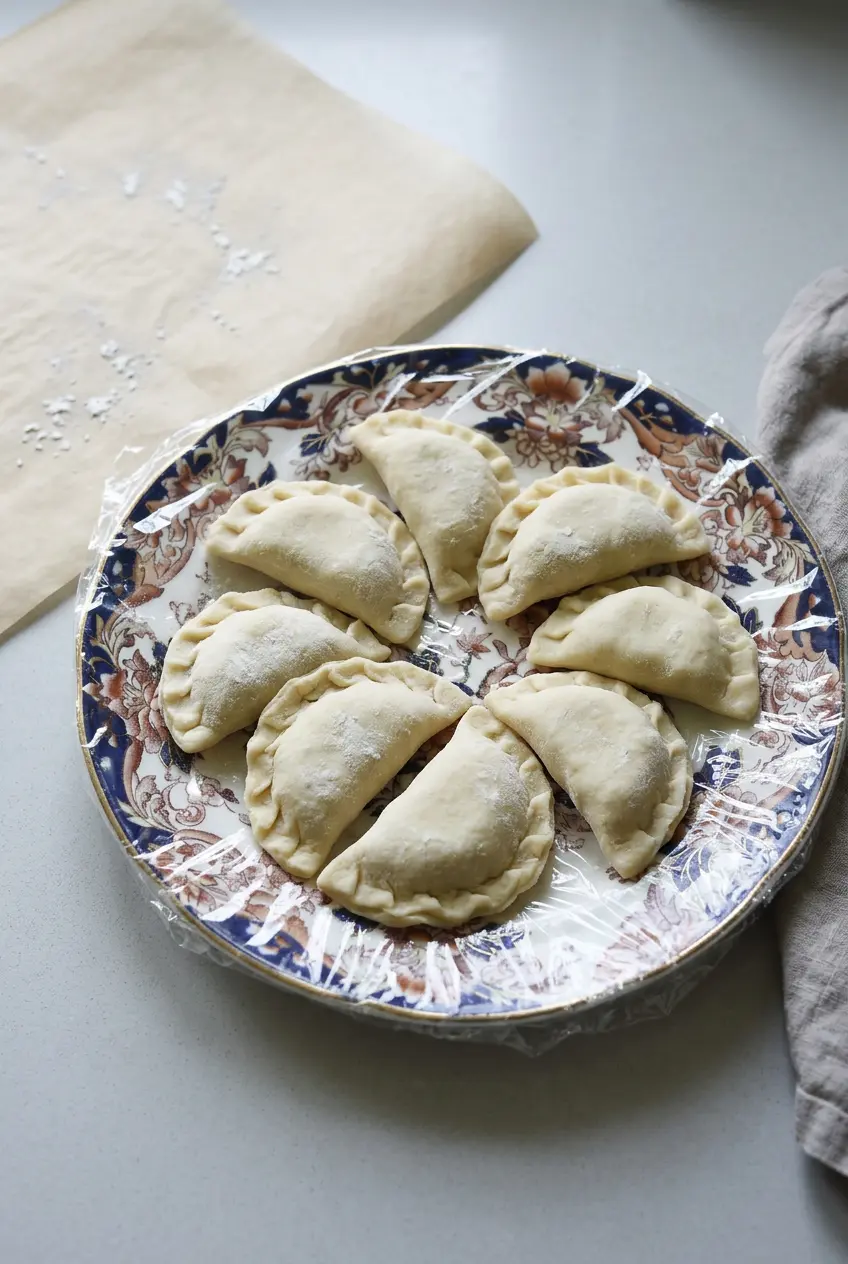
Plan around the shaped dumplings’ required refrigerator rest rather than treating this as a same-session recipe. Keep them covered on their lined plate until cooking.
For cooked leftovers, refrigerate in a closed container and keep sour cream and fresh dill separate. Warm the dumplings gently in a skillet to help restore their exterior, then add the cold toppings at serving. Avoid repeated warming of the whole batch.
Final Thoughts on Homemade Low-Carb Dumplings
Golden butter-browned edges and a savory mushroom-and-cottage-cheese center make these dumplings worth shaping. Dry filling, clean borders, and properly chilled wrappers do the heavy lifting.
Once the parchment rolling feels comfortable, explore a cauliflower-cheese or sauerkraut filling. Keep that same attention to moisture, and let the toppings finish the plate.
Frequently Asked Questions
What Can I Use as a Substitute for Pierogi Dough?
This almond flour, mozzarella, cream cheese, egg, and psyllium dough works as a rolled alternative. Provolone shells offer a no-roll option; whey- or gum-bound doughs require separate formulas.
Do You Have to Boil Keto Pierogies Before Frying Them?
No, don’t boil these mozzarella-based dumplings. Brown the chilled wrappers in butter, then use the oven finish to heat the centers.
Are Pierogies High in Carbs?
Carbohydrates depend on the wrapper, filling, and serving size; traditional versions commonly contain wheat flour and potatoes. The estimated nutrition for this version lists 8 g total carbohydrate and 3 g fiber per dumpling with toppings.
What Is a Lazy Pierogi?
Polish pierogi leniwe are unstuffed dumplings with curd cheese mixed into the dough. In American cooking, the name can also describe a deconstructed skillet or casserole.
Are There Any Low-Calorie Pierogi Options Available?
Compare recipes by serving size, filling, and cooking fat rather than assuming keto means low-calorie. This version’s estimated nutrition lists 265 calories per dumpling with toppings.
Can I Use Frozen Cauliflower If I Make a Faux-Potato Pierogi Filling?
Yes, provided the cooked mash is thoroughly drained and thick enough to hold its shape. Remove excess moisture before combining it with cheese, and cool the filling before shaping.
Keto Pierogi

Equipment
- Large nonstick skillet
- Microwave-safe bowl
- Parchment paper
- Baking sheet
Ingredients
- 2 tablespoons unsalted butter
- 8 ounces button mushrooms quartered
- 1/4 teaspoon salt
- 1/8 teaspoon black pepper
- 2 cloves garlic minced or crushed
- 1 teaspoon minced fresh thyme
- 4 tablespoons cottage cheese the dry kind or with the liquid strained out
- 1 teaspoon instant yeast
- 2 tablespoons warm water
- 1 1/4 cups almond flour
- 1 1/2 teaspoons psyllium husk powder
- 1 teaspoon baking powder
- 1 1/2 cups shredded low-moisture part-skim mozzarella cheese
- 1 ounce cream cheese
- 1 large egg beaten
- 1/2 tablespoon avocado oil for oiling your hands
- 1/4 onion thinly sliced
- 4 tablespoons sour cream for serving
- A small handful of fresh dill for serving
Instructions
For the Mushroom Filling:
- Cook the mushrooms with the butter, salt, and pepper in a large nonstick skillet over medium-high heat for 5 to 7 minutes, stirring occasionally and easing back the heat if needed. Look for golden surfaces rather than pale mushrooms sitting in liquid.
- Reduce the burner to low and stir the garlic and thyme through the mushrooms for 2 minutes, then set the filling aside to cool while preparing the dough. The garlic should smell fragrant without turning dark.
For the Dough:
- Combine the warm water and yeast in a small bowl and leave for 5 to 10 minutes. A foamy surface signals that the yeast mixture is ready.
- Blend the almond flour, psyllium husk powder, and baking powder with a whisk in a medium bowl. The dry mixture should look evenly combined, without concentrated pockets of powder.
- Microwave the mozzarella and cream cheese in a large microwave-safe bowl for 60 seconds, stir, then use 20-second bursts with stirring until fully melted. A glossy, cohesive cheese mixture should replace the separate shreds and cream cheese pieces.
- Work the yeast mixture into the melted cheese, follow with the beaten egg, then incorporate the dry mixture. The mixture should gather into dough rather than remain a loose cheese mixture.
- Coat your hands with the avocado oil, knead a couple of times, divide into 8 equal balls, and roll each between two sheets of parchment into a circle about 5 inches across. A smooth, even wrapper should peel away from the paper without stretching into holes.
- Distribute the cooled mushrooms among the circles, keeping a 1-inch border clear, and add 1/2 tablespoon cottage cheese over each portion. The uncovered edges should remain free of filling so they can stick together.
- Bring one side of each wrapper over the filling and gently press the curved edges together. Each dumpling should form a closed half-moon with no filling caught in the seam.
- Arrange the dumplings on a plastic-wrap-lined plate, cover with plastic wrap, and refrigerate for at least 12 hours, up to 3 days. The rested wrappers should feel firmer and hold their folded shape.
To Cook the Pierogis and Onion Topping:
- Set the oven to 300°F when you’re ready to cook. This gentle oven finish warms the centers after the skillet browns the wrappers.
- Melt 2 tablespoons unsalted butter in a large nonstick skillet over medium-high heat and brown the chilled dumplings for 2 to 3 minutes per side, turning once. Check the underside for golden patches before flipping.
- Move the browned dumplings to a baking sheet and place in the oven for 5 to 10 minutes while preparing the onions. The exterior should retain its browned surface as the filling heats through.
- Cook the sliced onion in the same skillet over medium heat for 5 to 7 minutes, stirring occasionally. Stop when the slices soften and begin developing caramel-colored edges.
To Serve:
- Plate the warm dumplings with the cooked onion, sour cream, and dill. The cool sour cream and fresh herbs contrast with the buttery crust.