Skip to content


Make keto croissants with a cheese-free yeast dough, a specialty flour blend, and cold butter folded into thin layers. This rough-puff technique produces buttery, golden pastries with a flaky exterior and an airy, bread-like interior.
These keto croissants are a hands-on baking project, rather than quick crescent rolls made from melted cheese. Rolling, folding, and resting the dough build the layered texture.
The payoff is a pastry you can split for breakfast sandwiches or enjoy warm with coffee. You don’t need a separate butter block for this method. Watch the butter become ribbons.
Clear space in the refrigerator before starting so you can chill the wrapped dough whenever rolling becomes difficult.
Key Ingredients and the Low-Carb Flour Blend
Each ingredient contributes to structure, moisture, lift, or flavor: gluten gives the dough elasticity, the flour blend balances its texture, cold butter separates the layers, and cream adds richness. Allulose sweetens the pastry, while the egg wash encourages a glossy finish.
- 2 tbsp (30ml) lukewarm water
- 2 tsp active dry yeast
- 2 tbsp inulin powder
- 3/4 cup (100g) vital wheat gluten
- 1/2 cup (70g) allulose sweetener
- 1/3 cup (40g) oat fiber
- 1/3 cup (30g) lupin flour
- 1 tbsp coconut flour
- 1 1/2 tbsp baking powder
- 1/2 tsp xanthan gum
- Pinch of salt
- 1 cup (250g) cold salted butter, cubed
- 6 tbsp (90ml) cold water
- 7 tbsp (100ml) heavy cream
- 1 whole egg for brushing
Vital wheat gluten provides the elastic framework that lets the dough stretch and hold its shape. Oat fiber adds dry bulk without behaving like wheat flour; lupin flour contributes body, and coconut flour absorbs moisture. Xanthan gum helps bind the mixture, while baking powder supplies additional lift.
Keep the blend intact. Replacing one flour changes how much liquid the dough absorbs and how it handles under the rolling pin. A ready-made keto baking mix isn’t automatically an equivalent substitute.
The inulin goes into the lukewarm water with the yeast, rather than into the dry mixture. Although often described as yeast food in keto baking, inulin does not reliably ferment with ordinary baker’s yeast, so don’t expect it to behave exactly like sugar or judge success by a large foamy bloom.
Allulose supplies sweetness and encourages pronounced browning. Salt balances that sweetness. Heavy cream enriches and moistens the dough, while cold butter must remain distinct enough to stretch into streaks during folding. Lukewarm water hydrates the yeast; cold water helps keep the dough cool.
I’d prioritize visible butter pieces over a perfectly smooth dough at the mixing stage; smoothness comes later, and those pieces are what you need for layers.
Step-by-Step Guide to Keto Croissants: Rough-Puff Lamination and Shaping
This makes six croissants. Use a rolling pin, parchment paper, plastic wrap, foil, a baking sheet, and either a fork or pastry blender. Allow room for extra chilling if the dough resists rolling; forcing it usually makes the job harder.
- Combine the lukewarm water, yeast, and inulin in a small bowl with one gentle stir of a fork, then cover the bowl with foil and leave it aside.
The mixture should look moistened throughout, without dry pockets of powder. - Distribute the vital wheat gluten, allulose, oat fiber, lupin flour, coconut flour, baking powder, xanthan gum, and salt evenly with a whisk in a separate bowl.
A uniform dry mixture helps avoid concentrated patches of gum or leavener. - Work the cubed butter through the dry mixture with a fork or pastry blender until the pieces resemble peas, then pour in the cold water, cream, and reserved yeast mixture.
Stop cutting while individual butter pieces remain clearly visible. - Bring the mixture together with a spoon, gather it into a ball, and enclose it in plastic wrap before refrigerating for 30 minutes.
The dough should hold together but still show pieces of butter. - Set the chilled dough on a work surface lightly dusted with vital wheat gluten and lay parchment over it before rolling.
The parchment creates a barrier between the dough and rolling pin without heavy dusting. - Lengthen the dough into a rectangle, fold the two short ends inward in overlapping thirds, neaten the edges, rotate 90 degrees, lightly dust the surface and dough again, and continue until you have completed four folds.
If rolling becomes difficult or the dough springs back strongly, wrap it and refrigerate for 30 minutes before continuing. - Refrigerate the wrapped dough for 30 minutes, then give it two additional rolling-and-folding turns, stopping when the butter appears mostly incorporated as streaks rather than chunks.
Use another 30-minute refrigerator rest if resistance returns, and look for a marbled appearance rather than a greasy paste. - Wrap the folded dough and refrigerate it for at least 30 minutes before dividing.
The chilled dough should feel firm enough to handle without smearing the butter. - Unwrap the dough, divide it into equal halves, and return one half to the refrigerator in fresh wrapping.
Keeping the unused portion chilled helps preserve its butter layers while you shape the first portion. - Roll the exposed half in both directions to make a broad rectangle, taking it as thin as the dough comfortably allows.
Aim for even thickness rather than forcing tight dough into a larger sheet. - Divide the rectangle into three smaller rectangles, cut each diagonally into two long triangles, then stack each pair and roll it into one elongated triangle.
Each pair forms a single croissant, giving you three triangles to shape from this half. - Coil one triangle from its broad cut edge toward its point, then press the point gently into the rolled dough.
The finished roll should hold its shape with the tip secured against the surface. - Shape the remaining two paired triangles in the same way.
Keep the rolls similar in size so they bake evenly. - Arrange the shaped pastries with space between them on a parchment-lined baking sheet, then retrieve the refrigerated half and repeat the rolling, cutting, pairing, and shaping.
You should now have six croissants with room to expand. - Beat the egg until uniform, brush a light coating over the pastries, cover them with plastic wrap, and let them rise for 1 hour at 75°F to 80°F, away from a hot spot.
Look for slightly puffed shapes with defined edges rather than greasy surfaces or pools of melted butter. - Start preheating the oven to 375°F (190°C) during the final 20 minutes of rising, remove the plastic wrap, and bake for about 20 to 25 minutes, adding a loose foil covering if the tops darken too quickly.
The finished croissants should have golden-brown ridges rather than scorched tops.
Why This Cheese-Free Laminated Keto Croissant Works
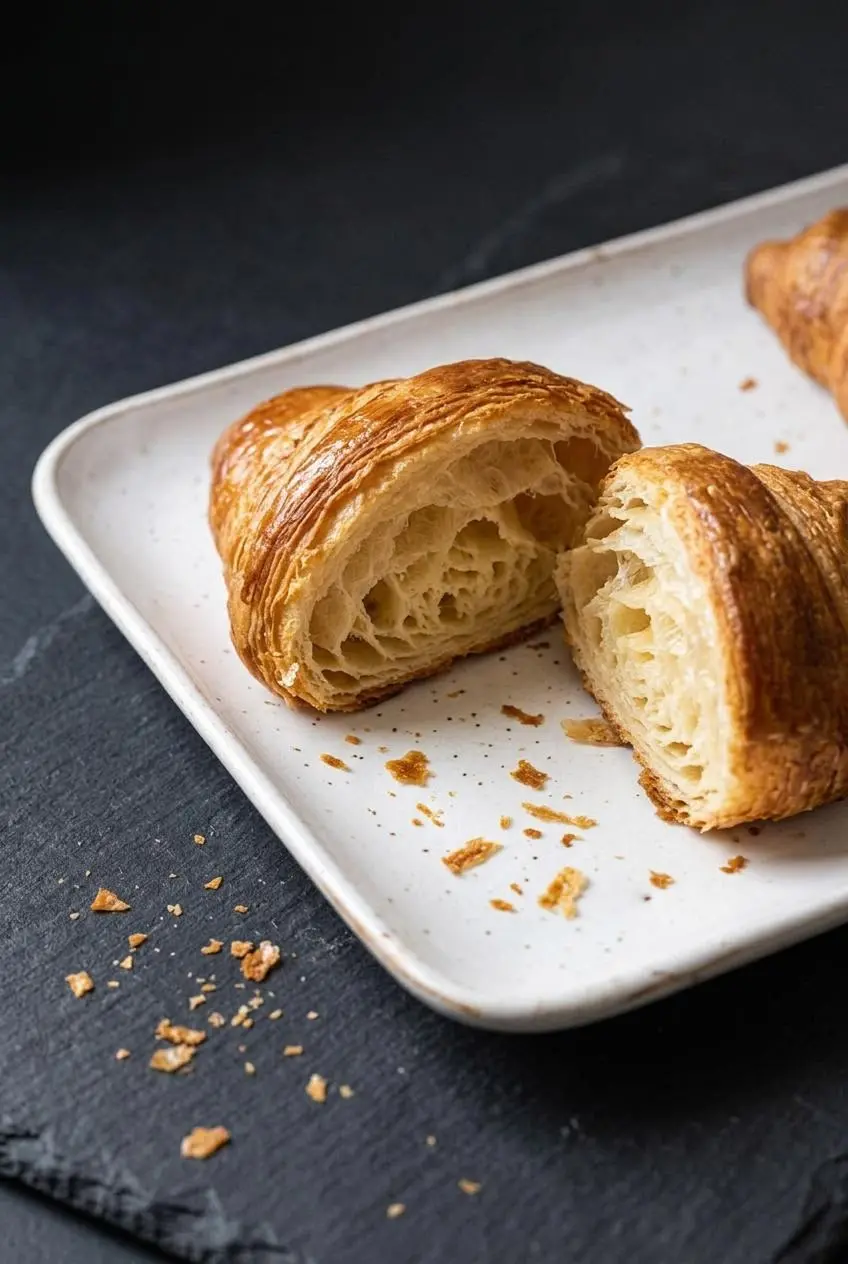
Butter streaks and an elastic dough do different jobs. The dough provides a framework; the butter separates it into layers that can lift as moisture turns to steam during baking. Letter folds distribute those layers throughout the pastry.
This isn’t gluten-free: vital wheat gluten is central to the dough’s structure. It also contains dairy from butter and cream, plus egg in the wash. Lupin flour comes from a legume, so check ingredient labels carefully if you have dietary restrictions.
People with peanut allergies can also react to lupin and lupin-derived ingredients. If that applies to you, ask your allergist before using lupin flour rather than assuming a wheat-flour alternative suits your needs.
Cheese-Free Laminated vs. Fathead Dough Comparison
Fathead dough commonly uses melted mozzarella and cream cheese to bind the dough. It makes a different kind of crescent, usually with a denser, chewier bite. Here, the gluten-based framework and folded butter aim for a more distinct pastry crumb.
If you enjoy making homemade keto bread, this offers another baking project, with an added focus on keeping fat in separate layers. Bakers who need gluten-free pastries should choose a separately developed gluten-free method, not simply remove the gluten from this one.
Troubleshooting and Pro Tips for Flaky Layers
Use the dough’s behavior to guide your handling, especially during the repeated folds.
- The dough snaps back: The gluten is resisting stretching; wrap and chill it instead of pressing harder with the rolling pin.
- The dough sticks: Use parchment over the top and a light dusting underneath rather than coating everything heavily with flour.
- The butter disappears into a paste: It has softened too much or been worked too finely; chill before continuing, and keep the butter pea-sized during the initial mixing.
- The croissants unroll: A loose triangle point can lift as the dough expands; secure it with a gentle press during shaping.
Why You Should Not Swap Psyllium Husk for Oat Fiber
Oat fiber and psyllium husk don’t perform the same job. Oat fiber contributes dry bulk, while hydrated psyllium forms a gel. A direct swap can make the dough gummy and interfere with distinct layers. There isn’t a validated replacement ratio for this recipe, so retain the oat fiber.
Preventing Butter Leakage and Rapid Crust Browning
- Butter pools during rising: The surroundings may be too warm; keep the tray in the moderate room environment specified in the method, away from oven vents and direct heat.
- The tops darken early: Allulose encourages rapid coloring; tent loosely with foil so the exterior has some protection while baking continues.
- The folds look greasy: Warm butter is smearing instead of forming streaks; pause for chilling rather than adding more flour to absorb it.
Variations and Customizations

Keep flavor changes optional and separate from the dough formula. Fillings can change how a pastry expands, so pairing them with baked croissants is the most straightforward way to customize.
Sweet Chocolate or Almond Keto Croissants
Pair a split pastry with low-carb chocolate or a suitable almond filling for a sweeter bakery-style serving. Check labels rather than assuming every sugar-free chocolate or almond paste fits your carbohydrate preferences. These additions aren’t part of the dough formula.
Savory Herb and Cheese Filling Ideas
Herbs or cheese tucked inside a split, baked crescent add a savory direction without changing the lamination. Choose the filling for flavor, but keep it separate from the dough if you want to preserve the cheese-free pastry itself.
Keto Breakfast Sandwich Croissants
- Breakfast sandwich: Slice horizontally and add eggs, cheese, bacon, or sausage; a fluffy keto omelette makes a substantial egg filling.
- Coffee pairing: Serve warm with butter or sugar-free jam alongside coffee or tea.
- Dinner side: Offer an unfilled croissant with soup, stew, or a crisp salad.
Storage and Reheating Instructions
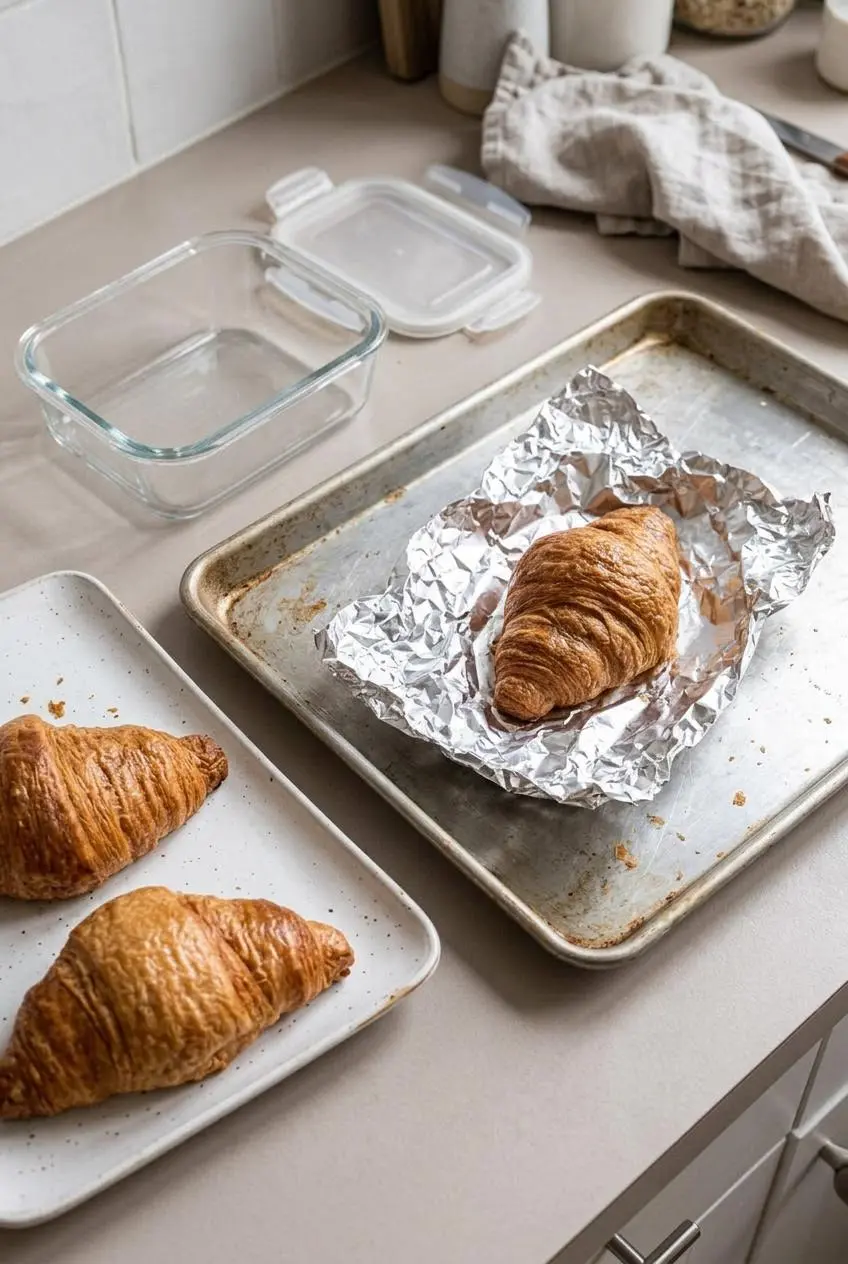
Let the pastries cool completely before wrapping so trapped steam doesn’t soften the crust. Wrap individual croissants and place them in a well-sealed container; keep any egg or meat sandwich fillings separate and chilled.
For reheating, loosely enclose an unfilled croissant in foil and warm it in the oven, then open the foil to let the exterior crisp. Watch the ridges closely because they can darken before the center warms. Reheat only what you plan to serve, and assemble sandwiches afterward.
Conclusion
The specialty flour blend gives these pastries structure, while cold butter and repeated letter folds create their flaky character without mozzarella or cream cheese.
Take the chilling breaks whenever the dough pushes back. That patience pays off when you split a warm croissant for breakfast or enjoy its buttery layers on their own.
Frequently Asked Questions
Can I Substitute Psyllium Husk for Oat Fiber in This Recipe?
No direct substitution is recommended because psyllium forms a gel rather than providing oat fiber’s dry bulk. Keep the oat fiber to avoid an untested change that could make the layers gummy.
How Are These Keto Croissants Made Without Cheese or Fathead Dough?
Vital wheat gluten and the specialty flour blend form the dough’s framework instead of melted cheese. Cold butter, distributed through repeated folds, creates the layered pastry texture.
Why Does the Yeast Mixture Use Inulin Powder Instead of Sugar?
Inulin is included in this formulation’s yeast mixture without adding granulated sugar. Don’t assume it feeds ordinary baker’s yeast just like sugar does; a dramatic foamy bloom isn’t a reliable expectation.
Are Keto Croissants Suitable for People Managing Blood Sugar or Diabetes?
The keto name alone doesn’t establish suitability for your individual eating plan. Review the ingredients and portion with your healthcare professional or registered dietitian rather than expecting a guaranteed blood-sugar response.
How Do I Keep the Butter From Melting Out While Rising and Baking?
Keep the dough cool during folding and avoid a hot proofing location. Preserve visible butter streaks and use the fully preheated oven specified in the method; these handling steps help protect the layers, though some butter leakage can still occur.

Keto Croissants

Equipment
- Rolling Pin
- Parchment paper
- Plastic wrap
- Aluminum foil
- Baking sheet
- Pastry blender
Ingredients
- 2 tbsp lukewarm water (30ml)
- 2 tsp active dry yeast
- 2 tbsp inulin powder
- 3/4 cup vital wheat gluten (100g)
- 1/2 cup allulose sweetener (70g)
- 1/3 cup oat fiber (40g)
- 1/3 cup lupin flour (30g)
- 1 tbsp coconut flour
- 1 1/2 tbsp baking powder
- 1/2 tsp xanthan gum
- Pinch of salt
- 1 cup cold salted butter (250g), cubed
- 6 tbsp cold water (90ml)
- 7 tbsp heavy cream (100ml)
- 1 whole egg for brushing
Instructions
- Combine the lukewarm water, yeast, and inulin in a small bowl with one gentle stir of a fork, then cover the bowl with foil and leave it aside. The mixture should look moistened throughout, without dry pockets of powder.
- Distribute the vital wheat gluten, allulose, oat fiber, lupin flour, coconut flour, baking powder, xanthan gum, and salt evenly with a whisk in a separate bowl. A uniform dry mixture helps avoid concentrated patches of gum or leavener.
- Work the cubed butter through the dry mixture with a fork or pastry blender until the pieces resemble peas, then pour in the cold water, cream, and reserved yeast mixture. Stop cutting while individual butter pieces remain clearly visible.
- Bring the mixture together with a spoon, gather it into a ball, and enclose it in plastic wrap before refrigerating for 30 minutes. The dough should hold together but still show pieces of butter.
- Set the chilled dough on a work surface lightly dusted with vital wheat gluten and lay parchment over it before rolling. The parchment creates a barrier between the dough and rolling pin without heavy dusting.
- Lengthen the dough into a rectangle, fold the two short ends inward in overlapping thirds, neaten the edges, rotate 90 degrees, lightly dust the surface and dough again, and continue until you have completed four folds. If rolling becomes difficult or the dough springs back strongly, wrap it and refrigerate for 30 minutes before continuing.
- Refrigerate the wrapped dough for 30 minutes, then give it two additional rolling-and-folding turns, stopping when the butter appears mostly incorporated as streaks rather than chunks. Use another 30-minute refrigerator rest if resistance returns, and look for a marbled appearance rather than a greasy paste.
- Wrap the folded dough and refrigerate it for at least 30 minutes before dividing. The chilled dough should feel firm enough to handle without smearing the butter.
- Unwrap the dough, divide it into equal halves, and return one half to the refrigerator in fresh wrapping. Keeping the unused portion chilled helps preserve its butter layers while you shape the first portion.
- Roll the exposed half in both directions to make a broad rectangle, taking it as thin as the dough comfortably allows. Aim for even thickness rather than forcing tight dough into a larger sheet.
- Divide the rectangle into three smaller rectangles, cut each diagonally into two long triangles, then stack each pair and roll it into one elongated triangle. Each pair forms a single croissant, giving you three triangles to shape from this half.
- Coil one triangle from its broad cut edge toward its point, then press the point gently into the rolled dough. The finished roll should hold its shape with the tip secured against the surface.
- Shape the remaining two paired triangles in the same way. Keep the rolls similar in size so they bake evenly.
- Arrange the shaped pastries with space between them on a parchment-lined baking sheet, then retrieve the refrigerated half and repeat the rolling, cutting, pairing, and shaping. You should now have six croissants with room to expand.
- Beat the egg until uniform, brush a light coating over the pastries, cover them with plastic wrap, and let them rise for 1 hour at 75°F to 80°F, away from a hot spot. Look for slightly puffed shapes with defined edges rather than greasy surfaces or pools of melted butter.
- Start preheating the oven to 375°F (190°C) during the final 20 minutes of rising, remove the plastic wrap, and bake for about 20 to 25 minutes, adding a loose foil covering if the tops darken too quickly. The finished croissants should have golden-brown ridges rather than scorched tops.