Skip to content

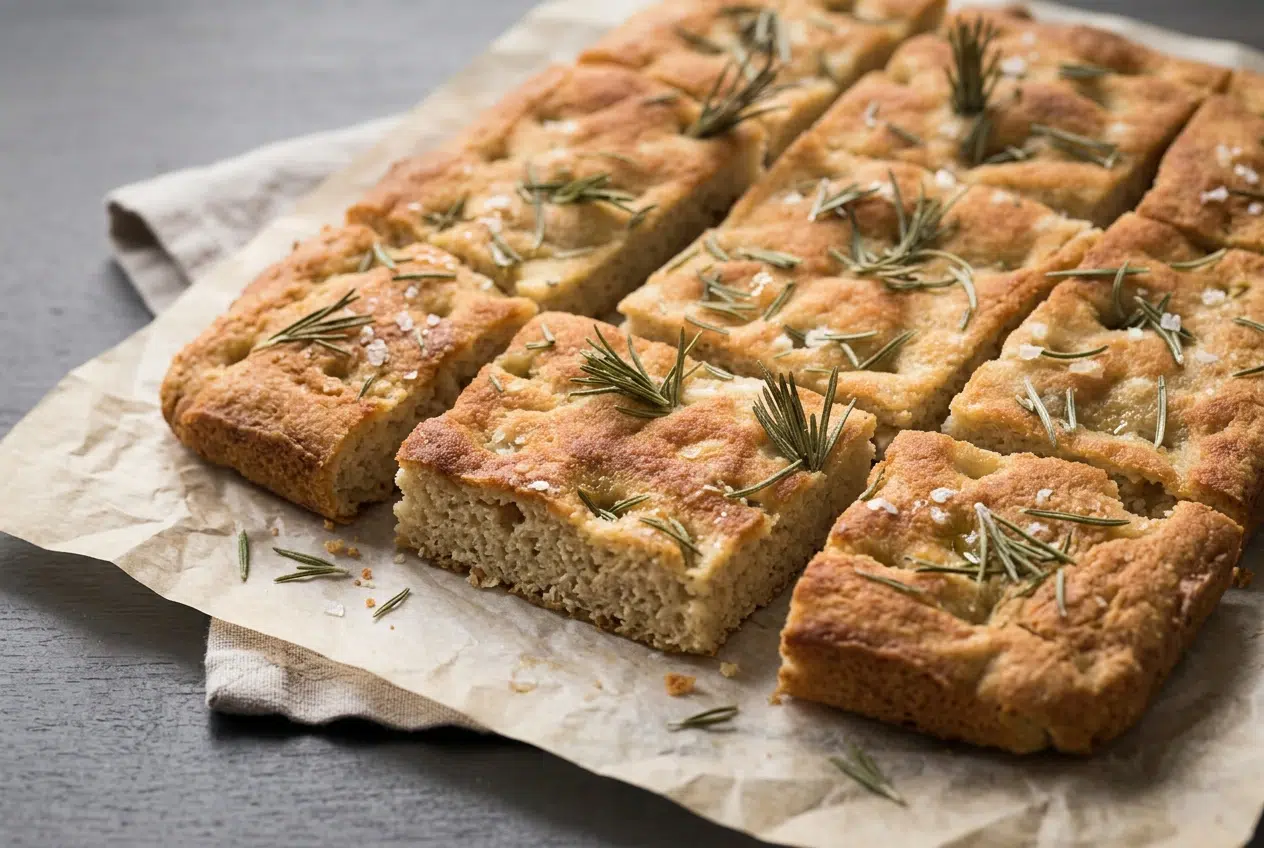
This keto focaccia bread uses yeast, almond flour, and psyllium husk for a soft, chewy crumb with savory rosemary and olive oil flavor. Wet-finger dimpling shapes the sticky dough, while complete cooling and a light toast help deliver crisp edges.
Unlike cheese-based flatbreads, this keto focaccia bread gets its bread-like aroma from active dry yeast. Almond flour provides richness, while binders give the wheat-free dough enough structure to hold together.
It’s a good match for dipping, sandwiches, or a bowl of soup. Expect a moist, tender interior rather than the large, open holes of wheat focaccia. The dimples catch the rosemary oil.
Set a small bowl of water beside the pan so you can rewet your fingers while spreading and dimpling.
Key Ingredients and Low-Carb Flour Roles
Each ingredient contributes to the bread’s structure, moisture, lift, or savory finish: almond flour brings richness, psyllium and xanthan gum hold the crumb together, and olive oil, rosemary, and salt give it focaccia character.
- 2 teaspoons active dry yeast
- 2 teaspoons maple syrup (or inulin, or honey, to feed the yeast*)
- 80 ml water (lukewarm between 105-110°F)
- 144 g almond flour
- 28 g psyllium husk (finely ground)
- 1 1/2 teaspoon xanthan gum (or 1 tablespoon ground flax seeds**)
- 1 1/2 teaspoon baking powder
- 1/2 teaspoon kosher salt
- 1 egg (at room temperature)
- 2 egg whites (at room temperature)
- 13 g extra virgin olive oil
- 2 teaspoons apple cider vinegar
- rosemary springs
- extra virgin olive oil
- flakey sea salt
Finely ground almond flour gives a smoother crumb than coarse almond meal. Psyllium absorbs moisture and supplies springy chew; xanthan gum helps bind the dough. The listed ground flaxseed alternative also binds, though the texture may be denser.
Egg whites help support the crumb, and baking powder supplements the yeast’s lift. Apple cider vinegar adds mild acidity and balances the rich nut-flour flavor. Yeast supplies its characteristic aroma, with maple syrup, honey, or inulin listed as feeding options.
Olive oil keeps the bread rich and moist. Rosemary adds fragrance, while flaky sea salt gives the surface little bursts of seasoning. Use the list above for all measurements and substitutions.
How to Make Keto Focaccia Bread Step by Step
Watch the dough as well as the clock: foamy yeast, rapid thickening, and a noticeably puffed surface tell you how the bake is progressing.
For the keto focaccia bread
- Combine the yeast and maple syrup in a large bowl, pour in water heated to 105-110°F, and cover with a kitchen towel for 7 minutes.
Look for bubbles and foam before continuing; restart with fresh yeast and correctly warmed water if the surface stays inactive. - Whisk the almond flour, finely ground psyllium husk, xanthan gum, baking powder, and kosher salt together in a medium bowl while the yeast rests.
The dry mixture should look uniform, without concentrated patches of binder or leavener. - Beat the room-temperature egg and egg whites, measured olive oil, and vinegar into the activated yeast with a whisk or electric mixer for a couple of minutes.
The mixture should become airy and frothy before the dry ingredients go in. - Incorporate the dry mixture in two additions, working briskly and thoroughly after each addition.
As the binders take up moisture, the mixture will gather into a thick, sticky round rather than remain pourable. - Fit parchment into a 10-inch skillet or baking dish, grease it with olive oil, then use wet fingers or a wet spatula to spread the dough evenly and press dimples into its surface.
An even layer helps the center and edges bake together, and water keeps the dough from clinging to your hands. - Tuck rosemary into some dimples, scatter more over the surface, drizzle generously with olive oil, sprinkle with flaky sea salt, and cover with a kitchen towel in a warm, draft-free spot for about an hour.
The dough should look lighter and visibly puffed, without needing to double in size. - Heat the oven to 350°F/180°C during the rise, using 375°F/190°C for high-altitude baking.
The dough should still look puffed when the oven is ready. - Move the pan carefully into the oven and bake for 25-30 minutes, adding a loose foil dome at minute 10 with its edges supported above the bread.
The foil should leave space over the rosemary and crust so the surface can brown without scorching. - Let the focaccia cool completely before slicing, or wait at least 15 minutes if cutting it warm.
The fully cooled crumb holds its shape better, while an early-cut slice may compress and feel damp. - Place completely cooled leftovers in an airtight container and lightly toast slices before serving again.
Toasting brings back a crisper exterior after the crust softens.
Pro Tips and Common Keto Focaccia Mistakes to Avoid
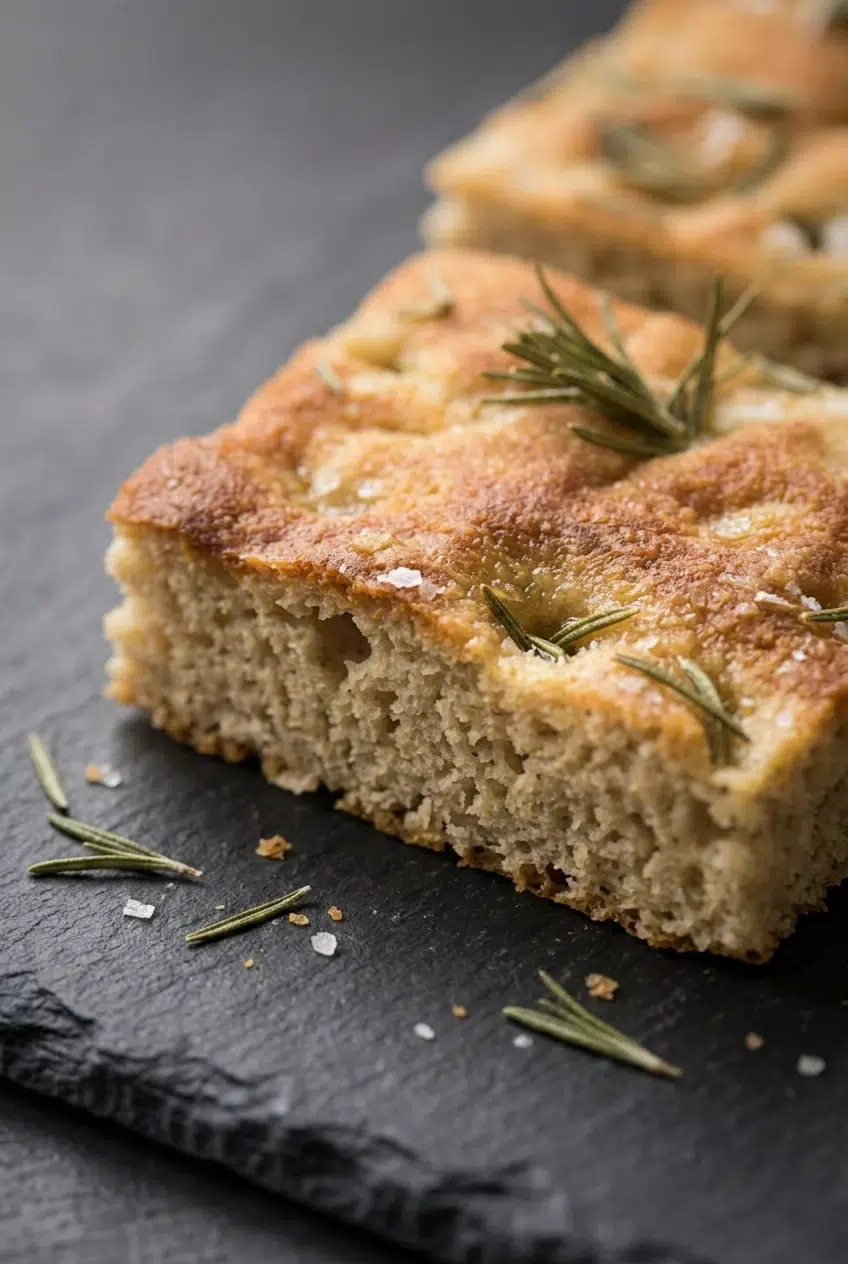
Most texture problems come from hydration, uneven thickness, or cutting before the crumb has set.
- Dense or dry crumb: Overpacked flour changes hydration, so weigh the dry ingredients instead of scooping them.
- Weak rise: Excessively hot water can damage yeast, while cold water slows activity; use the specified warmth and room-temperature eggs.
- Damp center: A thick mound bakes differently from a flat, even layer, so spread carefully and allow complete cooling before judging the texture.
- Slight sinking: Some settling can happen without wheat gluten; a modest drop is different from a collapsed, wet center.
- Dark herbs or soft edges: Keep the foil loose to protect aromatics, then lightly toast cooled slices if you prefer more crunch.
I favor an evenly spread dough over a perfectly smooth surface; consistent thickness matters more than tidy dimples.
For tall sandwich slices, choose a purpose-built loaf such as classic keto bread rather than putting this moist flatbread dough into a deep pan.
Popular Keto Focaccia Variations: Yeast-Free, Fathead, and Herb Options
These optional directions produce different breads, so treat them as alternatives rather than interchangeable changes to the method above.
Yeast-Free Quick Keto Focaccia
A Greek yogurt version with baking soda or baking powder skips yeast proofing and brings a tangy flavor. Expect a quick-bread texture rather than fermented aroma, and use a formula designed for that approach.
Fathead Cheese-Dough Focaccia
Melted mozzarella and cream cheese create a rich, chewy dough that tastes distinctly cheesy. Italian herbs suit this style, which also appears in savory bakes such as keto bagels.
Garlic and Rosemary Staged-Oil Topping
For a garlic variation, reserve some aromatic oil for a later application rather than exposing all the garlic and rosemary to the full bake. Keep the loose foil protection; garlic can turn bitter when it scorches.
Dairy-Free and Paleo Adaptations
The yeasted dough already contains no dairy. Ground flaxseed is the listed alternative to xanthan gum, and inulin is another listed yeast-feeding choice. Check individual ingredients against your preferred paleo guidelines rather than assuming every substitution fits.
Dietary Fit and Ingredient Adaptations
The dough contains no wheat, grains, or dairy, but it does contain almonds and eggs. Check ingredient labels and handling requirements when cooking for someone with allergies or a need to avoid gluten.
A keto label doesn’t establish individual dietary suitability. Calculate nutrition from your actual ingredients and portions, especially when choosing a yeast-feeding option or a cheese-based variation.
Best Ways to Serve Keto Focaccia
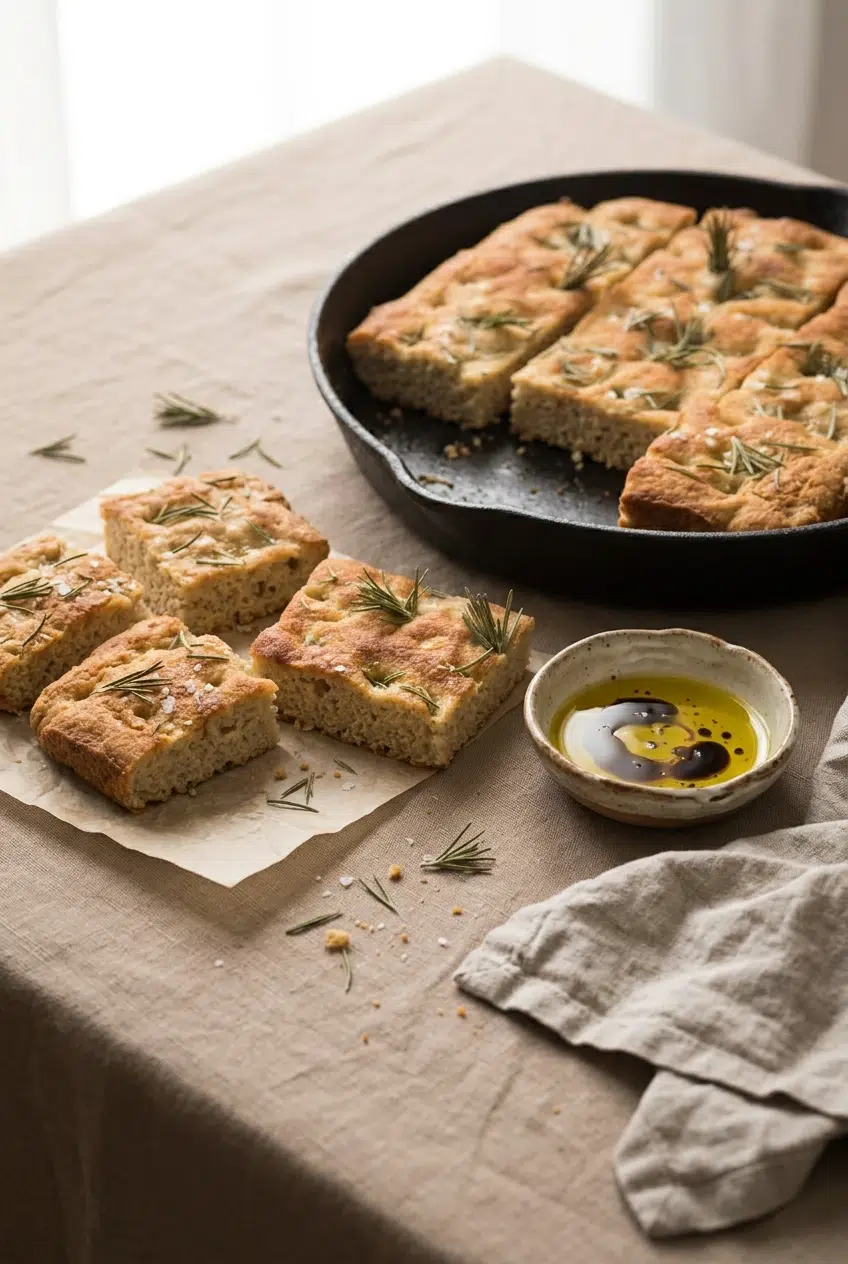
Let the crumb set first, then warm or toast slices to suit the meal.
- Dip slices into extra virgin olive oil with a little balsamic vinegar.
- Split cooled pieces horizontally for sandwiches or pressed panini; light toasting gives the cut surfaces more structure.
- Serve alongside Italian soups, stews, leafy salads, or keto pasta to catch the sauce.
- Use a slice as a savory flatbread foundation, keeping toppings restrained so the moist crumb isn’t weighed down.
Storage and Reheating for Crispness
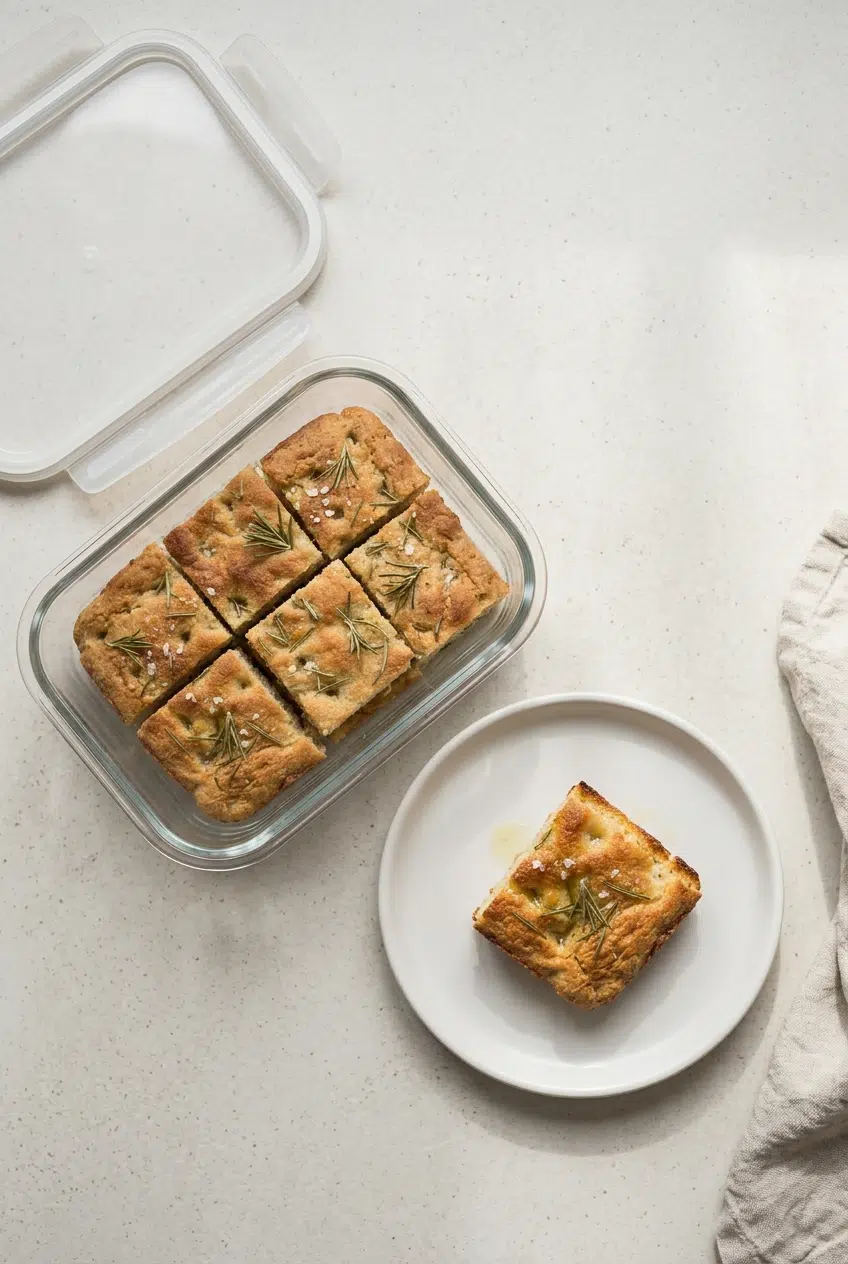
Allow the bread to cool completely before sealing it in an airtight container or tight wrap. Trapped steam encourages a damp surface, which works against crisp edges.
Lightly toast individual slices when you’re ready to eat them. Aim for a crisp exterior without drying out the center, and avoid treating renewed crispness as a measure of storage safety.
Wrapping Up Your Keto Focaccia Bake
Foamy yeast, wet-hand dimpling, and patient cooling make the biggest difference to this rosemary focaccia. Give the dough an even thickness and room to puff.
Enjoy the tender crumb as it is, or lightly toast cooled slices for crisper edges. Once you’re comfortable with the dough, try the herb-oil variation for another savory finish.
Frequently Asked Questions
Does Feeding Yeast With Maple Syrup or Honey Affect Ketosis?
The recipe alone can’t establish how a serving will affect your ketosis. Don’t assume fermentation removes all added carbohydrate; account for your ingredients and portion within your personal nutrition plan.
What Does Apple Cider Vinegar Do in Keto Focaccia Bread?
It adds mild acidity and balances the richness of the almond flour and olive oil. Its role here is culinary, not a promised health benefit.
Can I Make Keto Focaccia Bread Without Yeast or Xanthan Gum?
The listed ground flaxseed substitution offers a xanthan-free option. For yeast-free bread, use a dedicated Greek yogurt or fathead formula rather than simply omitting yeast.
Can I Bake This Keto Focaccia Dough as a Loaf of Bread?
Keep this dough in the specified shallow pan for the intended result. A taller shape may retain too much moisture in the center and lacks wheat gluten to support a lofty loaf.
How Should I Store and Reheat Leftover Keto Focaccia Bread?
Seal completely cooled bread in an airtight container or tight wrap. Lightly toast slices before serving to restore exterior crispness without over-drying the crumb.
Keto Focaccia Bread

Equipment
- Large bowl
- Medium bowl
- Whisk or electric mixer
- 10-inch skillet or baking dish
- Parchment paper
Ingredients
- 2 teaspoons active dry yeast
- 2 teaspoons maple syrup or inulin, or honey, to feed the yeast*
- 80 ml water lukewarm between 105-110°F
- 144 g almond flour
- 28 g psyllium husk finely ground
- 1 1/2 teaspoon xanthan gum or 1 tablespoon ground flax seeds**
- 1 1/2 teaspoon baking powder
- 1/2 teaspoon kosher salt
- 1 egg at room temperature
- 2 egg whites at room temperature
- 13 g extra virgin olive oil
- 2 teaspoons apple cider vinegar
- rosemary springs
- extra virgin olive oil
- flakey sea salt
Instructions
For the keto focaccia bread
- Combine the yeast and maple syrup in a large bowl, pour in water heated to 105-110°F, and cover with a kitchen towel for 7 minutes. Look for bubbles and foam before continuing; restart with fresh yeast and correctly warmed water if the surface stays inactive.
- Whisk the almond flour, finely ground psyllium husk, xanthan gum, baking powder, and kosher salt together in a medium bowl while the yeast rests. The dry mixture should look uniform, without concentrated patches of binder or leavener.
- Beat the room-temperature egg and egg whites, measured olive oil, and vinegar into the activated yeast with a whisk or electric mixer for a couple of minutes. The mixture should become airy and frothy before the dry ingredients go in.
- Incorporate the dry mixture in two additions, working briskly and thoroughly after each addition. As the binders take up moisture, the mixture will gather into a thick, sticky round rather than remain pourable.
- Fit parchment into a 10-inch skillet or baking dish, grease it with olive oil, then use wet fingers or a wet spatula to spread the dough evenly and press dimples into its surface. An even layer helps the center and edges bake together, and water keeps the dough from clinging to your hands.
- Tuck rosemary into some dimples, scatter more over the surface, drizzle generously with olive oil, sprinkle with flaky sea salt, and cover with a kitchen towel in a warm, draft-free spot for about an hour. The dough should look lighter and visibly puffed, without needing to double in size.
- Heat the oven to 350°F/180°C during the rise, using 375°F/190°C for high-altitude baking. The dough should still look puffed when the oven is ready.
- Move the pan carefully into the oven and bake for 25-30 minutes, adding a loose foil dome at minute 10 with its edges supported above the bread. The foil should leave space over the rosemary and crust so the surface can brown without scorching.
- Let the focaccia cool completely before slicing, or wait at least 15 minutes if cutting it warm. The fully cooled crumb holds its shape better, while an early-cut slice may compress and feel damp.
- Place completely cooled leftovers in an airtight container and lightly toast slices before serving again. Toasting brings back a crisper exterior after the crust softens.