Skip to content
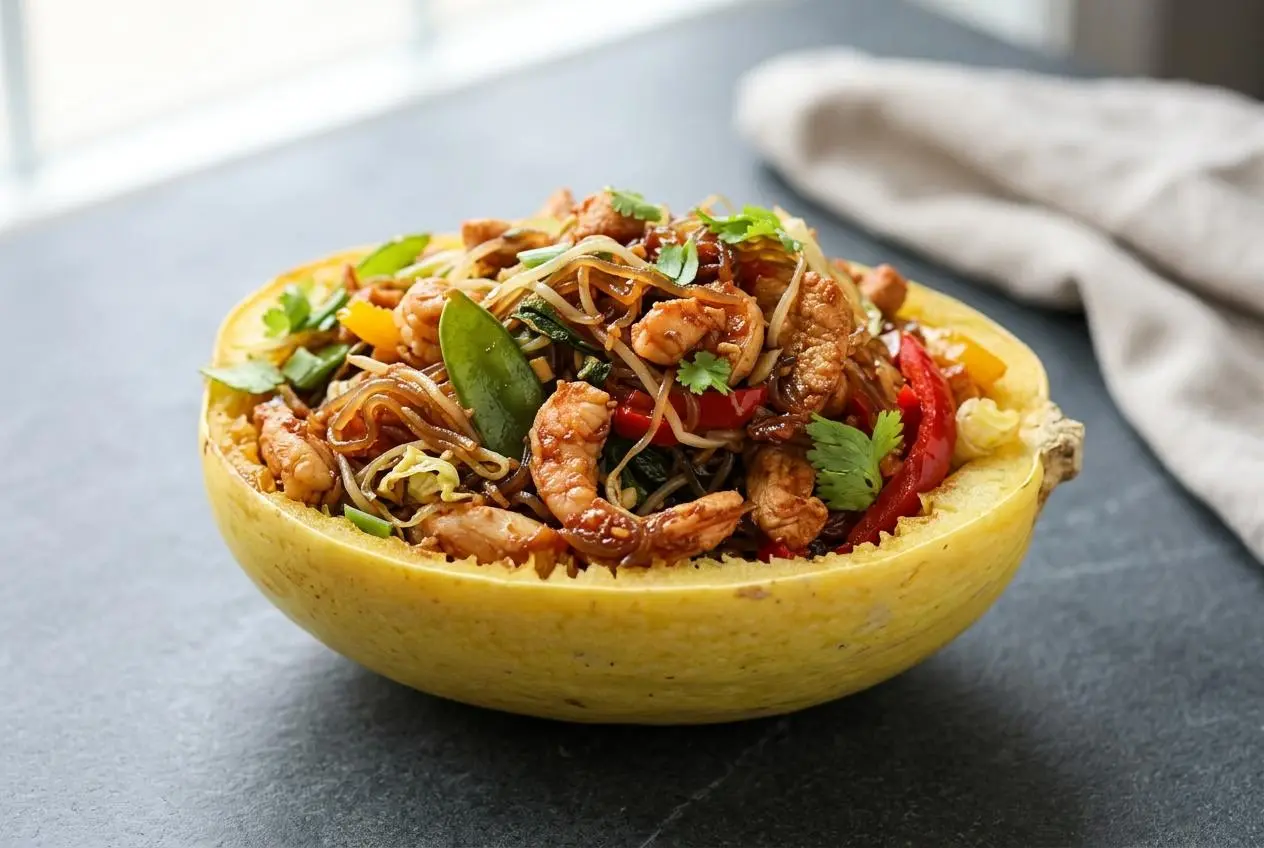
This fast stir fry combines chicken, shrimp, spaghetti squash, and miracle noodles in a savory, gingery sauce with crisp-tender vegetables.
This keto lo mein recipe turns takeout-style flavors into a skillet dinner with springy noodles, bright vegetables, and a tangy-sweet savory finish.
Cooking the proteins first keeps them tender while the vegetables stay colorful and lightly crisp. The dry noodle trick makes the sauce cling.
Rinse and drain the miracle noodles before cooking so they do not dilute the sauce in the pan.
Essential Low-Carb Ingredients for Takeout Flavor
Each ingredient builds a specific part of the dish: rich sesame aroma, tender proteins, crisp vegetables, springy strands, and a bright savory sauce that ties everything together.
- 1 tablespoon Avocado oil (or other light oil)
- 1 tablespoon sesame oil
- 1 cup raw shrimp, peeled and cut in half
- 1 cup raw chicken, cut into thin strips
- 1 teaspoon minced garlic – about 1 clove
- 1 tablespoon minced fresh ginger
- 1 cup raw bell pepper, cut into strips (I used red and yellow)
- 1 cup snow peas, trimmed
- 1 cup raw bean sprouts, washed
- 1/4 cup sliced scallions
- 1 cup thinly sliced Napa cabbage
- 1 cup cooked spaghetti squash strands
- 2 cups miracle noodles (shiritake)
- 1 tablespoon granulated sweetener **
- 1 tablespoon lime juice
- 2 tablespoon dark soy sauce (or tamari or coconut aminos)
- 2 tablespoon unseasoned rice wine vinegar
Fresh ginger and garlic give the stir fry its warm, aromatic backbone. Dark soy sauce, tamari, or coconut aminos provide the deep savory character, while vinegar and lime juice sharpen the sauce so the sweetener does not taste flat.
Bell peppers, snow peas, sprouts, scallions, and Napa cabbage bring crunch and color. Spaghetti squash softens the bouncy texture of miracle noodles, creating a fuller tangle of strands without relying on wheat noodles.
I prefer to slice the cabbage thinly and keep the vegetables moving in the pan, because thick pieces can release too much moisture before they turn tender.
How to Make This Keto Lo Mein
Set everything near the stove before heating the pan. The cooking moves quickly, and the ingredient list below gives the exact measurements and timing for each stage.
- Warm the avocado oil and sesame oil in a large sauté pan over high heat.
The surface should look fluid and shimmer slightly before the proteins go in. - Add the shrimp and chicken, then stir fry for about 3 minutes until cooked through.
The shrimp should turn opaque and the chicken strips should lose their raw-looking centers. - Transfer the cooked shrimp and chicken to a plate.
Removing them now prevents the proteins from tightening while the vegetables cook. - Place the minced ginger and garlic in the empty pan and cook for about 2 minutes.
The aromatics should smell fragrant before they begin to brown. - Add the bell pepper, snow peas, bean sprouts, scallions, and Napa cabbage, then stir fry for 3–4 minutes.
Pull the pan from the heat while the vegetables are just softened and still brightly colored. - Pour in the dark soy sauce, sweetener, rice wine vinegar, and lime juice, then cook for 2 minutes.
The liquid should bubble and look slightly glossier as the flavors come together. - Return the shrimp and chicken to the pan with the spaghetti squash strands and miracle noodles.
Turn everything until the sauce coats the noodles and vegetables evenly. - Serve the lo mein hot and garnish with cilantro if desired.
The finished dish should look glossy, aromatic, and lightly saucy rather than wet.
Understanding Low-Carb Lo Mein and Keto Noodle Basics
Traditional Lo Mein vs. Low-Carb Alternatives
Lo mein is usually a saucy noodle dish: the cooked noodles are tossed with vegetables, protein, and sauce until coated. Chow mein often leans toward pan-fried or crisp noodles, so its texture is quite different.
Traditional wheat noodles do not fit many low-carbohydrate eating plans. This version gets its familiar saucy noodle feel from miracle noodles and spaghetti squash, then builds takeout flavor with ginger, garlic, dark soy sauce, vinegar, lime, and sweetener instead of a cornstarch-thickened sauce.
Selecting the Right Noodle Replacement
Shirataki or konjac noodles offer the closest springy chew once rinsed and dried well. Spaghetti squash strands are softer and mildly sweet, which makes them especially useful alongside miracle noodles rather than as the only noodle substitute.
Hearts of palm noodles provide a firmer, more vegetable-forward bite, while thin zucchini ribbons cook quickly but can release water if left in the pan too long. For another noodle-style option, homemade keto pasta can give you a more traditional pasta-like texture.
Mastering the Low-Carb Stir Fry Technique
Dry-Frying Shirataki to Remove Excess Moisture
After rinsing and draining shirataki noodles, place them in a warm ungreased skillet before starting the stir fry. Toss them until the surface moisture cooks off and the strands begin to squeak lightly against the pan. That sound is a useful sign that the noodles are drying rather than steaming.
Dry noodles absorb the savory sauce instead of watering it down. Add them only at the final tossing stage so they warm through without becoming rubbery.
High-Heat Searing for Tender Proteins
Give the shrimp and chicken room in the pan and cook them before the vegetables. A crowded skillet traps steam, which leaves the proteins pale and can make the vegetables weep liquid.
Move the cooked proteins out as soon as they are done, then return them after the sauce has simmered. This staging keeps the chicken tender and the shrimp plump while the vegetables cook in the same flavorful pan.
Troubleshooting Sogginess, Texture, and Sauce Clumping
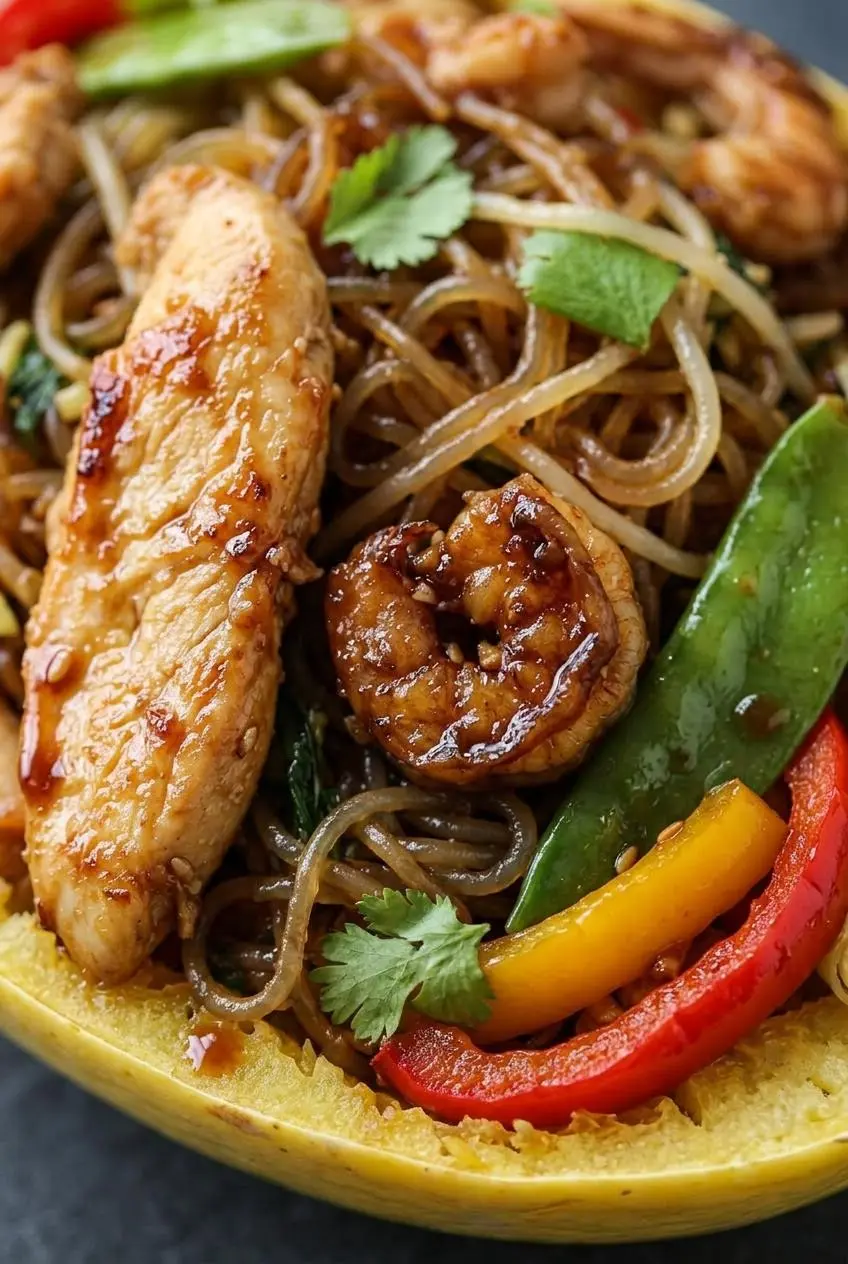
- Watery sauce: Miracle noodles or overcooked squash can release moisture. Rinse, drain, and dry-fry the noodles first, then add them only after the sauce has bubbled briefly.
- Soft vegetables: The pan may be crowded or the vegetables may have cooked too long. Use high heat, stir constantly, and stop when the cabbage begins to wilt but the snow peas remain bright.
- Weak flavor: The sauce needs a moment in the pan before the noodles go in. Let the soy sauce, vinegar, lime, and sweetener simmer together so the sharp and savory flavors round out.
- Clumpy thickener: If using xanthan gum in an optional variation, whisk it into cool sauce liquid before heating. Add it gradually, because it thickens quickly.
- Rubbery noodles: Shirataki can toughen when cooked too aggressively. Dry them first, then toss only long enough to coat and heat through.
Custom Protein and Vegetable Variations
Keto Beef Lo Mein
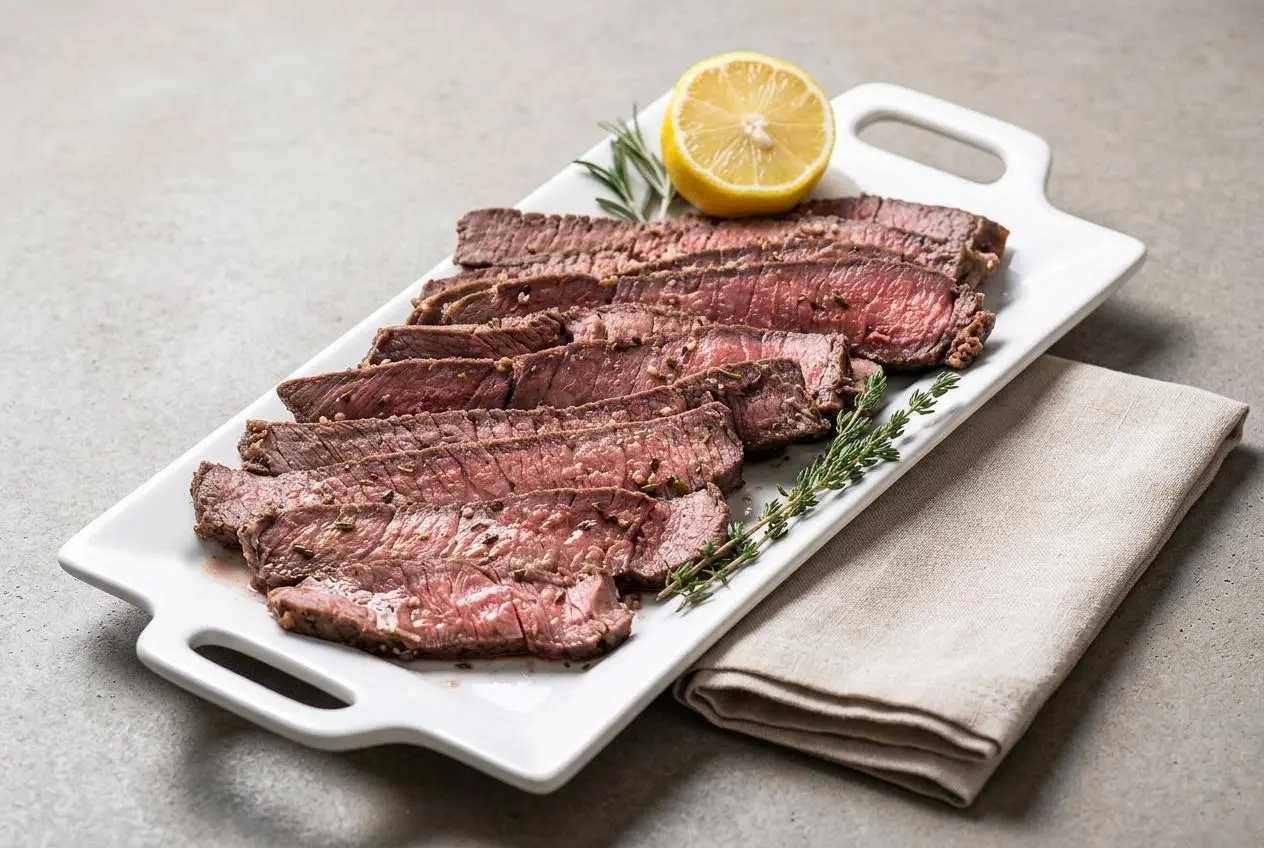
For an optional beef version, swap in thinly sliced flank steak or sirloin. Slice the beef across the grain for a more tender bite, sear it quickly, and pair it with extra scallions and shredded cabbage for a rich, savory skillet.
Vegetarian Mushroom and Tofu Lo Mein
For a plant-centered bowl, use crisp tofu cubes with shiitake mushrooms and bok choy. The mushrooms bring deep savory flavor, while bok choy adds a juicy crunch that works especially well with the ginger and sesame oil.
Hearts of Palm Noodle Lo Mein
Hearts of palm linguine is an optional swap for miracle noodles when you prefer a firmer noodle with a mild vegetable flavor. Drain and rinse it well before adding it to the finished sauce so its natural tang does not overpower the other ingredients.
Storage, Reheating, and Make-Ahead Guidance
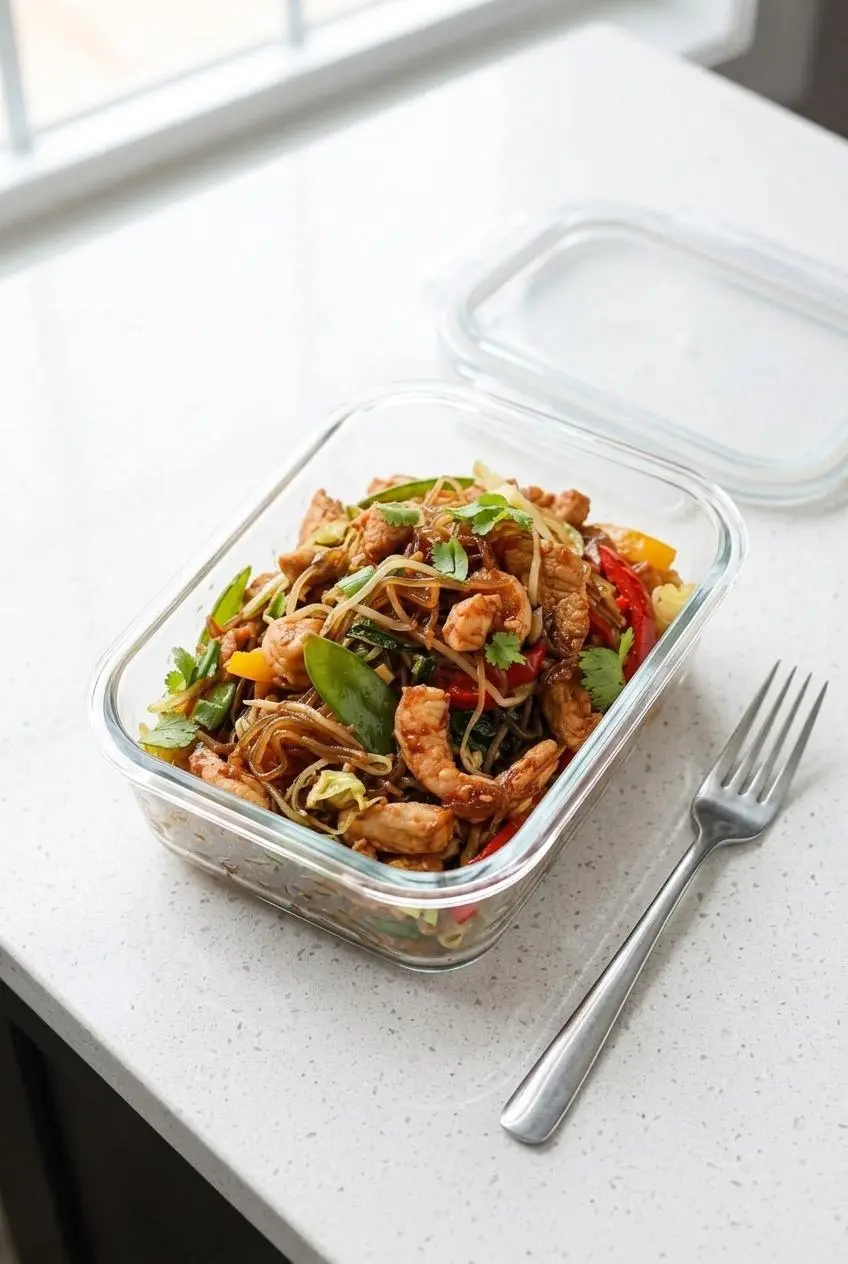
Let leftovers cool before transferring them to airtight glass containers and keeping them chilled. Store the stir fry in individual portions when possible, since reheating a smaller amount helps the vegetables keep more of their bite.
Warm leftovers gently in a hot skillet, tossing just until heated through. Avoid prolonged reheating, which can soften the cabbage, snow peas, spaghetti squash, and miracle noodles. For easier dinner prep, keep cut vegetables and sauce components separate until cooking time.
Serving Suggestions and Complementary Sides
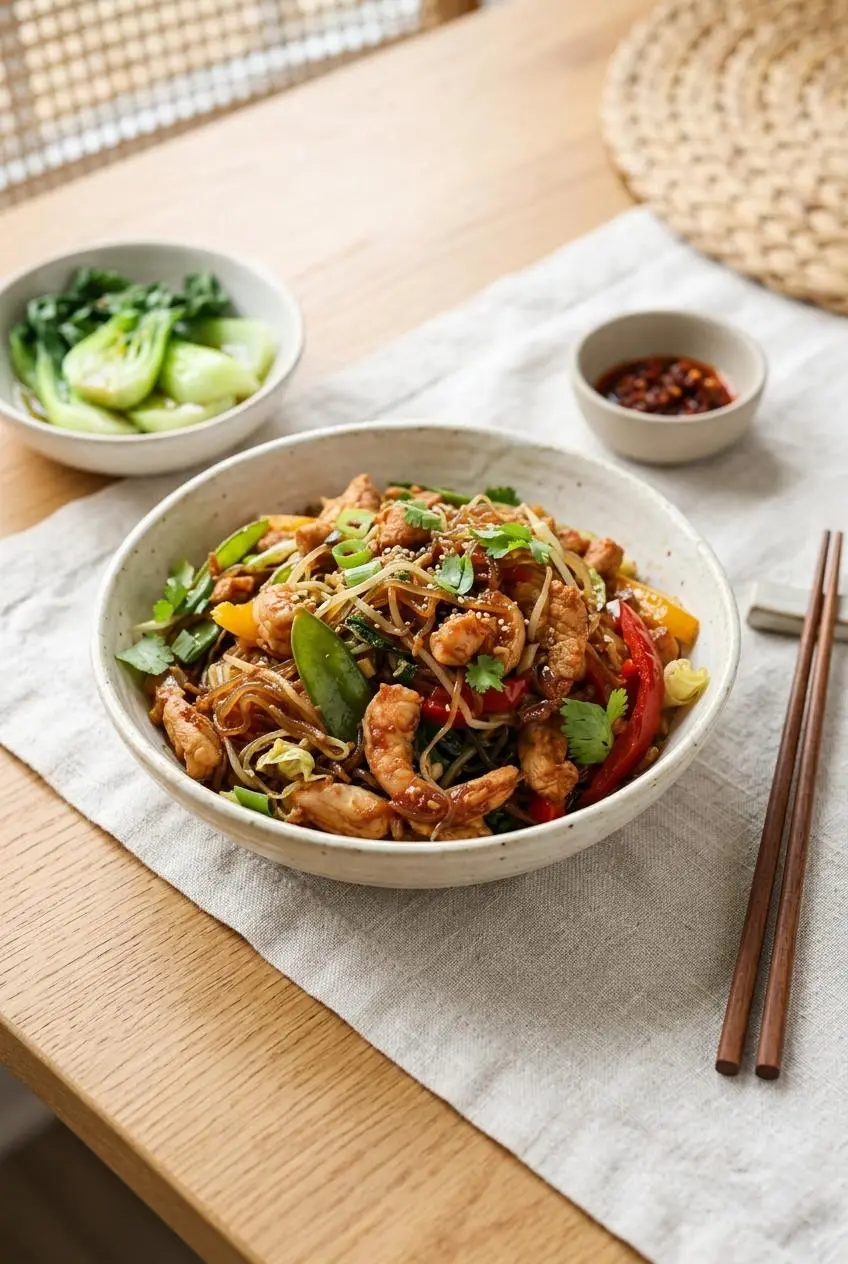
- Finish each bowl with toasted sesame seeds, fresh scallions, or cilantro for extra aroma and contrast.
- Offer chili crisp, chili garlic paste, or unsweetened sriracha at the table so everyone can adjust the heat.
- Pair the lo mein with steamed Asian greens dressed with a little sesame oil.
- Serve a clear broth alongside the stir fry for a warm, light complement to the savory noodles.
Bringing Takeout Flavors Home
A good low-carb stir fry depends on timing more than fuss: sear the proteins, wake up the ginger and garlic, keep the vegetables moving, and let the sauce turn glossy before the noodles go in.
Once you know how to manage noodle moisture, you can change the proteins and vegetables while keeping that satisfying saucy lo mein texture. Grab a hot pan and make it your own.
Frequently Asked Questions About Keto Lo Mein
Can you eat lo mein on a keto diet?
Traditional restaurant lo mein uses wheat noodles, which do not suit many keto eating plans. A keto-style version can use shirataki noodles, spaghetti squash, hearts of palm noodles, or other lower-carbohydrate alternatives with a savory sauce.
What noodles work best for low-carb lo mein?
Shirataki or konjac noodles give the closest springy, chewy texture when rinsed and dry-fried. Hearts of palm noodles offer a firmer bite, while spaghetti squash and vegetable ribbons create a softer, more produce-forward bowl.
How do you eliminate the earthy smell from shirataki noodles?
Rinse the noodles thoroughly under cold running water and drain them well. Then dry-fry them in an ungreased warm skillet until the excess moisture evaporates before they meet the sauce.
How do you thicken low-carb stir fry sauce without cornstarch?
Let the sauce simmer briefly so it reduces and coats the noodles more effectively. For an optional thicker sauce, disperse a small amount of xanthan gum into cool liquid before heating to prevent clumps.
Is keto lo mein good for weight loss?
No single dish guarantees weight loss. Results depend on overall eating patterns, portions, activity, health needs, and many personal factors. This dish can be adapted for a lower-carbohydrate meal pattern, but it is not a medical treatment or a promised outcome.
Keto Lo Mein Recipe

Equipment
- Large saute pan
Ingredients
- 1 tablespoon Avocado oil (or other light oil)
- 1 tablespoon sesame oil
- 1 cup raw shrimp peeled and cut in half
- 1 cup raw chicken cut into thin strips
- 1 teaspoon minced garlic about 1 clove
- 1 tablespoon minced fresh ginger
- 1 cup raw bell pepper cut into strips (I used red and yellow)
- 1 cup snow peas trimmed
- 1 cup raw bean sprouts washed
- 1/4 cup sliced scallions
- 1 cup thinly sliced Napa cabbage
- 1 cup cooked spaghetti squash strands
- 2 cups miracle noodles (shiritake)
- 1 tablespoon granulated sweetener **
- 1 tablespoon lime juice
- 2 tablespoon dark soy sauce (or tamari or coconut aminos)
- 2 tablespoon unseasoned rice wine vinegar
Instructions
- Warm the avocado oil and sesame oil in a large sauté pan over high heat. The surface should look fluid and shimmer slightly before the proteins go in.
- Add the shrimp and chicken, then stir fry for about 3 minutes until cooked through. The shrimp should turn opaque and the chicken strips should lose their raw-looking centers.
- Transfer the cooked shrimp and chicken to a plate. Removing them now prevents the proteins from tightening while the vegetables cook.
- Place the minced ginger and garlic in the empty pan and cook for about 2 minutes. The aromatics should smell fragrant before they begin to brown.
- Add the bell pepper, snow peas, bean sprouts, scallions, and Napa cabbage, then stir fry for 3-4 minutes. Pull the pan from the heat while the vegetables are just softened and still brightly colored.
- Pour in the dark soy sauce, sweetener, rice wine vinegar, and lime juice, then cook for 2 minutes. The liquid should bubble and look slightly glossier as the flavors come together.
- Return the shrimp and chicken to the pan with the spaghetti squash strands and miracle noodles. Turn everything until the sauce coats the noodles and vegetables evenly.
- Serve the lo mein hot and garnish with cilantro if desired. The finished dish should look glossy, aromatic, and lightly saucy rather than wet.