Skip to content
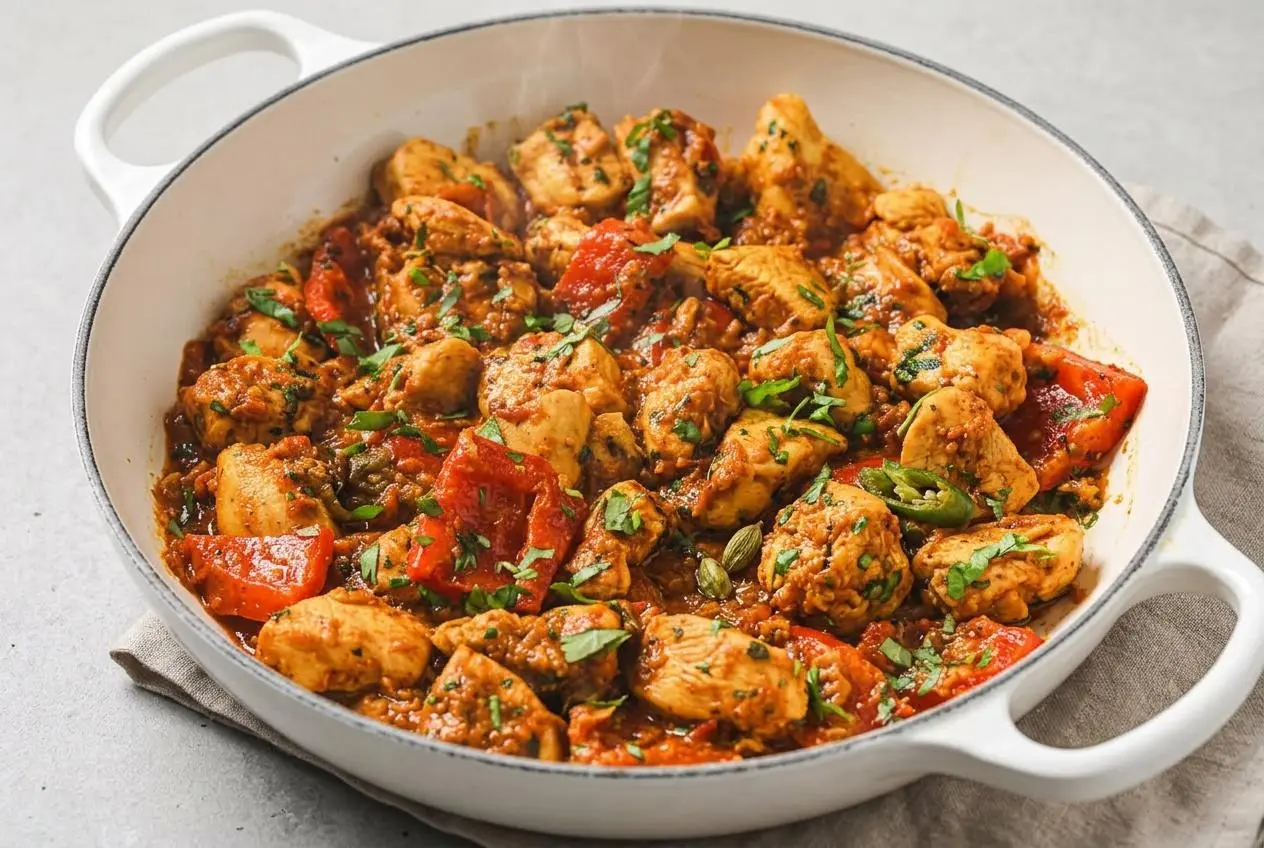
This stovetop chicken curry builds a rich, warmly spiced sauce with yogurt, tomatoes, cardamom, and crisp-tender red pepper, without flour or cornstarch.
This keto curry recipe turns chicken breast, fresh aromatics, and toasted spices into a satisfying low-carb dinner with a velvety tomato-yogurt gravy.
Golden onions and fragrant spices give the sauce its depth, while the peppers stay bright and lightly crisp. The cardamom finish is worth the small extra step.
Finely mince the onion, garlic, and ginger so they soften into the sauce rather than leaving noticeable chunks behind.
Key Ingredients for Authentic Low-Carb Curry
Each ingredient contributes something useful: aromatics build depth, spices bring warmth, yogurt adds body, tomatoes provide brightness, and red pepper adds fresh texture and color.
- 2 tbsp light olive oil ( or a neutral-tasting oil such as groundnut)
- 1 medium onion (finely minced (90g))
- 3 garlic cloves (finely minced)
- 1 tbsp ginger (finely grated)
- 4 skinless chicken breasts (920g, cubed into 2 inch pieces)
- 2 medium tomatoes (pureed (185g) or 1 cup cherry tomatoes)
- 1 green finger chilli (thinly sliced)
- 3 tbsp whole milk yoghurt (45g)
- 1/2 cup chicken broth (120ml)
- 1 medium red pepper (cut into 1 inch chunks (120g))
- 1 tbsp fresh coriander (chopped, plus more to serve)
- 1/3 tsp turmeric powder
- 1 tsp smoked paprika
- 1/2 tsp mild chilli powder
- 1/2 tsp garam masala
- 1/3 tsp black pepper
- 1 tsp coriander powder
- 3 green cardamon pods
- 1/2 tsp salt or to taste
The onion, garlic, and ginger form the savory foundation. Minced onion melts into the gravy as it cooks, while ginger adds a bright, peppery edge that keeps the creamy sauce from tasting heavy.
Turmeric, smoked paprika, mild chili powder, garam masala, black pepper, and coriander powder create layered warmth rather than one blunt hit of heat. The cardamom pods are especially important here: their floral, citrusy aroma lifts the tomato and yogurt base at the end.
Whole milk yogurt gives the sauce a gentle tang and a soft, luscious texture. Chicken breast stays lean and satisfying, but it needs attention during the first sear so it does not overcook before the covered simmer.
I prefer to grate the ginger finely and mince the onion very small for this style of curry, because the sauce becomes smoother and more cohesive without needing a starchy thickener.
How to Make This Keto Curry
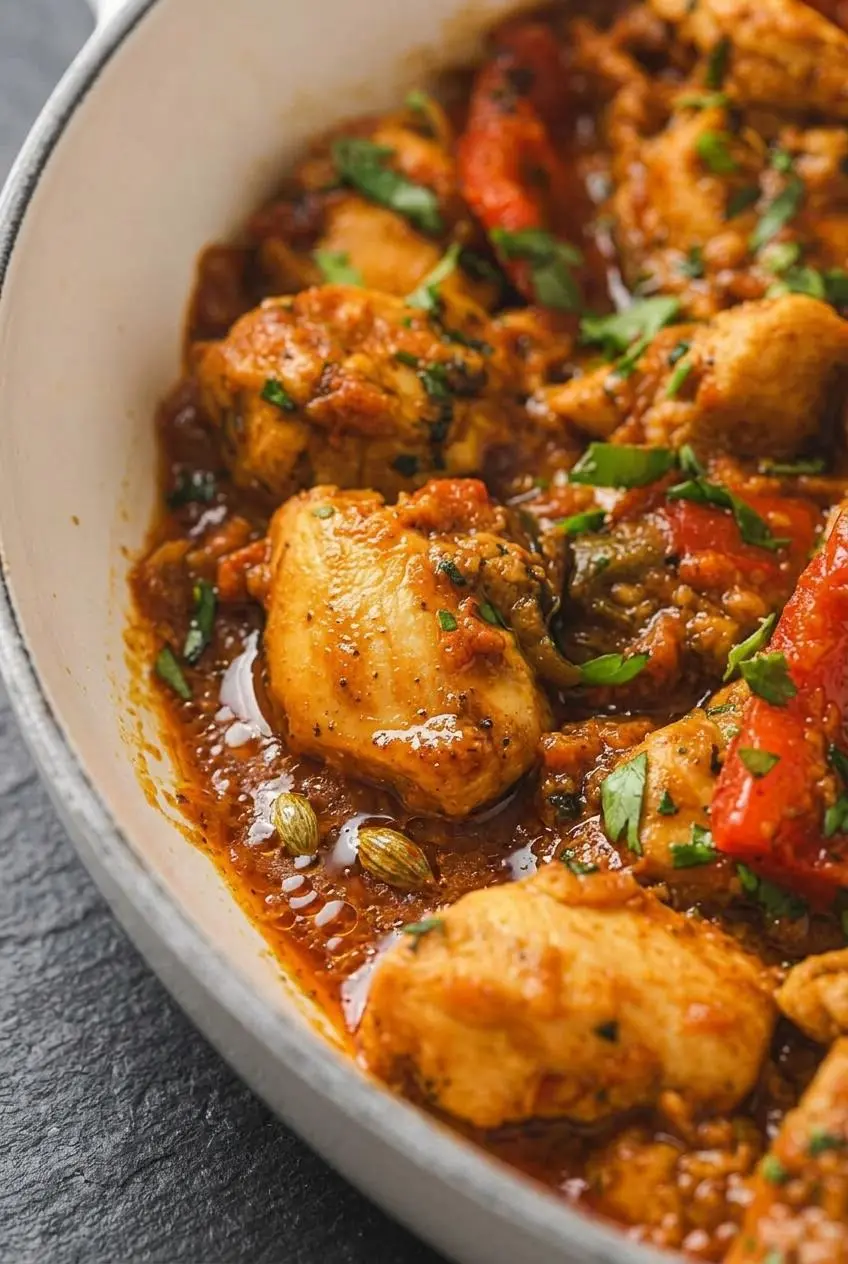
- Warm the oil in a non-stick frying pan over medium heat, then cook the minced onion for 3 to 4 minutes.
The onion should turn golden and give off a gentle sizzle without developing dark or burnt edges. - Stir in the garlic and ginger for 1 minute, then add the cubed chicken and cook for about 5 minutes, stirring often.
The aromatics should smell fragrant, and the chicken should look opaque on the outside with no pink remaining in the center. - Add the pureed tomatoes, green chilli, yoghurt, turmeric, paprika, chilli powder, garam masala, black pepper, coriander powder, cardamon pods, and salt; cook for 2 minutes before pouring in the chicken broth.
The tomatoes should begin to soften and the pan should return to a gentle simmer once the broth is added. - Reduce the heat to medium, cover the pan, and cook for about 15 minutes, stirring a couple of times.
The sauce should become richer and the chicken should yield easily when pressed with a fork. - Remove the lid and stir in the red pepper, adding a touch more stock or water if the curry needs loosening, then cover and cook for 3 to 5 minutes.
The pepper should be cooked through while still holding a crisp-tender bite. - Stir through the chopped coriander, remove the cardamon pods, and squeeze their seeds into the curry.
The finished sauce should look glossy and aromatic, with a final fresh lift from the coriander.
Give the curry a brief pause off the heat before serving so the sauce settles around the chicken. If it looks thinner than you want, leave the pan uncovered for a little longer and let gentle evaporation do the work.
What Makes a Curry Keto-Friendly?
A keto-friendly curry relies on protein, fats, vegetables, and aromatic spices instead of flour-thickened gravy or sugary sauces. This curry gets its body from reduced tomatoes, yogurt, onion, and chicken broth rather than cornstarch, flour, or gums.
Restaurant curries can vary widely, especially when sauces include added sugar, sweet chutneys, flour, cornstarch, or commercial pastes with starch fillers. When using a packaged curry powder or paste for another meal, check the label for added sugar and starches rather than assuming every blend fits your eating plan.
Olive oil, ghee, and coconut fat are all useful fats for blooming spices. Fresh onion and tomato naturally contribute carbohydrates, but they also build the balanced savory-sweet flavor that makes a homemade curry feel complete.
This dish leans toward a North Indian-inspired yogurt gravy, with cardamom, garam masala, turmeric, and coriander. A coconut milk curry has a different character, closer to many Southeast Asian styles, even when the spice profile overlaps.
Troubleshooting Common Low-Carb Curry Issues
- The yogurt looks grainy or separated: High heat is usually the culprit. Keep the curry at a gentle simmer, and for future batches, whisk a little warm broth into room-temperature yogurt before adding it to the pan.
- The sauce is thin: Leave the pan uncovered and simmer gently until steam reduces the liquid. The concentrated onion, tomato, and yogurt will create a fuller sauce without flour or cornstarch.
- The chicken feels dry: Chicken breast can become chewy when it cooks too long during the early browning stage. Stop once the cubes lose their raw appearance, then let the covered simmer finish the cooking.
- The flavor tastes flat: Salt, tomato acidity, and spice need a moment to come together. Stir well, let the curry simmer gently, then taste before adding more salt.
- The heat is too sharp: A little extra yogurt can soften the chili’s edge, while a squeeze of fresh lime at the table can brighten a rich sauce without masking the spices.
- The peppers became soft: Add them near the end, as directed. Their job is to bring contrast, not dissolve into the gravy.
Delicious Dietary Variations and Protein Swaps
Dairy-Free Coconut Milk Curry
For a dairy-free version, replace the yogurt with unsweetened canned full-fat coconut milk or coconut cream. Choose a product without added sugar, and keep the heat gentle so the coconut-based sauce stays smooth. The result will be milder, richer, and more coconut-forward than the yogurt version.
Rich Chicken Thigh Curry
Boneless, skinless chicken thighs make an excellent optional swap for chicken breast. Their darker meat has a richer flavor and is more forgiving during a longer simmer, making this a good choice when you prefer especially juicy chicken pieces.
Spinach and Green Vegetable Curry
Fresh baby spinach, zucchini chunks, or tender green beans can be folded into a variation of this curry for added color and texture. Add quick-cooking vegetables late enough that they stay vibrant and do not water down the sauce. Avoid starchy vegetables such as potatoes or sweet potatoes if you want to keep the meal lower in carbohydrates.
What to Serve with Keto Curry
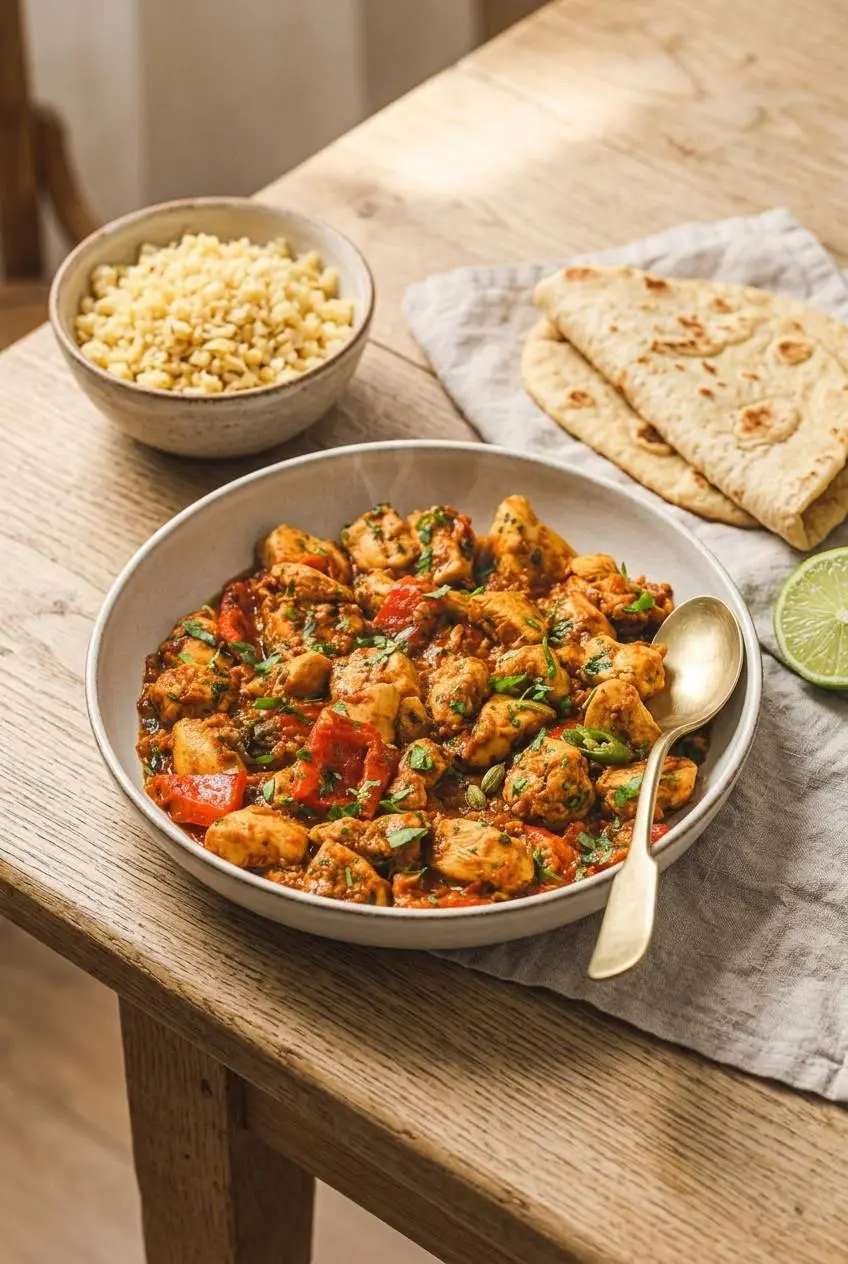
Serve the curry over sautéed cauliflower rice for a familiar rice-and-gravy feel. A little ghee and chopped cilantro in the cauliflower rice echo the curry’s warm spices without competing with the sauce.
- Cauliflower mash: Its soft texture makes a comforting base for the rich tomato-yogurt gravy.
- Keto naan bread: Warm flatbread is ideal for scooping up the fragrant sauce and tender chicken.
- Fresh garnishes: Add more chopped coriander, sliced scallions, and lime wedges just before serving for freshness and contrast.
Storing and Reheating Curry
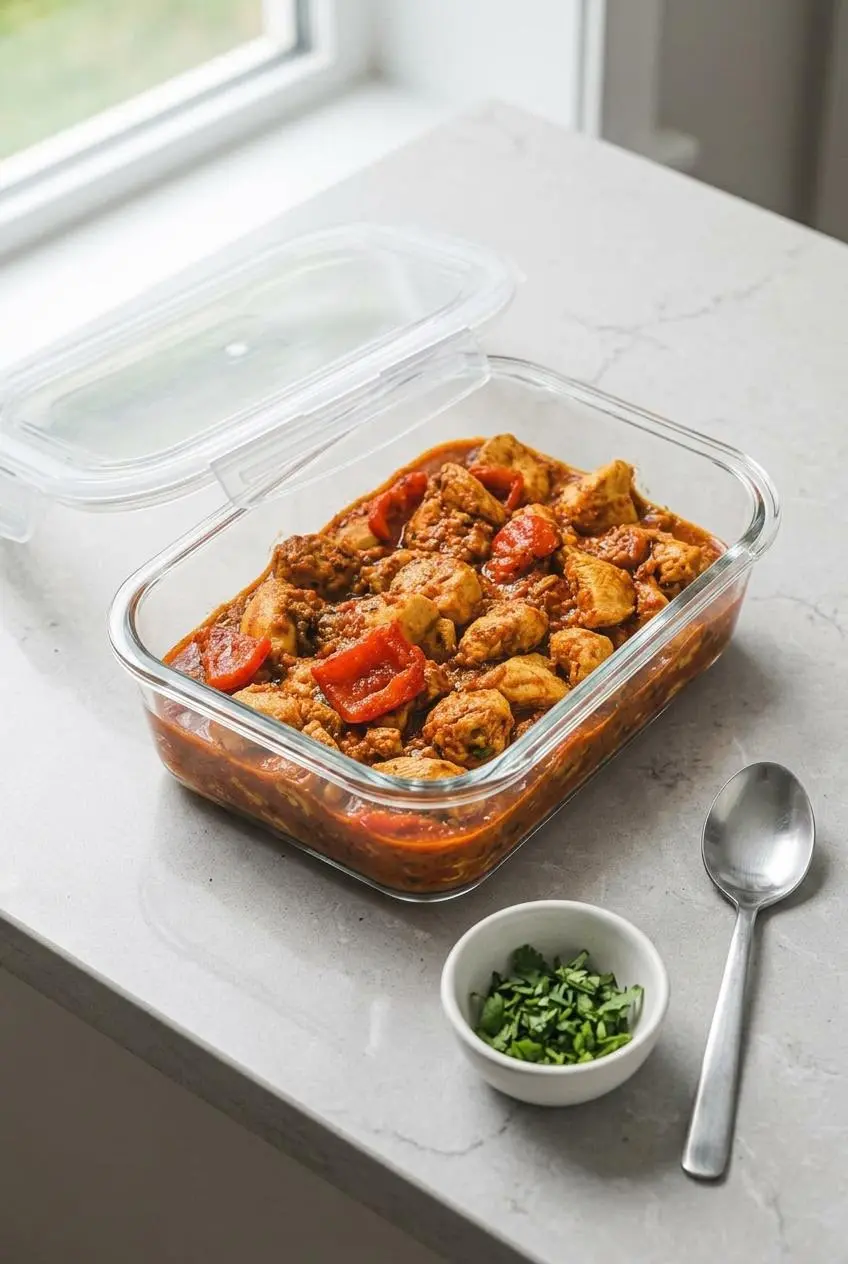
Cool leftover curry, transfer it to an airtight container, and keep it chilled. The spices often taste more rounded after resting, but the red pepper will soften as it sits in the sauce.
Reheat portions gently on the stovetop over medium-low heat, stirring often so the yogurt-based gravy warms evenly instead of boiling hard. Add a small splash of broth or water only if the sauce has tightened too much, and finish with fresh coriander when serving.
For meal planning, keep any fresh garnishes separate until the meal reaches the table. That small step preserves their clean, bright flavor against the deep warmth of the curry.
Final Thoughts on Easy Low-Carb Curry Dinners
This chicken curry proves that a deeply aromatic dinner does not need flour, cornstarch, or a heavy bottled sauce. Golden onion, warm spices, tomato, and yogurt create the kind of savory richness that makes a simple pan feel special.
Keep the heat gentle, add the peppers late, and do not skip squeezing those cardamom seeds into the finished curry. A fragrant, comforting weeknight dinner is well within reach.
Frequently Asked Questions About Keto Curry
Which Curry Is Best for Keto?
Curries made with fresh chicken, low-carb vegetables, cooking fat, unsweetened coconut milk, or whole dairy are generally suitable choices. Avoid versions thickened with flour, cornstarch, added sugar, sweet sauces, or starch-heavy pastes.
How Do You Thicken Curry Sauce on a Low-Carb Diet?
Simmer the sauce uncovered so excess moisture can evaporate naturally. In this curry, pureed tomato, finely minced aromatics, and whole milk yogurt reduce into a thicker gravy without needing flour, cornstarch, or processed gums.
Can I Use Canned Tomatoes Instead of Fresh Puree?
Yes. Use quality canned pureed or finely crushed tomatoes if fresh puree is unavailable. Check the label and choose tomatoes without added sugar or starches so the flavor stays clean and the sauce remains aligned with a low-carb approach.
Can I Substitute Chicken Thighs for Chicken Breasts?
Yes. Boneless, skinless chicken thighs work well in this curry and bring a richer flavor with a more forgiving texture during simmering. Cut them into similar bite-sized pieces so they cook evenly in the sauce.
How Do I Prevent Yogurt From Curdling in the Hot Curry?
Use room-temperature whole milk yogurt and avoid a hard boil after it enters the pan. For added control, whisk a little warm broth into the yogurt first, then add it to the curry over lower heat and keep the sauce at a gentle simmer.

Keto Curry Recipe

Equipment
- Non-stick frying pan
Ingredients
- 2 tbsp light olive oil ( or a neutral-tasting oil such as groundnut)
- 1 medium onion (finely minced (90g))
- 3 garlic cloves (finely minced)
- 1 tbsp ginger (finely grated)
- 4 skinless chicken breasts (920g, cubed into 2 inch pieces)
- 2 medium tomatoes (pureed (185g) or 1 cup cherry tomatoes)
- 1 green finger chilli (thinly sliced)
- 3 tbsp whole milk yoghurt (45g)
- 1/2 cup chicken broth (120ml)
- 1 medium red pepper (cut into 1 inch chunks (120g))
- 1 tbsp fresh coriander (chopped, plus more to serve)
- 1/3 tsp turmeric powder
- 1 tsp smoked paprika
- 1/2 tsp mild chilli powder
- 1/2 tsp garam masala
- 1/3 tsp black pepper
- 1 tsp coriander powder
- 3 green cardamon pods
- 1/2 tsp salt or to taste
Instructions
- Warm the oil in a non-stick frying pan over medium heat, then cook the minced onion for 3 to 4 minutes. The onion should turn golden and give off a gentle sizzle without developing dark or burnt edges.
- Stir in the garlic and ginger for 1 minute, then add the cubed chicken and cook for about 5 minutes, stirring often. The aromatics should smell fragrant, and the chicken should look opaque on the outside with no pink remaining in the center.
- Add the pureed tomatoes, green chilli, yoghurt, turmeric, paprika, chilli powder, garam masala, black pepper, coriander powder, cardamon pods, and salt; cook for 2 minutes before pouring in the chicken broth. The tomatoes should begin to soften and the pan should return to a gentle simmer once the broth is added.
- Reduce the heat to medium, cover the pan, and cook for about 15 minutes, stirring a couple of times. The sauce should become richer and the chicken should yield easily when pressed with a fork.
- Remove the lid and stir in the red pepper, adding a touch more stock or water if the curry needs loosening, then cover and cook for 3 to 5 minutes. The pepper should be cooked through while still holding a crisp-tender bite.
- Stir through the chopped coriander, remove the cardamon pods, and squeeze their seeds into the curry. The finished sauce should look glossy and aromatic, with a final fresh lift from the coriander.