Skip to content
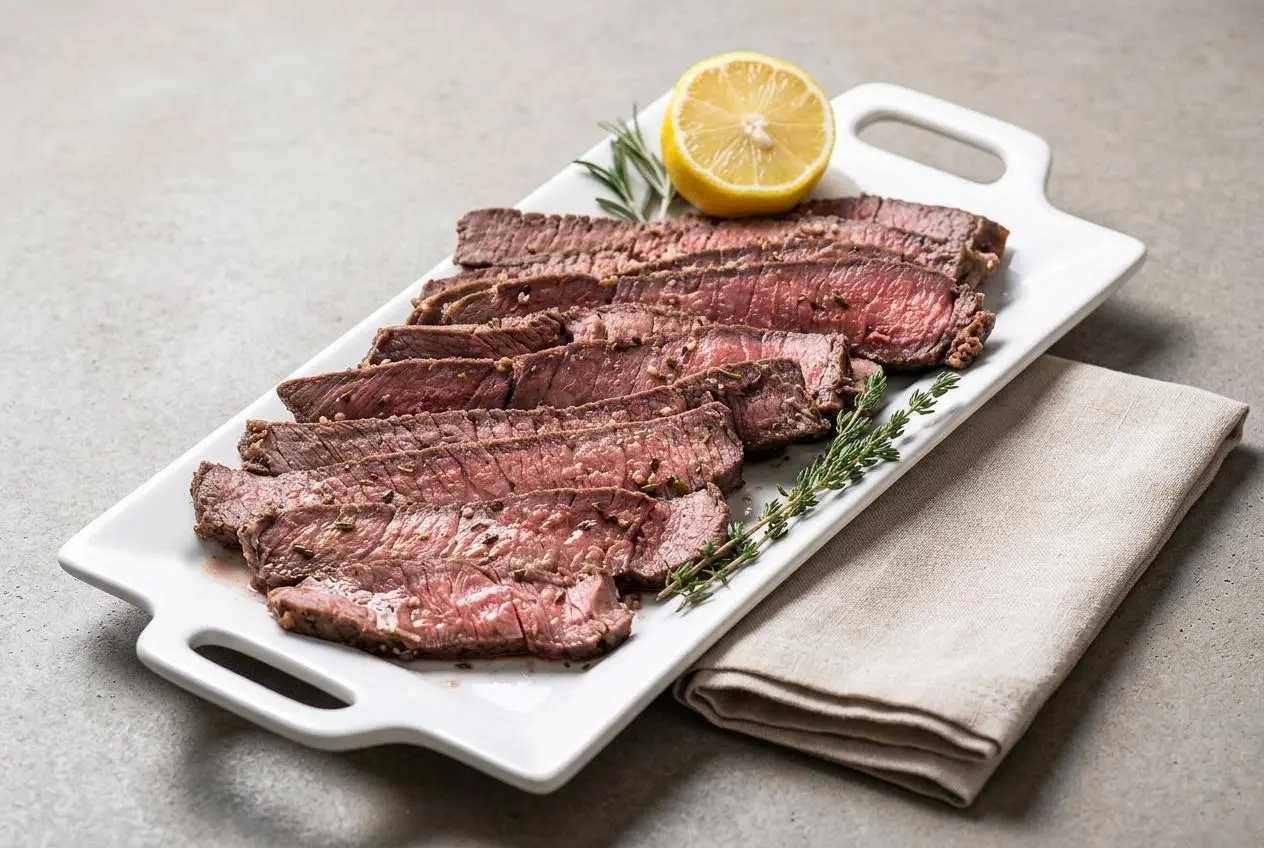
Marinate lean beef with herbs, vinegar, oil, and lemon, then broil it quickly, rest it, and slice across the grain for tender, savory London broil.
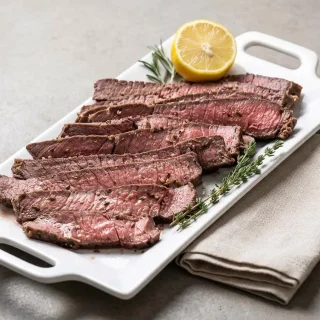
This keto london broil recipe turns a lean steak into a deeply seasoned dinner with a browned exterior and a juicy medium-rare center. The herb marinade does the flavor work while the broiler brings fast, intense heat.
It works especially well when you want steakhouse character without firing up the grill. The rosemary and garlic aroma is the reward.
Pat away dripping marinade before broiling so the steak sears instead of steaming and the foil-lined tray stays manageable.
Keto Marinade Essentials for Tender Beef
Each ingredient contributes something useful: acidity softens the beef’s surface, olive oil carries the herbs, garlic adds depth, and salt and pepper sharpen the finished steak.
- 2 1/2 tablespoons red wine vinegar
- 4 tablespoons extra-virgin olive oil
- 3 large cloves garlic (crushed)
- 1 tablespoon minced fresh rosemary
- 1 tablespoon minced fresh thyme
- 1 tablespoon fresh lemon juice
- 1 1/4 teaspoons salt
- 1/4 teaspoon black pepper
- 2 1/2 pound London broil steak
Red wine vinegar and lemon juice give the marinade its tang and help soften the outer muscle fibers of a lean cut. Extra-virgin olive oil spreads the rosemary, thyme, garlic, salt, and pepper evenly over the steak while adding richness to every slice.
London broil is a preparation style more than one specific cut. Stores often use the label for top round steak, but flank steak also works well. Top round is leaner and benefits greatly from marinating and thin carving; flank has a more pronounced grain, so slicing correctly matters even more.
I look for a steak with an even thickness whenever possible, because a thin end can overcook before the center reaches the desired doneness.
Mastering the Broil: Step-by-Step Cooking Technique
High heat is the key here: it browns the outside quickly while keeping the center tender. Keep the steak marinating in the refrigerator, not on the counter. Meat should be marinated in the refrigerator rather than at room temperature.
- Put the red wine vinegar, olive oil, crushed garlic, rosemary, thyme, lemon juice, salt, black pepper, and London broil steak into a gallon-size plastic bag.
Make sure the steak is surrounded by the herb mixture so its surface looks evenly coated. - Seal the bag and work the marinade around the steak with your hands.
The garlic and herbs should cling to both sides instead of gathering in one corner of the bag. - Set the sealed bag in a large bowl and refrigerate it for 8 hours, or up to 2 days.
Turn the bag occasionally if convenient so the steak stays in close contact with the marinade. - Let the steak stand out of the refrigerator for 10 minutes, then move an oven rack directly beneath the broiler and preheat the broiler to HIGH.
Taking off the fridge chill helps the steak cook more evenly when it meets the intense heat. - Line a large baking tray with foil, remove the steak from the bag, and place it on the tray before discarding the bag and used marinade.
The steak should lie flat with no puddle of marinade around it. - Broil for 6 to 8 minutes on the first side, then turn the steak and broil the second side for about 4 to 5 minutes, until it reaches 135°F for medium rare.
Use an internal thermometer for the clearest check, and look for a browned surface with a gently springy feel. - Cover the steak loosely with foil and rest it for 10 minutes before carving thinly across the grain.
During the rest, the surface loses its wet sheen and the juices settle back into the meat.
Pro Tips and Common Pitfalls to Avoid
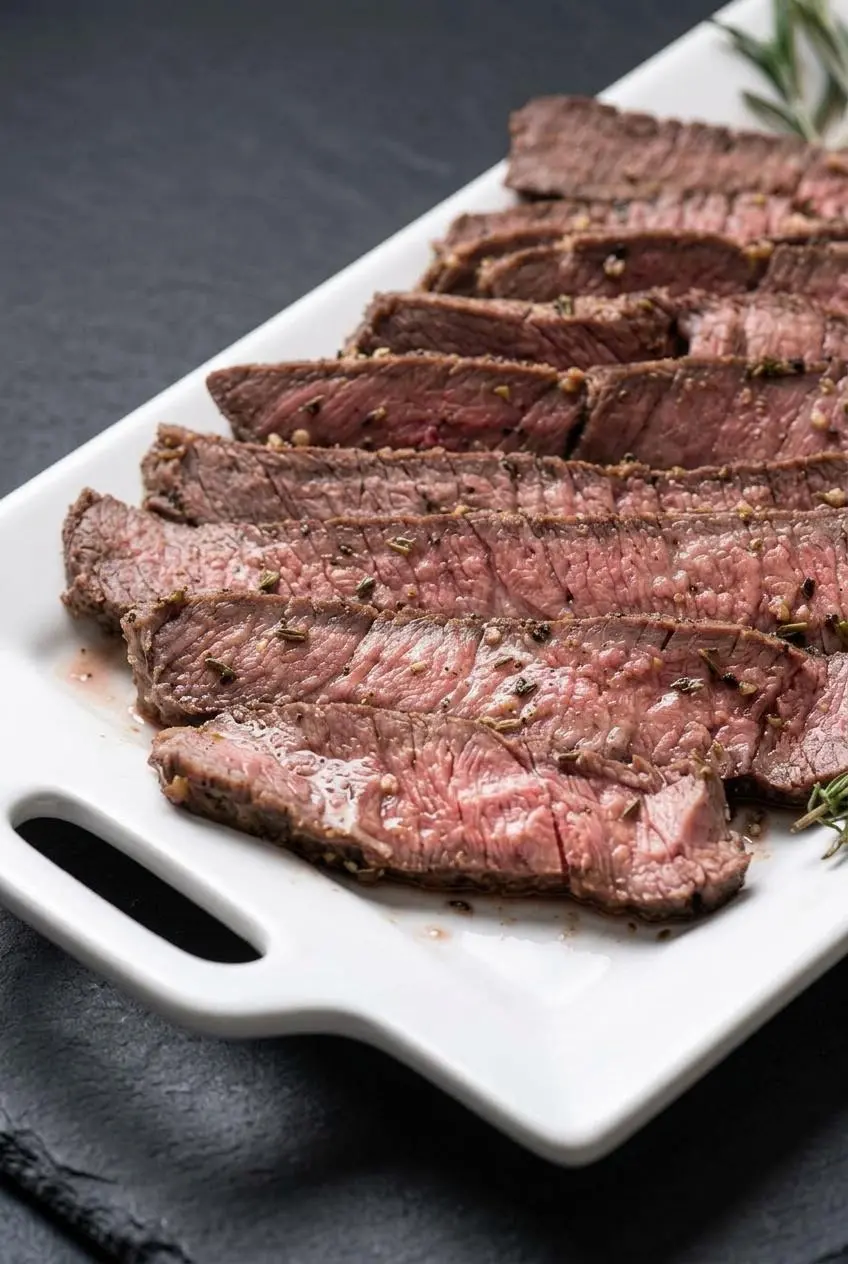
- The steak is tough: Lean beef needs the full marinating period, a brief rest after broiling, and thin cross-grain slices. Skipping any one of these can leave long, chewy fibers intact.
- The broiler smokes heavily: Trim any thick excess surface fat before marinating, and shake off excess marinade before the steak reaches the tray. Dripping oil and pooled marinade are the usual culprits.
- The outside darkens too fast: Keep the rack directly under the broiler as directed, but watch closely. If one end is thinner, orient it toward the cooler edge of the tray when possible.
- The center is overcooked: Cook times vary with steak thickness and broiler strength. Start checking with an internal thermometer rather than trusting the clock alone.
- The texture turns soft or mushy: Acid is useful, but leaving the steak beyond the stated marinating window can affect the surface texture too aggressively.
Cooking Method Variations and Adaptations
The broiler method gives this steak a fast, savory crust, but the marinade can adapt to different cooking setups and ingredient availability. Keep these changes optional and separate from the main method.
Outdoor Charcoal or Gas Grilling
For outdoor cooking, grill the marinated steak over direct medium-high heat. The exterior develops smoky char marks while the center stays more tender when you monitor the internal temperature and rest the steak before slicing.
Herb Marinade Adjustments (Dried vs. Fresh)
If fresh rosemary or thyme is unavailable, dried herbs can stand in. Their flavor is more concentrated and less bright, so use a restrained hand and crush them lightly between your fingers before adding them to the marinade.
Alternative Acid Profiles
Apple cider vinegar brings a rounder, slightly fruity tang, while white wine vinegar tastes cleaner and sharper. Either can replace red wine vinegar when needed without changing the overall marinating and broiling approach.
The Art of Slicing Across the Grain and Serving Ideas
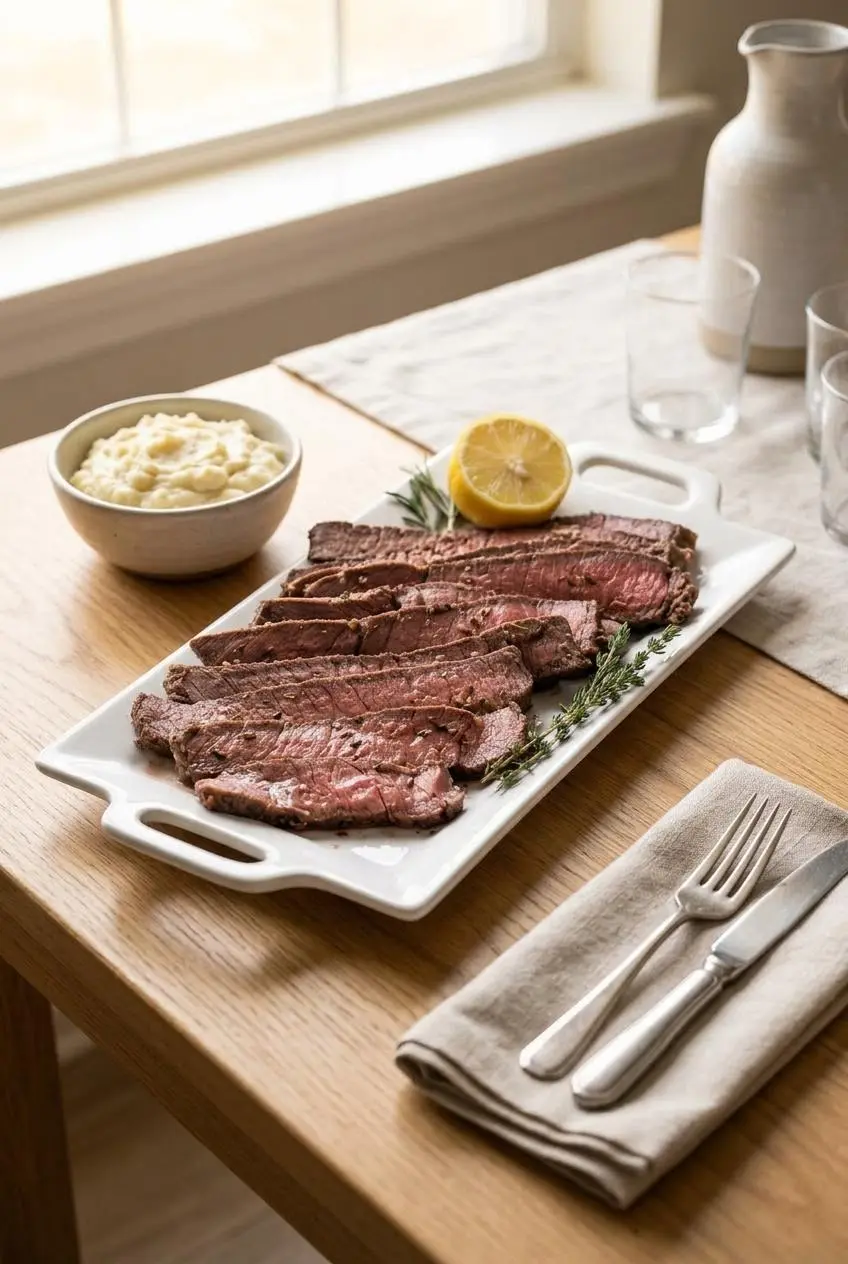
Carving is the final tenderness step. Even a well-marinated steak can feel chewy if it is cut in the wrong direction.
How to Identify and Slice Across the Grain
Look across the cooked steak for the long, parallel lines running through the meat. Those lines are the grain. Turn the steak so your knife cuts straight across those lines, then make thin slices on a slant. Shortening the fibers this way gives each bite a much more tender feel.
Let the steak rest before carving so less juice escapes onto the cutting board. If the grain changes direction across the steak, rotate the meat as you slice rather than forcing every cut the same way.
Keto-Friendly Side Dish Pairings
- Serve the steak with garlic butter cauliflower mash for a comforting, creamy contrast.
- Pair it with roasted asparagus, broccoli, or other roasted greens to balance the rich herb marinade.
- Add a crisp keto broccoli salad for cool crunch beside the warm beef.
- Layer thin slices over leafy greens with blue cheese for a satisfying cold steak salad.
Storage, Meal Prep, and Gentle Reheating
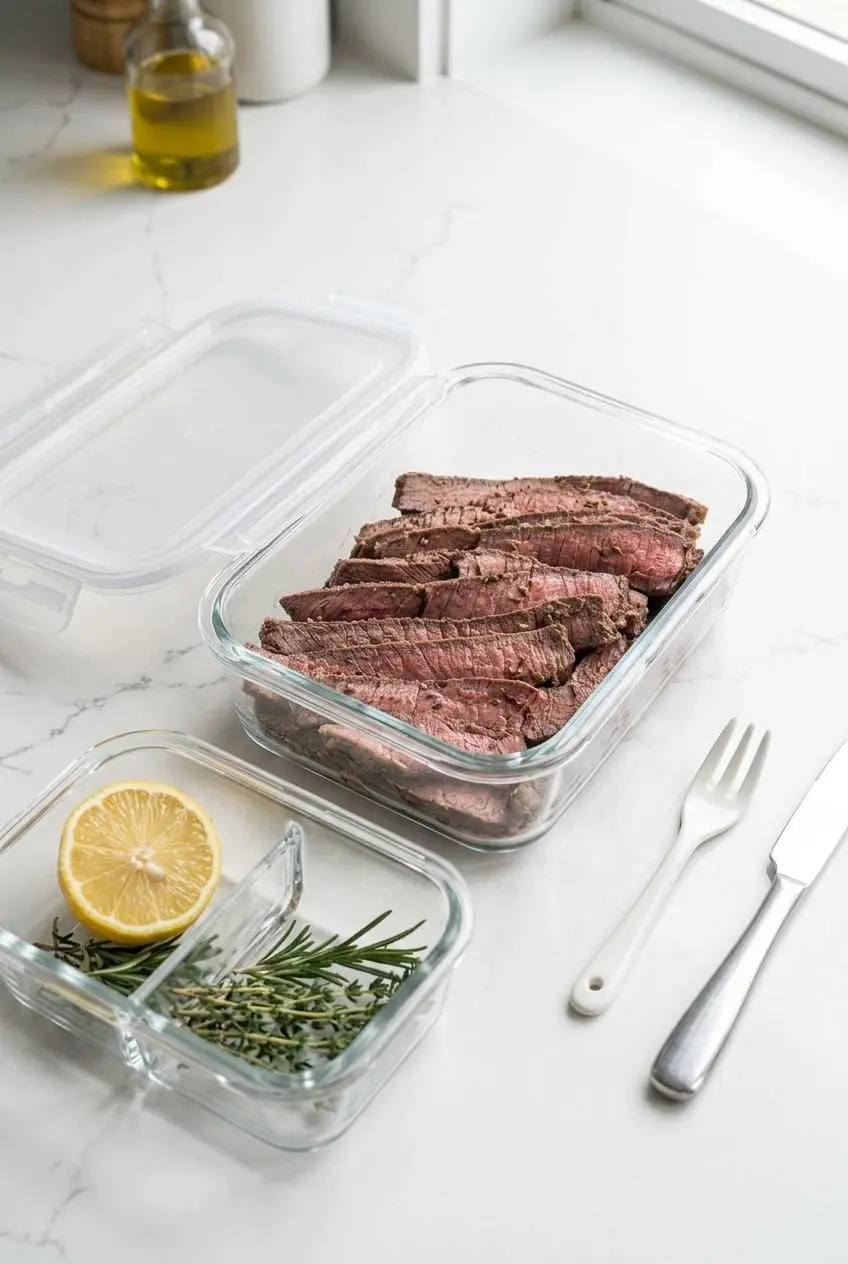
Cool leftover steak, transfer it to an airtight container, and keep it chilled. For the best texture, store larger pieces or thick slices rather than shaving the entire steak before storing.
Warm only the portion you plan to eat. A covered skillet with a small splash of broth or a low oven helps protect the meat from drying out; high-power microwave reheating can quickly make lean steak rubbery. Cold slices are also excellent folded into a fluffy keto omelette or served over greens.
Dietary Context and Nutritional Highlights
This dish fits a low-carb meal pattern because it centers on whole beef, olive oil, herbs, and acidic seasonings instead of sweet sauces or sugary glazes. The olive oil also adds satisfying richness to a naturally lean cut.
Whether it fits an individual keto approach depends on the rest of the meal and personal nutrition needs. Pair it with non-starchy vegetables and choose sauces carefully if you want to keep the plate lower in carbohydrates.
Tender, Juicy Steak on a Budget
A flavorful marinade, high broiler heat, a patient rest, and thin cross-grain slicing turn London broil into a tender dinner with plenty of savory herb character.
Marinate the steak ahead when it suits your schedule, then let the broiler do the fast work. That final thin slice is what makes the meal feel special.
Frequently Asked Questions
What Cut of Meat Is London Broil?
London broil usually refers to a cooking style for lean, flavorful beef rather than one exact cut. Top round is commonly sold under that label, and flank steak is another good choice. Both benefit from marinating, quick high-heat cooking, resting, and slicing across the grain.
How Long Should I Marinate London Broil?
For this recipe, refrigerate the steak in the marinade for 8 hours or up to 2 days. That gives the herbs and acidic ingredients time to season the beef without pushing the texture too far.
Can I Cook London Broil on an Outdoor Grill?
Yes. Grill it over direct medium-high heat, check the internal temperature as it cooks, then rest the steak before slicing. Grilling adds a smoky edge while keeping the same herb marinade profile.
Why Is My London Broil Tough?
Tough London broil usually comes from under-marinating, cooking the lean beef too far past medium rare, skipping the rest, or slicing with the grain. Thin slices cut across the muscle fibers make the biggest difference at the table.
Is London Broil Healthy for a Keto Diet?
London broil can fit a keto-style meal because beef contains no inherent carbohydrates and this marinade avoids sweeteners. Individual needs vary, so consider the full meal, including sides and sauces, when planning your plate.
Keto London Broil Recipe

Equipment
- Gallon-size plastic bag
- Large baking tray
- Aluminum foil
- Instant-read meat thermometer
Ingredients
- 2 1/2 tablespoons red wine vinegar
- 4 tablespoons extra-virgin olive oil
- 3 large cloves garlic crushed
- 1 tablespoon minced fresh rosemary
- 1 tablespoon minced fresh thyme
- 1 tablespoon fresh lemon juice
- 1 1/4 teaspoons salt
- 1/4 teaspoon black pepper
- 2 1/2 pound London broil steak
Instructions
- Put the red wine vinegar, olive oil, crushed garlic, rosemary, thyme, lemon juice, salt, black pepper, and London broil steak into a gallon-size plastic bag. Make sure the steak is surrounded by the herb mixture so its surface looks evenly coated.
- Seal the bag and work the marinade around the steak with your hands. The garlic and herbs should cling to both sides instead of gathering in one corner of the bag.
- Set the sealed bag in a large bowl and refrigerate it for 8 hours, or up to 2 days. Turn the bag occasionally if convenient so the steak stays in close contact with the marinade.
- Let the steak stand out of the refrigerator for 10 minutes, then move an oven rack directly beneath the broiler and preheat the broiler to HIGH. Taking off the fridge chill helps the steak cook more evenly when it meets the intense heat.
- Line a large baking tray with foil, remove the steak from the bag, and place it on the tray before discarding the bag and used marinade. The steak should lie flat with no puddle of marinade around it.
- Broil for 6 to 8 minutes on the first side, then turn the steak and broil the second side for about 4 to 5 minutes, until it reaches 135°F for medium rare. Use an internal thermometer for the clearest check, and look for a browned surface with a gently springy feel.
- Cover the steak loosely with foil and rest it for 10 minutes before carving thinly across the grain. During the rest, the surface loses its wet sheen and the juices settle back into the meat.