Skip to content
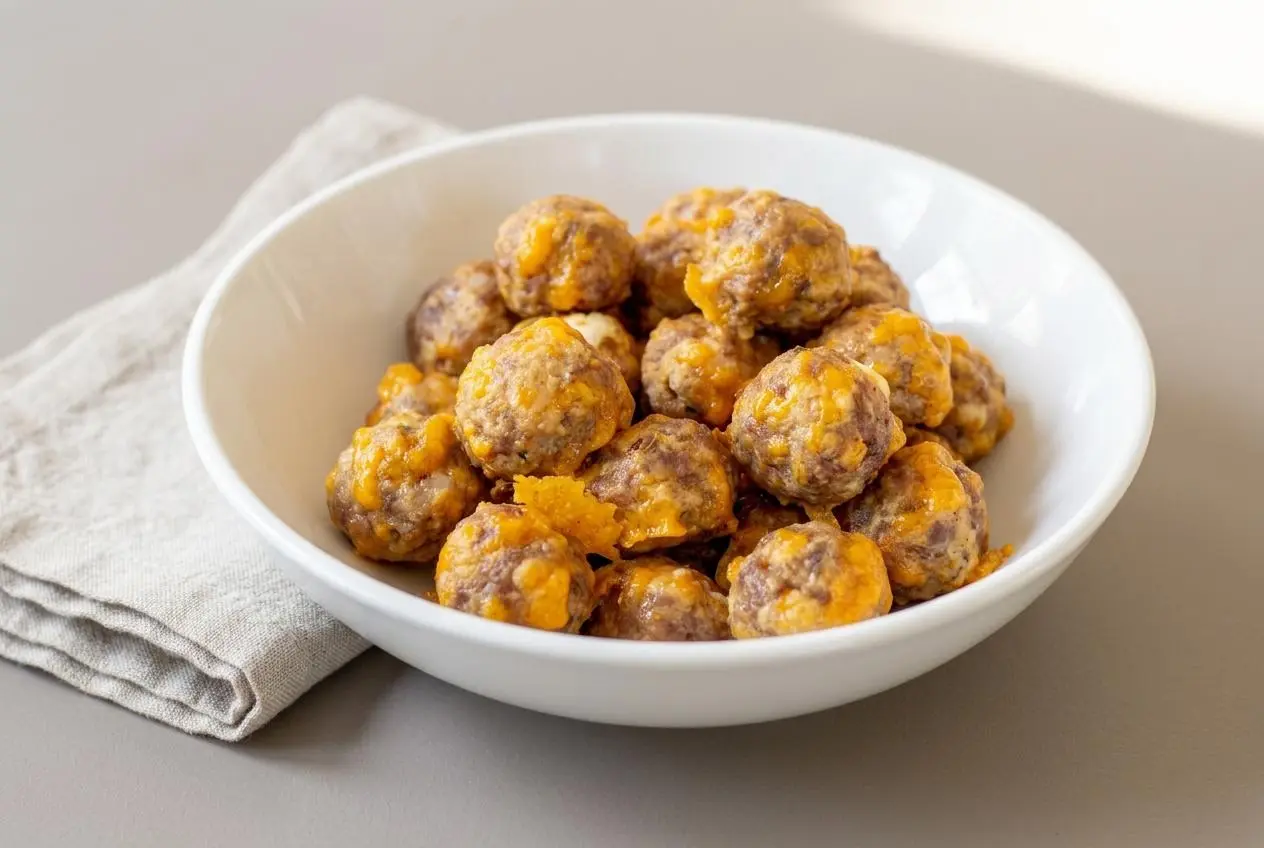
Keto sausage balls are crisp-edged, tender-centered bites made with sausage, cheddar, cream cheese, egg, and coconut flour instead of biscuit mix.
These keto sausage balls bake into savory, cheesy appetizers with a firm golden exterior and a soft center. They work especially well for brunch spreads, game-day plates, and warm holiday snack trays.
Softened cream cheese gives the mixture its smooth, cohesive texture, while coconut flour keeps it from feeling greasy or loose. The small details make the difference.
Set the cream cheese out early so it blends smoothly instead of leaving cold, dense pockets through the sausage mixture.
Essential Ingredients for Grain-Free Sausage Balls
Each ingredient supports the final texture and flavor: sausage brings savoriness, cheeses add richness and structure, coconut flour manages moisture, and egg helps the mixture hold its shape.
- 16 oz ground sausage
- 4 oz shredded cheddar
- 4 oz cream cheese
- 1/4 cup coconut flour
- 1 egg
- 1/2 tsp salt
Use raw ground sausage, not cooked crumbles. As it bakes, the meat proteins set around the cheese and binder, helping each ball stay together instead of breaking apart.
Cheddar supplies the familiar sharp, savory flavor and creates little melted pockets throughout the center. Freshly shredded cheddar generally blends more evenly than bagged shreds, which can carry coatings that make the mixture feel oilier.
Cream cheese provides moisture and a creamy binder that replaces the soft, biscuit-like quality traditional sausage balls get from baking mix. The egg reinforces that structure while the salt sharpens the sausage and cheese flavors.
The Role of Coconut Flour as a Moisture Magnet
Coconut flour absorbs a great deal of moisture, which is why it can turn the sausage and cream cheese mixture from loose crumbles into a scoopable dough. It gives these bites a tender, lightly cakey crumb without using wheat-based biscuit mix.
Do not swap coconut flour for another low-carb flour at the same ratio. Almond flour absorbs much less moisture, so a direct substitution can leave the mixture too soft or change how well the balls hold together.
Why Freshly Grated Cheddar Matters
Grate cheddar from a block when possible. It melts directly into the sausage mixture and helps create a more even cheesy interior, while pre-shredded cheese can sometimes separate and leave extra grease on the pan.
I look for cream cheese that presses easily with a finger before mixing, because fully softened cream cheese disappears into the dough instead of forming pale lumps.
Step-by-Step Preparation and Baking Method
The goal is an evenly blended dough and uniform portions, so every sausage ball browns at the same pace and stays tender in the middle.
Blending the Dough Evenly
- Heat the oven to 400 °F and cover a large baking sheet with parchment paper.
The parchment catches rendered fat and makes the browned sausage balls easier to lift from the pan. - Mix the sausage, cheddar, cream cheese, coconut flour, egg, and salt until the ingredients form one cohesive mixture, then shape it into 30 balls.
The dough should change from crumbly and uneven to moist, compact, and evenly flecked with cheddar. - Bake the sausage balls for 15 to 20 minutes until they are cooked through.
They are ready when the outsides are golden brown, the centers feel firm, and the pan gives off a lively sausage-and-cheese sizzle.
Portioning for Uniform Doneness
A spring-loaded cookie scoop is the easiest way to make consistently sized portions. Level each scoop rather than packing it tightly, then roll lightly with clean hands only if needed to smooth the surface.
Leave space between the balls so heat can move around them. Parchment keeps cleanup easy, while an elevated wire rack set over a baking sheet can help excess fat drain away and keep the bottoms from sitting in rendered grease.
There is no need to brown the sausage first. Starting with raw sausage lets it blend with the egg, cheese, and coconut flour before the mixture sets in the oven.
Texture Troubleshooting and Common Pitfalls

Most texture problems come down to temperature, moisture balance, or how the sausage renders during baking.
- Crumbly dough: Cold cream cheese often stays in stubborn pieces, and too much dry flour can pull moisture from the mixture. Let the cream cheese soften fully and mix until the dough holds when pressed together.
- Greasy bottoms: Very fatty sausage and coated pre-shredded cheese can release more oil. Use parchment for easy draining, or bake on a wire rack over the sheet pan if crisp bottoms matter most.
- Balls that fall apart: Pre-cooked sausage lacks the raw protein structure that helps the mixture bind as it bakes. Keep the sausage raw until it goes into the oven.
- Dry or rubbery centers: Leaving the balls in the oven beyond their browned, firm stage can dry them out. Start checking near the lower end of the baking range and remove the pan once they are cooked through.
- Uneven browning: Differently sized portions finish at different speeds. A cookie scoop keeps the batch more consistent and prevents small pieces from overcooking while larger ones lag behind.
Smart Low-Carb Swaps and Variations
Keep the main mixture unchanged for the most dependable texture, then treat flavor additions as optional directions rather than replacements for the binders.
- Choose hot breakfast sausage for a peppery kick, or use Italian sausage for a more herb-forward flavor.
- Swap the cheddar for sharp aged cheddar, smoked gouda, or pepper jack to change the cheese profile while keeping the bites rich and savory.
- Add chopped chives, dried Italian herbs, or garlic powder for extra aroma.
- Use fresh jalapeño sparingly and avoid watery vegetable additions, since excess moisture can make the dough slack and harder to shape.
Spicy Jalapeno and Pepper Jack
For a sharper party version, fold diced jalapeños and pepper jack cheese into the mixture as optional additions. The jalapeño brings fresh heat, while pepper jack adds a creamy melt and a gentle chile flavor that pairs well with spicy mustard or a cool ranch-style dip.
Remove jalapeño seeds for milder heat, and pat the pieces dry before adding them. Wet add-ins can loosen the dough and encourage extra steam during baking.
Almond Flour Formulation
Almond flour can suit cooks avoiding coconut, but it produces a different result. Because it absorbs much less moisture, it makes a softer, more nutty-tasting sausage ball and requires a separately developed balance of moisture and binder.
Do not replace the coconut flour one-for-one in this recipe. If using almond flour, follow a formulation designed specifically for it rather than guessing with the existing proportions.
Storage and Reheating Tips
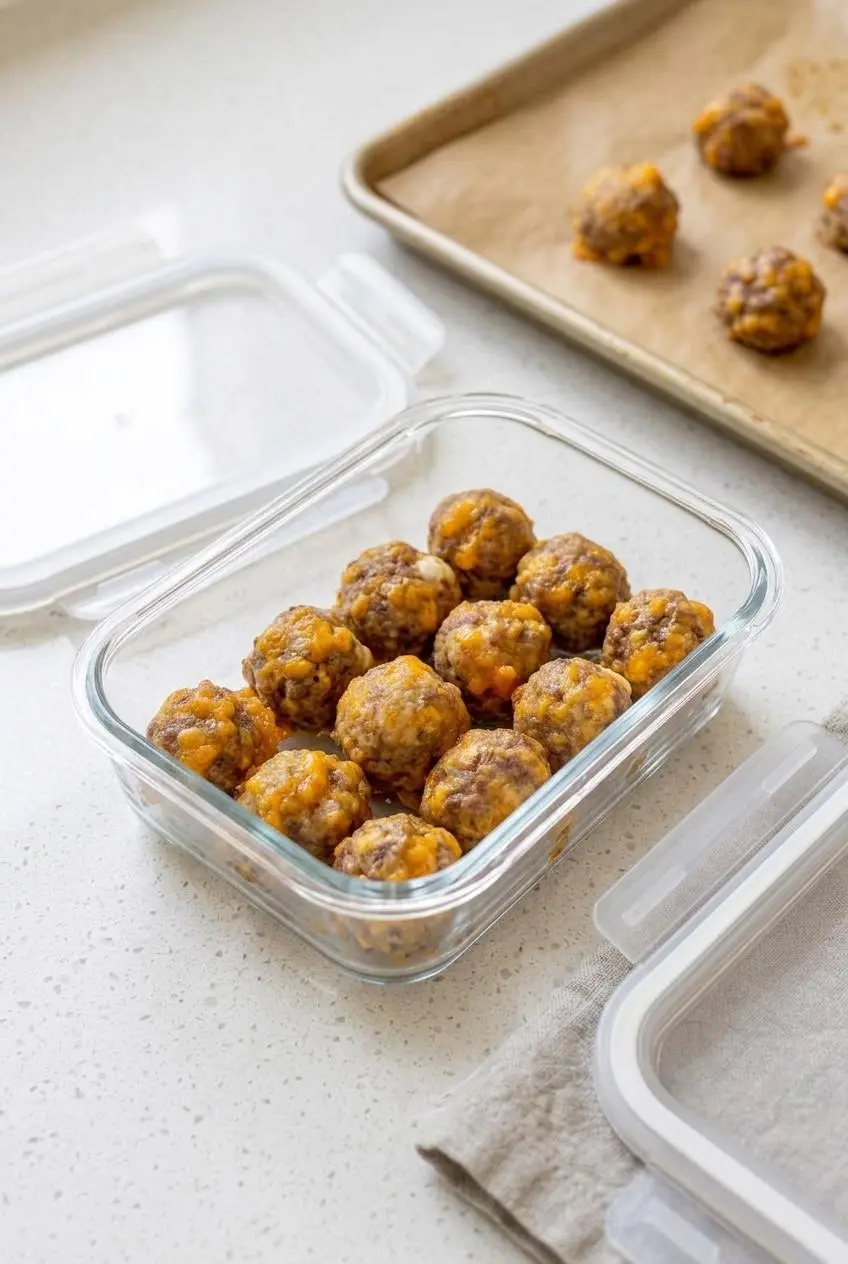
Let cooked sausage balls cool completely before transferring them to an airtight container and refrigerating them. Because they contain cream cheese, the U.S. Food and Drug Administration advises refrigerating any food made with cream cheese after 2 hours.
For the best texture, reheat only the portion you plan to serve in an oven or air fryer until warmed through and lightly crisp again. A microwave will warm the center, but it tends to soften the browned exterior.
If you are preparing for a gathering, shape and bake close to serving time when possible. Keeping the finished bites covered and chilled until reheating helps preserve their savory flavor and prevents the surface from drying out.
Serving Suggestions and Low-Carb Dipping Sauces

Serve these bites warm, when the cheddar is at its most melty and the outside still has a crisp edge.
- Set out creamy garlic ranch for a cool, tangy contrast to the sausage.
- Offer spicy whole-grain mustard for bite and acidity.
- Choose sugar-free barbecue sauce for smoky sweetness, checking the label for added sugars.
- Turn them into breakfast with soft scrambled eggs, sliced avocado, and fresh greens. A spoonful of keto sausage gravy makes the plate especially hearty.
- Use cocktail picks, celery sticks, pickled peppers, and herb sprigs to make a party platter easier to share.
Low-Carb Entertaining and Dietary Context
These sausage balls bring familiar cheese-and-sausage flavor to a grain-free appetizer spread, so they fit comfortably beside more traditional party foods. When ingredient labels confirm there are no wheat-based additions, they also suit gluten-free entertaining.
For a platter with contrasting textures, pair warm sausage balls with crisp keto crackers, crunchy vegetables, and a couple of savory dips. The rich, salty bites are satisfying enough to hold their own without making the spread feel fussy.
The Secret to Perfect Golden Sausage Balls
Softened cream cheese, freshly grated cheddar, and evenly scooped portions are the three details that make these sausage balls reliable. Mix until the dough looks cohesive, then give each piece room to brown.
Watch for a golden exterior and firm center, and serve them warm while the cheese is still soft. A simple plate of hot sausage balls rarely stays full for long.
Frequently Asked Questions
Can I Make Keto Sausage Balls in an Air Fryer?
Yes. Arrange the shaped sausage balls in a single layer in the air fryer basket without crowding them. Cook in batches as needed so hot air can circulate around each piece. Look for a browned exterior and a fully cooked, firm center before serving.
Can I Substitute Almond Flour for Coconut Flour?
Almond flour can work in a separate version, but it is not a direct substitute for coconut flour. It absorbs much less moisture, so using it at the same amount can change the dough’s structure and leave the sausage balls too soft. Use a recipe written specifically for almond flour proportions.
Should the Sausage Be Cooked Before Mixing?
No. Use raw ground sausage in the mixture. Raw sausage binds with the egg, cream cheese, cheddar, and coconut flour as it bakes, helping the balls keep their rounded shape and tender texture.
How Should Leftover Sausage Balls Be Stored and Reheated?
Cool them completely, seal them in an airtight container, and keep them chilled. Warm portions gently in an oven or air fryer for a crisper exterior. Avoid leaving cooked sausage balls at room temperature for extended serving periods.
Why Did My Sausage Balls Release So Much Grease While Baking?
High-fat sausage can release a noticeable amount of fat, and coated pre-shredded cheese can contribute to oily separation. Use freshly grated cheddar when possible, line the pan with parchment, and consider an elevated wire rack over a baking sheet so the balls do not sit in excess grease.

Keto Sausage Balls

Equipment
- Baking sheet
- Parchment paper
Ingredients
- 16 oz ground sausage
- 4 oz shredded cheddar
- 4 oz cream cheese
- 1/4 cup coconut flour
- 1 egg
- 1/2 tsp salt
Instructions
- Heat the oven to 400 °F and cover a large baking sheet with parchment paper. The parchment catches rendered fat and makes the browned sausage balls easier to lift from the pan.
- Mix the sausage, cheddar, cream cheese, coconut flour, egg, and salt until the ingredients form one cohesive mixture, then shape it into 30 balls. The dough should change from crumbly and uneven to moist, compact, and evenly flecked with cheddar.
- Bake the sausage balls for 15 to 20 minutes until they are cooked through. They are ready when the outsides are golden brown, the centers feel firm, and the pan gives off a lively sausage-and-cheese sizzle.