Skip to content
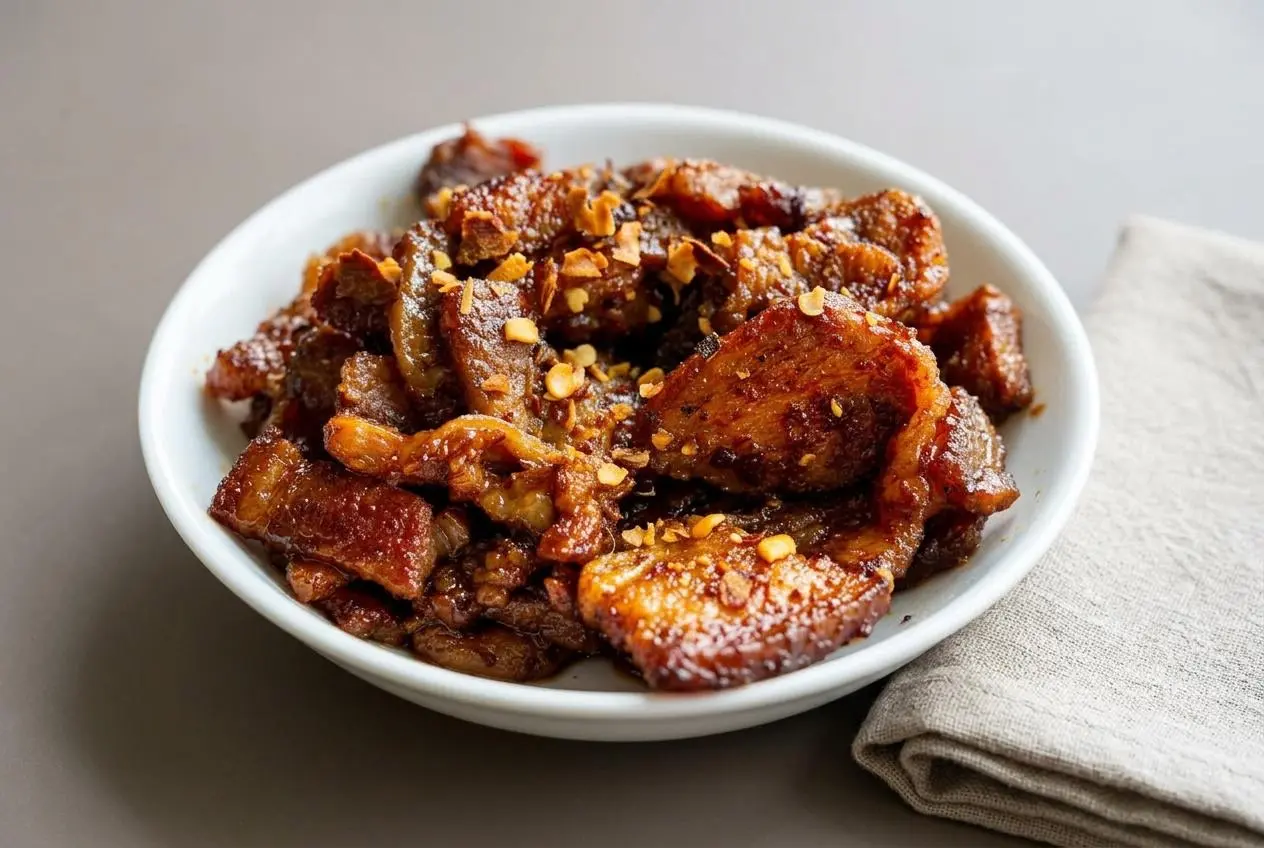
Make keto pork belly by simmering it in seasoned chicken stock until tender, then browning it in a skillet before adding a sugar-free savory glaze. Look for crisp edges and a glossy, deep mahogany coating, with controlled crackling rather than aggressive popping.
This keto pork belly combines ginger, garlic, vinegar, and a sweet-spicy soy glaze. The slow simmer softens the meat first, so the skillet can focus on rendering fat and building browned edges.
You’ll need patience for the simmer, but the finishing stage gives you plenty of control over the texture. Watch the coating turn from watery to glossy. That’s where the sticky edges begin.
I’d keep paper towels and a mesh splatter screen within reach before starting the skillet stage; surface moisture makes a noticeable difference here.
Essential Ingredients for Sugar-Free Glazed Pork Belly
Pork belly supplies richness, stock carries the aromatics, and olive oil helps start the browning. Ginger and garlic build fragrance, vinegar balances the fat, and sweetener, soy sauce, pepper, salt, and chili flakes shape the savory, sticky finish.
- 1 lb Pork Belly
- 3 cups Chicken Stock
- 1 tsp Ground Ginger
- 3 cloves Garlic
- 1 tbsp Apple Cider Vinegar
- 1 tbsp sweetener
- 2 tbsp Olive Oil
- pinch Salt
- pinch Black Pepper
- 1 tsp Chili Pepper Flakes
- 1.5 tbsp sweetener
- 2 tbsp Soy Sauce (Tamari or Coconut Aminos can be used as a substitute using the same quantity.)
Choose fresh pork belly rather than cured bacon. Look for alternating layers of meat and fat instead of a piece dominated by one thick fat layer. More even layering makes the bite-sized pieces easier to brown consistently.
Skinless pork belly is the more straightforward choice for this stovetop dish. Skin-on pieces can work, but the skin may stay chewy rather than turn into puffed crackling. This method aims for browned meat and crisp edges, not a brittle sheet of crispy skin.
The chicken stock provides a moist cooking environment; gentle heat and time do the tenderizing. Ginger and garlic perfume that liquid, while apple cider vinegar adds acidity to balance the finished pork’s richness.
Use a sugar-free sweetener for both sweetener entries. The first belongs in the simmering liquid; the second goes into the skillet glaze. Sweetener blends behave differently when heated, so don’t expect every product to melt, brown, or stay glossy in exactly the same way.
Soy sauce brings savory depth and color. Tamari and coconut aminos are the listed alternatives, but their sweetness and saltiness can differ. Check their labels, along with the stock and sweetener labels, when tracking carbohydrates. Sugar-free doesn’t automatically mean the entire dish is carbohydrate-free.
How to Make Keto Pork Belly
The two stages solve different problems: the covered simmer develops tenderness, and the skillet builds the crust. Plan for 10 minutes of prep and about 150 minutes of cooking. This recipe serves four.
Slow Cooked Pork Belly
- Slice the pork belly into evenly sized strips roughly the size of a finger.
Similar thickness helps the meat soften at a consistent pace. - Combine the chicken stock, ground ginger, garlic, apple cider vinegar, and first sweetener amount in a medium pot, then stir over high heat.
The liquid should reach a boil before the pork goes in. - Add the pork strips to the boiling stock, reduce the heat, and cover the pot for about 2 hours of gentle simmering.
Maintain quiet bubbling rather than a vigorous rolling boil. - Drain the pork after the simmer and cut the strips into bite-sized pieces.
The meat should feel tender enough to cut without firm resistance.
Before frying, blot the drained pieces thoroughly with paper towels, including their undersides. Wet surfaces spend their first moments in the skillet steaming instead of browning. Drying also helps limit the amount of hot fat that spits from the pan.
Glaze
- Warm the olive oil in a medium frying pan and carefully place the pork pieces in the oil.
The soft-looking pieces will begin to sizzle as their surfaces heat. - Turn the pieces regularly to expose each side to the pan.
Look for golden-brown patches across the meat rather than browning on only one face. - Set a mesh splatter screen over the skillet as the fat begins to pop.
The mesh catches droplets while letting steam escape. - Add the soy sauce or listed substitute, salt, black pepper, chili pepper flakes, and second sweetener amount once the pork has browned.
The sauce will initially loosen across the pan before reducing around the pieces. - Continue turning the pork, lowering the heat when popping becomes excessive and raising it again as needed to maintain browning.
The coating should thicken and cling without developing a burnt smell. - Remove the skillet from the heat when the pork has a dark, sticky coating and lightly crisp edges.
The finished pieces should look glossy rather than sit in a pool of watery sauce.
Listen as well as look. Early frying can sound like wet bubbling; as surface moisture evaporates, a sharper crackle takes over. That change helps you judge progress, but loud popping alone doesn’t mean the pork is ready.
The glaze’s color comes partly from the soy sauce, so color alone can mislead. Watch for a thin, glassy coating that grips the meat. A pleasant savory aroma is welcome; an acrid smell or smoke means the heat needs immediate attention.
Understanding Pork Belly on a Ketogenic Diet
Pork belly can fit a low-carbohydrate meal, but the glaze deserves as much attention as the meat. Fresh, unseasoned pork belly is a low-carbohydrate cut; sweetened marinades, curing mixtures, and bottled sauces can change the finished dish.
It’s also a particularly fatty, rich cut. Consider the portion alongside the rest of your meal rather than treating the keto label as a reason to ignore quantities. Pairing it with vegetables gives the plate a useful contrast in texture and flavor.
Choose sugar-free sweeteners and unsweetened savory liquids, then check the actual product labels. Different sweetener blends and amino sauces can contribute different amounts of carbohydrates. Without those specific labels, an exact net-carb count would be misleading.
If you follow a ketogenic diet for a medical reason, use your clinician’s meal-planning advice rather than relying on a recipe name to determine suitability.
Troubleshooting Common Texture and Splatter Issues
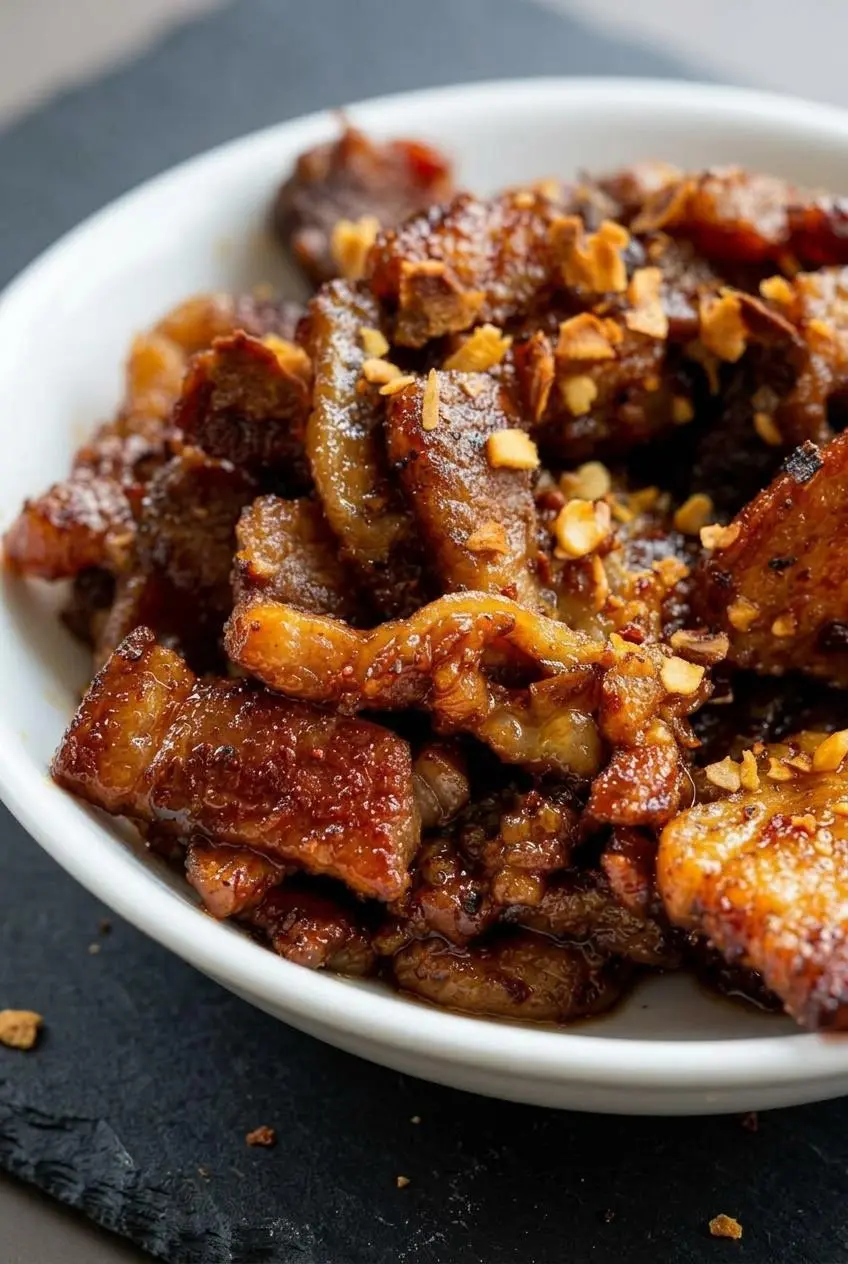
Most problems come from moisture, crowded pieces, or pushing the glaze harder than it can tolerate. Match the fix to what’s happening in the pan.
- Soft fat early in frying: Tender pork can look loose before browning develops. Keep turning it and allow the exposed surfaces to color before adding the glaze.
- Rubbery meat after simmering: The interior hasn’t become tender enough. Check tenderness during the simmer rather than expecting the frying stage to soften a firm center.
- Pale, soggy edges: Wet surfaces or tightly packed pieces trap steam. Blot the drained pork well and leave space between pieces; brown in batches if necessary.
- Excessive splatter: Moisture meeting hot fat causes popping. Use a mesh screen, lower the heat, and turn the meat with long-handled tongs rather than leaning over the skillet.
- Glaze darkening too quickly: The liquid has reduced faster than the pork can finish crisping. Lower the heat and keep the pieces moving; briefly lift the pan from the burner if browning continues too aggressively.
- Smoke or an acrid aroma: The fat or coating is overheating. Remove the skillet from the heat and reduce the burner before continuing; don’t pour water into hot fat.
A solid lid isn’t a substitute for a splatter screen during browning. It traps steam, which works against the crisp exterior you’re trying to build.
Pork Belly Flavor Variations
These optional directions change the flavor or finishing approach. Keep them separate from the ingredient list and method above.
Keto Barbecue Pork Belly Burnt Ends
For a smoky, burnt-ends-inspired flavor, use an unsweetened barbecue sauce and a low-carb brown sweetener as an alternative coating. Check both labels carefully. This gives the bites a barbecue character without claiming the same texture as slow-smoked burnt ends.
Shanghai-Style Red Braised Pork Belly
Star anise, ginger, and savory soy sauce or aminos offer an aromatic, red-braise-inspired direction. Chinese five-spice can add a warm spice profile, though it may already contain star anise. Keep the spicing restrained so it complements rather than overwhelms the pork.
Air Fryer Crisped Pork Belly
An air fryer offers an optional finish for drained, thoroughly dried pork pieces with less stovetop splatter. Leave room for air to circulate and monitor browning using your appliance’s instructions. The skillet remains the more controllable choice for reducing this liquid glaze while turning the pieces.
Low-Carb Side Dishes and Serving Ideas
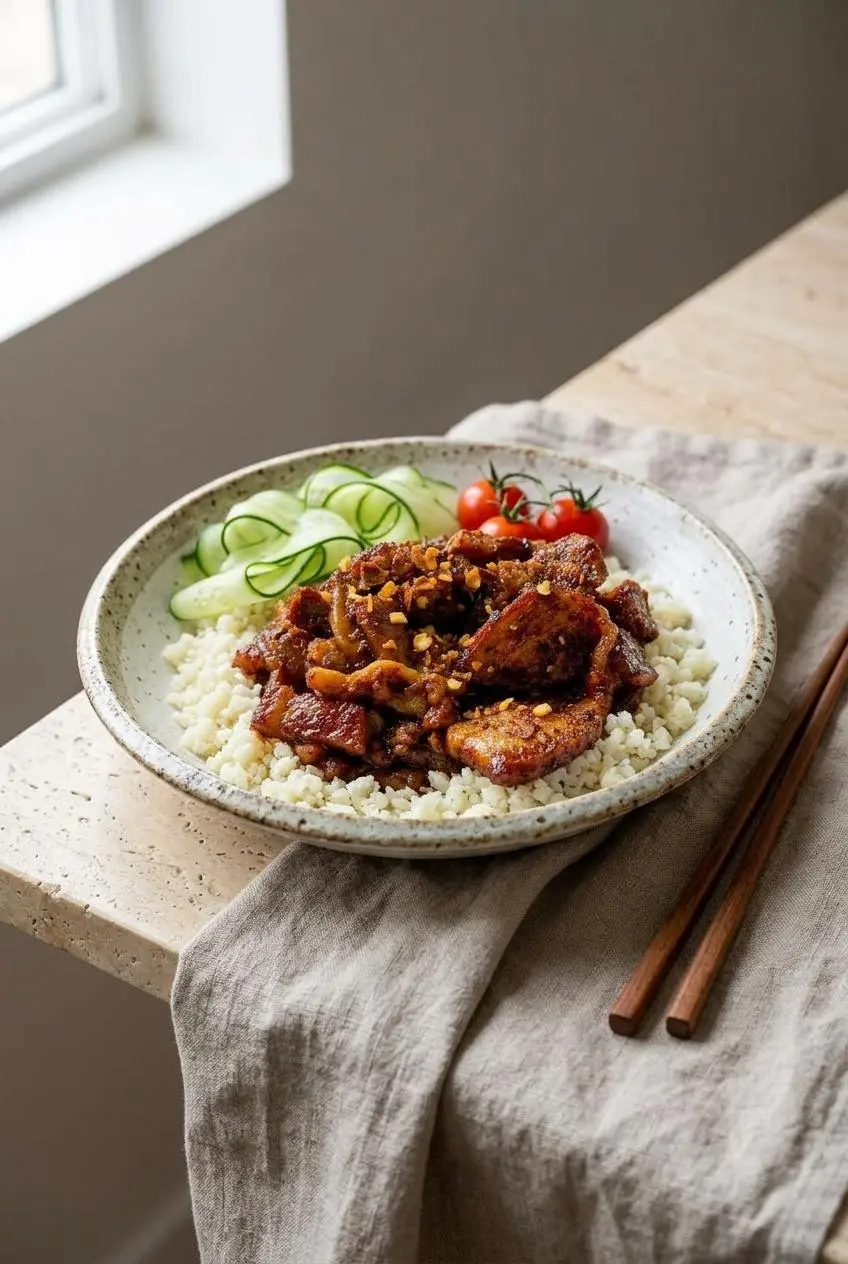
Freshness and acidity make rich pork belly easier to enjoy as a complete meal. Choose sides that contrast with the sticky coating instead of competing with it.
- A vegetable rice bowl: Spoon the pork over cauliflower rice or keto fried rice, using a little of the seasoned pan coating to flavor the vegetables.
- A crisp, cool contrast: Serve cucumber ribbons or thin radish slices alongside the pork, lightly pickled without added sugar if desired.
- A warm green side: Pair the bites with garlic-sautéed bok choy or tender broccoli spears.
- Lettuce cups: Tuck the pork into chilled butter lettuce leaves and add cucumber or radish for crunch.
Use the pan drippings sparingly when dressing a side. The glaze is concentrated, and too much rendered fat can make the vegetables feel heavy rather than pleasantly seasoned.
Storage and Reheating for Maximum Crispness
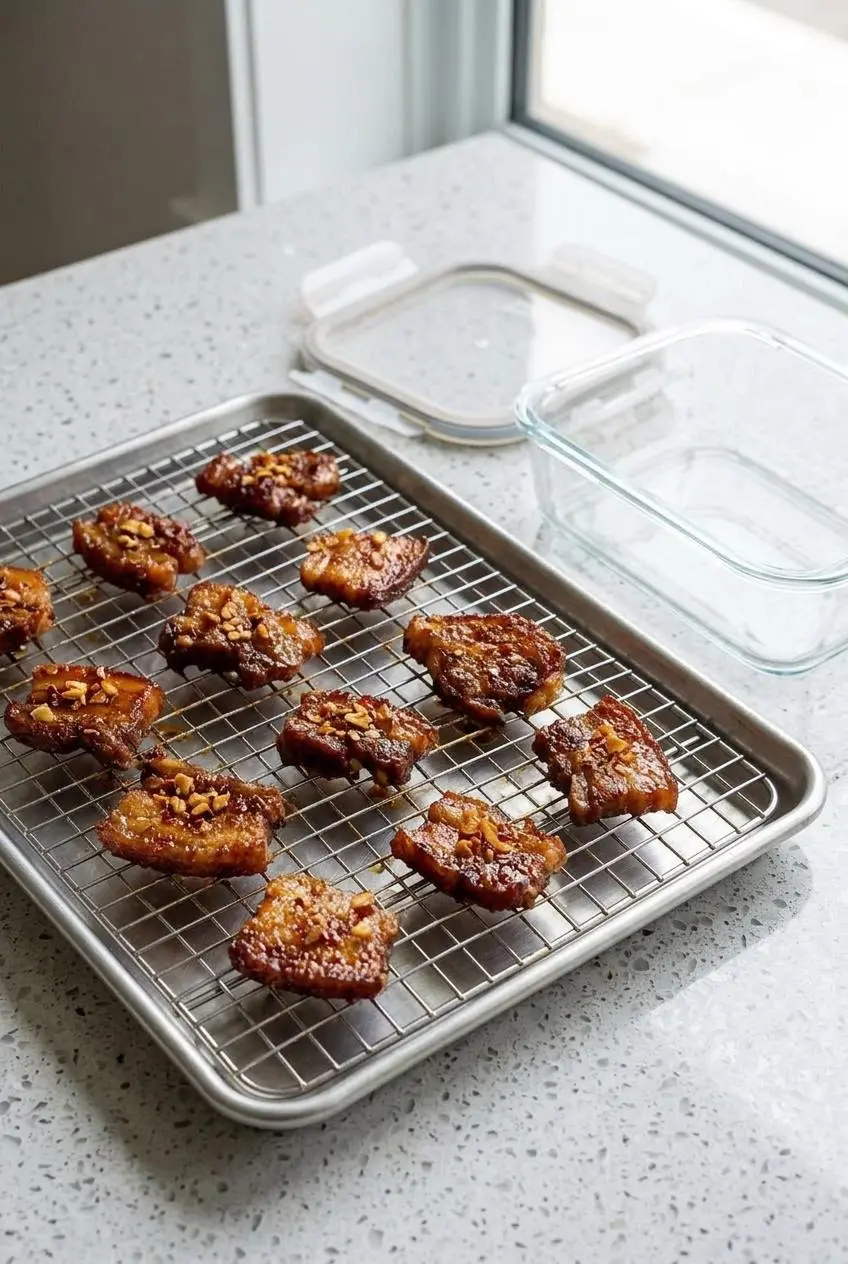
Leftover pork belly loses some crunch as the coating absorbs moisture. Keep it chilled in an airtight container, separate from cucumber, lettuce, or other fresh accompaniments.
For reheating, favor dry heat from an oven or air fryer and arrange the pieces with space around them. Warm them through while watching the sweetened coating closely, then stop before the edges scorch or the meat dries out. Reheat only the portion you plan to serve.
A microwave can warm the meat, but it won’t recreate the browned crust well. The coating tends to soften, making dry heat the better choice when texture matters. Add fresh vegetables only after reheating.
Final Thoughts on Perfect Crispy Pork Belly
Tenderness comes from the gentle simmer; crisp edges come from dry surfaces and patient skillet browning. Finish when the glaze clings in a glossy coating and the corners have a little crunch.
Let your palate guide the sweetness and chili heat on future batches, while keeping the browning stage separate from glazing. The questions below cover the last practical details before serving.
Frequently Asked Questions
Can I Eat Pork Belly on Keto?
Yes, pork belly can fit a ketogenic meal plan when the seasonings and portion suit your carbohydrate goals. Use sugar-free sweetener and check the stock, soy sauce, or amino sauce labels rather than assuming every product is equivalent.
Are There Carbs in Pork Belly?
Fresh, unseasoned pork belly is naturally low in carbohydrates; sauces and seasonings affect the finished dish’s total. Cured or marinated products may include sugar, so check the package instead of treating them like fresh pork belly.
What Is the Best Way to Cook Belly Pork on Keto?
For tender, glazed bites, this simmer-then-sear method gives you separate control over the interior and exterior. Drain and dry the pork well, brown it first, and add the glaze afterward so it doesn’t scorch before the edges crisp.
Will Keto Flatten My Stomach?
A ketogenic diet doesn’t guarantee a flatter stomach, and this dish makes no body-shape promise. Early weight loss on keto can reflect fluid loss before later fat loss, so a change on the scale isn’t the same as a predictable change in abdominal shape.
How Do I Reheat Cooked Pork Belly to Keep It Crispy?
Use an oven or air fryer with space between the pieces to warm them through and help restore the edges. Watch the glaze closely and keep fresh sides separate; microwave reheating tends to soften the exterior.
Keto Pork Belly

Equipment
- Medium pot
- Medium frying pan
- Mesh splatter screen
- Tongs
- Paper towels
Ingredients
- 1 lb Pork Belly
- 3 cups Chicken Stock
- 1 tsp Ground Ginger
- 3 cloves Garlic
- 1 tbsp Apple Cider Vinegar
- 1 tbsp sweetener
- 2 tbsp Olive Oil
- pinch Salt
- pinch Black Pepper
- 1 tsp Chili Pepper Flakes
- 1.5 tbsp sweetener
- 2 tbsp Soy Sauce Tamari or Coconut Aminos can be used as a substitute using the same quantity.
Instructions
Slow Cooked Pork Belly
- Slice the pork belly into evenly sized strips roughly the size of a finger. Similar thickness helps the meat soften at a consistent pace.
- Combine the chicken stock, ground ginger, garlic, apple cider vinegar, and first sweetener amount in a medium pot, then stir over high heat. The liquid should reach a boil before the pork goes in.
- Add the pork strips to the boiling stock, reduce the heat, and cover the pot for about 2 hours of gentle simmering. Maintain quiet bubbling rather than a vigorous rolling boil.
- Drain the pork after the simmer and cut the strips into bite-sized pieces. The meat should feel tender enough to cut without firm resistance.
Glaze
- Warm the olive oil in a medium frying pan and carefully place the pork pieces in the oil. The soft-looking pieces will begin to sizzle as their surfaces heat.
- Turn the pieces regularly to expose each side to the pan. Look for golden-brown patches across the meat rather than browning on only one face.
- Set a mesh splatter screen over the skillet as the fat begins to pop. The mesh catches droplets while letting steam escape.
- Add the soy sauce or listed substitute, salt, black pepper, chili pepper flakes, and second sweetener amount once the pork has browned. The sauce will initially loosen across the pan before reducing around the pieces.
- Continue turning the pork, lowering the heat when popping becomes excessive and raising it again as needed to maintain browning. The coating should thicken and cling without developing a burnt smell.
- Remove the skillet from the heat when the pork has a dark, sticky coating and lightly crisp edges. The finished pieces should look glossy rather than sit in a pool of watery sauce.