Skip to content

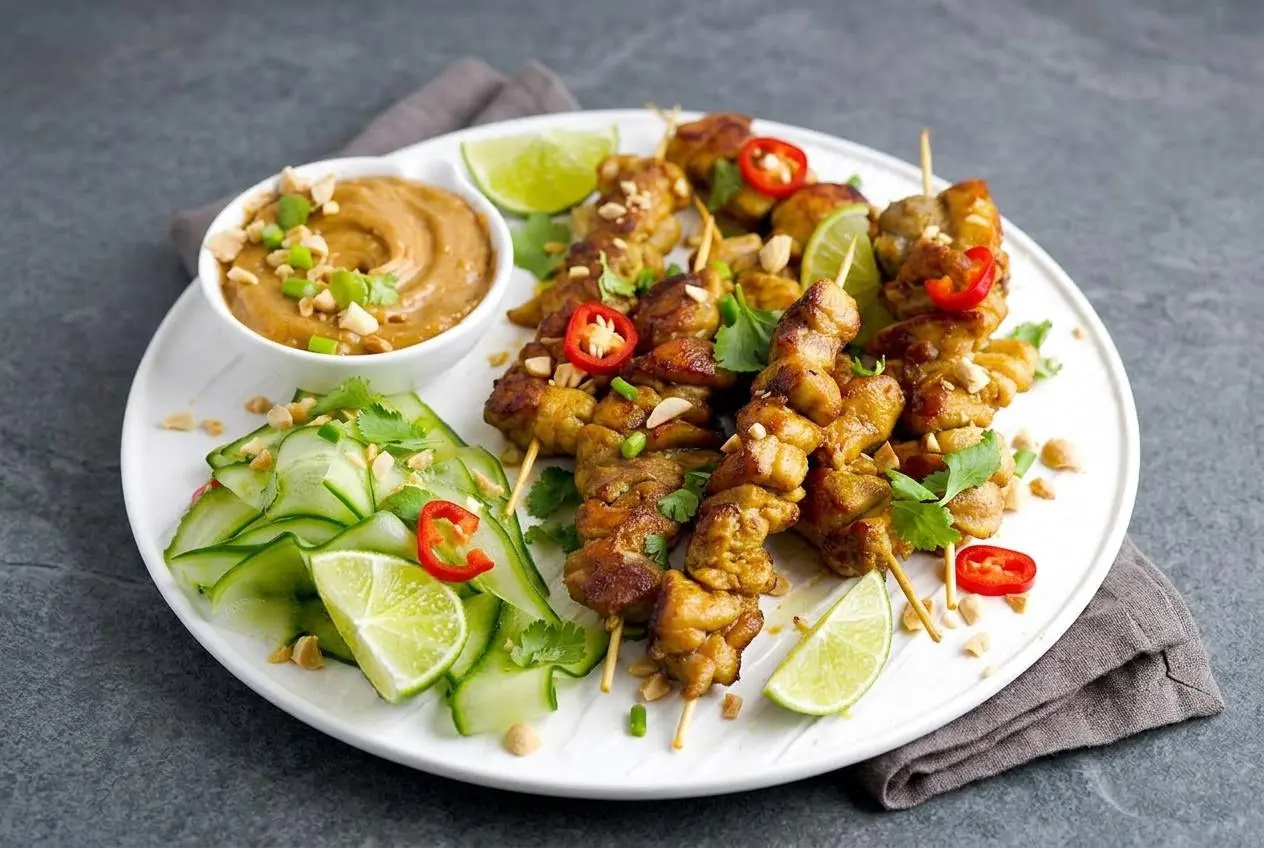
Keto chicken satay pairs curry-spiced chicken thigh skewers with a creamy dipping sauce made from unsweetened peanut butter, coconut milk, and sugar-free sweetener. Sear the chicken in a hot grill pan for golden edges, then finish with lime, cilantro, and chopped peanuts.
This keto chicken satay brings together savory chicken, aromatic spices, and a rich peanut sauce without using regular sugar in the marinade or dipping sauce. The stovetop method makes it manageable without an outdoor grill.
Expect tender chicken, crunchy peanuts, and cool cucumber alongside that creamy sauce. Prep takes 20 minutes, cooking takes 10, and the recipe makes six skewers. The sauce balance makes the difference.
Before seasoning, cut the chicken into pieces of similar thickness so each skewer cooks evenly.
Ingredients Needed for the Chicken and Spicy Peanut Sauce
Each ingredient contributes to the balance: curry and garlic season the chicken, fish sauce adds savory depth, peanut butter and coconut milk create richness, and lime brightens both components. Peanuts, herbs, and cucumber add contrasting crunch and freshness.
- 1 lb chicken thighs (boneless and skinless, cut into bite-size pieces (500 grams))
- 1 tablespoon mild curry powder
- ½ teaspoon white pepper
- 1 teaspoon garlic powder
- ¼ teaspoon salt
- 1 tablespoon lime juice (or rice wine vinegar)
- 1 tablespoon fish sauce
- 2 tablespoons gluten-free soy sauce (e.g., Tamari or coconut aminos)
- 2 tablespoons olive oil (coconut oil or avocado oil)
- Short Bamboo sticks (soak in cold water for 5 minutes)
- 1 teaspoon grated or minced garlic
- 1 teaspoon grated ginger
- ½ cup unsweetened peanut butter (crunchy or not crunchy is fine)
- ½ cup coconut milk
- 2 teaspoons sugar-free sweetener (Natvia or something similar, equivalent to 2 teaspoons of regular sugar)
- 2 tablespoons gluten-free soy sauce
- 1 tablespoon lime juice or rice vinegar
- ¼ cup water
- 2 tablespoons peanuts (roasted and finely chopped)
- Lime wedges
- Coriander/cilantro
- Red chili sliced or thinly sliced red onion/spring onions
- Optional: make a shaved cucumber salad or a few shaved cucumber ribbons to serve on the plate
For the chicken: Thighs suit this hot-pan method because they remain forgiving as the edges brown. Mild curry powder supplies aromatic warmth, white pepper adds a gentle bite, and fish sauce and tamari give the marinade savory depth. Lime keeps those flavors lively.
For the sauce: Choose unsweetened peanut butter, preferably with peanuts and salt rather than added sugar or oils. Smooth peanut butter gives a silkier sauce; crunchy leaves small peanut pieces. Coconut milk softens its intensity, while ginger, fresh garlic, soy sauce, and lime keep it from tasting like sweetened nut butter.
For finishing: Cilantro and lime add freshness. Chopped peanuts supply crunch, while chili brings heat. The curry seasoning is aromatic, not necessarily fiery, so you can keep the chili garnish separate.
How to Make Keto Chicken Satay Step-by-Step
Start the chicken first, then make the dipping sauce while it marinates. Keep the sauce separate from the raw chicken so it stays ready for serving.
- Make evenly sized squares or rectangles from the thighs, coat them with curry powder, garlic powder, white pepper, and salt, then toss in a bowl with the lime juice, fish sauce, and gluten-free soy sauce and marinate for at least 10–15 minutes in the refrigerator.
Every piece should carry a moist, even coating of seasoning. - Process the fresh garlic, ginger, peanut butter, coconut milk, sweetener, sauce soy sauce, lime juice or vinegar, and water in a blender or food processor, or gently soften the peanut butter in a microwave or over hot water before whisking in those ingredients.
Aim for a cohesive, spoonable sauce with restrained sweetness, adjusting the sweetener, lime, or salt or fish sauce as needed. - Load the marinated chicken onto metal skewers or bamboo skewers soaked in cold water for 5 minutes.
Keep the pieces evenly distributed rather than compressed into a thick bundle. - Set a grill pan or cast-iron skillet over medium-high heat and distribute the cooking oil across its surface.
The oil should look fluid and lightly shimmering before the chicken goes in. - Sear the skewers for 4–5 minutes per side, checking that the chicken cooks through before removing it.
Look for golden-brown edges and a fragrant curry-garlic aroma, but do not treat browning alone as proof of doneness. - Transfer the finished skewers to a platter alongside the peanut sauce and finish with chopped peanuts, red chili, cilantro, and lime wedges.
Add the optional cucumber salad or ribbons for a cool, crisp contrast.
Why This Chicken Satay Fits a Keto Lifestyle
The low-carb adaptation centers on ingredient choices, rather than a promise about ketosis. Some satay marinades and sauces contain added sugar; this version uses unsweetened peanut butter and sugar-free sweetener instead.
Coconut milk, peanut butter, and olive oil contribute richness and fat without needing cream or butter. The ingredients contain no dairy, and gluten-free soy sauce keeps wheat-containing soy sauce out of the dish. Check packaged ingredient labels for your dietary needs.
The nutrition estimate per serving is 420 calories, 35 g fat, 21 g protein, 9 g total carbohydrate, and 2 g fiber. Brands, sweeteners, garnishes, and portion sizes can change the final values. Sugar-free sweetener does not make the finished dish carbohydrate-free.
Pro Tips for Juicy Skewers & Smooth Peanut Sauce
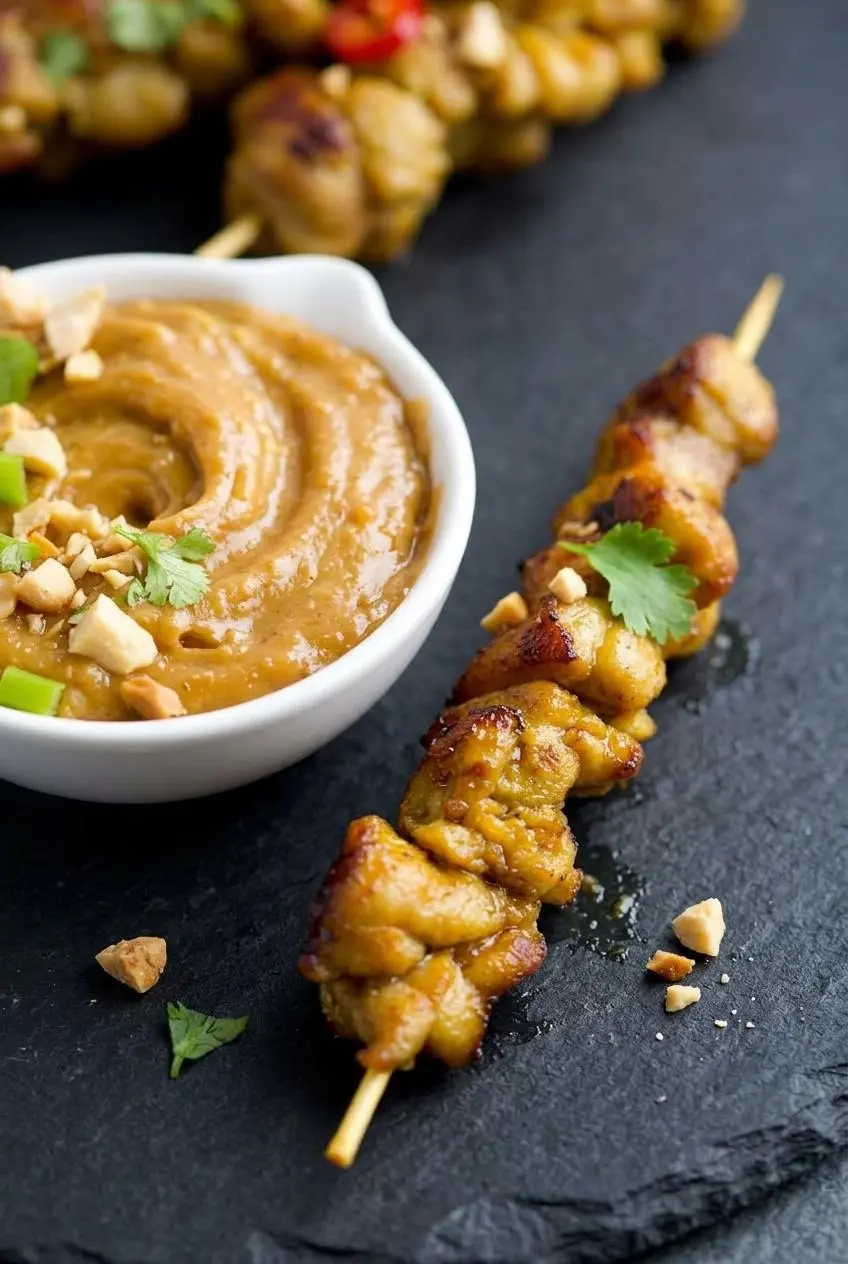
Most problems come from uneven chicken pieces or a sauce that needs more liquid, not more peanut butter.
- Uneven cooking: Thick folds of chicken take longer than flat pieces. Unfold the thighs before cutting and keep the pieces similar in thickness.
- Thick or stiff sauce: Natural peanut butter can resist mixing at first. Gently warm it, then whisk in warm water or coconut milk gradually until the mixture falls from the spoon in a broad ribbon.
- Oily or separated sauce: Excessive heat can make the texture harder to manage. Remove it from the heat and whisk in a splash of warm water to help bring it together.
- Flat flavor: Taste before adding more seasoning. Lime brightens a heavy sauce, sweetener softens a sharp edge, and soy sauce or fish sauce adds saltiness.
- Scorched bamboo handles: Soak the skewers as directed. On an outdoor grill, folded foil beneath exposed handles helps shield them from direct heat.
I prefer to judge the sauce while it is warm enough to stir easily, rather than thinning a cold, stiff spoonful too aggressively.
A grill pan provides defined sear marks; a flat skillet gives broader browned patches. Outdoor grilling adds another cooking option, but watch the chicken rather than assuming the stovetop timing will transfer exactly.
Easy Variations & Dietary Swaps
These optional changes adjust flavor or cooking style without changing the ingredient list above.
Peanut-Free Almond Butter Satay
Unsweetened almond butter makes a creamy alternative with a milder, slightly sweeter nut flavor. For a peanut-free version, omit the chopped peanut garnish too and check ingredient labels for your allergy needs. Almond butter still contains tree nuts.
Chicken Breast or Chicken Tenders Option
Breast strips and tenders offer a leaner alternative, but they are less forgiving of extended cooking than thighs. Keep their thickness uniform and check doneness rather than automatically using the full thigh cooking time.
Soy-Free & Paleo-Friendly Adaptation (Coconut Aminos)
Coconut aminos can replace the gluten-free soy sauce in both components for a soy-free direction. It tastes sweeter and less salty than tamari, so taste before adjusting the sweetener. For paleo preferences, check the sweetener and other packaged ingredients too.
Oven-Baked and Skewerless Satay Options
Skip the skewers and cook the marinated pieces directly in the skillet, leaving room between them for browning. Oven cooking is another option, but the stovetop timing is not a baking schedule. For a separate oven-focused meal, try oven-baked chicken thighs.
What to Serve with Keto Chicken Satay
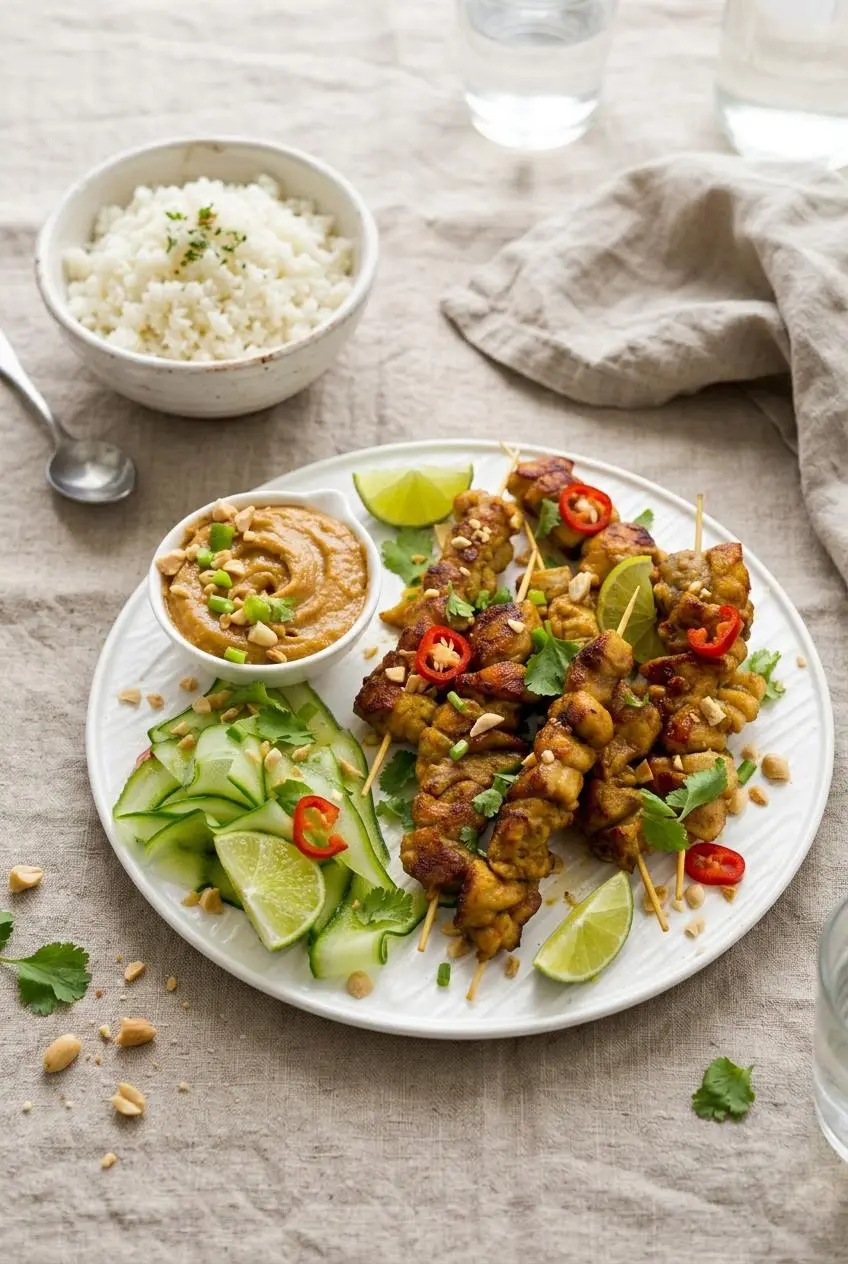
Fresh, crisp sides balance the rich sauce better than another heavy accompaniment.
- Weeknight dinner: Pair the skewers with plain or coconut cauliflower rice to catch extra sauce.
- Crunchy plate: Add shaved cucumber salad or cucumber ribbons and an Asian-style cabbage slaw without a sugary dressing.
- Vegetable side: Choose steamed broccolini or quickly stir-fried broccoli and zucchini.
- Party platter: Arrange the skewers with individual dipping bowls, lime wedges, cilantro, and chili served separately.
Make-Ahead, Storage & Reheating Guide
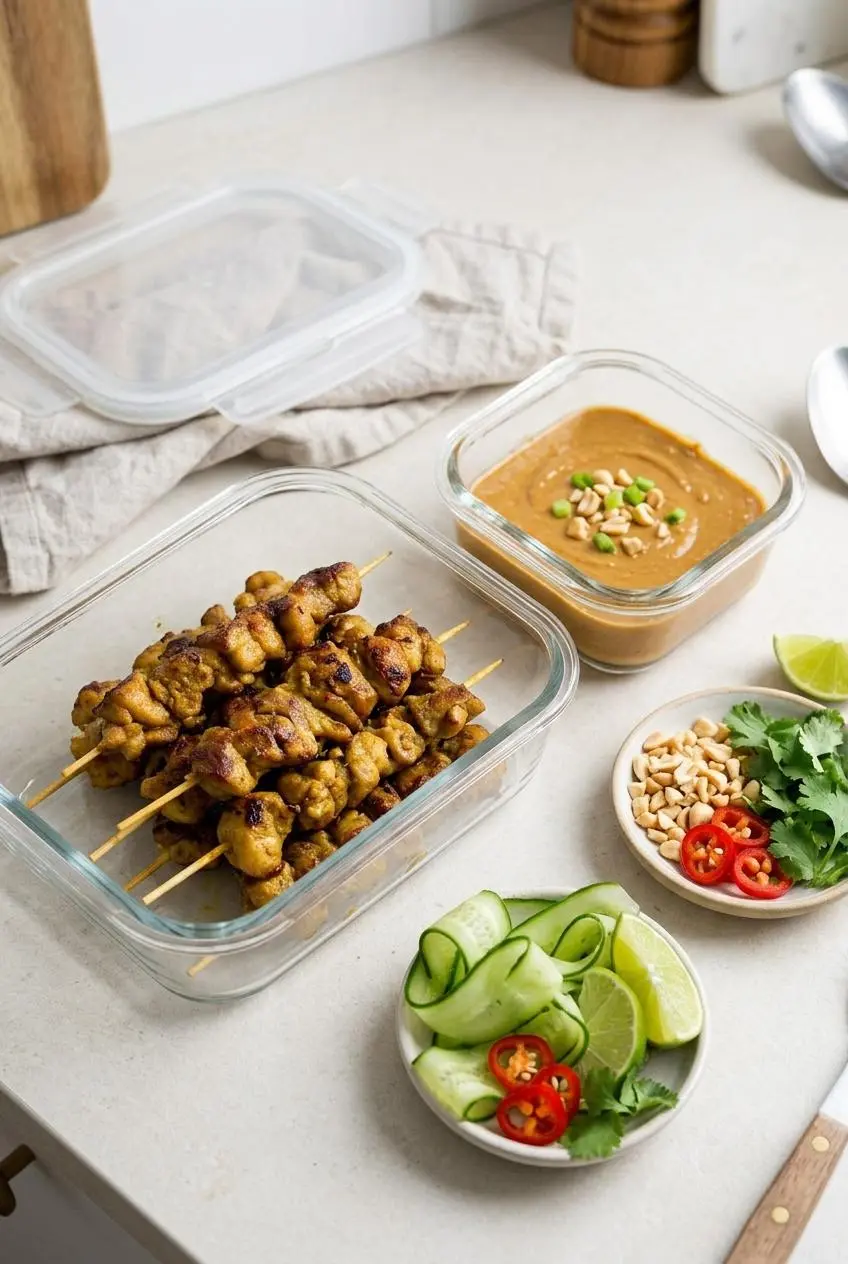
You can marinate the chicken ahead in the refrigerator, then prepare the sauce and garnishes separately. Leave the cucumber and herbs separate until serving to preserve their texture.
Keep cooked chicken and peanut sauce in separate airtight containers in the refrigerator. Store crunchy garnishes separately so they do not soften in the sauce.
Warm the sauce gently while stirring, adding water as needed to restore its dipping consistency. Avoid a hard boil. Reheat the chicken separately, checking it throughout rather than continuing to cook it simply to deepen the browned exterior.
Final Thoughts on Homemade Chicken Satay
Golden-edged chicken, aromatic curry seasoning, and creamy peanut sauce make a satisfying combination. Evenly cut thighs and a hot pan help the skewers cook consistently.
Taste the sauce for sweetness, saltiness, and acidity before serving, then finish with the herbs, lime, and crunch you enjoy. Keep the chili on the side if everyone likes a different level of heat.
Frequently Asked Questions
Can You Eat Peanut Butter in Ketosis?
Whether it fits your eating plan depends on the product, portion, and your overall carbohydrate intake. Choose unsweetened peanut butter and check its label rather than assuming that every peanut butter has the same nutrition.
How Many Carbs Are in Chicken Satay?
Carbohydrate content varies with the marinade, dipping sauce, and serving size. Use the per-serving nutrition estimate above for this version, allowing for any ingredient swaps or extra sauce.
What Is Chicken Satay Sauce Made Of?
This sauce combines unsweetened peanut butter, coconut milk, garlic, ginger, gluten-free soy sauce, lime juice or rice vinegar, sugar-free sweetener, and water. Its flavor should balance nutty richness with saltiness, gentle sweetness, and acidity.
Can I Substitute Almond Butter for Peanut Butter in Satay Sauce?
Yes, unsweetened almond butter is an optional alternative with a different nut flavor. Omit the peanut garnish as well if you are avoiding peanuts.
Can I Cook Keto Chicken Satay in the Oven or a Skillet Without Skewers?
Yes, you can cook the marinated chicken pieces directly in a skillet without threading them. Oven cooking is also an option, but it requires a different cooking schedule from the stovetop method given here.
Keto Chicken Satay

Equipment
- Grill pan or cast-iron skillet
- Blender or food processor
- Short bamboo sticks
Ingredients
- 1 lb chicken thighs (boneless and skinless, cut into bite-size pieces (500 grams))
- 1 tablespoon mild curry powder
- ½ teaspoon white pepper
- 1 teaspoon garlic powder
- ¼ teaspoon salt
- 1 tablespoon lime juice (or rice wine vinegar)
- 1 tablespoon fish sauce
- 2 tablespoons gluten-free soy sauce (e.g., Tamari or coconut aminos)
- 2 tablespoons olive oil (coconut oil or avocado oil)
- Short Bamboo sticks (soak in cold water for 5 minutes)
- 1 teaspoon grated or minced garlic
- 1 teaspoon grated ginger
- ½ cup unsweetened peanut butter (crunchy or not crunchy is fine)
- ½ cup coconut milk
- 2 teaspoons sugar-free sweetener (Natvia or something similar, equivalent to 2 teaspoons of regular sugar)
- 2 tablespoons gluten-free soy sauce
- 1 tablespoon lime juice or rice vinegar
- ¼ cup water
- 2 tablespoons peanuts (roasted and finely chopped)
- Lime wedges
- Coriander/cilantro
- Red chili sliced or thinly sliced red onion/spring onions
- Optional: make a shaved cucumber salad or a few shaved cucumber ribbons to serve on the plate
Instructions
- Make evenly sized squares or rectangles from the thighs, coat them with curry powder, garlic powder, white pepper, and salt, then toss in a bowl with the lime juice, fish sauce, and gluten-free soy sauce and marinate for at least 10–15 minutes in the refrigerator. Every piece should carry a moist, even coating of seasoning.
- Process the fresh garlic, ginger, peanut butter, coconut milk, sweetener, sauce soy sauce, lime juice or vinegar, and water in a blender or food processor, or gently soften the peanut butter in a microwave or over hot water before whisking in those ingredients. Aim for a cohesive, spoonable sauce with restrained sweetness, adjusting the sweetener, lime, or salt or fish sauce as needed.
- Load the marinated chicken onto metal skewers or bamboo skewers soaked in cold water for 5 minutes. Keep the pieces evenly distributed rather than compressed into a thick bundle.
- Set a grill pan or cast-iron skillet over medium-high heat and distribute the cooking oil across its surface. The oil should look fluid and lightly shimmering before the chicken goes in.
- Sear the skewers for 4–5 minutes per side, checking that the chicken cooks through before removing it. Look for golden-brown edges and a fragrant curry-garlic aroma, but do not treat browning alone as proof of doneness.
- Transfer the finished skewers to a platter alongside the peanut sauce and finish with chopped peanuts, red chili, cilantro, and lime wedges. Add the optional cucumber salad or ribbons for a cool, crisp contrast.