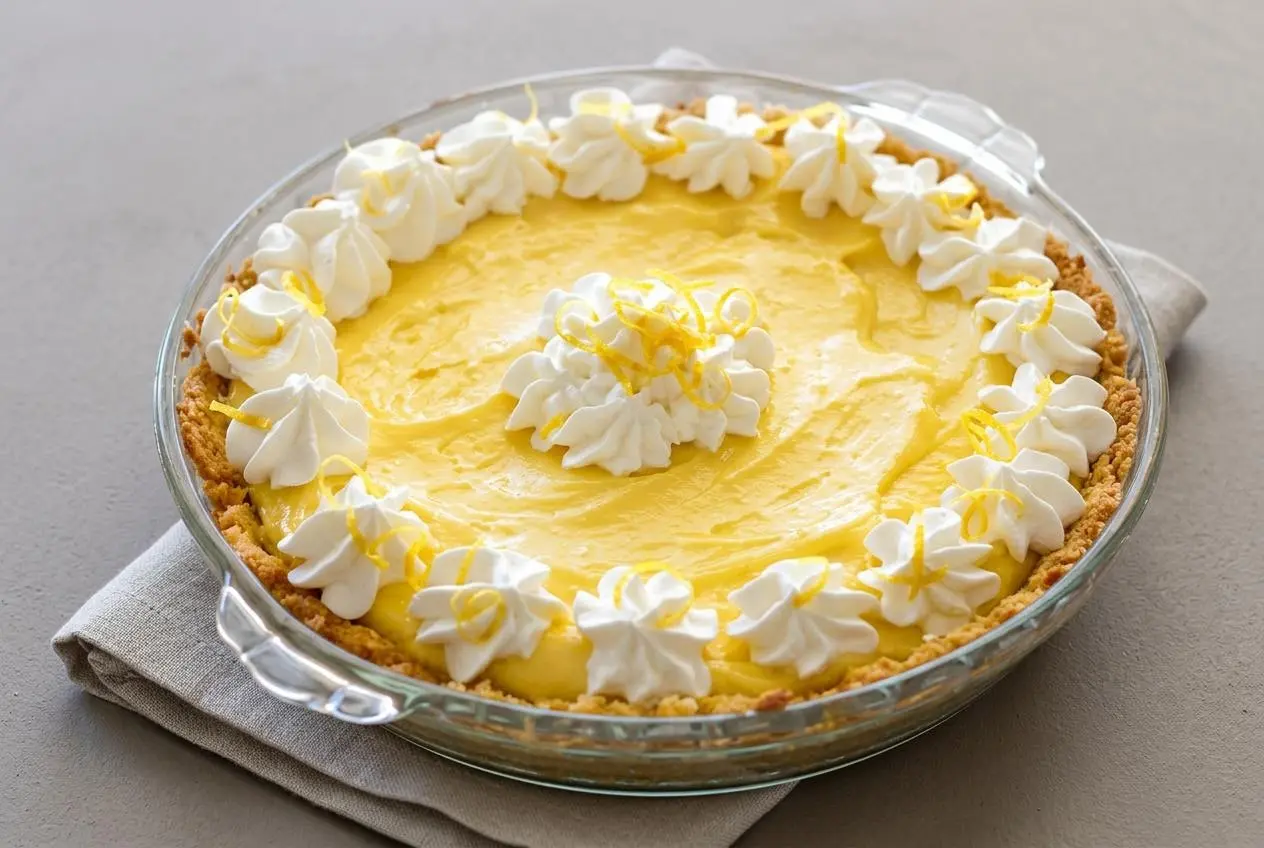
Make a creamy keto lemon pie by baking a coconut almond crust, cooking a gentle lemon curd, folding it into whipped cream, and chilling until firm. The key is a fully cooled crust and a curd thickened enough to leave a soft trail behind the whisk.
This Keto Lemon Pie Recipe gives you bright lemon flavor, a fluffy creamy filling, and a crust with real toasted crunch. It feels classic and cool, but stays low carb and gluten-free with ingredients that actually work together.
The tart filling cuts through the rich butter and cream beautifully, and the crust smells almost like toasted macaroons as it bakes. The folding step is where the texture turns from dense curd to cloudlike pie.
Use a fine-mesh strainer for the curd and let the crust cool completely before filling, or the crisp base will soften fast.
Why You Will Love This Keto Lemon Pie
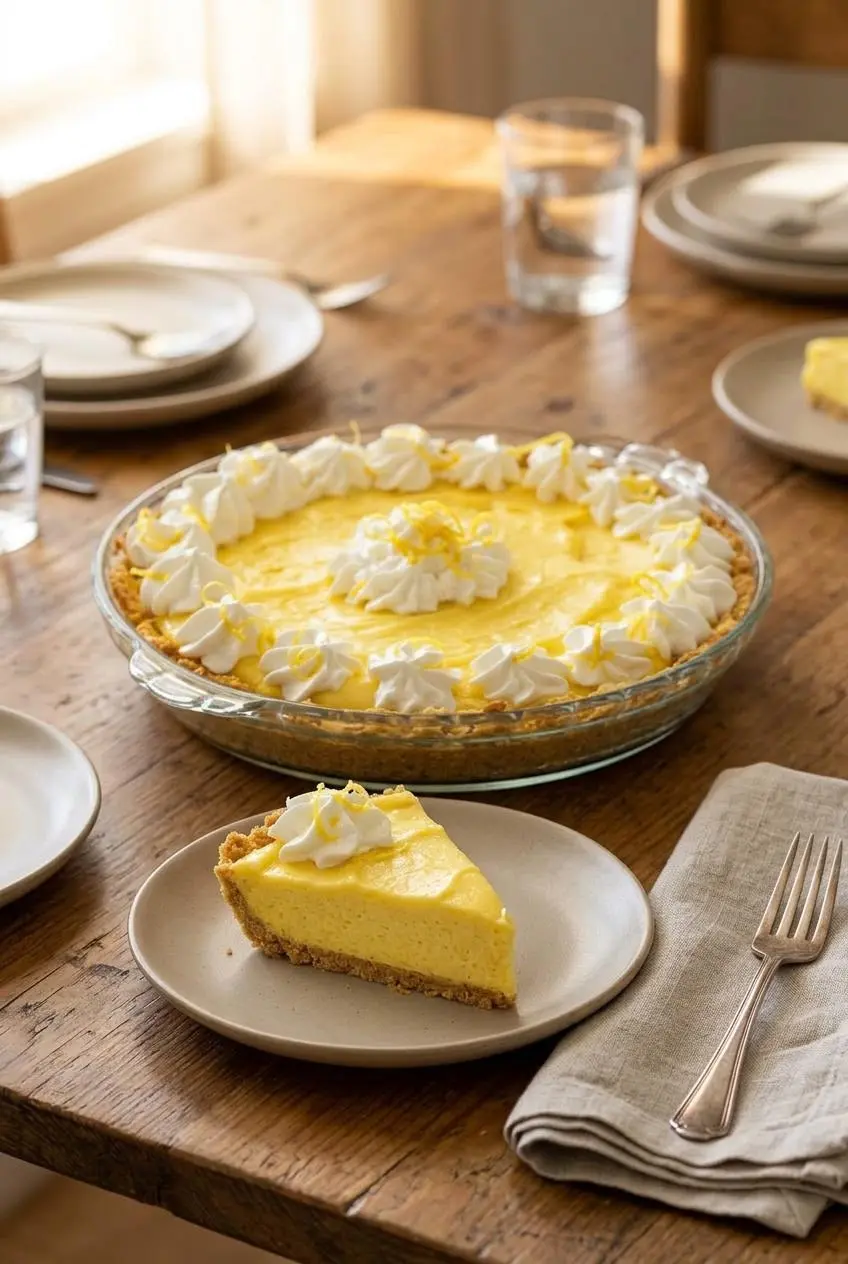
This pie lands right in the sweet spot between rich and refreshing. The filling is smooth and lemony without being heavy, and the coconut almond crust brings enough texture to keep every bite interesting.
It also fits the moments when you want a chilled dessert that still feels special. Serve it plain, finish it with berries, or put a slice next to keto ice cream if you want the full summer-dessert treatment.
Because the filling is folded with whipped cream, it slices softer and lighter than a dense baked custard pie. That makes it especially good for warm days, holiday dessert spreads, or any time you want lemon to taste bright instead of sharp.
Key Ingredients and Low-Carb Substitutions
Each ingredient pulls its weight here, from crust structure and toasted flavor to smooth curd, stable whipped filling, and the fresh citrus punch that keeps the pie lively.
For the Crust
- 6 tablespoons butter, softened
- 3/4 cup erythritol
- 3/4 cup dried shredded coconut (unsweetened)
- 3/4 cup super fine almond flour
- pinch of salt
For the Filling
- 1/2 cup butter
- 1/2 cup erythritol sweetener
- 1/2 cup fresh lemon juice
- 1/4 cup lemon zest
- 6 egg yolks
- 1 1/2 cups heavy whipping cream
- 1/4 teaspoon xanthan gum
- 1 Tablespoon erythritol sweetener
Almond flour gives the crust body without making it heavy, while shredded coconut adds chew and toasty edges. Butter carries flavor in both parts of the pie, and fresh lemon juice plus zest keep the filling sharp enough to balance all that richness.
I strongly prefer super-fine almond flour and powdered sweetener here because coarse almond meal and gritty sweetener can make a chilled pie feel sandy.
Understanding Sugar-Free Sweeteners
Sweetener choice matters more in a chilled dessert than it does in a quick skillet recipe. Once the pie is cold, any sweetener that did not fully dissolve has a habit of showing off.
- Powdered erythritol works best when you want a clean sweetness and already have it on hand. If you use granulated erythritol, the filling can feel slightly crunchy or cool on the tongue after chilling.
- Powdered allulose dissolves more smoothly and usually stays silkier in cold fillings. It is the better choice if grit bothers you or if you want the most custard-like texture.
- Monk fruit blends vary a lot by brand. If the blend is based on erythritol, expect it to behave more like erythritol than pure monk fruit.
That is why powdered sweeteners are such a practical upgrade here. They dissolve faster into the warm lemon mixture and are less likely to leave tiny crystals behind once the pie is cold.
Fresh lemon zest also helps. Its natural oils brighten the flavor and soften any lingering sweetener aftertaste that can show up in low-carb desserts.
Selecting Your Low-Carb Thickeners
This filling already gets structure from egg yolks, then extra stability from whipped cream and xanthan gum. The thickener is there to support the texture, not turn it gummy.
- Xanthan gum gives whipped cream staying power and helps reduce weeping. It works well in this recipe because only a small amount is needed.
- Glucomannan is another good low-carb stabilizer if you prefer it. It thickens quickly and can make lemon fillings feel slightly more pudding-like.
- Cornstarch and wheat flour are not good fits for this pie. They change the carb profile and are unnecessary when egg yolks and low-carb stabilizers already do the job.
If you swap xanthan gum for glucomannan, keep the goal the same: a filling that holds a slice but still feels airy after folding. Too much of either can make the final texture drag instead of melt.
How to Make Keto Lemon Pie
The method is straightforward, but two moments decide everything: how well you bake and cool the crust, and how patiently you thicken the lemon curd before chilling it.
For the Crust
- Mix the softened butter, erythritol, shredded coconut, almond flour, and salt in a medium bowl until the mixture comes together as a cohesive dough.
The dough should look evenly moistened and hold together when pressed between your fingers. - Press the dough into a pie plate, covering the bottom and pushing it all the way up the sides in an even layer.
Try to keep the thickness as uniform as possible so the edges brown at the same pace as the base. - Bake the crust at 350 °F for 15 minutes until golden brown.
It is ready when the kitchen smells buttery and toasted and the surface has a deep golden color rather than a pale beige one.
For the Filling
- Warm the 1/2 cup butter in a small saucepan over low heat until fully melted.
Keep the heat gentle so the butter liquefies smoothly without browning. - Take the pan off the heat, then whisk in the 1/2 cup erythritol sweetener, fresh lemon juice, and lemon zest until the sweetener dissolves as much as possible.
The mixture should look glossy and smell strongly of fresh lemon. - Whisk the egg yolks separately into the warm lemon mixture, then return the saucepan to low heat.
Whisk constantly so the yolks blend in smoothly instead of catching on the bottom of the pan. - Continue whisking over low heat until the curd thickens noticeably.
Look for a yogurt-like trail where the whisk passes through the curd and a coating that clings to the back of a spoon instead of sliding right off. - Remove the curd from the heat, pour it through a fine-mesh strainer into a small bowl, and chill it.
The strainer catches any bits of scrambled yolk, leaving the curd smoother and cleaner tasting. - In a large bowl, whip the heavy whipping cream, xanthan gum, and 1 Tablespoon erythritol sweetener to stiff peaks.
The cream should stand upright on the whisk with tips that hold their shape rather than droop. - Fold about one-third of the whipped cream into the chilled lemon curd to lighten it.
The curd will loosen from dense and glossy to softer and paler, which makes the final fold much easier. - Gently fold the lightened lemon mixture into the remaining whipped cream until combined but still fluffy.
Stop as soon as the filling looks evenly colored and airy, with no heavy streaks pooled at the bottom. - Spoon the filling into the cooled crust and garnish with additional whipped cream and lemon zest if desired.
The finished pie should mound lightly and hold soft swirls on top. - Serve the pie chilled.
The filling slices best once it is thoroughly cold and feels set rather than loose in the center.
Fresh lemon juice is best here because the filling is so simple. Bottled juice can work in a pinch, but fresh juice and zest give a brighter flavor that helps the pie taste cleaner and less sweet.
Crucial Tips for a Crispy, No-Shrink Keto Crust
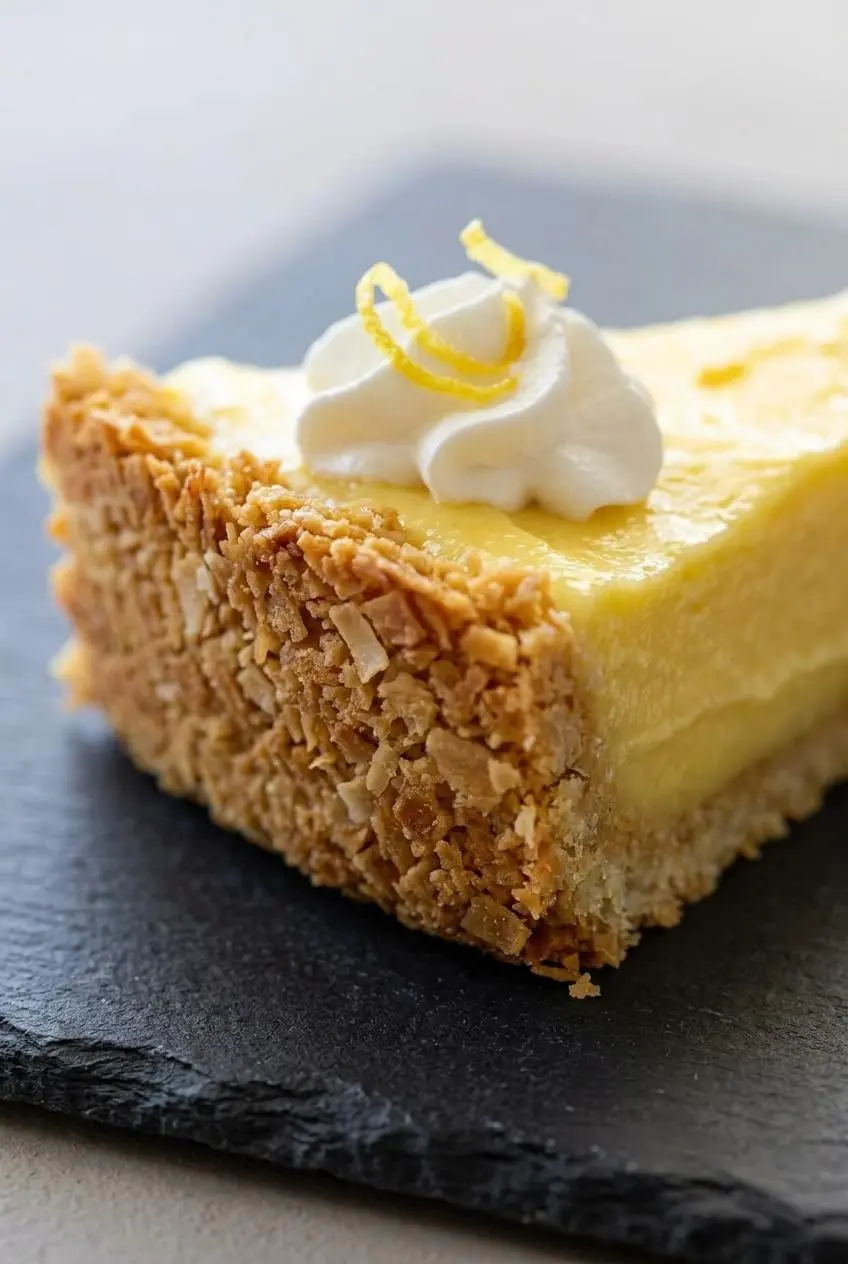
Keto crusts behave differently from wheat crusts, so a little technique goes a long way. The goal is a crust that bakes evenly, stays crisp, and does not slump before you even add the filling.
- Use softened butter for mixing, but do not let it get oily or melted. Overly warm fat makes the dough greasy and can encourage more spreading in the oven.
- Press the crust firmly into the pie plate, especially where the bottom meets the sides. That corner is the first place weak crusts crack or slide.
- Bake until genuinely golden, not just set. Pale keto crusts tend to soften faster once the filling goes in.
- Cool the crust completely before filling. A warm shell traps steam under the mousse-like filling and takes away the crunch you just baked in.
- The same principle matters in other custard-style pies too, including keto pumpkin pie, where a fully baked shell helps keep the base from turning damp.
Fixing Crust Shrinkage and Slid-Down Edges
If the sides of the crust sink while it is still hot, you can usually save it. Do it early, before the butter firms back up.
- Use the back of a spoon to gently push the warm crust back up the sides of the pie plate. Press lightly and work in small sections so you do not tear the base.
- If the edge looks ragged, smooth it while the crust is still pliable. Once it cools, it becomes much harder and less forgiving.
- If one spot gets too thin, leave it alone rather than scraping dough from another area. It is better to have one delicate patch than a chain reaction of cracks.
Troubleshooting: How to Fix a Runny Filling
A runny keto lemon pie almost always points back to the curd stage. If the curd never thickens enough on the stove, the chilled pie will stay soft and may slump when sliced.
- Problem: the filling feels loose even after chilling. Cause: the curd came off the heat too soon. Fix: cook the curd until it leaves a soft trail behind the whisk and coats the back of a spoon.
- Problem: the filling separates slightly when folded. Cause: the curd was still too warm or the whipped cream was overmixed. Fix: chill the curd fully and fold gently, stopping as soon as the mixture looks uniform.
- Problem: the curd looks a little scrambled. Cause: the yolks heated too fast. Fix: strain it first, then blend briefly with an immersion blender if needed to pull it back together.
- Problem: the pie slices messily. Cause: the filling was not cold enough to firm up. Fix: chill until the center feels set and the cut edges hold their shape.
If you do slightly overcook the curd, do not toss it. A quick pass with an immersion blender can often smooth the texture enough to rescue the filling before you chill and fold it.
Tempering Yolks Safely
Even though the official method adds yolks directly into the warm lemon mixture off the heat, the same gentle principle applies as classic tempering. The key is to avoid shocking the yolks with too much heat at once.
- Start with the butter, lemon juice, zest, and sweetener warm, not boiling hot. If the mixture is aggressively hot, the yolks can tighten on contact.
- Whisk the yolks in steadily and immediately. Constant movement spreads the heat through them before any one spot cooks too hard.
- Once the yolks are in, return the pan to low heat only. Slow heat is what gives you thick curd instead of sweet scrambled eggs.
- If you ever feel unsure, whisk a small splash of the warm lemon mixture into the yolks first, then add that back to the pan. It is a gentle backup move and helps calm the nerves.
Tangy and Luxurious Variations
These are optional ways to shift the texture and flavor while keeping the same lemon-forward personality. Keep them separate from the main recipe and treat them as choose-your-own-pie upgrades.
Keto Lemon Sour Cream Pie
Sour cream gives the filling a deeper tang and a slightly more cheesecake-like finish. It can make the lemon flavor feel rounder and less airy than the whipped-cream version.
- Fold it into the chilled lemon component before combining with the whipped cream.
- Expect a richer bite and a slightly denser set.
- This version is great if you like lemon desserts with more old-school diner-pie energy.
Keto Lemon Mascarpone Cream Pie
Mascarpone turns the filling thicker, silkier, and more stable, with a soft luxurious finish that slices very neatly. It also tones down sharp acidity a bit, which some people prefer in very tart desserts.
- Blend mascarpone into the chilled lemon mixture before folding it into the whipped cream.
- Use a gentle hand so the filling stays smooth rather than heavy.
- If you like that dense, velvety style of chilled dessert, keto cheesecake is another good direction to explore.
Sugar-Free Pecan Crust Base
If you want to skip coconut, finely ground toasted pecans can step in for a richer, nuttier crust. The flavor leans more buttery and less tropical, and it pairs especially well with the lemon filling’s brightness.
- Use the pecans as an alternative crust idea rather than changing the official base recipe.
- Toast them first for the best flavor and a more pronounced crunch.
- A tiny splash of orange blossom water in the lemon curd can add a floral citrus accent, but keep it subtle or it will take over fast.
If you are considering a meringue topping, wait to add it until you are ready to serve. Refrigerating meringue too early can lead to moisture beads and weeping, which undo that pretty fluffy finish in a hurry.
Storage and Make-Ahead Guidelines
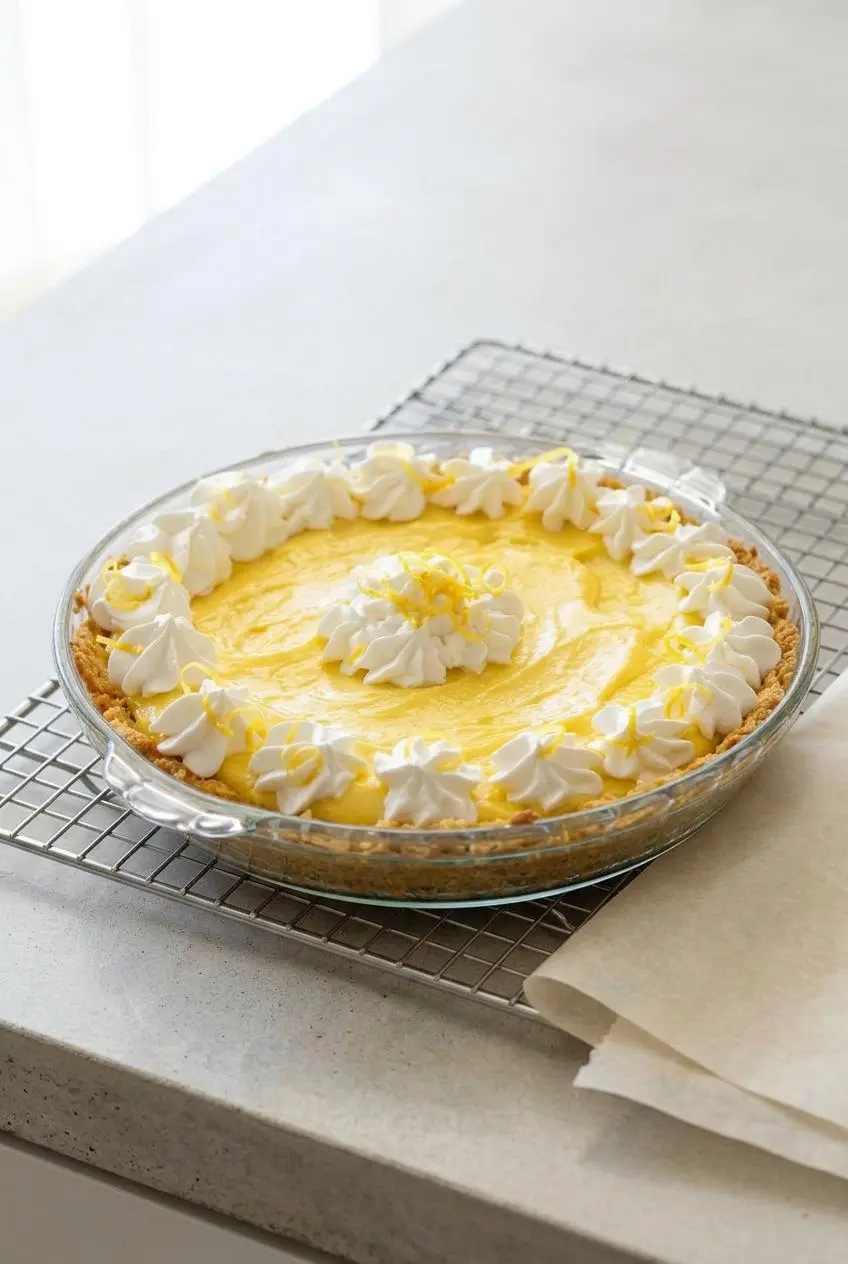
This pie is best kept chilled and loosely covered so the filling stays fresh while the crust has some room to breathe. Tight wrapping pressed directly against the top can trap moisture and soften the crust faster.
The official recipe notes that it will keep up to a week in the refrigerator. For the best texture, store it in the pie plate or transfer slices carefully to a covered container once fully chilled.
If you want to work ahead, the easiest approach is to bake the crust first, let it cool completely, and keep the lemon filling separate until you are ready to assemble and chill. That helps protect the crispness of the crust.
The Cold-Chilled Icebox Strategy
This pie benefits from thorough chilling because the filling firms as the whipped cream and curd settle together. If you need cleaner slices, chill the assembled pie until the center feels fully set and the top no longer shifts when the plate is nudged.
You can also prepare the crust and custard components separately ahead of assembly. Freezing the baked crust and the lemon custard separately can work better than freezing the fully assembled pie, while a pie topped with whipped cream or meringue is more likely to release moisture after thawing.
Conclusion
This keto lemon pie works because each part does a specific job: the crust bakes until toasty and sturdy, the curd thickens gently, and the whipped cream keeps the filling light enough to feel almost mousse-like.
Take your time with the curd, cool the crust all the way, and fold gently once everything is cold. That is what turns a good lemon pie into one you will want to make again.
Frequently Asked Questions
Why did my keto lemon pie turn out runny?
The lemon curd probably came off the stove before it thickened enough. Look for a yogurt-like texture and a visible trail from the whisk before chilling it. The pie can also seem runny if the curd was still warm when folded into the cream. Chill the finished pie until the center feels set before slicing.
Can I use allulose instead of erythritol?
Yes, and it is often the smoother option for chilled desserts. Allulose usually dissolves more completely, so the filling is less likely to feel gritty. If you use erythritol, powdered works better than granulated here.
Do I have to bake the keto pie crust first?
Yes, the crust needs to be fully baked before you add the filling. That blind-baked structure helps the crust stay crisp under the soft lemon filling. It also needs to cool completely, or the base can soften and lose definition.
Can I freeze keto lemon pie?
The baked crust and lemon filling can be frozen separately if needed. That usually works better than freezing the fully assembled pie. A pie finished with whipped cream or meringue tends to weep after thawing, so it is better to add those toppings fresh.
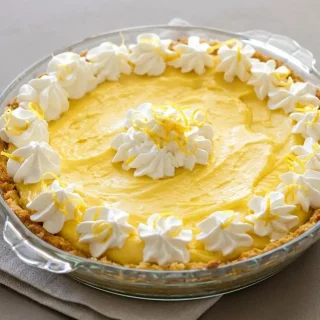
Keto Lemon Pie Recipe

Equipment
- Medium bowl
- pie plate
- Small saucepan
- Whisk
- Fine-mesh strainer
- Large bowl
Ingredients
For the Crust
- 6 tablespoons butter softened
- 3/4 cup erythritol
- 3/4 cup dried shredded coconut unsweetened
- 3/4 cup super fine almond flour
- pinch of salt
For the Filling
- 1/2 cup butter
- 1/2 cup erythritol sweetener
- 1/2 cup fresh lemon juice
- 1/4 cup lemon zest
- 6 egg yolks
- 1 1/2 cups heavy whipping cream
- 1/4 teaspoon xanthan gum
- 1 Tablespoon erythritol sweetener
Instructions
For the Crust
- Combine the butter, erythritol, coconut, almond flour and salt in a medium bowl and mix until a dough forms.
- Press the dough into a pie plate, going all the way up the sides.
- Bake the crust at 350 degrees (F) for 15 minutes, or until golden brown.
For the Filling
- Melt the butter in a small saucepan on low heat.
- Remove from heat and whisk in 1/2 cup sweetener, lemon juice, and lemon zest until dissolved. Whisk in the egg yolks and return to the stove over low heat.
- Whisk continually until the curd starts to thicken.
- Remove from the heat and strain into a small bowl. Chill.
- In a large bowl, whip the heavy whipping cream, xanthan gum, and 1 Tbsp sweetener together until stiff peaks form.
- Fold 1/3 of the whipped cream mixture into the chilled lemon curd until combined.
- Add the lightened lemon curd mixture to the remaining whipped cream and gently fold together until fully combined, but still fluffy.
- Spoon the filling into the cooled pie crust. Garnish with additional whipped cream and lemon zest if desired.
- Serve chilled. Will keep up to a week in the refrigerator.