Skip to content

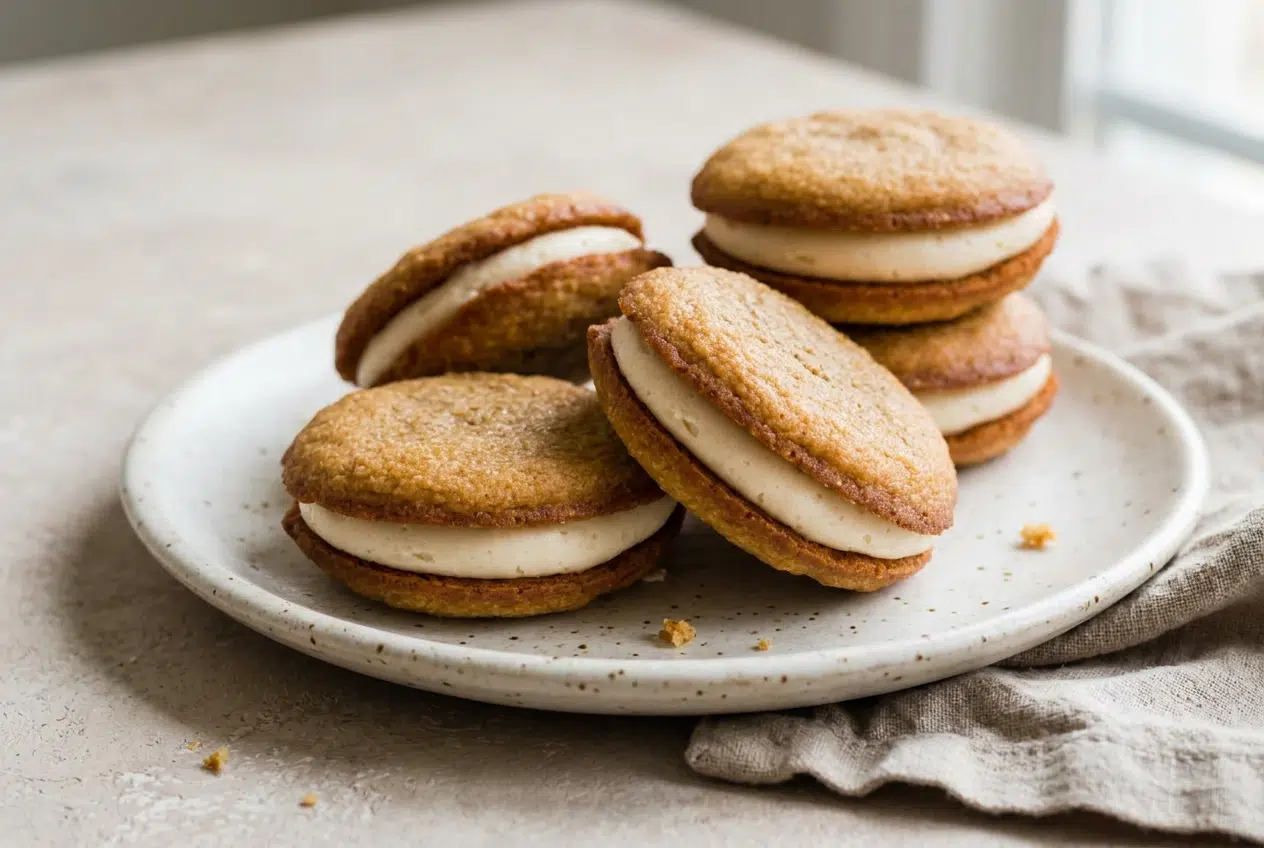
Keto oatmeal cream pies pair soft, cinnamon-spiced almond flour cookies with fluffy vanilla cream. Oat fiber replaces rolled oats for an oatmeal-style bite, while brown sugar-free sweetener and molasses flavoring bring familiar warmth. The key to neat sandwiches is cooling the cookies completely before filling.
These homemade sandwich cookies have the tender edges, creamy centers, and cozy spice that make snack-cake-style desserts so appealing. The filling includes optional marshmallow flavoring for an extra nostalgic touch.
The mixing is straightforward, but delicate almond flour cookies need patient handling. Golden edges matter more than a deeply browned top. Keep those centers soft.
Check that your butter yields easily to gentle pressure without looking oily before you begin.
Key Ingredients and Low-Carb Substitutions
Each ingredient contributes to the balance: almond flour and eggs build the cookie structure, butter adds richness, oat fiber shapes the texture, and cinnamon and flavor extracts supply warmth. Powdered sweetener helps the cream filling feel smooth rather than sandy.
- 1 cup unsalted butter, softened
- 3/4 cup packed brown sugar-free sweetener
- 1/3 cup granulated sugar-free sweetener
- 1 teaspoon molasses flavor extract
- 1 teaspoon vanilla extract
- 2 eggs, room temperature
- 3 cups almond flour
- 1/3 cup oat fiber
- 1 teaspoon baking soda
- 1/2 teaspoon salt
- 1/4 teaspoon ground cinnamon
- 1 1/2 cups powdered sugar-free sweetener
- 1 tablespoon oat fiber
- 1 tablespoon nut milk or cream
- 1 1/2 dropperfuls marshmallow flavoring, optional
Before starting: The filling also calls for butter and vanilla extract, but their separate filling quantities are not specified. Confirm those amounts before proceeding rather than guessing or taking ingredients away from the cookie dough.
For the cookies: Almond flour creates a tender crumb rather than the stretchy structure of wheat flour. Eggs help hold that crumb together. Oat fiber contributes to the oatmeal-style texture without adding rolled oat flakes, though the cookies won’t have the same distinct pieces as traditional oatmeal cookies.
Brown sugar-free sweetener supplies a deeper flavor than granulated sweetener alone. Molasses flavor extract reinforces that caramel-like character, while cinnamon adds gentle spice. Use molasses flavor extract here, not an assumed equal amount of actual molasses.
For the filling: Powdered sugar-free sweetener blends more smoothly into whipped butter than granulated sweetener. Nut milk or cream helps loosen the mixture, and the additional oat fiber gives it body. Optional marshmallow flavoring adds aroma rather than actual marshmallow texture.
Sweetener formats aren’t interchangeable in every part of this dessert. Keep the brown and granulated versions in the dough and the powdered version in the filling. Sweetener blends also differ in sweetness and aftertaste, so choose one intended for baking and frosting rather than assuming every product behaves alike.
How to Make Keto Oatmeal Cream Pies
Work through the cookies, filling, and assembly in that order, and resolve the missing filling quantities before mixing. Have an electric mixer, mixing bowls, a parchment-lined baking sheet, a cookie scoop, a spatula, a wire rack, and a piping bag ready.
Recipe timing: 20 minutes prep, 20 minutes cooking, 40 minutes total listed time. Plan separately for the cookies to cool completely. Yield: 18 sandwich cookies.
- Heat the oven to 325°F and cover a baking sheet with parchment paper.
The parchment should lie flat so the delicate cookies have an even surface and release cleanly. - Beat the softened butter with the brown and granulated sugar-free sweeteners in a large bowl, then incorporate the molasses flavor extract, vanilla extract, and eggs.
The mixture should look creamy and lighter in color, with no firm butter lumps. - Use a whisk to distribute the almond flour, oat fiber, baking soda, salt, and cinnamon throughout a medium bowl.
The dry mixture should look uniform, without visible pockets of cinnamon or baking soda. - Run the electric mixer while feeding the dry mixture gradually into the wet mixture, stopping once the dough comes together.
No loose flour should remain around the bowl or within the dough. - Portion the dough with a 1.25-inch cookie scoop onto the lined sheet, leaving about 1 1/2 inches between portions.
Keep the mounds similar in size to encourage even baking and matching sandwich halves. - Bake at 325°F for 9–10 minutes, then leave the cookies on the sheet for several minutes before transferring them gently to a wire rack.
Look for the first golden color around the edges and wait until a spatula slips underneath easily, then let the cookies cool completely on the rack. - Whip the filling butter in a large bowl with the electric mixer, gradually incorporate the powdered sugar-free sweetener, then beat in the filling oat fiber, nut milk or cream, vanilla extract, and optional marshmallow flavoring.
The finished cream should look airy and hold soft, defined ridges rather than spread into a puddle. - Fill a piping bag with the cream, pipe a swirl onto the flat underside of a cooled cookie, and cap it with another cookie.
The filling should stay between the cookies without melting or sliding out.
Tips for Soft, Chewy Texture and Smooth Cream Filling
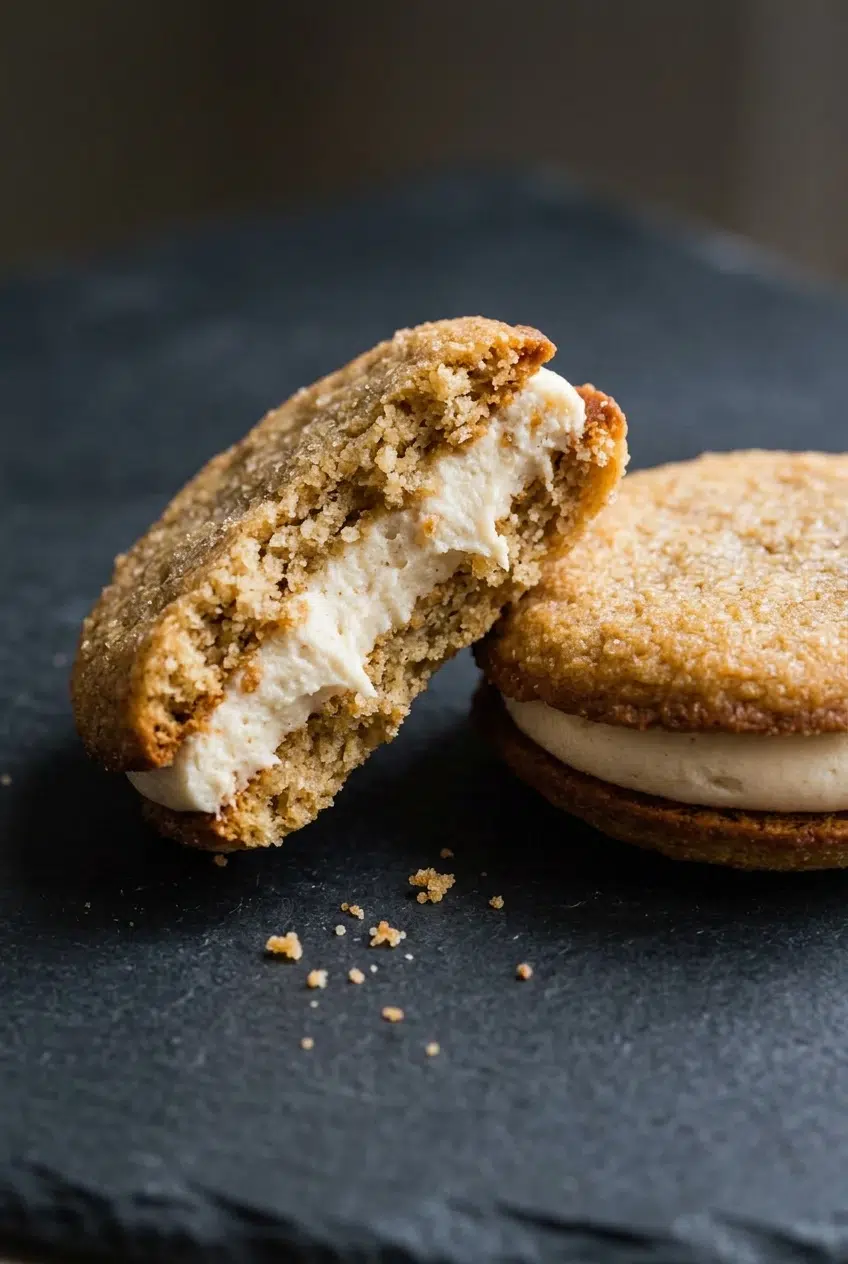
Most texture problems come from ingredient temperature, overbaking, or moving the cookies before they can support themselves.
- Lumpy or uneven dough: Firm butter and cold eggs make cohesive mixing harder. Start with genuinely softened butter and room-temperature eggs rather than trying to beat hard butter smooth after adding everything.
- Cookies breaking at the spatula edge: The centers haven’t set enough to lift. Leave them undisturbed on the baking sheet until the spatula slides beneath the whole cookie without dragging through it.
- Dry, crumbly cookies: Waiting for an evenly brown surface can mean baking too far. Watch the edges and preserve the softer centers instead.
- Gritty filling: Granulated sweetener can leave a sandy bite. Use the specified powdered form and incorporate it gradually.
- Loose filling: Warm butter or warm cookies can make the cream slump. Let the cookies cool fully, and chill overly soft filling until it can hold piping ridges before beating it again.
- Stiff filling: Cool butter can resist whipping. Let the filling soften enough to beat smoothly before considering more liquid, which can quickly make it loose.
I’d use the spatula-release cue rather than appearance alone when deciding whether to lift these cookies; a golden edge doesn’t mean the center can support itself yet.
Flavor Variations and Allergy-Friendly Swaps
Treat these as optional directions, not automatic replacements. Changing flour or the oat-style texture ingredients can change spread, tenderness, and how easily the cookies hold together.
Nut-Free Almond Flour Swap Using Sunflower Seed Flour
Sunflower seed flour is a possible direction for replacing almond flour, but it can bring a more pronounced seed flavor and different moisture absorption. A tested sunflower-flour formulation is preferable to assuming an identical substitution.
For a nut-free adaptation, also review the nut milk option and every flavoring label. Choosing cream addresses the nut milk ingredient, but the filling remains dairy-based. No verified dairy-free adaptation is specified here.
Oat Fiber vs. Unsweetened Coconut Flakes and Sliced Almonds
Oat fiber gives the dough a more uniform texture. Unsweetened coconut flakes and sliced almonds offer a visibly flaked, more textured alternative with noticeable coconut flavor and almond bite.
That combination is a different cookie formulation, not a direct replacement for the oat fiber in these quantities. For another way to enjoy oatmeal-style comfort, try a keto oatmeal breakfast bowl.
Easy Flavor Mix-Ins
- Sugar-free chocolate chips: An optional chocolate-chip direction adds contrasting chocolate bites to the warm spice and vanilla profile.
- Peanut butter filling: A peanut-butter-style cream offers a richer, roasted flavor in place of the vanilla-marshmallow direction, but it introduces peanuts and changes filling consistency.
How to Store Homemade Cream Pies
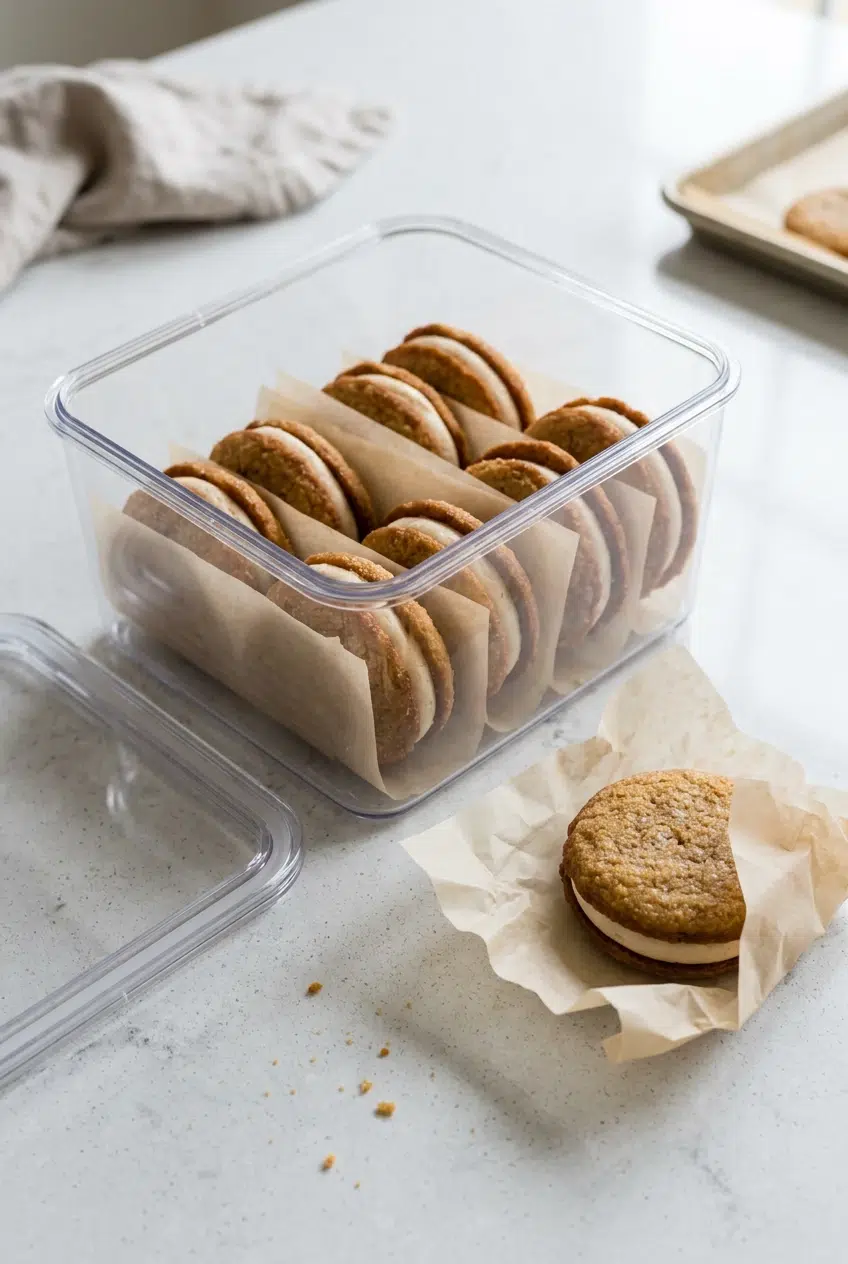
For cautious handling, keep the filled cookies covered and refrigerated rather than treating them like shelf-stable packaged snack cakes.
Use a rigid, airtight container to protect the tender cookies from crushing. Separate layers with parchment, or wrap individual sandwiches in parchment before placing them in the container. Let the filling firm before stacking so the cookies don’t squeeze it outward.
Serving Ideas and Presentation

Serve chilled for a firmer, snack-cake-style bite, or let a portion soften slightly before eating for a gentler cookie and cream texture. Handle each sandwich from underneath instead of pinching the edges.
For an optional neater finish, place an assembled sandwich between parchment sheets and press very gently to level the filling, then chill until it holds its shape. Stop before the cookie bends or the cream reaches the edges.
Black coffee, unsweetened almond milk, and spiced chai tea all suit the cinnamon and vanilla flavors. If you prefer creamy coffee, pair a cookie with coffee finished with keto coffee creamer.
Final Thoughts on These Low-Carb Sandwich Cookies
Soft spiced cookies and airy vanilla cream give these sandwiches their nostalgic appeal. Brown sweetener, cinnamon, and molasses flavoring carry the familiar flavor without rolled oats.
Confirm the separate filling amounts before starting, then give the cookies time to cool completely before assembly. Gentle handling is what gets that creamy center neatly between two intact cookies.
Frequently Asked Questions
Are Oats Allowed on a Keto Diet?
Whether oats fit depends on your dietary targets and portion size; this dessert doesn’t establish that for you. These cookies use oat fiber rather than rolled oats, and the two aren’t interchangeable baking ingredients.
How Do These Taste Like Oatmeal Cookies Without Using Real Oats?
Brown sugar-free sweetener, cinnamon, and molasses flavor extract recreate the warm flavor associated with oatmeal cookies. Almond flour and oat fiber provide an oatmeal-style bite, though they don’t reproduce distinct rolled oat flakes.
How Many Calories Are in a Small Oatmeal Cream Pie?
For a packaged cream pie, check the label for that specific product and size. For these homemade sandwiches, calculate nutrition using your chosen products and confirmed filling amounts; the missing butter quantity prevents a dependable calculation.
Can I Make Keto Oatmeal Cream Pies Nut-Free or Coconut-Free?
No coconut ingredient appears in the listed formulation, though checking product labels still matters for allergies. Sunflower seed flour is a possible nut-free direction, but it requires a suitable formulation rather than an assumed direct swap; also review the nut milk and flavorings.
How Should Homemade Keto Oatmeal Cream Pies Be Stored?
Keep the filled cookies covered and chilled as a cautious approach. Use parchment between layers and a rigid container to protect the cream swirls and delicate cookie edges.

Keto Oatmeal Cream Pies

Equipment
- Electric mixer
- Mixing bowls
- Whisk
- Baking sheet
- Parchment paper
- 1.25-inch cookie scoop
- spatula
- Wire rack
- Piping bag
Ingredients
- 1 cup unsalted butter softened
- 3/4 cup packed brown sugar-free sweetener
- 1/3 cup granulated sugar-free sweetener
- 1 teaspoon molasses flavor extract
- 1 teaspoon vanilla extract
- 2 eggs room temperature
- 3 cups almond flour
- 1/3 cup oat fiber
- 1 teaspoon baking soda
- 1/2 teaspoon salt
- 1/4 teaspoon ground cinnamon
- 1 1/2 cups powdered sugar-free sweetener
- 1 tablespoon oat fiber
- 1 tablespoon nut milk or cream
- 1 1/2 dropperfuls marshmallow flavoring optional
Instructions
- Heat the oven to 325°F and cover a baking sheet with parchment paper. The parchment should lie flat so the delicate cookies have an even surface and release cleanly.
- Beat the softened butter with the brown and granulated sugar-free sweeteners in a large bowl, then incorporate the molasses flavor extract, vanilla extract, and eggs. The mixture should look creamy and lighter in color, with no firm butter lumps.
- Use a whisk to distribute the almond flour, oat fiber, baking soda, salt, and cinnamon throughout a medium bowl. The dry mixture should look uniform, without visible pockets of cinnamon or baking soda.
- Run the electric mixer while feeding the dry mixture gradually into the wet mixture, stopping once the dough comes together. No loose flour should remain around the bowl or within the dough.
- Portion the dough with a 1.25-inch cookie scoop onto the lined sheet, leaving about 1 1/2 inches between portions. Keep the mounds similar in size to encourage even baking and matching sandwich halves.
- Bake at 325°F for 9–10 minutes, then leave the cookies on the sheet for several minutes before transferring them gently to a wire rack. Look for the first golden color around the edges and wait until a spatula slips underneath easily, then let the cookies cool completely on the rack.
- Whip the filling butter in a large bowl with the electric mixer, gradually incorporate the powdered sugar-free sweetener, then beat in the filling oat fiber, nut milk or cream, vanilla extract, and optional marshmallow flavoring. The finished cream should look airy and hold soft, defined ridges rather than spread into a puddle.
- Fill a piping bag with the cream, pipe a swirl onto the flat underside of a cooled cookie, and cap it with another cookie. The filling should stay between the cookies without melting or sliding out.