Skip to content
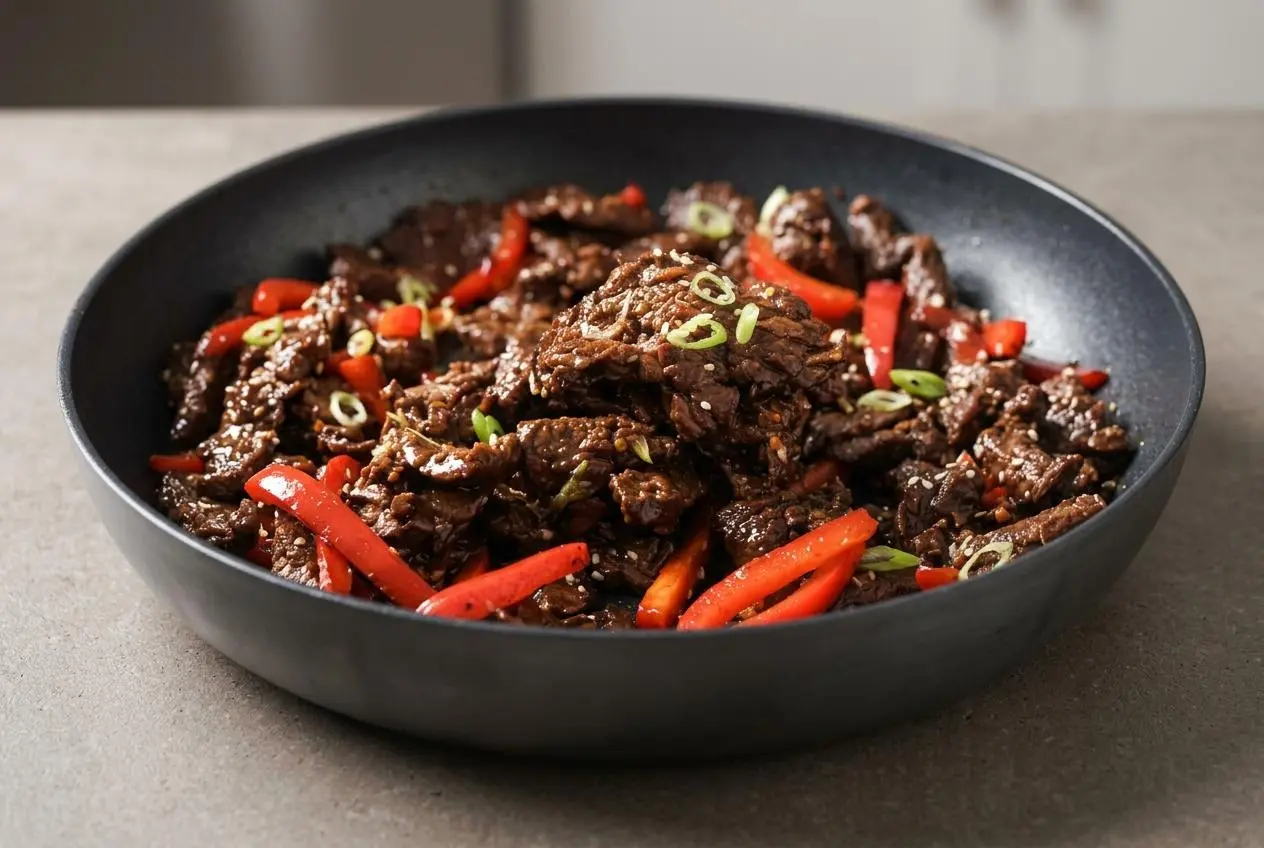
Keto Mongolian beef recipe brings tender strips of steak, fresh aromatics, and a glossy sweet-savory tamari glaze to the table without cornstarch or refined sugar.
This fast skillet dinner has the familiar caramelized flavor of takeout, with crisp-tender bell pepper and scallions folded in at the end. The sauce clings to every browned edge.
A hot, uncrowded skillet is the difference between deeply seared beef and gray, steamed strips.
Is Mongolian Beef Keto-Friendly? Understanding Takeout Swaps
Traditional Mongolian beef is usually coated in cornstarch and finished in a sugar-heavy sauce, both of which add significant carbohydrates. This version skips the starch coating and builds body by reducing tamari, water, aromatics, and brown erythritol directly in the skillet.
Tamari supplies the salty, savory backbone, while the brown-style sweetener brings the molasses-like character associated with a classic Mongolian glaze. The result is a carbohydrate-conscious takeout-style dinner that still tastes sweet, garlicky, and richly savory.
The sear matters here. When thin steak hits properly heated oil, moisture evaporates quickly and the meat develops browned, caramelized edges without needing a floury or starchy coating.
Essential Ingredients for Authentic Low-Carb Mongolian Beef
Each ingredient contributes to the finished dish: steak provides richness, aromatics create depth, tamari adds savoriness, sweetener rounds the glaze, and peppers and scallions bring fresh color and crunch.
- 1 lb flat iron steak (or flank steak or sirloin, fat removed, 450g)
- salt and black pepper
- 2 tbsp light olive oil (or avocado oil, for frying)
- 1 tbsp fresh ginger (minced)
- 3 cloves garlic (minced)
- ¼ teaspoon red pepper flakes (or chili flakes)
- 1/3 cup tamari (or medium soy sauce or coconut aminos, 80ml)
- 1/4 cup water (60ml)
- 2 tbsp brown erythritol (or more, to taste)
- 1 red bell pepper (sliced (110g))
- 2 large spring onions (finely sliced (50g))
- 1/2 tsp toasted sesame seeds
- drizzle of toasted sesame oil (optional)
Fresh ginger and garlic give the sauce its bright, aromatic character. Red pepper flakes add gentle heat, while sesame seeds and optional toasted sesame oil bring a nutty finish. Bell pepper stays lightly crisp, and spring onions soften just enough from the residual heat.
Selecting the Best Beef Cuts: Flank, Flat Iron, and Sirloin
Flat iron steak is especially good for this dish because it has enough marbling to stay juicy during a fast sear. Flank steak has a more pronounced grain, so slicing it thinly across that grain is essential. Top sirloin is leaner but works well when cut into narrow strips and cooked only until just done.
Avoid stew meat or thick chunks of steak. They need longer cooking to become tender and will turn chewy in a quick stir-fry.
I prefer flat iron when available because its tender texture gives you a little more breathing room at the stove, but a carefully sliced flank steak makes an excellent bowl too.
Tamari vs. Coconut Aminos vs. Soy Sauce
Tamari gives the sauce a deep, clean soy flavor and is often a gluten-free choice, though labels can vary. Medium soy sauce has a familiar salt-forward profile and works well if gluten is not a concern. Coconut aminos offer a soy-free option with a sweeter, milder flavor.
If using coconut aminos, taste the sauce as it reduces. Its natural sweetness may mean you prefer less added brown erythritol, while its lower saltiness may call for a final pinch of salt or pepper.
Choosing the Right Low-Carb Brown Sweetener
Brown erythritol creates the darker sweetness that makes the glaze taste closer to restaurant-style Mongolian beef. Other brown-style keto sweeteners can work, but they may melt, reduce, or crystallize differently.
Natural reduction is the most reliable thickening method for this skillet sauce. Xanthan gum or glucomannan can add body in other low-carb sauces, but use either sparingly and whisk carefully to avoid a gummy texture.
How to Cook Keto Mongolian Beef
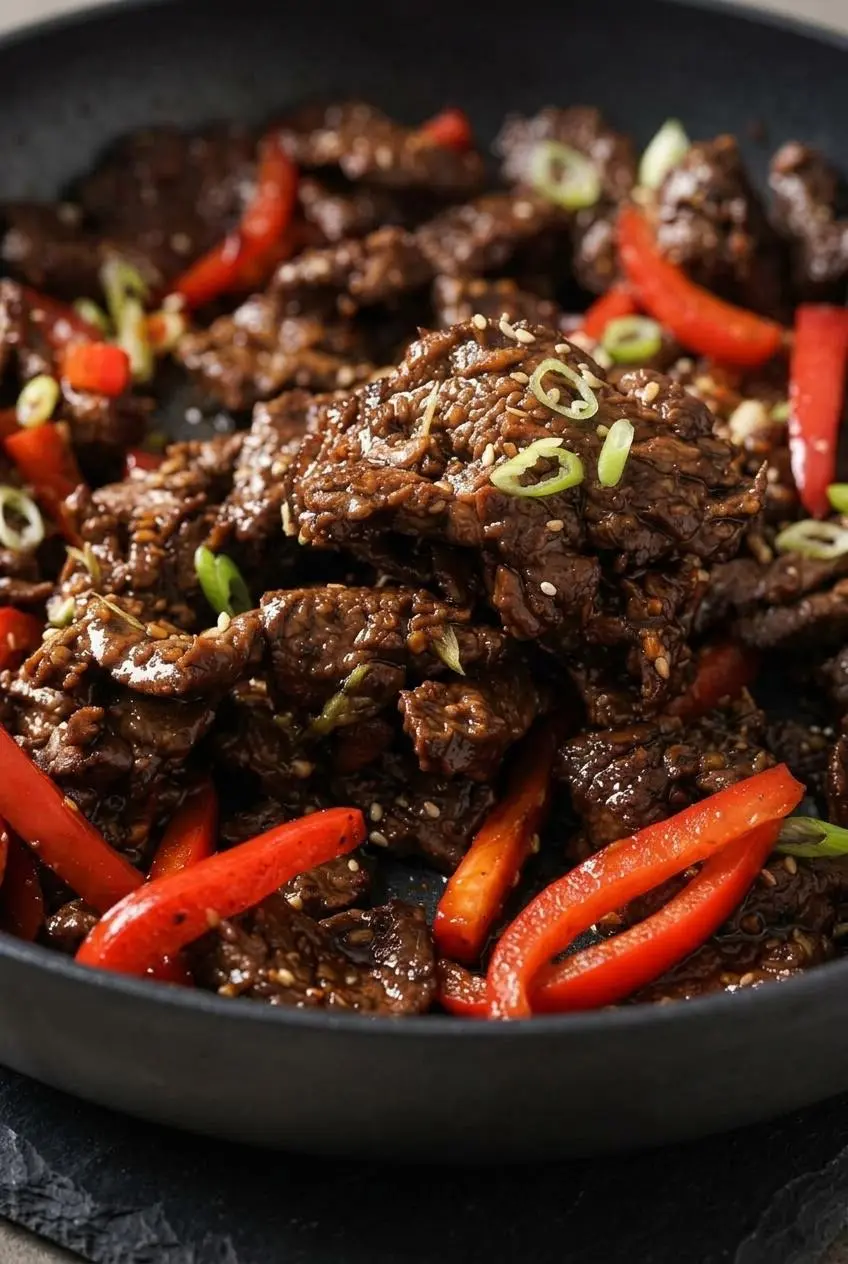
- Slice the steak into 1/2 cm strips across the grain, using partially frozen meat if it helps you cut cleanly, then season with salt and black pepper.
The strips should look thin and even, with the long muscle fibers running across each piece rather than along it. - Heat the oil in a large wok or frying pan until it is very hot, then sear the beef for 4 minutes without moving it before turning and cooking for 1 to 2 minutes more; work in 2 batches if needed.
The beef should sizzle loudly on contact and develop browned edges while the pan stays dry rather than filling with juices. - Transfer the beef aside and cook the ginger, garlic, and red pepper flakes in the same pan for 1 minute.
Stir constantly until the aromatics smell warm and fragrant, stopping before the garlic darkens. - Pour in the tamari, water, and brown erythritol, bring the mixture to a boil, then lower the heat to medium and simmer for 3 to 4 minutes.
The sauce is ready when bubbling becomes slightly slower and the liquid looks glossy enough to coat a spoon. - Return the beef to the skillet with the sliced red bell pepper and cook for 2 to 3 minutes.
The pepper should soften around the edges while keeping a firm bite, and the sauce should cling to the beef. - Turn off the heat, stir through the spring onions, then finish with toasted sesame seeds, more black pepper, and a drizzle of toasted sesame oil if desired.
The scallions should stay bright and fresh, with their aroma lifting the rich glaze.
The Freezer Trick for Ultra-Thin Slicing
A brief chill firms the steak so the knife glides through it instead of dragging and tearing the meat. Look for the grain, which appears as long parallel lines, then cut straight across those lines. Shortened fibers give each bite a much more tender feel.
High-Heat Batch Searing Without Pan Crowding
Give the beef room in the pan. Too many strips at once release moisture faster than the skillet can evaporate it, so the meat steams instead of browning. Sear in batches when needed and leave each strip untouched at first.
Wait until the oil has a light shimmer and faint wisps of heat rise from the pan before adding the beef. That strong initial sizzle tells you the surface is hot enough to build flavor quickly.
Simmering the Glossy Low-Carb Reduction Glaze
The tamari mixture thickens as water evaporates and the sweetener concentrates. Keep the heat at a steady simmer, not a hard boil, so the sauce reduces evenly and the garlic stays pleasant rather than harsh.
If the glaze becomes too thick or starts to look grainy, lower the heat and loosen it with a small splash of water. Add the beef back only when the sauce coats the pan in a thin, shiny layer.
Common Pitfalls and How to Avoid Them
- Gray, watery beef: The pan was crowded or not hot enough. Cook in smaller batches and wait for the skillet to regain heat between batches.
- Tough, stringy strips: The steak was sliced with the grain. Turn the meat so the fibers run side to side, then cut across them.
- Bitter garlic: The aromatics cooked too long over intense heat. Keep them moving and add the sauce as soon as they smell fragrant.
- Sticky or grainy glaze: The sauce reduced too far. Lower the heat and add a small splash of water to restore a smooth coating consistency.
- Soft peppers and dull scallions: They stayed in the skillet too long. Add peppers near the end and scallions after turning off the heat.
Low-Carb Serving Suggestions and Takeout Pairings
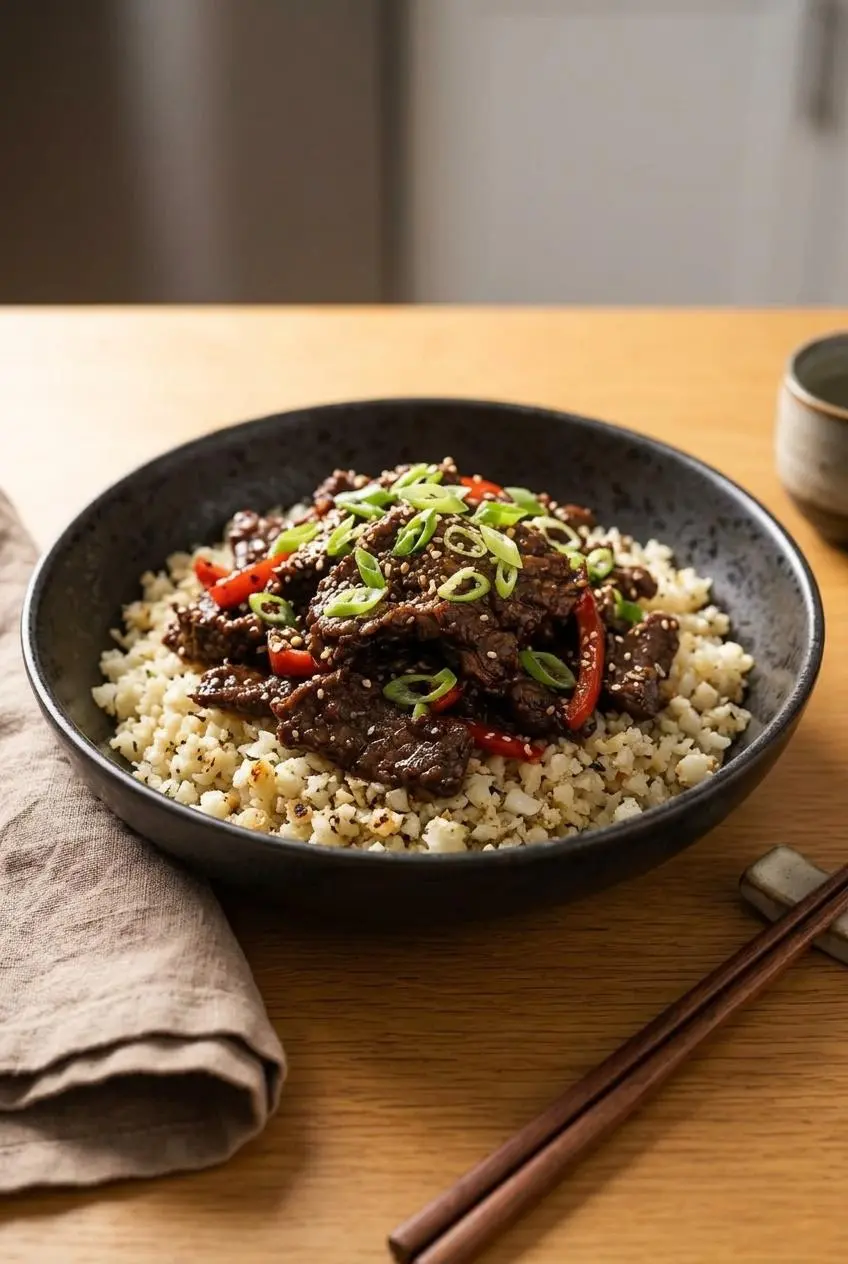
Serve the beef hot over sautéed cauliflower rice or broccoli rice so neither side turns watery under the sauce. A little garlic and sesame oil in the rice makes the bowl feel especially satisfying.
- Spoon the beef into chilled butter lettuce or romaine leaves for crisp, handheld wraps.
- Toss shirataki noodles with the glaze for a noodle-bowl feel, or try homemade keto pasta for a heartier alternative.
- Add sautéed asparagus, mushrooms, or snap peas alongside the beef for more vegetable texture.
- Finish each serving with sliced spring onions and toasted sesame seeds for contrast against the glossy sauce.
Popular Variations: Slow Cooker and Air Fryer Methods
Slow Cooker Mongolian Beef
For a hands-off variation, use tamari, water, ginger, garlic, red pepper flakes, and brown-style keto sweetener as the braising mixture. Choose thinly sliced flank, flat iron, or sirloin, then cook until the beef is tender enough to pull apart easily with a fork.
This version will be softer and more braised than skillet-seared beef, with less caramelized edge texture. Add fresh scallions near serving time for a welcome burst of freshness.
Air Fryer Mongolian Beef with Green Beans
For an air fryer approach, cook seasoned beef strips in a single layer so air can circulate around them. Cook green beans separately or alongside the beef only when there is enough space to keep them from piling up.
Make the tamari glaze in a skillet, reduce it until glossy, then toss the crisped beef and tender green beans through it just before serving. The sauce stays concentrated, while the vegetables keep more snap.
- Extra spicy: Increase the red pepper flakes for a sharper heat, or add chili oil as an optional finishing touch.
- Mushroom version: Sauté sliced mushrooms after searing the beef, then continue with the aromatics and sauce.
- Asparagus version: Add thin asparagus pieces with the bell pepper for a fresh, green contrast.
Storage, Reheating, and Meal Prep Guidelines
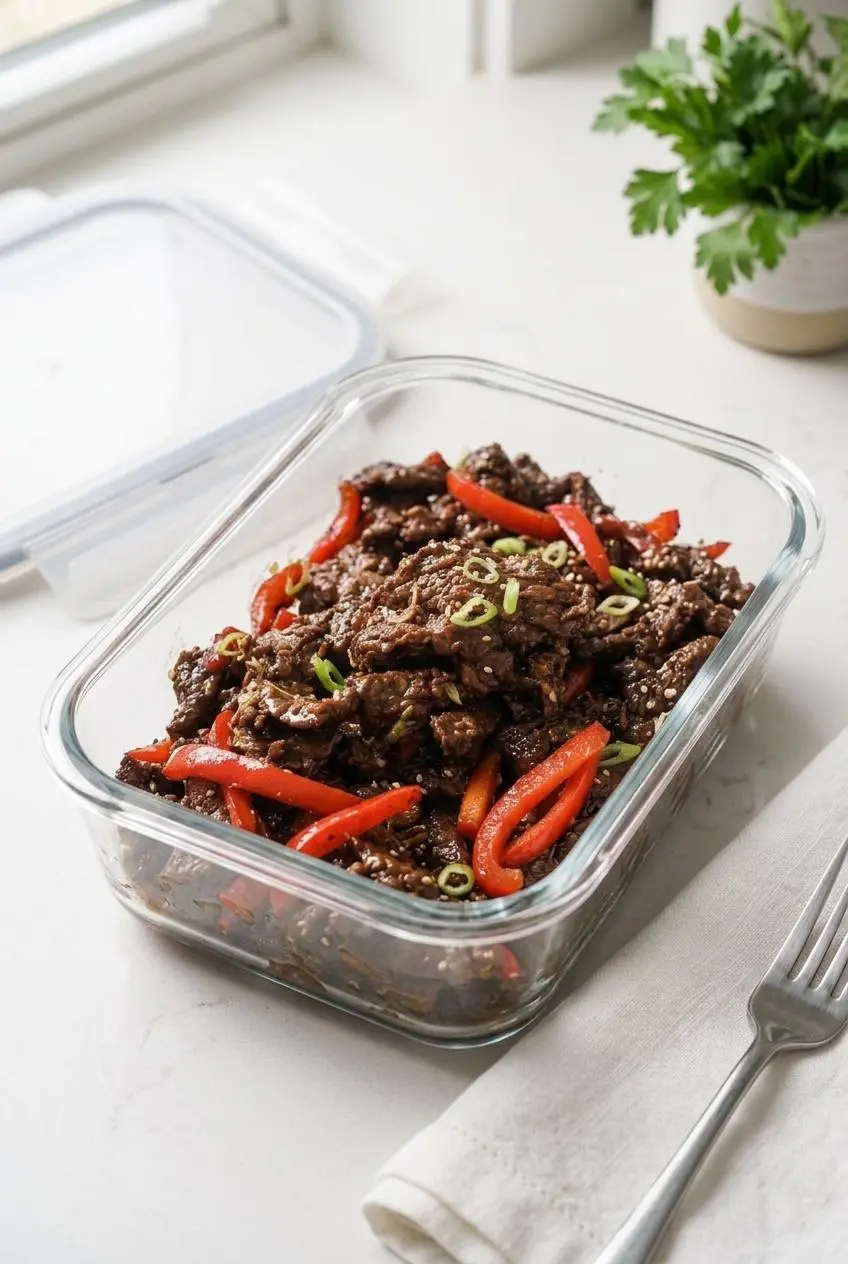
Let leftovers cool completely, then place them in an airtight container and keep them chilled. For meal prep, pack the beef and sauce together, but keep scallions and sesame seeds separate when possible so they stay fresher in texture.
Reheat a portion gently in a skillet with a splash of water, stirring just until the sauce loosens and the beef is warmed through. High heat can tighten the steak and push the sweetener glaze toward a sticky texture.
Final Culinary Thoughts for Weeknight Stir-Fry Success
Thin cross-grain slicing, a very hot pan, and batch searing are the three moves that make this beef tender and deeply caramelized. Give the glaze a steady simmer, then add the vegetables late so they stay lively.
Adjust the heat with red pepper flakes and switch up the vegetables when the mood strikes. A glossy skillet of homemade low-carb takeout can make an ordinary weeknight feel a little more special.
Frequently Asked Questions About Keto Mongolian Beef
Can I eat Mongolian beef on a keto diet?
Yes, when prepared with low-carb swaps. This version replaces sugar with brown erythritol, skips the usual cornstarch coating, and uses tamari for savory depth. Individual carbohydrate needs can vary, so tailor the serving and sides to your own eating plan.
What Is the Secret Ingredient in Mongolian Beef?
The signature flavor comes from the balance of fresh ginger, minced garlic, tamari, brown erythritol, and scallions. Toasted sesame oil, used as an optional finish, adds a nutty aroma that rounds out the glaze.
How Do You Thicken Keto Mongolian Beef Sauce Without Cornstarch?
Simmer the tamari, water, and sweetener mixture until some liquid evaporates and the sauce turns glossy. This natural reduction creates a coating sauce without starch. If it reduces too far, loosen it with a small splash of water.
What Is the Best Cut of Beef for This Recipe?
Flat iron, flank steak, and top sirloin are all good choices. Flat iron is naturally tender, flank steak has great beefy flavor, and sirloin is leaner. Slice any of them thinly across the grain for the best texture.
Can I Use Coconut Aminos Instead of Soy Sauce or Tamari?
Yes. Coconut aminos make the dish soy-free and bring a milder, naturally sweeter flavor. Taste the sauce as it cooks, then adjust the brown erythritol and seasoning to balance its lighter saltiness.
Keto Mongolian Beef Recipe

Equipment
- Large wok or frying pan
- Chef knife
Ingredients
- 1 lb flat iron steak (or flank steak or sirloin, fat removed, 450g)
- salt and black pepper
- 2 tbsp light olive oil (or avocado oil, for frying)
- 1 tbsp fresh ginger (minced)
- 3 cloves garlic (minced)
- ¼ teaspoon red pepper flakes (or chili flakes)
- 1/3 cup tamari (or medium soy sauce or coconut aminos, 80ml)
- 1/4 cup water (60ml)
- 2 tbsp brown erythritol (or more, to taste)
- 1 red bell pepper (sliced (110g))
- 2 large spring onions (finely sliced (50g))
- 1/2 tsp toasted sesame seeds
- drizzle of toasted sesame oil (optional)
Instructions
- Slice the steak into 1/2 cm strips across the grain, using partially frozen meat if it helps you cut cleanly, then season with salt and black pepper. The strips should look thin and even, with the long muscle fibers running across each piece rather than along it.
- Heat the oil in a large wok or frying pan until it is very hot, then sear the beef for 4 minutes without moving it before turning and cooking for 1 to 2 minutes more; work in 2 batches if needed. The beef should sizzle loudly on contact and develop browned edges while the pan stays dry rather than filling with juices.
- Transfer the beef aside and cook the ginger, garlic, and red pepper flakes in the same pan for 1 minute. Stir constantly until the aromatics smell warm and fragrant, stopping before the garlic darkens.
- Pour in the tamari, water, and brown erythritol, bring the mixture to a boil, then lower the heat to medium and simmer for 3 to 4 minutes. The sauce is ready when bubbling becomes slightly slower and the liquid looks glossy enough to coat a spoon.
- Return the beef to the skillet with the sliced red bell pepper and cook for 2 to 3 minutes. The pepper should soften around the edges while keeping a firm bite, and the sauce should cling to the beef.
- Turn off the heat, stir through the spring onions, then finish with toasted sesame seeds, more black pepper, and a drizzle of toasted sesame oil if desired. The scallions should stay bright and fresh, with their aroma lifting the rich glaze.