Skip to content
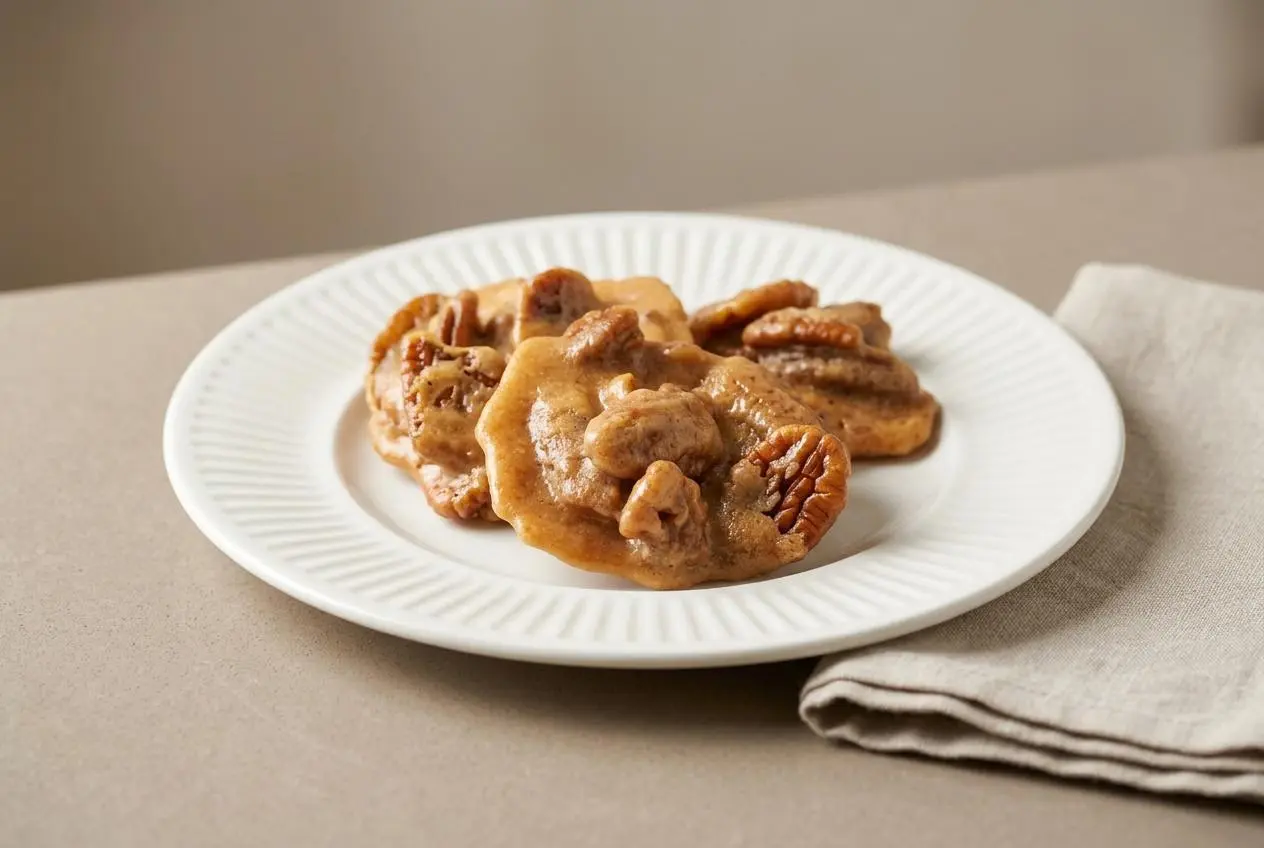
To make keto pecan pralines, simmer butter, heavy cream, and powdered sweetener until the bubbling mixture thickens and turns caramel-colored. Stir in vanilla and pecans, spoon onto parchment, then cool and chill until the clusters hold together.
These Southern-style candies wrap pecan halves in a rich, buttery coating. The fragrant bubbling caramel tells you flavor is developing, but thickness matters more than color alone.
They’re lovely served cold, when the pecans keep their crunch and the coating releases cleanly from the parchment. Watch what happens as the bubbles slow.
Line the baking sheet before heating the saucepan so you can spoon the mixture out while it’s still easy to shape.
Essential Ingredients for Authentic Sugar-Free Pralines
Each ingredient shapes the candy: butter and cream bring richness, the sweetener helps the coating firm, vanilla adds aroma, and pecans give the pralines their defining crunch.
- 5 tbsp Butter (unsalted)
- 1/2 cup Swerve Confectioner’s Sugar Substitute
- 1/3 cup Heavy Whipping Cream
- 1 tsp Vanilla Extract
- 1 1/4 cup Pecan Halves
Unsalted butter lets the pecan and vanilla flavors come through without extra saltiness. Heavy whipping cream supplies the liquid that carries the sweetener as the mixture cooks; reducing that liquid is what takes the coating from loose to thick. Whisking often helps the butter and cream stay combined rather than leaving a slick of fat around the edges.
Swerve Confectioner’s Sugar Substitute has a fine texture that mixes more readily into the cream than coarse sweetener. Erythritol-based sweeteners can become firmer and sometimes grainy as they cool. Allulose generally stays smoother and softer, so it is not a direct swap if you want the same chilled set. Check the ingredients of any sweetener blend rather than assuming two brands will behave alike.
Choose pecans that smell pleasantly nutty, not stale or oily. Halves give each cluster a generous bite; smaller broken pieces can disappear into the coating. Toasting the pecans first is an optional flavor change, not a requirement for the method below.
I like to have the pecans measured and within reach before the caramel thickens. Once the saucepan comes off the heat, there’s little reason to let that glossy coating sit and stiffen.
How to Make Keto Pecan Pralines on the Stovetop
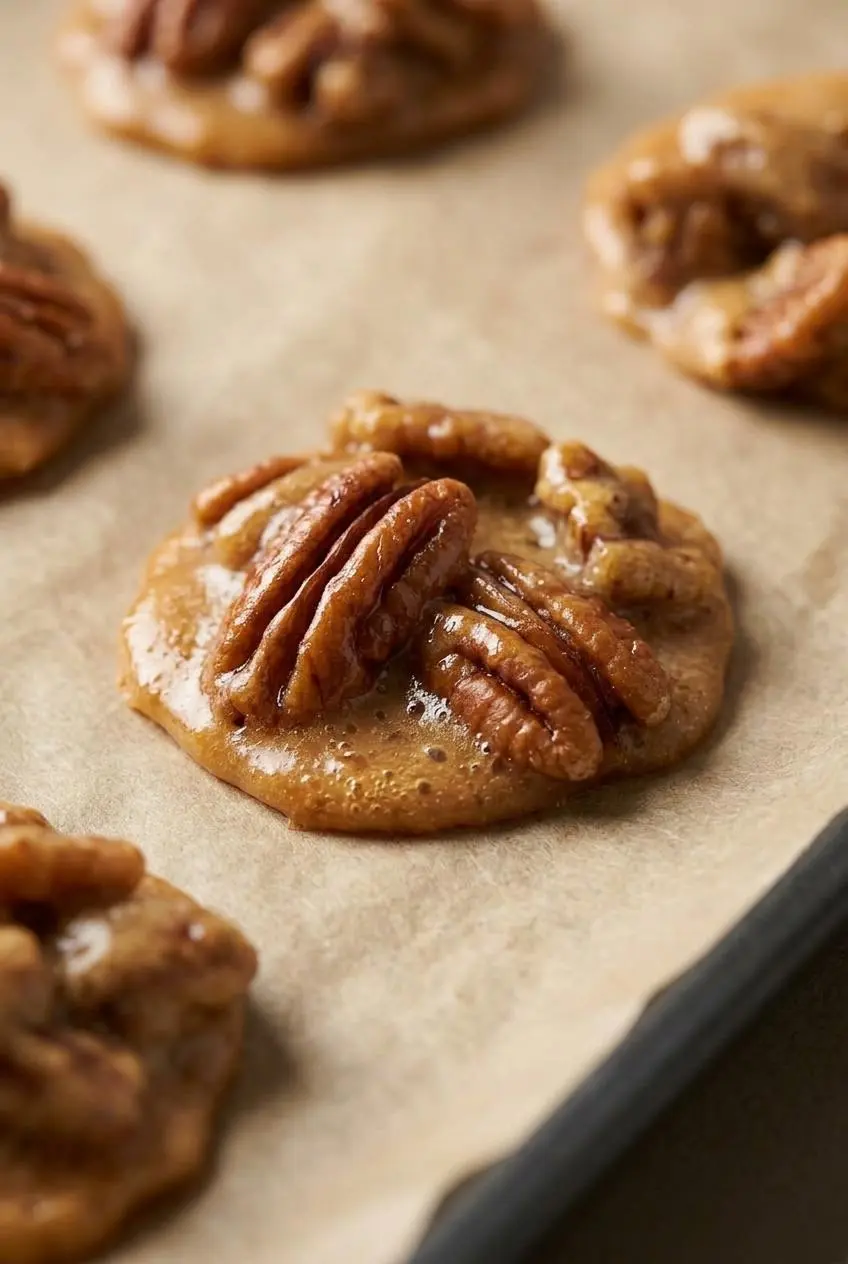
You do not need a candy thermometer for this method. Keep the heat at medium, whisk as the mixture boils, and look for a coating that has changed from pale and fluid to caramel-colored and noticeably thick.
- Add the butter, Swerve, and heavy whipping cream to a saucepan over medium heat.
As the butter melts, the mixture should become creamy and begin to bubble. - Bring the mixture to a gentle boil and whisk often as it cooks.
The bubbles should look thicker and the coating should turn caramel-colored before you remove it from the heat. - Take the saucepan off the burner, then stir in the vanilla and pecan halves.
The thick coating should cling to the nuts rather than run freely off them. - Divide the mixture into 12 even mounds on a parchment-lined baking sheet.
Each mound should hold its shape as the coating begins to cool. - Let the pralines reach room temperature, then refrigerate them for 1 hour before serving.
They should feel firm enough to lift from the parchment.
At first, the cream mixture may foam broadly across the pan. As it reduces, watch for tighter, glossier bubbles and a slower, steadier boil. The caramel color and thicker consistency should arrive together. Color by itself can mislead you, especially if the sweetener begins to darken at the edges.
Once the pan is off the heat, stir until the pecans are evenly coated, then work promptly. Parchment protects the baking sheet from the sticky coating and makes the chilled clusters easier to lift. A bare metal sheet can make an otherwise successful batch frustrating to serve.
Pralines vs Candied Pecans: Key Differences
Southern cream pralines are spooned candies: pecans sit in a cooked butter-and-cream coating that forms a patty as it cools. Candied pecans are usually separate nuts with a dry, crisp coating, often made in the oven. One is a clustered confection; the other is a coated nut you can pick up individually.
This sugar-free version aims for the buttery richness and nut-filled bite of a cream praline, though its sweetener will not behave exactly like traditional sugar. Chilling is particularly useful here because the coating firms around the pecans as it cools. Expect a rich chilled candy with plenty of pecan crunch, rather than a hard sugar shell.
Troubleshooting Common Praline Issues
The mixture’s thickness in the saucepan gives you the best clue about how the pralines will set. If something looks wrong, address it before spooning out the clusters when possible.
What to Do If the Caramel Stays Runny
If the coating pours like cream instead of clinging to the pecans, it likely needs more reduction. Return the mixture to low heat and whisk gently, watching for thicker bubbles and a coating that stays on the nuts. Stop before it scorches; turning up the flame is more likely to burn the dairy than to improve the candy.
If the mounds are already on parchment, chill them as directed before deciding they have failed. A warm praline will naturally feel softer than a cold one. An allulose-heavy substitution can also leave the finished coating softer than the sweetener used here.
How to Fix Butterfat Separation
Shiny pools of butter around the mixture suggest the fat has separated. Take the saucepan off the heat and whisk steadily to bring the coating back together. If it still needs thickening, return it to gentle heat rather than an intense boil.
Heat spikes make a cream-and-butter mixture harder to manage. Keep the boil low enough that you can whisk through it comfortably, and pay attention to the bottom and edges of the pan, where scorching tends to start.
Preventing Gritty Crystallization
A sandy texture can come from sweetener that has not mixed thoroughly or from erythritol becoming more noticeable as it cools. Whisk during cooking so no dry sweetener clings to the saucepan, and use the specified confectioners-style product for the intended texture.
A pale, slightly grainy coating can also become more visible on chilled pralines. Keep them covered once fully cool to limit surface moisture and condensation. If a softer finish sounds preferable, remember that changing sweeteners also changes how well the candy holds its shape.
Flavor Variations and Texture Tweaks
Make the recipe as written first if you want to know how its coating sets. These optional finishes change the flavor without becoming part of the official ingredient list or method.
Flaky Sea Salt & Toasted Pecan Pralines
For more pronounced nut flavor, lightly toast the pecans before they go into the caramel and let them cool before mixing. A little flaky sea salt on the freshly spooned mounds contrasts with the sweet, buttery coating. Use a restrained hand so the pecans remain the focus.
Browned Butter Pecan Pralines
For a deeper, toffee-like aroma, gently brown the butter before combining it with the cream and sweetener. This is an optional departure from the stovetop method above. Watch the butter closely: browned milk solids can move from fragrant to bitter quickly, and the caramel still needs to thicken after the other ingredients go in.
Warm Autumn Spiced Pralines
A light touch of cinnamon, nutmeg, or ground ginger can give the candy a holiday feel. Keep the spice subtle so it complements the vanilla and pecans instead of masking them. These additions are optional and may slightly change the coating’s appearance.
Storing and Serving Chilled Pralines
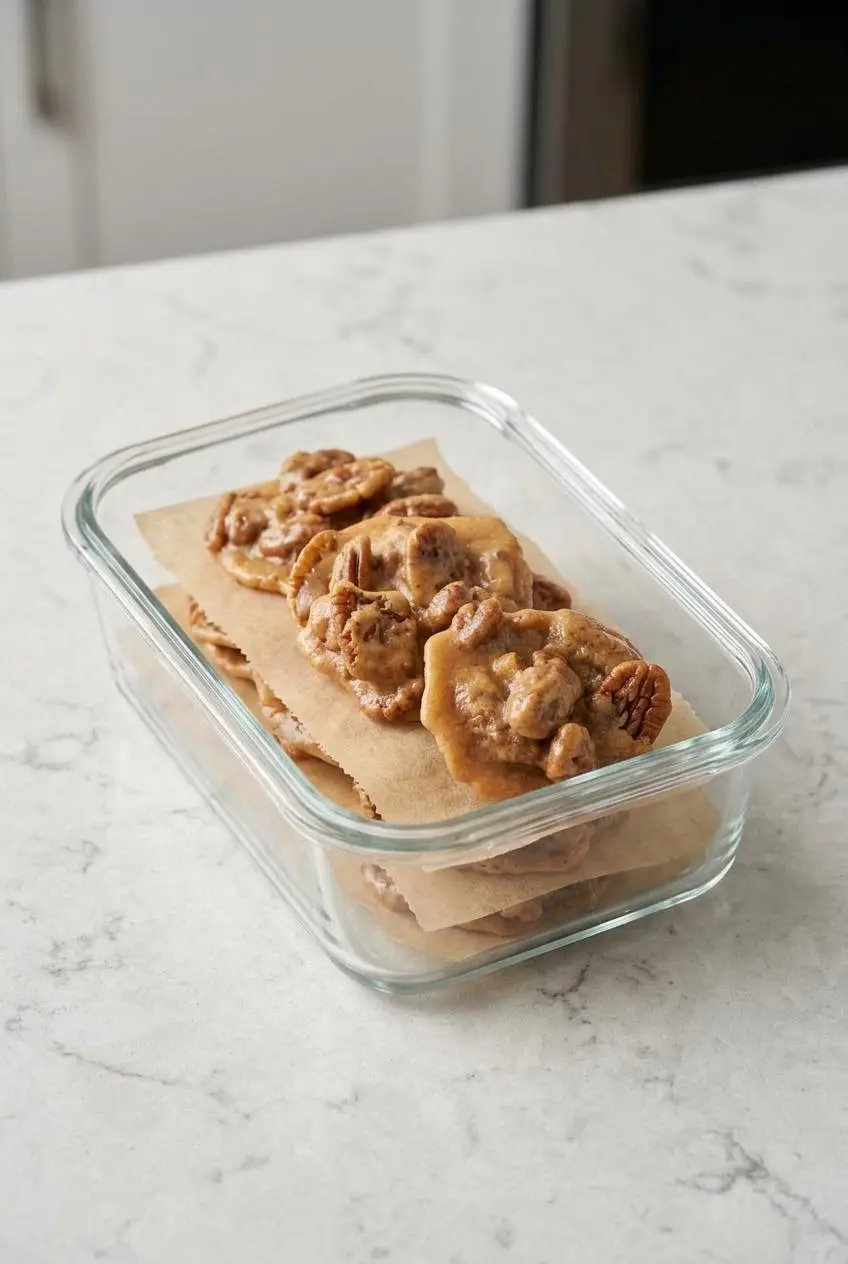
Let the mounds cool, then complete the refrigerator chill in the method before packing them away. Sealing them while warm can trap moisture against the candy. Once firm, place them in an airtight container with parchment between layers so the clusters do not stick together.
Keep the pralines chilled to help maintain their shape, particularly if your kitchen is warm. Set out only what you plan to serve and return the rest to the refrigerator. If the container develops condensation, avoid leaving the candy uncovered in a humid spot, where the surface can turn tacky.
For a dessert assortment, prepare the clusters, chill them until firm, and pack them only after they lift cleanly from the parchment. That sequence protects their shape better than piling soft mounds into a container.
Creative Ways to Serve and Enjoy Pecan Pralines
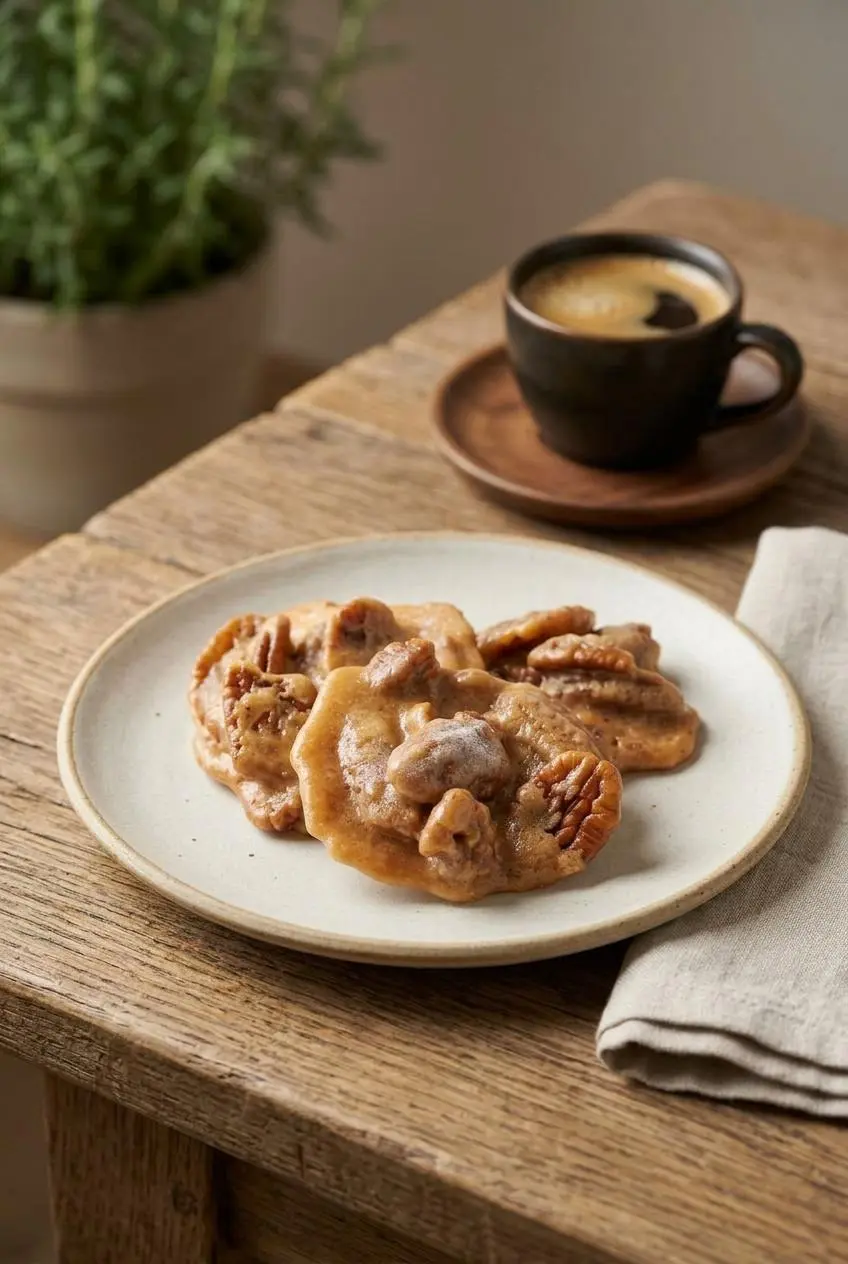
Serve the pralines chilled on a dessert platter with black coffee, espresso, or spiced tea. Their buttery sweetness pairs especially well with an unsweetened hot drink, and the cold candy keeps its shape while guests choose a piece.
For a dessert topping, break a firm praline into rough pieces and scatter it over butter pecan ice cream just before serving. The same crunchy pieces work over chilled yogurt or a slice of pie. Add them at the last moment if you want the pecans to stay crisp.
Chilled clusters also look inviting in a holiday treat tin. Separate layers with parchment and keep the tin cool so the candies arrive as distinct pieces rather than one sticky stack.
Embrace the Classic Taste of Low-Carb Pralines
These pralines bring together a rich, buttery coating and the satisfying crunch of pecan halves. The key is to cook until the coating visibly thickens, then give the spooned clusters their full chill.
Follow the ingredient amounts and method above, and let the caramel’s texture guide you at the stove. If you make a batch, share how yours turned out.
Frequently Asked Questions
Why Didn’t My Keto Pecan Pralines Set Firm?
The coating may not have thickened enough before you removed it from the heat. Look for a caramel-colored mixture that clings to the pecans, then cool and chill the mounds as directed. A different sweetener, particularly allulose, may produce a softer result.
Can I Substitute Allulose for Confectioner’s Erythritol?
You can try it, but expect a different candy. Allulose tends to make a smoother, softer coating, while the confectioners-style erythritol blend used here gives a firmer chilled set. It is not an equal swap for texture.
Should Keto Pecan Pralines Be Stored in the Fridge or at Room Temperature?
Keep them in an airtight container in the refrigerator to help preserve their firm texture. Separate layers with parchment, and avoid packing the pralines while they are still warm.
Are Pecans Suitable for a Low-Carb Diet?
Pecans are a popular choice in low-carb cooking for their flavor and crunch, but whether a serving fits your eating plan depends on your individual goals and the products you use. Check ingredient labels and calculate portions using nutrition information you trust.
What Is the Difference Between Pecan Pralines and Candied Pecans?
Pralines are clusters of pecans held together by a cooked, creamy candy coating. Candied pecans are individual nuts coated and cooked until their exterior is dry and crisp.
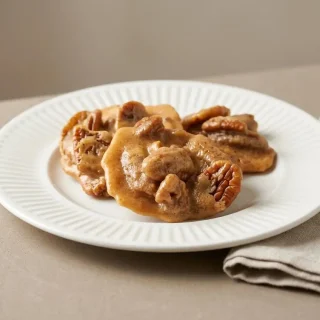
Keto Pecan Pralines

Equipment
- Saucepan
- Whisk
- Baking sheet
- Parchment paper
Ingredients
- 5 tbsp Butter unsalted
- 1/2 cup Swerve Confectioner’s Sugar Substitute
- 1/3 cup Heavy Whipping Cream
- 1 tsp Vanilla Extract
- 1 1/4 cup Pecan Halves
Instructions
- Add the butter, Swerve, and heavy whipping cream to a saucepan over medium heat. As the butter melts, the mixture should become creamy and begin to bubble.
- Bring the mixture to a gentle boil and whisk often as it cooks. The bubbles should look thicker and the coating should turn caramel-colored before you remove it from the heat.
- Take the saucepan off the burner, then stir in the vanilla and pecan halves. The thick coating should cling to the nuts rather than run freely off them.
- Divide the mixture into 12 even mounds on a parchment-lined baking sheet. Each mound should hold its shape as the coating begins to cool.
- Let the pralines reach room temperature, then refrigerate them for 1 hour before serving. They should feel firm enough to lift from the parchment.