Skip to content
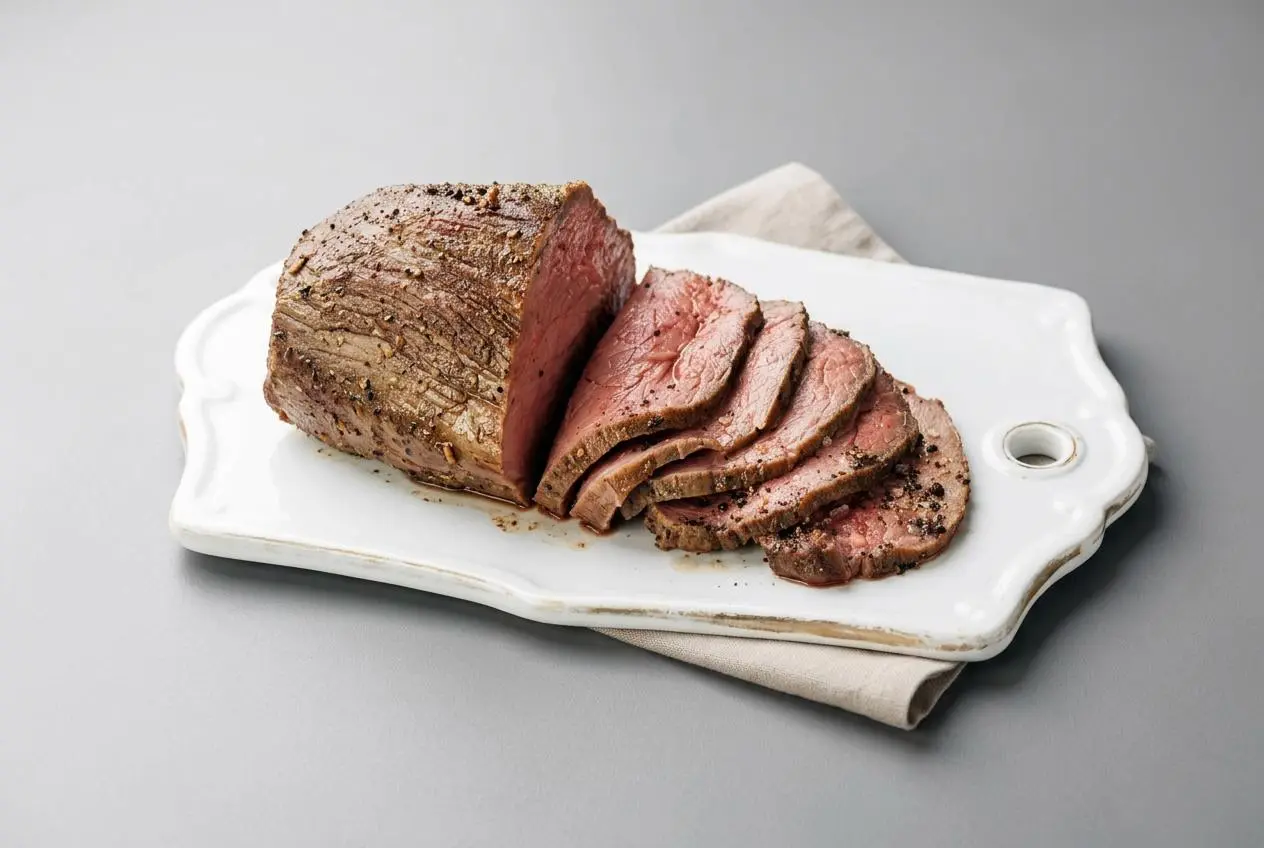
For tender, juicy roast beef with an aromatic, savory coating, season a whole beef roast with Montreal Steak Seasoning, roast gently, and check the center with a digital thermometer. Let the meat rest under loose foil, then carve thinly across the grain.
This keto roast beef recipe makes a sliceable oven roast rather than a fall-apart pot roast. Gentle heat gives you more control over doneness, while the coarse seasoning adds a peppery finish without a separate marinade.
Serve it warm for dinner or chill the remaining portions for thinly sliced lunches. The cooking is mostly hands-off, but a little attention at carving time makes a noticeable difference. Watch the grain, not just the crust.
Look for the direction of the meat fibers before seasoning so you’ll know which way to carve later.
Ingredients and Seasoning Options for Tender Keto Roast Beef
The beef supplies the savory flavor and sliceable texture, while Montreal Steak Seasoning adds salt, peppery bite, and aromatic depth to the surface. Choosing the right cut matters as much as seasoning it evenly.
- 5 pounds roast beef
- 2 tablespoons Montreal Steak Seasoning
Choose an uncooked whole beef roast. Top round, eye of round, and sirloin tip are useful options for thin slices. Eye of round is especially lean, so careful temperature monitoring and thin carving matter. A sirloin roast can offer a more forgiving texture, depending on the specific cut.
Chuck and brisket serve a different purpose. Their connective tissue benefits from moist, extended cooking, making them better suited to braised pot roast than this sliceable oven preparation. More marbling alone doesn’t make a cut the right choice for dry roasting.
Check the seasoning label. Montreal blends vary by brand. Look for a savory blend built around coarse salt, cracked pepper, garlic, and spices, and check for added sugar, cornstarch, or maltodextrin if you’re tracking carbohydrates. The blend already contributes salt, so extra salt isn’t part of this recipe.
I’d choose a roast with a fairly even thickness rather than a sharply tapered end; it’s easier to monitor the center without drying out a thin tail.
How to Make Keto Roast Beef
Use the cooking time as a planning estimate, not the final decision-maker. The roast’s shape and starting temperature affect how quickly its center warms, so the thermometer deserves the last word.
- Set the oven to 275°F and let it finish preheating before the beef goes in.
This gentle oven setting helps limit the difference between the outer meat and the center. - Distribute the Montreal Steak Seasoning over every side of the beef, then settle it in a roomy roasting pan.
A consistent coating gives each slice a seasoned edge, and the pan should leave space around the roast. - Cook the beef uncovered for approximately 2 hours, checking its center periodically with a digital meat thermometer.
About 130°F is the medium-rare doneness target for this preparation, but the thermometer reading matters more than the estimated cooking time. - Transfer the beef out of the roasting pan, drape foil loosely over it, and leave it to rest for about 15 minutes before carving thinly across the grain.
The loose covering retains some warmth while the resting period helps reduce juice loss when you slice.
Insert the thermometer into the thickest central portion, avoiding bone or an obvious fat pocket. Keep the tip away from the pan, which can distort the reading. If the roast has an uneven shape, check another central spot rather than assuming the first reading represents the whole piece.
The medium-rare target describes doneness, not a food-safety guarantee. If you need more thoroughly cooked beef, don’t treat a rosy center as the goal.
An optional roasting rack can lift the beef above collected juices and let air circulate underneath. Keep the roasting pan open rather than adding a lid: trapped steam changes the surface texture and moves the result toward braising. A rack is helpful, but it isn’t required for the method above.
There’s no need to add an extended room-temperature rest before cooking. Keep the raw beef chilled until you’re ready to prepare it, then let temperature checks guide the roasting.
To carve, find the long lines of muscle fibers and cut across them, not along them. If the fibers run diagonally, turn the roast so your knife crosses that direction. Use smooth strokes with a sharp knife; pressing down hard tends to tear thin slices.
Troubleshooting Common Roast Beef Challenges
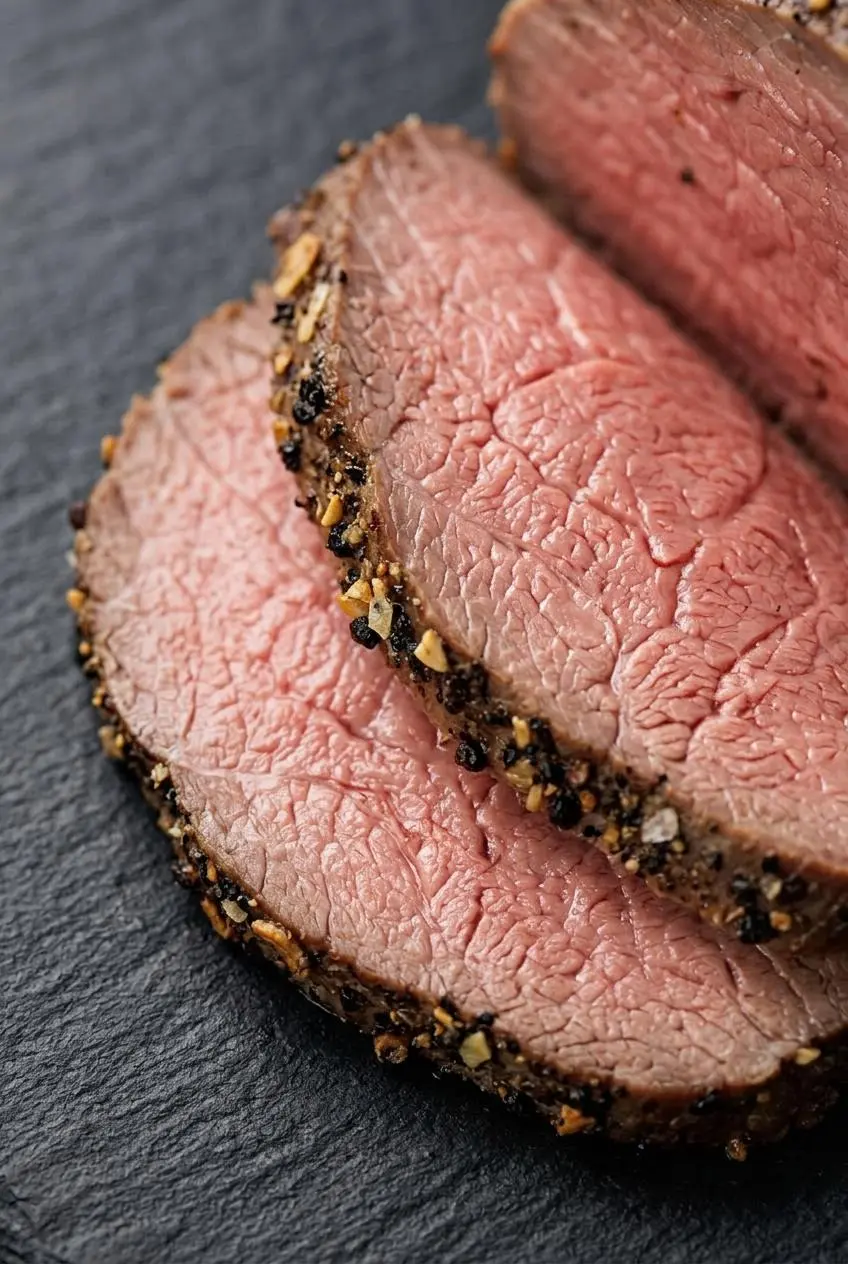
Dryness and chewiness can look like the same problem on the plate, but they often need different fixes.
- Chewy slices despite a juicy center: The knife may have followed the grain, leaving long fibers in each bite. Rotate the remaining roast and cut thinner slices across those fibers.
- Dry meat throughout: The center likely cooked beyond your intended doneness. Check earlier on the next roast, especially if it is narrow or unevenly shaped, and stop relying on the clock alone.
- A thick gray band around the center: Higher oven heat cooks the exterior much faster than the middle. Stay with the gentle oven setting instead of increasing the heat to hurry dinner.
- A puddle of juice on the cutting board: Carving immediately can release more liquid. Honor the resting period and leave the foil loose rather than wrapping the roast tightly.
- A damp underside: Collected liquid or a covered pan can keep the bottom wet. Roast uncovered and consider an elevated rack for better airflow underneath.
- An overly salty edge: Seasoning blends differ in salt content, and a heavy patch can overwhelm a bite. Spread the measured seasoning evenly and avoid adding extra salt automatically.
Don’t judge doneness by the coating’s color, sizzling, or aroma. Those cues tell you something about the surface, but they can’t tell you what’s happening in the center.
Flavor Variations and Alternative Cooking Methods
These optional flavor ideas belong outside the ingredient list above. Use them as alternative coatings rather than piling every seasoning onto an already salted roast.
Herb and Garlic Crusted Roast Beef
Dried rosemary or thyme with minced garlic gives the beef a woodsy, savory finish. A light coating of oil can help the herbs adhere; choose an oil suitable for roasting and avoid leaving thick clumps of garlic on the surface.
This variation emphasizes aroma rather than peppery heat. If you use it alongside Montreal seasoning, remember that the blend may already contain garlic and salt.
Horseradish and Coarse Peppercorn Crust
Prepared horseradish and cracked black pepper create a sharper steakhouse-style coating. Mustard can act as an optional binder, adding tang while helping the pepper stay against the meat.
Check prepared horseradish and mustard labels for added sugar. A thin coating works better than a thick wet layer, which can slide off and leave uneven patches.
Slow-Cooker Shredded Pot Roast Alternative
If you want beef that pulls apart with a fork, choose a braising cut such as chuck and use a separate slow-cooker or pressure-cooker pot roast preparation. Moist heat and a covered vessel produce a different texture from this uncovered oven roast.
A butter-and-pepperoncini flavor profile is another optional direction for that shredded style. It’s a different dish, not a reason to transfer these roasting instructions unchanged to a slow cooker or Instant Pot.
Low-Carb Serving Ideas and Keto Meal Pairings
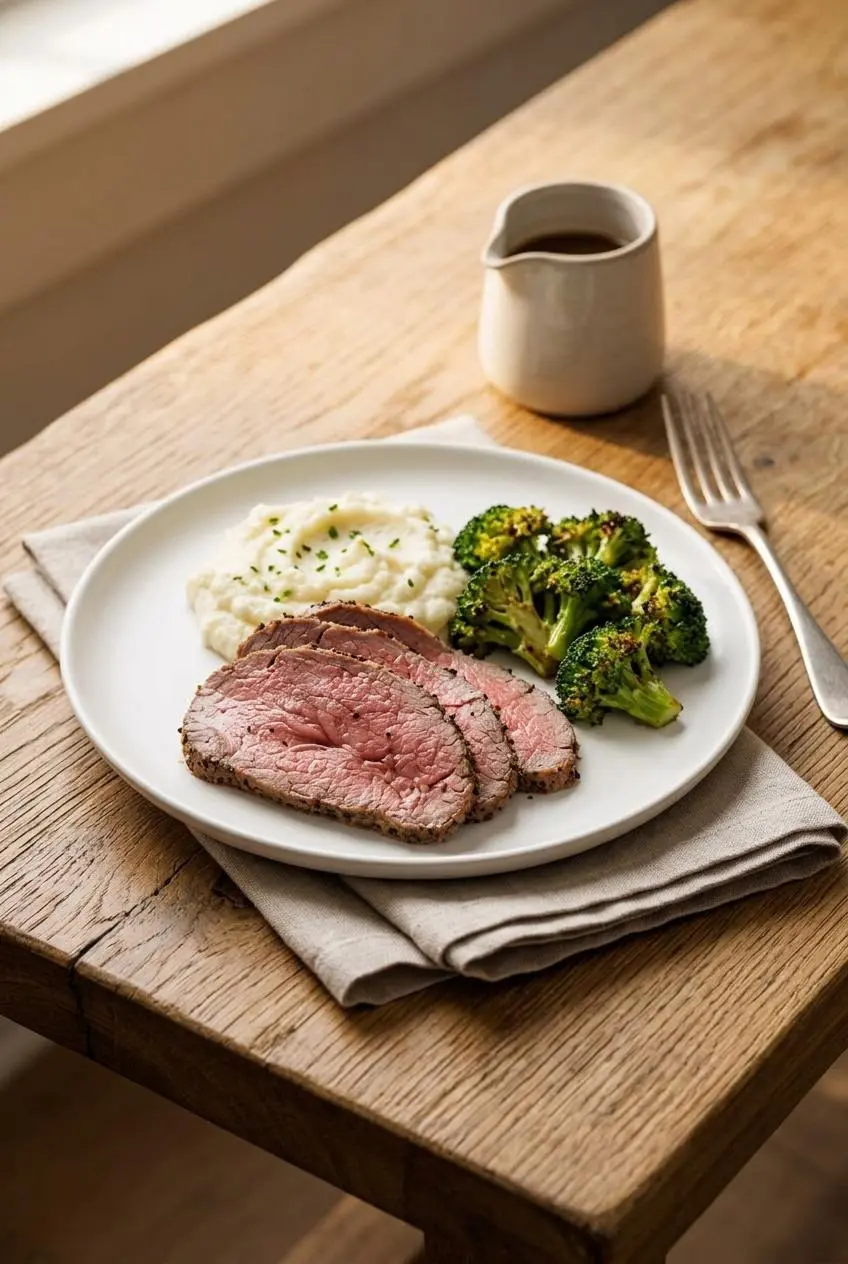
Lean roast slices pair well with vegetables that offer creaminess or browned edges, plus a little sauce to bring moisture to the plate.
Keto Side Dishes and Low-Carb Vegetables
- Warm dinner plate: Serve with garlic mashed cauliflower and roasted broccoli or cabbage for a mix of creamy and browned textures.
- Cold lunch: Tuck thin slices into sturdy lettuce cups with cucumber and an optional sugar-free horseradish cream.
- Wrap meal: Use a low-carb wrap whose label fits your carbohydrate goals, keeping wet sauce separate until assembly.
Skip sweet vegetable glazes and check packaged sauces as carefully as the seasoning. The accompaniments can change the meal’s carbohydrate content considerably.
Natural Keto Au Jus and Pan Reduction
Dry roasting may leave only a little liquid, especially with a lean cut. Save the juices and any browned, rather than burned, residue from the pan. An au jus should be pourable, not thick like gravy.
For an optional pan sauce, loosen those residues with beef broth in a heat-safe pan and simmer gently. Taste before reducing further: both the seasoning and broth can contribute salt, and reduction concentrates it. If the flavor becomes too strong, stop reducing rather than chasing a thicker consistency.
Flour and cornstarch aren’t necessary for a flavorful jus. If you prefer a fuller-bodied sauce, serve the slices with rich keto gravy instead.
Storage, Chilling, and Meal Prep Guidelines
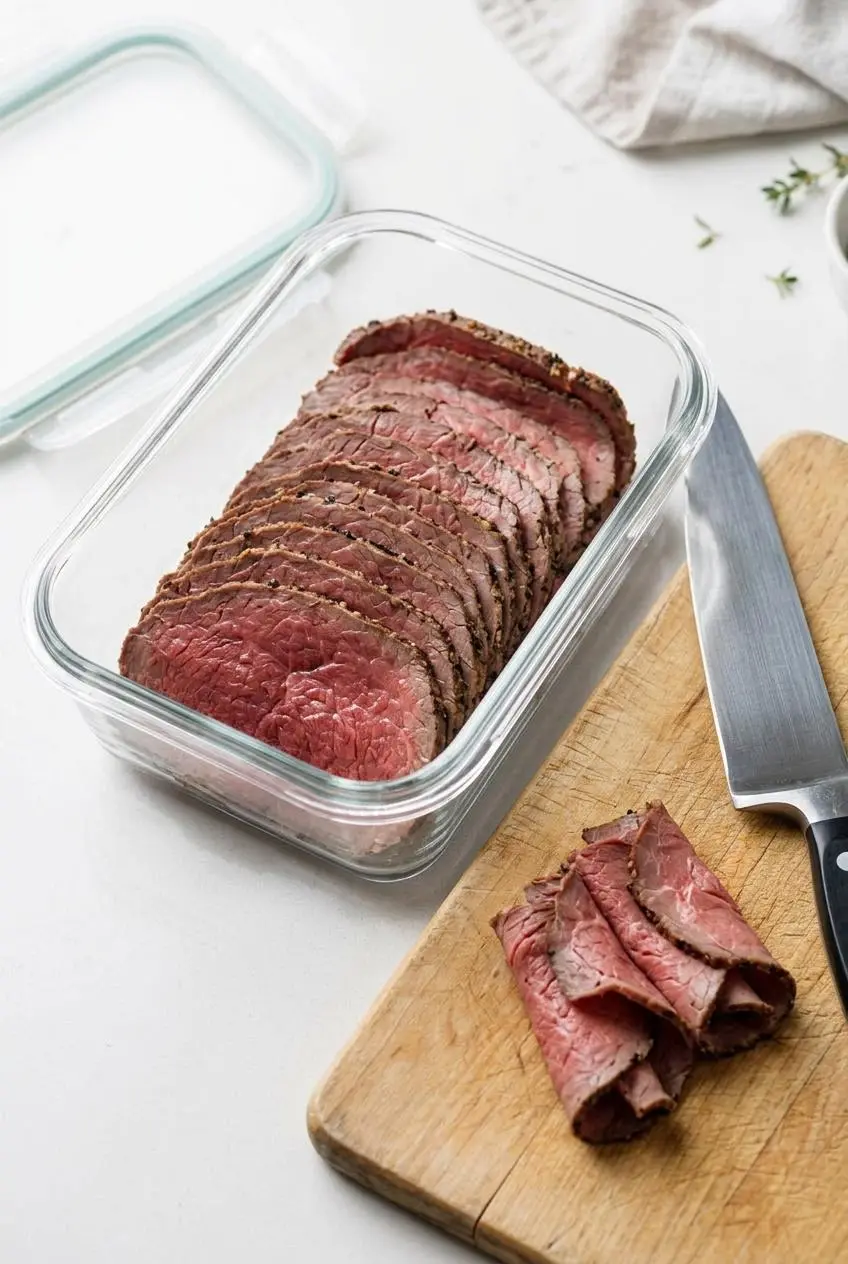
For clean deli-style slices, chill the cooked beef thoroughly before carving it thinly. Firm, cold meat is easier to cut neatly than a warm roast that bends under the knife.
After serving, divide the remaining beef into manageable portions and refrigerate promptly in covered containers. Don’t leave the whole roast on the counter waiting for it to become completely cold. Use shallow containers for portions and keep any pan sauce separately covered and chilled.
Once the meat is thoroughly chilled, cut across the grain with a sharp knife using long, smooth strokes. Start with a manageable slice thickness, then go thinner as the meat and blade allow. If the slices tear, sharpen the knife or make them slightly thicker instead of forcing paper-thin ribbons.
Pack chilled slices in an airtight container and assemble sandwiches on sliced keto bread when you’re ready to eat. Keep lettuce and wet condiments separate so the lunch doesn’t become soggy.
For warming, use gentle heat with a little reserved jus to limit drying, and heat only the portion you plan to serve. Reheating can move the beef beyond its original doneness, so don’t expect a reheated slice to keep exactly the same rosy center.
Nutritional Value and Ketogenic Compliance
The seasoning and accompaniments matter when deciding how this roast fits your eating plan. A homemade preparation lets you check what goes onto the beef rather than relying on an unfamiliar marinade or packaged deli coating.
The supplied nutrition estimate lists protein along with a small amount of carbohydrate for the seasoned roast. Actual values depend on the beef cut, seasoning brand, portion size, and any sauces or sides you add. Don’t assume that “sugar-free” automatically means a product contains no carbohydrates.
Choose portions and pairings that fit your own goals. This meal doesn’t guarantee ketosis or any particular health outcome.
Summary of Keys to Flawless Keto Roast Beef
Gentle oven heat, careful thermometer checks, and a proper rest give you better control over a sliceable roast. Let the center guide the cooking rather than the clock or the color of the coating.
Finish by carving thinly across the grain, then keep the remaining portions chilled for another meal. A thoughtful cut makes the savory beef easier to enjoy, whether dinner is warm or lunch is cold.
Frequently Asked Questions About Keto Roast Beef
Is Roast Beef Keto-Friendly?
It can fit a keto eating plan when the seasoning, portion, sauces, and sides fit your carbohydrate goals. Check commercial rubs and prepared sauces for added sugars and starches rather than assuming every roast beef preparation is alike.
What Is the Best Cut of Beef for Oven Roasting?
Top round, eye of round, and sirloin tip are useful choices for thinly sliced oven roast beef. Chuck and brisket generally suit moist braising better when you want tender, shreddable pot roast.
How Do I Ensure My Roast Beef Is Tender Rather Than Chewy?
Use gentle heat, monitor the center, and allow the cooked roast to rest before carving. Slice thinly across the grain to shorten the muscle fibers in each bite.
Can I Make Gravy From the Roasting Pan Drippings?
Yes, the drippings can become an unthickened pan jus when combined with broth and gently simmered. Taste as it reduces so the concentrated seasoning doesn’t become overly salty; flour and cornstarch aren’t needed.
How Should I Chill Roast Beef for Meal Prep?
Refrigerate remaining portions promptly in covered containers rather than leaving the whole roast out to cool completely. Carve once thoroughly chilled for cleaner thin slices, and store wet sandwich ingredients separately.
Keto Roast Beef Recipe

Equipment
- Roasting pan
- Digital meat thermometer
Ingredients
- 5 pounds roast beef
- 2 tablespoons Montreal Steak Seasoning
Instructions
- Set the oven to 275°F and let it finish preheating before the beef goes in. This gentle oven setting helps limit the difference between the outer meat and the center.
- Distribute the Montreal Steak Seasoning over every side of the beef, then settle it in a roomy roasting pan. A consistent coating gives each slice a seasoned edge, and the pan should leave space around the roast.
- Cook the beef uncovered for approximately 2 hours, checking its center periodically with a digital meat thermometer. About 130°F is the medium-rare doneness target for this preparation, but the thermometer reading matters more than the estimated cooking time.
- Transfer the beef out of the roasting pan, drape foil loosely over it, and leave it to rest for about 15 minutes before carving thinly across the grain. The loose covering retains some warmth while the resting period helps reduce juice loss when you slice.