Skip to content

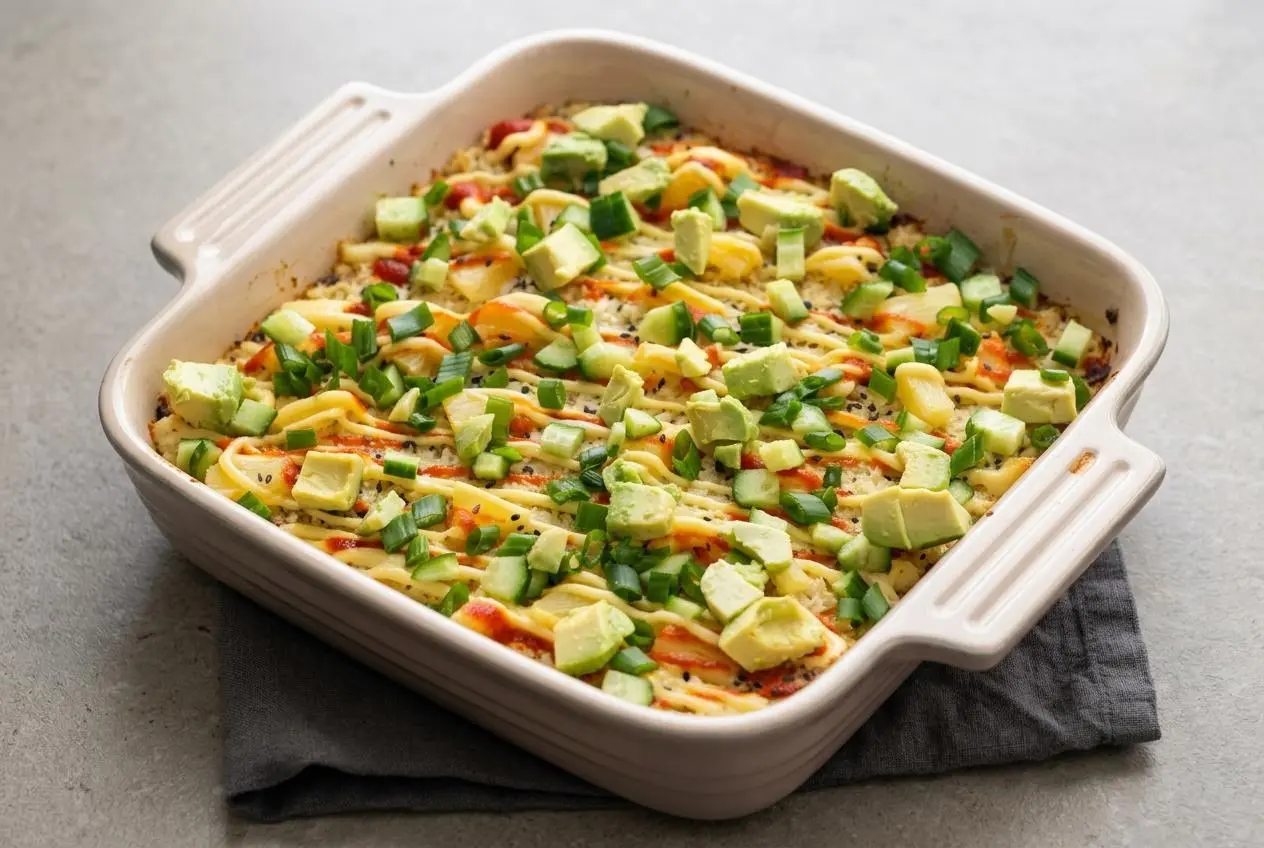
A keto sushi bake is a deconstructed sushi casserole made with seasoned cauliflower rice and creamy, spicy seafood instead of rolled sushi rice. Thoroughly drying the cauliflower creates a cohesive, scoopable layer, ready to pair with warm crab filling and crisp roasted seaweed snacks.
This keto sushi bake brings California roll flavors into a baking dish, with cream cheese, sesame, tangy rice vinegar, and a spicy mayonnaise finish. There’s no rolling mat involved, just layers to assemble and bake.
Cool cucumber and buttery avocado balance the rich filling, while roasted seaweed gives each bite its crunch. The cauliflower prep makes the difference. Get that layer dry, and the scooping gets good.
Set out a clean kitchen towel before you begin so the cooled cauliflower is ready to squeeze.
Essential Ingredients and Smart Keto Swaps
Each ingredient contributes flavor or texture: cauliflower provides structure, seafood supplies savory depth, creamy binders hold the layers together, vinegar balances richness, and sesame seasonings add aroma. Fresh toppings and roasted seaweed finish the bake with contrasting crunch.
- 1 Lbs. Imitation Crab Meat (Can Also Use Crab or Any Seafood of Choice.)
- 1/4 Cup Kewpie Mayo
- 1/2 Cup Cream Cheese (Softened. )
- 1 Tbsp Black Sesame Seeds
- 1 Large Egg
- Sriracha (To Taste.)
- 2 Packages Frozen Cauliflower Rice (680 Grams Total.)
- 1 Tbsp Sesame Oil
- 1 Tbsp Dashi Miso Paste (Optional.)
- 1/4 Cup Furikake
- 1/4 Cup Rice Vinegar
- 1 Tsp Keto Friendly Sweetener (Stevia, Erythritol etc.)
- 1 Tbsp Mayo (To Taste.)
- 1 Tbsp Sriracha (To Taste.)
- 1/4 Cup Pineapple (Optional.)
- 1/4 Cup Green Onion (Diced, to Serve. )
- 1/4 Cup Cucumber (Diced, to Serve.)
- 1 Avocado (Diced, to Serve.)
- 4 Packages Korean Roasted Seaweed Laver Snacks
Frozen cauliflower rice needs both squeezing and skillet drying. Rice vinegar gives it sushi-style tang, while keto sweetener softens the acidity. Choose unseasoned rice vinegar if you want control over the seasoning. Furikake adds savory seaweed and sesame flavor; optional dashi miso paste deepens that savoriness.
Softened cream cheese gives the seafood layer body. Kewpie mayo adds richness and tang, and sriracha brings heat. Regular mayonnaise with a small splash of rice vinegar offers a practical Kewpie substitute, though the flavor won’t be identical.
For stricter carbohydrate tracking, compare the labels on imitation crab and your preferred plain crab, salmon, tuna, or shrimp. Check condiments for added sugar and seafood products for starch ingredients rather than assuming every brand fits your goals. You can omit the optional pineapple; calculate nutrition from the products you actually use.
How to Make the Keto Sushi Bake Step-by-Step
Prep: 20 minutes. Cook: 25 minutes. Servings: 6.
The single egg helps bind both layers: beat it and divide it between the filling and cauliflower mixture. Reserve some of the listed Kewpie mayo for the topping, use the rest in the seafood filling, and stir the separately listed mayo into the rice. No additional egg or mayo is needed.
This assembly puts seafood underneath the cauliflower, unlike rice-bottom sushi casseroles. Both layers reach your spoon together, so there’s no need to reverse them.
- Set the oven to 375°F and microwave the frozen cauliflower according to its package directions, about 3 to 5 minutes.
Leave it to cool until you can handle it comfortably. - Use the cooling time to chop the imitation crab by hand or pulse it in a food processor.
A finely chopped texture will blend evenly into the creamy filling. - Beat the egg, reserve a portion for the cauliflower, and mix the remainder with the crab, filling portion of Kewpie mayo, softened cream cheese, black sesame seeds, and sriracha in a large bowl.
The mixture should look cohesive, without firm pockets of cream cheese. - Cover the bottom of a 9×9-inch baking dish with the seafood mixture.
Level it into an even layer so the cauliflower can cover it uniformly. - Gather the cooled cauliflower in a clean kitchen towel and twist firmly to extract its liquid.
Keep squeezing until the bundle feels compact and liquid stops dripping. - Warm the sesame oil in a large skillet over medium heat, then add the squeezed cauliflower and optional dashi miso paste.
Stir continuously for about 5 minutes to release lingering moisture while keeping the cauliflower pale rather than browned. - Distribute the mayo, furikake, reserved beaten egg, rice vinegar, and sweetener throughout the cauliflower.
The seasonings should coat the rice evenly, with no visible streaks of egg. - Cover the seafood with the seasoned cauliflower, then finish with the reserved Kewpie mayo, sriracha, and optional pineapple.
Spread the rice to the edges without disturbing the filling underneath. - Place the uncovered dish in the oven for 25 minutes and check that the center is heated through.
The creamy topping may bubble around the edges, but edge bubbling alone does not confirm the center is ready. - Scatter the diced cucumber, green onion, and avocado over the finished bake.
The fresh toppings should stay cool and distinct against the warm casserole.
Bring the roasted seaweed snacks to the table separately so they stay crisp until you scoop.
Pro Tips to Prevent a Watery Cauliflower Base
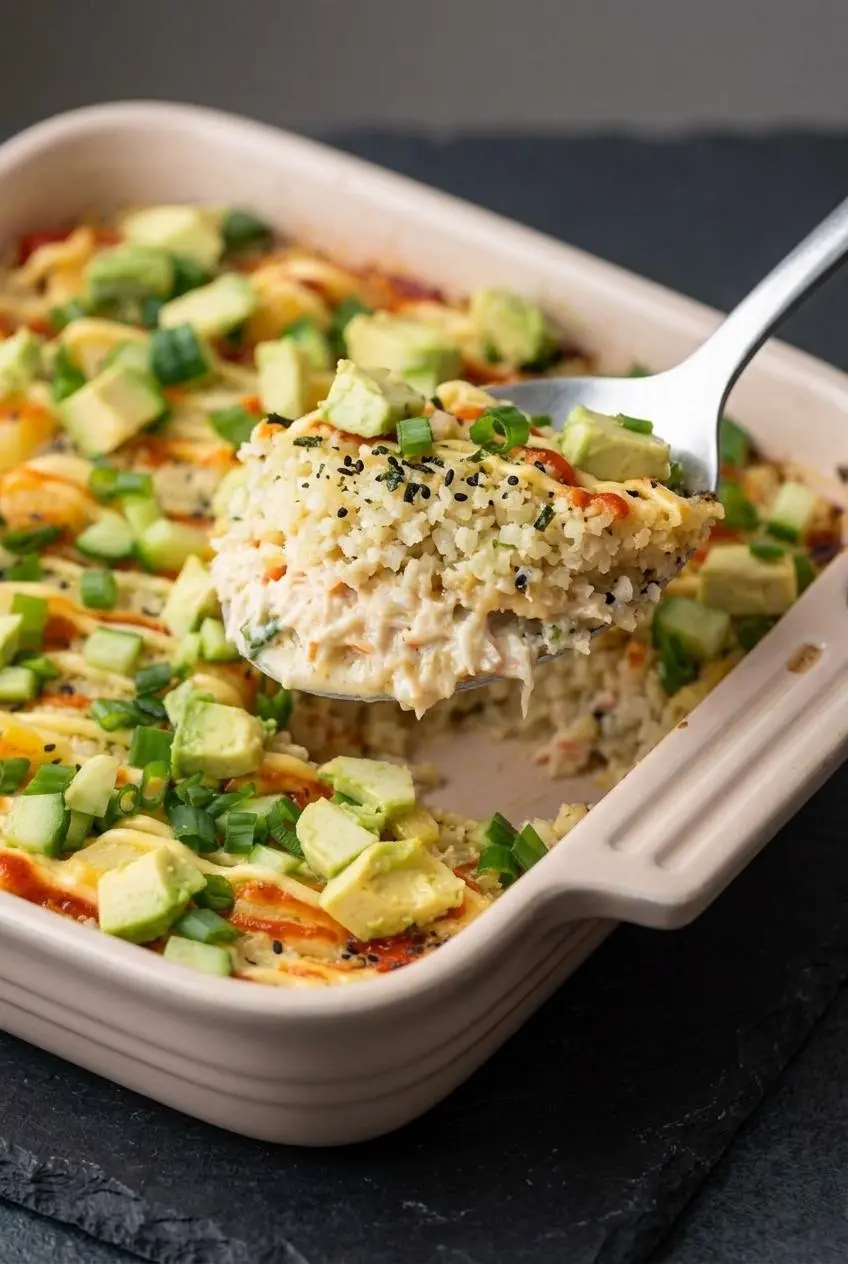
Remove water before assembly rather than hoping the oven will dry the casserole.
- Puddles in the dish: Incompletely squeezed cauliflower releases liquid during baking. Let it cool enough to handle, then twist the towel firmly until dripping stops.
- Steamy, damp rice: Towel wringing leaves some moisture behind. Spread the cauliflower across the skillet and stir so steam can escape, a useful texture habit for dishes such as keto fried rice.
- Browned cauliflower: Excess heat or too little stirring creates toasted patches. Keep the heat moderate and the rice moving; you want drying, not a crust.
- Lumpy filling: Cold cream cheese resists mixing. Soften it before combining so it blends throughout the chopped seafood.
I look for pale, separate cauliflower grains with no wet sheen in the skillet before adding the seasonings.
Popular Variations (Salmon, Real Crab, and Dairy-Free)
Keep these optional adaptations separate from the ingredient list above. Cooked seafood or chicken lets you change the flavor without relying on the listed bake time to cook a different raw protein.
Keto Salmon Sushi Bake
Replace imitation crab with chopped cooked salmon for a richer seafood flavor. Fold it gently into the creamy mixture so some flakes remain intact. The sriracha, cucumber, and avocado work especially well with salmon.
Strict Keto Real Crab or Shrimp Swap (No Imitation Crab or Pineapple)
Use plain lump crab or chopped cooked shrimp and leave out the optional pineapple. Drain seafood well so it doesn’t undo your cauliflower prep, and compare product labels against your carbohydrate goals. For another use for lump crab, try keto crab cakes.
Spicy Tuna or Chicken Sushi Bake
Choose the flavor and texture you prefer:
- Tuna: Well-drained canned tuna gives the filling a pronounced savory flavor and mixes readily with spicy mayo.
- Chicken: Finely shredded cooked chicken makes a poultry version; keep the shreds small for easier scooping.
- Dairy-free: Omit cream cheese and use mayonnaise for richness, expecting a softer filling. Psyllium husk flakes are another possible cauliflower binder, but they change the texture and aren’t a direct cream cheese replacement.
Best Ways to Serve Keto Sushi Bake
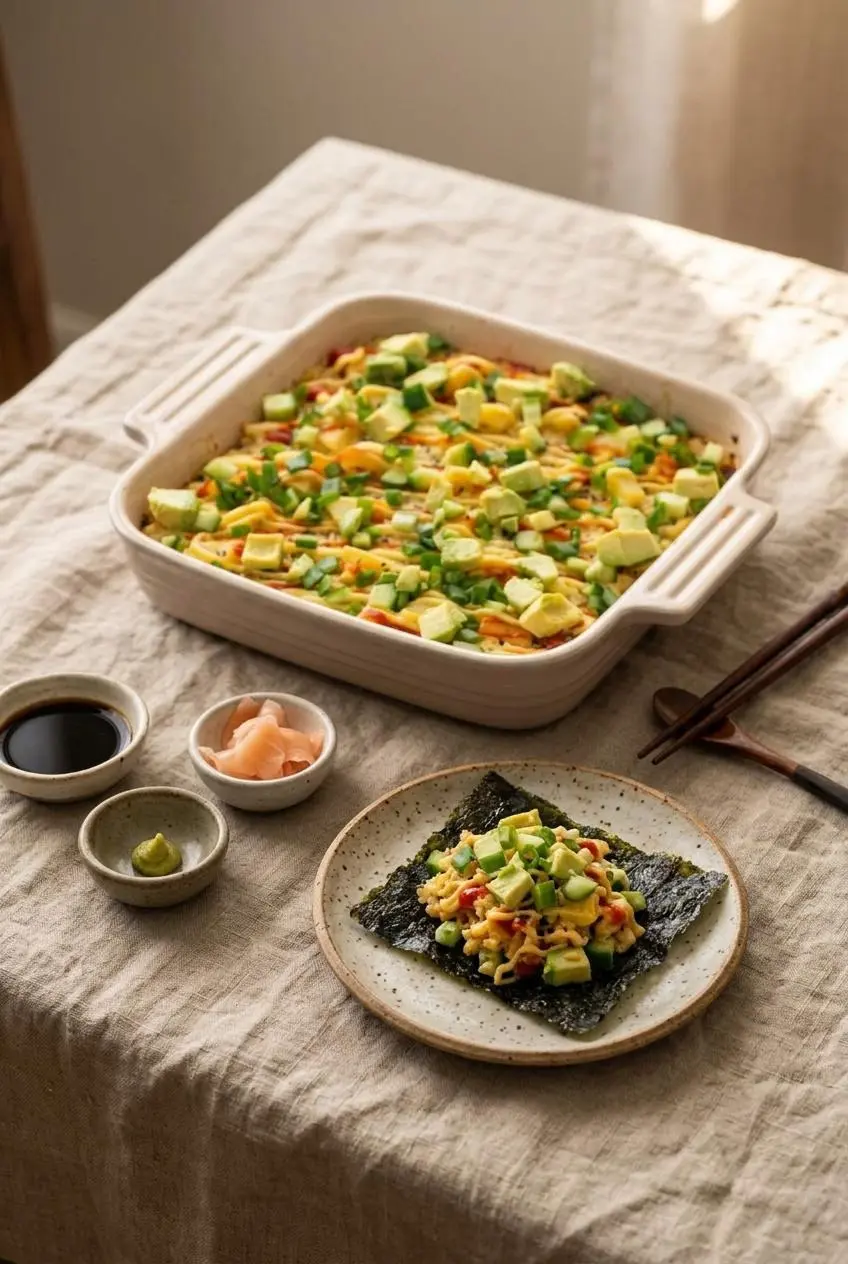
Scoop modest portions onto roasted seaweed just before eating. Filling the seaweed too early softens its crunch.
- Seaweed scoops: Use Korean roasted laver snacks or small pieces of nori.
- Lettuce cups: Spoon the bake into crisp lettuce leaves for a refreshing contrast.
- Bowl serving: Serve a portion with fresh cucumber and avocado, keeping seaweed alongside for crunch.
Offer low-sodium soy sauce or tamari, pickled ginger, and wasabi separately so everyone can adjust the seasoning. A warm bowl of keto miso soup makes a savory companion.
Make-Ahead, Storage, and Reheating Guide
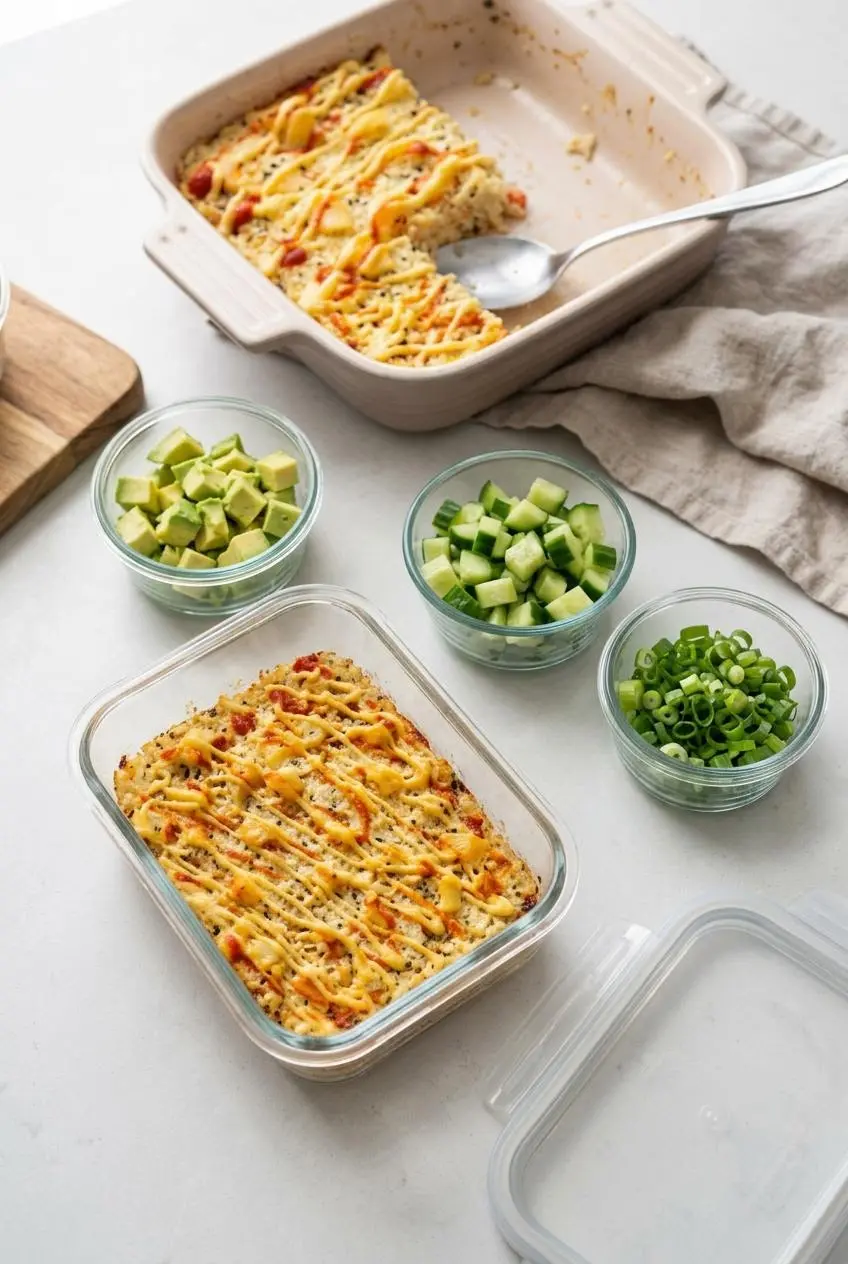
Organize prep by component: keep the squeezed, skillet-dried cauliflower separate from the filling until assembly, and keep both chilled if you pause. Dice avocado close to serving and hold cucumber and green onion apart from the bake.
Store leftovers in a covered refrigerator container without fresh toppings. Because this dish contains cream cheese, refrigerate it within two hours, including preparation time.
For reheating, warm individual portions gently and check the center rather than judging by the edges. Avoid prolonged heating that can toughen seafood or make the creamy mixture oily. Add fresh toppings afterward, or serve properly chilled portions cold.
Final Thoughts on Making Keto Sushi Bake at Home
A creamy, savory sushi casserole starts with cauliflower that’s thoroughly squeezed and skillet-dried. That preparation gives the seasoned layer enough structure to scoop alongside the rich filling.
Choose your favorite seafood, keep the fresh toppings separate until serving, and bring crisp seaweed to the table. Build each bite as you eat.
Frequently Asked Questions
Is Imitation Crab Keto-Friendly in a Sushi Bake?
It depends on the product, portion, and your carbohydrate goals, so check the package label. Plain real crab, salmon, or shrimp are optional alternatives; compare labels and omit pineapple if preferred.
How Do You Keep Cauliflower Sushi Rice From Getting Soggy?
Cool the microwaved cauliflower and wring it firmly in a clean towel. Sauté it afterward to evaporate remaining moisture without browning.
Can I Use Salmon or Tuna Instead of Crab Meat?
Yes. Chopped cooked salmon or well-drained canned tuna can replace imitation crab. Fold salmon gently to retain flakes, and drain tuna thoroughly.
What Can I Use if I Cannot Find Kewpie Mayo or Dashi Miso Paste?
Use regular mayonnaise with a small splash of rice vinegar in place of Kewpie. Omit the optional dashi miso paste; furikake and sesame oil still provide savory flavor.
How Should Leftovers Be Stored and Reheated?
Keep the covered bake refrigerated separately from avocado, cucumber, and green onion. Reheat portions gently, check the center, and add fresh toppings afterward.
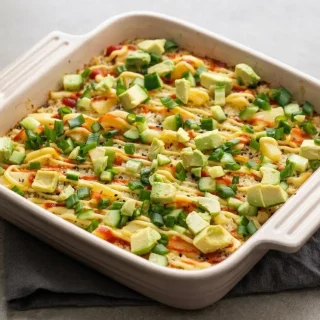
Keto Sushi Bake

Equipment
- 9×9-inch baking dish
- Clean kitchen towel
- Large skillet
- Large bowl
Ingredients
- 1 Lbs. Imitation Crab Meat (Can Also Use Crab or Any Seafood of Choice.)
- 1/4 Cup Kewpie Mayo
- 1/2 Cup Cream Cheese (Softened. )
- 1 Tbsp Black Sesame Seeds
- 1 Large Egg
- Sriracha (To Taste.)
- 2 Packages Frozen Cauliflower Rice (680 Grams Total.)
- 1 Tbsp Sesame Oil
- 1 Tbsp Dashi Miso Paste (Optional.)
- 1/4 Cup Furikake
- 1/4 Cup Rice Vinegar
- 1 Tsp Keto Friendly Sweetener (Stevia, Erythritol etc.)
- 1 Tbsp Mayo (To Taste.)
- 1 Tbsp Sriracha (To Taste.)
- 1/4 Cup Pineapple (Optional.)
- 1/4 Cup Green Onion (Diced, to Serve. )
- 1/4 Cup Cucumber (Diced, to Serve.)
- 1 Avocado (Diced, to Serve.)
- 4 Packages Korean Roasted Seaweed Laver Snacks
Instructions
- Set the oven to 375°F and microwave the frozen cauliflower according to its package directions, about 3 to 5 minutes. Leave it to cool until you can handle it comfortably.
- Use the cooling time to chop the imitation crab by hand or pulse it in a food processor. A finely chopped texture will blend evenly into the creamy filling.
- Beat the egg, reserve a portion for the cauliflower, and mix the remainder with the crab, filling portion of Kewpie mayo, softened cream cheese, black sesame seeds, and sriracha in a large bowl. The mixture should look cohesive, without firm pockets of cream cheese.
- Cover the bottom of a 9×9-inch baking dish with the seafood mixture. Level it into an even layer so the cauliflower can cover it uniformly.
- Gather the cooled cauliflower in a clean kitchen towel and twist firmly to extract its liquid. Keep squeezing until the bundle feels compact and liquid stops dripping.
- Warm the sesame oil in a large skillet over medium heat, then add the squeezed cauliflower and optional dashi miso paste. Stir continuously for about 5 minutes to release lingering moisture while keeping the cauliflower pale rather than browned.
- Distribute the mayo, furikake, reserved beaten egg, rice vinegar, and sweetener throughout the cauliflower. The seasonings should coat the rice evenly, with no visible streaks of egg.
- Cover the seafood with the seasoned cauliflower, then finish with the reserved Kewpie mayo, sriracha, and optional pineapple. Spread the rice to the edges without disturbing the filling underneath.
- Place the uncovered dish in the oven for 25 minutes and check that the center is heated through. The creamy topping may bubble around the edges, but edge bubbling alone does not confirm the center is ready.
- Scatter the diced cucumber, green onion, and avocado over the finished bake. The fresh toppings should stay cool and distinct against the warm casserole.