Skip to content

A keto English muffin is a single-serve, grain-free bread made from almond flour, coconut flour, baking soda, egg white, milk, and fat, whisked in a bowl and cooked in a greased ramekin until set. Slice it in half and toast it for a crisp, bread-like finish.
This keto english muffin recipe turns a small bowl of low-carb flours and an egg white into a round, sliceable muffin in about two minutes. It cooks in the microwave or the oven, splits cleanly down the middle, and toasts into something that genuinely tastes like breakfast bread instead of a soft mug cake.
What sells it is the finish. Straight out of the ramekin, the crumb is tender and a little steamy. After a pass in a hot skillet or toaster, the cut sides turn golden and crisp while the inside stays light and airy. That toasting step is doing more work than most people realize.
Use a wide, flat-bottomed ramekin rather than a tall mug. A shallow, broad dish gives you a proper round shape and even thickness, which makes slicing far easier once it cools.
Essential Ingredients for Low-Carb Bread
Each ingredient here pulls its weight. The flours build structure, the leavener creates lift, the egg white sets the crumb, and the fat and milk bring tenderness and moisture so the muffin bends instead of crumbling.
- 1 tablespoon coconut flour
- 4 tablespoon blanched almond flour
- 1/8 teaspoon baking soda
- 1/2 teaspoon coconut oil (can substitute for butter)
- 1 egg white
- 2 tablespoon Unsweetened almond milk (can use any milk of choice)
Blanched almond flour is the backbone. Because it is finely milled and skinless, it produces a soft, close crumb that reads like bread rather than something gritty or nutty. On its own, though, almond flour holds a lot of moisture and can turn heavy and slightly damp in the center.
Coconut flour solves that. It is intensely absorbent, so a small amount soaks up excess liquid and firms the structure just enough to slice cleanly. This pairing is the whole trick behind a tender crumb that avoids both dense heaviness and dry crumbliness. Swapping one flour for the other at an equal rate throws the moisture balance off completely, and you end up with either a wet middle or a dry, sandy texture.
Baking soda gives the quick lift. There is no yeast and no rising time here, so the leavener has to create air pockets fast as the batter heats. Those pockets are what give you the open, forkable interior that catches melted butter.
Using the egg white instead of a whole egg is deliberate. The yolk carries most of the sulfurous, custardy flavor that people describe as an eggy taste in quick microwave breads, and it also weighs the crumb down. The white brings protein and lift without that aroma, which keeps the muffin tasting like bread. I keep a small container of egg whites in the fridge for exactly this reason, since separating one egg for a single muffin at 6 a.m. is more fuss than most mornings deserve.
The coconut oil or butter coats the flour particles so the crumb stays tender and does not tighten up. Unsweetened almond milk hydrates the flours and thins the batter to a pourable consistency. Any milk you prefer works the same way here.
How to Make This Keto English Muffin Recipe

The whole process is a whisk, a pour, and a short cook. What matters most is mixing thoroughly enough that the coconut flour fully hydrates, and choosing a dish that gives you width instead of height.
- Grease a 4-inch or 6-inch microwave-safe ramekin or bowl and set it aside.
Coat the bottom and sides lightly so the cooked muffin releases in one piece instead of tearing. - Whisk the coconut flour, almond flour, and baking soda together in a small bowl until no streaks remain.
Breaking up coconut flour clumps now prevents dry pockets later, since they will not dissolve once liquid goes in. - Add the coconut oil, egg white, and almond milk, then whisk until you have a smooth, pourable batter.
The batter should look glossy and uniform, with no dry patches clinging to the side of the bowl. - Pour the batter into the greased ramekin and microwave for 90 seconds.
The surface should look dry and matte, and the edges should pull slightly away from the ramekin wall. - Slide a rubber spatula around the rim and lift the muffin out onto a board or rack.
Getting it out immediately lets trapped steam escape from the bottom instead of soaking back into the crumb. - Slice the muffin in half once it has cooled enough to handle, then toast both halves before eating.
The cut sides should turn golden with crisp ridges, and the interior should feel light and springy rather than damp.
Oven Instructions
- Heat the oven to 180C/350F and grease a 4-inch or 6-inch oven-safe ramekin.
A fully preheated oven matters here, since a lukewarm start gives you a flat, dense result. - Combine all the ingredients in a small mixing bowl, whisk until smooth, and transfer the batter to the prepared dish.
Level the top with the back of a spoon so the muffin bakes to an even thickness. - Bake for 10-12 minutes, until a skewer inserted into the center comes out clean.
The top should feel set and spring back lightly when pressed. - Loosen the edges with a rubber spatula, turn the muffin out, then slice it in half and toast.
Oven baking dries the exterior more than the microwave, so the crumb browns quickly under heat.
What Makes a Great Keto English Muffin?

Yes, keto English muffins are a real thing, and they work because low-carb flours can be coaxed into bread-like behavior even without gluten. Traditional English muffins rely on gluten strands and yeast fermentation to trap gas and create those famous nooks. Grain-free flours cannot build that same elastic network, so the structure comes from a different place: protein from the egg white, fat for tenderness, and a chemical leavener that inflates the batter fast.
That combination gives you a crumb with genuine air pockets rather than a solid, cakey block. The almond flour supplies softness, the coconut flour tightens the structure so the muffin slices instead of crumbling, and the fat keeps everything from turning tough.
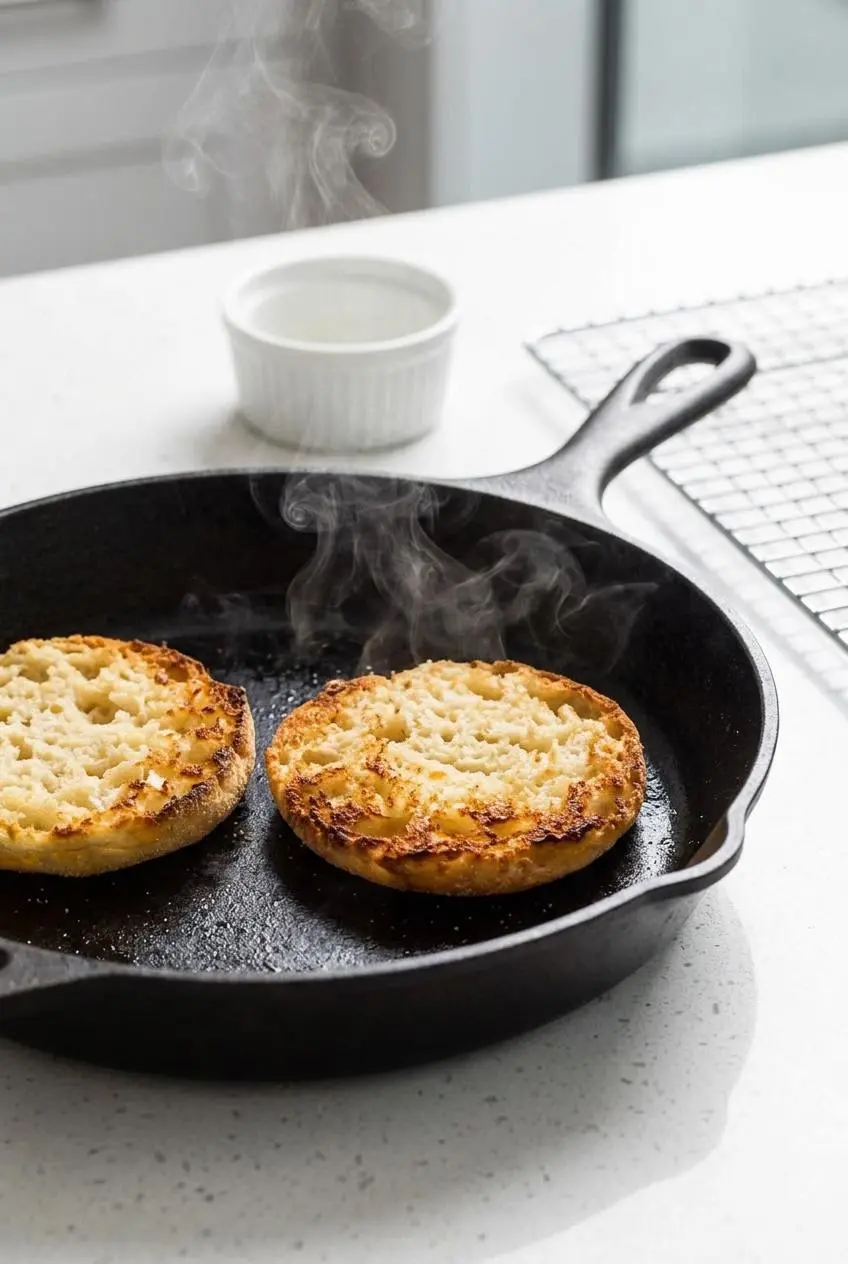
The final step is the one most people skip. Quick-cooked bread holds surface moisture, and that moisture is exactly what makes microwave bread feel spongy. Toasting drives it off, firms the cut face, and builds the crisp golden ridges that make an English muffin feel like an English muffin. If you enjoy fast single-serve breakfast bases, a keto chaffle recipe works on a similar principle with a crisper edge, while chewy keto bagels give you a denser, chewier bread when you want something more substantial.
Troubleshooting Texture, Moisture, and Egginess
Almost every complaint about quick low-carb bread traces back to one of four things: dish shape, trapped steam, egg choice, or skipping the toast. Here is how to fix each one.
- Spongy or rubbery crumb. This is nearly always untoasted bread. The microwave sets the batter without evaporating surface moisture, so the muffin feels damp and bouncy. Toast both halves in a dry or lightly buttered skillet until the cut sides are golden.
- Soggy bottom. Steam collects underneath while the muffin sits in the ramekin. Lift it out right after cooking and set it on a board or rack so air reaches the base.
- Thick, unevenly cooked muffin. A narrow, tall mug forces the batter upward, leaving a wet center and overcooked edges. A wide, flat-bottomed ramekin spreads the batter thin so it cooks through evenly and slices into two even rounds.
- Eggy aftertaste. Whole eggs are the usual culprit, since the yolk carries that sulfurous note. Sticking with the egg white keeps the flavor neutral, and a proper toast further mellows any lingering aroma.
- Dry, crumbly texture. This usually means too much coconut flour relative to almond flour, or overcooking. Coconut flour absorbs several times its weight in liquid, so even a small increase dries the crumb out. Stick to the stated amounts and pull the muffin as soon as the top looks set.
- Muffin compresses when sliced. Cutting while it is piping hot squashes the crumb. Let it sit until the surface feels warm rather than steaming, then cut with a serrated knife or split it with a fork for a rougher, more traditional surface.
A skillet beats a slot toaster for this bread. Direct contact with a hot pan crisps the entire cut face at once and browns the small ridges left by a fork split, which a vertical toaster can only do unevenly.
Delicious Flavor Variations and Add-Ins
The base muffin is intentionally neutral so it works for both savory and sweet mornings. Keep these adjustments optional and stir any dry seasonings into the flour mixture before adding the wet ingredients, so they distribute evenly without extra steps.
Savory Herb and Garlic English Muffin
Whisk garlic powder, onion powder, and dried herbs like oregano, thyme, or dill into the dry flours. Everything bagel seasoning works beautifully too, either mixed in or scattered over the batter surface before cooking. This version turns the muffin into a proper burger bun or sandwich base, and it pairs especially well with cheese and cured meats. Start light with dried herbs, since they intensify as the muffin toasts.
Cinnamon and Sweet Spice English Muffin
Add ground cinnamon and a low-carb granulated sweetener to the dry ingredients for a breakfast toast version. A pinch of nutmeg or cardamom deepens the warmth without making it taste like dessert. Toasted in butter and spread with sugar-free preserves or nut butter, it becomes the low-carb answer to cinnamon toast. If that flavor profile appeals to you, keto cinnamon bread scales the same idea into a full loaf.
Dairy-Free English Muffin
The recipe is already dairy-free as written when you use the coconut oil rather than butter. Melted virgin coconut oil adds a faint sweetness that suits the

Keto English Muffin Recipe

Equipment
- Ramekin
- Small mixing bowl
- Whisk
- Rubber spatula
Ingredients
- 1 tablespoon coconut flour
- 4 tablespoon blanched almond flour
- 1/8 teaspoon baking soda
- 1/2 teaspoon coconut oil (can substitute for butter)
- 1 egg white
- 2 tablespoon Unsweetened almond milk (can use any milk of choice)
Instructions
- Grease a 4-inch or 6-inch microwave-safe ramekin or bowl and set it aside. Coat the bottom and sides lightly so the cooked muffin releases in one piece instead of tearing.
- Whisk the coconut flour, almond flour, and baking soda together in a small bowl until no streaks remain. Breaking up coconut flour clumps now prevents dry pockets later, since they will not dissolve once liquid goes in.
- Add the coconut oil, egg white, and almond milk, then whisk until you have a smooth, pourable batter. The batter should look glossy and uniform, with no dry patches clinging to the side of the bowl.
- Pour the batter into the greased ramekin and microwave for 90 seconds. The surface should look dry and matte, and the edges should pull slightly away from the ramekin wall.
- Slide a rubber spatula around the rim and lift the muffin out onto a board or rack. Getting it out immediately lets trapped steam escape from the bottom instead of soaking back into the crumb.
- Slice the muffin in half once it has cooled enough to handle, then toast both halves before eating. The cut sides should turn golden with crisp ridges, and the interior should feel light and springy rather than damp.
Oven Instructions
- Heat the oven to 180C/350F and grease a 4-inch or 6-inch oven-safe ramekin. A fully preheated oven matters here, since a lukewarm start gives you a flat, dense result.
- Combine all the ingredients in a small mixing bowl, whisk until smooth, and transfer the batter to the prepared dish. Level the top with the back of a spoon so the muffin bakes to an even thickness.
- Bake for 10-12 minutes, until a skewer inserted into the center comes out clean. The top should feel set and spring back lightly when pressed.
- Loosen the edges with a rubber spatula, turn the muffin out, then slice it in half and toast. Oven baking dries the exterior more than the microwave, so the crumb browns quickly under heat.