Skip to content
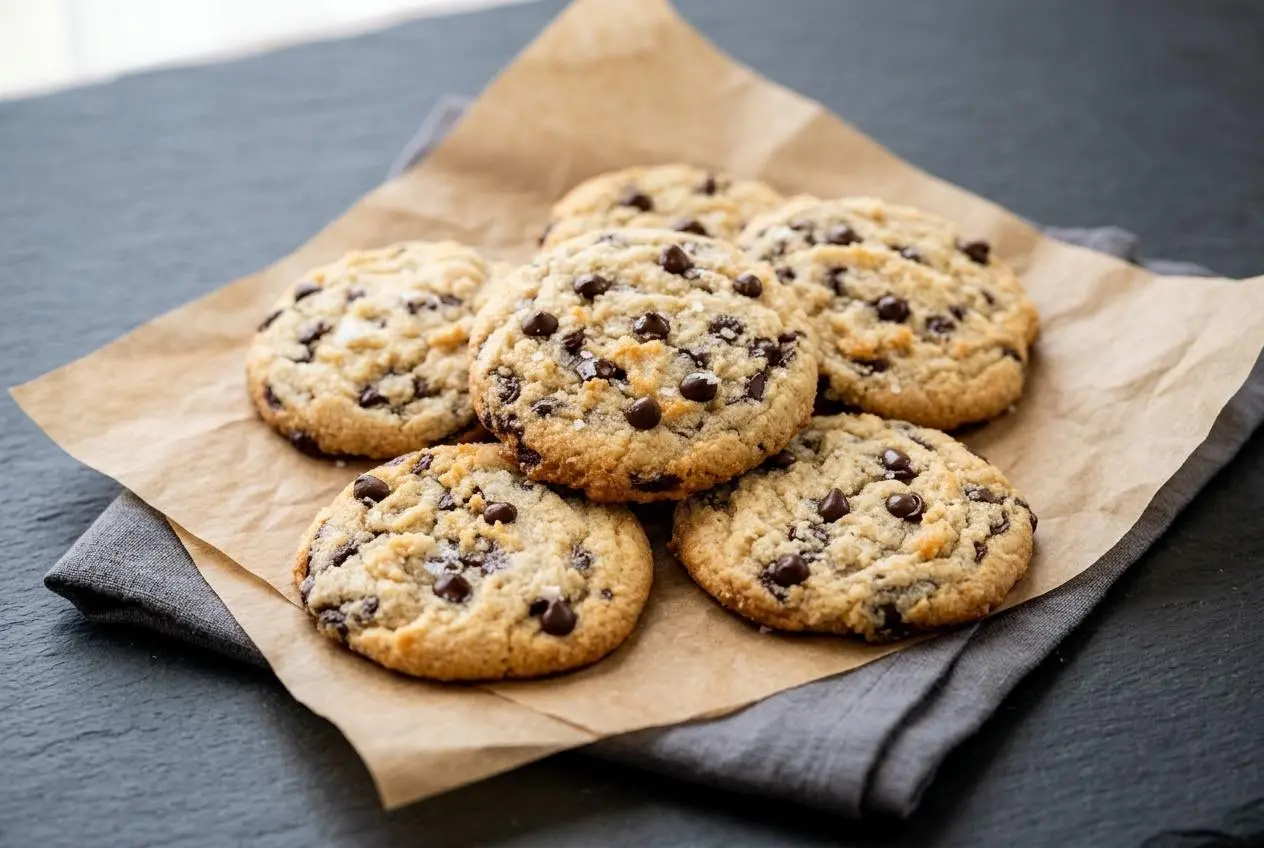
Keto chocolate chip cookies combine almond flour, melted butter, granulated erythritol, an egg, and sugar-free chocolate chips. Scoop the dough into 12 portions, bake at 180 °C (360 °F) for 10 to 12 minutes, then cool 15 minutes on the tray so the soft centers firm up.
These keto chocolate chip cookies bake up buttery and tender, with golden edges and a center that stays soft after cooling. There is no wheat flour and no sugar, yet the crumb still feels like a classic bakery cookie thanks to finely ground almond flour and plenty of real butter.
You get all the flavor you want from a chocolate chip cookie without the sugar spike, and the whole batch comes together in one bowl with a saucepan and a spatula. The trick that changes everything is what you do in the last few minutes, and it happens after the oven timer stops.
Pull the tray when the tops still look slightly under-set in the middle. Almond flour cookies keep cooking on the hot pan, and that residual heat is exactly what gives you a soft center instead of a dry one.
Essential Ingredients for Tender Low-Carb Cookies
Every item here does a specific job: fat for richness, almond flour for the crumb, a granulated sweetener for bulk and structure, egg for binding, and chocolate for those melty pockets. Balance matters more than volume.
- 3.5 oz Salted Butter ((3.5 oz – 1/2 cup))
- 4.5 oz Erythritol (SoNourished) ((4.5 oz – 3/4 cup) )
- 1 tsp Vanilla Extract
- 1 large Egg ((50g / 1.7 oz))
- 6 oz Almond Flour ((6 oz – 170g) by weight, equals about 1 1/2 cups, depending on your almond flour)
- 1/2 tsp baking powder
- 1/2 tsp xanthan gum
- 1/4 tsp Salt
- 3 oz Sugar Free Chocolate Chips ((90g – 3/4 cup))
The Role of Finely Ground Almond Flour
Finely ground blanched almond flour is what makes this dough behave like a cookie dough at all. It has no gluten, so it cannot stretch or trap air the way wheat flour does. Instead, it delivers fat, protein, and a fine crumb that reads as tender rather than gritty.
Grind size matters. Coarse almond meal with skins still attached gives you a sandy, speckled cookie that falls apart. Weighing the flour is the single most reliable habit here, because cup measurements swing wildly depending on how tightly the flour packs.
I always press almond flour through a fine sieve if the bag has been sitting a while. Almond flour clumps from the oils, and those little lumps turn into dense spots in a finished cookie.
The butter carries most of the flavor. Melting it first, rather than creaming softened butter, gives a denser, chewier crumb and lets the sweetener dissolve more readily. Let the hot butter lose its steam for a moment before the egg goes in, or you risk scrambling it at the edge of the bowl.
Baking powder gives a gentle lift so the cookies do not bake into flat discs, while xanthan gum steps in for the missing gluten. That tiny amount of gum holds the crumb together and keeps the cookies from crumbling when you lift them. Salt sharpens the chocolate and stops sweetener from tasting flat.
Selecting the Right Keto Sweetener
Granulated erythritol works well here because it measures with real volume, which cookies need for structure. It also stays granular, which encourages crisp edges as the cookies cool.
Allulose behaves differently. It browns faster and stays softer, so cookies made with it tend to be chewier and less crisp, and they can darken before the centers set. Monk fruit blends are usually erythritol based, so they behave much like straight erythritol.
Two things worth avoiding: blends heavy in maltitol, which many low-carb bakers find affects them differently than erythritol, and powdered sweeteners with added starch fillers that change how the dough hydrates. Check the ingredient panel rather than the front of the bag.
A brown-style keto sweetener blend swapped in for part of the granulated sweetener gives a deeper, caramel-leaning bakery flavor if you like that profile.
Sugar-Free Chocolate Chip Options
Not all sugar-free chips melt the same way. Chips sweetened with erythritol and stevia often hold their shape and can feel slightly waxy on the tongue. Chips or chopped bars with a higher cocoa butter content melt into smooth, glossy pockets instead.
Read the label for cocoa butter placement in the ingredient list. When cocoa butter appears early, you usually get better melting. If your chips stay stubbornly firm, chopping a sugar-free dark chocolate bar solves it immediately.
How to Bake Keto Chocolate Chip Cookies
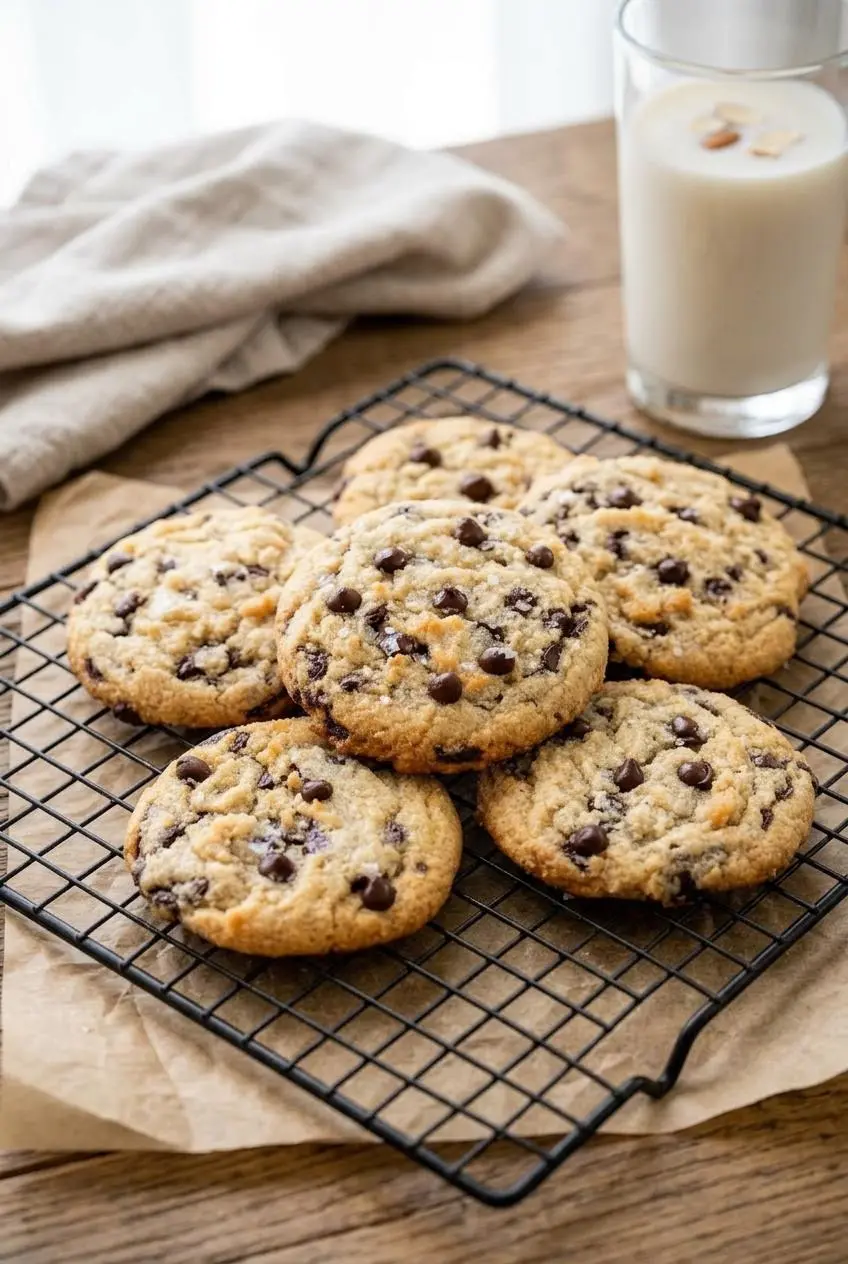
The method is short, but the order matters. Melted butter goes in first, dry ingredients go in as a group, and the chips get folded in by hand so they stay whole. Line your tray with parchment paper or a silicone mat, which protects the undersides from scorching in a hot fan oven.
- Set a fan forced oven to 180 °C (360 °F) and let it come fully to temperature.
A properly heated oven gives the edges a head start so they set before the centers overbake. - Melt the butter in a saucepan over medium heat until it is fully liquid and hot.
It should look glossy and pourable, with no solid streaks left in the pan. - Pour the hot butter into a mixing bowl with the erythritol and beat until the two come together.
The mixture will look grainy and pale, which is normal at this stage. - Add the vanilla and egg, then beat on low for about 15 seconds.
Stop as soon as the mixture turns smooth and slightly glossy so the egg does not aerate. - Tip in the almond flour, baking powder, xanthan gum, and salt, then beat until fully combined.
The dough should pull away from the sides of the bowl and feel soft and malleable rather than sticky. - Press the dough into a mass, lift it out of the bowl, and work in the chocolate chips with your hands or a silicone spatula.
Kneading by hand keeps the chips intact instead of smearing them through the dough. - Divide the dough into 12 portions with a small ice cream scoop and space them on a lined baking tray.
Even scoops mean even baking, and a lined tray keeps the buttery bottoms from catching. - Bake for 10 to 12 minutes at 180 °C (360 °F), checking the tray at the 6 to 7 minute mark.
If the mounds are still sitting tall and round, press each one down gently with the back of a fork. - Pull the tray while the centers still look slightly undercooked and the edges are lightly golden.
A rich, nutty, buttery aroma tells you they are done even when the middles look pale. - Let the cookies rest on the tray for 15 minutes before serving.
They firm up as they cool, moving from fragile and soft to sturdy with a tender bite.
Troubleshooting & Texture Masterclass
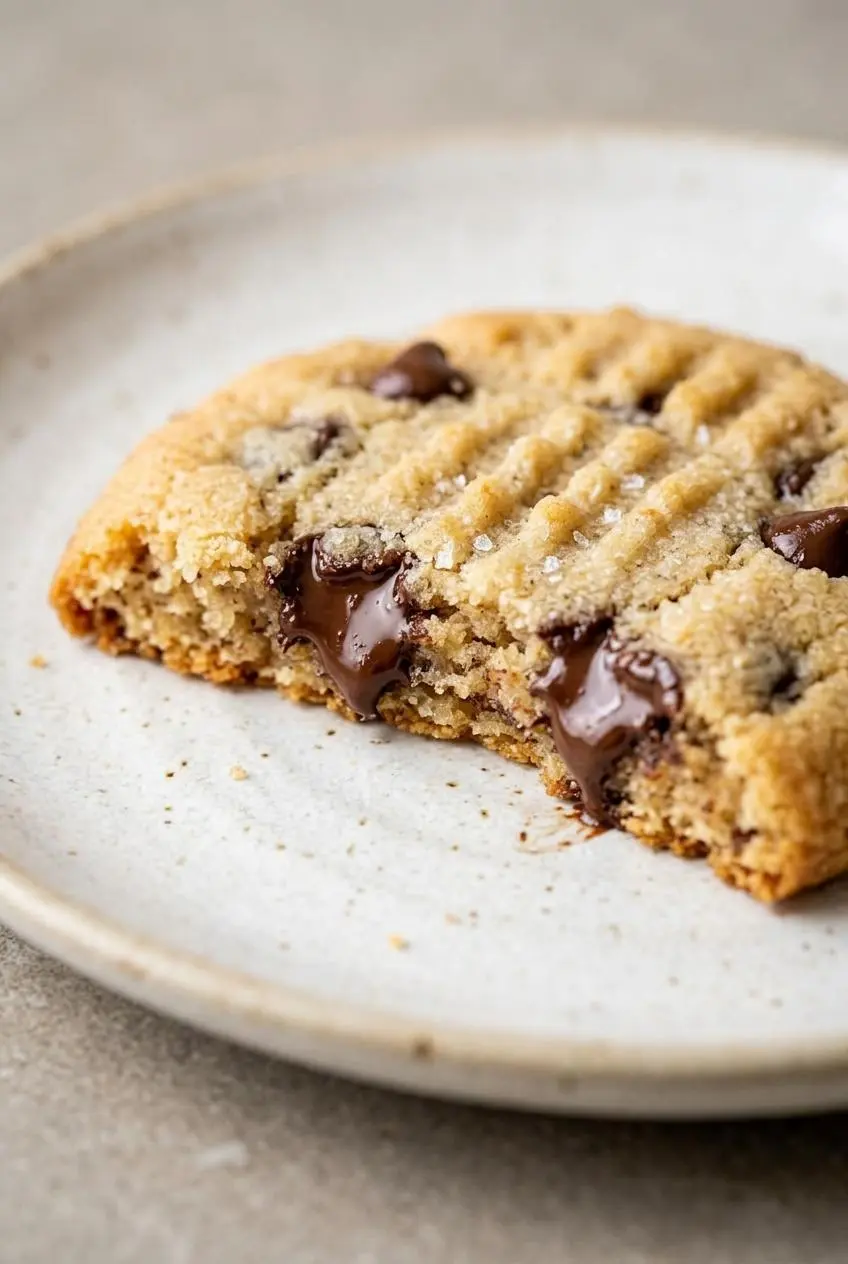
Most problems with almond flour cookies come down to three things: no gluten, no melting sugar, and impatience. Once you know what each one does, the fixes are quick.
Why Low-Carb Cookies Don’t Spread Automatically
Traditional cookies spread because granulated sugar melts into a syrup and gluten relaxes under heat. Erythritol does not liquefy the same way, and there is no gluten network to loosen, so the dough often holds whatever shape you gave it.
That is why the fork trick matters. Check the tray at the 6 to 7 minute mark, and if the mounds are still domed, press each one flat with the back of a fork. Press gently and evenly. Slamming down cracks the edges and creates thin spots that burn.
You can also flatten the scoops slightly before they go into the oven if you prefer a thinner, crisper cookie. Thicker mounds stay chewier in the middle.
The Crucial Pan-Cooling Window
This is where most batches are lost. Straight out of the oven, the fat in these cookies is still liquid and the binder has not set, so the crumb has almost no strength. Move one with a spatula at that moment and it collapses into pieces.
Leave the tray alone for the full 15 minutes. As the butter cools and solidifies, the xanthan gum and almond flour lock into a firm structure, and the pale center goes from raw looking to soft and set. Waiting is the technique.
If your cookies still feel too soft after cooling, they were likely underbaked rather than overhandled. Add a minute next time instead of chasing deep brown color, which dries them out fast.
Flour Substitutions to Avoid
Coconut flour is the biggest trap. It absorbs far more liquid than almond flour, so swapping it in at the same weight or volume leaves the dough parched, and the baked result turns out dry and chalky. It is not an equal exchange in either direction.
Coarse almond meal, whole wheat flour, and standard gluten-free baking blends all change the crumb and the carb count, so they are not useful stand-ins here. If you need a nut-free version, that requires a different recipe built around a different flour entirely rather than a straight swap.
One more common issue: skipping the xanthan gum. Without it the cookies still bake, but they are noticeably more fragile and prone to breaking apart when handled.
Flavor Variations & Custom Add-Ins
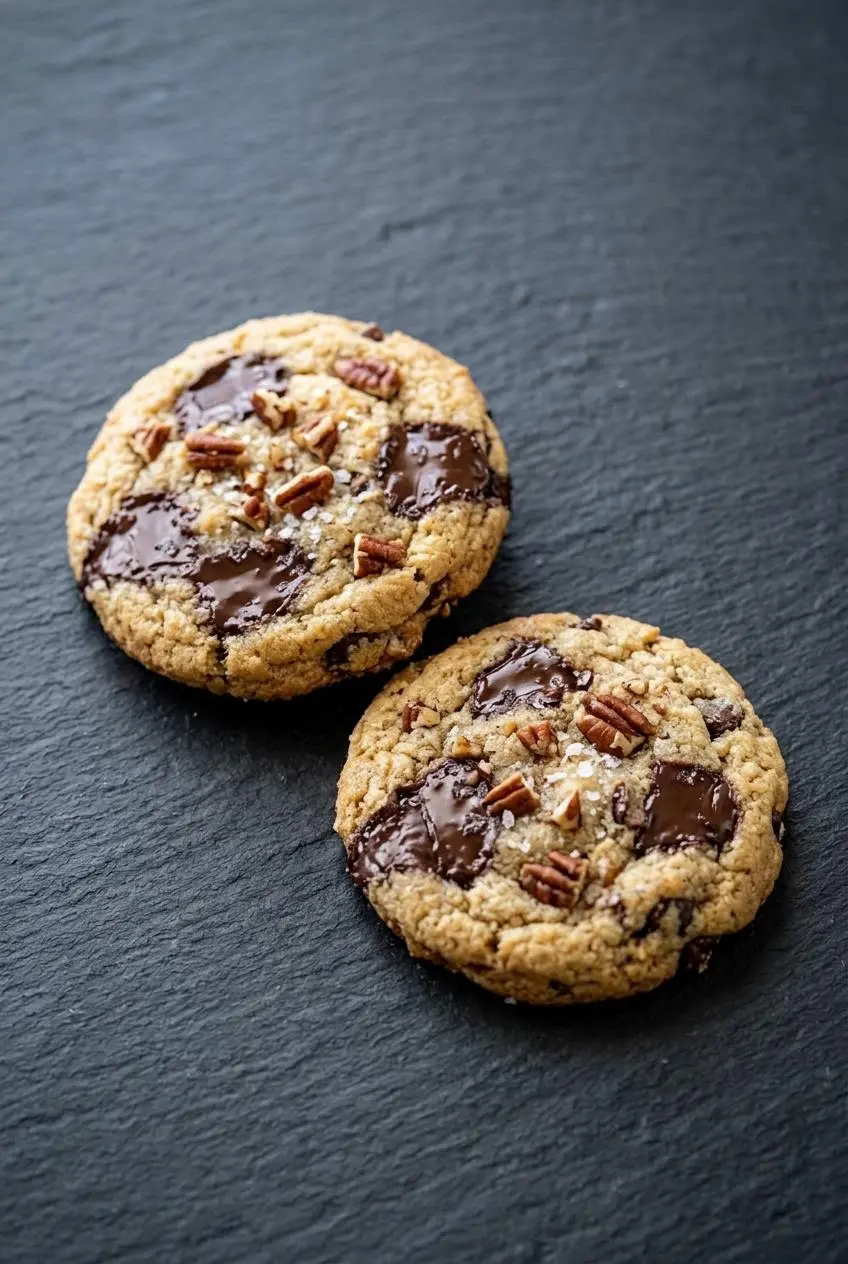
The base dough takes add-ins well as long as you fold them in at the same stage as the chocolate chips and keep the total volume of extras modest. Adding too much dry mix-in throws off the moisture balance and leaves you with a crumbly cookie.
Toasted Pecans and Walnuts
Chopped toasted pecans or walnuts bring crunch and a deeper roasted flavor that plays nicely against the butter. Toast them first and let them cool before folding them in, since raw nuts taste flat and can turn slightly bitter during the short bake.
Keep the pieces small. Large chunks create weak points where the cookie wants to snap.
Artisanal Dark Chocolate Chunks
Chopping a sugar-free dark chocolate bar instead of using standard baking chips gives you uneven pieces that melt into wide, glossy puddles rather than staying in neat little rounds. Chips are engineered to hold their shape, which is useful for appearance but less satisfying to bite into.
If you like that rich, deeply chocolate direction, the same k

Keto Chocolate Chip Cookies

Equipment
- Baking sheet
- Parchment paper
- Small saucepan
- Mixing bowl
- Silicone spatula
- Small cookie scoop
Ingredients
- 3.5 oz Salted Butter (3.5 oz – 1/2 cup)
- 4.5 oz Erythritol (SoNourished) (4.5 oz – 3/4 cup)
- 1 tsp Vanilla Extract
- 1 large Egg (50g / 1.7 oz)
- 6 oz Almond Flour (6 oz – 170g) by weight, equals about 1 1/2 cups, depending on your almond flour
- 1/2 tsp baking powder
- 1/2 tsp xanthan gum
- 1/4 tsp Salt
- 3 oz Sugar Free Chocolate Chips (90g – 3/4 cup)
Instructions
- Set a fan forced oven to 180 °C (360 °F) and let it come fully to temperature. A properly heated oven gives the edges a head start so they set before the centers overbake.
- Melt the butter in a saucepan over medium heat until it is fully liquid and hot. It should look glossy and pourable, with no solid streaks left in the pan.
- Pour the hot butter into a mixing bowl with the erythritol and beat until the two come together. The mixture will look grainy and pale, which is normal at this stage.
- Add the vanilla and egg, then beat on low for about 15 seconds. Stop as soon as the mixture turns smooth and slightly glossy so the egg does not aerate.
- Tip in the almond flour, baking powder, xanthan gum, and salt, then beat until fully combined. The dough should pull away from the sides of the bowl and feel soft and malleable rather than sticky.
- Press the dough into a mass, lift it out of the bowl, and work in the chocolate chips with your hands or a silicone spatula. Kneading by hand keeps the chips intact instead of smearing them through the dough.
- Divide the dough into 12 portions with a small ice cream scoop and space them on a lined baking tray. Even scoops mean even baking, and a lined tray keeps the buttery bottoms from catching.
- Bake for 10 to 12 minutes at 180 °C (360 °F), checking the tray at the 6 to 7 minute mark. If the mounds are still sitting tall and round, press each one down gently with the back of a fork.
- Pull the tray while the centers still look slightly undercooked and the edges are lightly golden. A rich, nutty, buttery aroma tells you they are done even when the middles look pale.
- Let the cookies rest on the tray for 15 minutes before serving. They firm up as they cool, moving from fragile and soft to sturdy with a tender bite.