Skip to content
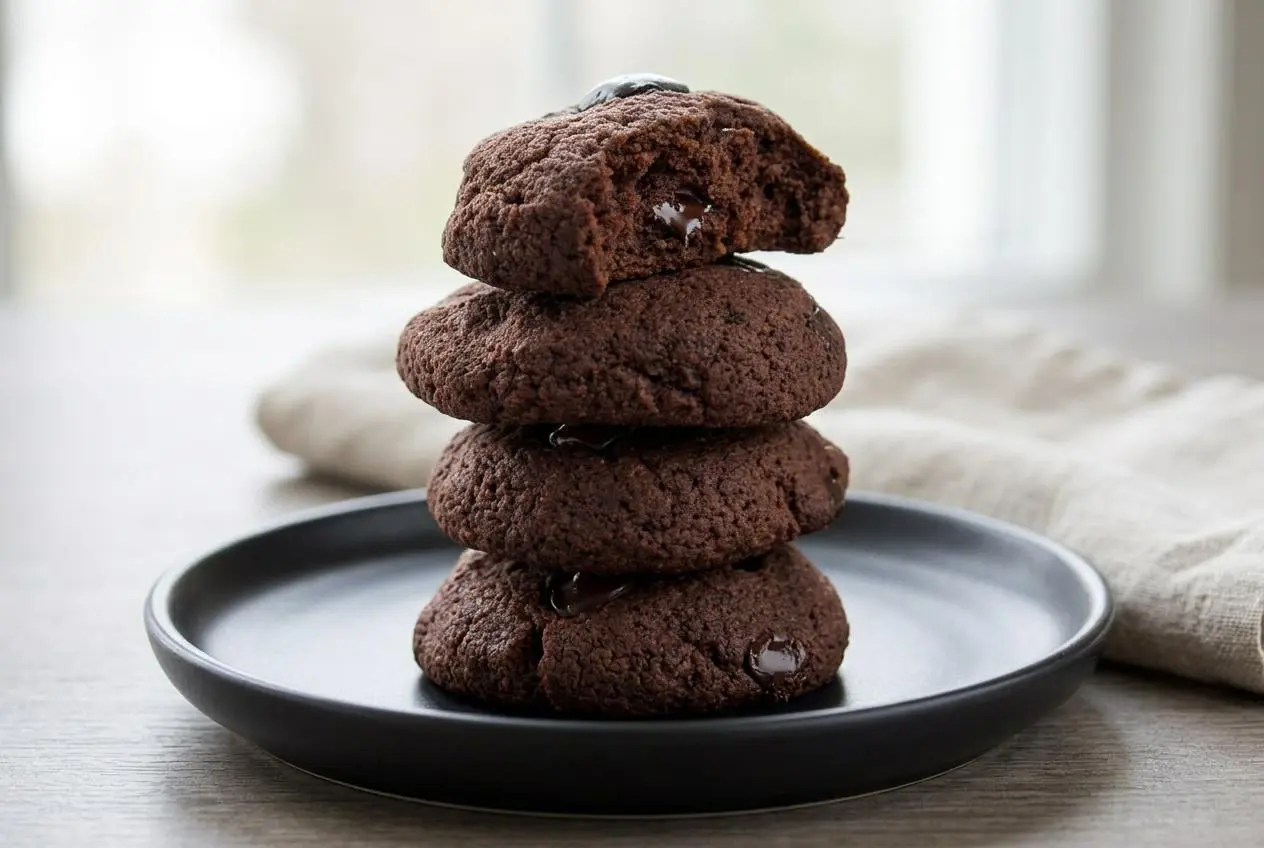
Keto chocolate cookies are soft, fudgy, low-carb treats made by combining almond flour, unsweetened cocoa powder, granulated erythritol, softened butter, an egg, and sugar-free chocolate chips. Because grain-free dough does not spread much while baking, shape the portions before putting them into the oven and allow them to cool completely on the tray to set their tender crumb.
Finding a low-carb dessert that genuinely satisfies a deep craving for rich chocolate can often feel like a culinary gamble. Many grain-free baked goods end up either unpleasantly dry or disappointingly spongy, missing that luscious, melt-in-your-mouth density that makes a classic chocolate biscuit so comforting. These keto chocolate cookies deliver an intensely decadent cocoa flavor wrapped in a delicate, buttery crumb without requiring specialty equipment or complicated baking steps.
Stirred together in a single bowl using just a fork, this simple dough comes together in minutes and bakes into rich, bakery-style treats that keep carbs low while tasting completely indulgent. The secret lies in balancing the nut flour with rich butter so every bite melts smoothly on the tongue.
Line your baking sheet with parchment paper beforehand so the delicate cookies lift away cleanly once fully cooled.
Ingredient Selection and Keto Flour Differences
Every ingredient in this recipe serves an essential structural or sensory purpose, working in harmony to create a tender crumb, balanced sweetness, deep cocoa aroma, and rich moisture without relying on gluten or refined sugars.
- 1 cup / 100g almond flour
- 1/2 tsp baking powder
- 3 tbsp / 21g cocoa powder
- 4 tbsp / 48g granulated erythritol
- 4 tbsp / 60g butter (softened)
- 1 egg (medium)
- 1/4 cup / 30g sugar free chocolate chips (or chopped dark chocolate, minimum 85% cocoa solids (I used 90%))
When measuring almond flour, spoon it gently into the cup and level it off rather than packing it down so the dough stays perfectly tender.
Almond flour forms the foundational bulk of the dough, lending natural healthy fats and a moist crumb. Baking powder introduces a subtle lift to keep the interior tender, while unsweetened cocoa powder imparts bold chocolate intensity. Granulated erythritol provides clean sweetness that balances the dark cocoa notes. Softened butter and a fresh egg act as the primary emulsifiers and binders, coating the almond particles to yield a texture reminiscent of a classic chocolate keto cake rather than a dry biscuit.
Almond Flour vs. Coconut Flour in Cocoa Dough
Almond flour and coconut flour behave fundamentally differently in low-carb baking. Almond flour is made from finely ground nuts and contains significant natural oils, creating a tender, rich dough that mimics the mouthfeel of traditional pastry. In contrast, coconut flour is exceptionally absorbent, soaking up liquid like a sponge.
Replacing almond flour with coconut flour in a one-to-one ratio will immediately dry out the dough, resulting in a crumbly, unworkable paste. Regular ground almond flour or standard almond meal provides the ideal particle size for cocoa dough, absorbing just enough fat from the softened butter while maintaining a fudgy interior.
Choosing the Right Keto Sweetener
Granulated erythritol is an ideal choice for this recipe because it crystallizes slightly as the cookies cool, providing structural support to the edges while keeping the centers tender. Monk fruit blends that use an erythritol base will behave almost identically and yield consistent results.
If you prefer a softer, more cake-like texture, allulose is an alternative sweetener option. Keep in mind that allulose attracts and retains moisture, meaning cookies made with allulose will remain exceptionally soft and will not develop firmer edges. Choose your sweetener based on whether you prefer a fudgy, slightly set cookie or an ultra-soft brownie-style bite.
Selecting Sugar-Free Chocolate Chips
The mix-in chocolate adds pockets of melted richness throughout the dough. Look for sugar-free chocolate chips sweetened with stevia, monk fruit, or allulose rather than maltitol, which can cause digestive discomfort and unwanted glycemic spikes. Alternatively, you can finely chop a high-percentage dark chocolate bar containing 85% to 90% cocoa solids. Dark chocolate chunks melt into gorgeous glossy pools on top of the warm cookies, enhancing their deep cocoa character.
Essential Steps for Baking Soft Keto Chocolate Cookies
Baking low-carb treats requires attention to tactile cues and timing since nut flour dough behaves differently under heat than standard wheat dough. Follow these steps to ensure a tender, perfectly set batch.
- Set your conventional oven to 175 Celsius / 350 Fahrenheit and line a flat baking sheet with parchment paper.
A properly heated oven ensures the cookies begin setting immediately upon entering the heat. - Whisk the almond flour, baking powder, cocoa powder, and granulated erythritol together in a medium mixing bowl.
The dry mixture should look uniform with all cocoa and flour lumps completely broken apart. - Add the softened butter and medium egg directly to the dry ingredients, mixing thoroughly with a fork.
A cohesive, thick, and glossy chocolate dough will form as the fats blend into the nut flour. - Fold the sugar-free chocolate chips into the dough, setting a small handful aside for the tops.
The chips should be evenly distributed throughout the dark dough mixture. - Portion the mixture into nine equal balls, arrange them on the lined baking sheet, and flatten them into your desired cookie shape.
The dough will spread very little during baking, so shape them exactly as you want the finished cookies to appear. - Bake for approximately 12 minutes until the outer edges are set to a light touch, then let the cookies rest on the baking sheet until completely cooled.
The surface will transition from glossy to a soft matte finish, indicating the structure is ready to firm up at room temperature.
Baking Tips and Texture Troubleshooting
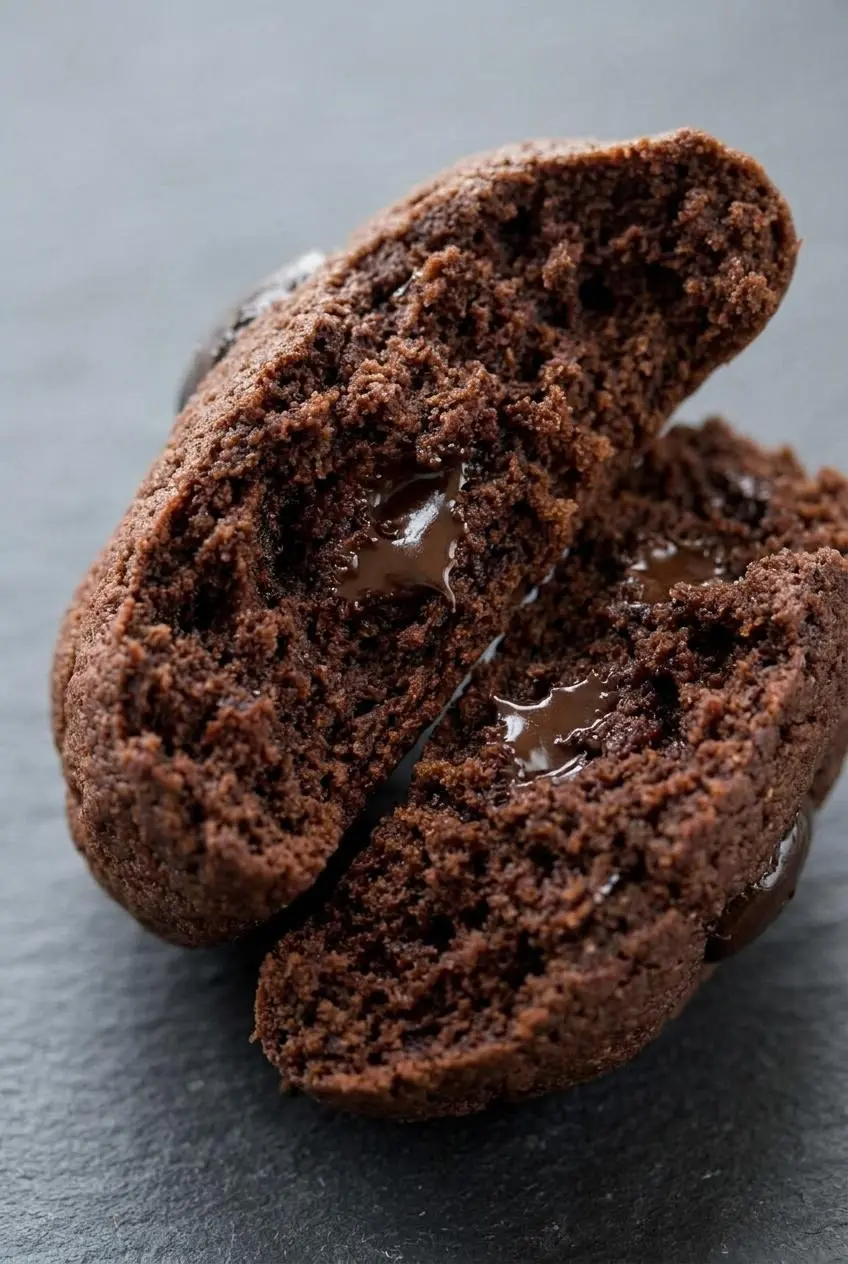
Achieving bakery-level results with grain-free baking comes down to understanding how nut flours and fats interact in the oven. Addressing common texture pitfalls will ensure every batch turns out soft, rich, and structurally sound.
- Crumbly or breaking cookies usually happen when the treats are lifted off the sheet while still hot; allow them to cool entirely on the metal tray so the butter and egg proteins solidify.
- Dry or chalky texture indicates slight overbaking or using a super-fine almond flour that soaked up excess moisture; pull the pan as soon as the edges show a matte finish.
- Cookies that remain overly soft in the center might have been shaped too thick; gently press them down to an even half-inch thickness before putting them into the oven.
- Uneven sweetness or bitter pockets can occur if dry cocoa lumps are not whisked thoroughly; always sift or whisk the dry ingredients before incorporating the wet binder.
How to Judge Doneness in Dark Chocolate Cookies
Judging doneness in dark cocoa dough can be tricky because you cannot rely on golden-brown visual cues. Instead, look for tactile and surface changes. After about 12 minutes in the oven, the tops of the cookies will lose their glossy raw sheen and take on a soft matte appearance. The outer edges should feel lightly set when pressed very gently with a fingertip, while the center remains delicate and soft. If the edges feel completely firm while in the oven, the cookies are likely overbaked.
Preventing Dry or Crumbly Texture
Because almond flour contains no gluten, moisture balance is critical. Using butter that is properly softened to room temperature rather than melted helps create an emulsion with the egg, trapping moisture inside the crumb. Avoid over-measuring your cocoa powder, as excess cocoa rapidly absorbs liquid and leads to a powdery mouthfeel. If your kitchen is particularly dry and the dough feels stiff while mixing, work the dough patiently with your fork until the butter warms and softens the mixture.
Why Pan Cooling Is Non-Negotiable
Gluten-free nut flours rely entirely on melted fats, egg proteins, and sweetener crystallization for their structural integrity. When freshly baked, the cookies are extremely fragile and will fall apart if you attempt to transfer them to a wire cooling rack immediately. Leaving the cookies on the hot baking sheet allows them to finish setting gently as the residual heat dissipates. As the butter firms up at room temperature, the cookies develop their signature fudgy, sliceable texture.
Delicious Variations and Mix-In Ideas
The standard cocoa base is versatile and accommodates several optional additions to suit different dietary preferences and flavor profiles.
Dairy-Free Keto Chocolate Cookies
If you prefer a dairy-free option, replace the softened butter with an equal amount of softened virgin coconut oil or a dairy-free baking block. Coconut oil yields a rich texture with a faint, pleasant tropical aroma that pairs wonderfully with dark cocoa. Ensure the coconut oil is soft and pliable rather than fully melted or rock hard to maintain the proper dough consistency.
German Chocolate Style with Coconut and Pecans
For a dessert inspired by classic German chocolate cake, fold unsweetened toasted shredded coconut and finely chopped pecans into the dough alongside the chocolate chips. The toasted coconut provides a chewy contrast, while the pecans add buttery richness to every bite.
Double Chocolate Nut Crunch
To introduce extra crunch and nutty depth, fold coarsely chopped walnuts or hazelnuts directly into the chocolate mixture. The earthy flavor of roasted walnuts cuts through the intense cocoa richness, giving each cookie an artisan bakery finish.
Storage, Make-Ahead Dough, and Freezing Instructions
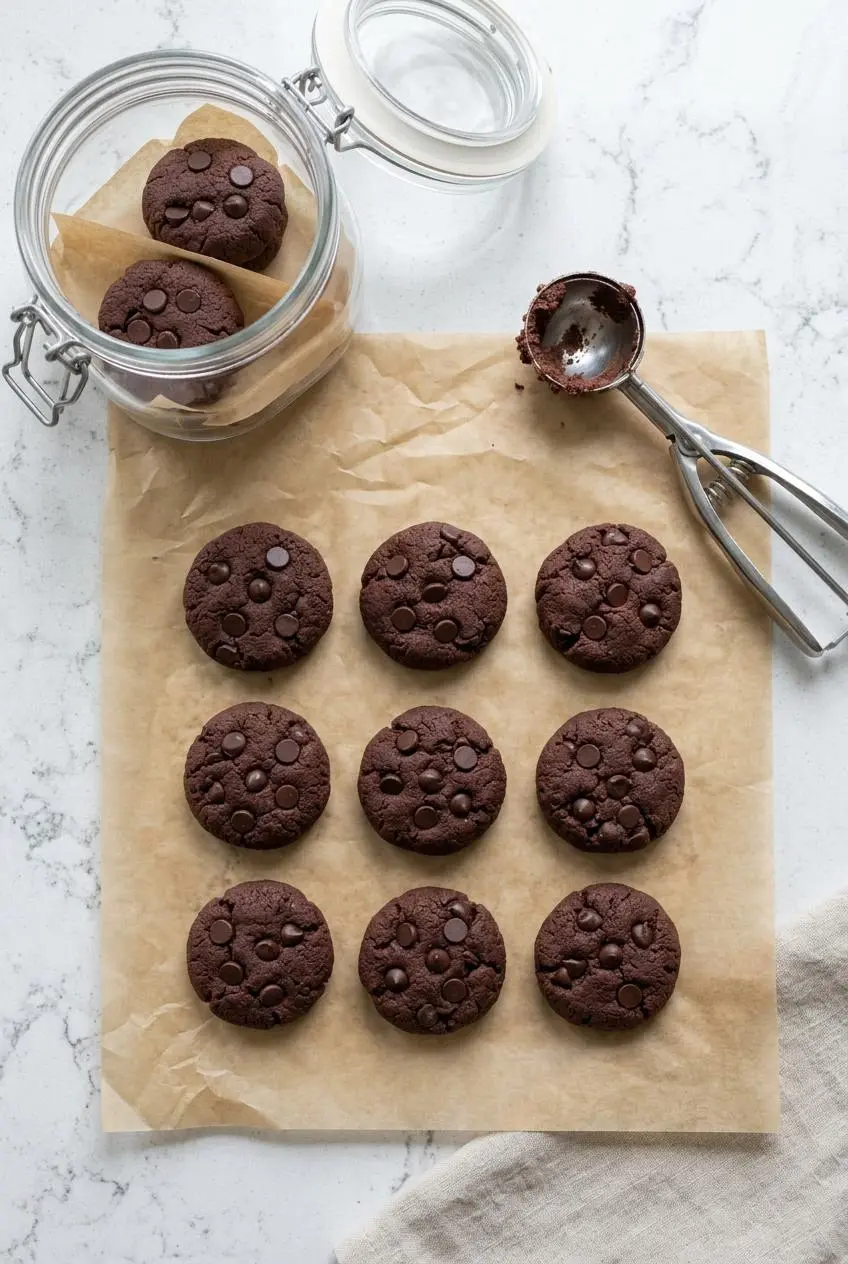
Proper storage preserves the fudgy interior and prevents grain-free baked goods from absorbing ambient kitchen moisture.
Room Temperature and Fridge Storage
Once the baked cookies have cooled completely to room temperature, place them in a single layer inside an airtight container. If you need to stack them, place a sheet of parchment paper between the layers to prevent them from sticking together. Keeping them in a cool, dark pantry protects their soft crumb. For a firmer, fudge-like bite, store the sealed container in the refrigerator.
Freezing Dough Balls for On-Demand Baking
You can easily prepare the cookie dough ahead of time by portioning it into individual rounds. Shape the dough into nine disks on a parchment-lined tray and place the tray in the freezer until the dough portions are solid. Transfer the frozen dough pucks to an airtight freezer container with parchment separating each piece. When ready to enjoy, place the frozen portions on a lined baking sheet and bake, adding a couple of extra minutes to the standard baking time until the edges are set.
Best Ways to Serve and Enjoy Keto Cookies
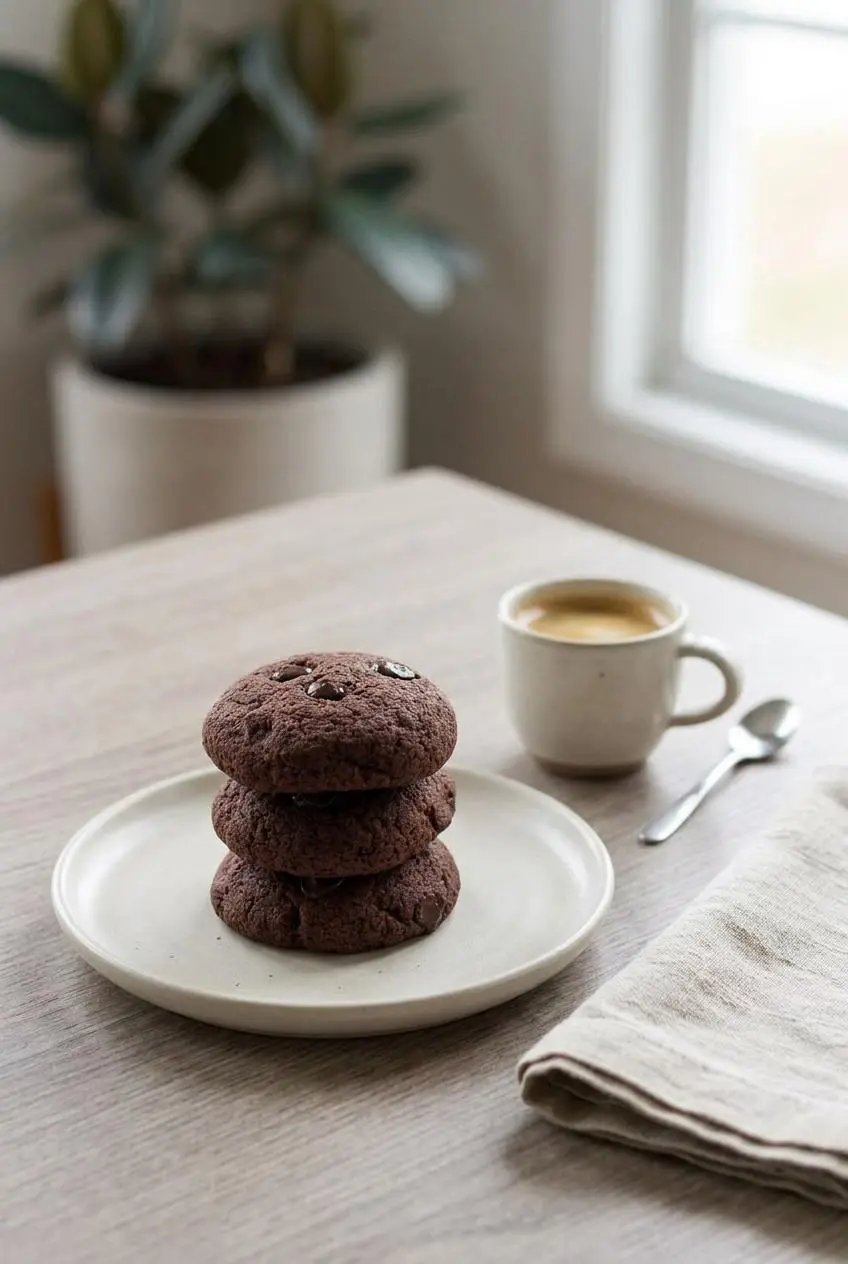
These rich chocolate treats make a wonderful afternoon pick-me-up or an elegant low-carb dessert. Enjoying a cookie alongside a hot espresso or a freshly brewed dark roast coffee enhances the deep roasted notes of the cocoa powder. If you enjoy specialty drinks, pairing a cookie with a splash of keto coffee creamer in your morning cup creates a comforting cafe-style experience at home.
For a refreshing pairing, serve a cookie with a tall glass of chilled unsweetened almond or macadamia nut milk. If you want to create an impressive plated dessert for guests, warm a cooled cookie for a few seconds and serve it alongside a scoop of sugar-free vanilla bean dessert or a dollop of fresh cream.
Summary: Perfect Fudgy Low-Carb Chocolate Treats
These one-bowl keto chocolate cookies prove that you do not need refined flour or sugar to enjoy a deeply satisfying, chocolate-packed dessert. By combining the rich moisture of almond flour with robust cocoa powder and softened butter, this quick method delivers bakery-quality results in less than twenty minutes from start to finish.
Remember that the key to a tender, cohesive crumb is patience after baking. Allowing the cookies to cool completely on the baking pan ensures they develop their signature fudgy texture without falling apart. Keep a batch on hand for whenever you crave a rich chocolate indulgence that fits seamlessly into your low-carb routine.
Frequently Asked Questions About Keto Chocolate Cookies
Why did my keto chocolate cookies turn out crumbly?
Almond flour lacks the gluten network found in traditional wheat flour, meaning warm cookies are fragile straight out of the oven. The cookies require a dedicated cooling period on the baking tray so the butter, egg proteins, and sweetener can solidify into a stable, fudgy structure.
Can I substitute allulose for erythritol in this recipe?
Yes, allulose can be used as an alternative sweetener. However, allulose retains substantially more moisture than erythritol and does not crystallize as it cools, which will produce an ultra-soft, cake-like cookie rather than one with slightly firmer edges.
How do I freeze keto chocolate cookie dough?
Shape the mixed dough into individual portions and place them on a parchment-lined baking sheet. Freeze the portions until firm, then transfer the solid dough disks into an airtight freezer-safe container with parchment paper between layers.
Do keto chocolate cookies spread in the oven?
Grain-free nut flour dough spreads very little during baking. You must press and shape the raw dough portions into your desired cookie thickness and diameter on the baking sheet before placing them in the oven.
Can coconut flour be used in place of almond flour?
Coconut flour cannot be substituted for almond flour in a direct one-to-one swap. Coconut flour absorbs vastly more liquid and fat, which would make the dough excessively dry and powdery without substantial increases in eggs and butter.
Keto Chocolate Cookies

Ingredients
- 1 cup almond flour (NOT super-fine**. Ground almonds work well here)
- 1/2 tsp baking powder
- 3 tbsp cocoa powder
- 4 tbsp granulated erythritol
- 4 tbsp butter (softened)
- 1 egg (medium)
- 1/4 cup sugar free chocolate chips (or chopped dark chocolate, minimum 85% cocoa solids (I used 90%))
Instructions
- Set your conventional oven to 175 Celsius / 350 Fahrenheit and line a flat baking sheet with parchment paper. A properly heated oven ensures the cookies begin setting immediately upon entering the heat.
- Whisk the almond flour, baking powder, cocoa powder, and granulated erythritol together in a medium mixing bowl. The dry mixture should look uniform with all cocoa and flour lumps completely broken apart.
- Add the softened butter and medium egg directly to the dry ingredients, mixing thoroughly with a fork. A cohesive, thick, and glossy chocolate dough will form as the fats blend into the nut flour.
- Fold the sugar-free chocolate chips into the dough, setting a small handful aside for the tops. The chips should be evenly distributed throughout the dark dough mixture.
- Portion the mixture into nine equal balls, arrange them on the lined baking sheet, and flatten them into your desired cookie shape. The dough will spread very little during baking, so shape them exactly as you want the finished cookies to appear.
- Bake for approximately 12 minutes until the outer edges are set to a light touch, then let the cookies rest on the baking sheet until completely cooled. The surface will transition from glossy to a soft matte finish, indicating the structure is ready to firm up at room temperature.