Skip to content
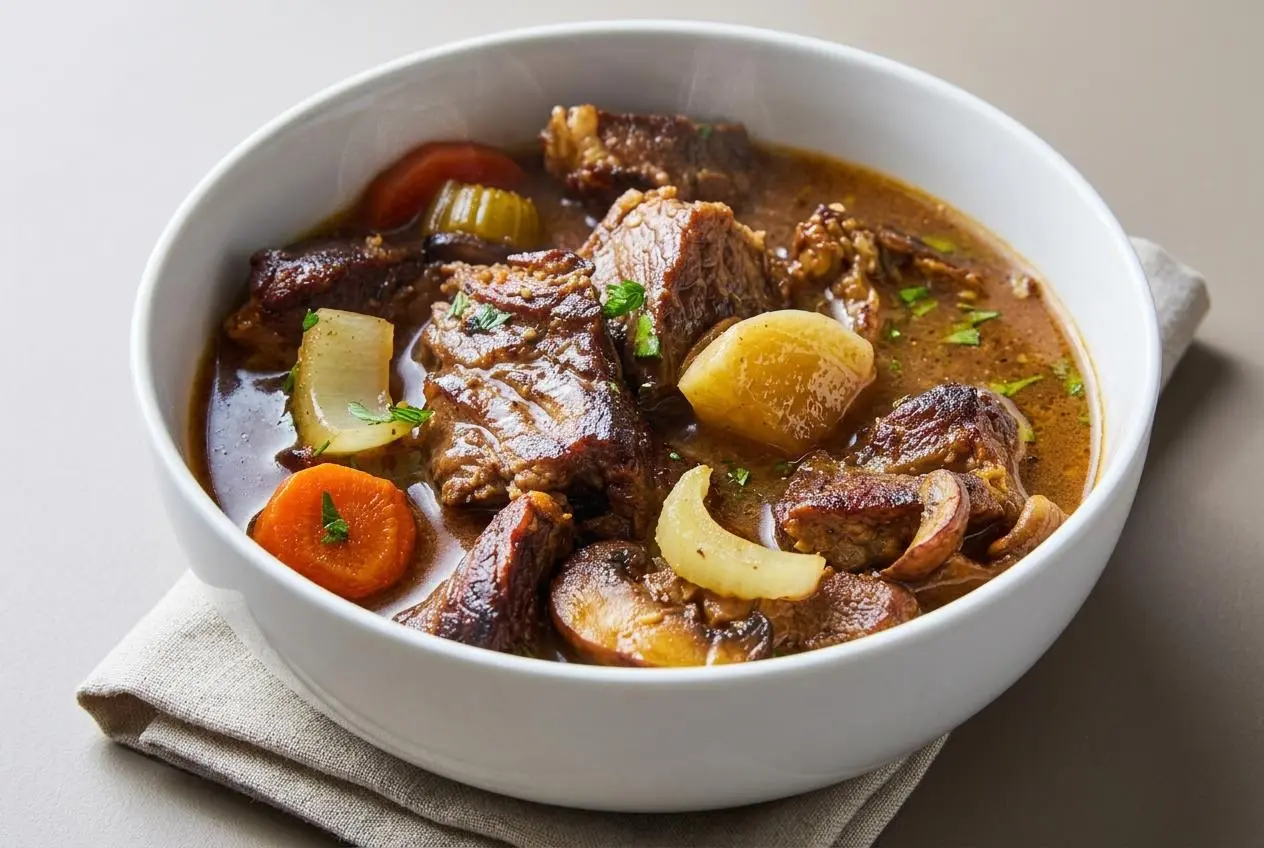
Keto beef stew combines browned chuck roast, mushrooms, aromatic vegetables, and herb broth without flour or potatoes. A gentle stovetop simmer softens the beef’s connective tissue and gives the broth savory body, creating a hearty dinner with fork-tender meat.
This keto beef stew keeps the familiar onion, carrot, and celery flavors of a classic stew, with baby bella mushrooms adding earthy depth. It’s a beef-forward bowl of comfort rather than a thick, flour-based gravy.
The cooking rhythm is relaxed: brown the meat, soften the vegetables, then let the pot simmer gently. Thyme and rosemary perfume the broth as the chuck becomes tender. The flavor starts with that golden crust.
Dry the beef thoroughly before seasoning it so the hot oil can brown the surface instead of steaming it.
Key Ingredients for Low-Carb Beef Stew
Chuck supplies richness and tender texture; mushrooms deepen the savory flavor. Onion, carrot, celery, and garlic balance the broth, while tomato paste adds color and depth. Olive oil supports browning, and salt, pepper, thyme, and rosemary bring the flavors into focus.
- 2 lb. beef chuck roast, cut into 1" pieces
- Kosher salt
- Freshly ground black pepper
- 2 tbsp. extra-virgin olive oil
- 8 oz. Baby bella mushrooms, sliced
- 1 small onion, chopped
- 1 medium carrot, peeled and cut into rounds
- 2 stalks celery, sliced
- 3 cloves garlic, minced
- 1 tbsp. tomato paste
- 6 c. low-sodium beef broth
- 1 tsp. fresh thyme leaves
- 1 tsp. freshly chopped rosemary
Choose chuck for the simmer. Its marbling and connective tissue suit moist cooking. Cutting a whole roast yourself gives you control over piece size, whereas packages labeled “stew meat” may contain different cuts that don’t soften at the same pace.
I’d choose a chuck roast with visible marbling rather than the leanest-looking package; stew needs a cut that rewards patient simmering.
Trim away tough exterior tissue, but don’t strip out every streak of fat. Keep the pieces evenly sized so you can judge tenderness consistently across the pot.
The onion, carrot, and celery form a mirepoix-style aromatic foundation. Mushrooms add chew and savory depth, while tomato paste rounds out the broth without turning this into a tomato-heavy stew. Low-sodium broth leaves more room to adjust seasoning as the liquid concentrates.
Fresh thyme brings a gentle herbal note; rosemary adds a stronger, piney aroma. Use the ingredient list above and the method below for the exact quantities and cooking schedule.
Step-by-Step Stovetop Guide to Keto Beef Stew
Use a large, heavy pot with enough room to brown the beef in batches. A Dutch oven works well because it holds steady heat during both searing and simmering.
Prep: 15 minutes. Total: about 1 hour 45 minutes. Yield: 4 to 6 servings.
- Blot every surface of the beef with paper towels, then distribute salt and black pepper over the pieces.
The cubes should look dry rather than slick with moisture. - Warm the olive oil in a large pot over medium heat, then brown an uncrowded batch of beef for about 3 minutes on each side.
Listen for a steady sizzle and look for a golden crust before turning each piece. - Transfer the browned cubes to a plate and continue with the remaining beef, adding oil as necessary.
The pot should collect brown cooking residue without developing black, scorched patches. - Cook the sliced mushrooms in the same pot for 5 minutes.
Look for golden surfaces and crisp edges as their released moisture cooks away. - Stir in the onion, carrot, and celery and cook for 5 minutes.
The onion should lose its raw firmness, and the vegetables should begin to soften. - Add the garlic for 1 minute, then mix in the tomato paste until it coats the vegetables.
The garlic should smell fragrant, and the paste should leave the vegetables evenly red. - Pour in the broth, add the thyme and rosemary, return the beef to the pot, and season with 1/2 teaspoon salt and black pepper.
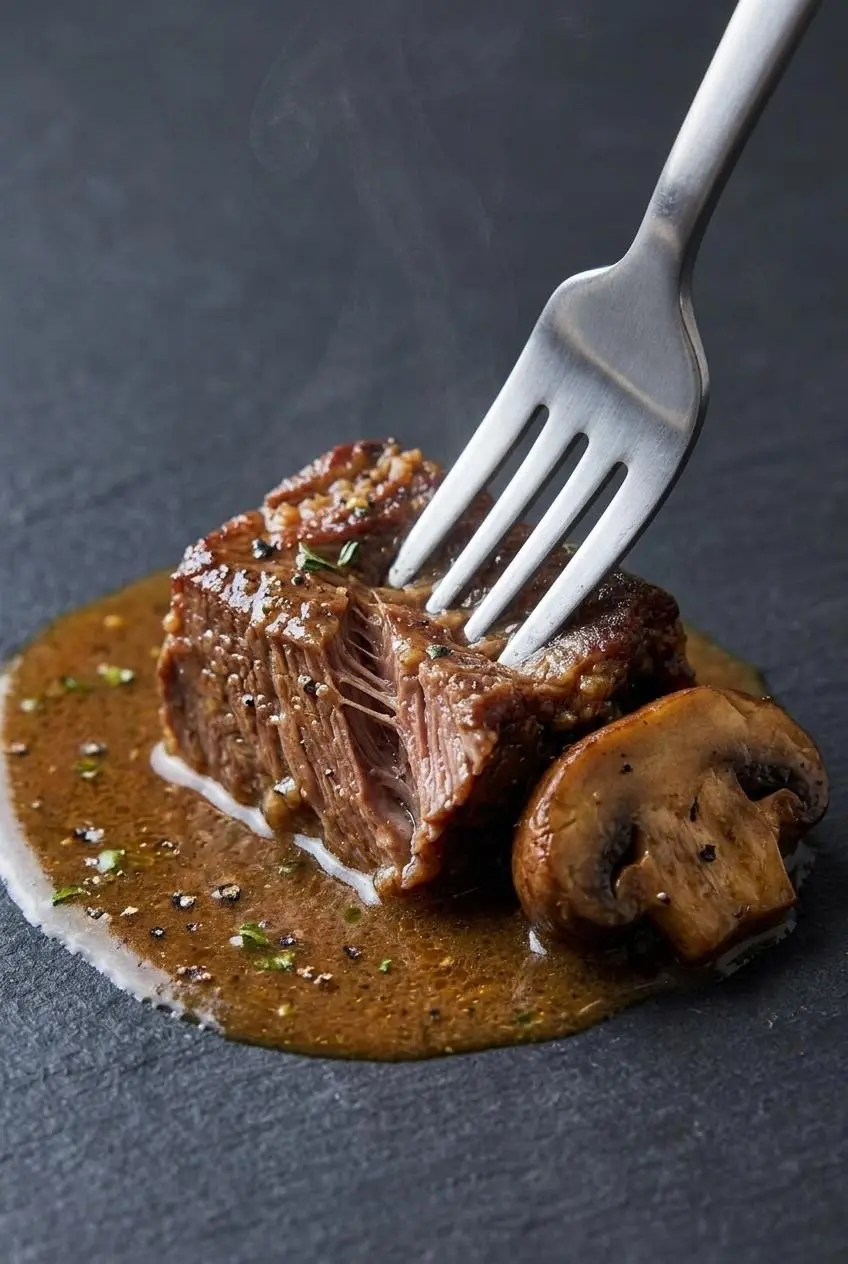
The liquid will loosen the browned residue and take on a deeper savory color. - Bring the liquid to a boil, lower the heat to a gentle simmer, and cook for 50 minutes to an hour, until the beef is tender.
A finished cube should yield easily when you press and twist a fork into it.
During browning, give the cubes enough space that you can see the pot between them. If liquid pools around the meat, the batch is too crowded to develop a good crust.
As you add broth, stir along the bottom to loosen the brown fond. That residue belongs in the stew, not stuck to the pot. Once simmering, look for occasional gentle bubbles rather than constant rolling movement.
Understanding Beef Stew on a Ketogenic Diet
Beef stew can suit a carbohydrate-conscious menu, but the ingredients and serving size matter. Traditional versions often include potatoes and flour or cornstarch to create a thick gravy. This version leaves those out.
Chuck’s connective tissue softens during simmering and contributes gelatin to the liquid. Evaporation also concentrates the broth. Together, these give the stew body, though the result remains more brothy than a flour-thickened stew.
Omitting potatoes doesn’t make the dish carbohydrate-free. Onion, carrot, mushrooms, tomato paste, and broth all contribute to the finished meal, so account for your ingredients and portion size if you track carbohydrates.
For another beef-and-mushroom dinner to add to your rotation, try keto beef stroganoff.
Low-Carb Potato Alternatives and Vegetable Swaps
Mushrooms provide substance in this stew, so a potato substitute isn’t required. If you miss root-vegetable chunks, the following optional choices offer different textures without changing the ingredient list above.
Radish and Turnip Potato Swap
Radishes become milder as they cook, losing much of their raw peppery bite. Turnips retain a more distinct earthy flavor and can bring a slight bitterness. Both can supply tender chunks, but neither has the fluffy, starchy interior of a potato.
Simmering Radishes and Turnips for Classic Texture
Cut optional roots into evenly sized pieces and add them according to their firmness and the beef’s progress. Smaller pieces soften faster, so don’t automatically give them the entire beef simmer.
Check a piece with a fork as it cooks. Aim for a tender center with enough structure to survive gentle stirring. If the vegetables finish before the beef, lift them out and return them once the meat is tender.
Using Mushrooms and Celery Root for Earthy Depth
- Mushrooms: Keep the chewy, savory character already built into the recipe rather than trying to imitate potatoes.
- Celery root: Peel away the rough exterior and cut the firm flesh evenly for an optional earthy, celery-scented addition.
- Turnips or radishes: Choose these when you want separate root-vegetable chunks rather than mushroom texture.
These vegetables aren’t interchangeable for carbohydrate tracking. Recalculate your meal if you change the vegetables or serving size.
Troubleshooting Common Stew Challenges
Check heat, tenderness, and seasoning before reaching for extra ingredients.
- Beef still feels chewy: The connective tissue may need more simmering, especially if the pieces vary in size; maintain gentle heat and check again rather than boiling harder.
- Broth seems thin: Evaporation may be slower in your pot; simmer gently uncovered, and remove tender beef temporarily if the liquid needs further reduction.
- Fond turns black: The pot is too hot or too dry; lower the heat, and remove burned residue before continuing because broth won’t hide its bitterness.
- Flavor tastes flat: Taste the broth and beef together, then adjust salt, pepper, or herbs; an optional touch of unsweetened acidity can brighten a heavy-tasting finish.
- Broth tastes too salty: Reduction concentrates seasoning; stop reducing and loosen the liquid with unsalted broth or water as needed.
For an optional thicker finish, xanthan gum can add body, but use it sparingly and whisk it thoroughly to avoid clumps or a gummy texture. Reduction is the most straightforward first choice. For a separate flourless sauce option, try rich keto gravy.
Cooking Method Variations: Slow Cooker and Pressure Cooker
Appliance versions need different liquid management because they retain more moisture than an open stovetop pot. Treat these as adaptation principles, not replacements for the stovetop schedule.
Slow Cooker Adaptation
Brown the beef and cook the aromatics before transferring them to the slow cooker. Deglaze the cooking pot with broth so you carry the fond into the stew.
A slow cooker loses relatively little moisture, so the stovetop broth quantity may produce a thinner result. Use an appliance-specific beef stew recipe to determine liquid needs rather than applying an arbitrary reduction.
Slow Cooker Low-and-Slow Guidelines
Follow your appliance’s guidance for beef chuck, load size, and cooking duration. Check for easy fork tenderness rather than assuming that hot meat is tender meat.
If the beef finishes with more liquid than you want, reduce the broth separately on the stovetop. That concentrates flavor without repeatedly cooking already-tender meat.
Instant Pot Pressure Cooker Method
Pressure cooking can shorten the tenderizing stage, but a sealed cooker doesn’t reduce broth like an open pot. Brown the beef using the sauté function, cook the aromatics, and thoroughly loosen the fond before sealing.
Instant Pot Pressure Cooking Steps
Use the manufacturer’s minimum liquid requirements, fill limits, and beef-chuck directions to select a high-pressure program. Don’t transfer the stovetop simmer time directly to pressure cooking.
Follow the appliance instructions for pressure release, and open the lid only after pressure has fully released. Check tenderness afterward; if the broth needs concentration, use sauté mode with the lid off once the meat is tender.
Delicious Keto-Friendly Serving Suggestions
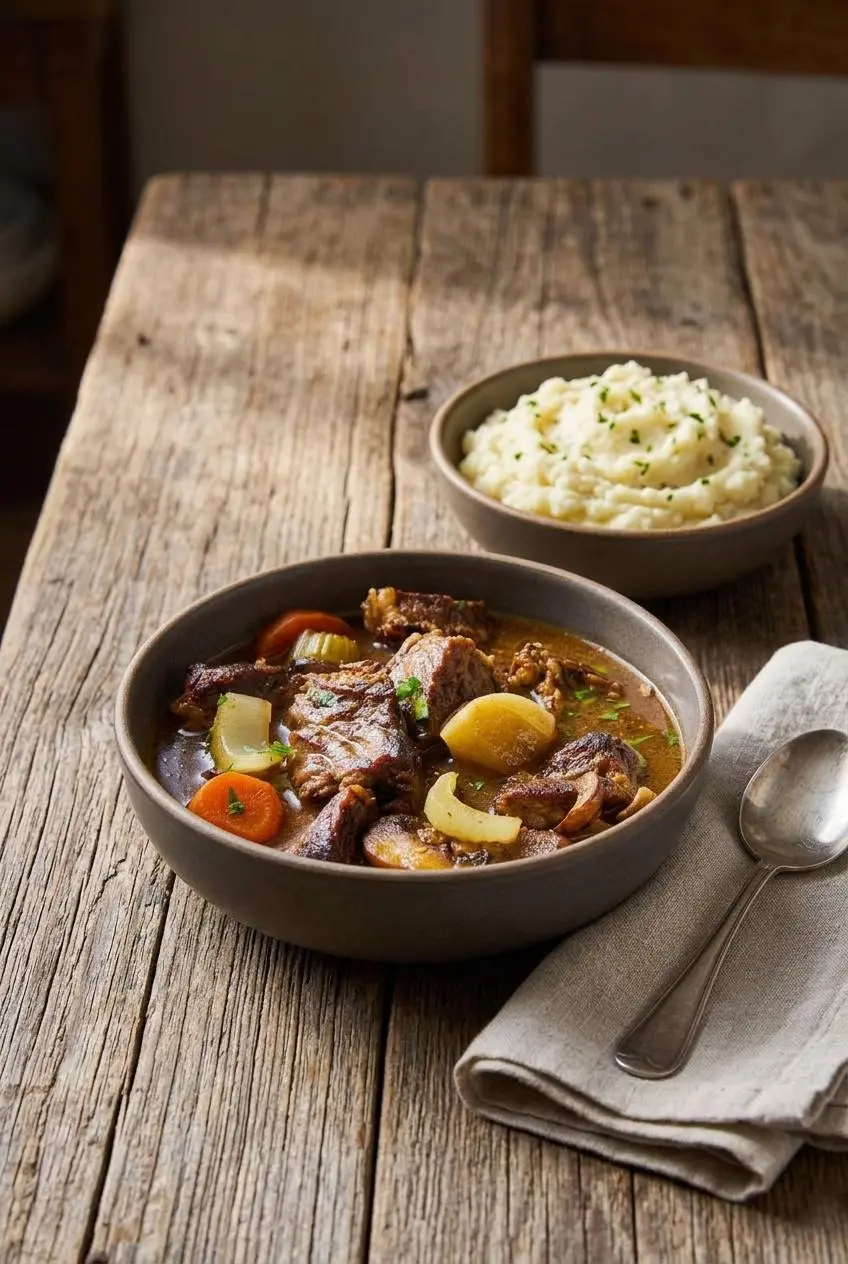
Choose a side that catches the broth or offers a crisp contrast to the rich beef.
- Garlic mashed cauliflower: Spoon the stew over a warm mound for a creamy foundation.
- Green salad or roasted green vegetables: Add freshness or browned vegetable flavor alongside the bowl.
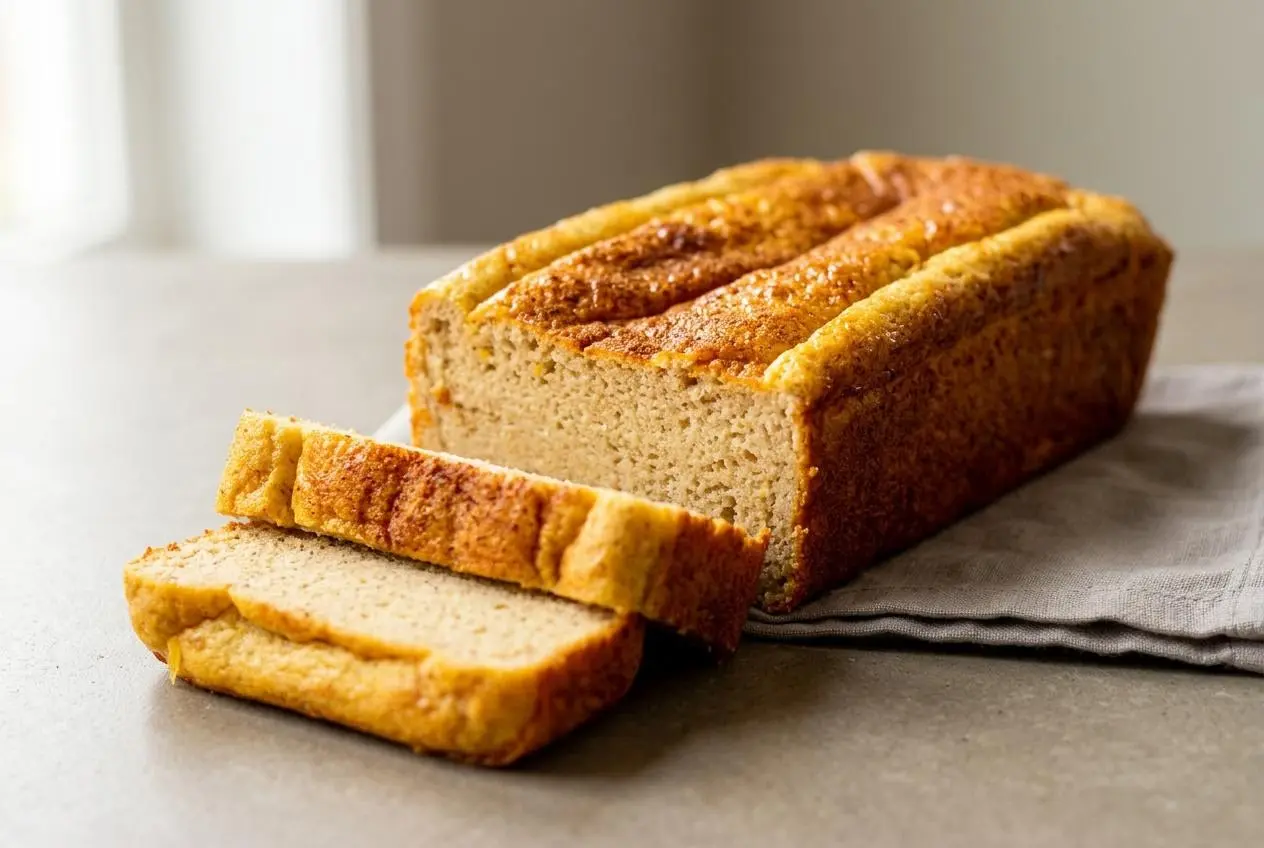
- Bread for dipping: Serve keto bread alongside to soak up the savory broth.
Storage, Reheating, and Prep Advice
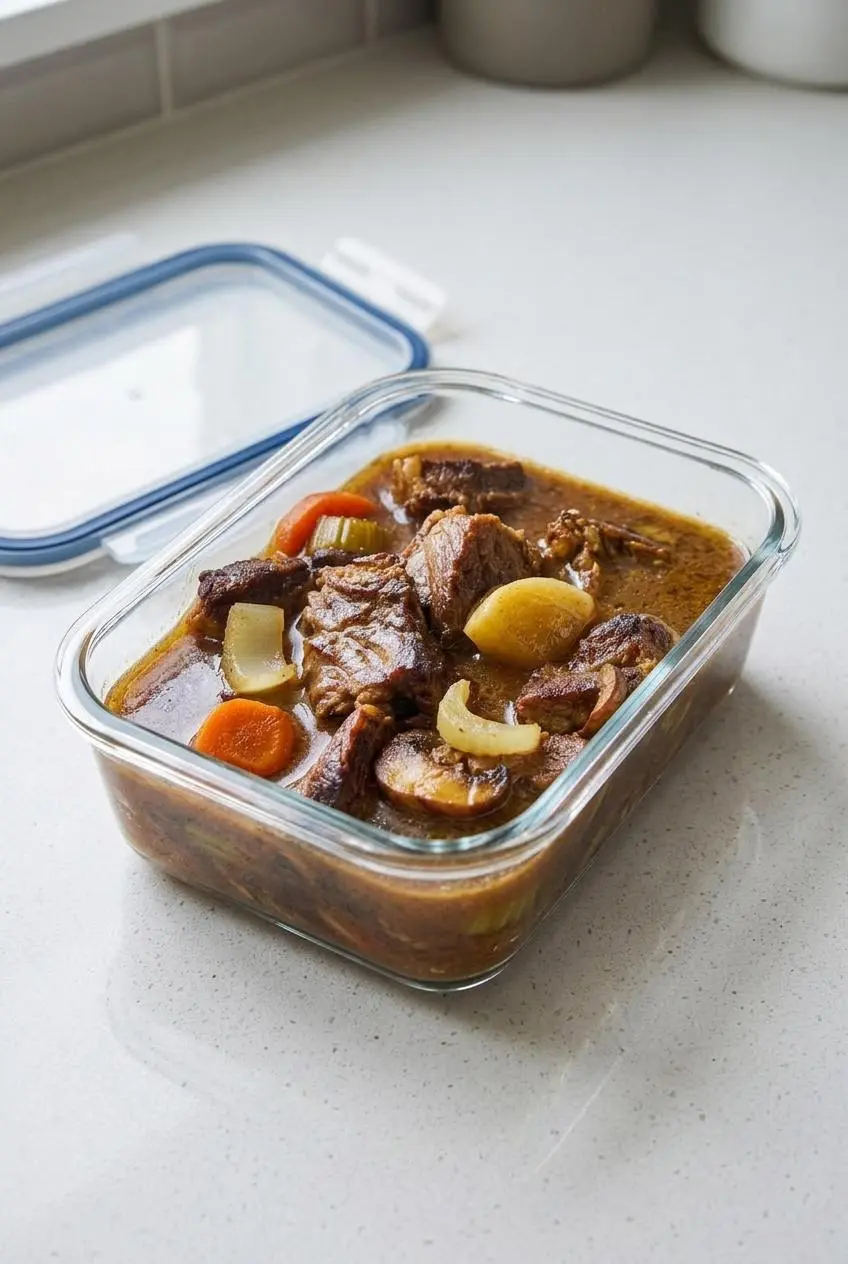
Portion leftover stew into shallow containers and refrigerate promptly rather than leaving the entire pot out to cool. Keep the containers covered for chilled storage.
The broth may become softly set when chilled because of its gelatin content. Gentle warming loosens it again. Reheat the portion you need in a saucepan, stirring carefully and adding a splash of broth or water if it has become too concentrated.
For easier cooking preparation, cut the vegetables and measure the herbs before heating the pot. Keep the raw beef chilled and separate from the prepared vegetables until you’re ready to cook.
Bringing Hearty Low-Carb Comfort to Your Table
A well-browned chuck roast and a gentle simmer do the heavy lifting here. Check the meat with a fork: it should yield easily, not spring back against the tines.
Keep the mushroom-forward version or choose an optional root vegetable that fits your preferences and availability. The questions below cover the common swaps and thickening choices, so you can serve a bowl that suits your table.
Frequently Asked Questions
Can You Eat Beef Stew on a Keto Diet?
Yes, depending on the ingredients, portion size, and your carbohydrate target. This version omits potatoes and flour, but its vegetables and broth still contribute carbohydrates.
What Can I Substitute for Potatoes in Stew?
Optional radishes, turnips, or celery root can provide tender vegetable chunks. Mushrooms add savory chew and substance, although they don’t mimic potato texture.
What Not to Put in Beef Stew?
For this lower-carb version, leave out potatoes, flour, cornstarch, and sugary sauces. Avoid blackened fond and excessive rosemary, which can overwhelm the broth.
How Do You Thicken Beef Stew Without Flour?
Simmer uncovered to reduce the broth; gelatin from the chuck contributes body. Optional xanthan gum can thicken it further, but add it cautiously to avoid a gummy finish.
How Many Carbs Are in a Homemade Beef Stew?
There isn’t one carbohydrate count for homemade stew; vegetable choices, broth, and portion size change the total. For tracking, calculate from the ingredient labels and the number of portions you actually serve.
Keto Beef Stew

Equipment
- Dutch oven or large heavy pot
Ingredients
- 2 lb. beef chuck roast, cut into 1″ pieces
- Kosher salt
- Freshly ground black pepper
- 2 tbsp. extra-virgin olive oil
- 8 oz. Baby bella mushrooms, sliced
- 1 small onion, chopped
- 1 medium carrot, peeled and cut into rounds
- 2 stalks celery, sliced
- 3 cloves garlic, minced
- 1 tbsp. tomato paste
- 6 c. low-sodium beef broth
- 1 tsp. fresh thyme leaves
- 1 tsp. freshly chopped rosemary
Instructions
- Blot every surface of the beef with paper towels, then distribute salt and black pepper over the pieces. The cubes should look dry rather than slick with moisture.
- Warm the olive oil in a large pot over medium heat, then brown an uncrowded batch of beef for about 3 minutes on each side. Listen for a steady sizzle and look for a golden crust before turning each piece.
- Transfer the browned cubes to a plate and continue with the remaining beef, adding oil as necessary. The pot should collect brown cooking residue without developing black, scorched patches.
- Cook the sliced mushrooms in the same pot for 5 minutes. Look for golden surfaces and crisp edges as their released moisture cooks away.
- Stir in the onion, carrot, and celery and cook for 5 minutes. The onion should lose its raw firmness, and the vegetables should begin to soften.
- Add the garlic for 1 minute, then mix in the tomato paste until it coats the vegetables. The garlic should smell fragrant, and the paste should leave the vegetables evenly red.
- Pour in the broth, add the thyme and rosemary, return the beef to the pot, and season with 1/2 teaspoon salt and black pepper. The liquid will loosen the browned residue and take on a deeper savory color.
- Bring the liquid to a boil, lower the heat to a gentle simmer, and cook for 50 minutes to an hour, until the beef is tender. A finished cube should yield easily when you press and twist a fork into it.