Skip to content
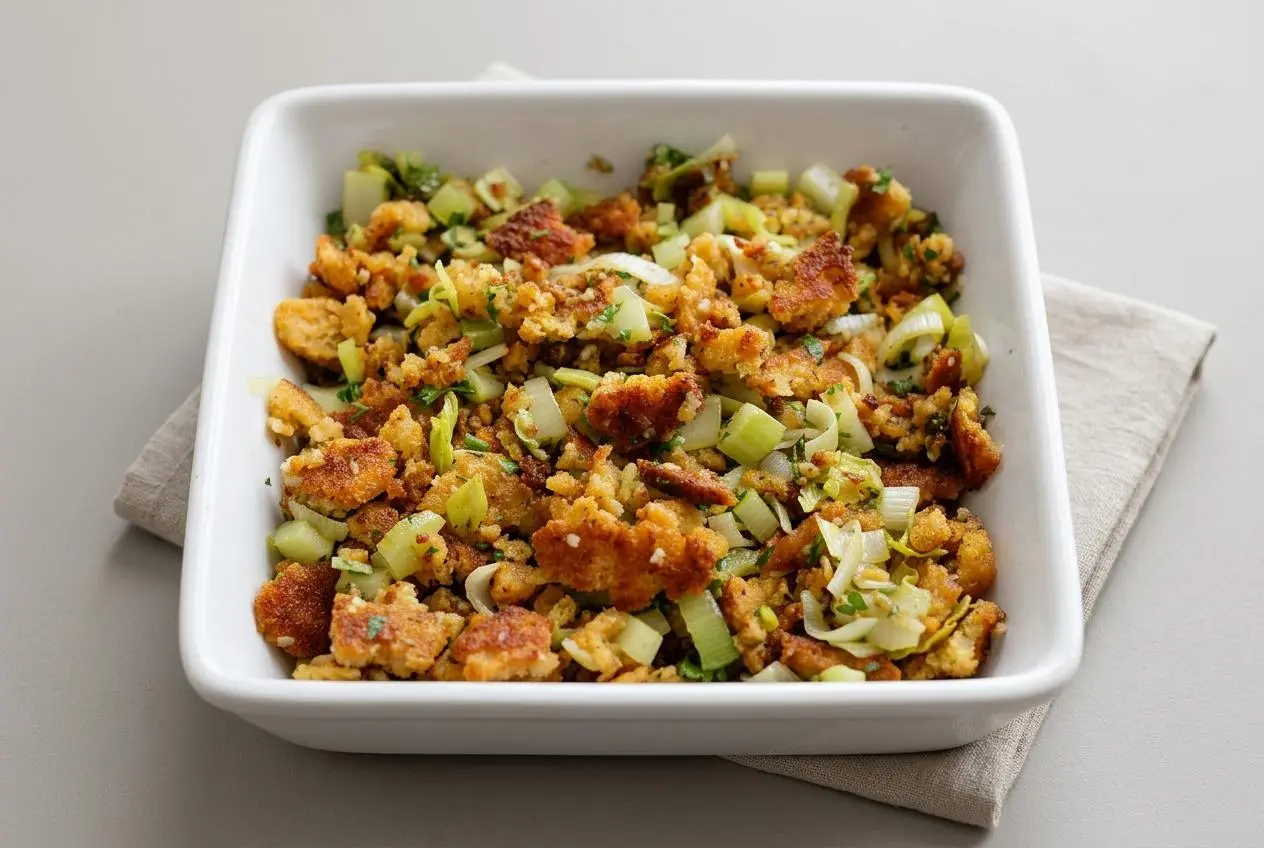
This keto stuffing recipe bakes toasted low-carb bread with buttery herbs, celery, leeks, broth, and egg into a savory holiday side dish with a crisp golden top and tender center.
It has the familiar flavor of classic stuffing, but the bread base is built around low-carb loaves or rolls. Toasting the crumbs first helps them hold their shape once the broth and egg mixture goes in.
Leeks bring gentle sweetness, while sage and celery seasoning make every scoop taste ready for a holiday plate. That crackly top is worth the foil.
Spread the mixture loosely in the baking dish rather than pressing it down, so steam can move through the crumbs and the center stays lighter.
Essential Ingredients for Homemade Keto Stuffing
Each ingredient supports the finished casserole: bread creates the crumb, butter adds richness, broth brings moisture, egg gives structure, and vegetables and herbs build the savory aroma.
- 4 Slices Keto Bread (or rolls), crumbled
- 3 tablespoon Butter, melted
- 1 egg
- 2 stalks Celery, chopped
- 1/4 cup Leeks, chopped
- 1/2 teaspoon Garlic, minced
- 1 teaspoon Italian Blend Seasoning, dried
- 1/4 teaspoon Sage
- 1/2 teaspoon each Salt & Pepper
- Olive Oil
- 1/2 teaspoon Celery Seasoning, optional
- 1/2 Cup Chicken broth
Selecting the Best Low-Carb Bread
Choose a keto bread or roll with a sturdy, sliceable crumb rather than one that feels very soft or cakey. Low-carb breads can vary widely in fiber, moisture, and structure, so one loaf may drink in broth faster than another. Check the label on your chosen product, since commercial ketogenic and low-carb bakery products can vary substantially in their nutrition and formulation.
Dense almond flour breads often need especially thorough drying because their crumb can soften quickly once liquid is added. A firmer sandwich loaf or roll gives the stuffing more distinct pieces and a more traditional bready bite.
Aromatics, Herbs, and Seasoning Balance
Celery adds the familiar savory crunch associated with holiday stuffing, while leeks offer a softer, sweeter allium flavor than onion. Garlic, dried Italian seasoning, and sage round out the herb profile without overpowering the bread.
Celery seasoning is optional, but it adds an extra layer of old-fashioned dressing flavor. Taste the broth and consider whether your butter, bread, and broth are already seasoned before adding more salt. Sodium content can vary widely among brands, so seasoning should be adjusted with that in mind.
The Custard Binder: Broth, Butter, and Eggs
Melted butter coats the crumbs and carries the herbs through the dish. Chicken broth provides savory moisture, while the egg gently sets the mixture so it scoops cleanly instead of scattering into loose crumbs.
Whisk the egg, butter, and broth together before they meet the bread. This distributes the egg evenly and prevents pockets of egg from setting too firmly in the casserole.
Step-by-Step Guide to Baking Keto Stuffing
Toasting the bread, softening the vegetables, and baking in two stages creates the contrast that makes stuffing satisfying: tender underneath, golden on top.
- Heat the oven and place the crumbled keto bread on a baking sheet. Drizzle it with olive oil and bake for about 5 minutes, until the crumbs are lightly browned and feel dry rather than soft.
The pieces should look a shade deeper in color and rattle lightly when the pan is moved. - Warm olive oil in a skillet, then cook the chopped celery, leeks, garlic, Italian blend seasoning, sage, salt, pepper, and optional celery seasoning for 1 to 2 minutes.
Stop when the vegetables smell fragrant and the leeks turn translucent without developing dark edges. - Whisk the egg with the melted butter and chicken broth in a bowl, then stir in the warm vegetable mixture.
The liquid should look evenly blended before it is added to the bread. - Fold the toasted bread crumbs into the seasoned liquid until coated, then transfer the mixture to a baking dish.
Keep the crumbs loosely arranged so the casserole retains an airy texture. - Cover the dish with foil and bake at 350°F for 10 minutes, then remove the foil and bake for 5 minutes more.
The edges should gently sizzle and the surface should turn golden and lightly crisp. - Serve the stuffing while the top is still crisp and the center is warm.
Let it stand briefly if needed, until the egg-broth binder feels settled when scooped.
Understanding Low-Carb Stuffing for Holiday Meals
Traditional stuffing relies on wheat bread, while this version uses low-carb bread to keep the classic herb-and-broth profile in a different format. The result is still a warm, savory holiday side dish, with celery, leeks, sage, and buttery crumbs at the center.
Low-carb bread usually has a denser crumb than wheat bread and can absorb liquid unevenly. That is why drying it first matters so much. It gives the crumbs room to take in the broth without collapsing into a soft, dense casserole.
This dish can sit comfortably beside conventional holiday favorites, too. Guests who are not following a low-carb eating pattern will still recognize the familiar stuffing flavors and appreciate the crisp-topped texture.
Mastering the Texture: How to Prepare Low-Carb Bread
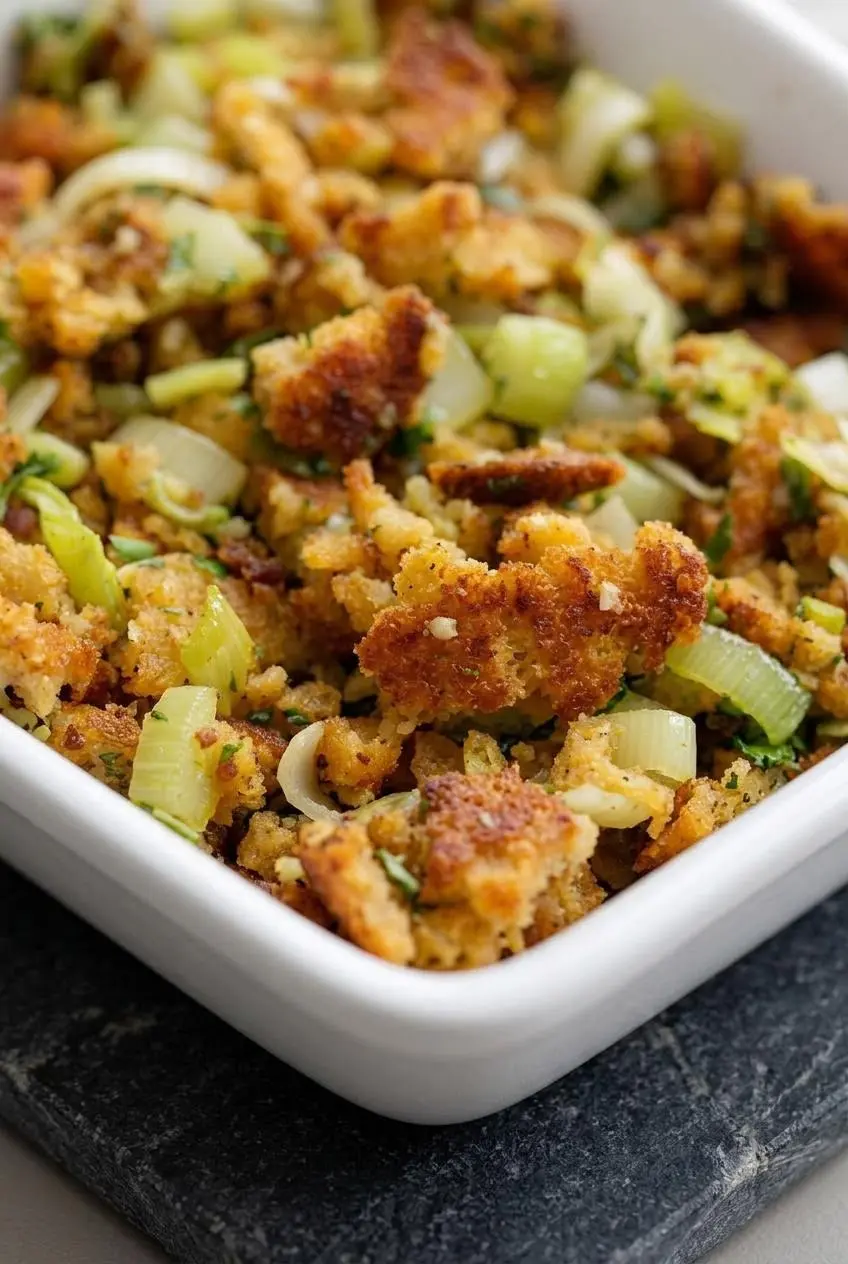
The most reliable way to prevent soggy stuffing is to dry the crumbled bread before adding the binder. Fresh, soft crumbs absorb liquid too quickly and can turn the casserole into a heavy pudding-like layer.
After toasting, the bread should feel firm and dry on the outside, with separate crumbs rather than clumps. If it still feels spongy when pressed, it needs more drying before it goes into the casserole mixture.
For holiday planning, prepare homemade keto bread before you begin the stuffing, then crumble and toast it when you are ready to assemble. Keep prepared crumbs sealed away from humidity so they stay dry and ready to absorb the seasoned broth.
I prefer a bread crumb that seems almost too dry before mixing because the butter, broth, vegetables, and egg bring plenty of moisture back during baking.
Troubleshooting Common Low-Carb Stuffing Issues
- Too dry before baking: The bread may have absorbed the broth quickly. Fold the mixture gently and look for dry pockets before transferring it to the dish; a lightly moistened crumb should hold together when scooped.
- Too wet after the covered bake: Low-carb bread formulas absorb differently. Leave the dish uncovered for the final baking stage so surface moisture can cook off and the top can brown.
- Dense texture: Packing the mixture tightly blocks steam and compresses the crumb. Spoon it into the dish loosely instead, leaving the surface uneven and light.
- Bland flavor: The vegetables may not have cooked long enough to release their aroma. Warm them with the herbs until fragrant, then reassess salt carefully, especially when using seasoned broth.
- Overly salty stuffing: Salted butter, packaged keto bread, and broth can stack up quickly. Use a lower-sodium broth next time or leave the optional celery seasoning out if the bread already tastes well seasoned.
Flavorful Variations and Dietary Swaps
Keep the main casserole as written, then use these optional directions when you want a different flavor profile for the table.
Savory Sausage and Herb Stuffing
Fold in browned breakfast sausage or Italian sausage for a heartier, meatier stuffing. Sausage brings its own seasoning, so go lightly with extra salt and let sage remain the main herb note.
Crisp bacon can work in the same spirit, adding smoky richness and a firmer bite. Add either option as an extra, not as part of the core casserole formula.
Earthy Mushroom and Sage Stuffing
For a meat-free holiday variation, use sautéed wild mushrooms and a little extra sage. Their earthy aroma pairs naturally with leeks and celery, giving the stuffing a deeper woodland flavor without making it heavy.
Cook mushrooms until their moisture has cooked away before adding them to the bread mixture. Excess liquid is the quickest route to a soft bottom layer.
Cauliflower and Nut Grain-Free Stuffing
For a bread-free direction, roasted cauliflower florets can replace the crumb base, while nuts add crunch and a toasted flavor. Expect a vegetable-forward casserole rather than the soft, bready texture of this stuffing.
To make the core version dairy-free, swap the butter for rich extra virgin olive oil. The flavor becomes more peppery and clean, while the herbs and broth still carry the familiar holiday character.
Make-Ahead and Storage Strategies for Stress-Free Holidays
Advance Preparation and Par-Baking
Divide the work into manageable parts by crumbling and toasting the bread before final assembly. You can also chop the celery and leeks ahead, keeping them covered and chilled until it is time to sauté.
Wait to combine the dried bread with the broth-and-egg mixture until close to baking. That approach protects the crumb structure and keeps the casserole from sitting in liquid longer than necessary.
Refrigeration and Reheating Guidelines
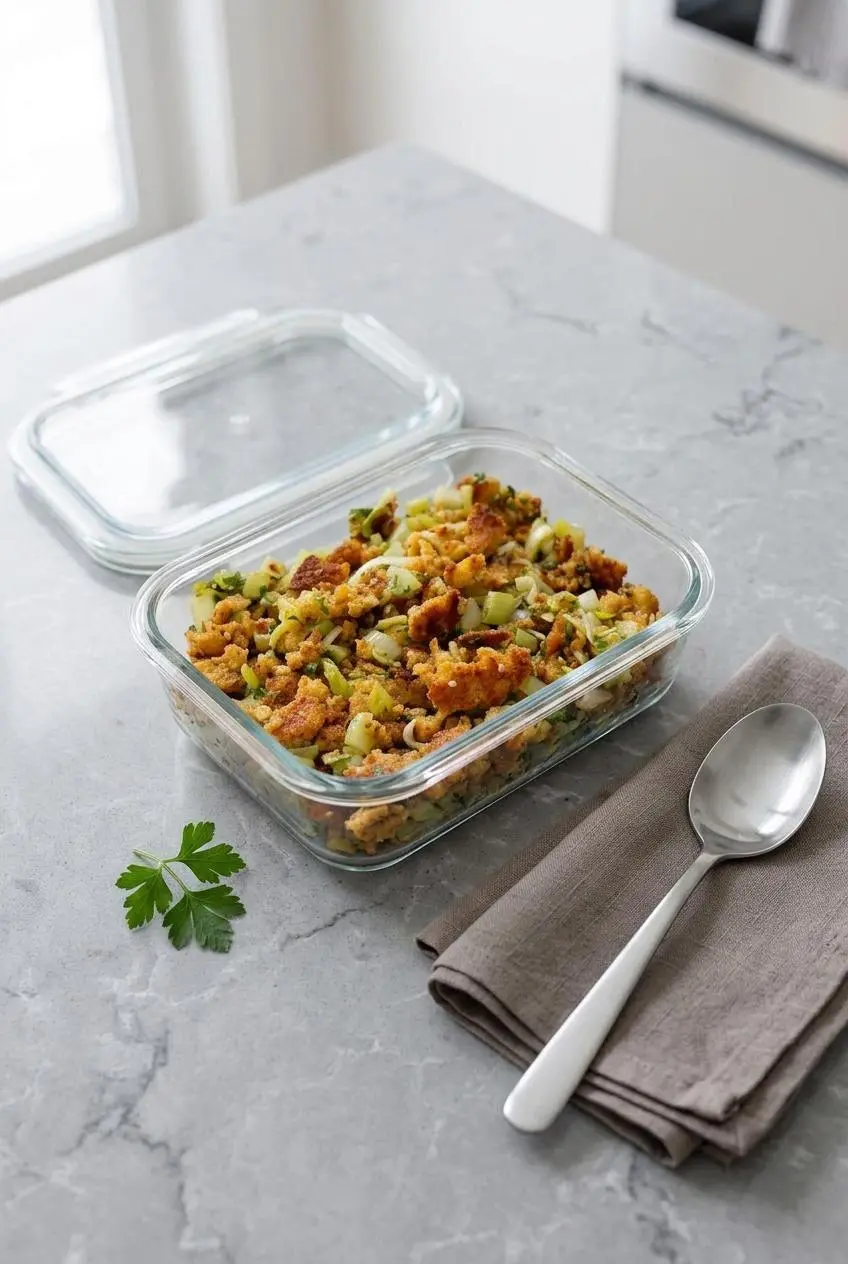
Cool cooked stuffing before transferring it to an airtight container and refrigerating it. Rewarm portions gently in the oven for the best chance of restoring the crisp top, or use a microwave when speed matters more than crunch.
For oven reheating, cover the stuffing at first if it seems dry, then uncover it briefly once it is hot so the surface can regain some texture. Reheat only the portion you plan to serve when possible.
Leftover Portions and Texture
Pack leftover portions tightly with as little exposed air as possible to protect the herbs and prevent the bread from drying out. If the top softens after storage, a brief uncovered finish in the oven can bring back some of its golden edges.
Avoid adding extra broth until you see how the stuffing behaves as it warms. Low-carb crumbs can soften quickly, so a restrained hand gives you more control.
Serving Suggestions and Holiday Table Pairings
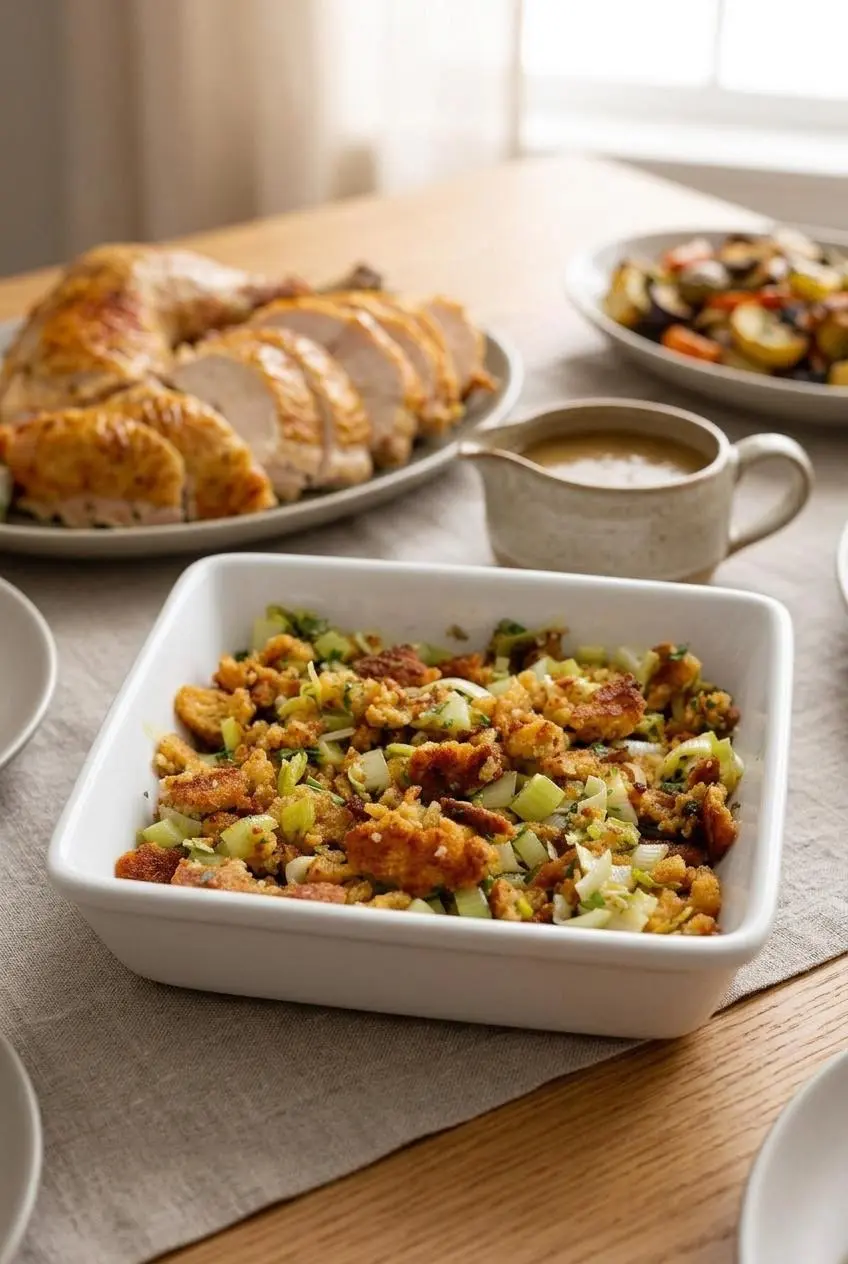
- Serve it with roast turkey, roasted turkey breast, or chicken thighs for a traditional holiday-style plate.
- Spoon savory keto gravy over the stuffing and poultry for extra moisture and rich herb flavor.
- Pair it with roasted pork chops, glazed ham, or roasted mushrooms for a cozy dinner outside Thanksgiving.
- Add sugar-free cranberry compote for a sweet-tart contrast that cuts through the buttery crumb.
- Press leftover stuffing into a waffle maker for crisp-edged stuffing waffles, then serve them with eggs or roasted chicken.
Bringing Classic Comfort to Your Low-Carb Table
This stuffing brings together the holiday flavors that matter most: buttery toasted bread, sweet leeks, savory celery, fragrant sage, and a golden crust that gives each spoonful contrast.
Keep an eye on the moisture level, taste the seasoning thoughtfully, and tailor the herbs to your table. A warm casserole with crisp edges always has a place at dinner.
Frequently Asked Questions About Keto Stuffing
Can I Bake Keto Stuffing Inside a Roasted Turkey?
Baking the stuffing separately in a casserole dish is the better choice for this method. It keeps the topping crisp and avoids extra moisture from poultry juices. If you choose to stuff a turkey, use careful poultry handling and follow the cooking directions for your bird.
What Is the Secret to Keeping Keto Stuffing From Turning Soggy?
Dry and lightly brown the keto bread before adding the broth mixture. The crumbs should feel firm and separate before they are combined with liquid. Also, keep the casserole loosely filled rather than compressed.
Can I Make This Stuffing Ahead of Time for Thanksgiving?
You can prepare the bread crumbs and chop the vegetables before assembling the casserole. Keep the bread dry and wait to mix in the broth and egg until close to baking. This helps preserve the stuffing’s structure.
Can I Use Store-Bought Keto Bread Instead of Making It From Scratch?
Yes. A sturdy store-bought keto sandwich loaf or roll works well when crumbled and toasted. Choose bread that holds its shape when handled and avoid using soft, fresh crumbs without drying them first.
Is Keto Stuffing Safe to Freeze for Leftovers?
This version does not provide freezing directions. For leftover stuffing, cool it before placing it in an airtight container and keep it chilled. Rewarm gently so the bread does not become overly soft.
Keto Stuffing Recipe

Ingredients
- 4 Slices Keto Bread (or rolls), crumbled
- 3 tablespoon Butter melted
- 1 egg
- 2 stalks Celery chopped
- 1/4 cup Leeks chopped
- 1/2 teaspoon Garlic minced
- 1 teaspoon Italian Blend Seasoning dried
- 1/4 teaspoon Sage
- 1/2 teaspoon each Salt & Pepper
- Olive Oil
- 1/2 teaspoon Celery Seasoning optional
- 1/2 Cup Chicken broth
Instructions
- Heat the oven and place the crumbled keto bread on a baking sheet. Drizzle it with olive oil and bake for about 5 minutes, until the crumbs are lightly browned and feel dry rather than soft. The pieces should look a shade deeper in color and rattle lightly when the pan is moved.
- Warm olive oil in a skillet, then cook the chopped celery, leeks, garlic, Italian blend seasoning, sage, salt, pepper, and optional celery seasoning for 1 to 2 minutes. Stop when the vegetables smell fragrant and the leeks turn translucent without developing dark edges.
- Whisk the egg with the melted butter and chicken broth in a bowl, then stir in the warm vegetable mixture. The liquid should look evenly blended before it is added to the bread.
- Fold the toasted bread crumbs into the seasoned liquid until coated, then transfer the mixture to a baking dish. Keep the crumbs loosely arranged so the casserole retains an airy texture.
- Cover the dish with foil and bake at 350°F for 10 minutes, then remove the foil and bake for 5 minutes more. The edges should gently sizzle and the surface should turn golden and lightly crisp.
- Serve the stuffing while the top is still crisp and the center is warm. Let it stand briefly if needed, until the egg-broth binder feels settled when scooped.