Skip to content
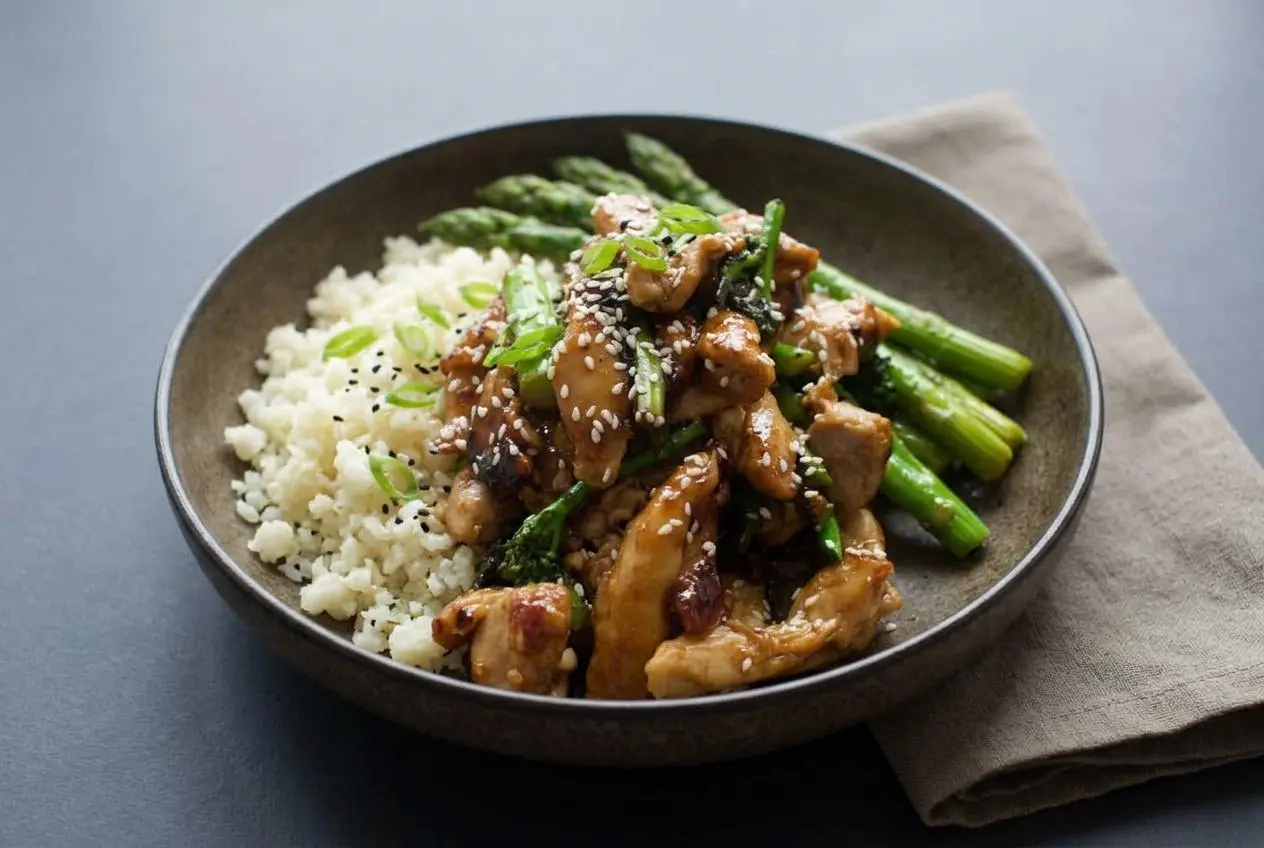
Keto teriyaki chicken is easy to make with chicken thighs, a homemade sugar-free glaze, and tamari or coconut aminos in place of sugary bottled sauce.
The best part of this dish is how close it feels to takeout while staying low carb. You get browned chicken, tender-crisp vegetables, and a glossy sauce that tastes sweet, savory, and deeply gingery.
It cooks fast, but it does reward a little attention at the stove because sugar-free sweeteners can darken quickly. That sticky glaze is worth watching.
Cut the chicken into even strips before heating the wok so it sears instead of steams.
Is Teriyaki Chicken Keto-Friendly?
Sometimes yes, but traditional teriyaki chicken usually is not. Classic takeout versions often rely on brown sugar, honey, and cornstarch, which give the sauce its shine and thickness while also pushing the carbs much higher than most keto meals allow.
This version changes the sauce, not the comfort-food appeal. A sugar-free brown sweetener replaces the usual sugar, and xanthan gum thickens the glaze without using cornstarch or flour. That keeps the sauce sticky and satisfying while staying much lower in carbs.
Tamari gives the sauce its salty, savory backbone and a deeper umami flavor than plain water-based stir-fry sauces. Coconut aminos can work too if you want a slightly milder, sweeter profile, though the finished glaze may taste softer and a little less punchy.
With the ingredients used here, the dish stays under 5 grams of net carbs per serving, and that fits the goal of a quick keto Chinese takeout alternative. Swap white rice for the cauliflower rice in the recipe and you keep the whole bowl aligned with a low-carb dinner.
Ingredients
Each ingredient earns its place here, from the wok-friendly oil and juicy chicken to the tamari, ginger, and xanthan gum that build flavor, aroma, and a glossy glaze.
Stir Fry
- 1 tablespoon avocado oil
- 1/4 onion, sliced into thin strips
- 300 g chicken thigh fillets, cut into strips
- 1/2 bunch broccolini
- 1/2 bunch asparagus
- 1 green onion, sliced thinly, to garnish
- 2 teaspoons sesame seeds
- 1 cup Cauliflower Rice, to serve
Teriyaki Sauce
- 0.25 cup gluten-free tamari (60g)
- 0.25 cup water (60g)
- 1-2 tablespoons brown sweetener (35g)
- 1 teaspoon garlic powder
- 2 teaspoons sesame oil
- 1 tablespoon ginger paste (20g)
- 0.25 tsp xanthan gum
Avocado oil is a smart choice for this kind of high-heat stir fry because it handles the wok well without turning harsh. Chicken thighs stay juicier than breast meat during fast cooking, and tamari brings the salty, rich depth that makes the glaze taste like real teriyaki instead of sweet soy sauce.
Ginger paste gives the sauce a warm, fresh bite, while sesame oil rounds everything out with a toasted finish. Xanthan gum does the thickening work, but it needs a light hand. Too much turns the sauce gummy fast.
I like thighs here because they give you a little more room for error. In a hot skillet, that extra fat helps the strips stay tender while the edges brown.
Cutting the chicken thigh fillets into uniform strips of about half an inch helps them cook quickly and evenly in the hot skillet.
How to Make Keto Teriyaki Chicken
Conventional Method
- Combine all of the sauce ingredients in a small saucepan and set it over moderate heat, then let it simmer until the liquid reduces by half before setting it aside.
The sauce is ready when it smells sweet and ginger-forward and looks glossy enough to lightly coat the back of a spoon. - Set a wok over medium-high heat, add the avocado oil, then stir-fry the onion and chicken strips until both pick up color.
Flip the chicken once the underside looks deep golden at the edges and releases easily from the pan. - Add the vegetables if using, pour in half of the teriyaki sauce, and keep stir-frying until everything is coated and the sauce thickens.
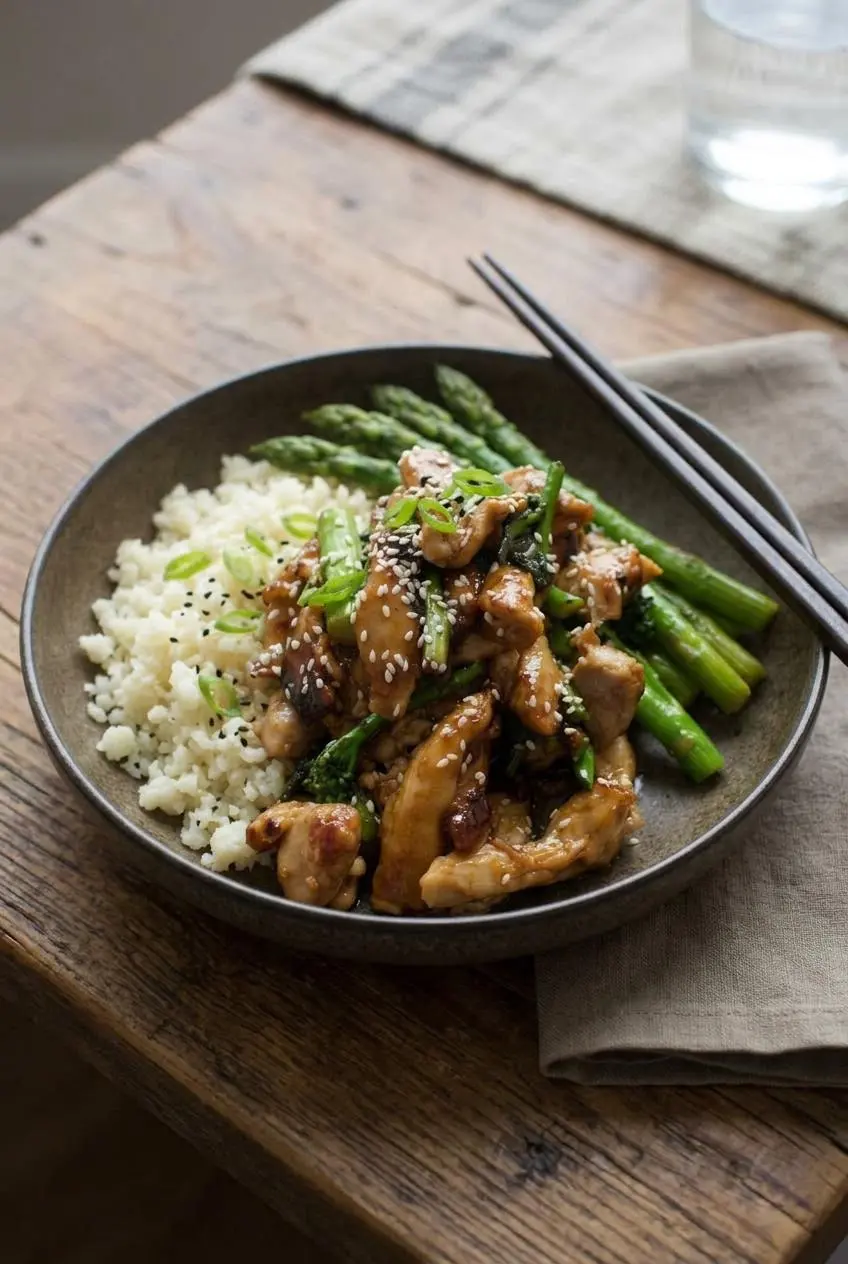
The broccolini and asparagus should stay bright and crisp-tender while the glaze turns sticky and clings to the chicken. - Divide the cauliflower rice between two bowls, spoon the teriyaki chicken over the top, and finish with green onion and sesame seeds.
The final dish should look glossy, with the garnish adding freshness and a little crunch.
Thermal Method
- Add all of the sauce ingredients to the mixing bowl and cook for 5 min at 110 °C on speed 1, then reserve the reduced sauce.
When it is done, the mixture should smell warm and gingery and look slightly thickened rather than watery. - Heat a wok over medium-high heat, add the avocado oil, onion, and chicken strips, and stir-fry until the onion softens and the chicken browns.
The chicken is ready to turn when the first side has a clear golden sear instead of a pale, wet look. - Stir in the vegetables if using and half of the teriyaki sauce, then continue cooking until the glaze thickens and the vegetables are just tender.
The sauce should coat the chicken in a shiny layer, not pool thinly at the bottom of the wok. - Split the cauliflower rice between two serving bowls, add the teriyaki chicken, and garnish with green onions and sesame seeds.
You want a bowl with juicy chicken, crisp vegetables, and enough glaze to season the rice underneath.
Mastering the Keto Teriyaki Sauce Reduction
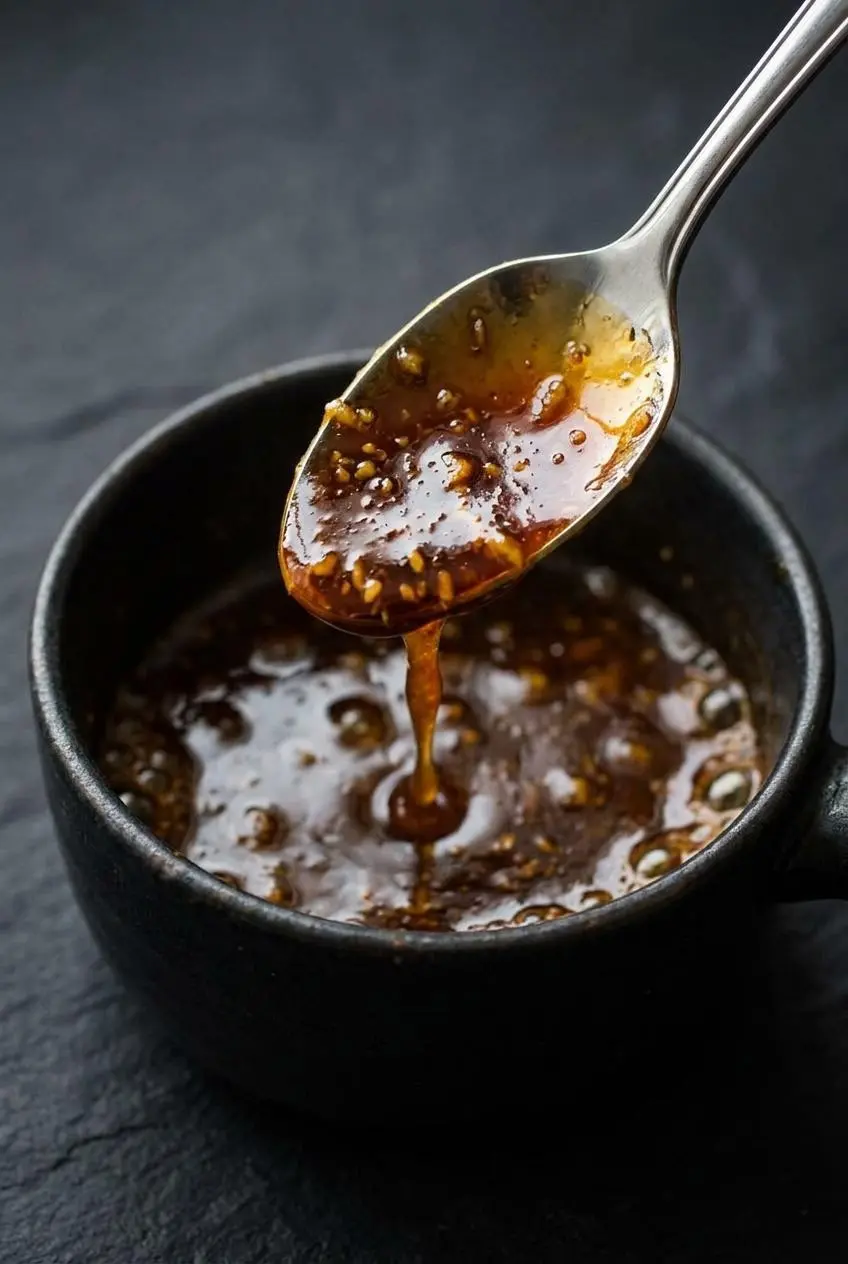
This is where the whole dish comes together. If the sauce reduces properly, you get that sticky, sweet-savory finish people want from teriyaki without using cornstarch.
The key is patience over high heat heroics. Let the sauce simmer steadily so water cooks off and the flavors concentrate. If you rush it, the sweetener can catch and taste bitter before the sauce thickens.
Half the sauce goes into the stir fry, which is enough to coat the chicken and vegetables without drowning them. Save the rest if you want a little extra at the table, or reduce it a touch more for an even stickier glaze.
- If the sauce stays thin, it usually needs a bit more simmering time rather than more xanthan gum.
- If the sauce turns slimy, too much xanthan gum went in too fast. Start lighter next time.
- If the glaze tastes flat, the sauce likely did not reduce enough to concentrate the tamari, ginger, and sweetener.
- If it darkens too quickly, lower the heat right away because sugar-free sweeteners can burn faster than sugar.
How to Avoid Clumpy Xanthan Gum
Xanthan gum thickens fast, and that is both the benefit and the trap. Whisk it thoroughly into the cold or room-temperature tamari and water before the pan goes on the heat. That gives it time to disperse instead of forming little rubbery beads on contact.
Dropping xanthan gum straight into a hot liquid almost always creates lumps. Once those gel pockets form, they are hard to smooth out and the sauce can feel slick instead of glossy.
If you do end up with a sauce that is thicker than you wanted, warm it over low heat and whisk in a tablespoon of warm water or low-sodium chicken broth until it loosens. Keep the heat gentle so the sweetener does not scorch while you adjust the texture.
Sweetener Swaps: Erythritol, Monk Fruit, and Allulose
Different keto sweeteners behave differently in a teriyaki glaze, even when the flavor seems close.
- Allulose gives the most natural sticky texture and the closest feel to classic teriyaki sauce. It reduces smoothly and stays glossy.
- Erythritol works well for sweetness, but it can crystallize a bit as the sauce cools, so the glaze may lose some of its silky finish.
- Monk fruit blends are very sweet and useful when you want strong sweetness without much volume, but the final texture depends on what the blend contains.
If you are chasing a takeout-style glaze, allulose usually gets you closest. If you are using erythritol, let the reduction do most of the thickening work and resist adding extra xanthan gum.
Best Low-Carb Veggie Mix-ins
Vegetables make this bowl feel like a full dinner instead of just chicken and sauce. They also balance the richness of the thighs and help the glaze go further.
Stretching Your Meal with Keto-Friendly Vegetables
Broccolini and asparagus already fit this recipe well because they cook quickly and stay crisp if you add them at the right moment. Trim the broccolini into manageable lengths and cut thick asparagus spears into shorter pieces so they hit tenderness at about the same time.
Add the vegetables after the chicken has browned, not at the beginning. That keeps the pan hot enough to sear the meat first, which matters for flavor and for avoiding a watery stir fry.
Other good low-carb options include bok choy, broccoli florets, and green beans. If you want a ready-made side instead of folding beans into the wok, keto green beans pair especially well with the sweet-savory glaze.
Shirataki noodles also work if you want something closer to a noodle bowl than a rice bowl. Keep them separate from the stir fry until they are well drained so they do not water down the sauce.
Mastering the Green Bean Blanching Technique
Green beans can be excellent here, but they need a head start if you want them bright and crisp instead of squeaky and undercooked. Blanch them in boiling water for 2 min, then move them straight into an ice bath to stop the cooking.
That quick chill helps lock in the green color and keeps the texture snappy. Once drained well, the beans can go into the wok near the end just long enough to heat through and catch some glaze.
For the vegetables in this recipe, rinse broccolini and asparagus under running water and keep them away from raw chicken and its juices during prep, which aligns with washing fresh produce under running water and separating it from raw meat.
Thermomix Method vs Conventional Wok Cooking
Both methods work, but they shine in different ways. The thermal method gives you a very controlled, hands-off sauce reduction, which is helpful when you are using sugar-free sweeteners that can go from glossy to too dark pretty quickly.
The wok still wins on chicken texture. High heat gives the onion and chicken those browned edges that make the finished bowl taste fuller and more savory. If you want the best of both, use the machine for the sauce and the wok for the stir fry, exactly as the method is set up.
If your sauce is the part that tends to misbehave, the thermal route gives you more consistency. If your favorite part is the seared chicken with little caramelized spots, the conventional wok path is the more satisfying one.
Protein Swaps: Salmon, Beef, and Tofu
The sauce works with more than chicken, so you can change the protein without losing the character of the dish. Keep these swaps optional and use the same glaze.
Keto Teriyaki Salmon
Use a 150 g salmon fillet and sear it in avocado oil until the surface is well colored and the skin is crisp if you are using skin-on fish. Spoon the reduced teriyaki sauce over the top right at the end so it glazes the fish instead of burning in the pan.
This version is especially good with asparagus or broccolini because both vegetables cook on roughly the same quick timeline as salmon.
Keto Teriyaki Beef
Thinly sliced flank steak or sirloin works best because it cooks fast and stays tender with brief, high-heat stir-frying. Get the wok hot first, spread the beef out quickly, and avoid crowding the pan so it browns instead of releasing too much liquid.
Beef gives the sauce a slightly richer, more robust feel, so it pairs well with sharper vegetables like broccolini and green beans.
Keto Teriyaki Tofu
Use extra-firm tofu, press out as much moisture as you can, then cube it and fry until the outside is crisp before adding glaze. If the tofu goes in wet, the sauce will slide off and the pan can turn watery fast.
Tofu soaks up flavor beautifully, but it needs that crisp exterior first or the final texture can feel soft all the way through.
Storing and Reheating Your Meal Prep
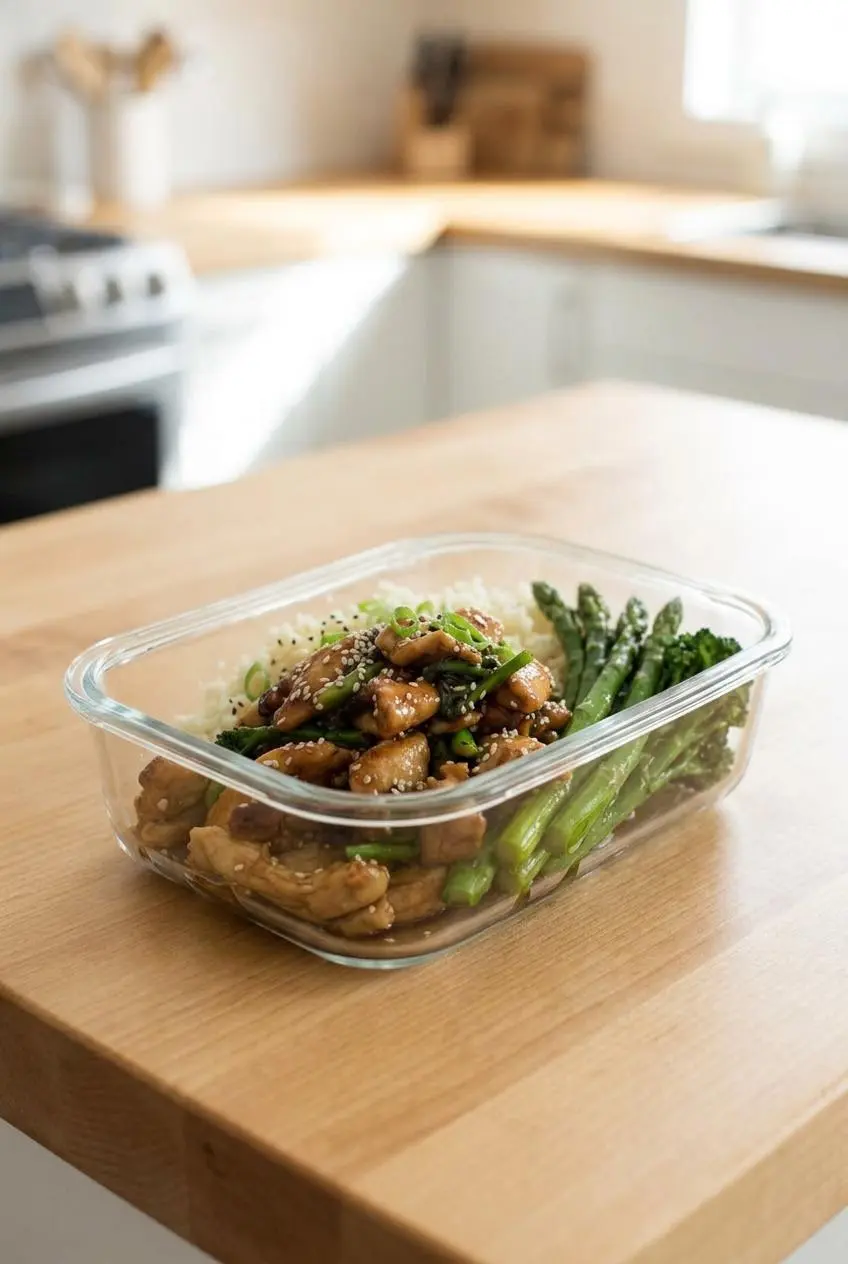
If you are making this for later, cool the components before sealing them up and keep them in airtight containers. The cooked chicken and cauliflower rice can be refrigerated for up to four days.
For the best texture, store the vegetables separately if you can. Broccolini and asparagus soften faster than the chicken, so separating them helps keep the meal from turning mushy on day two.
Reheat gently in a skillet over low heat with a small splash of water if the glaze has tightened up in the fridge. Avoid blasting it on high heat because the chicken can dry out and the sweetener in the sauce can catch at the edges.
The sauce can also be made ahead and kept chilled in a sealed container until you need it. If it thickens after resting, warm it slowly and whisk in a little water to bring it back to a spoon-coating consistency.
Conclusion
This is the kind of low-carb dinner that actually scratches the takeout itch. You get juicy chicken thighs, a gingery glossy glaze, and enough vegetable crunch to keep each bite balanced.
If you remember one thing, make it this: whisk the xanthan gum into the cold liquid before heating the sauce. That tiny step makes the whole dish smoother and much easier to love.
Frequently Asked Questions
Is Teriyaki Chicken good for keto?
Yes, if you make it with a sugar-free glaze instead of standard bottled sauce. Traditional versions usually rely on sugar and starch, which push the carbs up fast. This version uses brown sweetener, xanthan gum, and cauliflower rice to keep the meal low carb and keto-friendly.
Is teriyaki sauce allowed on keto?
Usually not if it is the typical store-bought kind. Many bottled versions contain sugar, corn syrup, or starch thickeners that do not fit well into keto eating. A homemade version with tamari and xanthan gum is a much better keto option.
How do I thin out the teriyaki sauce if it gets too thick?
Warm it gently over low heat first. Then whisk in a tablespoon of warm water or low-sodium chicken broth until the texture loosens. Add liquid gradually so the glaze stays glossy instead of turning thin.
Can I use chicken breasts instead of thighs?
Yes, you can. Chicken breasts cook faster and have less fat, so they need a closer eye in the wok. Pull them from the heat as soon as they are cooked through to help prevent dryness.
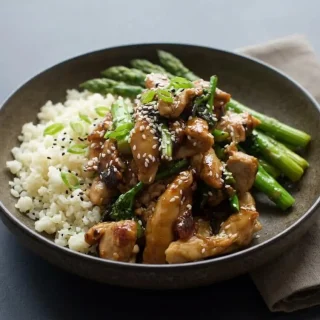
Keto Teriyaki Chicken

Equipment
- Small saucepan
- Wok or large frying pan
- Thermomix (optional)
Ingredients
Stir Fry
- 1 tablespoon avocado oil
- 1/4 onion sliced into thin strips
- 300 g chicken thigh fillets cut into strips
- 1/2 bunch broccolini
- 1/2 bunch asparagus
- 1 green onion sliced thinly, to garnish
- 2 teaspoons sesame seeds
- 1 cup Cauliflower Rice to serve
Teriyaki Sauce
- 0.25 cup gluten-free tamari (60g)
- 0.25 cup water (60g)
- 1-2 tablespoons brown sweetener (35g)
- 1 teaspoon garlic powder
- 2 teaspoons sesame oil
- 1 tablespoon ginger paste (20g)
- 0.25 tsp xanthan gum
Instructions
Conventional Method
- Combine all of the sauce ingredients in a small saucepan and set it over moderate heat, then let it simmer until the liquid reduces by half before setting it aside. The sauce is ready when it smells sweet and ginger-forward and looks glossy enough to lightly coat the back of a spoon.
- Set a wok over medium-high heat, add the avocado oil, then stir-fry the onion and chicken strips until both pick up color. Flip the chicken once the underside looks deep golden at the edges and releases easily from the pan.
- Add the vegetables if using, pour in half of the teriyaki sauce, and keep stir-frying until everything is coated and the sauce thickens. The broccolini and asparagus should stay bright and crisp-tender while the glaze turns sticky and clings to the chicken.
- Divide the cauliflower rice between two bowls, spoon the teriyaki chicken over the top, and finish with green onion and sesame seeds. The final dish should look glossy, with the garnish adding freshness and a little crunch.
Thermal Method
- Add all of the sauce ingredients to the mixing bowl and cook for 5 min at 110 °C on speed 1, then reserve the reduced sauce. When it is done, the mixture should smell warm and gingery and look slightly thickened rather than watery.
- Heat a wok over medium-high heat, add the avocado oil, onion, and chicken strips, and stir-fry until the onion softens and the chicken browns. The chicken is ready to turn when the first side has a clear golden sear instead of a pale, wet look.
- Stir in the vegetables if using and half of the teriyaki sauce, then continue cooking until the glaze thickens and the vegetables are just tender. The sauce should coat the chicken in a shiny layer, not pool thinly at the bottom of the wok.
- Split the cauliflower rice between two serving bowls, add the teriyaki chicken, and garnish with green onions and sesame seeds. You want a bowl with juicy chicken, crisp vegetables, and enough glaze to season the rice underneath.