Skip to content
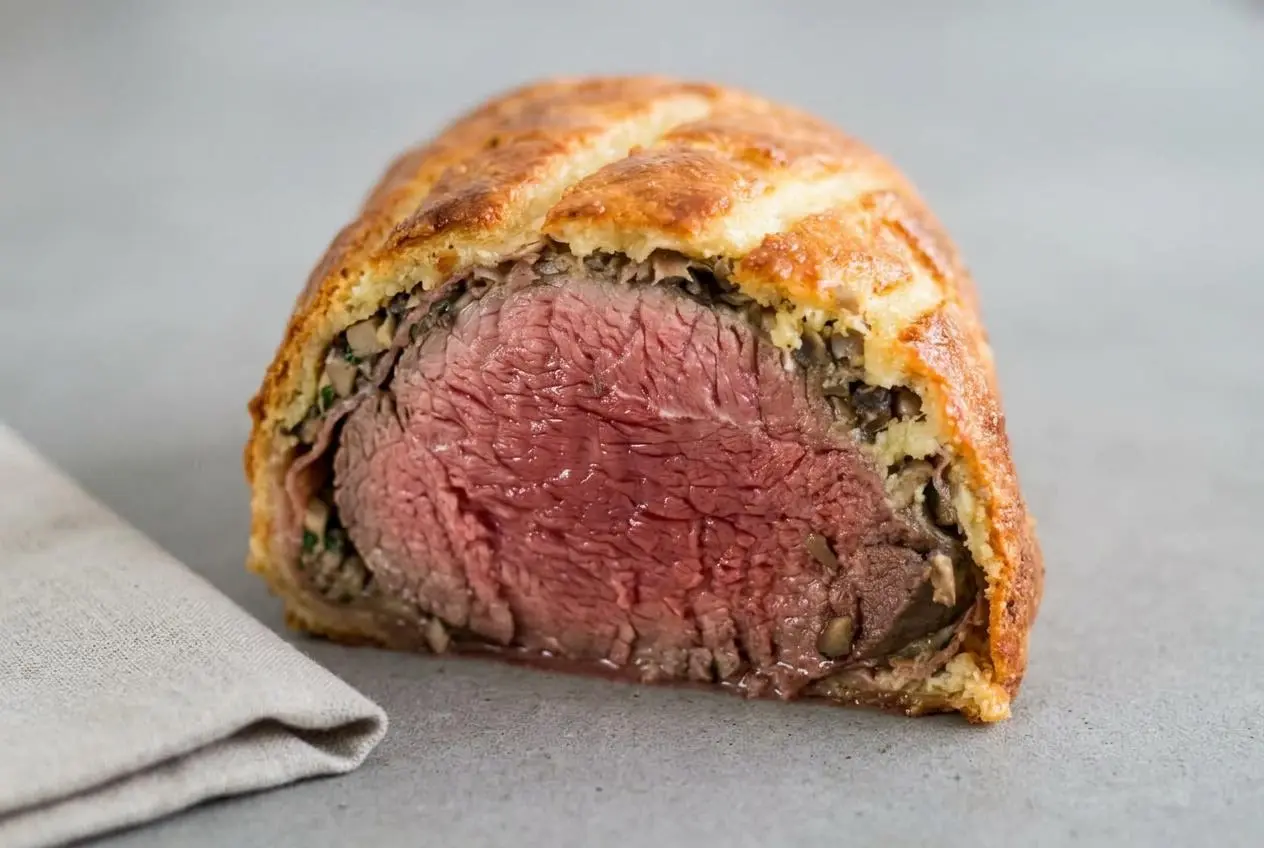
This keto beef wellington recipe wraps seared beef, savory mushroom duxelles, and prosciutto in a golden mozzarella and almond flour crust for an elegant low-carb centerpiece.
A keto beef wellington recipe keeps the familiar contrast of tender beef and crisp pastry while replacing wheat puff pastry with flexible fathead dough. The key is managing moisture at every stage.
The beef stays richly savory, the mushrooms turn deep and concentrated, and the crust bakes golden around the edges. That clean slice is worth the pause.
Set out two sheets of parchment before melting the mozzarella so the dough can be rolled while it is still warm and pliable.
Essential Ingredients for Low-Carb Beef Wellington
Each component builds a specific part of the Wellington: beef brings tenderness, mushrooms add savory depth, prosciutto controls moisture, and the cheese dough creates a flexible, browned crust.
- 0.75 – 1kg cut of beef
- 2 tbsp butter
- 2 garlic cloves – minced
- 1/4 cup onion – chopped finely
- 3 cups (200g) mushrooms – chopped finely
- 1 tsp thyme
- 2 tbsp dijon mustard
- 10 slices prosciutto / parma ham
- 2 cups (200g) mozzarella – shredded
- 1 cup (100g) almond flour
- 1 egg
- 1 tsp baking powder
Selecting and Trimming the Beef
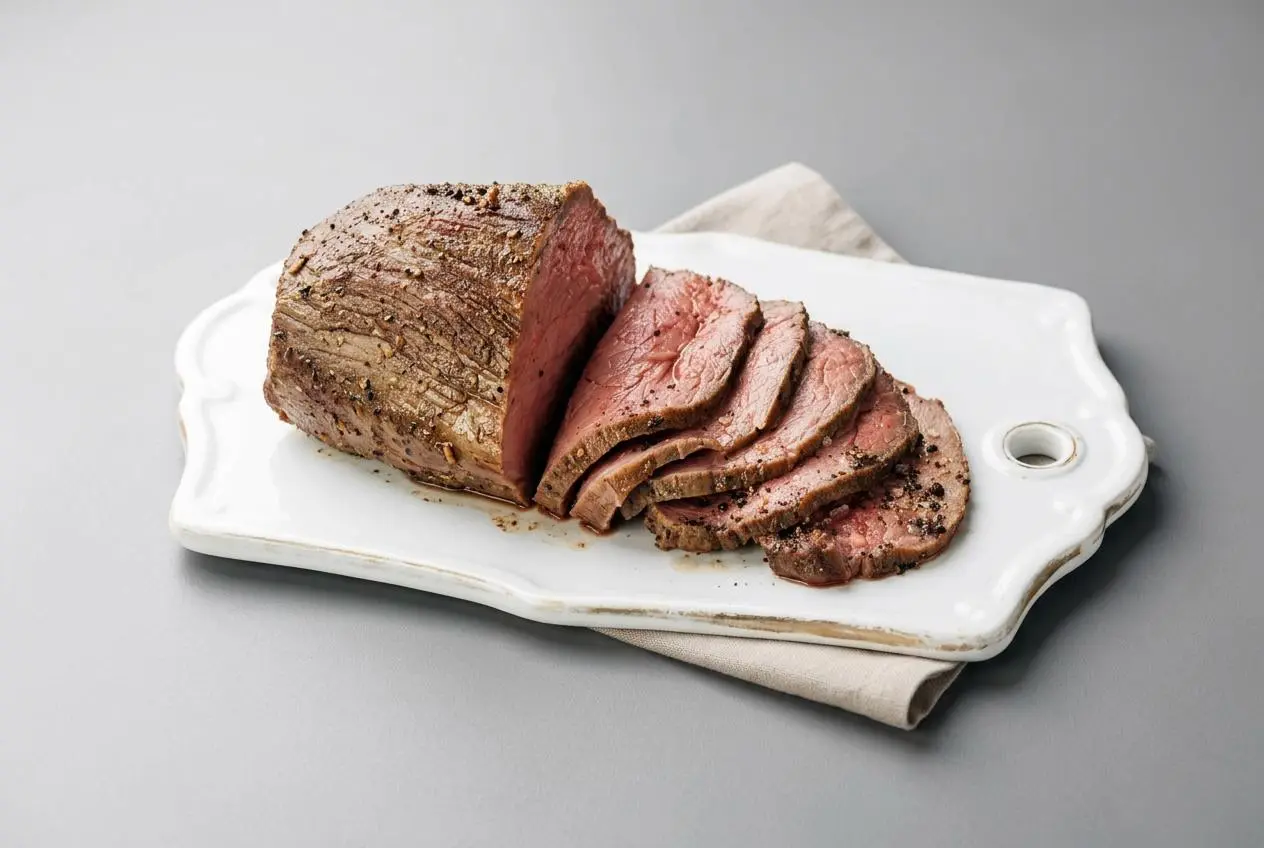
A center-cut beef tenderloin gives the most even shape and the soft, buttery texture expected from Wellington. Choose a piece with similar thickness from end to end, then trim away loose flaps that could cook faster than the center.
Butcher twine can help shape an uneven tenderloin into a more consistent cylinder before searing. Remove the twine after the beef has cooled, before it is wrapped. A well-trimmed roast makes slicing much neater at the table.
Crafting the Mushroom Duxelles
Finely chopped mushrooms, onion, garlic, thyme, and butter cook down into mushroom duxelles, a concentrated filling with deep earthy flavor. The important change happens after the initial steam: keep cooking until the mixture looks crumbly rather than glossy or wet.
Any liquid left in the pan will become steam inside the crust. Dijon adds tang to the beef, while the prosciutto forms a salty barrier between the duxelles and fathead pastry, helping the bottom stay firmer.
The Anatomy of Fathead Pastry
Melted mozzarella gives this dough its stretch, while almond flour provides body and baking powder helps lighten the finished crust. The egg helps bind the dough and encourages a more deeply browned exterior.
Fathead dough is softer and less elastic than wheat pastry, so parchment matters. The same mozzarella-and-almond-flour handling used for a keto pizza crust works well here: roll gently and keep the dough supported by the paper.
I find that warm fathead dough should feel supple and slightly resistant under your hands, not greasy or runny. If it begins to stick, keep it between the parchment instead of adding extra flour.
How to Make Keto Beef Wellington
Build this Wellington in layers: browned beef, fully reduced duxelles, prosciutto, and finally the mozzarella crust. Allowing the hot components to cool before wrapping protects the dough from softening too soon.
- Melt the butter in a pan over high heat until it bubbles actively.
The pan should sound lively and hot enough to brown the beef quickly. - Sear the beef for 2-3 minutes, turning it until every side has developed a deep brown crust.
Keep the center uncooked at this stage; the color should stay on the surface. - Brush the browned beef all over with Dijon mustard, then set it aside to cool while leaving the butter in the pan.
The mustard should form a thin, even coating over the warm beef. - Reduce the heat to medium-high and add the garlic, onion, mushrooms, and thyme to the pan.
Stir as the mushrooms release moisture and the thyme becomes fragrant. - Cook the mushroom mixture for about 10 minutes until the pan is dry and no liquid remains.
The finished duxelles should look like a dense, crumbly paste rather than a wet sauté. - Lay plastic wrap on the counter and overlap the 10 prosciutto slices into a square.
Keep the slices slightly overlapped so they form one continuous layer. - Spread the cooled mushroom mixture across the prosciutto, then place the mustard-coated beef in the center.
Leave the edges clear enough for the prosciutto to fold over the roast. - Use the plastic wrap to roll the prosciutto tightly around the beef until it is fully enclosed.
The wrapped roast should hold a compact log shape with no exposed beef. - Melt the mozzarella in the microwave or on the stove.
The cheese should be fully melted and stretchy before the dry ingredients are added. - Mix in 3/4 cup (75g) almond flour and the baking powder, then knead until a dough starts to form.
Work while the mozzarella is warm so the mixture becomes cohesive instead of crumbly. - Knead in the egg until it is fully incorporated.
The dough will become softer and more uniform as the egg disappears into the cheese mixture. - Add the remaining almond flour and knead until the dough is smooth.
Stop once it holds together and feels flexible enough to roll. - Roll the dough flat between two sheets of parchment paper.
A uniform sheet helps the crust bake evenly around the beef. - Place the prosciutto-wrapped beef in the center of the dough and bring the pastry around it, sealing the edges.
Pinch the seam closed so the filling is enclosed without large gaps. - Turn the Wellington seam-side down and brush the outside with beaten egg.
The smooth side should face up for the most even browning. - Bake at 400°F / 200°C for 45 minutes, covering loosely with foil after 20 minutes.
The foil should protect the crust if it is browning quickly while the beef continues cooking. - Rest the baked Wellington for about 10 minutes before slicing.
The crust will settle and the meat juices will stay contained more easily during carving.
Critical Mistakes to Avoid for Flawless Wellington
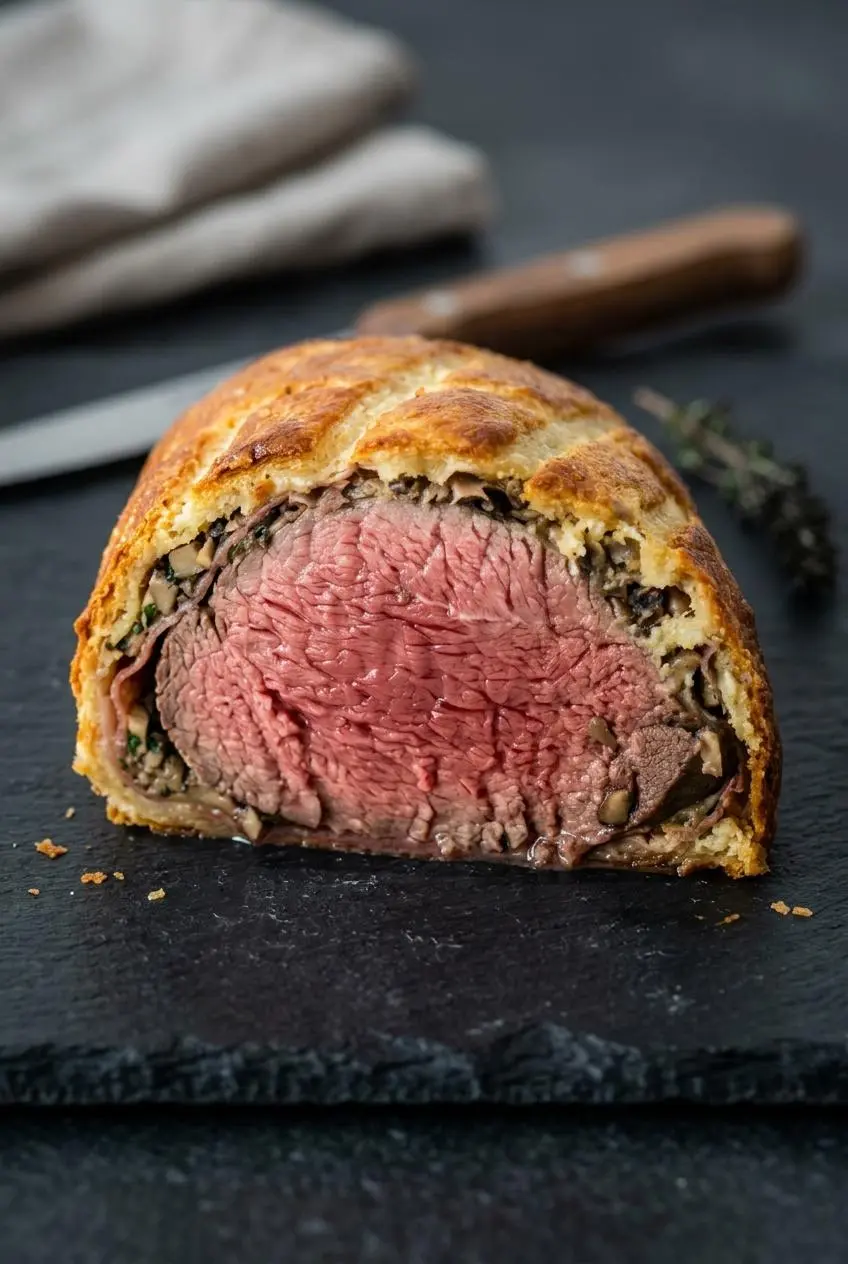
Most Wellington problems come down to trapped moisture, overheated dough, or cutting too soon. These fixes keep the layers distinct and protect that crisp crust.
Preventing the Dreaded Soggy Bottom
- Problem: The underside turns soft. Cause: The mushrooms still held liquid. Fix: Cook the duxelles until the pan looks dry and the mixture becomes concentrated and crumbly.
- Problem: Steam loosens the pastry. Cause: Warm beef or hot mushrooms were wrapped too soon. Fix: Cool both before assembly so they do not melt the mozzarella dough.
- Problem: Juices seep into the crust. Cause: Gaps in the prosciutto layer. Fix: Overlap the slices and wrap the beef snugly before adding the dough.
Avoiding Pastry Tears and Meltdowns
- Problem: The dough sticks or tears while rolling. Cause: Cheese dough is naturally tacky. Fix: Keep it between parchment and lift the paper to guide it over the beef.
- Problem: A small split opens at the seam. Cause: The dough stretched too far. Fix: Press the tear together with clean, slightly damp fingertips, then place the seam underneath.
- Problem: The crust browns before the center is ready. Cause: Almond flour colors quickly. Fix: Loosely tent with foil after the stated baking point.
Checking Temperature Without Losing Juices
An instant-read thermometer is the most useful way to judge the center without cutting into the Wellington. Insert it through the side into the thickest part of the beef, keeping the opening small so fewer juices escape.
Use the thermometer as a doneness check rather than relying on crust color alone. The pastry can look deeply golden while the center still needs attention, especially if the roast is thicker at one end.
Flavor Variations: Pâté, Herbs, and Seasonings
Keep the main method unchanged, then choose one optional flavor direction if you want a more classic French profile or a sharper finish.
Liver Pâté Enriched Wellington
For a traditional, luxurious note, spread a thin layer of smooth liver pâté beneath the mushroom layer before rolling the prosciutto around the beef. It adds richness and a savory, mineral depth, so a restrained layer works best.
Nut-Free Sunflower Seed Dough
Finely milled sunflower seed flour can replace almond flour for a nut-free variation. Expect a more pronounced toasted seed flavor and a dough that may feel somewhat different from the almond flour version, so handle it gently between parchment.
Horseradish-Dijon Crust Layer
Stir prepared horseradish into the Dijon before brushing it over the seared beef for a sharper, peppery edge. The bite cuts through the rich cheese crust and mushroom filling without taking over the tenderloin.
Make-Ahead, Storage, and Reheating Guidelines
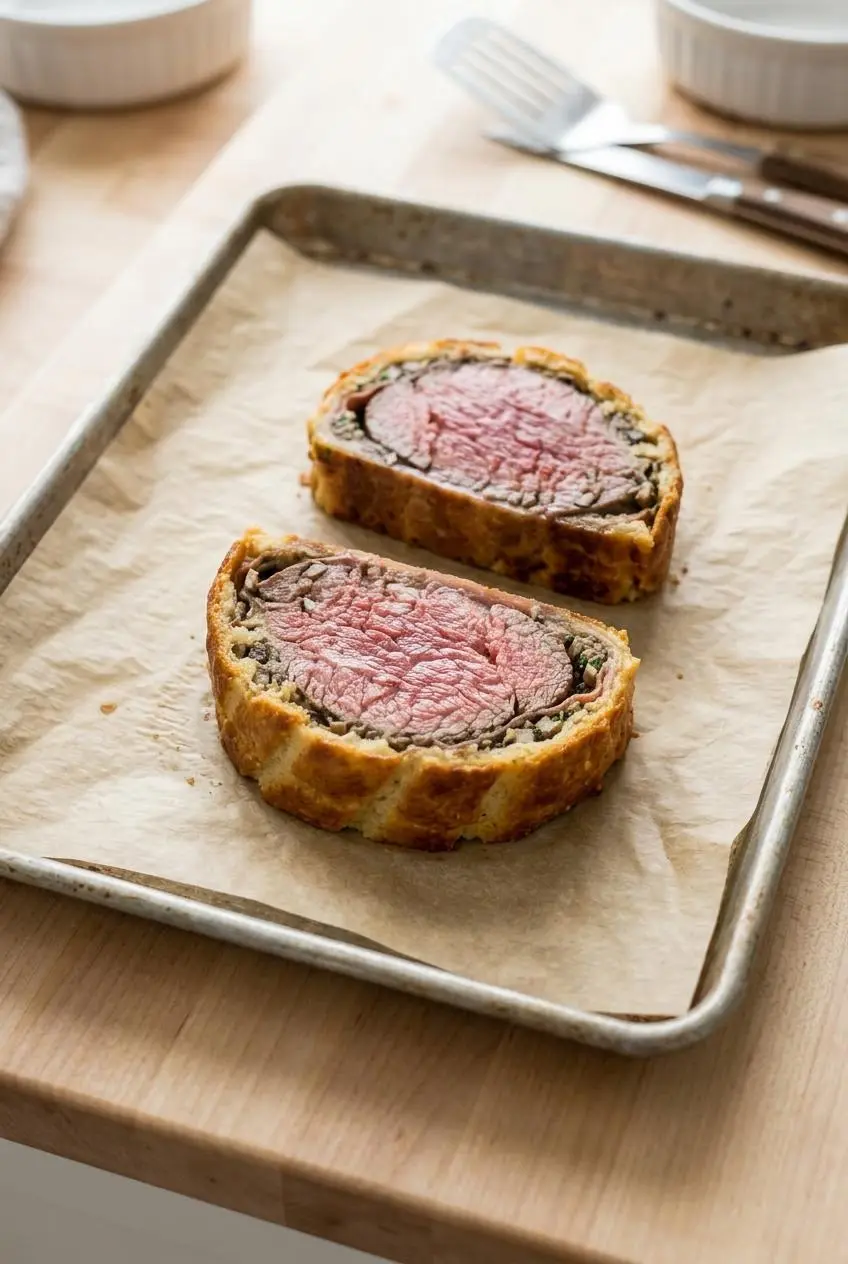
For a less rushed dinner, prepare the beef and duxelles through their cooling stage, keeping them covered and chilled until you are ready to finish assembly. Avoid sealing warm ingredients in plastic wrap, since trapped condensation can soften the layers.
Store cooled leftovers in an airtight container in the refrigerator. Reheat slices gently on a lined baking sheet in the oven until warmed through; this gives the cheese crust a chance to firm up again without the sogginess that can come from microwave reheating.
For the best texture, reheat only the portion you plan to serve. The crust is at its crispest soon after baking, while the beef is at its juiciest after its brief rest.
Ideal Side Dishes for a Low-Carb Feast
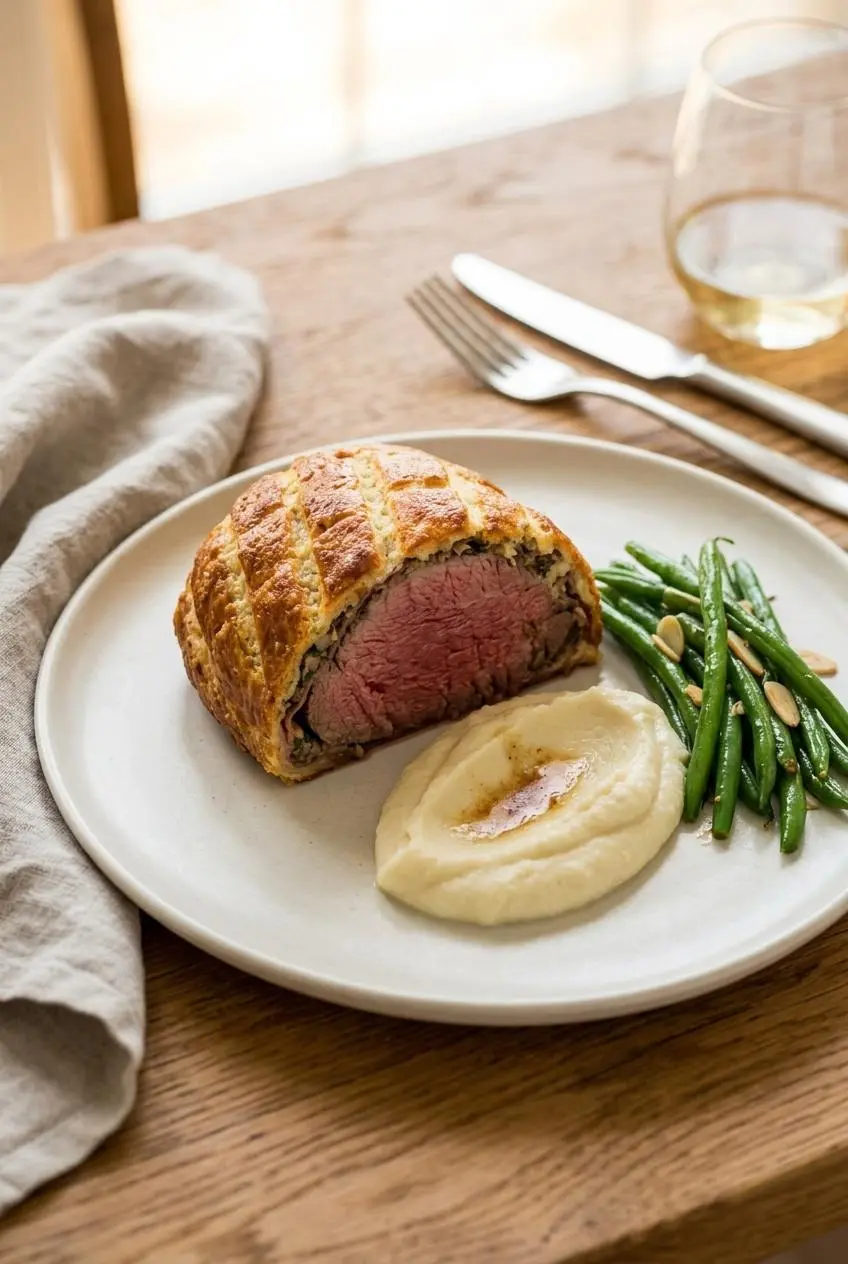
Rich beef and cheese pastry benefit from sides with freshness, green color, or a creamy texture that does not compete with the duxelles.
- Serve creamy roasted cauliflower mash with garlic butter for a comforting, low-carb alternative to potatoes.
- Pair the Wellington with sautéed green beans or roasted asparagus for a crisp, clean contrast.
- Add a spoonful of the pan juices or a gentle garlic-herb cream reduction, keeping the sauce light enough to let the beef lead.
- For another warm vegetable option, keto baked zucchini brings a tender, lightly roasted side without crowding the plate.
Bringing It All Together for an Unforgettable Dinner
Success comes from three calm checkpoints: brown the beef quickly, cook every trace of moisture from the mushrooms, and let the finished Wellington rest before carving. Those details create a crisp crust and clean, satisfying slices.
Bring it to the table whole, then cut with a sharp knife using steady downward strokes. It makes a memorable centerpiece for holidays, celebrations, or any dinner that deserves a little ceremony.
Frequently Asked Questions
How Do I Prevent My Keto Beef Wellington Crust From Getting Soggy?
Cook the mushroom duxelles until all moisture has evaporated and the mixture looks dry and concentrated. Let the beef and mushrooms cool before wrapping, then overlap the prosciutto tightly to create a barrier between the filling and dough.
Can I Assemble Keto Beef Wellington Ahead of Time?
You can pause after the beef and mushroom mixture have cooled, keeping the components covered and chilled until assembly. Roll the dough and wrap the Wellington when you are ready to bake so the cheese pastry stays easier to handle.
What Is the Best Cut of Beef for This Recipe?
Center-cut beef tenderloin is the strongest choice because it is tender, evenly shaped, and cooks consistently. A carefully trimmed beef cut with uniform thickness can also work, though leaner budget cuts may be less tender.
How Do I Reheat Leftover Keto Beef Wellington?
Warm individual slices gently in the oven on a lined baking sheet until heated through. This approach helps revive the crust while avoiding prolonged heat that can overcook the beef center.
How Many Carbs Are in a Keto Beef Wellington?
The carbohydrate total depends on the specific mozzarella, almond flour, Dijon mustard, and prosciutto you use. For a precise count, calculate the nutrition from the package labels for your ingredients and divide by the number of servings.

Keto Beef Wellington Recipe

Equipment
- Large skillet
- Rolling Pin
- Parchment paper
- Plastic wrap
- Baking sheet
- Pastry brush
- Meat thermometer
Ingredients
- 0.75 – 1 kg cut of beef
- 2 tbsp butter
- 2 cloves garlic minced
- 1/4 cup onion chopped finely
- 3 cups mushrooms chopped finely (200g)
- 1 tsp thyme
- 2 tbsp dijon mustard
- 10 slices prosciutto / parma ham
- 2 cups mozzarella shredded (200g)
- 1 cup almond flour (100g)
- 1 egg
- 1 tsp baking powder
Instructions
- Melt the butter in a pan over high heat until it bubbles actively. The pan should sound lively and hot enough to brown the beef quickly.
- Sear the beef for 2-3 minutes, turning it until every side has developed a deep brown crust. Keep the center uncooked at this stage; the color should stay on the surface.
- Brush the browned beef all over with Dijon mustard, then set it aside to cool while leaving the butter in the pan. The mustard should form a thin, even coating over the warm beef.
- Reduce the heat to medium-high and add the garlic, onion, mushrooms, and thyme to the pan. Stir as the mushrooms release moisture and the thyme becomes fragrant.
- Cook the mushroom mixture for about 10 minutes until the pan is dry and no liquid remains. The finished duxelles should look like a dense, crumbly paste rather than a wet sauté.
- Lay plastic wrap on the counter and overlap the 10 prosciutto slices into a square. Keep the slices slightly overlapped so they form one continuous layer.
- Spread the cooled mushroom mixture across the prosciutto, then place the mustard-coated beef in the center. Leave the edges clear enough for the prosciutto to fold over the roast.
- Use the plastic wrap to roll the prosciutto tightly around the beef until it is fully enclosed. The wrapped roast should hold a compact log shape with no exposed beef.
- Melt the mozzarella in the microwave or on the stove. The cheese should be fully melted and stretchy before the dry ingredients are added.
- Mix in 3/4 cup (75g) almond flour and the baking powder, then knead until a dough starts to form. Work while the mozzarella is warm so the mixture becomes cohesive instead of crumbly.
- Knead in the egg until it is fully incorporated. The dough will become softer and more uniform as the egg disappears into the cheese mixture.
- Add the remaining almond flour and knead until the dough is smooth. Stop once it holds together and feels flexible enough to roll.
- Roll the dough flat between two sheets of parchment paper. A uniform sheet helps the crust bake evenly around the beef.
- Place the prosciutto-wrapped beef in the center of the dough and bring the pastry around it, sealing the edges. Pinch the seam closed so the filling is enclosed without large gaps.
- Turn the Wellington seam-side down and brush the outside with beaten egg. The smooth side should face up for the most even browning.
- Bake at 400°F / 200°C for 45 minutes, covering loosely with foil after 20 minutes. The foil should protect the crust if it is browning quickly while the beef continues cooking.
- Rest the baked Wellington for about 10 minutes before slicing. The crust will settle and the meat juices will stay contained more easily during carving.