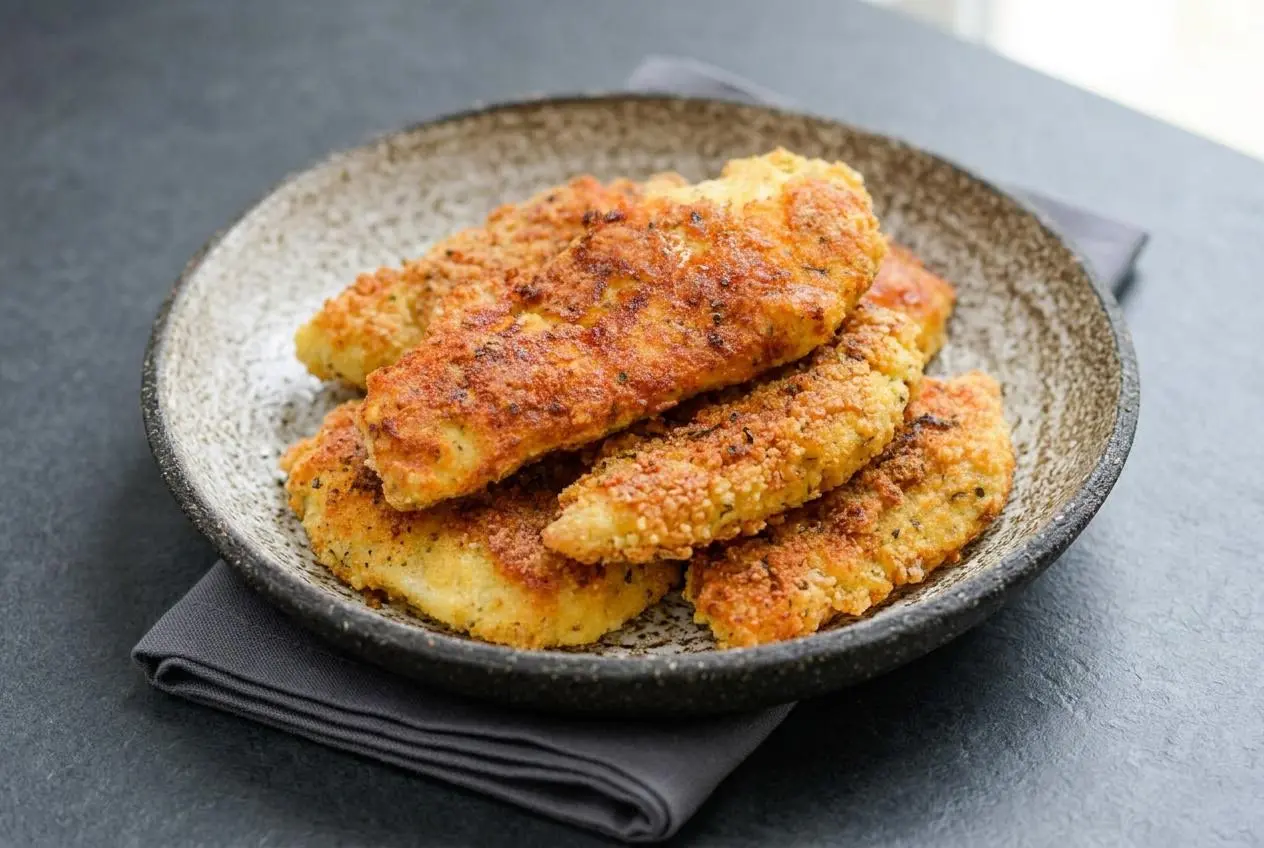
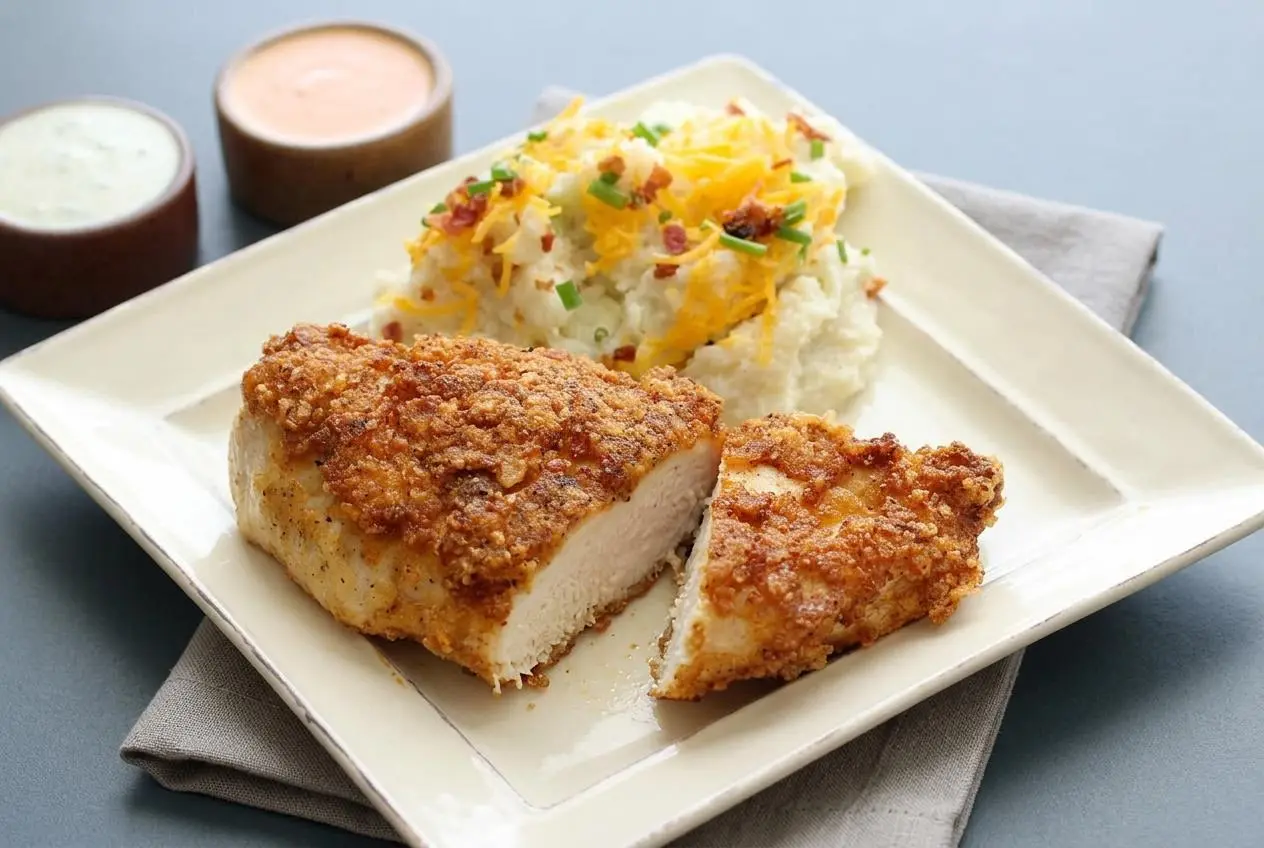
To make fried chicken keto-friendly, coat chicken in crushed pork rinds and parmesan, double-dip it in egg, then fry until the crust is golden and the chicken is cooked through.
That crackly first bite is exactly what this keto fried chicken recipe delivers, with a savory crust and juicy chicken inside. It skips regular flour but still gives you the kind of crunch you actually want from fried chicken.
You get a sturdy low carb breading, a quick stovetop method, and two optional ways to cook it if you want less hands-on frying. The real trick is in the coating.
Pat the chicken very dry before it ever touches the egg, or the coating will have a much harder time sticking.
Why This Keto Fried Chicken Recipe Works
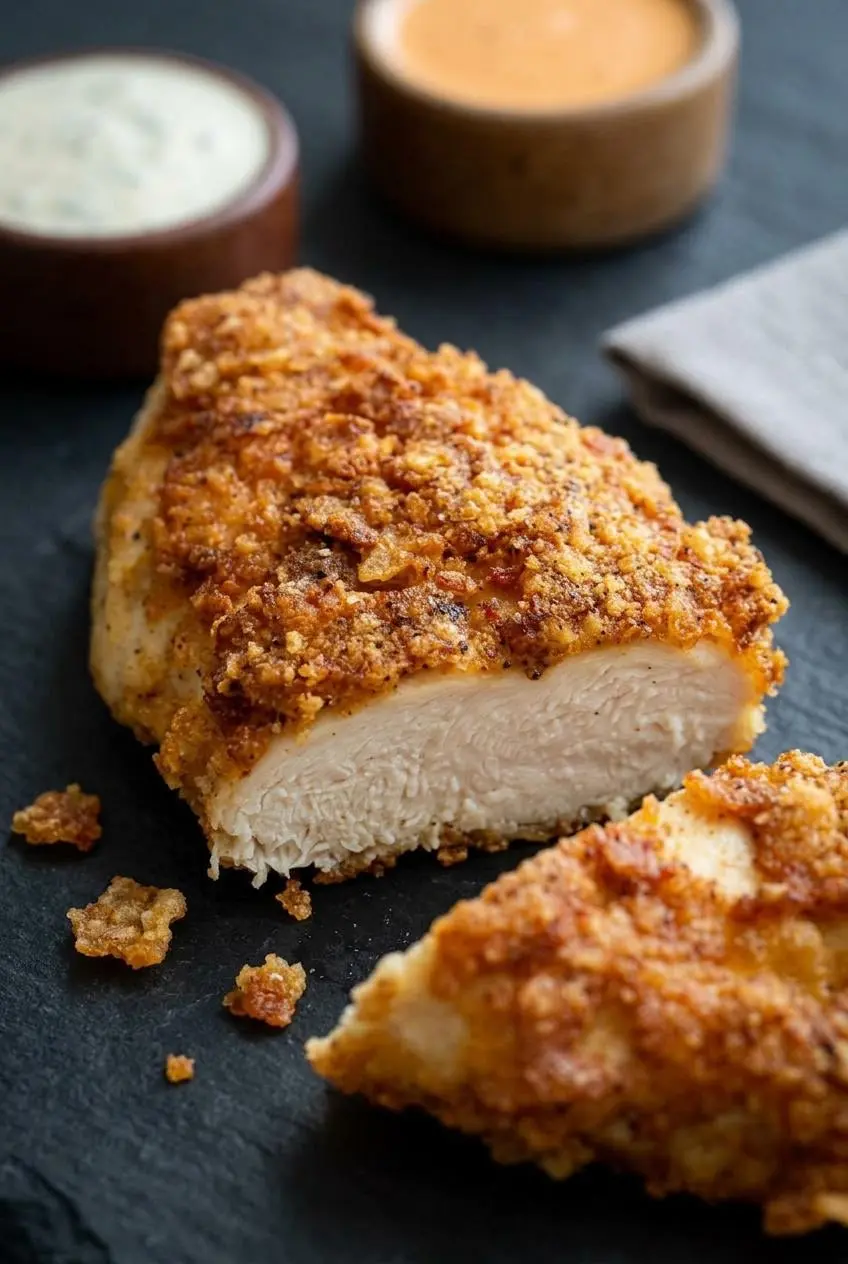
This recipe works because each part of the coating does a specific job. Crushed pork rinds bring the main crunch, while shredded parmesan melts slightly as it fries and helps the crust cling to the chicken instead of sliding off.
The double-dip matters more here than it does with regular flour breading. The first layer gives the chicken coverage, and the second layer builds a thicker shell that can stand up to hot oil without turning patchy or fragile.
BBQ pork rinds also add built-in seasoning, so the crust tastes savory instead of flat. If you want a little deeper flavor, stir a pinch of smoked paprika and garlic powder into the pork rind mixture as an optional boost.
For a comfort-food style plate, this pairs especially well with keto french fries.
Ingredients for Crispy Keto Fried Chicken
Each ingredient shapes the final result, from the crisp texture of the coating to the rich flavor, juicy interior, and browned finish in the pan.
Official Ingredients
Keto Fried Chicken
- 1/2 cup pork rinds (BBQ flavor, crushed)
- 12 ounce boneless, skinless chicken breast (sliced in half)
- 1/3 cup parmesan cheese (shredded)
- 1 teaspoon black pepper
- 1 large egg
- 1 1/2 tablespoon olive oil
- 1 tablespoon coconut oil
Pork rinds are the backbone of the low carb breading. They fry up crisp and light, and they mimic the brittle crunch you usually get from flour-based coatings.
Parmesan does more than add saltiness. As it heats, it lightly softens and helps bind the crumbs together, which makes the crust more cohesive and less likely to break apart during frying.
The egg wash gives the coating something to grab onto, and black pepper keeps the crust from tasting one-note. The olive oil and coconut oil blend gives you flavor plus good browning in a shallow pan.
I always crush pork rinds in a sealed bag until they look like coarse crumbs, not powder. That gives better texture and keeps the coating from packing on too densely.
How to Make Keto Fried Chicken Step by Step
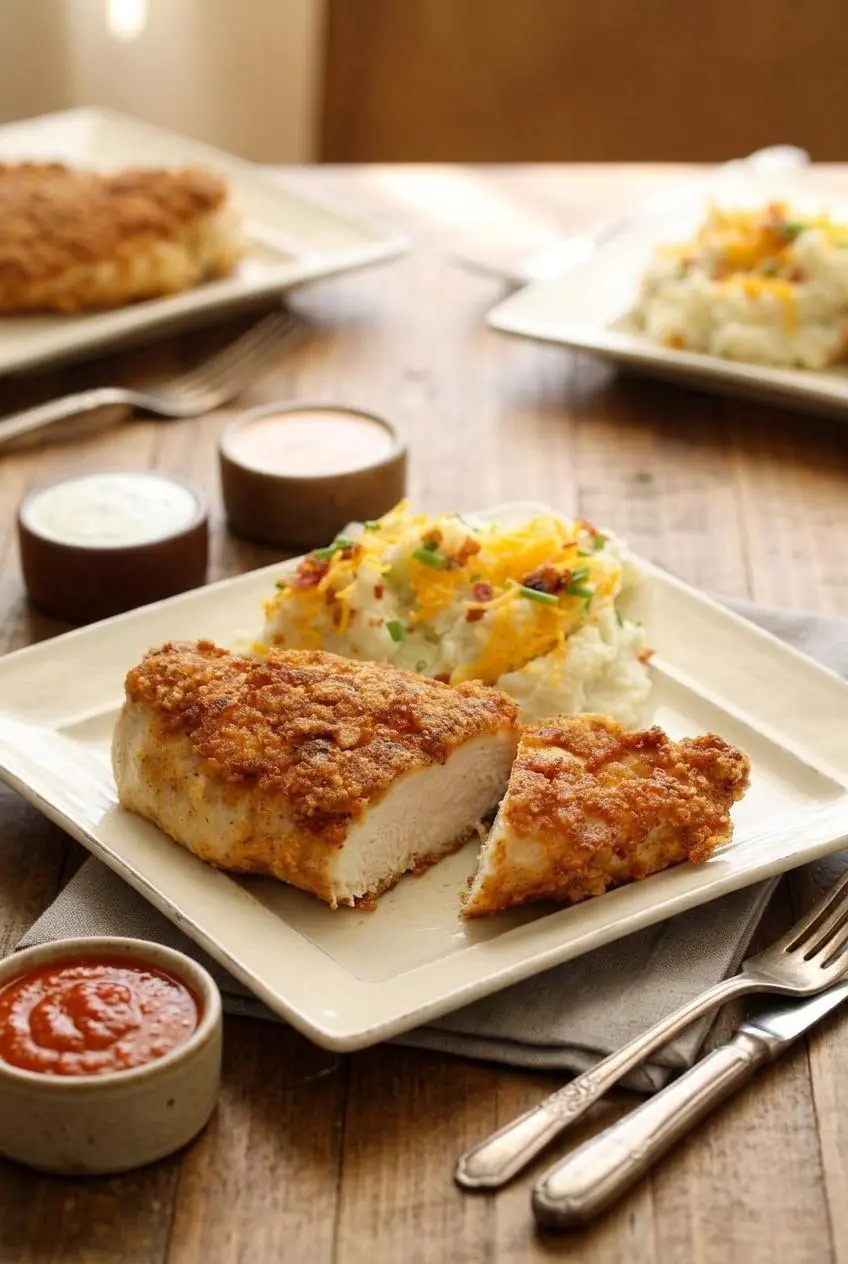
Cooking Method
- Crush the pork rinds in a Ziploc bag until they are finely broken up, then pour them into a bowl with the parmesan and black pepper.
The coating should look evenly mixed, with no big shards of pork rind left behind. - Whisk the egg in a separate bowl until smooth and streak-free.
A fully blended egg wash coats the chicken more evenly and helps the crumbs stick better. - Dip each chicken piece into the egg, press it into the pork rind mixture, then repeat the egg and coating one more time for a second layer.
The chicken should look fully covered with no bare wet spots showing through. - Heat the olive oil and coconut oil in a frying pan over medium-high heat, then test the pan with a tiny crumb before adding the chicken.
If the crumb sizzles right away, the oil is hot enough to start building a crisp crust. - Lay the chicken into the pan and leave space between the pieces while the first side browns.
Do not crowd the pan, or the chicken will steam and the coating can turn soft instead of crisp. - Let the chicken cook undisturbed until the underside turns deep golden brown, then flip it and brown the second side before turning it back once more.
Wait for a clear golden-brown color shift before flipping so the crust has time to set. - Lower the heat to the minimum setting and continue cooking for about 6 to 7 minutes per side, depending on thickness.
The chicken is done when the crust is crisp and the center reaches 165 °F on a thermometer, as shown in the safe minimum internal temperature chart for poultry.
Serve the chicken while the crust is still at its crispest. If you want something cool and creamy next to it, a keto slaw or a low-carb buffalo dipping sauce balances the richness nicely.
The Best Frying Oils for a Ketogenic Diet
The best frying fat here is one that handles heat well and helps the crust brown without tasting heavy. Coconut oil is a solid choice for keto cooking, and avocado oil is another strong option when you want a neutral flavor for high-heat frying.
Olive oil can work in a shallow pan like this recipe uses, especially when blended with coconut oil, but it is not the first pick for very high heat. If you want a more heat-stable option for repeat batches, swap the olive oil for avocado oil.
It also helps to avoid delicate seed and vegetable oils when you want a steadier frying medium. They tend to be less appealing for this kind of keto cooking, especially when you are trying to keep the flavor clean and the crust from darkening too fast.
Troubleshooting Common Frying Mistakes
Most problems with low carb fried chicken come down to moisture, heat, or moving the chicken too soon. These quick fixes keep the crust intact and the chicken juicy.
- The coating falls off in the pan. The chicken was likely too wet or flipped too early. Pat it dry, double-dip it, and let it sit undisturbed for the first few minutes.
- The breading sticks to the pan. The oil was not hot enough when the chicken went in, or the crust had not set yet. Test with a crumb first and wait for browning before trying to turn it.
- The pork rinds brown too fast. The heat is too high. Lower the burner and give the chicken time to finish cooking gently after the crust forms.
- The crust turns soggy. The pan was crowded, which traps steam. Fry in batches if needed and keep space around each piece.
- The coating seems too coarse. The pork rinds were not crushed enough. Aim for fine crumbs after crushing so they cling more evenly to the egg wash.
- Loose crumbs keep burning in the oil. Shake off excess coating before frying and wipe out dark bits between batches if needed.
Alternative Cooking Methods
If you want less splatter or need a more hands-off option, both of these methods work well. The texture changes a little, but you can still get a crisp coating if you set up the chicken properly.
Air Fryer Keto Fried Chicken Instructions
Arrange the double-dipped chicken in a single layer in the basket so air can move around each piece. Lightly spray the coating with a high-heat oil spray, then air fry at 370 °F for about 12 to 15 minutes, flipping halfway through.
The crust should look dry, browned, and crisp by the end. If your basket is crowded, cook in batches so the coating stays crunchy instead of soft.
Oven Baked Crispy Chicken Directions
Set the breaded chicken on a wire rack over a baking sheet, then bake at 400 °F for 18 to 20 minutes until golden. The rack matters because it lets heat circulate under the chicken and helps the bottom stay crisp instead of damp.
This option is especially handy when you want to cook several pieces at once without babysitting a skillet. The coating will be a little less fried in flavor, but still nicely crisp around the edges.
Storage and Reheating to Maintain Crispiness
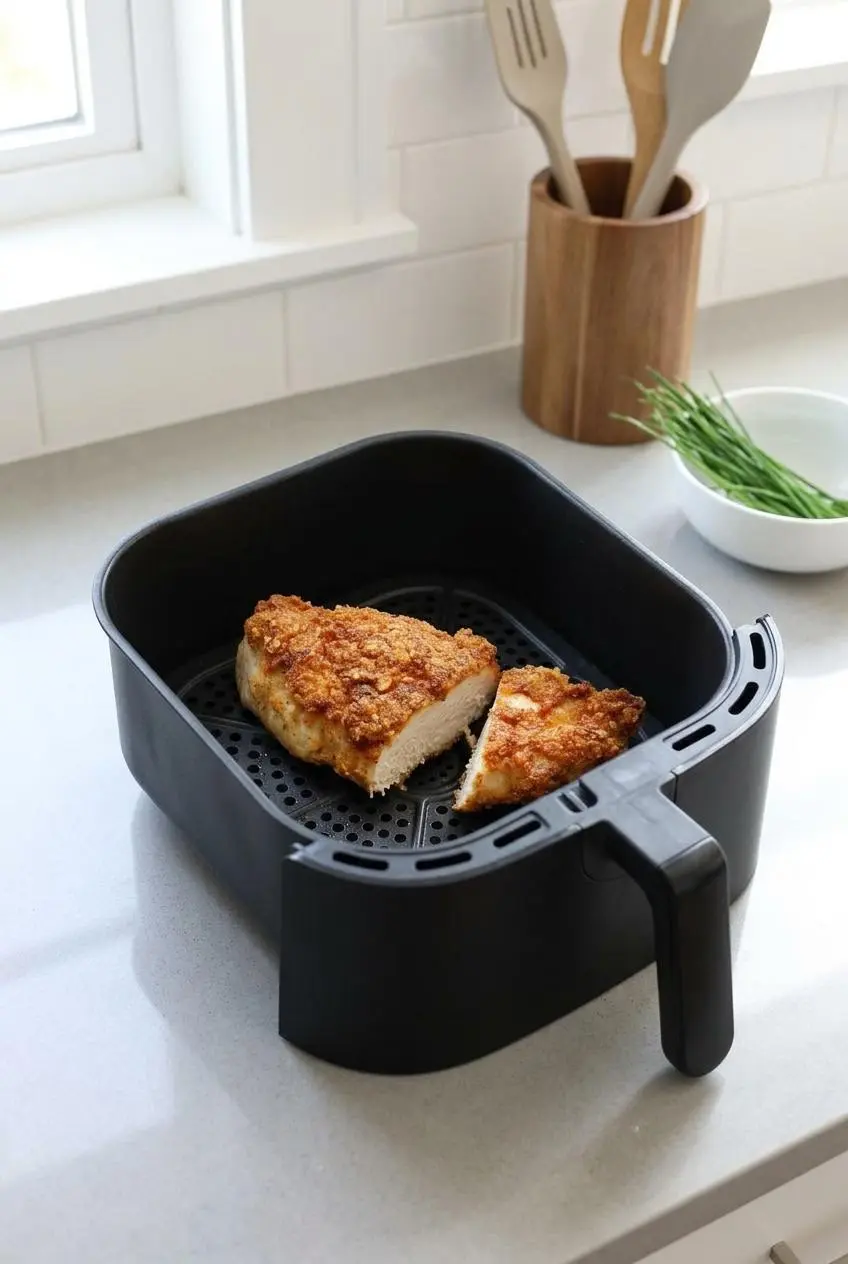
Let leftover chicken cool, then store it in an airtight container in the refrigerator for up to 3 to 4 days to maintain safe storage for cooked poultry.
For the best texture, reheat it in the air fryer or oven rather than the microwave. Dry heat helps wake the crust back up, while the microwave tends to soften the coating and dampen all that good crunch.
If you already know dinner wants a classic comfort-food side, keto cornbread works well with reheated pieces too.
Conclusion
This chicken nails the two things most people want from a keto version of fried chicken: a real crisp crust and juicy meat underneath. Pork rinds and parmesan do the heavy lifting, and the double-dip keeps that coating where it belongs.
Give the chicken space in the pan, wait for that deep golden color before flipping, and let the crust set before moving anything around. Dinner gets a lot more satisfying from there.
Frequently Asked Questions
Do you measure the pork rinds before or after crushing?
Measure them after crushing for the most accurate coating ratio. Whole pork rinds take up more space, so measuring first can leave you short on crumbs. Fine, even crumbs coat the chicken more consistently than large pieces.
Can I make this fried chicken without pork rinds?
Yes, you can use almond flour mixed with shredded parmesan as an alternative. The texture will still be crisp, but it will not have quite the same crackly finish as pork rinds. Keep the double-dip so the alternate coating has the best chance of sticking well.
How do I keep the keto crust from falling off?
Pat the chicken completely dry before dipping it into the egg. Double-dip each piece so the coating forms a thicker shell. Once the chicken hits the hot oil, leave it alone until the first side has clearly browned.
What is the best way to reheat leftover keto chicken?
Use an air fryer if you can, because it brings the crust back faster than most other methods. Reheat at 350 °F for 3 to 5 minutes, just until the coating is crisp again and the center is hot. If you do not have an air fryer, use the oven instead of the microwave for a better texture.
Keto Fried Chicken Recipe

Equipment
- Ziploc bag
- Mixing bowls
- Whisk
- Frying pan
Ingredients
Keto Fried Chicken
- 1/2 cup pork rinds (BBQ flavor, crushed)
- 12 ounce boneless, skinless chicken breast (sliced in half)
- 1/3 cup parmesan cheese (shredded)
- 1 teaspoon black pepper
- 1 large egg
- 1 1/2 tablespoon olive oil
- 1 tablespoon coconut oil
Instructions
Cooking Method
- Crush the pork rinds in a Ziploc bag until they are finely broken up, then pour them into a bowl with the parmesan and black pepper. The coating should look evenly mixed, with no big shards of pork rind left behind.
- Whisk the egg in a separate bowl until smooth and streak-free. A fully blended egg wash coats the chicken more evenly and helps the crumbs stick better.
- Dip each chicken piece into the egg, press it into the pork rind mixture, then repeat the egg and coating one more time for a second layer. The chicken should look fully covered with no bare wet spots showing through.
- Heat the olive oil and coconut oil in a frying pan over medium-high heat, then test the pan with a tiny crumb before adding the chicken. If the crumb sizzles right away, the oil is hot enough to start building a crisp crust.
- Lay the chicken into the pan and leave space between the pieces while the first side browns. Do not crowd the pan, or the chicken will steam and the coating can turn soft instead of crisp.
- Let the chicken cook undisturbed until the underside turns deep golden brown, then flip it and brown the second side before turning it back once more. Wait for a clear golden-brown color shift before flipping so the crust has time to set.
- Lower the heat to the minimum setting and continue cooking for about 6 to 7 minutes per side, depending on thickness. The chicken is done when the crust is crisp and the center reaches 165 °F on a thermometer, as shown in the safe minimum internal temperature chart for poultry.