Skip to content
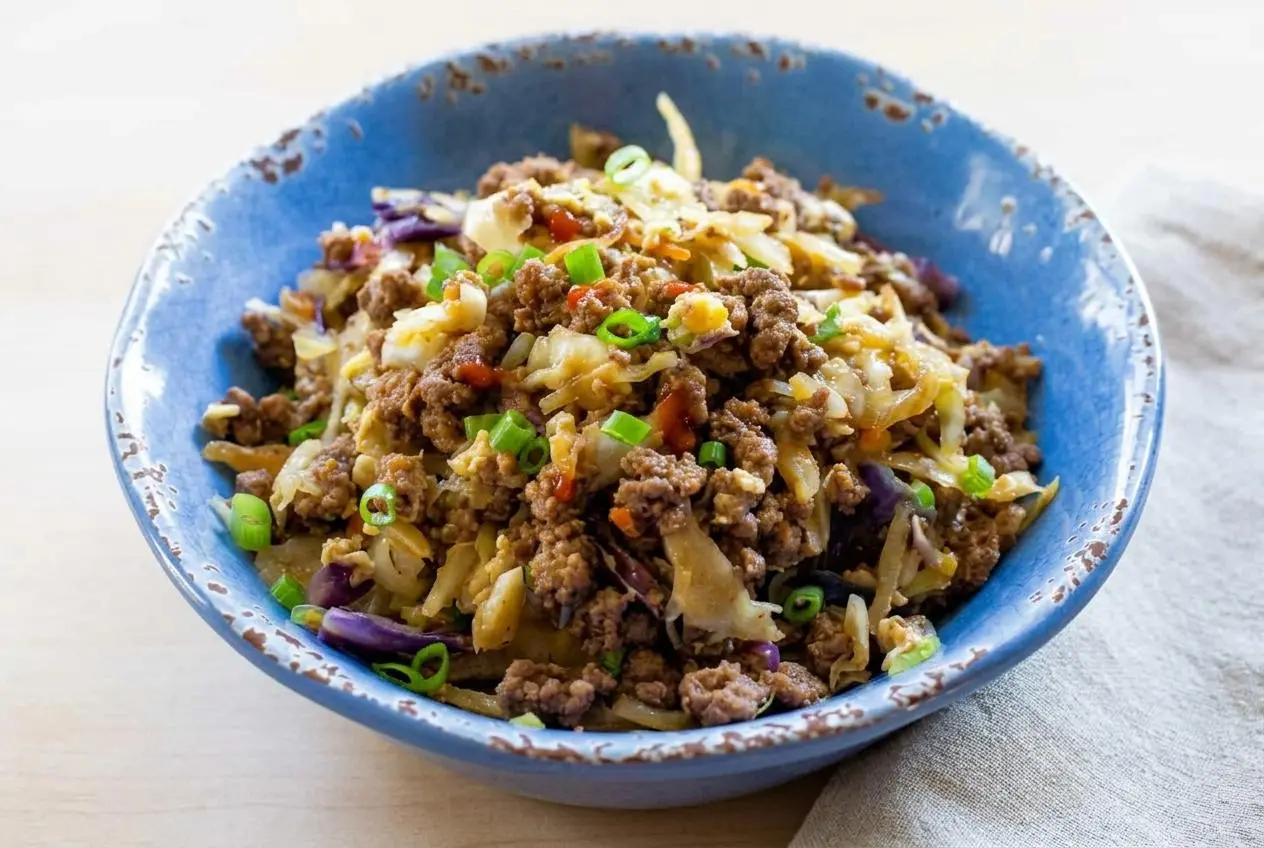
Keto egg roll in a bowl is a fast low-carb skillet dinner with ground beef, cabbage, soy sauce, ginger, egg, and sesame oil that gives you classic takeout flavor without the wrapper.
This keto egg roll in a bowl cooks in about 15 minutes and tastes deeply savory, a little spicy, and warmly nutty from the sesame oil. It scratches the takeout itch without the carb-heavy shell.
The big win is texture. Brown the beef well, keep the cabbage tender-crisp, and the whole bowl stays lively instead of limp. That last drizzle of sesame oil is the trick.
Have the soy sauce, sriracha, and sesame oil measured before the beef hits the skillet so the cabbage cooks quickly instead of steaming while you search the fridge.
Why You Will Love This Low-Carb Egg Roll Bowl
This is the kind of weeknight dinner that earns a permanent spot in the rotation. You get the flavors of an egg roll filling, but everything happens in one skillet and in a fraction of the time it takes to wrap and fry anything.
It also fits a keto dinner plan nicely because the wheat wrapper is gone. Classic egg rolls are not keto-friendly because the wrapper is made with flour, but the filling itself adapts beautifully to a low-carb skillet meal.
- It is ready fast, with very little prep if you start with shredded cabbage or coleslaw mix.
- The beef makes it rich and filling, while the cabbage keeps the bowl light and tender-crisp.
- The egg cooked right in the pan adds extra protein and gives the mixture that familiar takeout-style texture.
- You can keep it mild or finish it with extra sriracha if you want more heat.
Per serving, this recipe lands in low-carb territory based on the provided nutrition, with 8 g carbohydrate and 3 g fiber. That is why it works so well when you want something fast, savory, and satisfying.
Essential Ingredients and Low-Carb Swaps
Each ingredient pulls its weight here, from beefy richness and savory depth to crisp texture, heat, aroma, and that glossy finish that makes the bowl taste complete.
- 1 lb ground beef
- 1 teaspoon minced garlic
- 14 ounces shredded cabbage or coleslaw mix
- 1/4 cup low-sodium soy sauce
- 1 teaspoon ground ginger
- 1 whole egg
- 2 teaspoons sriracha
- 1 tablespoon sesame oil
- 2 tablespoons sliced green onions
Ground beef brings the richest flavor and enough fat to carry the ginger, garlic, and chile. Cabbage gives the bowl its volume and bite. Soy sauce seasons everything quickly, while the egg adds little ribbons of soft structure through the skillet.
Sesame oil matters most at the end, not the beginning. It is a finishing oil here, used for aroma and that unmistakable toasted flavor. If you cook with it from the start, the nutty scent fades and the bowl loses one of its best notes.
Fresh garlic is especially helpful in a fast dish like this because it wakes up in seconds. If you use fresh ginger instead of ground, it should smell sharp and spicy the moment it hits the grater, which tells you it will punch through the richness of the beef.
I like to measure the soy sauce, sriracha, and sesame oil before I start because once the cabbage goes in, the skillet moves quickly and that little bit of prep keeps the texture much better.
Coleslaw Mix vs. Broccoli Slaw: Crucial Macro and Crunch Differences
Both work, but they behave differently in the pan. Standard coleslaw mix softens faster and gives you the most classic egg roll texture. Broccoli slaw stays firmer and chewier, so the final bowl has more bite.
Bagged coleslaw is convenient, but many mixes include some carrot shreds. That does raise the carb count a bit compared with using mostly cabbage at home, though the exact difference depends on the brand and the ratio in the bag. If you want the lowest-carb route, choose a mix with mostly green cabbage and just a light touch of carrot, or shred your own cabbage and control it directly.
Broccoli slaw is a good optional swap when you want a hardier crunch that holds up well for leftovers. It will taste a little less like takeout filling and a little more like a sturdy low-carb skillet bowl, which can be a very good thing.
Selecting Your Soy Sauce Alternative
The best choice depends on how strict your keto approach is and whether you need soy-free or gluten-free options.
- Low-sodium soy sauce gives balanced salinity and the classic flavor profile this recipe is built around.
- Gluten-free tamari is the closest swap for flavor if you avoid wheat.
- Liquid aminos work well, but they often taste saltier, so be careful not to season the beef too aggressively early on.
- Coconut aminos are useful for soy-free cooking, but they taste a little sweeter and usually carry more natural sugars, so they are less ideal for very strict clean keto.
If you are choosing strictly for keto macros, low-sodium soy sauce or tamari usually make the most sense. If sodium is your bigger concern, compare labels and pick the lowest-sodium option that still tastes good to you.
How to Shred Cabbage Like a Pro Without It Getting Soggy
If you want to shred your own cabbage instead of opening a bag, keep the pieces thin and dry. Thick cabbage chunks stay tough in the short cooking time, while very wet shreds can steam the skillet and water everything down.
Use a sharp chef’s knife or a mandoline to slice green cabbage very thinly. A mix of mostly green cabbage with a small amount of red cabbage works nicely if you want extra color without changing the flavor much. For the lowest-carb feel, keep carrots light or skip them entirely, since many store-bought slaw blends rely on them more than you might expect.
After shredding, pat away any obvious moisture if the cabbage seems damp from washing. Dry cabbage sautés. Wet cabbage steams. That one detail makes a bigger difference than people think.
If you are using a mandoline, go slowly and use the guard. Thin, even shreds cook fast and stay pleasantly tender instead of turning stringy.
How to Cook Keto Egg Roll in a Bowl: Step-by-Step Guide with Success Cues
This recipe moves quickly, so the main goal is control. Brown the beef first for flavor, add the aromatics briefly so they do not burn, then cook the cabbage just until it softens while keeping a bit of bite.
- Set a large skillet over medium-high heat and cook the ground beef, breaking it up as it browns, until no pink remains; then add the 1 teaspoon minced garlic for about 30 seconds.
The beef should look fully browned with sizzling edges, and the garlic should smell fragrant but not darken. - Add the 14 ounces shredded cabbage or coleslaw mix, 1/4 cup low-sodium soy sauce, and 1 teaspoon ground ginger, then sauté until the cabbage reaches your preferred tenderness, adding a little water only if the pan needs help softening the slaw.
The skillet should stay lively and steamy rather than soupy, and the cabbage should look slightly wilted but still tender-crisp. - Lower the heat, make an open space in the center, and crack in the 1 whole egg; scramble it in that center spot until set, then fold it into the beef and cabbage.
The egg should form soft curds in the well instead of disappearing into the pan, which gives the bowl better texture. - Stir in 2 teaspoons sriracha, drizzle with 1 tablespoon sesame oil, and finish with 2 tablespoons sliced green onions, adding more soy sauce and sriracha only if you want a stronger finish.
You should smell the warm sesame aroma right away, and the mixture should look glossy rather than wet.
The Skillet Well Technique for Perfect Scrambled Eggs
This little move is worth doing. Once the cabbage is cooked, push the beef and vegetables out toward the edges of the skillet to create an empty center. That bare spot gives the egg direct contact with the pan so it can scramble into soft curds instead of coating the whole mixture.
Keep the heat low for this part. The egg cooks gently, stays tender, and folds back through the bowl in visible bits. It adds body and makes the whole dish feel more like the inside of an egg roll, rather than just seasoned ground beef and cabbage.
Expert Tips for the Ultimate Texture and Flavor
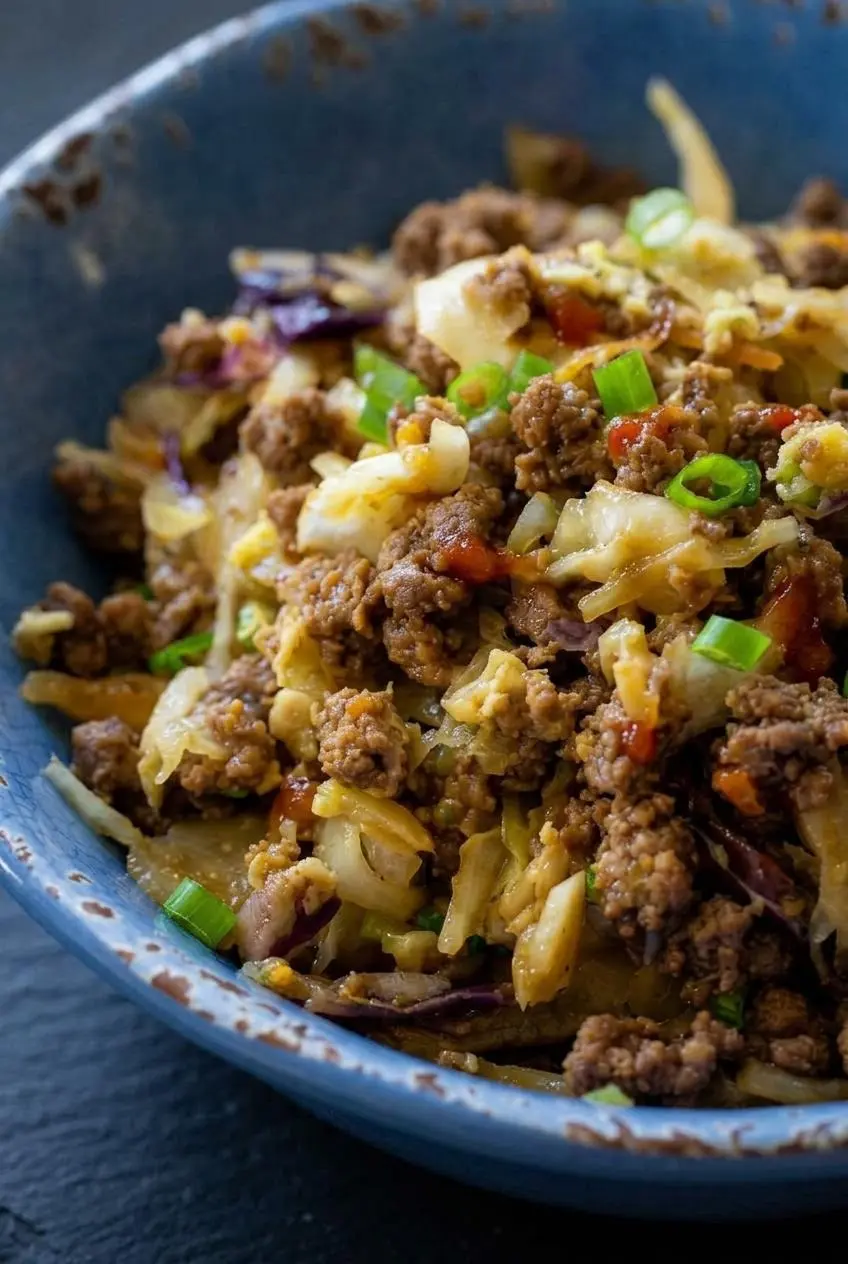
If your goal is a skillet that tastes bold and stays crisp instead of watery, a few small choices matter a lot.
- If the pan starts looking wet, turn the heat up briefly and let the extra moisture evaporate before serving. This rescues the bowl fast without overloading it with more sauce.
- Do not add garlic too early. Beef can take the heat, but garlic burns quickly and turns bitter.
- Fresh ginger gives a brighter, sharper flavor than ground ginger. If you have it, grate it in right after the beef browns so the aroma blooms in the hot fat.
- Do not cook the cabbage too long. A short sauté keeps it tender-crisp, while extra time pulls out more water and makes the skillet mushy.
- Add sesame oil at the end. Early heat dulls its toasted aroma, and that aroma is half the charm of the dish.
- If the bowl tastes rich but a little flat, finish with a small splash of unseasoned rice vinegar or a squeeze of lime. Acid wakes up the savory fat and keeps the flavor from feeling heavy.
- Use seasoned rice vinegar with caution. It often contains added sugar, so unseasoned rice vinegar is the cleaner choice here.
- If you swap in liquid aminos, taste before adding extra salt. They can come across saltier than soy sauce.
Want the quickest path to a better pan? Listen for a steady sizzle after the cabbage goes in. If that sound disappears and the mixture starts quietly steaming, the skillet is drifting toward soggy territory.
Creative Variations: Protein and Diet Customizations
This recipe is flexible as long as the official version stays your base. Keep all of these as optional changes, and adjust only for texture and flavor.
- Swap the ground beef for pork if you want a richer, slightly sweeter savory profile.
- Use turkey or chicken for a leaner bowl with a lighter finish.
- Try broccoli slaw when you want more chew and crunch.
- Drizzle on a low-carb spicy mayo if you want more richness at the table.
- If ground beef is always in your weeknight rotation, keto ground beef casserole is another cozy dinner to keep in mind.
Choosing Your Protein: Beef, Pork, or Poultry
Ground beef is the default because it gives you rich flavor quickly and keeps the bowl satisfying. Ground pork makes the dish taste even more like traditional egg roll filling, with a softer and juicier texture.
Chicken and turkey absorb the ginger, soy, and sriracha beautifully, but they need a little more attention because they are leaner. If you use them, look for a bit of fat in the grind if possible, or plan to enrich the finished bowl so it does not eat dry.
Adapting the Recipe for Lean Poultry: Chicken and Turkey Rules
Lean poultry works very well here, but it needs help from fat and careful timing.
- Brown chicken or turkey just until cooked through so it stays tender.
- Add an extra tablespoon of sesame oil or butter at the end if the bowl tastes lean or dry.
- Do not overcook the cabbage when using poultry, because the vegetables will not have as much beef fat to cushion the texture.
- A small splash of broth can help if the pan looks dry while the slaw softens.
How to Make it Whole30 and Paleo Compliant
For a Whole30 or Paleo-style version, use coconut aminos instead of soy sauce and make sure your hot sauce has no added sugar. The flavor will be a touch sweeter and less salty, so expect a softer, rounder finish.
Because coconut aminos are naturally sweeter, many strict keto eaters still prefer tamari or low-sodium soy sauce. Both approaches work. It just depends on which rules you are cooking by that day.
How to Serve with Keto Yum Yum and Creamy Asian Sauces
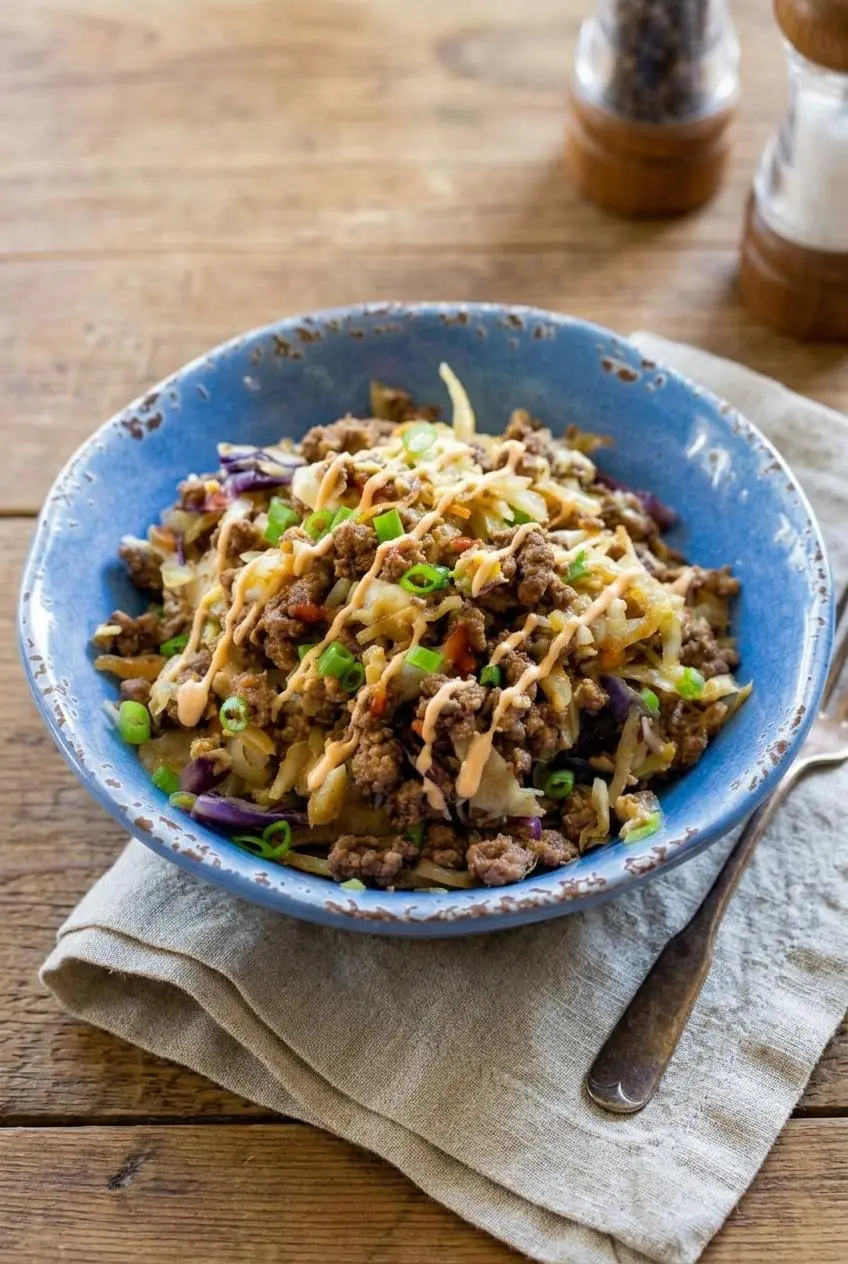
This bowl is satisfying on its own, but a smart topping or side can turn it into a fuller dinner without much extra work.
- Serve it hot over butter-steamed cauliflower rice if you want a heartier plate.
- Add a runny fried egg on top for extra richness and a little sauce from the yolk.
- Use cold leftovers in butter lettuce leaves for crisp low-carb wraps.
- A quick sugar-free spicy mayo or keto yum yum style drizzle adds a creamy finish that works especially well with the heat from sriracha.
- If you want a vegetable side, green beans almondine pairs nicely with the savory sesame notes.
A creamy sauce works best as a table finish, not something stirred into the whole skillet. That way the bowl keeps its edge and does not turn heavy.
The Sriracha Ranch Finishing Touch
For an easy creamy topper, stir together ranch and sriracha to taste. It gives you cool richness, a little tang, and enough heat to play nicely with the beef and cabbage.
If you want something sharper, a wasabi-spiked sugar-free mayo also works well in tiny drizzles. Keep it light so it supports the bowl instead of burying the sesame and ginger.
How to Store and Reheat Leftovers
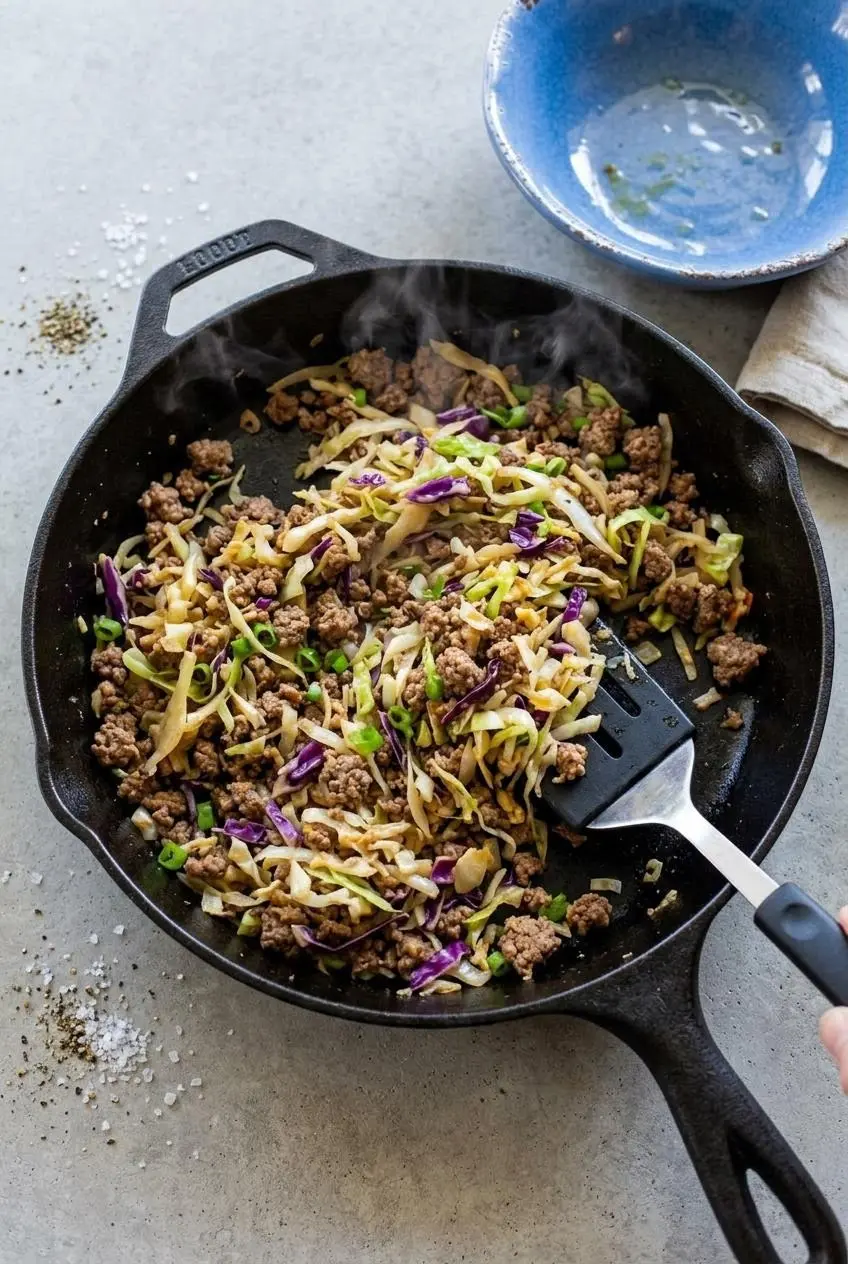
This bowl stores fairly well, but cabbage is always best closest to the day it is cooked. For the best texture, cool the leftovers before covering them and keep them in an airtight container in the refrigerator. For cooked ground meat leftovers, keep within 3 to 4 days.
When reheating, skip the wet microwave approach if texture is your priority. A dry skillet over medium-high heat brings the bowl back to life much better because it lets excess moisture cook off quickly.
If the leftovers seem watery, spread them out in the pan and give them a minute or two without stirring much. That lets steam escape so the cabbage tightens back up instead of collapsing further.
Freezing is possible, but it is not ideal for texture. Cooked cabbage tends to soften and release water after thawing, so the bowl loses its best tender-crisp quality. If you want to freeze part of the meal, the seasoned cooked meat holds up better than the finished cabbage mixture.
Conclusion
This is a genuinely fast dinner with big takeout-style flavor, and it only asks for one skillet and a little attention to timing. Brown the beef well, keep the cabbage moving, and finish with sesame oil after the heat.
If you remember one thing, make it this: stop cooking while the cabbage still has bite. That is what keeps the whole bowl lively, savory, and worth making again.
Frequently Asked Questions
Can I freeze keto egg roll in a bowl?
Yes, but the texture changes. Cooked cabbage usually softens and turns wetter after freezing and thawing. If you want the best result, freeze the seasoned cooked meat portion and add fresh shredded cabbage when you reheat. If you freeze the full bowl, reheat it in a dry hot skillet to drive off extra moisture.
How do I prevent my egg roll in a bowl from getting soggy?
Use high enough heat and keep the cabbage cooking short. Brown the beef fully before the cabbage goes in so the pan starts hot and flavorful. Cook the cabbage just until tender-crisp, not until fully limp. If liquid collects in the skillet, raise the heat briefly and let it evaporate instead of adding more sauce.
Which soy sauce alternative is best for strict clean keto?
Tamari or low-sodium soy sauce are usually the best fit. Gluten-free tamari gives you the closest flavor if you avoid wheat. Liquid aminos can work, but they often taste saltier, so season carefully. Coconut aminos are useful for soy-free cooking, though they are a bit sweeter and less strict for keto macros.
Can I make this recipe with ground chicken or turkey instead of beef?
Absolutely. Both absorb the garlic, ginger, and soy flavors very well. Because they are leaner, they can taste dry if overcooked. Add an extra tablespoon of sesame oil or butter at the end if the finished bowl needs more richness.
Keto Egg Roll in a Bowl

Equipment
- Large skillet
- meat chopper
Ingredients
- 1 lb ground beef
- 1 teaspoon minced garlic
- 14 ounces shredded cabbage or coleslaw mix
- 1/4 cup low-sodium soy sauce
- 1 teaspoon ground ginger
- 1 whole egg
- 2 teaspoons sriracha
- 1 tablespoon sesame oil
- 2 teaspoons sliced green onions
Instructions
- In a large skillet, brown the beef until no longer pink. Add the 1 teaspoon minced garlic and saute for 30 seconds. Add the cabbage/coleslaw, 1/4 cup low-sodium soy sauce, 1 teaspoon ground ginger, and saute until desired tenderness. You can add a little water if you need more liquid to saute the coleslaw down.
- Make a well in the center of the skillet and add the egg. Scramble until done over low heat.
- Stir in 2 teaspoons sriracha. Drizzle with 1 tablespoon sesame oil and sprinkle with green onions. Add additional soy sauce and sriracha if desired.