Skip to content
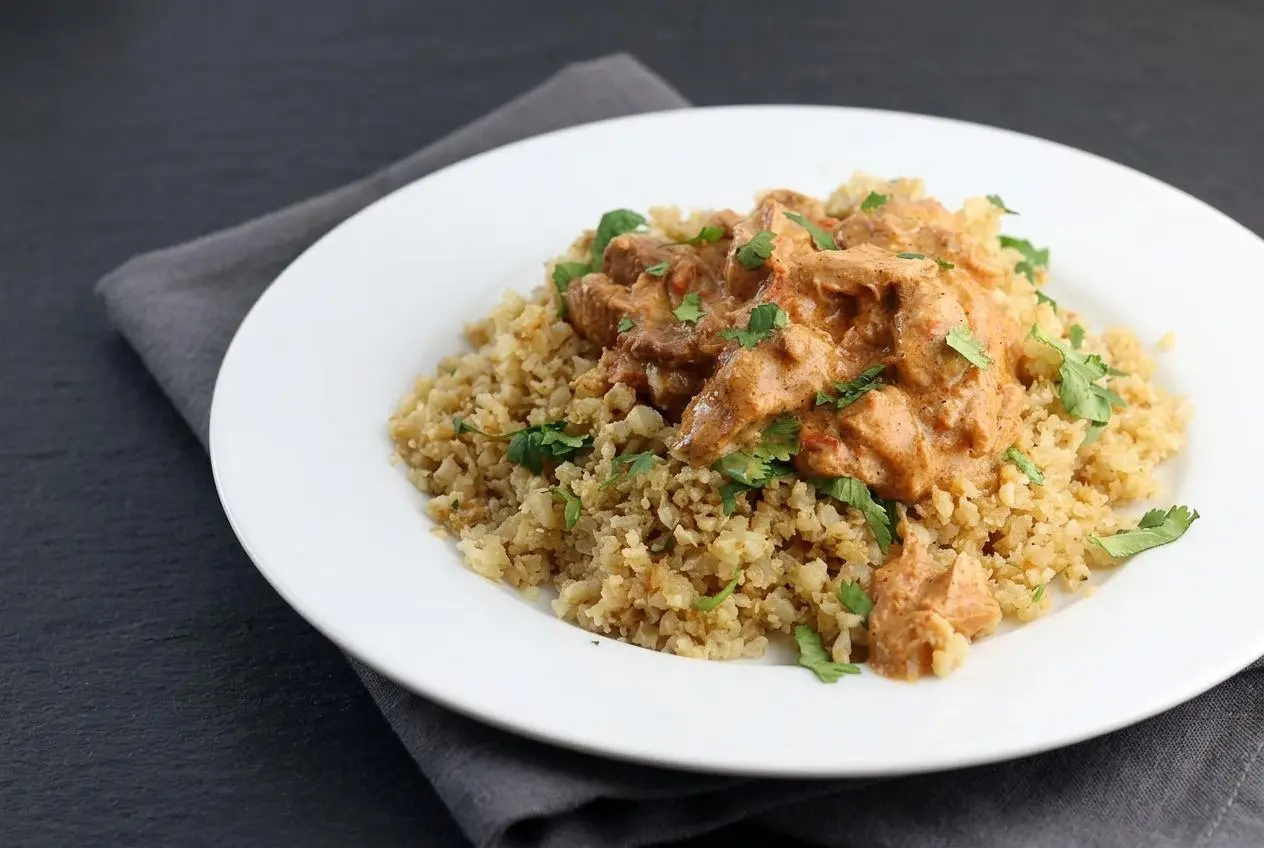
Keto chicken tikka masala is a low-carb version of the classic curry made with chicken thighs, tomatoes, coconut milk, heavy cream, and guar gum for a rich sauce without sugary add-ins or starch.
This is a slow cooker curry with deep spice, tender chicken, and a creamy finish that still feels like comfort food. Fresh ginger, garam masala, and smoked paprika give it that warm, cozy aroma right from the start.
What makes it work so well is the timing. The dairy and thickener go in at the end, so the sauce stays smooth instead of splitting.
Use kitchen shears for the chicken if you have them. They make quick work of trimming and cutting the thighs into even pieces.
Is Chicken Tikka Masala Keto-Friendly?
Yes, it can be, but traditional versions often are not. Restaurant tikka masala usually picks up extra carbs from added sugar, sweeter tomato sauces, and starch-based thickeners that make the sauce glossy and clingy.
This version keeps the flavor profile rich and full while lowering the carbs by skipping the sugary extras and using guar gum instead of flour or cornstarch. Per serving, this recipe comes in at 5.9 g of net carbs, which makes it much easier to fit into a keto dinner.
The choice of chicken matters too. Chicken thighs bring more richness than chicken breast, and the mix of bone-in skin-on plus boneless thighs helps the curry taste deeper and stay moist during the long cook. For keto meals, that extra fat also helps the dish feel satisfying instead of lean and a little flat.
Another small but useful detail is the onion powder. It gives you that savory onion backbone without the heavier carb load that a larger amount of raw onion would add to the pot.
Essential Low-Carb Ingredients and Thickeners
The ingredient choices here are doing real work. Each one helps keep the curry rich, aromatic, and low in carbs without making the sauce feel thin or watered down.
- Chicken thighs bring tenderness and flavor. They also hold up better than breast meat during a long slow cooker run.
- Fresh ginger sharpens the whole dish and keeps the creamy sauce from tasting heavy.
- Garam masala and smoked paprika build warmth, color, and that classic tikka masala feel.
- Tomato paste and diced tomatoes give body and tang, but the recipe keeps them balanced so the sauce stays keto-friendly.
- Unsweetened carton coconut milk and heavy whipping cream create the silky finish. The coconut milk rounds out the spices, while the cream softens the tomato edge.
Onion powder is especially helpful in keto curries because it adds flavor without bringing the extra moisture and carb load of chopped onion. That means a more concentrated sauce and less risk of the curry turning soupy.
Guar gum is the thickener that ties the sauce together. It helps the cream and coconut milk settle into the tomatoes so the curry coats the chicken instead of pooling around it. If you need to swap in xanthan gum, use less because it thickens more aggressively. Start with about half as much, mix well, and stop as soon as the sauce looks glossy and lightly thickened.
If your sauce ever seems watery, the usual reason is either too much added liquid or skipping the thickener at the end. In this recipe, the guar gum is there for texture, not decoration.
Ingredients
Each ingredient here adds something important, from warmth and color to richness, moisture, and a sauce that actually clings to the chicken.
- 24 ounce bone-in, skin-on chicken thighs
- 16 ounce boneless, skinless chicken thighs
- 1 tablespoon fresh ginger (grated)
- 5 teaspoon garam masala
- 4 teaspoon kosher salt
- 2 teaspoon onion powder
- 2 teaspoon smoked paprika
- 10 ounce canned diced tomatoes
- 3 teaspoon fresh garlic (minced)
- 2 tablespoon olive oil
- 3 tablespoon tomato paste
- 1 cup unsweetened carton coconut milk
- 1 cup heavy whipping cream
- 1 teaspoon guar gum
- 2 tablespoon fresh cilantro (chopped, for garnish)
Ginger brings brightness, tomato paste deepens the base, and the mix of coconut milk with heavy cream gives the curry its lush texture without tasting overly sweet. Guar gum helps the final sauce hold together so it feels like curry, not broth.
I like to grate the ginger fresh right over the slow cooker so none of the juices stay behind on the cutting board. It gives the sauce a cleaner, punchier aroma.
How to Make Keto Chicken Tikka Masala
- Remove the bones from the bone-in thighs as needed, then cut all of the chicken into bite-sized pieces, keeping the skin on any pieces that already have it.
Uniform pieces cook more evenly, and the skin adds extra richness as the curry slowly cooks. - Place the chicken in the slow cooker and grate the fresh ginger directly over the top.
The ginger should smell bright and sharp right away, which is a good sign it will carry through the creamy sauce. - Sprinkle in the garam masala, kosher salt, onion powder, and smoked paprika, then stir to coat the chicken well.
Once mixed, the chicken should look evenly stained with spice and smell warm and fragrant. - Add the canned diced tomatoes, minced garlic, olive oil, and tomato paste, then stir again until the mixture is well combined.
The tomato paste should disappear into the mixture instead of sitting in dense streaks. - Pour in half of the coconut milk and mix thoroughly, then cook on low for 6 hours or on high for 3 hours.
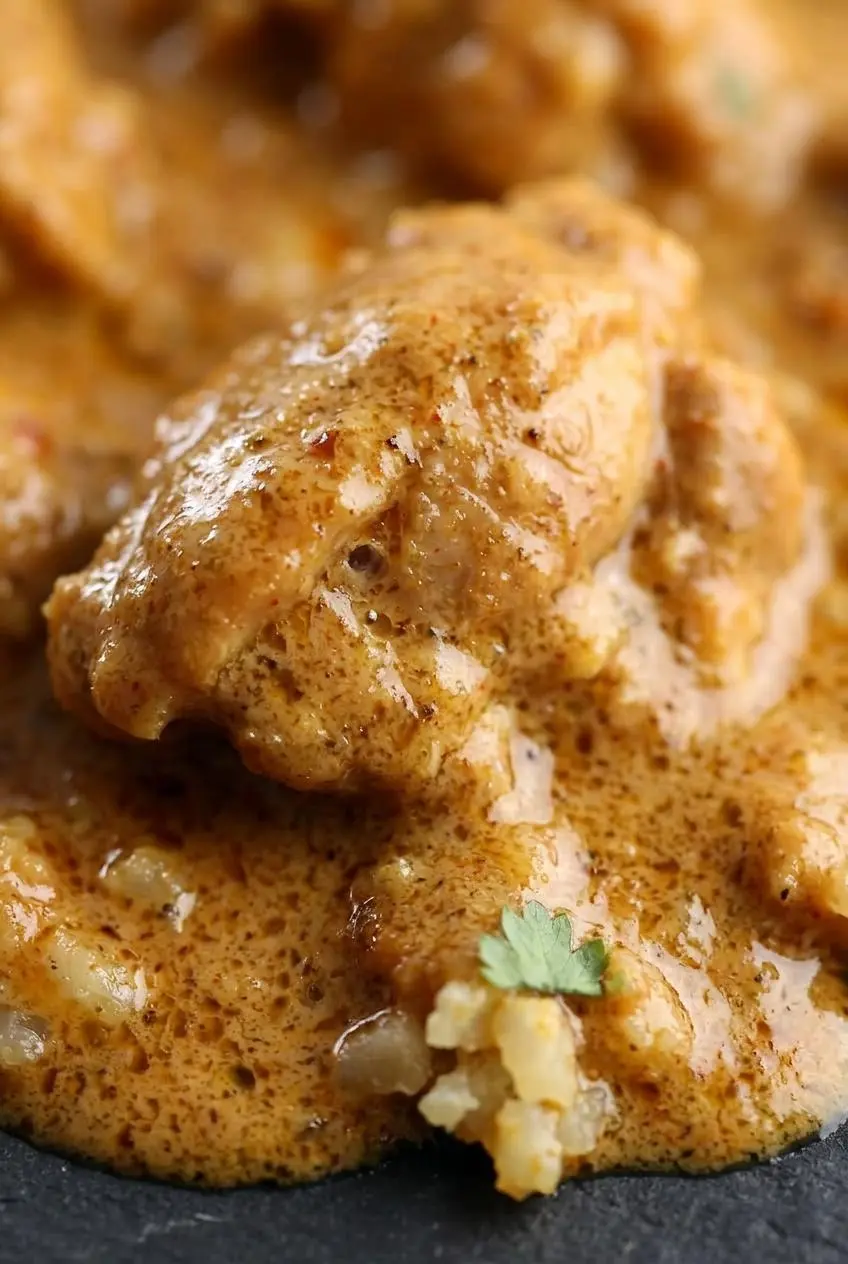
By the end, the chicken should be very tender and the sauce should look darker, looser, and fully aromatic. - Stir in the remaining coconut milk, the heavy whipping cream, and the guar gum after the cooking time is finished, then mix until the sauce thickens.
The curry should turn creamy and smooth, with a sauce that lightly coats the chicken instead of running thin.
That last step matters more than it may seem. Adding the cream at the start can make it more likely to split during a long cook, while adding it at the end keeps the texture smoother and richer.
If you want an extra check on doneness, cook the chicken until it is fully done and reaches 165 °F, which matches safe minimum temperature for poultry.
Watch the finished sauce as you stir in the cream and guar gum. It should go from loose and tomato-forward to glossy, pale orange, and lightly velvety within a minute or two of mixing.
Alternative Cooking Methods
Instant Pot Instructions
If you want the same flavor with less waiting, the Instant Pot works well. Build the mixture as written, using the same ingredient order, then pressure cook on high for 15 minutes.
Use a quick release when the cooking time is done. After opening the pot, stir in the remaining coconut milk, heavy cream, and guar gum off the heat or on a gentle warming setting. This helps the dairy blend in smoothly instead of turning grainy.
The sauce may look a little loose at first, which is normal. Keep stirring and give it a minute to emulsify. It should settle into the same creamy consistency as the slow cooker version.
Stovetop Instructions
For the stovetop, use a Dutch oven or a large deep skillet. Add the chicken, ginger, spices, tomatoes, garlic, olive oil, tomato paste, and half of the coconut milk, then cook over medium-low heat after the mixture comes to a gentle simmer.
Cover partially and keep the heat steady rather than high. You want a slow bubble, not a hard boil. Stir now and then so the tomato base does not catch on the bottom.
Cook until the chicken is tender and fully cooked through. Then lower the heat and stir in the remaining coconut milk, heavy cream, and guar gum at the end, just as you would with the slow cooker method. The sauce is ready when it looks smooth and coats the spoon.
Recipe Variations and Swaps
This curry is very flexible as long as the core method stays the same. Keep the official recipe as written, then use these as optional ways to tailor the flavor or texture.
- Dairy-free: Replace the heavy whipping cream with thick coconut cream for a fuller coconut finish and a slightly less tangy sauce.
- Chicken breast: It works, but it is leaner and easier to dry out. Watch the cooking more closely and pull it as soon as the meat is tender.
- Xanthan gum instead of guar gum: Use a lighter hand. Xanthan thickens faster, so starting with less helps avoid a gummy sauce.
- Brighter spice profile: A little fresh lime zest and a pinch of ground cardamom can wake up the creamy base without changing the character of the dish.
- Milder family version: Keep the same structure but lean on the creamier finish for a softer spice impression.
Dairy-Free Coconut Tikka Masala
For a dairy-free version, swap the heavy whipping cream for pure, thick coconut cream. The curry stays rich, but the coconut flavor becomes more noticeable and slightly sweeter on the finish.
Because coconut cream can be naturally dense, stir it in gradually at the end just as you would with the heavy cream. The sauce should still look smooth and glossy, not oily or separated.
Keto-Friendly Side Dishes

This curry is rich enough to stand on its own, but a good side makes the meal feel complete and gives all that sauce somewhere useful to go.
Spiced Cauliflower Rice
Cauliflower rice is the easiest match here. Toast it in butter or olive oil with a little cumin until it smells nutty and the moisture cooks off, then spoon the curry over the top.
If you want a green side to cut through the creamy sauce, keto green beans fit nicely on the same plate.
Low-Carb Garlic Naan
A warm almond flour flatbread is a great partner for tikka masala because it can scoop up the thicker parts of the sauce without overpowering the spices.
If you like baking low-carb breads to serve with saucy mains, these keto bread recipes are a useful place to start.
How to Store and Reheat Keto Curry
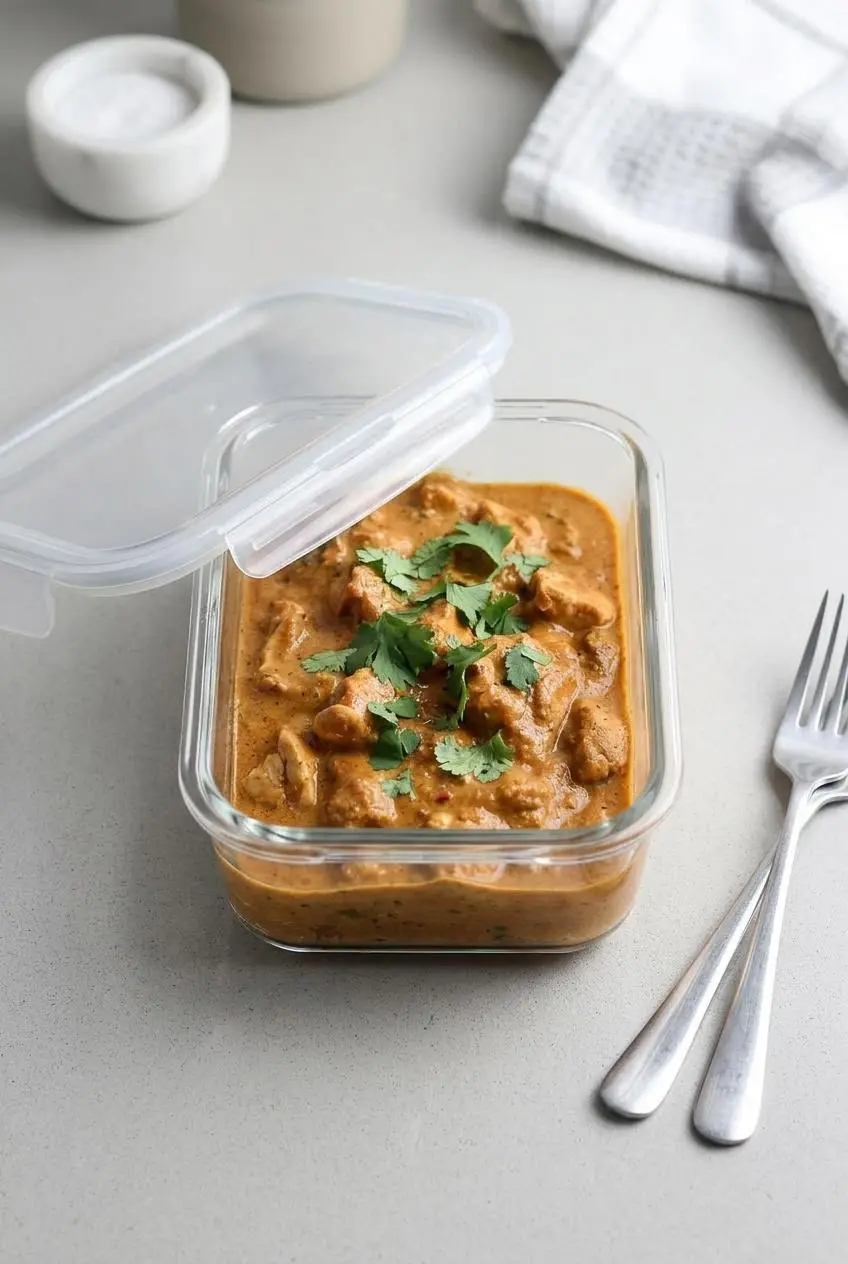
Let the curry cool, then transfer it to an airtight container and keep it chilled. For better food safety in the fridge, keep your refrigerator at 40 °F or below, which aligns with refrigeration guidance for perishable foods.
To reheat, place the curry in a saucepan over low heat. Stir gently as it warms so the cream and coconut milk stay blended.
If the sauce looks separated at first, keep the heat low and whisk or stir steadily. It usually comes back together as it warms. Avoid a hard boil, which can make the creamy finish look grainy.
If you want to portion it for meal prep, divide it into smaller containers once cooled. Smaller portions reheat more evenly and give the sauce less chance to break.
Conclusion
This is the kind of keto dinner that earns a repeat spot because it gives you deep curry flavor with very little hands-on work. The chicken stays tender, the spices stay bold, and the sauce lands right where you want it: rich and spoon-coating.
If you remember one thing, make it this: add the cream and guar gum at the end. That small move is what turns a good pot of curry into a silky one worth making again.
Frequently Asked Questions
Can I use chicken breast instead of thighs?
Yes, you can. Chicken breast works, but it is leaner and can dry out faster than thighs. Thighs stay juicier during long cooking and suit a keto meal better because they bring more fat. If you use breast meat, cook only until tender and fully done rather than letting it go longer than needed.
What Is the Difference Between Guar Gum and Xanthan Gum?
They both thicken low-carb sauces, but they behave a little differently. Guar gum works well in warm and cooler mixtures and gives a soft, smooth thickening effect. Xanthan gum is stronger, so you usually need less of it. When swapping xanthan for guar gum, start small and stir well before adding more.
Can I Freeze This Curry After Adding the Cream?
Creamy curries can change texture after freezing and thawing, so it is better to focus on chilled storage and gentle reheating for the smoothest result. If the sauce separates after reheating, warm it slowly on the stove and whisk gently to help it come back together. Avoid high heat, which can make the dairy look grainy.
How Do I Double This Recipe for Meal Prep?
You can double the ingredients if your slow cooker is large enough to hold everything comfortably. Keep the cooking time the same. Stir thoroughly so the seasonings and tomato paste are evenly distributed. Once done, portion the curry into containers so it cools and reheats more evenly.

Keto Chicken Tikka Masala

Equipment
- Slow Cooker
- kitchen shears
- grater
Ingredients
- 24 ounce bone-in, skin-on chicken thighs
- 16 ounce boneless, skinless chicken thighs
- 1 tablespoon fresh ginger grated
- 5 teaspoon garam masala
- 4 teaspoon kosher salt
- 2 teaspoon onion powder
- 2 teaspoon smoked paprika
- 10 ounce canned diced tomatoes
- 3 teaspoon fresh garlic minced
- 2 tablespoon olive oil
- 3 tablespoon tomato paste
- 1 cup unsweetened carton coconut milk
- 1 cup heavy whipping cream
- 1 teaspoon guar gum
- 2 tablespoon fresh cilantro chopped, for garnish
Instructions
- Remove the bones from the bone-in thighs as needed, then cut all of the chicken into bite-sized pieces, keeping the skin on any pieces that already have it. Uniform pieces cook more evenly, and the skin adds extra richness as the curry slowly cooks.
- Place the chicken in the slow cooker and grate the fresh ginger directly over the top. The ginger should smell bright and sharp right away, which is a good sign it will carry through the creamy sauce.
- Sprinkle in the garam masala, kosher salt, onion powder, and smoked paprika, then stir to coat the chicken well. Once mixed, the chicken should look evenly stained with spice and smell warm and fragrant.
- Add the canned diced tomatoes, minced garlic, olive oil, and tomato paste, then stir again until the mixture is well combined. The tomato paste should disappear into the mixture instead of sitting in dense streaks.
- Pour in half of the coconut milk and mix thoroughly, then cook on low for 6 hours or on high for 3 hours. By the end, the chicken should be very tender and the sauce should look darker, looser, and fully aromatic.
- Stir in the remaining coconut milk, the heavy whipping cream, and the guar gum after the cooking time is finished, then mix until the sauce thickens. The curry should turn creamy and smooth, with a sauce that lightly coats the chicken instead of running thin.