 Skip to content
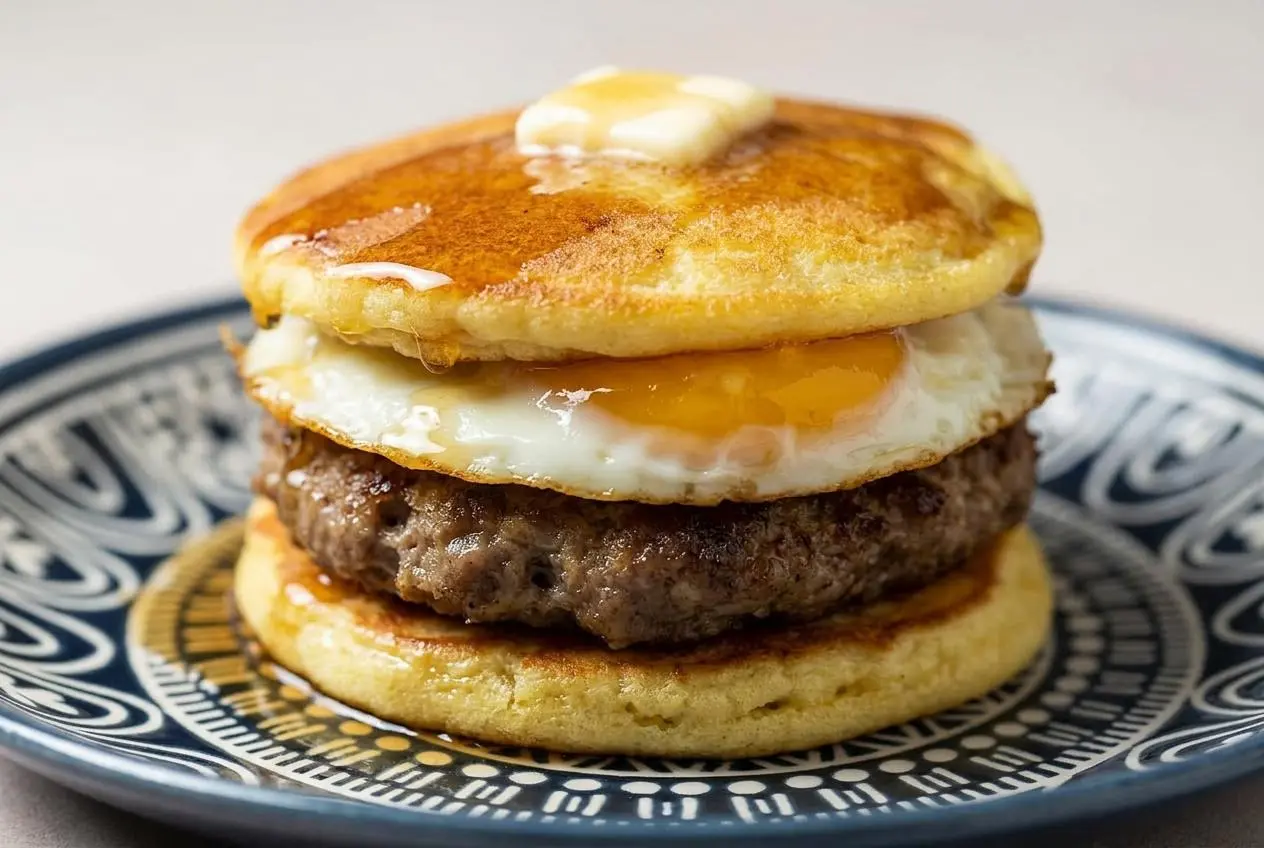
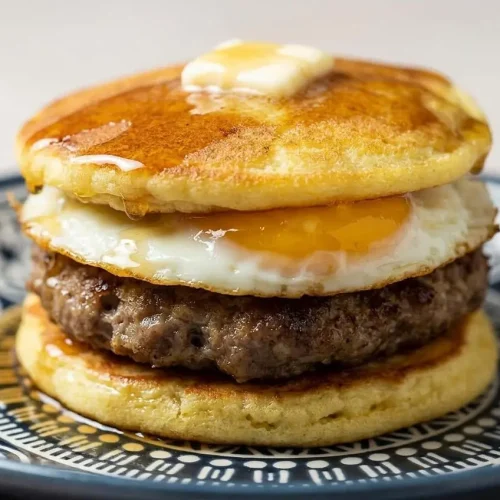
A Low Carb Pancake Sandwich gives you fluffy keto pancakes instead of bread, layered with savory sausage and soft scrambled eggs for a sweet and savory breakfast that feels substantial and easy to repeat.
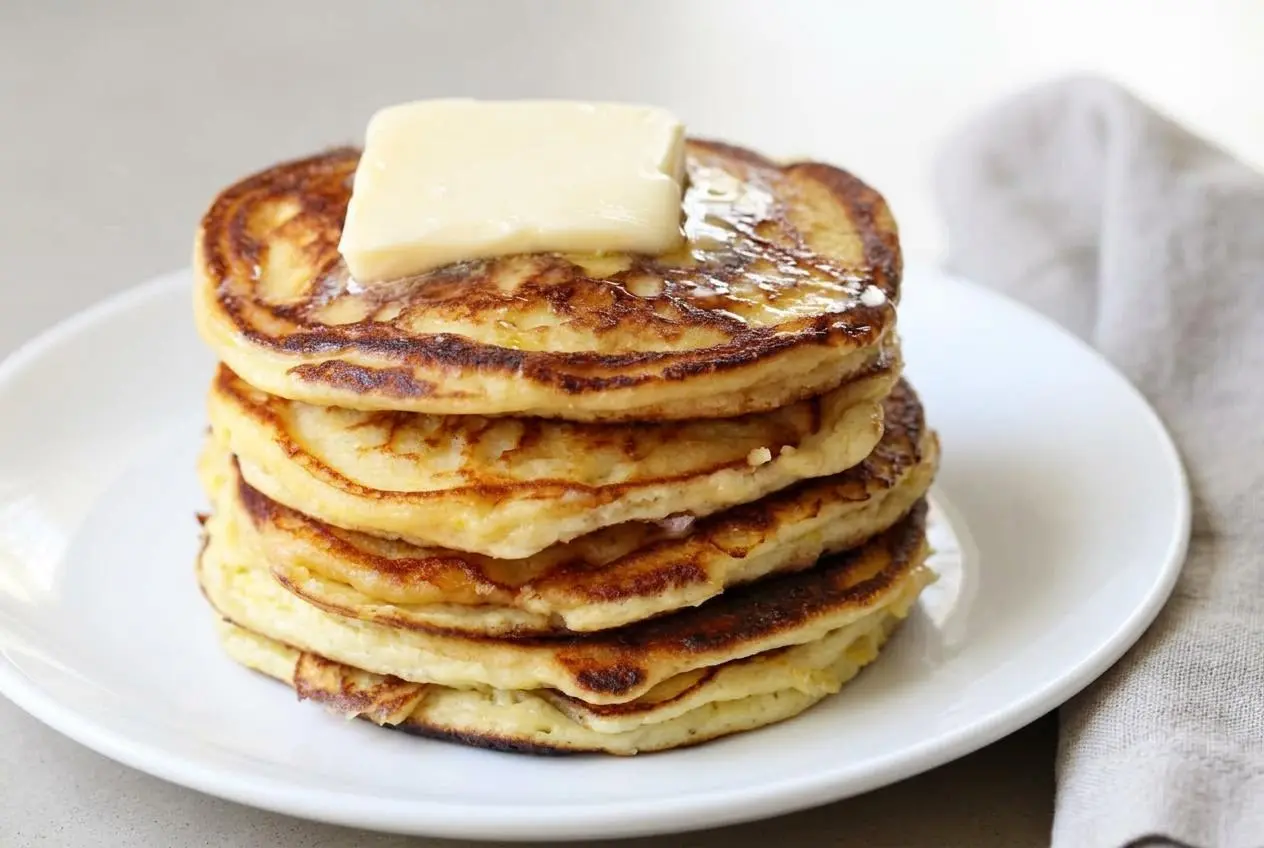
This Low Carb Pancake Sandwich lands somewhere between a breakfast sandwich and a McGriddle-style treat, but with a pancake base that stays firmly in low-carb territory. It’s warm, savory, a little sweet, and very satisfying.
It also works well for busy mornings because you can cook the parts ahead and reheat without much fuss. The pancake texture is the trick that makes it all click.
Let the pancake batter rest for 5 minutes if you can, because that small pause helps the flour hydrate and makes the pancakes easier to cook.
Why This Recipe Works
The big win here is using pancakes as the bun. You get that sweet and savory contrast that makes breakfast sandwiches so craveable, but the filling still feels hearty enough for a real meal.
The sausage brings salty richness, the eggs stay soft and creamy, and the sugar free maple syrup ties everything together without pushing the sandwich away from its low-carb goal. If you like breakfast that hits both savory and slightly sweet notes, this one gets there fast.
It’s also practical. The recipe makes 2 sandwiches, the method is straightforward, and the parts can be cooked separately so you can assemble fresh or prep ahead. Paired with coffee and even a splash of sugar-free coffee creamer, it feels like a full breakfast instead of a compromise.
Ingredients You’ll Need
Each ingredient pulls its weight here, building structure in the pancakes, richness in the eggs, and that sweet savory balance that makes the sandwich work.
Sausage
- ½ lb ground breakfast sausage
Pancakes
- 2 tablespoon Coconut flour or ¼ cup almond flour
- 2 large eggs
- 1 teaspoon baking powder
- 1 ½ tablespoon oil
- 1 tablespoon sugar free maple syrup
- pinch of salt
- cooking spray
Eggs
- 4 large eggs
- 1 tablespoon butter
- kosher salt to taste
Garnish
- sugar free maple syrup
- butter
The pancake choice matters more than it might seem. Coconut flour absorbs more moisture and gives you a denser pancake, while almond flour makes a lighter, more cake-like texture that feels a little more like a classic breakfast sandwich bun.
The baking powder gives the pancakes lift, the oil keeps them tender, and the sugar free maple syrup adds that classic breakfast flavor without changing the recipe into a dessert. For the filling, sugar free breakfast sausage helps keep the carb count down while still giving you a rich, well-seasoned center.
I always check breakfast sausage labels carefully, because hidden sugar and fillers can change both the flavor and the carb count more than you’d expect.
How to Make a Low Carb Pancake Sandwich
Cook the Sausage
- Shape the ground breakfast sausage into 2 patties and place them in a cast iron skillet over medium high heat.
Leave them in place long enough to brown well so a crust can develop before you turn them. - Cook the patties on both sides until they are browned and cooked through.
The outside should look deeply golden with crisp spots, and the center should no longer look raw when checked.
Make the Pancakes
- Set a large non-stick skillet over medium heat while you mix the pancake batter in a small bowl using the coconut flour or almond flour, 2 large eggs, baking powder, oil, sugar free maple syrup, and salt.
The batter should be thick enough to spoon into rounds but still soft enough to spread slightly in the pan. - Coat the skillet with cooking spray and spoon the batter into 4 round pancakes.
Try to keep them similar in size so the finished sandwiches stack neatly. - Cook the pancakes until small, steady bubbles appear around the edges and the bottoms have set.
If you flip too early they can break, so wait until the surface looks less wet around the outside. - Turn the pancakes and cook the second side until the centers spring back when lightly touched.
The finished pancakes should feel set but still soft, not dry.
Prepare the Eggs
- Crack the 4 large eggs into a medium bowl and beat until the yolks and whites are fully combined.
You want an even mixture so the scrambled eggs cook into soft, uniform folds. - Heat a medium skillet over medium-low heat, add the butter, and pour in the beaten eggs.
Once the edges begin to set, the eggs are ready to be gently moved. - Push the eggs across the pan with a rubber spatula, scraping the bottom occasionally to form large, soft curds.
Keep the movement gentle so the eggs stay fluffy instead of turning dry and crumbly. - Take the eggs off the heat when they are just set and still glossy and slightly wet.
They will keep cooking from the residual heat, which is what keeps them tender.
Assemble
- Place 1 sausage patty on a pancake, add half of the scrambled eggs, and top with another pancake.
The warm eggs will settle into the sausage and help hold the sandwich together. - Finish with butter and sugar free syrup before serving.
The final sandwich should taste savory first, then slightly sweet on the finish.
If you want that tidy breakfast sandwich look, a ring mold helps keep the pancakes and sausage evenly shaped, but you can absolutely make this freeform and still get a great result.
Tips and Troubleshooting
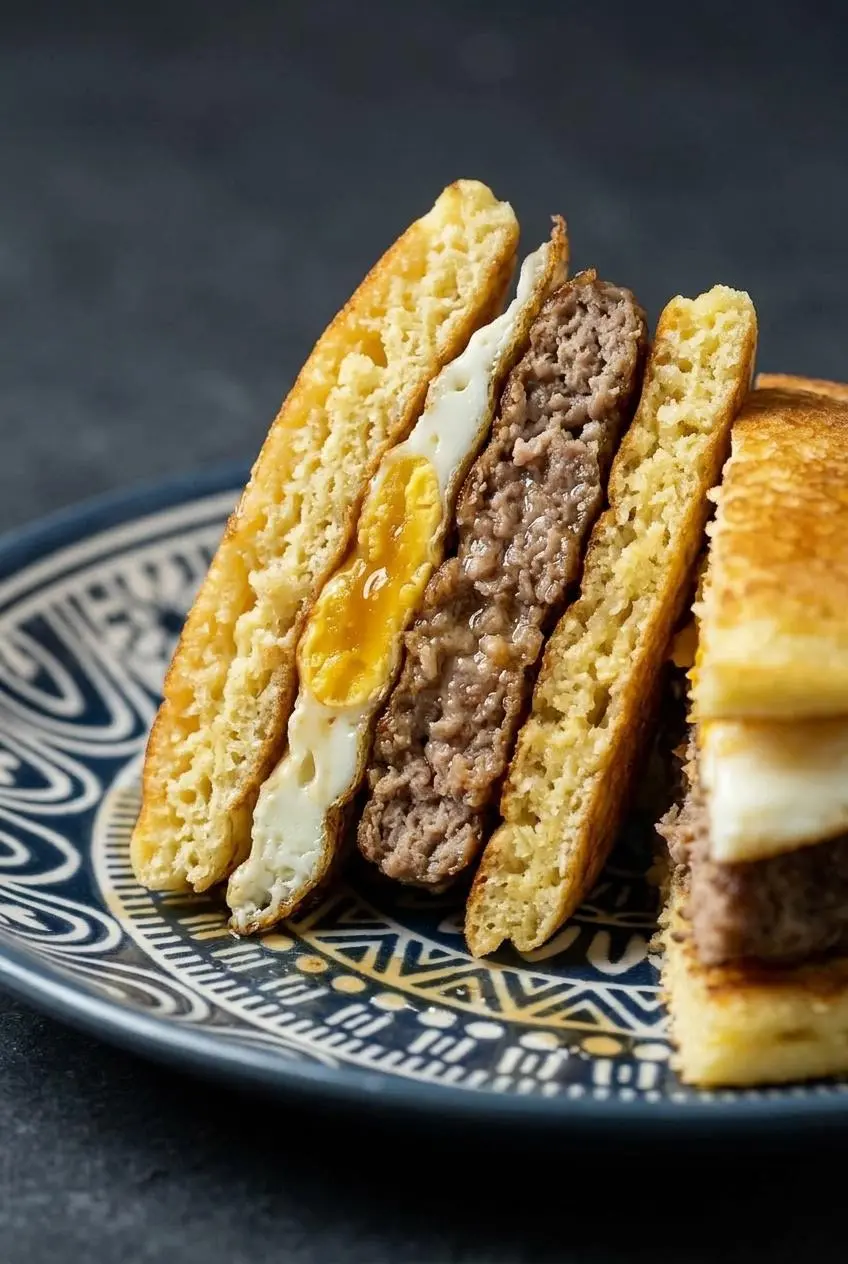
- If the pancakes taste too eggy, let the batter rest before cooking and lightly toast the cooked pancakes in a greased skillet before assembling. A splash of vanilla or a little extra sweetener can also soften that egg-forward flavor.
- If the pancakes spread too much, the batter may be too loose or the pan may be too hot before the structure sets. The batter should be thick enough to spoon, and medium heat gives it time to puff instead of racing outward.
- If the pancakes break when flipped, wait longer for the bubble cue around the edges. Once the surface starts looking set at the sides, they release more cleanly.
- If the eggs turn dry, lower the heat and pull them off while they still look glossy. Soft scrambled eggs always coast a little after leaving the pan.
- If the sandwich gets soggy, let the components cool slightly before stacking, especially if you plan to store them. Briefly toasting the pancakes helps create a better barrier too.
- If the sausage won’t form a crust, stop moving it around. Give the patties time to sit against the hot skillet so browning can actually happen.
Variations and Customization
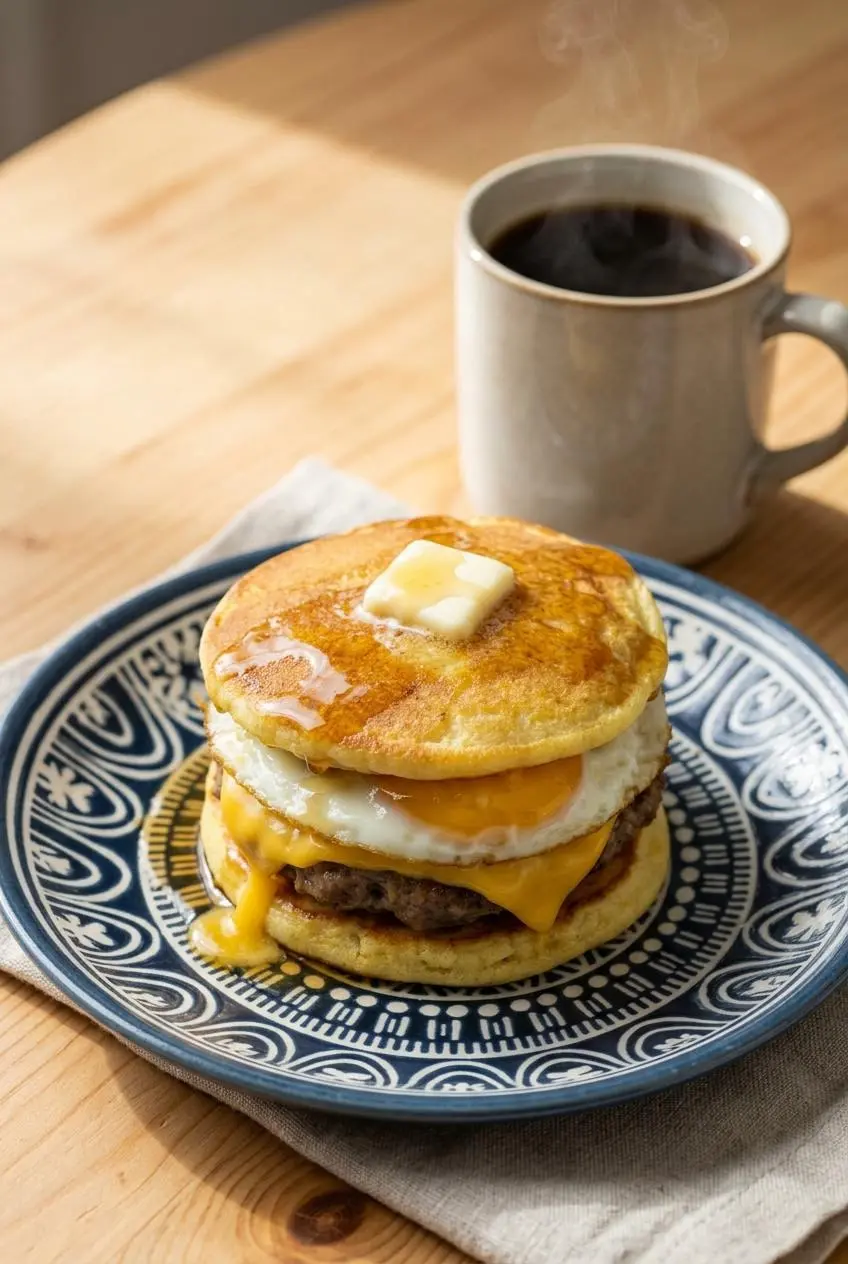
This sandwich is easy to tweak once you have the main method down. Keep the pancake base and filling style the same, then swap parts based on the texture and flavor you want.
Protein and Cheese Ideas
- Crispy bacon strips give you a firmer bite and a smokier flavor.
- Thick-sliced ham makes the sandwich a little less rich and a little more classic diner-style.
- Canadian bacon keeps the profile leaner while still tasting distinctly breakfast-like.
- Turkey sausage works if you want a lighter filling, though it usually browns a bit differently than pork sausage.
- A slice of American or cheddar melts easily and adds that classic breakfast sandwich feel.
- Provolone or Swiss gives a slightly sharper, more savory finish.
- A slice of avocado or a few leaves of spinach can add freshness, but use them sparingly so the sandwich still holds together well.
Alternative Pancake Bases
Different low-carb pancake styles change the sandwich more than the filling does. Coconut flour and almond flour are the main recipe options, but a couple of other approaches can work if you want a different texture.
- Coconut flour makes a more absorbent, denser pancake that holds shape well.
- Almond flour creates a softer, lighter pancake with a more cake-like bite.
- Pork rind pancakes make the sandwich sturdier, crispier, and more savory overall, which can be great if you want less sweetness.
- Protein powder pancakes can add more structure and a protein boost, especially with unflavored or vanilla whey or casein, though the texture is usually a bit firmer.
If you want a completely different sandwich base another day, keto breakfast bagels give you a chewier option with the same kind of savory filling appeal.
How to Store, Freeze, and Reheat
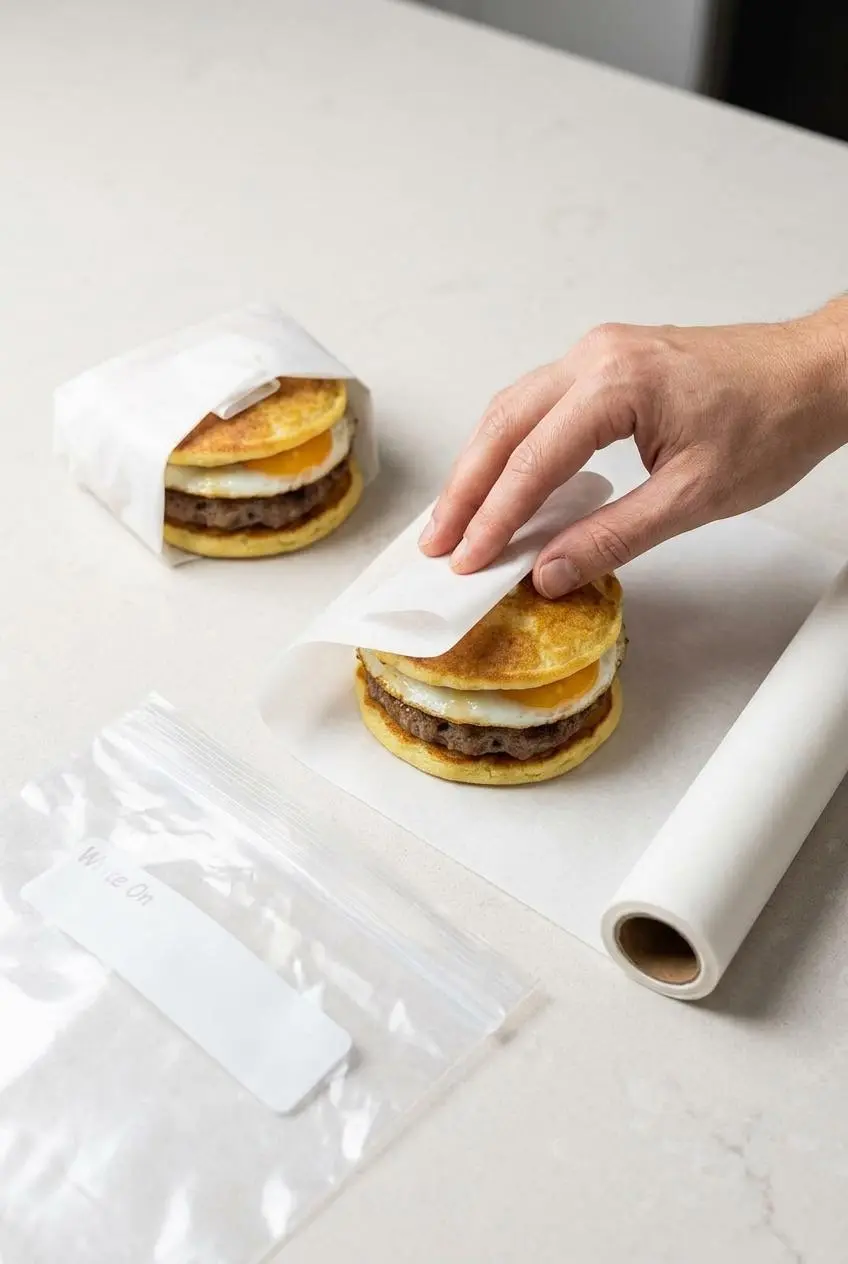
This recipe is very workable for prep, but the best texture comes from keeping moisture in check. Cool the components before storing so steam does not get trapped inside the container.
Refrigerating Leftovers
You can refrigerate the assembled sandwiches or store the pancakes, sausage, and eggs separately in an airtight container. Storing the components separately usually gives the best texture because the pancakes stay less damp.
If you want to keep assembled sandwiches ready to grab, wrap them once they have cooled and keep them chilled. For best quality, use them while the pancakes still feel soft and the eggs still reheat gently.
Freezing for Meal Prep
You can freeze these sandwiches because the recipe structure holds up well to it. Let the pancakes, sausage, and eggs cool completely first so trapped steam does not turn into icy moisture later.
Assemble each sandwich, wrap it individually in parchment paper, then place the wrapped sandwiches in a freezer-safe bag or container. This recipe source supports freezing them for up to 3 months.
Best Reheating Methods
Microwave: This is the fastest route. Wrap a chilled or frozen sandwich in a damp paper towel before reheating so the pancake has a better chance of staying soft instead of drying at the edges.
Oven or toaster oven: Use this when you want a slightly firmer outside. Warm the sandwich at 350 °F until heated through, checking as needed so the eggs and pancakes do not overcook.
Air fryer: This gives the best texture if you like a lightly toasted pancake exterior. Reheat at a moderate temperature and check early, because air fryers vary and the pancakes can brown faster than you expect.
Conclusion
This is the kind of breakfast sandwich that feels fun to eat but still practical to make. You get fluffy low carb pancakes, savory sausage, soft eggs, and that sweet maple finish in every bite.
It’s also a smart one to keep in your breakfast rotation when you want something meal-prep friendly without feeling repetitive. Make a batch, tweak the filling if you want, and keep mornings easier.
Frequently Asked Questions (FAQ)
How do I store and reheat these low-carb pancake sandwiches?
Store them chilled in an airtight container once the components have cooled. You can keep them assembled or store the pancakes, sausage, and eggs separately for better texture. To reheat, use the microwave for speed, the oven for a slightly crisper outside, or the air fryer for the best overall texture. A damp paper towel helps a lot in the microwave.
My keto pancakes taste too eggy. How can I fix that?
Let the batter rest before cooking so the flour can hydrate and the texture settles. That one step makes a bigger difference than people expect. You can also add a splash of vanilla or a touch more sweetener to shift the flavor balance. Toasting the cooked pancakes lightly in a greased skillet helps too.
Can I make these sandwiches ahead of time for meal prep?
Yes. You can cook all the components ahead, then assemble when ready to eat, which gives you the best texture. If convenience matters more, assemble the sandwiches fully and freeze them individually so breakfast is mostly handled already. That is a pretty good gift to your future self.
What other fillings can I use in a keto pancake sandwich?
Crispy bacon, sliced ham, Canadian bacon, or turkey sausage all work well here. A fried egg can replace the scrambled eggs if you want a more distinct layer. For cheese, try provolone, Swiss, American, or cheddar. Avocado is also good, especially if you want a cooler, creamy contrast against the warm filling.
Low Carb Pancake Sandwich

Equipment
- Cast iron skillet
- Large non-stick skillet
- Rubber spatula
Ingredients
Sausage
- ½ lb ground breakfast sausage
Pancakes
- 2 tablespoon Coconut flour or ¼ cup almond flour
- 2 large eggs
- 1 teaspoon baking powder
- 1 ½ tablespoon oil
- 1 tablespoon sugar free maple syrup
- 1 pinch of salt
- cooking spray
Eggs
- 4 large eggs
- 1 tablespoon butter
- kosher salt to taste
Garnish
- sugar free maple syrup
- butter
Instructions
Cook the Sausage
- Shape the ground breakfast sausage into 2 patties and place them in a cast iron skillet over medium high heat. Leave them in place long enough to brown well so a crust can develop before you turn them.
- Cook the patties on both sides until they are browned and cooked through. The outside should look deeply golden with crisp spots, and the center should no longer look raw when checked.
Make the Pancakes
- Set a large non-stick skillet over medium heat while you mix the pancake batter in a small bowl using the coconut flour or almond flour, 2 large eggs, baking powder, oil, sugar free maple syrup, and salt. The batter should be thick enough to spoon into rounds but still soft enough to spread slightly in the pan.
- Coat the skillet with cooking spray and spoon the batter into 4 round pancakes. Try to keep them similar in size so the finished sandwiches stack neatly.
- Cook the pancakes until small, steady bubbles appear around the edges and the bottoms have set. If you flip too early they can break, so wait until the surface looks less wet around the outside.
- Turn the pancakes and cook the second side until the centers spring back when lightly touched. The finished pancakes should feel set but still soft, not dry.
Prepare the Eggs
- Crack the 4 large eggs into a medium bowl and beat until the yolks and whites are fully combined. You want an even mixture so the scrambled eggs cook into soft, uniform folds.
- Heat a medium skillet over medium-low heat, add the butter, and pour in the beaten eggs. Once the edges begin to set, the eggs are ready to be gently moved.
- Push the eggs across the pan with a rubber spatula, scraping the bottom occasionally to form large, soft curds. Keep the movement gentle so the eggs stay fluffy instead of turning dry and crumbly.
- Take the eggs off the heat when they are just set and still glossy and slightly wet. They will keep cooking from the residual heat, which is what keeps them tender.
Assemble
- Place 1 sausage patty on a pancake, add half of the scrambled eggs, and top with another pancake. The warm eggs will settle into the sausage and help hold the sandwich together.
- Finish with butter and sugar free syrup before serving. The final sandwich should taste savory first, then slightly sweet on the finish.

Made these before an early hospital shift and reheated one in foil at work. Still held together really well and kept me full way longer than my usual yogurt.
Pretty good! My pancakes came out a little too soft the first time and I think I flipped them too early. Should I cook them lower and longer?
Yes, that usually does the trick. A slightly lower heat and giving them a bit more time before flipping helps them set so they are easier to turn. Letting the batter rest the full 5 minutes helps too.
So good 😊