Skip to content
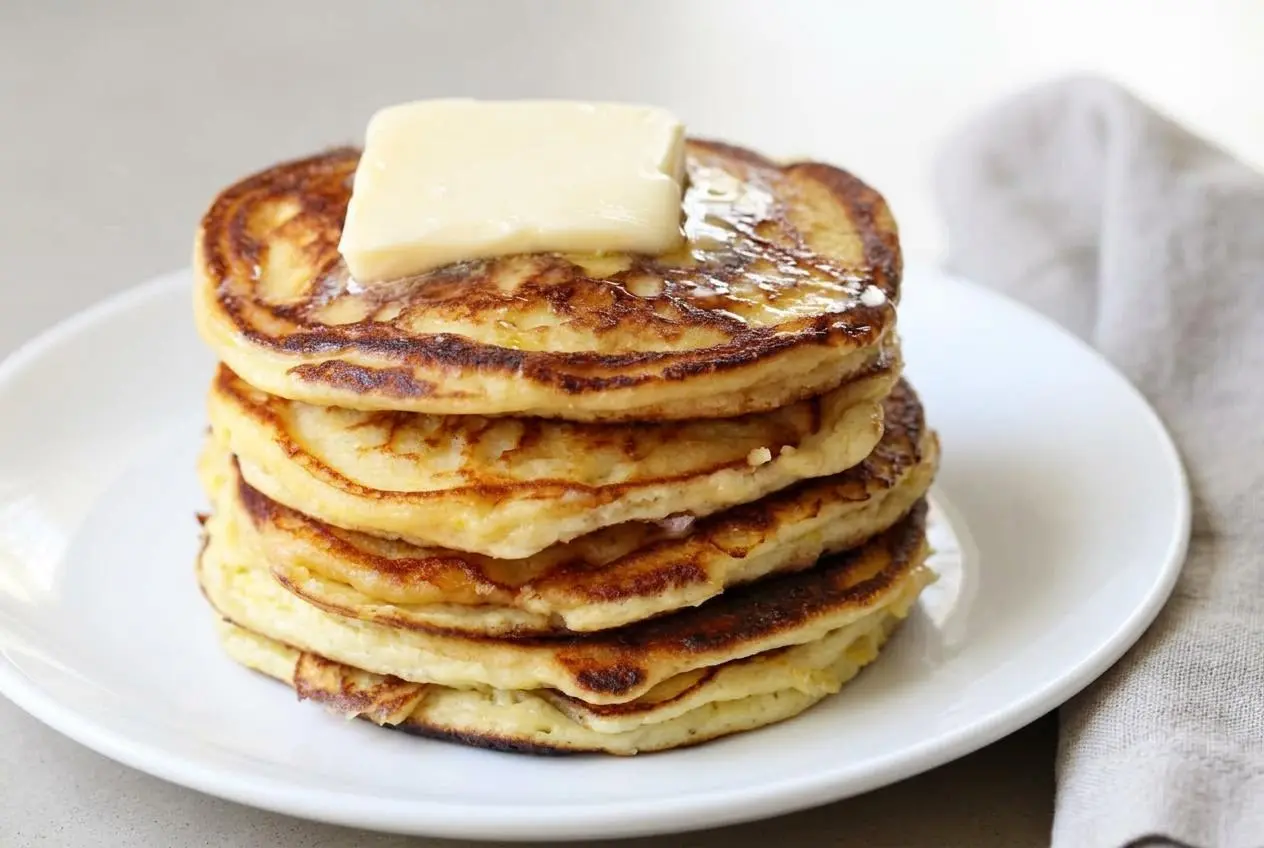
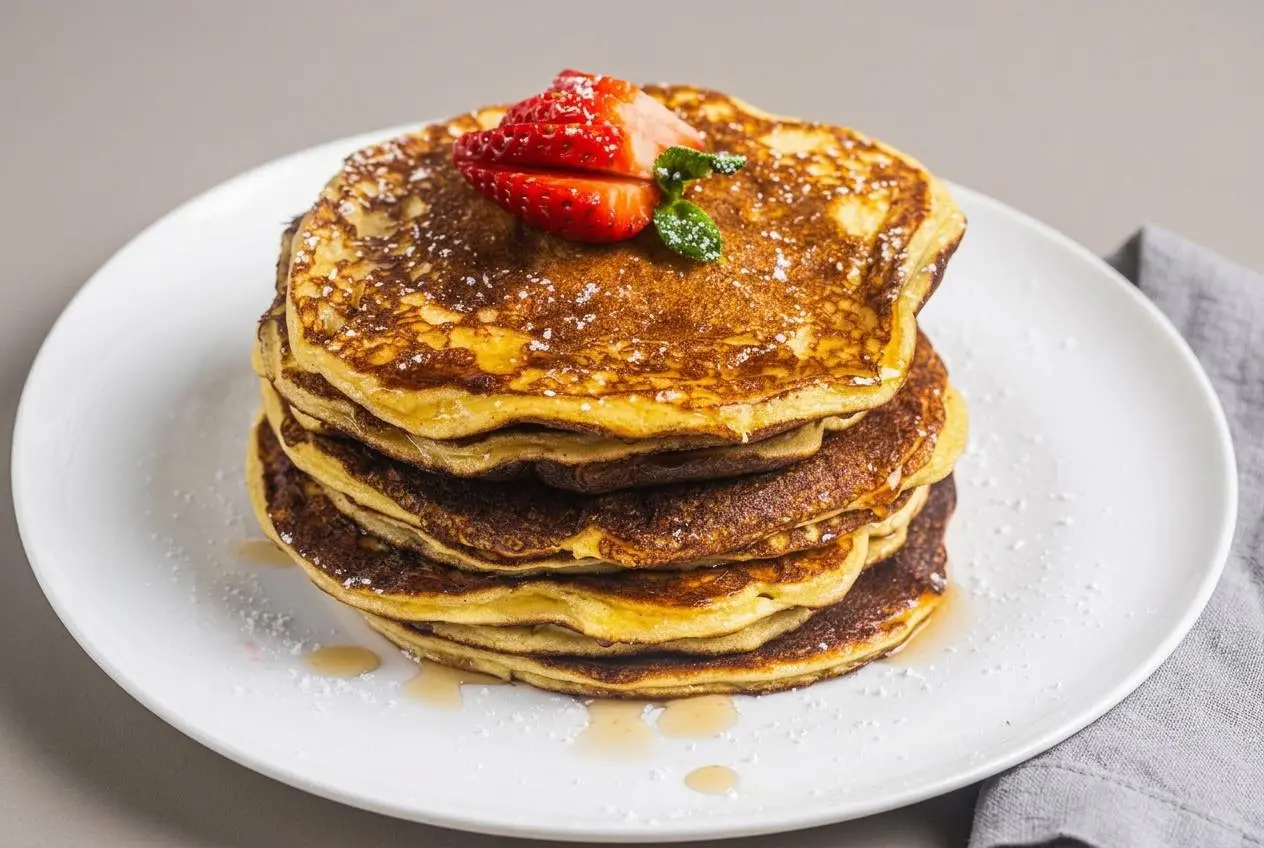
Keto lemon ricotta pancakes are tender, fluffy pancakes made with whole-milk ricotta, eggs, coconut flour, and fresh lemon zest. Small portions and steady medium heat create golden rounds with a creamy, citrus-scented center.
These keto lemon ricotta pancakes bring together rich dairy, bright lemon, and a naturally delicate crumb without grain flour or added sugar.
The batter cooks into soft, gently puffed rounds with a lightly golden edge and a sunny lemon aroma. The flip is the trick worth learning.
Set out a thin, wide spatula before heating the griddle so each delicate pancake has full support when it is time to turn.
Essential Ingredients for Tender Low-Carb Pancakes
Each ingredient supports the finished texture: eggs provide structure, ricotta brings moisture, coconut flour binds, zest adds aroma, and butter encourages an even golden crust.
- 4 large eggs
- 1 cup whole milk ricotta cheese
- 1/4 cup whole milk
- 1 tablespoon vanilla extract
- 1 tablespoon lemon zest (from a large lemon)
- 1 teaspoon stevia glycerite (equals 1/3 cup of sugar)
- 6 tablespoons coconut flour (42 grams)
- 1/2 teaspoon baking soda
- 2 tablespoons unsalted butter (divided, for the griddle)
The Role of Whole-Milk Ricotta vs Part-Skim
Whole-milk ricotta gives these pancakes their creamy moisture and soft interior. Part-skim ricotta can be looser and less rich, which may leave the batter wetter and the pancakes more fragile. Check the container before mixing: if liquid has pooled around the ricotta, spoon the cheese into a fine strainer and let the excess moisture drain briefly.
I prefer ricotta that looks thick and softly curdled rather than watery, because it makes the batter easier to scoop and the pancakes easier to flip.
Working With Absorbent Coconut Flour
Coconut flour absorbs moisture rapidly, creating structure in a batter with no gluten. After whisking, the batter should look thick enough to scoop rather than pour like traditional pancake batter. It may seem loose at first, then tighten as the flour hydrates.
Citrus Zest vs Lemon Juice for Flavor Intensity
Fresh lemon zest delivers fragrant citrus oils without adding extra liquid that could loosen the batter. Rub the zest between your fingers before adding it to wake up its aroma. Vanilla and stevia glycerite round out the lemon’s tart edge without relying on sugar-based syrup.
How to Make Keto Lemon Ricotta Pancakes
- Whisk the eggs, ricotta, milk, vanilla, lemon zest, stevia glycerite, coconut flour, and baking soda in a medium bowl until no dry flour remains.
The batter should become smooth, thick, and scoopable as the coconut flour absorbs the liquid. - Warm a nonstick double-burner griddle over medium heat, keeping the heat no higher, then coat it with half the butter.
The butter should bubble gently without smoking. - Scoop 2 tablespoons of batter onto the buttered griddle for each pancake, leaving space between the rounds.
Compact pancakes hold together more reliably than large ones. - Cook for 3-4 minutes per side, turning once the bottoms are golden brown and the pancakes have puffed.
The edges should look set and less glossy before the spatula slides underneath. - Butter the griddle with the remaining butter and cook the second batch the same way.
Serve the pancakes while warm, when their centers are at their softest.
Troubleshooting Common Low-Carb Pancake Issues
Preventing Breakage During the Flip
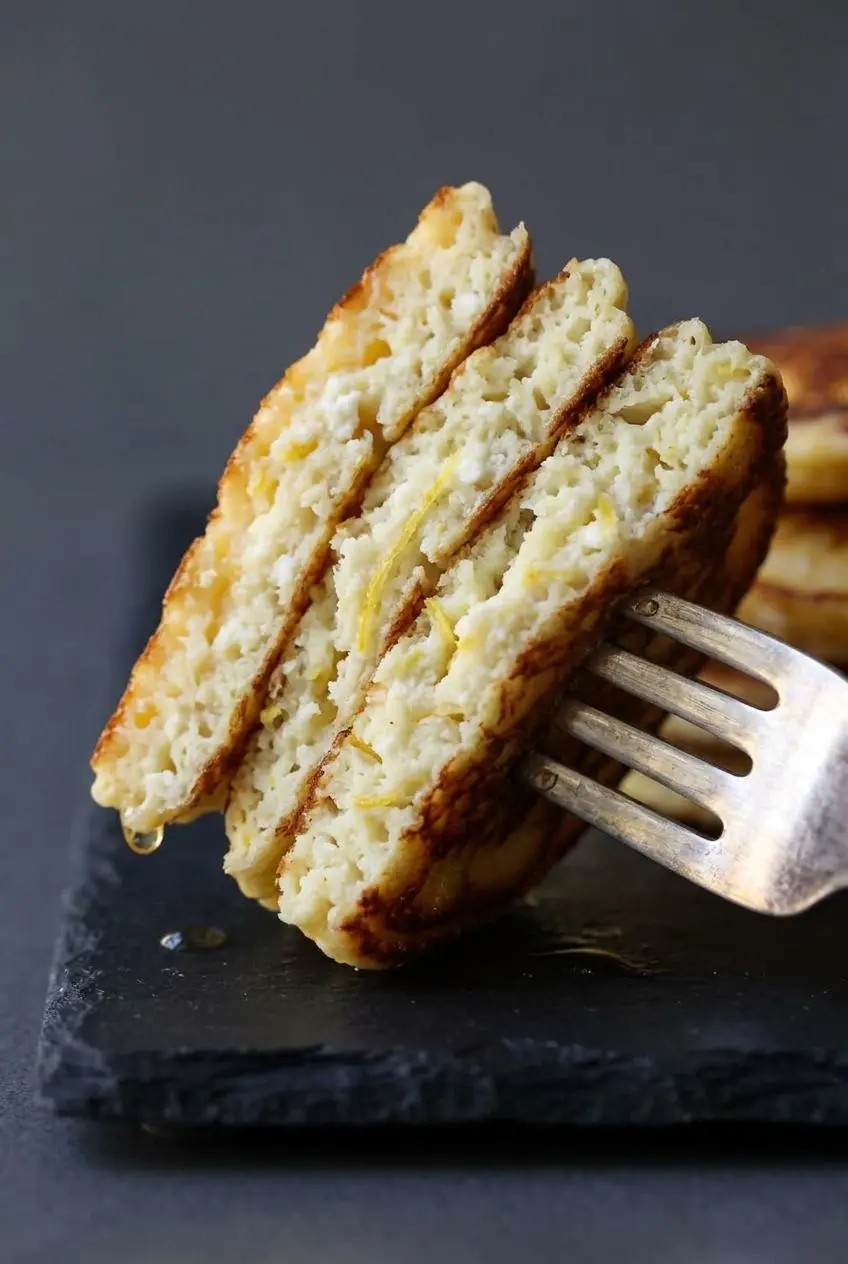
Delicate ricotta pancakes need a fully set underside before they move. Slide a thin spatula under the entire round, pause for a moment to make sure it releases, then turn in one steady motion. If the center still looks wet and shiny, give it more time before flipping.
For a firmer low-carb pancake style, compare the batter behavior with classic keto pancakes. Ricotta batter is richer and benefits from smaller portions and more patience on the first side.
Regulating Griddle Surface Temperature
If the pancakes darken before they puff, the griddle is too hot. Keep it at medium heat so the exterior browns gradually while the dairy-rich center cooks through. Butter that smokes is another sign to lower the heat and let the surface settle before adding more batter.
Fixing Overly Thick or Watery Batter
- Thick, stiff batter: Coconut flour has absorbed moisture quickly. Stir thoroughly and allow the batter to settle for a moment before judging its consistency.
- Loose, spreading batter: The ricotta may contain excess liquid. Drain watery ricotta before mixing future batches so the pancakes hold a neater shape.
- Gummy centers: Avoid crowding the griddle or rushing the flip. Give each compact round room and moderate heat.
Keto-Friendly Variations and Serving Inspirations
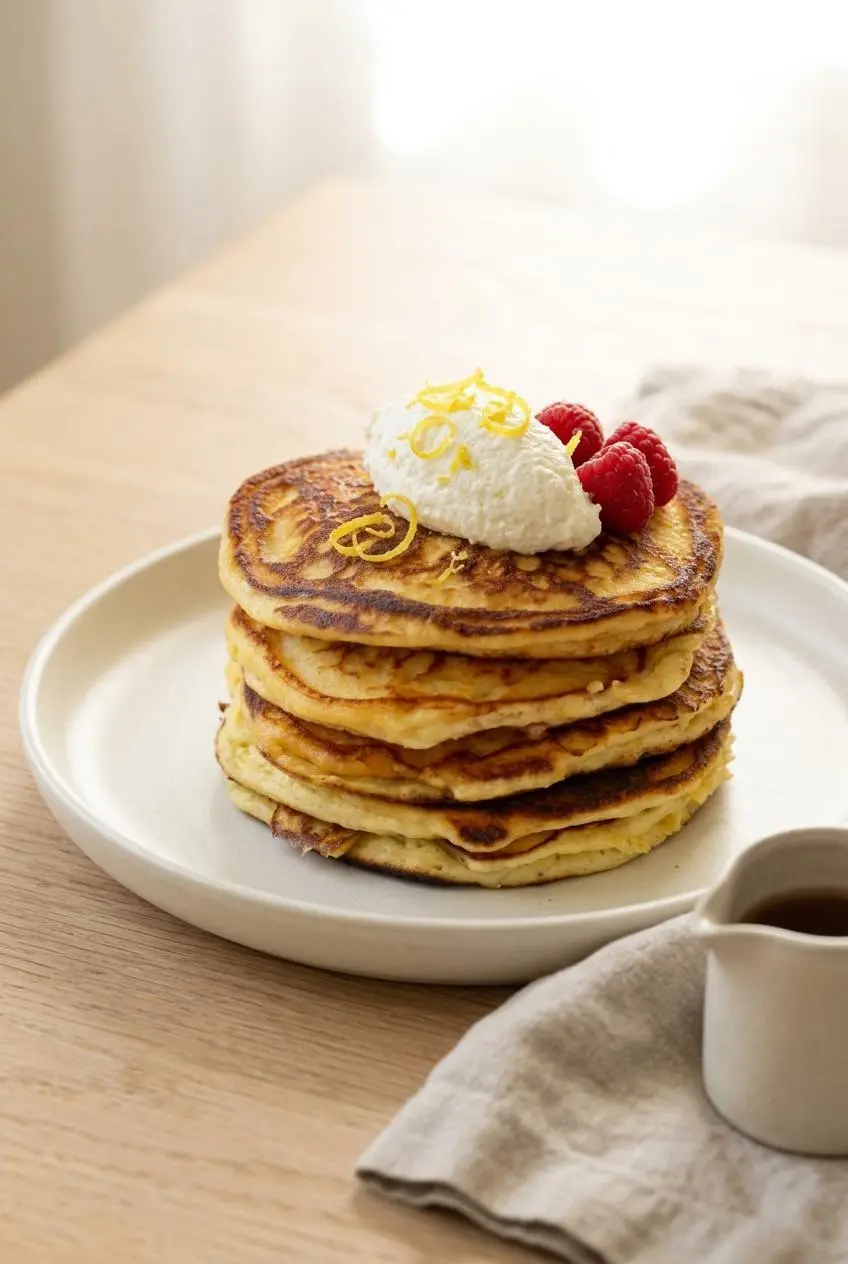
Keep the lemon-ricotta batter as written, then add toppings or flavor accents after choosing the texture you want.
Fresh Berry Studded Pancakes
For a berry variation, gently press a few low-sugar berries into the top of each raw pancake round after it reaches the griddle. This keeps the batter bright and prevents crushed berries from turning the entire bowl pink. Raspberries or blueberries pair especially well with lemon.
Alternative Nut-Free Flour Considerations
The coconut flour base keeps this pancake batter nut-free and grain-free. Almond flour behaves very differently because it absorbs much less liquid, so it cannot be swapped in directly without changing the batter’s structure. Stick with coconut flour for the intended tender yet stable texture.
Whipped Ricotta Brunch Topping
Whip extra ricotta until smooth with a little lemon zest and a keto-friendly sweetener, then spoon it over a warm stack for a creamy brunch finish. A pat of butter, sugar-free syrup, or softly whipped cream also works beautifully. For another dairy-rich breakfast idea, try these cottage cheese pancakes.
Storage and Gentle Reheating
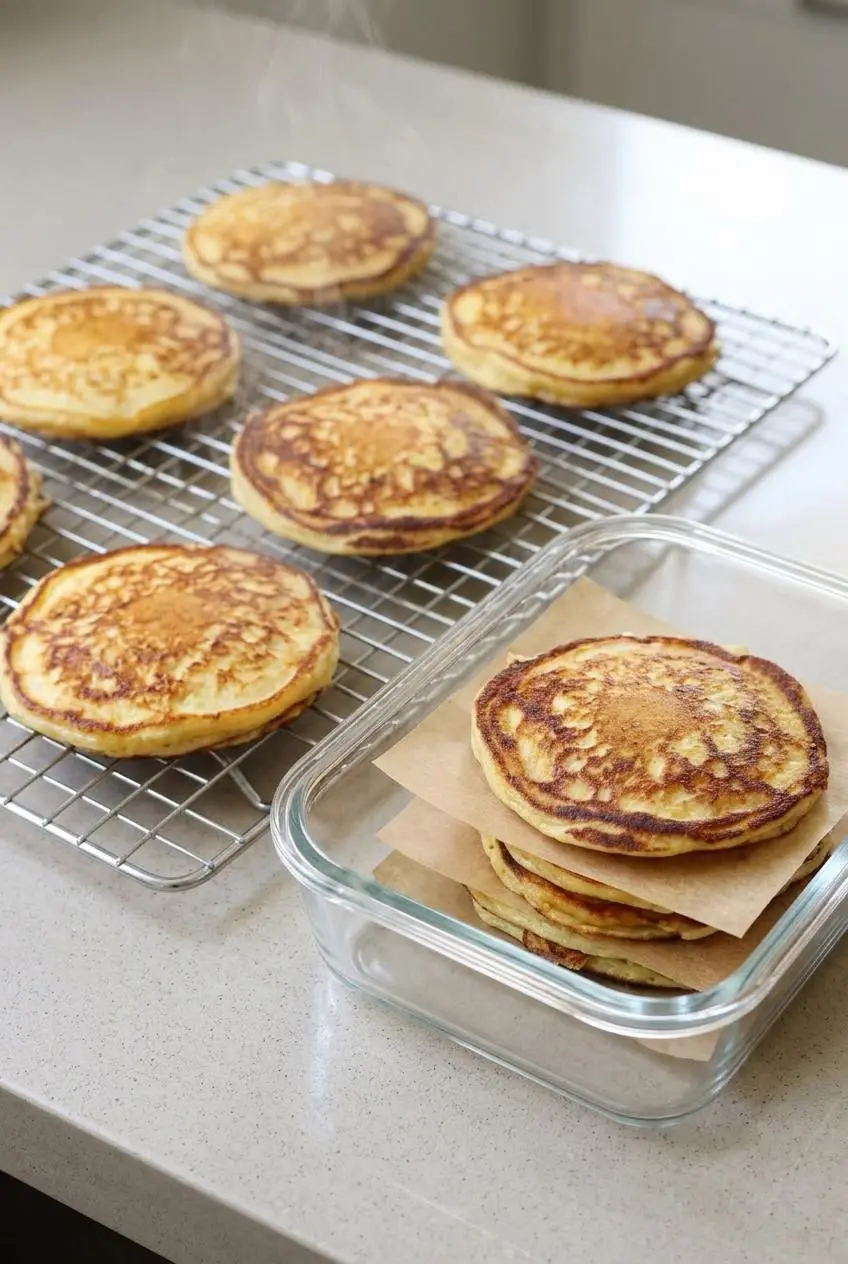
For the best texture, let cooked pancakes sit on a wire rack until the steam has dissipated, then place them in an airtight container with parchment between layers. Keep them chilled, and warm individual portions gently in a toaster oven or at moderate microwave power to avoid a tough, rubbery crumb.
Because ricotta is a soft dairy cheese, ricotta left at room temperature for more than two hours should be discarded. Avoid leaving cooked pancakes out longer than needed, and return leftovers to the refrigerator promptly.
Bringing Fluffy Citrus Pancakes to Your Morning Table
Whole-milk ricotta and fresh lemon zest give these pancakes their creamy tang and bright aroma, while coconut flour keeps the batter thick enough for soft, golden rounds.
Stay patient with the griddle, keep the portions compact, and wait for the edges to set before flipping. A warm stack with a tender center makes breakfast feel a little more special.
Frequently Asked Questions
What does adding ricotta to pancakes do?
Ricotta adds moisture, creamy dairy flavor, and soft curds that create a tender interior. In this batter, it also helps balance the absorbency of coconut flour so the pancakes stay delicate rather than dry.
Why do my keto ricotta pancakes fall apart when flipped?
These pancakes do not have gluten to give them stretch. Keep each round small, wait until the underside is golden and the edges look set, then slide a wide spatula completely beneath the pancake before turning.
Can I use part-skim ricotta cheese instead of whole milk?
You can, but whole-milk ricotta is the better choice for this batter. Its richer texture helps create a softer crumb, while part-skim ricotta may release more moisture and make the pancakes harder to handle.
Are lemon ricotta pancakes healthy for a keto diet?
This formulation uses coconut flour and stevia glycerite instead of grain flour and sugar, which may suit a keto eating pattern. Individual needs and product labels vary, so choose ingredients that fit your own dietary approach.
Can these pancakes be frozen and reheated?
This method does not include freezing directions. For leftovers, cool the pancakes, separate them with parchment in an airtight container, keep them chilled, and reheat gently to preserve their soft texture.
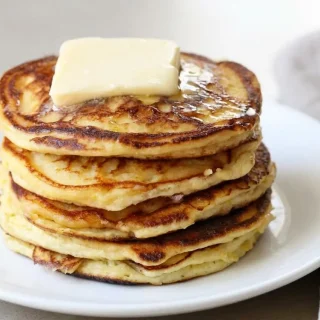
Keto Lemon Ricotta Pancakes

Equipment
- Nonstick double-burner griddle
- Mixing bowl
- Whisk
- Thin, wide spatula
- 2-tablespoon scoop
Ingredients
- 4 large eggs
- 1 cup whole milk ricotta cheese
- 1/4 cup whole milk
- 1 tablespoon vanilla extract
- 1 tablespoon lemon zest from a large lemon
- 1 teaspoon stevia glycerite equals 1/3 cup of sugar
- 6 tablespoons coconut flour 42 grams
- 1/2 teaspoon baking soda
- 2 tablespoons unsalted butter divided, for the griddle
Instructions
- Whisk the eggs, ricotta, milk, vanilla, lemon zest, stevia glycerite, coconut flour, and baking soda in a medium bowl until no dry flour remains. The batter should become smooth, thick, and scoopable as the coconut flour absorbs the liquid.
- Warm a nonstick double-burner griddle over medium heat, keeping the heat no higher, then coat it with half the butter. The butter should bubble gently without smoking.
- Scoop 2 tablespoons of batter onto the buttered griddle for each pancake, leaving space between the rounds. Compact pancakes hold together more reliably than large ones.
- Cook for 3-4 minutes per side, turning once the bottoms are golden brown and the pancakes have puffed. The edges should look set and less glossy before the spatula slides underneath.
- Butter the griddle with the remaining butter and cook the second batch the same way. Serve the pancakes while warm, when their centers are at their softest.