Skip to content
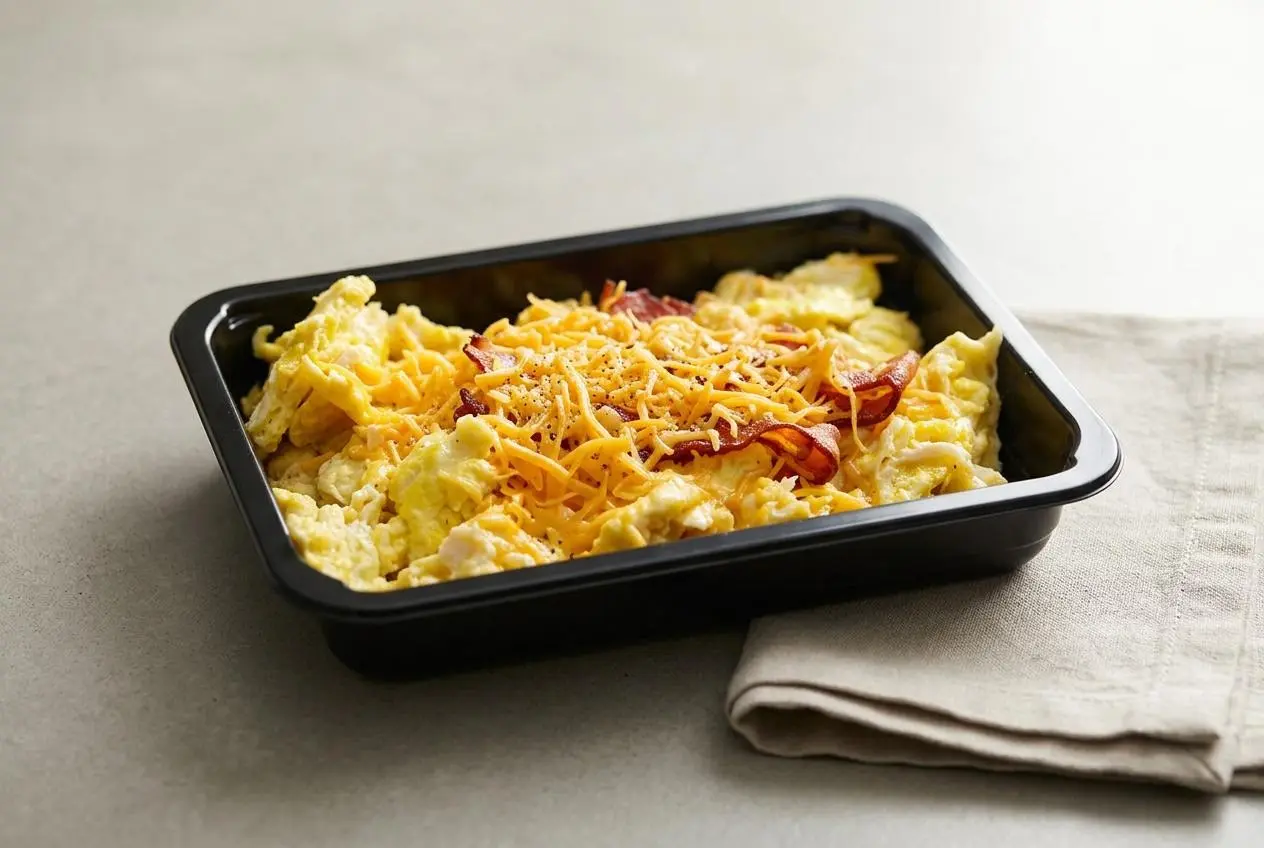
This keto scrambled eggs recipe makes a rich, low carb breakfast with fluffy eggs, crisp bacon, butter, and cheddar, all cooked gently so the eggs stay tender instead of dry.
It’s a practical way to make scrambled eggs feel more satisfying on a keto breakfast plate. The mix of eggs, bacon, butter, and cheese gives you creamy texture, savory depth, and plenty of flavor without drifting into carb-heavy add-ins.
The real trick is low heat and patient folding. That’s where the soft curds happen.
Crack the eggs on a flat counter, not the bowl edge, to avoid tiny shell pieces sneaking into the mix.
Are Scrambled Eggs Keto-Friendly?
Yes, scrambled eggs fit a keto lifestyle very well. Eggs are naturally very low in carbs, and this recipe keeps the focus on protein and higher-fat ingredients that make breakfast filling and steady.
A large egg is often counted at about 0.5 g of net carbs, which is why eggs show up so often in low-carb breakfast routines. The bigger thing to watch is what gets added to the pan. Regular milk, sweet breakfast meats, or sugary sauces can change the carb count fast.
This version stays keto-friendly because it leans on butter, bacon, and cheddar for richness. That matches the broader structure of ketogenic eating, which typically emphasizes higher fat with very low carbohydrate intake, as outlined in the clinical macronutrient pattern used in ketogenic diets.
If you want a breakfast that supports ketosis without much fuss, scrambled eggs are one of the easiest places to start. They cook quickly, taste great, and adapt well as long as the extras stay low carb.
Essential Ingredients for Keto Eggs
Each ingredient has a job here, from building soft curds and savory depth to adding crisp texture, richness, and that warm cheddar finish.
- 3 Eggs
- 2 slices Bacon
- Salt and pepper
- 1 pad Butter
- 1 tbsp Cheddar cheese
Eggs are the structure of the dish, and they also give you the soft, custardy texture you want when they’re cooked gently. Bacon adds crisp contrast and a deeper savory bite. Butter helps the eggs stay tender in the pan, while cheddar melts into the warm curds and gives the whole plate a richer finish.
For keto eating, these ingredients make sense together because they keep the meal centered on fat and protein instead of starch. Cheddar is a strong choice here because it melts easily and brings plenty of flavor in a small amount. Goat cheese also works as an optional swap if you want something tangier and softer.
- Dairy-free keto scrambled eggs can be cooked in ghee if that works for you better than butter.
- Avocado oil is another option when you want a dairy-free cooking fat with a clean flavor.
- If you skip cheddar, a dairy-free version still works well with the bacon carrying more of the savory flavor.
I like grating the cheddar finely so it melts into the eggs quickly instead of sitting in little chewy clumps.
The Role of Butter and Ghee
Butter and ghee do more than keep the pan slick. They coat the eggs lightly as they cook, which helps the curds stay soft and rich instead of turning dry and chalky.
Many keto cooks prefer butter or ghee over neutral seed oils because these fats bring more flavor and give the eggs a fuller mouthfeel. Ghee is especially useful if you want a buttery taste with less milk solids in the pan. Butter works beautifully too, as long as you keep the heat gentle enough to enjoy its aroma without letting it brown too hard.
When the butter starts to melt and smells warm and nutty, that’s your cue to pay attention. If it starts getting dark before the eggs go in, the pan is already too hot.
Low-Carb Liquid Additions for Fluffy Eggs
If you want fluffier keto eggs, the best liquid additions are low-carb ones. Heavy whipping cream adds richness and helps create softer curds, while unsweetened almond milk can lighten the mixture without bringing in much carbohydrate.
Regular cow’s milk is a weaker fit for keto scrambled eggs because it contains lactose, the natural sugar in milk. That makes it easier for carbs to climb, especially if you cook eggs this way often.
Keto scrambled eggs with heavy cream are a popular variation for good reason. A small splash whisked in with the eggs can make the texture more plush and creamy. Sour cream or a little cream cheese can also add body, though they change the texture more noticeably than cream does.
How to Make Perfect Keto Scrambled Eggs
- Heat the oven to 365 °F and arrange the bacon slices on a baking sheet.
The strips should lie flat so they cook evenly and crisp at the same pace. - Bake the bacon for about 30 minutes, turning it once at the 15-minute mark.
It’s ready when the color is deep brown and the fat has rendered well. - Tap each egg against a hard, flat surface to crack it, then open it over a mixing bowl.
This method helps keep shell fragments out and gives you a cleaner break. - Whisk the eggs until the yolks and whites are mostly blended but still show some ribbons.
You want the mixture loosened and lightly emulsified, not foamy or overbeaten. - Place the pad of butter in a cold pan and set it over medium-low heat.
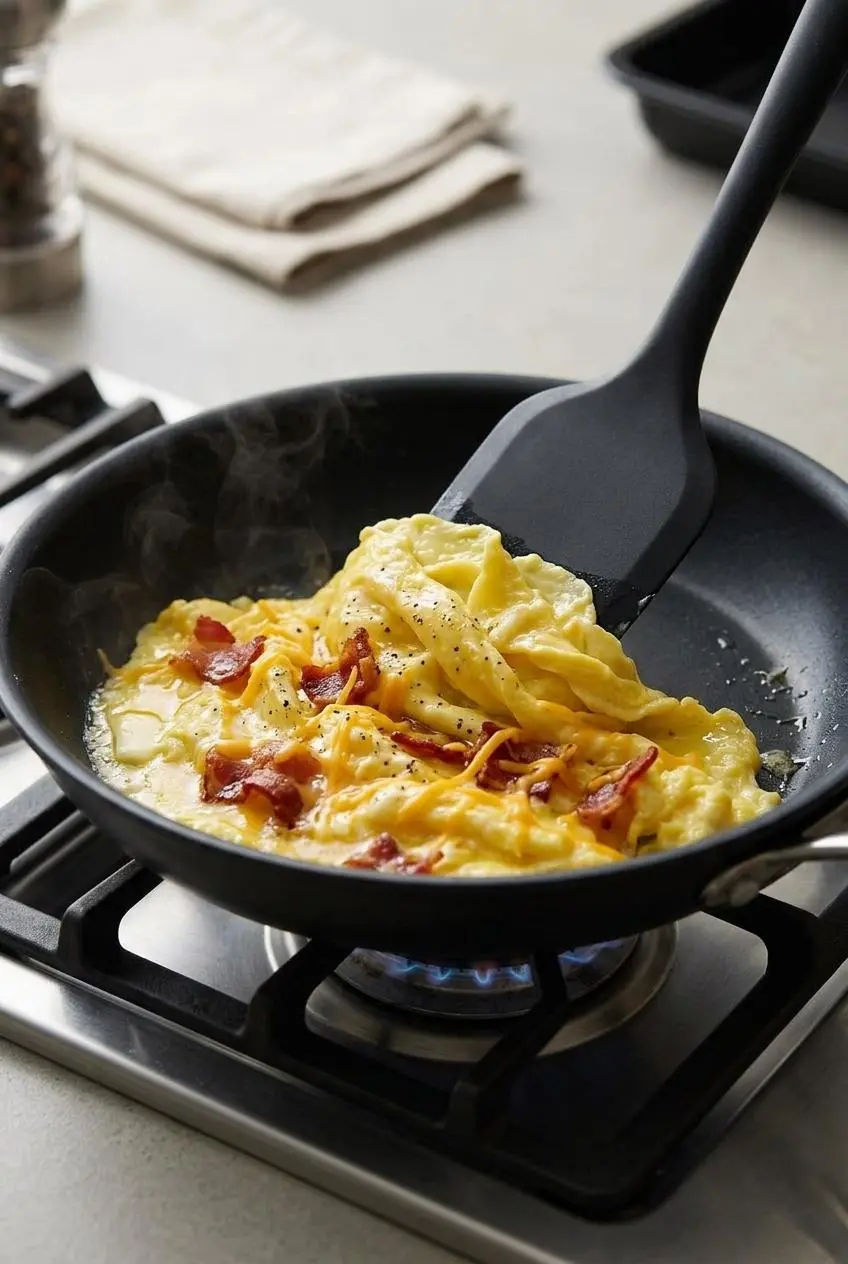
The butter should melt gently and smell fragrant without browning fast. - Pour in the eggs and use a spatula to fold them slowly across the pan.
As they cook, the mixture will shift from glossy liquid to soft, velvety layers. - Keep folding the eggs to build tender curds instead of stirring constantly.
Low heat slows down protein tightening, which helps prevent dry or rubbery eggs. - Turn off the burner and pull the pan from the heat about 30 seconds before the eggs look fully done.
The curds will keep setting from the residual heat, so stop while they still look a little softer than you want on the plate. - Season with salt and pepper, then add the cheddar cheese while the eggs are still hot and fold it through.
The cheese should melt into the warm curds and leave buttery, cheesy streaks throughout. - Chop the bacon if you like, add it to the eggs, then plate and serve.
You should end up with fluffy eggs, crisp bacon pieces, and warm cheddar layered through the dish.
The most important stage is the soft-curd phase, when the eggs are just beginning to hold shape but still look glossy. That is not the moment to walk away. Keep folding with a silicone spatula, scraping broad ribbons through the pan so the eggs pile into creamy layers instead of tiny dry bits.
Low heat matters because egg proteins tighten quickly when the pan gets too hot. Gentle heat gives the curds time to form before they squeeze out moisture. That’s why these eggs stay tender and why high heat almost always leads to a sad breakfast.
For food safety, scrambled eggs are best cooked until they’re set rather than runny, which matches USDA guidance for cooking scrambled eggs until firm and not runny.
Troubleshooting and Perfect Texture Tips
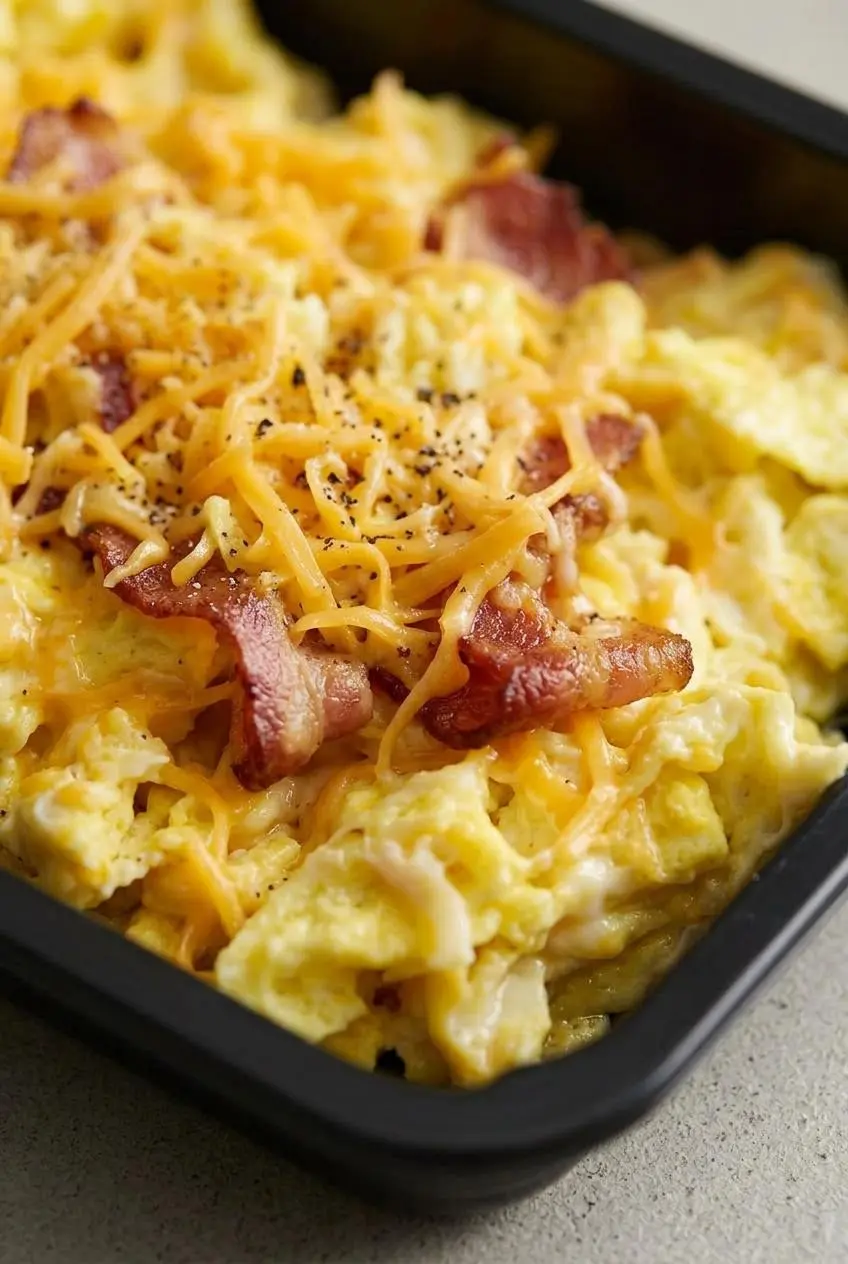
If scrambled eggs frustrate you, the problem is usually heat, timing, or seasoning. These fixes keep the texture creamy instead of watery or rubbery.
- Watery eggs on the plate usually mean the heat was too high or the eggs cooked too long. When proteins tighten too fast, they squeeze out moisture, so keep the burner at medium-low and take the pan off early.
- If the eggs weep after serving, salt may have gone in too soon. Seasoning later, once the curds are mostly formed, can help the eggs stay tighter and less wet.
- Rubbery eggs come from overcooking. Pull them from the stove while they still look slightly under your ideal doneness, because the pan keeps cooking them for a bit.
- If the eggs end up too dry, fold in a small touch of sour cream off the heat. It won’t completely undo overcooking, but it can soften the curds and bring back some creaminess.
- If the butter smells sharp or starts browning before the eggs go in, the pan is too hot. Start colder next time so the butter melts slowly and the eggs cook more gently.
What to Eat with Keto Scrambled Eggs
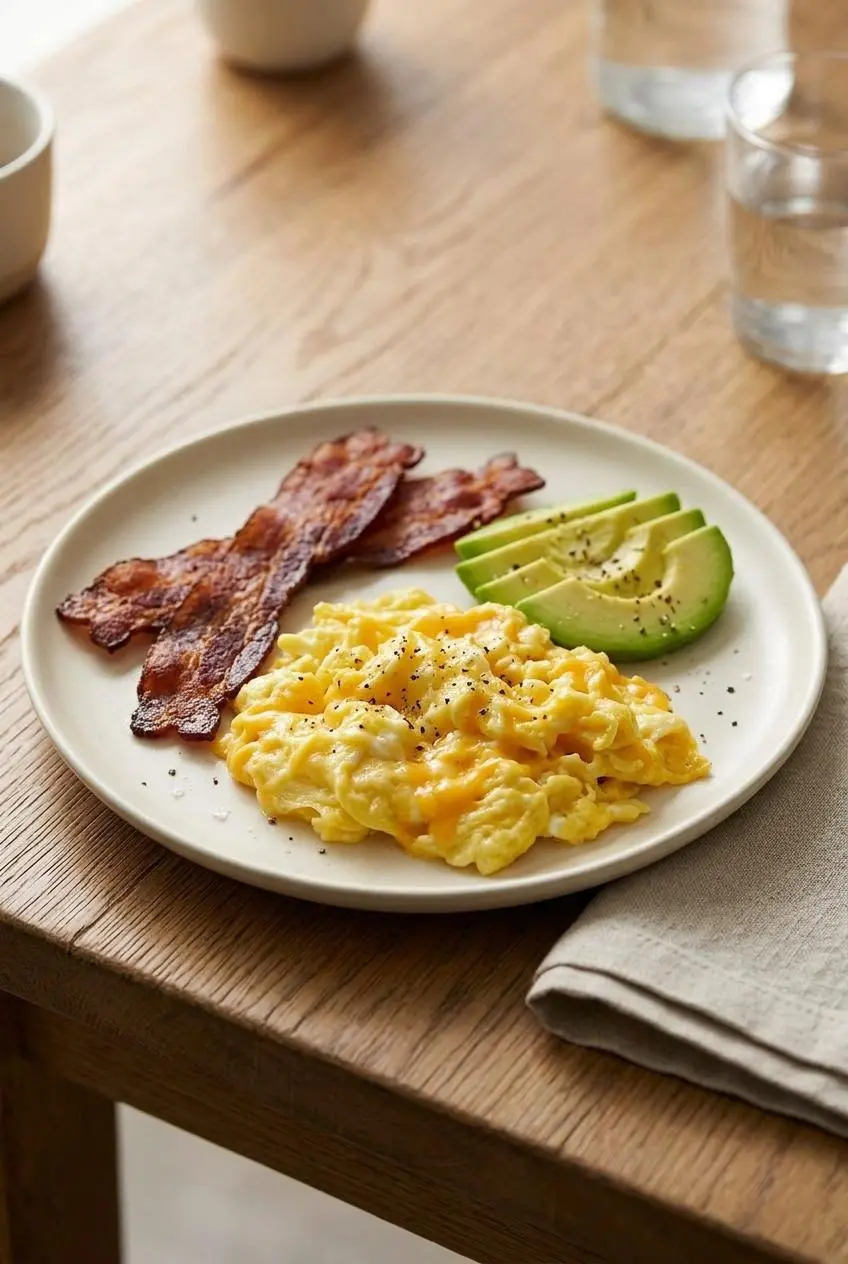
These eggs are rich enough to stand alone, but a couple of smart sides can turn them into a full low-carb breakfast.
- Fresh sliced avocado with a pinch of sea salt adds cool contrast and extra healthy fat.
- Sautéed spinach or kale cooked in bacon grease brings color and a savory edge that fits the eggs well.
- Sugar-free sausage or extra bacon makes the plate heartier if you want more protein.
- A slice of toasted keto bread gives you that classic eggs-and-toast feel without leaving the low-carb lane.
- For a bigger brunch plate, these eggs also pair nicely with fresh tomato slices or a simple pile of sautéed mushrooms.
Conclusion
This breakfast works because it keeps the ingredients focused and the method gentle. Bacon, butter, eggs, and cheddar do plenty when the heat stays low and the curds are folded instead of rushed.
If you remember one thing, let it be this: take the pan off before the eggs look fully done. That small move makes the difference between fluffy and dry.
Frequently Asked Questions
Are scrambled eggs good for a keto diet?
Yes. Eggs are naturally low in carbs and fit easily into a keto breakfast. They also bring protein and fat, which makes them satisfying. Just keep an eye on extras like milk, sweet sauces, or sugary breakfast meats.
What to eat with scrambled eggs without carbs?
Crispy bacon is the most obvious carb-free side, and it already fits this recipe. Avocado, sautéed spinach, and cheddar are also good low-carb choices. If you want to keep carbs especially low, skip standard toast and potatoes.
Is 4 eggs a day too much on keto?
For many people, four eggs can fit just fine into a keto day. What matters most is how they fit into your overall eating pattern, preferences, and daily macros. If you have specific dietary concerns, it’s smart to check with a qualified health professional.
Can you make keto scrambled eggs with milk?
You can, but regular milk is not the best choice for keto because it contains lactose sugar. Heavy whipping cream is a better keto-friendly option when you want richer, fluffier eggs. Unsweetened almond milk can also work if you want a lighter dairy-free option.
Keto Scrambled Eggs Recipe

Equipment
- 8-10 inch Non-Stick Pan
- cutting board
- Whisk
- Measuring Cups and Spoons
- chef’s knife
- Silicone spatula
- Kitchen Timer
- Mixing bowl
Ingredients
- 3 Eggs
- 2 slices Bacon
- Salt and pepper
- 1 pad Butter
- 1 tbsp Cheddar cheese
Instructions
- Heat the oven to 365 °F and arrange the bacon slices on a baking sheet. The strips should lie flat so they cook evenly and crisp at the same pace.
- Bake the bacon for about 30 minutes, turning it once at the 15-minute mark. It’s ready when the color is deep brown and the fat has rendered well.
- Tap each egg against a hard, flat surface to crack it, then open it over a mixing bowl. This method helps keep shell fragments out and gives you a cleaner break.
- Whisk the eggs until the yolks and whites are mostly blended but still show some ribbons. You want the mixture loosened and lightly emulsified, not foamy or overbeaten.
- Place the pad of butter in a cold pan and set it over medium-low heat. The butter should melt gently and smell fragrant without browning fast.
- Pour in the eggs and use a spatula to fold them slowly across the pan. As they cook, the mixture will shift from glossy liquid to soft, velvety layers.
- Keep folding the eggs to build tender curds instead of stirring constantly. Low heat slows down protein tightening, which helps prevent dry or rubbery eggs.
- Turn off the burner and pull the pan from the heat about 30 seconds before the eggs look fully done. The curds will keep setting from the residual heat, so stop while they still look a little softer than you want on the plate.
- Season with salt and pepper, then add the cheddar cheese while the eggs are still hot and fold it through. The cheese should melt into the warm curds and leave buttery, cheesy streaks throughout.
- Chop the bacon if you like, add it to the eggs, then plate and serve. You should end up with fluffy eggs, crisp bacon pieces, and warm cheddar layered through the dish.