Skip to content

A keto omelette can be baked as a thin egg sheet, filled with cheese and ham, then rolled into tender slices. Pull it from the oven when the surface is set with a slight gloss, so the egg stays flexible.
This keto omelette skips skillet flipping in favor of an evenly baked sheet pan base. Sour cream and finely grated parmesan help the eggs stay soft enough to roll without fighting back.
Warm cheese and savory ham make every slice feel substantial. The parchment flip is the trick to watch.
Use parchment that fully covers the baking tray, including the corners, so the egg sheet releases cleanly when inverted.
Essential Ingredients for a Tender Low-Carb Omelette
Each ingredient supports the roll in a different way, from the eggs’ structure and the dairy’s tenderness to the cheese’s melt and the ham’s savory finish.
- 6 eggs
- 1 tablespoon sour cream
- 1 tablespoon parmesan (finely grated)
- Salt and pepper (to taste)
- 4 slices Swiss cheese (provolone or Monterey Jack cheese)
- 150 g shaved leg ham
The Foundation: Quality Eggs and Cultured Dairy
Fresh eggs create a sturdy but delicate egg sheet, while rich yolks bring color and flavor. Whisk the eggs thoroughly with sour cream and parmesan so the dairy disperses evenly. That smooth mixture bakes into a more supple layer than eggs alone.
I prefer finely grating parmesan from a block here because it disappears into the egg mixture more evenly and keeps the texture silky.
Selecting Cheeses That Melt Smoothly
Swiss cheese melts into a mild, cohesive layer that holds the roll together. Provolone and Monterey Jack work well too. Choose sliced cheese that melts smoothly, and avoid heavily coated pre-shredded cheese when you want the filling to stay creamy rather than grainy.
Savory Protein Fillings
Shaved leg ham lies flat, which makes it easier to roll the omelette tightly without creating bulky spots that can split the egg sheet. Keep the ham in an even layer so every slice has the same savory balance.
Step-by-Step Keto Omelette Preparation

This oven method gives you an even thickness from edge to edge, making the roll far less fussy than a traditional folded omelette.
Prepping and Lining the Baking Sheet
CONVENTIONAL METHOD
- Heat the oven to 180 °C and line a 28 cm x 22 cm baking tray with baking paper.
Press the paper neatly into the corners so the egg mixture has a smooth, contained surface. - Whisk the eggs, sour cream, and parmesan in a large bowl until fully blended, then season with salt and pepper.
The mixture should look even in color with no visible streaks of sour cream. - Pour the egg mixture into the lined tray and bake for 10 minutes.
Remove it when the surface is set but still lightly glossy, rather than dry or deeply browned. - Lay a silicone mat over the warm egg sheet, turn it over carefully, and peel away the baking paper.
The egg should release in one piece and feel soft enough to bend without cracking. - Return the baking paper to the tray, arrange the cheese over the egg, add the ham, and roll it lengthwise.
Keep the seam underneath as you transfer the roll back onto the lined tray. - Bake the rolled omelette for a further 5 minutes, then slice and serve.
The cheese should be melted and the roll should have a gentle spring when lightly pressed.
THERMAL METHOD
- Set the oven to 180 °C and line a 28 cm x 22 cm baking tray with baking paper.
Make sure the paper sits flat so the egg layer bakes evenly. - Add the eggs, sour cream, and parmesan to the mixer bowl and mix for 15 sec/speed 5, then season with salt and pepper.
The finished mixture should look smooth and uniform. - Spread the egg mixture in the prepared tray and bake for 10 minutes.
The center should no longer look wet, though the top should retain a soft sheen. - Cover the hot egg sheet with a silicone mat, invert it carefully, and remove the baking paper.
Lift the paper slowly if an edge clings, rather than tugging at the warm eggs. - Put the baking paper back in the tray, cover the egg sheet with cheese and ham, and roll it lengthwise.
Set the roll seam-side down to help it hold its shape. - Return the roll to the oven for a further 5 minutes before cutting it into portions.
The filling is ready when the cheese has melted through the center.
Troubleshooting Common Omelette Mistakes
- The egg sheet cracks: It likely baked too long and lost flexibility. Remove it as soon as it is set with a soft gloss, then roll it while still warm.
- The eggs stick to the paper: The parchment may not have covered the tray smoothly, or the sheet may have cooled too much. Use fresh parchment and peel it away slowly after inverting.
- The filling turns watery: High-moisture vegetables release liquid as they warm. Cook mushrooms, spinach, peppers, or other wet fillings first, then let excess moisture evaporate before using them.
- The roll feels rubbery: Excess heat tightens egg proteins. Keep the final bake focused on melting the cheese rather than browning the omelette.
- The slices unravel: Roll firmly but gently, then place the seam underneath before the final bake so the shape can set.
Flavor Variations and Custom Fillings
The egg sheet can take on different flavors beautifully, as long as the fillings stay fairly dry and are spread in a thin, even layer.
Smoked Salmon and Cream Cheese Roll
For a cooler, more delicate option, use smoked salmon with cream cheese and fresh chives. Add the filling while the egg sheet is warm enough to soften the cream cheese, but avoid piling it on too thickly.
Sautéed Mushroom and Aged Cheddar
Cook cremini mushrooms until their moisture has cooked away, then pair them with sharp aged cheddar. The earthy mushrooms and nutty cheese make a fuller, more savory roll without making the center soggy.
Mediterranean Feta and Spinach
Use wilted, well-drained baby spinach with crumbled feta and dried oregano for a bright Mediterranean direction. For another rich green filling that stays spoonable rather than watery, try rich creamed spinach in a restrained layer.
A dairy-free version can use an unsweetened alternative milk in place of sour cream and a meltable nut-based cheese. Expect a slightly different texture, and keep the filling modest so the egg sheet remains easy to roll.
Storage and Reheating Guidelines
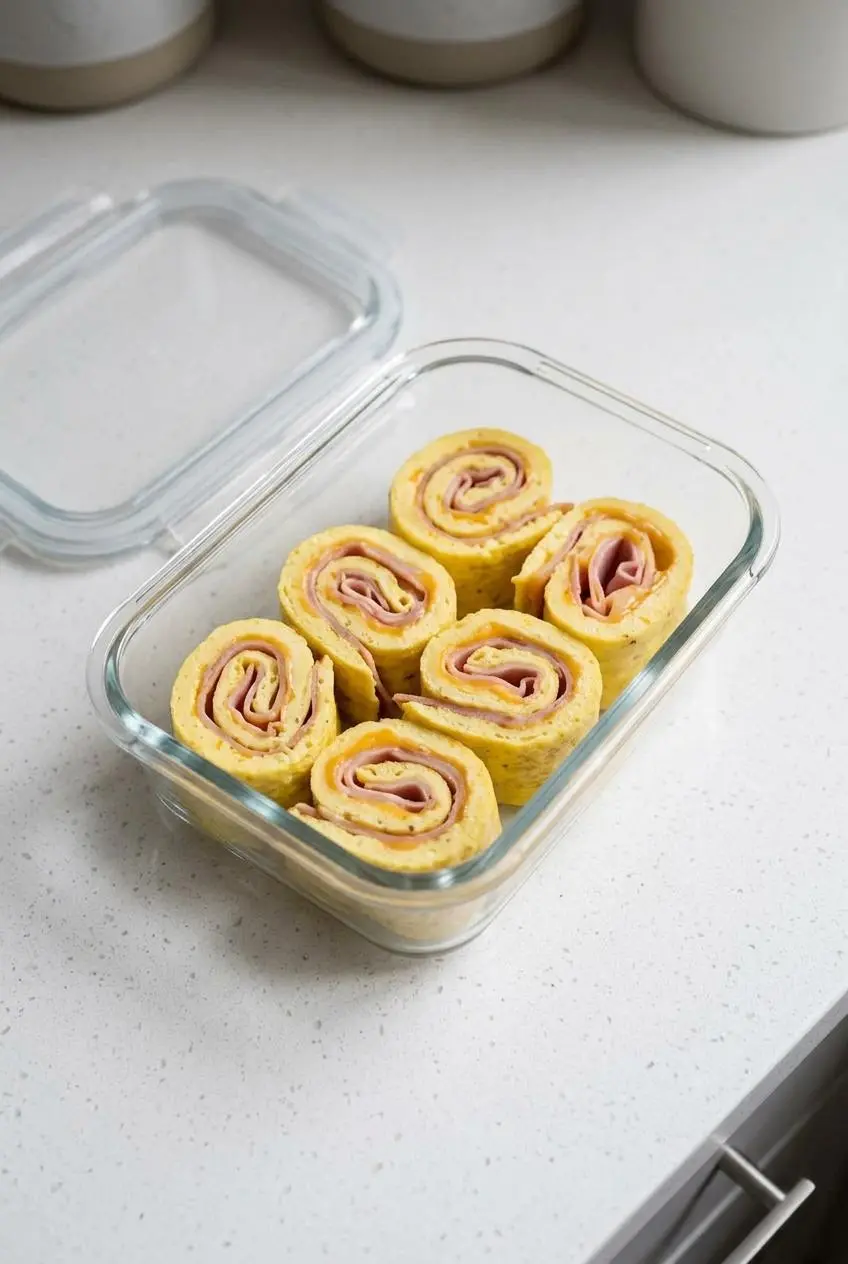
Let sliced omelette rolls cool before placing them in an airtight container and refrigerating them. Keep slices in a single layer when possible so condensation does not soften the outside.
For the best texture, warm a slice gently in a covered nonstick skillet over low heat with a touch of butter. A microwave also works when used at low power in short intervals, stopping as soon as the center is warm.
For chilled lunches, cut the roll into pinwheels after it has firmed up in the refrigerator and pack it in a sealed container. If you enjoy batch-friendly egg breakfasts, keto egg muffins offer another convenient option.
Nutritional and Dietary Context for Keto Mornings
Eggs, cheese, and ham bring protein and fat to this low-carb meal, while the recipe avoids flour, starchy vegetables, and sweet sauces. That combination can fit a carb-conscious breakfast routine when the rest of the meal suits your needs.
Check labels on cured meats, prepared sauces, and packaged fillings, since added sugars or starches can change the carbohydrate content. Egg-and-cheese breakfasts such as crisp keto chaffles follow a similarly satisfying direction.
Serving Suggestions and Complementary Sides
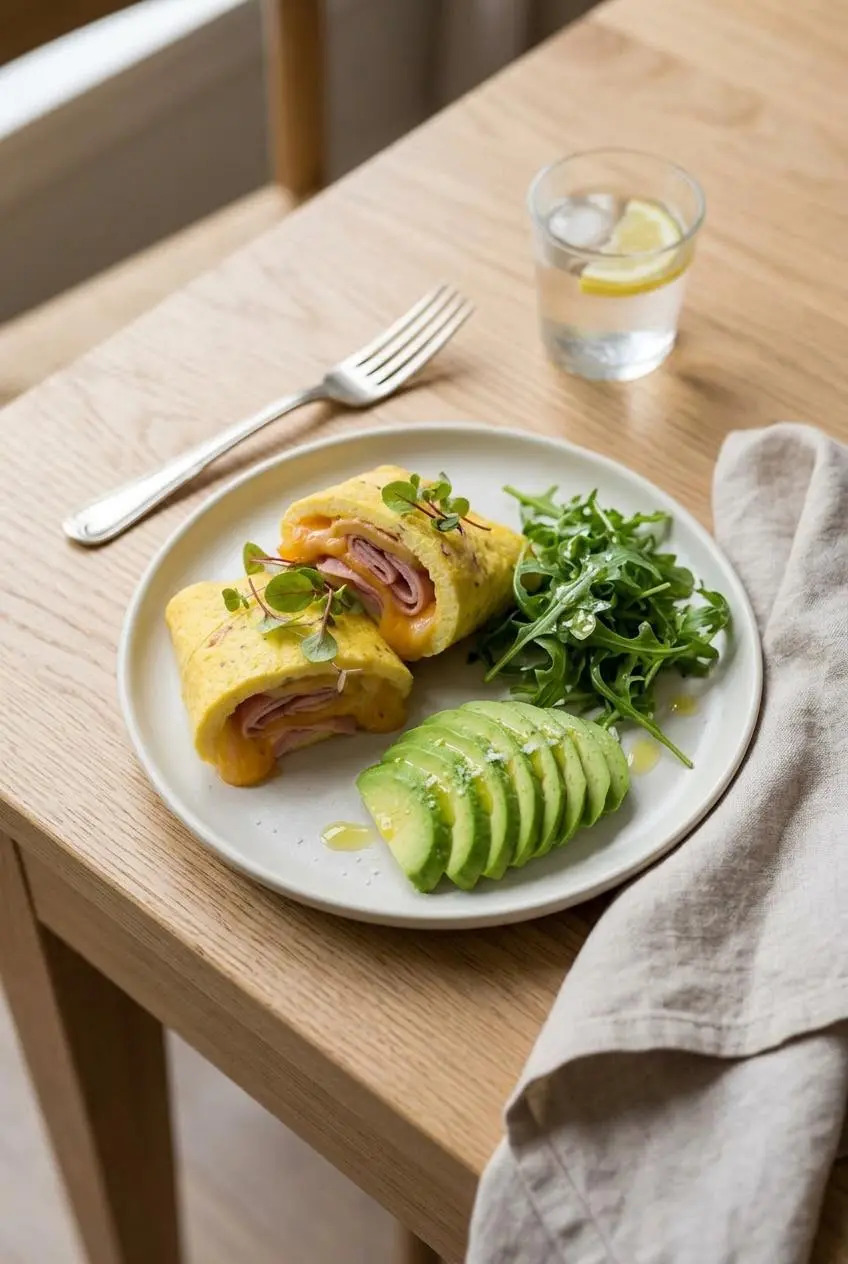
- Serve warm slices with avocado, extra virgin olive oil, and flaky sea salt.
- Add peppery arugula or mixed baby greens dressed with lemon juice and olive oil for freshness.
- Pair the omelette with sautéed greens or breakfast sausages when you want a larger plate.
- For a toast-like breakfast companion, add toasted keto bread alongside the warm slices.
Final Thoughts on Perfect Low-Carb Omelettes
A parchment-lined tray, a softly baked egg sheet, and careful rolling turn familiar ingredients into neat, tender slices. The key is gentle heat and handling the eggs while they are still warm and flexible.
Keep the filling thin, choose ingredients with controlled moisture, and make the flavor your own. A warm, cheesy pinwheel is a fine reward for a little kitchen precision.
Frequently Asked Questions
Are All Omelettes Naturally Keto-Friendly?
Plain egg omelettes with cheese, meat, and non-starchy vegetables are generally low in carbohydrates. Check fillings carefully, especially cured meats, salsas, sauces, and processed cheese products that may contain added sugar, flour, or starch.
How Do You Prevent a Sheet-Pan Omelette From Cracking When Rolled?
Do not overbake the egg sheet. The sour cream and parmesan help the eggs stay pliable, but the sheet must also be rolled while warm and just set. Peel the parchment gently after inverting rather than pulling at the eggs.
What Is the Best Way to Reheat a Rolled Keto Omelette?
Use low heat in a covered nonstick skillet with a touch of butter, or microwave at low power in brief intervals. Stop warming as soon as the filling is hot, since prolonged heat can make eggs firm and rubbery.
Can You Freeze a Keto Rolled Omelette for Later?
I do not recommend it for this style of omelette. The delicate egg layers can release water and lose their tender texture after being stored at very cold temperatures. Refrigerated slices and gentle reheating give a better result.

Keto Omelette

Equipment
- 28 cm x 22 cm baking tray
- Baking paper
- Silicone mat
- Large bowl or mixer bowl
Ingredients
- 6 eggs
- 1 tablespoon sour cream
- 1 tablespoon parmesan finely grated
- Salt and pepper to taste
- 4 slices Swiss cheese provolone or Monterey Jack cheese
- 150 g shaved leg ham
Instructions
CONVENTIONAL METHOD
- Heat the oven to 180 °C and line a 28 cm x 22 cm baking tray with baking paper. Press the paper neatly into the corners so the egg mixture has a smooth, contained surface.
- Whisk the eggs, sour cream, and parmesan in a large bowl until fully blended, then season with salt and pepper. The mixture should look even in color with no visible streaks of sour cream.
- Pour the egg mixture into the lined tray and bake for 10 minutes. Remove it when the surface is set but still lightly glossy, rather than dry or deeply browned.
- Lay a silicone mat over the warm egg sheet, turn it over carefully, and peel away the baking paper. The egg should release in one piece and feel soft enough to bend without cracking.
- Return the baking paper to the tray, arrange the cheese over the egg, add the ham, and roll it lengthwise. Keep the seam underneath as you transfer the roll back onto the lined tray.
- Bake the rolled omelette for a further 5 minutes, then slice and serve. The cheese should be melted and the roll should have a gentle spring when lightly pressed.
THERMAL METHOD
- Set the oven to 180 °C and line a 28 cm x 22 cm baking tray with baking paper. Make sure the paper sits flat so the egg layer bakes evenly.
- Add the eggs, sour cream, and parmesan to the mixer bowl and mix for 15 sec/speed 5, then season with salt and pepper. The finished mixture should look smooth and uniform.
- Spread the egg mixture in the prepared tray and bake for 10 minutes. The center should no longer look wet, though the top should retain a soft sheen.
- Cover the hot egg sheet with a silicone mat, invert it carefully, and remove the baking paper. Lift the paper slowly if an edge clings, rather than tugging at the warm eggs.
- Put the baking paper back in the tray, cover the egg sheet with cheese and ham, and roll it lengthwise. Set the roll seam-side down to help it hold its shape.
- Return the roll to the oven for a further 5 minutes before cutting it into portions. The filling is ready when the cheese has melted through the center.