Skip to content
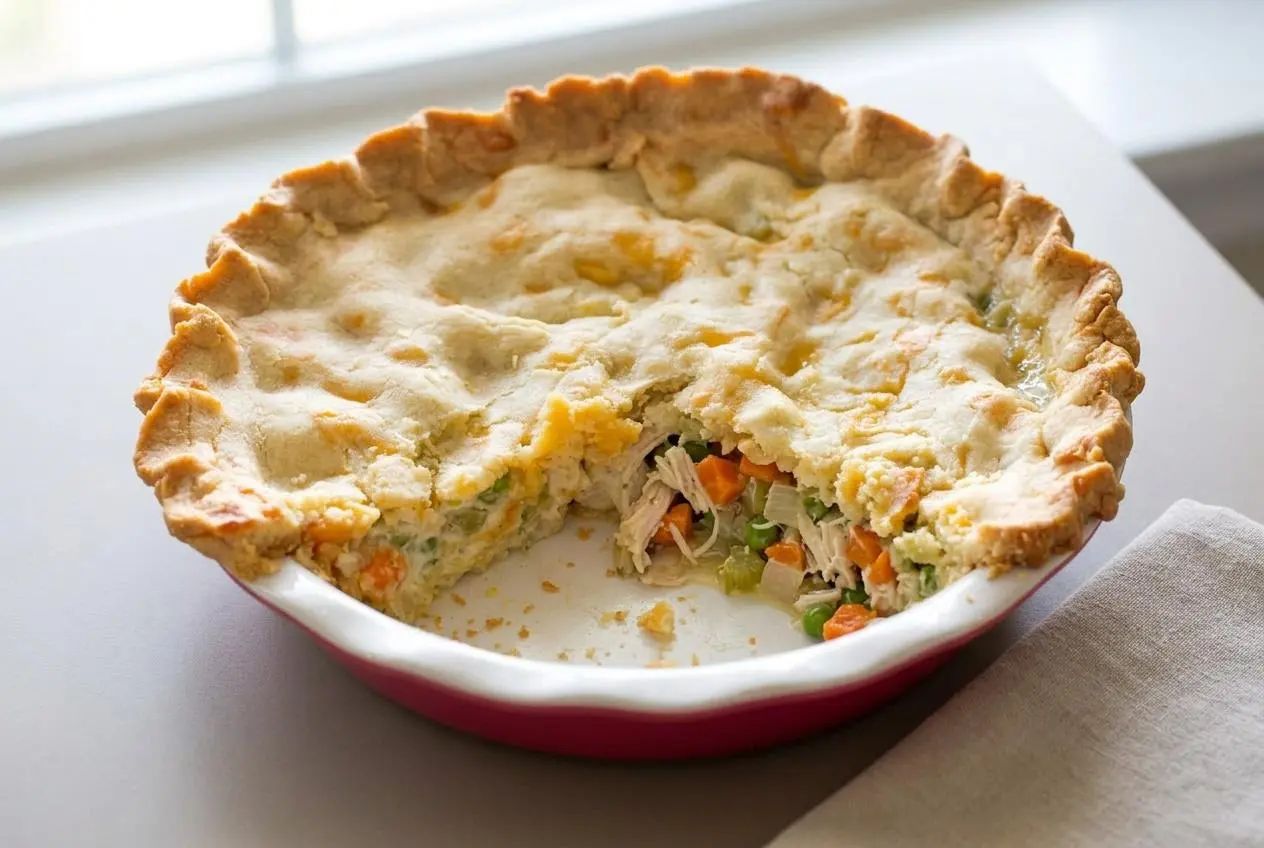
Keto chicken pot pie works best with an almond flour crust, a creamy chicken filling thickened with xanthum gum, and two key moves: par-bake the bottom crust and let the filling cool slightly before adding the top.
Golden crust, creamy filling, and real pot pie comfort without the usual floury heaviness is exactly what this dish delivers. This keto chicken pot pie keeps the classic double-crust feel while using almond flour, cheddar, cream cheese, and rotisserie chicken for a cozy low-carb dinner.
It’s especially good when you want something hearty that still slices neatly and holds together on the plate. The small details matter here, and they’re what make the crust stay flaky instead of soggy.
Chill the rolled dough before handling it, because cold keto pastry is much easier to lift, flip, and press into the pie plate cleanly.
Ingredients Explained by Role
Each ingredient pulls its weight here, whether that means building crust structure, thickening the filling, adding richness, or keeping the flavor balanced and savory.
Crust
- 2 cups almond flour
- 6 tablespoons unsalted butter, softened
- 1 egg
- 1/4 teaspoon fine pink Himilayan salt, or regular salt
- 1/2 cup shredded cheddar cheese
Filling
- 2 Tablespoons unsalted butter
- 1/2 cup diced celery
- 1/2 cup diced onion
- 1 1/2 cups low-sodium chicken broth
- 4 ounces cream cheese, softened
- 1/4 cup heavy cream
- 1 teaspoon garlic powder
- 1/4 teaspoon poultry seasoning
- 1/4 teaspoon celery seed
- 1 teaspoon fine pink Himilayan salt or regular salt
- 1/4 teaspoon ground pepper
- 1/2 teaspoon xanthum gum
- 2 cups shredded rotisserie chicken
- 2/3 cup frozen peas and carrots
Almond flour gives the crust its low-carb base, but it behaves very differently from wheat flour. It doesn’t form gluten, so the butter, egg, and cheddar are what help the dough hold together and bake into something sliceable instead of sandy.
The softened butter should blend into the almond flour until the mixture feels evenly moistened and a little mealy before the cheese finishes the dough. That texture is a good sign, because it means the fat is distributed well enough to help the crust bake up tender instead of greasy.
Xanthum gum handles the filling the way flour would in a traditional pot pie, but without turning it starchy. It thickens the broth, cream cheese, and heavy cream into a gravy that clings to the chicken instead of running into the bottom crust.
Rotisserie chicken is the best shortcut here because it already brings seasoning and tenderness. Since the filling cooks only briefly before baking, using cooked shredded chicken keeps the whole pie practical for a weeknight.
The celery, onion, poultry seasoning, celery seed, salt, and pepper build that classic pot pie flavor. Frozen peas and carrots keep the filling familiar, while the low-sodium broth gives you better control over the final seasoning.
I like letting the cream cheese soften fully before it goes into the skillet, because it melts into the broth much more smoothly and saves a lot of whisking.
Step-by-Step Cooking Instructions
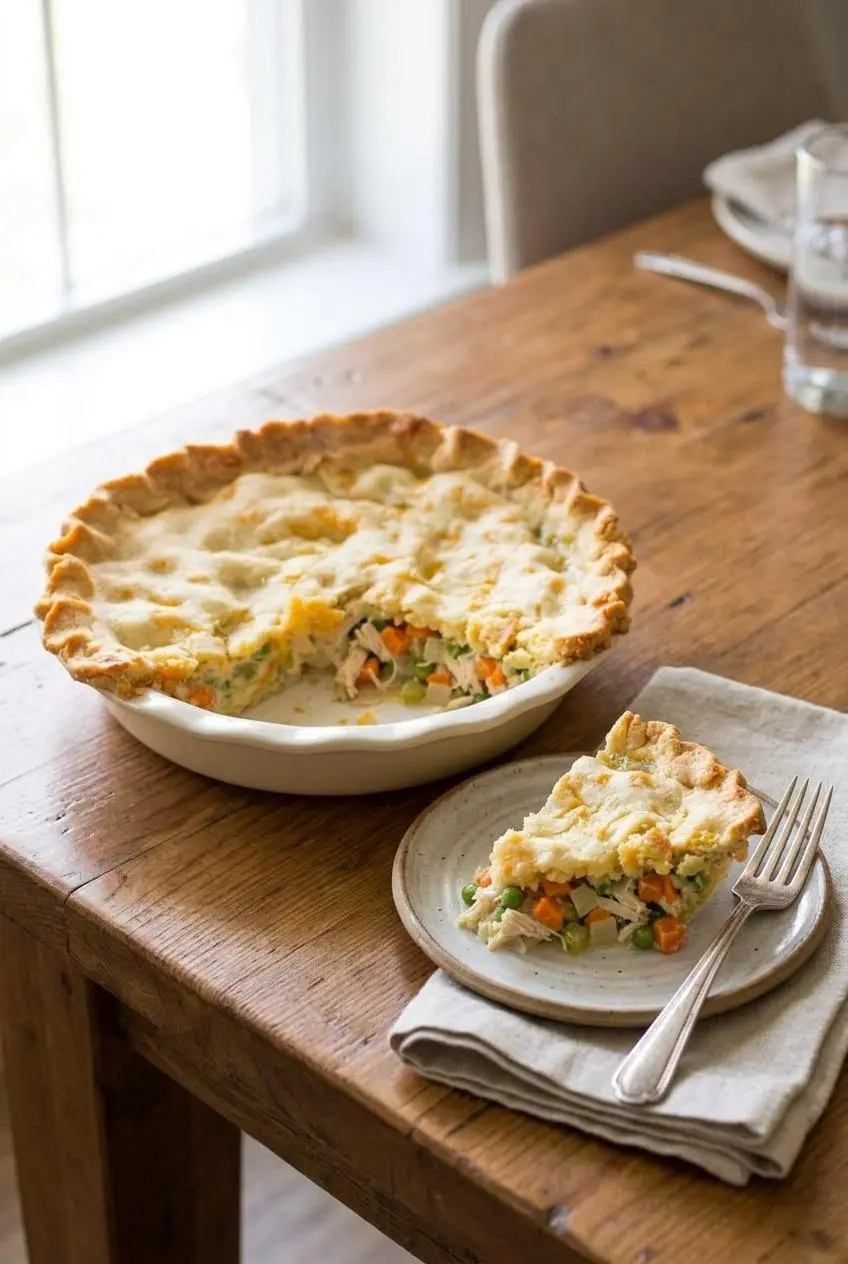
This method is all about keeping the crust crisp and the filling thick enough to stay where it belongs. Follow the order closely, especially the parchment rolling, the short chill, and the quick par-bake.
Pie Crust
- Heat the oven to 375 degrees and coat a 9-inch pie plate with cooking spray.
The prepared dish helps the almond flour crust release more cleanly after baking. - Combine the almond flour, 6 tablespoons of softened butter, egg, and salt in a large bowl, then mix until the dough starts coming together before stirring in the shredded cheese.
The finished dough should look evenly moistened and hold when pressed, not appear dry and loose. - Split the dough into two portions and spray four pieces of parchment paper with cooking spray, then roll each portion between two sheets into a circle large enough for the pie plate.
This parchment method keeps the dough from sticking and cracking while you roll it. - Transfer both rolled rounds to the refrigerator for about 5 to 10 minutes.
A short chill firms the butter and makes the dough easier to flip without tearing. - Peel the top parchment off one chilled round, invert it into the pie plate, remove the second sheet, and press the dough into place.
If the dough softens too much while you work, it will start to slump and stick instead of holding its shape. - Par-bake the bottom crust for 6 to 8 minutes, then remove it from the oven.
The crust should look set and lightly dry on the surface, not deeply browned.
Filling and Baking
- Melt 2 Tablespoons of butter in a skillet over medium heat, add the celery and onion, and cook for 5 minutes.
The vegetables should soften and smell sweet and savory, with no raw onion bite left. - Pour in the chicken broth, add the softened cream cheese and heavy cream, and whisk over medium heat until smooth.
The mixture should look creamy and unified, with no obvious bits of cream cheese floating around. - Season the sauce with garlic powder, poultry seasoning, celery seed, 1 teaspoon fine pink Himilayan salt or regular salt, and 1/4 teaspoon ground pepper.
You should smell a classic pot pie aroma at this stage, rich and a little herby. - Lower the heat and sprinkle in the 1/2 teaspoon xanthum gum while whisking quickly.
Keep stirring until the sauce thickens enough to coat a spoon like gravy rather than drip like soup. - Add the shredded rotisserie chicken and frozen peas and carrots, then stir until everything is well coated.
The filling should look creamy and full, with the chicken suspended in the sauce instead of sitting in liquid. - Let the filling cool for 5 minutes before spooning it into the par-baked crust.
This brief rest cuts down on trapped steam, which helps prevent the top crust from turning gummy underneath. - Place the second crust round over the filling, press the top and bottom edges together, and crimp if you like.
The dough should seal neatly around the edge without stretching thin in the center. - Bake the pie for 25 to 30 minutes, covering the edges halfway through with a pie shield or foil if they darken too fast.
The pie is ready when the crust is brown and the filling is visibly bubbling around the edges. - Cool the pie for 5 minutes before slicing and serving.
The crust will set a bit more and the filling will thicken slightly, making cleaner slices much easier.
The Golden Rule for Xanthan Gum Thickening
Xanthum gum clumps fast if it lands in one spot, so the best move is to keep the sauce warm over low heat and whisk continuously while sprinkling it in gradually. Think light snowfall, not a dump-and-stir moment.
The target texture is a thick, spoon-coating gravy before the chicken goes in. If the sauce still looks thin and shiny like broth, keep whisking a little longer. If it becomes too tight, a small splash of heavy cream can loosen it back up.
Tips for a Flaky, Non-Soggy Keto Pie Crust
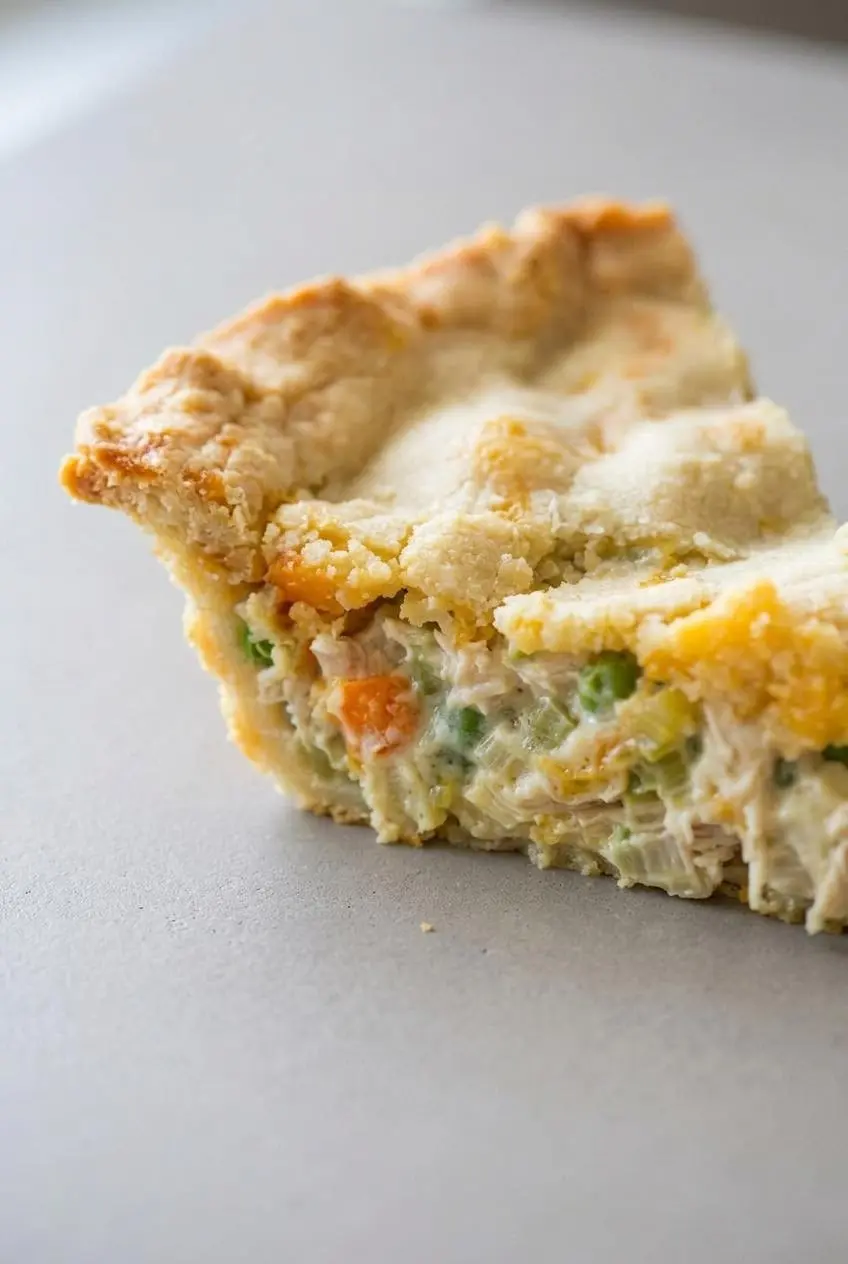
This is where most pot pie trouble starts, so a few small choices make a big difference. Keto dough needs temperature control and moisture control more than brute force.
- Par-bake the bottom crust for 6 to 8 minutes. That first bake sets the surface so the creamy filling does not soak straight into it.
- Cool the filling for 5 minutes before topping the pie. Hot filling throws steam upward, and that steam can leave the underside of the top crust soft and gummy.
- Roll the dough between parchment sheets. Almond flour dough is more delicate than wheat dough, so this keeps it intact during transfer.
- Chill the dough if it starts feeling greasy or floppy. Warm dough sticks, tears, and bakes less evenly.
- Do not over-bake the crust. Once it reaches a light golden-brown color, it’s usually right where you want it.
- Use the filling only after it has thickened to a real gravy consistency. A loose filling is the fastest route to a wet bottom crust.
Troubleshooting Crumbly Almond Flour Dough
- If the dough breaks apart while mixing, it is usually too dry. Add a tiny splash of water or a little oil just until it presses together.
- If the dough cracks badly while rolling, let it sit a moment and press the edges back together between the parchment sheets. Small cracks are normal with almond flour pastry.
- If the dough turns sticky and hard to handle, chill it again before trying to lift it. Warm butter makes low-carb dough much fussier.
- If the baked crust seems brittle, it likely stayed in the oven a bit too long. Almond flour browns quickly, so watch for light golden edges instead of deep color.
Lower-Carb Vegetable Swaps
If you want to trim the carb count further, the filling is flexible. The easiest way is to swap part or all of the peas and carrots for vegetables that stay firmer and carry less sweetness.
- Chopped green beans work well because they keep a pot pie feel without adding much starch. They also make a nice side if you’d rather keep the filling classic, and green beans almondine fits that role especially well.
- Small cauliflower florets give the filling more body and absorb the creamy sauce nicely.
- Celery root adds a more traditional, root-vegetable vibe with a lower-carb feel than extra carrots.
- Zucchini can work too, but add it carefully because it releases more water and can loosen the filling.
If you keep the peas and carrots, the amount here is modest across eight servings, so the pie still stays squarely in low-carb territory for most people.
The Ultimate Make-Ahead and Reheating Guide
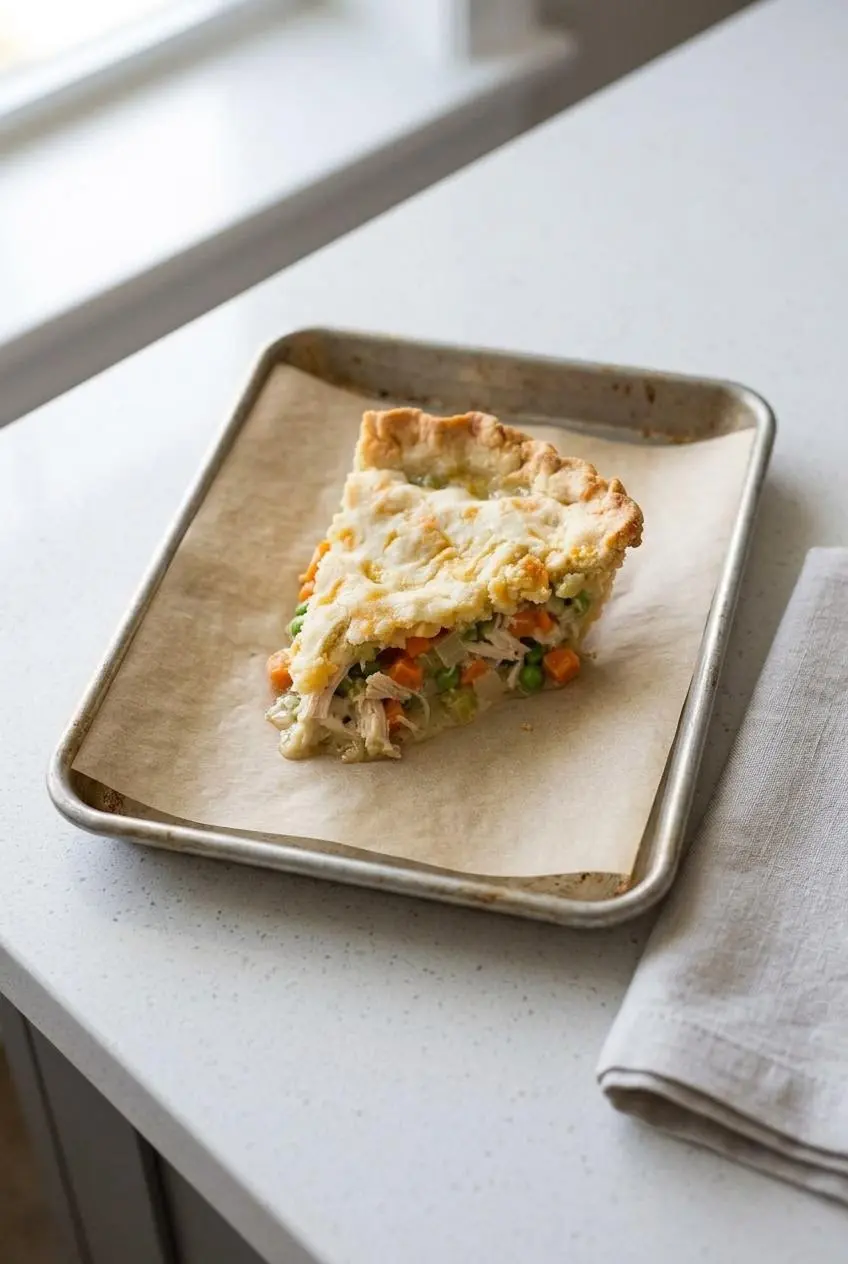
This pie is very manageable ahead, but texture matters. The crust stays at its best when you keep moisture under control and reheat gently instead of blasting it.
You can prepare the dough, roll it out, and chill it until you are ready to assemble. You can also cook the filling, let it cool, and assemble the pie later so the crust goes onto a cooler filling rather than a steaming one.
For leftovers, cool the pie fully, cover it well, and refrigerate it promptly. Cooked chicken leftovers are best kept only within the window described for poultry storage and leftovers, which is 3 to 4 days.
Reheat slices in the oven so the crust can crisp back up as the filling warms through. A microwave is fine for a quick single serving if texture is not your top concern, but for a whole pie it usually softens the crust too much and can make it rubbery.
If you want to bake it later, keep the assembled pie chilled until it goes into the oven. That helps the crust hold its shape and gives the butter a better chance to bake into a firmer, flakier shell.
Keto Crust Variations
If you like the filling but want a different finish, these options all work well. Keep them as optional routes, because the main recipe above is written for the almond flour double crust.
Fathead Cheese Crust Variation
A fathead-style crust made with mozzarella and cream cheese bakes up sturdy, flexible, and nicely golden. It is a good choice if you want a dough that rolls more smoothly and feels a little more elastic than almond flour pastry.
The one watch-out is heat. If you cap the pie while the filling is still very hot, steam can collect under that cheese-based dough and leave the bottom of the top crust gummy. Let the filling cool briefly first, then top the pie. If you like working with that style of dough, the technique is similar to keto pizza crust.
Fluffy Biscuit Topping Option
If rolling dough sounds like too much for tonight, a drop-biscuit topping is the easy answer. Spoon biscuit dough over the filling in small mounds so steam can escape between them and the tops can brown evenly.
This version gives you a softer, more rustic finish instead of a classic sealed top crust. For a similar no-roll approach, use the method behind fluffy keto biscuits as your guide.
Crustless Pot Pie Casserole
Skip the crust entirely and bake the thickened filling in a skillet or baking dish with a little cheddar over the top. You still get the creamy, savory center, just in a faster and more spoonable form.
This is especially handy when you want comfort food with less assembly. If crustless keto dinners are your speed, ground beef casserole is another good one-pan idea.
Conclusion
This pot pie brings the comfort of the classic version while keeping the crust low carb, cheesy, and deeply satisfying. The filling stays creamy, the chicken stays tender, and the whole thing feels like real dinner, not a workaround.
If you remember just two things, par-bake the bottom crust and let the filling cool briefly before adding the top. Those two steps make the flaky finish much easier to get.
Frequently Asked Questions
How do I prevent my keto pot pie crust from getting soggy?
Par-bake the bottom crust for 6 to 8 minutes before adding the filling. Let the filling cool for 5 minutes so it does not steam the top crust from underneath. Make sure the sauce has thickened to a spoon-coating gravy before you fill the pie. Bake until the crust is browned and the filling is bubbling at the edges.
Can I use coconut flour instead of almond flour for the crust?
Yes, but it behaves very differently and absorbs much more liquid. A common swap is 1/3 cup of coconut flour in place of the almond flour, plus two extra tablespoons of cream cheese. Expect a different texture, usually a bit denser and more delicate. Roll it gently and chill well before handling.
How do I thicken the pot pie filling without xanthan gum?
You can use 1/2 tablespoon of arrowroot powder or 1/2 tablespoon of coconut flour instead. Whisk the thickener into the warm liquid and let it simmer until the sauce reduces. The goal is still the same: a thick gravy that coats the spoon before the chicken goes in. Avoid regular flour or cornstarch if you want to keep the filling keto-friendly.
Can you freeze keto chicken pot pie?
Yes, but wrap it very well and protect the crust from moisture as much as possible. Keto crusts can lose some texture after freezing, so the result is usually best when reheated in the oven rather than the microwave. If you freeze it before baking, assemble it in a freezer-safe dish and bake straight from frozen, adding more oven time as needed until the crust is browned and the center is hot. If you freeze it after baking, cool it completely first and reheat gently so the filling warms without turning the crust soft.
Keto Chicken Pot Pie

Equipment
- 9-inch pie plate
- Rolling Pin
- Parchment paper
- Skillet
- Whisk
- Mixing bowls
Ingredients
Crust
- 2 cups almond flour
- 6 tablespoons unsalted butter softened
- 1 egg
- 1/4 teaspoon fine pink Himilayan salt, or regular salt
- 1/2 cup shredded cheddar cheese
Filling
- 2 Tablespoons unsalted butter
- 1/2 cup diced celery
- 1/2 cup diced onion
- 1 1/2 cups low-sodium chicken broth
- 4 ounces cream cheese softened
- 1/4 cup heavy cream
- 1 teaspoon garlic powder
- 1/4 teaspoon poultry seasoning
- 1/4 teaspoon celery seed
- 1 teaspoon fine pink Himilayan salt or regular salt
- 1/4 teaspoon ground pepper
- 1/2 teaspoon xanthum gum
- 2 cups shredded rotisserie chicken
- 2/3 cup frozen peas and carrots
Instructions
Pie Crust
- Heat the oven to 375 degrees and coat a 9-inch pie plate with cooking spray. The prepared dish helps the almond flour crust release more cleanly after baking.
- Combine the almond flour, 6 tablespoons of softened butter, egg, and salt in a large bowl, then mix until the dough starts coming together before stirring in the shredded cheese. The finished dough should look evenly moistened and hold when pressed, not appear dry and loose.
- Split the dough into two portions and spray four pieces of parchment paper with cooking spray, then roll each portion between two sheets into a circle large enough for the pie plate. This parchment method keeps the dough from sticking and cracking while you roll it.
- Transfer both rolled rounds to the refrigerator for about 5 to 10 minutes. A short chill firms the butter and makes the dough easier to flip without tearing.
- Peel the top parchment off one chilled round, invert it into the pie plate, remove the second sheet, and press the dough into place. If the dough softens too much while you work, it will start to slump and stick instead of holding its shape.
- Par-bake the bottom crust for 6 to 8 minutes, then remove it from the oven. The crust should look set and lightly dry on the surface, not deeply browned.
Filling and Baking
- Melt 2 Tablespoons of butter in a skillet over medium heat, add the celery and onion, and cook for 5 minutes. The vegetables should soften and smell sweet and savory, with no raw onion bite left.
- Pour in the chicken broth, add the softened cream cheese and heavy cream, and whisk over medium heat until smooth. The mixture should look creamy and unified, with no obvious bits of cream cheese floating around.
- Season the sauce with garlic powder, poultry seasoning, celery seed, 1 teaspoon fine pink Himilayan salt or regular salt, and 1/4 teaspoon ground pepper. You should smell a classic pot pie aroma at this stage, rich and a little herby.
- Lower the heat and sprinkle in the 1/2 teaspoon xanthum gum while whisking quickly. Keep stirring until the sauce thickens enough to coat a spoon like gravy rather than drip like soup.
- Add the shredded rotisserie chicken and frozen peas and carrots, then stir until everything is well coated. The filling should look creamy and full, with the chicken suspended in the sauce instead of sitting in liquid.
- Let the filling cool for 5 minutes before spooning it into the par-baked crust. This brief rest cuts down on trapped steam, which helps prevent the top crust from turning gummy underneath.
- Place the second crust round over the filling, press the top and bottom edges together, and crimp if you like. The dough should seal neatly around the edge without stretching thin in the center.
- Bake the pie for 25 to 30 minutes, covering the edges halfway through with a pie shield or foil if they darken too fast. The pie is ready when the crust is brown and the filling is visibly bubbling around the edges.
- Cool the pie for 5 minutes before slicing and serving. The crust will set a bit more and the filling will thicken slightly, making cleaner slices much easier.