Skip to content
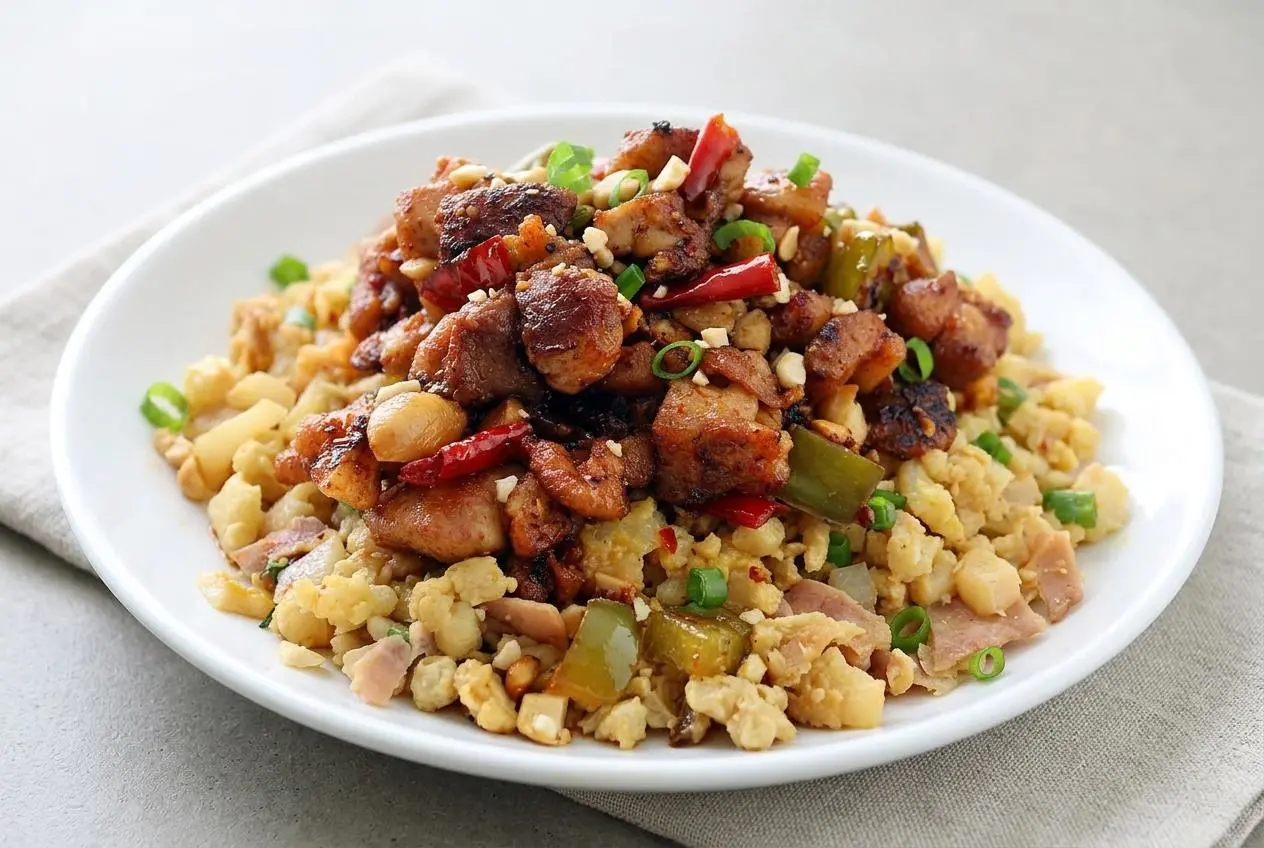
Keto Kung Pao chicken is a fast skillet stir-fry with browned chicken thighs, crisp peppers, peanuts, and a spicy, glossy sauce that reduces without cornstarch.
This keto kung pao chicken brings savory heat, tangy vinegar, and nutty crunch together in one pan. It keeps the bold character of a Kung Pao-style stir-fry while leaving out sugary sauces and starch-heavy coatings.
The chicken gets deeply browned before the sauce goes in, so the finished dish tastes rich rather than watery. The sticky glaze is the payoff.
Chop the pepper, green onion, and chiles before heating the pan because the cooking moves quickly once the chicken starts sizzling.
Low-Carb Ingredient Selections and Smart Swaps
Each ingredient builds a specific part of the dish, from juicy chicken and crisp vegetables to spicy depth, tangy balance, and a glossy finish that clings to every bite.
- 7 1/2 ounce boneless, skinless chicken thighs
- salt and pepper (to taste)
- 1 teaspoon ground ginger
- 1/2 medium green bell pepper
- 30 gram green onion
- 4 bird’s eye chile pepper (deseeded)
- 1/4 cup peanuts
- 1 tablespoon soy sauce (or coconut aminos)
- 2 teaspoon unseasoned rice vinegar
- 2 tablespoon chili-garlic paste (such as sambal oelek with garlic)
- 1 tablespoon low-carb ketchup
- 2 teaspoon sesame oil
- 1/2 teaspoon maple extract
- 10 drop liquid stevia
Why Chicken Thighs Excel in High-Heat Woks
Boneless chicken thighs have enough natural richness to stay juicy when exposed to a very hot skillet. Their fuller flavor also stands up well to chile paste, ginger, soy sauce, and vinegar. Cut the pieces evenly so they brown at a similar pace instead of leaving some pieces dry while others are still pale.
Crisp Vegetables and Low-Carb Crunch Factors
Green bell pepper brings a fresh snap that offsets the savory glaze, while green onion adds a clean, sharp finish. Peanuts provide the essential crunchy contrast. Add them near the end so their texture remains noticeable instead of softening in the sauce.
I prefer leaving the bell pepper slightly firm because its clean crunch makes the sticky sauce and rich chicken feel much lighter.
Selecting Keto-Compliant Sweeteners and Sauces
Soy sauce or coconut aminos supplies the salty, savory backbone. Rice vinegar brightens the heavier flavors, while low-carb ketchup, maple extract, and liquid stevia round out the acidity with a sweet edge. Whisk these ingredients thoroughly so the stevia and maple extract distribute evenly through the glaze.
How to Make Keto Kung Pao Chicken
Cook the chicken in stages so it can brown before the vegetables and sauce change the pan’s temperature. Use a food thermometer if needed, since chicken should reach an internal temperature of 165°F.
- Cut the chicken thighs into bite-sized pieces and season them with salt, pepper, and ground ginger.
Coat the pieces evenly so the ginger is distributed before they hit the hot pan. - Heat a non-stick pan over medium-high heat, then add the chicken when the surface is very hot and cook until browned, about 10 minutes.
The chicken should sizzle right away and develop deep golden edges; use a splatter screen to reduce grease splatter. - While the chicken browns, chop the bell pepper, green onion, and deseeded bird’s eye chiles.
Keep the vegetables and chiles ready beside the stove so they can go into the pan without delay. - Whisk together the soy sauce or coconut aminos, rice vinegar, chili-garlic paste, low-carb ketchup, sesame oil, maple extract, and liquid stevia.
The mixture should look smooth and evenly blended, with no concentrated streaks of sweetener or chile paste. - Stir the browned chicken and continue cooking it for a few more minutes before adding the bell pepper, green onion, chiles, and peanuts.
Cook the mixture for about 3–4 minutes, until the vegetables begin to soften but still retain a crisp bite. - Pour in the sauce and let it bubble in the pan until it reduces slightly.
When the liquid changes from thin and bubbly to glossy and nearly sticky, it should coat the chicken instead of pooling at the bottom. - Transfer the stir-fry to serving bowls while the glaze is hot.
The peanuts should stay crunchy against the shiny sauce and crisp vegetables.
Understanding Low-Carb Chinese Stir-Fry Cooking
Many takeout-style stir-fries rely on breading, cornstarch slurries, and sweet sauces for body. This version gets its flavor from browned chicken, chiles, aromatics, and a reduced pan sauce instead. Removing refined sugar and starch-heavy thickeners helps keep the carbohydrate load lower without making the dish taste flat.
High heat does much of the work. A hot skillet creates browned edges on the chicken, adding savory depth that a floury coating would otherwise provide. That same approach works well in a keto chicken stir fry, where quick cooking protects the vegetables’ texture.
Kung Pao-style flavor leans savory, tangy, spicy, and nutty. It differs from sweeter battered dishes because the chicken stays unbreaded and the sauce remains a light coating rather than a thick, sugary blanket.
Crafting the Signature Keto Kung Pao Glaze
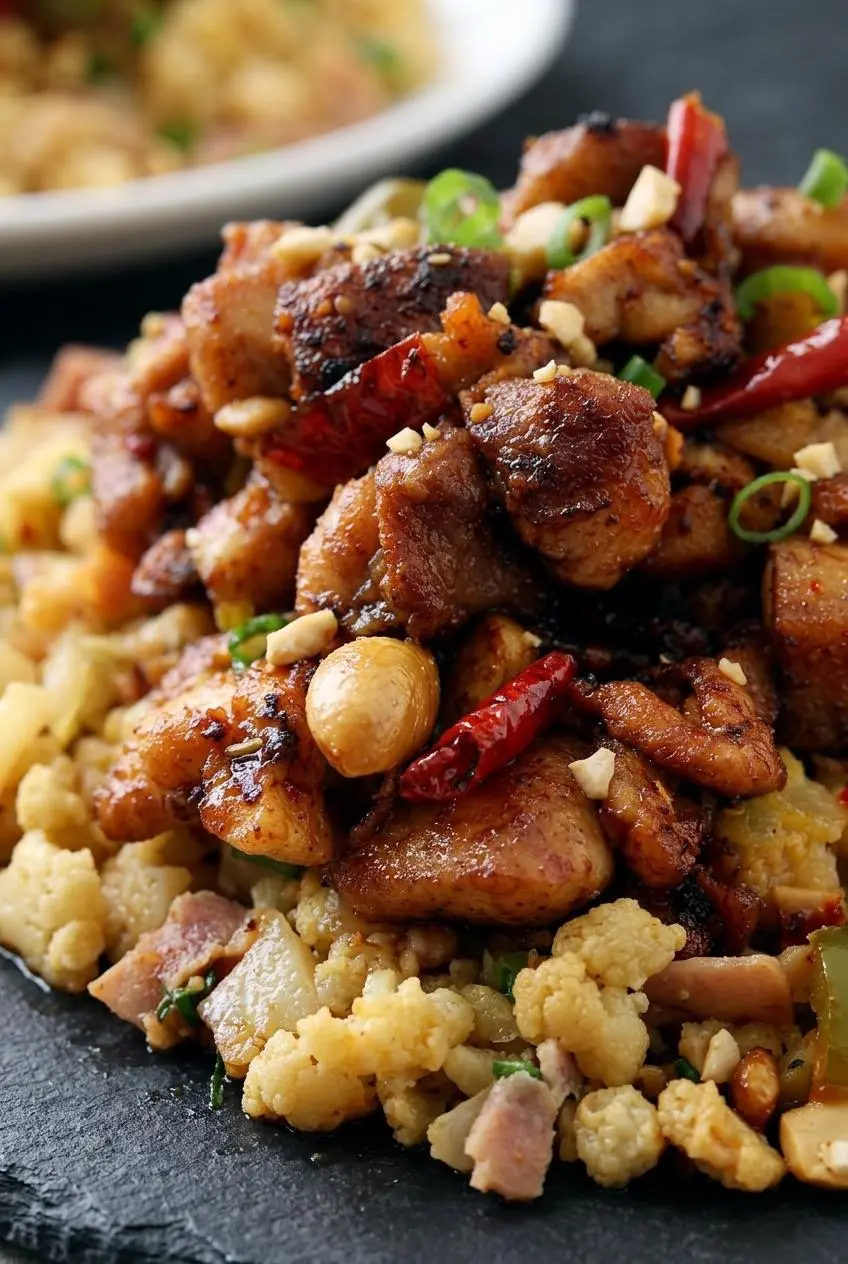
The glaze works because salty, tangy, spicy, and sweet ingredients meet in a hot pan and concentrate together. Soy sauce or coconut aminos brings umami, rice vinegar adds brightness, and chili-garlic paste gives the sauce its deeper chile flavor.
Low-carb ketchup adds body, while maple extract and liquid stevia soften sharp vinegar and chile notes. Sugar substitutes do not behave exactly like brown sugar during reduction, so watch the pan closely. The goal is a lively simmer that turns shiny and clingy, not a hard-cooked syrup.
If the sauce looks separated when it first hits the skillet, keep stirring as it bubbles. The chicken juices, sesame oil, and sauce will come together as the excess liquid cooks away.
Troubleshooting Common Stir-Fry Mistakes
- Thin sauce: The pan may not have been hot enough, or the sauce may not have reduced long enough. Keep it bubbling until it coats the chicken in a light, glossy layer.
- Pale or gray chicken: Overcrowding traps moisture and makes the meat steam. Give the chicken room in the pan so it can sear instead.
- Soft vegetables: Adding the sauce before the peppers become crisp-tender gives them too much time in liquid. Add the sauce only after the vegetables have started to cook down.
- Bitter heat: Bird’s eye chiles and chili-garlic paste can become harsh when scorched. Keep the heat steady and avoid letting chile pieces sit against a dry, overheated pan.
- Lost peanut crunch: Peanuts soften when submerged too long. Stir them in with the vegetables near the end and serve soon after the glaze thickens.
Flavor Adjustments and Dietary Variations
The main dish has direct bird’s eye chile heat, but you can tailor the spice and crunch without changing the core skillet method.
Mild Heat Kung Pao Chicken
For gentler heat, remove all seeds and membranes from the chiles, reduce the chile pieces, or use less chili-garlic paste. You will still get warmth from ginger, sesame oil, and the chiles themselves, but the sauce will feel less fiery. For a sweet-savory dinner without the chile focus, try keto teriyaki chicken.
Nut-Free / Seed-Crusted Variation
Replace the peanuts with toasted sunflower seeds or pumpkin seeds for a nut-free crunch. Add them at the same finishing stage so they stay crisp against the glaze. Seeds bring a slightly earthier flavor, but they still provide the toasted texture that makes this style of stir-fry satisfying.
Authentic Sichuan Peppercorn Infusion
For a more traditional Sichuan direction, infuse the cooking oil briefly with whole Sichuan peppercorns, then remove them before cooking the chicken. Their floral aroma and gentle tingling sensation pair especially well with the chiles. Keep the heat controlled so the peppercorns do not burn and turn bitter.
Low-Carb Serving and Side Dish Pairings
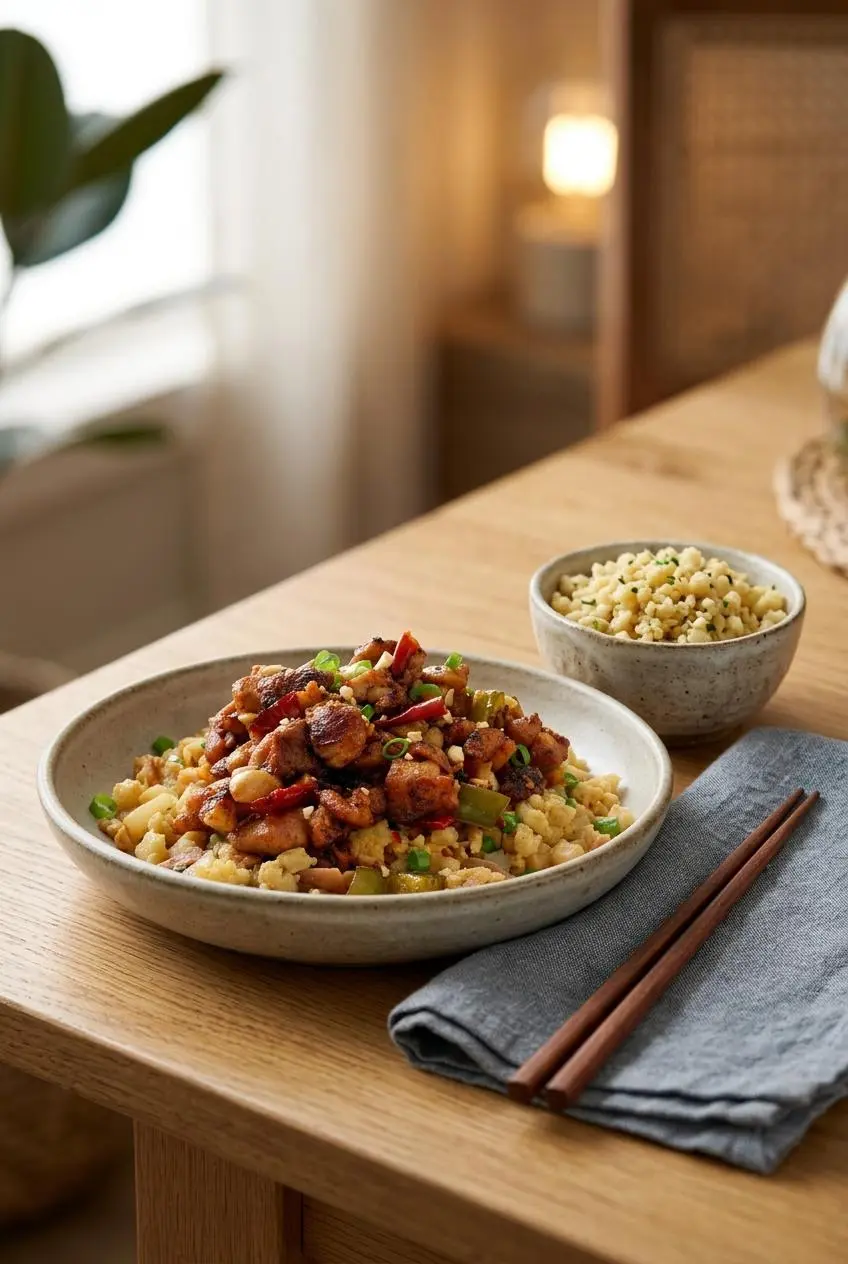
A saucy stir-fry needs something that can catch every bit of glaze without competing with the chiles and peanuts.
- Serve it over skillet-fried cauliflower rice tossed with cooking fat for a satisfying bowl with plenty of texture.
- Use spiralized zucchini noodles or thin ribbons of cabbage for a lighter base that still holds the sauce.
- Pair it with steamed bok choy or tender-crisp broccoli for fresh green contrast.
- For a heartier noodle-style bowl, spoon the chicken over homemade keto pasta.
Storage, Meal Prep, and Reheating Best Practices
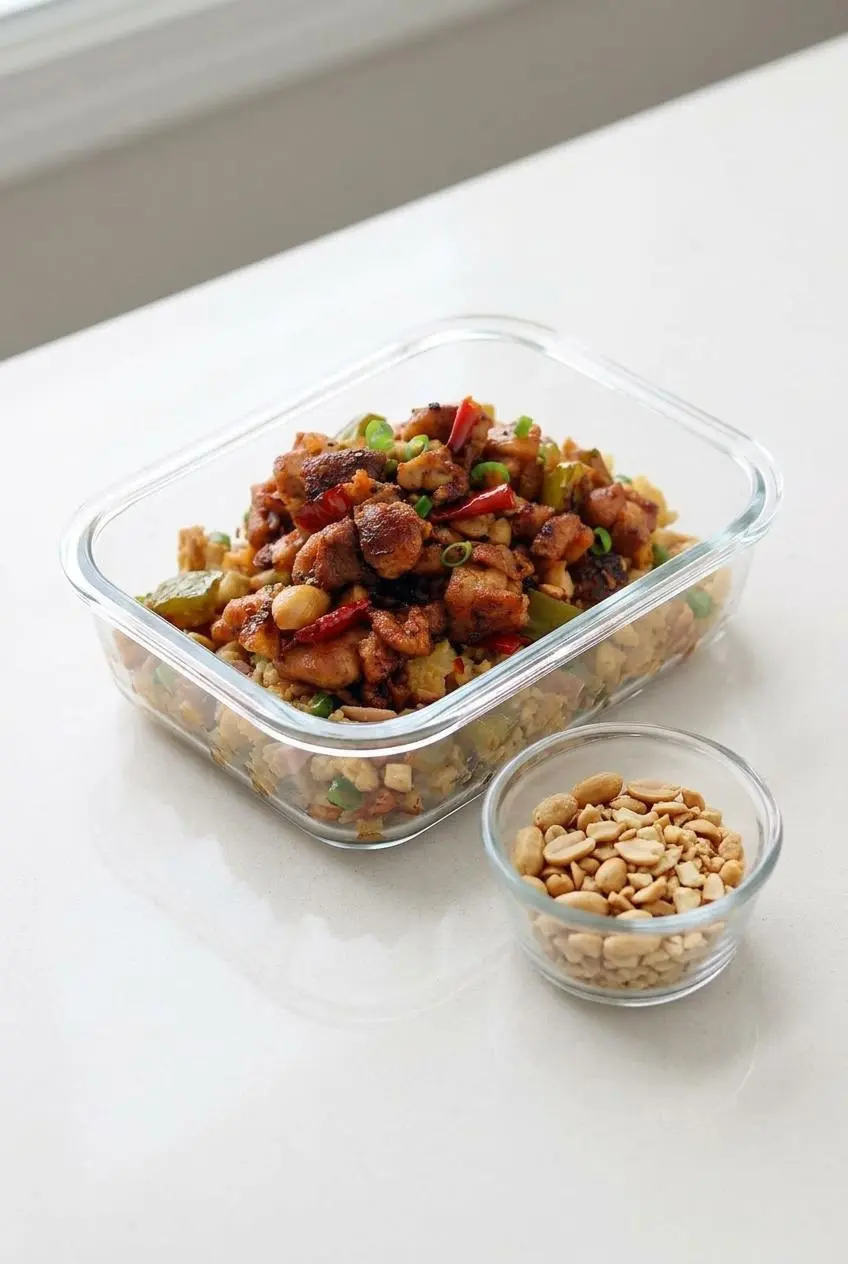
Cool leftover stir-fry promptly, transfer it to an airtight container, and keep it chilled. Store the peanuts separately when possible if preserving their crunch matters most. Keeping prepped vegetables, chicken, and sauce in separate containers before cooking also helps each component hold its intended texture.
Reheat a portion in a hot skillet over medium heat, stirring just until the chicken is heated through and the glaze loosens again. A microwave can work when needed, but the peppers and peanuts will soften more readily. Add reserved peanuts after reheating for the best contrast.
Bringing Takeout Flavors Home the Low-Carb Way
Great keto Kung Pao chicken comes down to a properly heated pan, well-browned chicken, crisp vegetables, and a sauce reduced until it clings. The combination delivers bold savory heat without relying on breading or a cornstarch slurry.
Adjust the chile level to suit your table, but keep the final glaze glossy and the peanuts crunchy. That contrast makes every bite feel complete.
Frequently Asked Questions
How do I thicken keto Kung Pao chicken sauce without cornstarch?
Let the sauce bubble in a hot skillet until excess liquid reduces. As it concentrates, it changes from watery to glossy and creates a light, sticky coating on the chicken. Avoid adding the sauce before the chicken and vegetables are ready, since that can leave it thin and dilute.
Can I substitute chicken breast for chicken thighs?
Yes. Chicken breast can replace thighs, but it has less fat and can dry out more easily over high heat. Cut it into even pieces and cook it only until done, then proceed with the vegetables and glaze.
How can I make this dish less spicy?
Deseed the bird’s eye chiles carefully and use fewer chile pieces if desired. You can also reduce the chili-garlic paste for a milder, warmer flavor. Ginger, sesame oil, vinegar, and peanuts will still give the stir-fry plenty of character.
What Are the Best Keto-Friendly Sides to Serve With Kung Pao Chicken?
Skillet-fried cauliflower rice is a strong choice because it catches the glaze. Zucchini noodles, ribboned cabbage, bok choy, and broccoli also pair well with the spicy, savory chicken. Choose a side with a mild flavor so the Kung Pao sauce remains the focus.
How Should Leftovers Be Stored and Reheated?
Cool leftovers promptly, keep them in an airtight container in the refrigerator, and reheat a portion in a hot skillet. This approach helps revive the glaze and limits sogginess. Keep peanuts separate until serving when you want them crunchy.
Keto Kung Pao Chicken

Equipment
- Non-stick skillet
- chef’s knife
- cutting board
- Small mixing bowl
- Whisk
Ingredients
- 7 1/2 ounce boneless, skinless chicken thighs
- salt and pepper to taste
- 1 teaspoon ground ginger
- 1/2 medium green bell pepper
- 30 gram green onion
- 4 bird’s eye chile pepper deseeded
- 1/4 cup peanuts
- 1 tablespoon soy sauce or coconut aminos
- 2 teaspoon unseasoned rice vinegar
- 2 tablespoon chili-garlic paste such as sambal oelek with garlic
- 1 tablespoon low-carb ketchup
- 2 teaspoon sesame oil
- 1/2 teaspoon maple extract
- 10 drop liquid stevia
Instructions
- Cut the chicken thighs into bite-sized pieces and season them with salt, pepper, and ground ginger. Coat the pieces evenly so the ginger is distributed before they hit the hot pan.
- Heat a non-stick pan over medium-high heat, then add the chicken when the surface is very hot and cook until browned, about 10 minutes. The chicken should sizzle right away and develop deep golden edges; use a splatter screen to reduce grease splatter.
- While the chicken browns, chop the bell pepper, green onion, and deseeded bird’s eye chiles. Keep the vegetables and chiles ready beside the stove so they can go into the pan without delay.
- Whisk together the soy sauce or coconut aminos, rice vinegar, chili-garlic paste, low-carb ketchup, sesame oil, maple extract, and liquid stevia. The mixture should look smooth and evenly blended, with no concentrated streaks of sweetener or chile paste.
- Stir the browned chicken and continue cooking it for a few more minutes before adding the bell pepper, green onion, chiles, and peanuts. Cook the mixture for about 3-4 minutes, until the vegetables begin to soften but still retain a crisp bite.
- Pour in the sauce and let it bubble in the pan until it reduces slightly. When the liquid changes from thin and bubbly to glossy and nearly sticky, it should coat the chicken instead of pooling at the bottom.
- Transfer the stir-fry to serving bowls while the glaze is hot. The peanuts should stay crunchy against the shiny sauce and crisp vegetables.