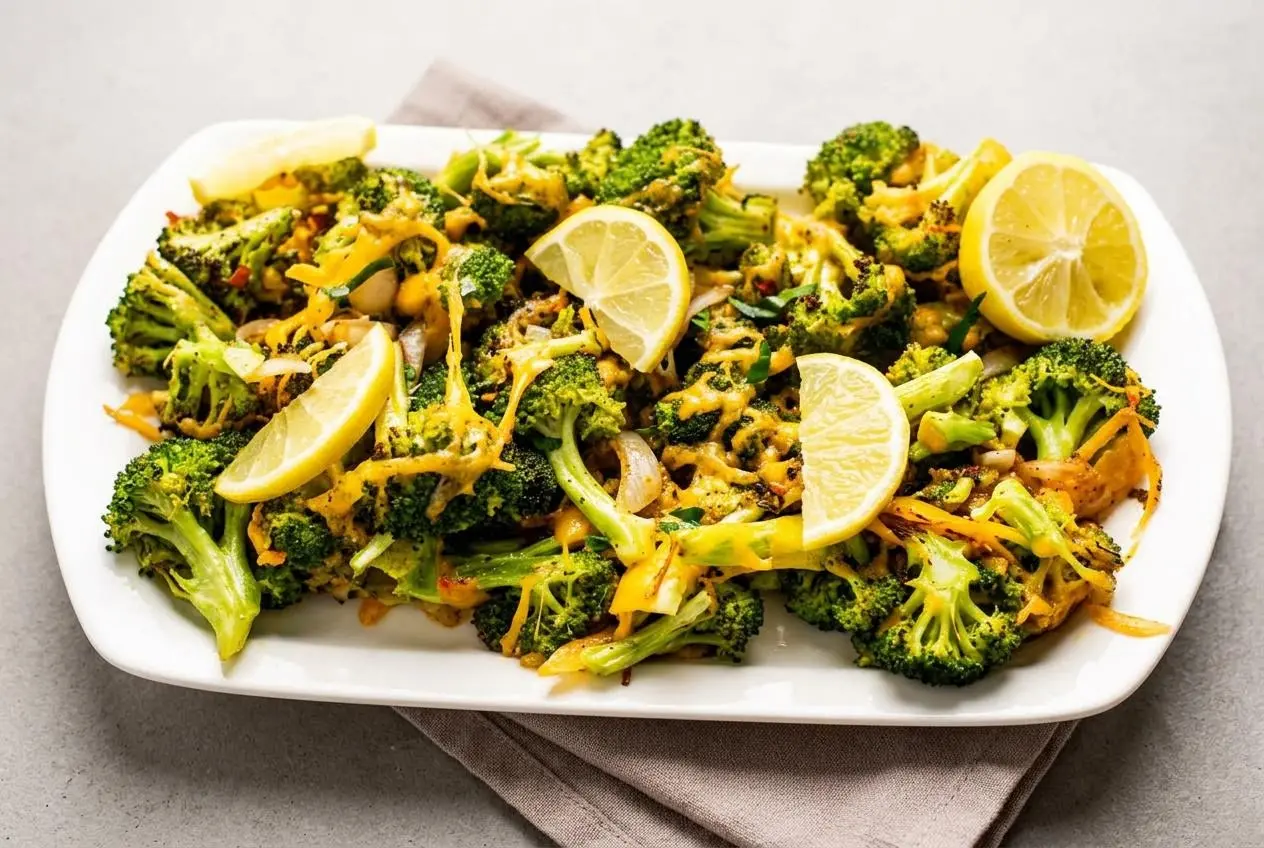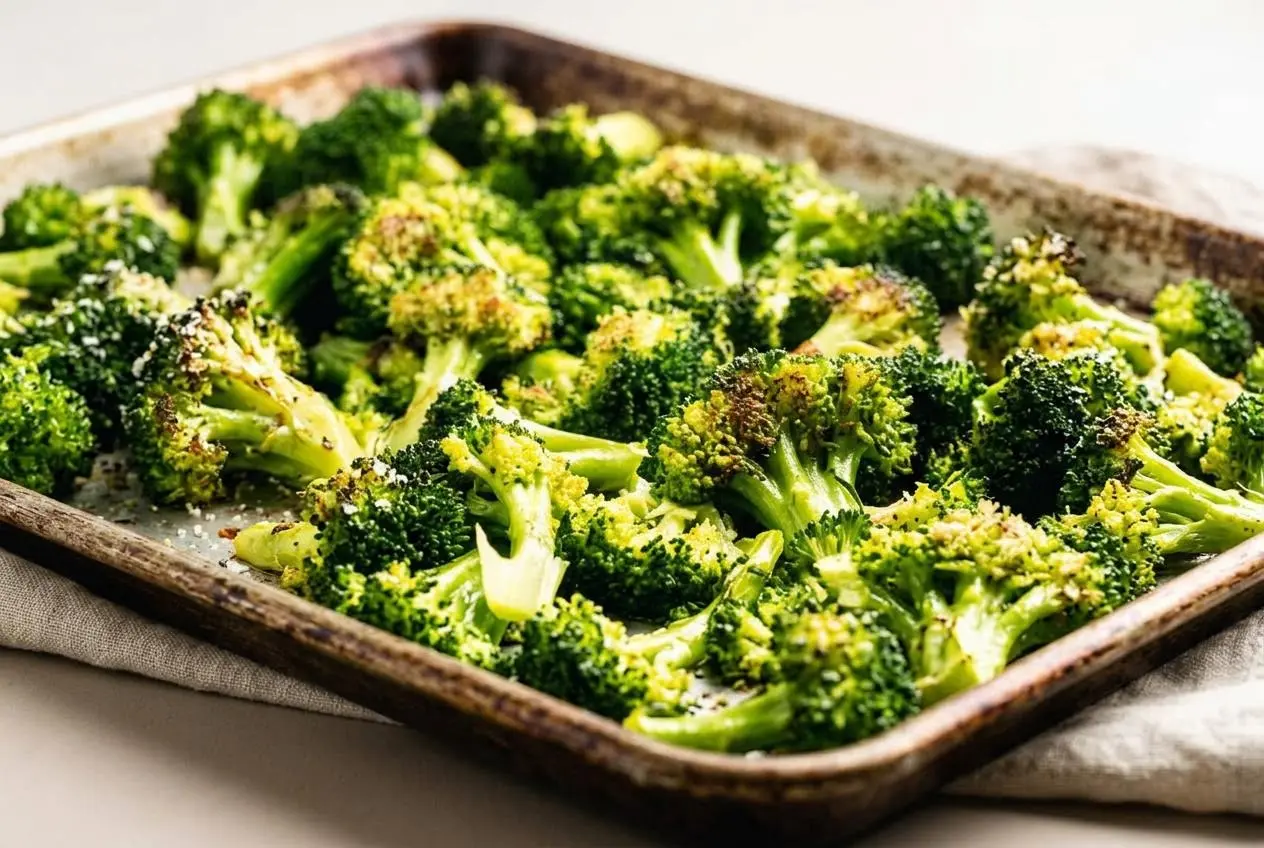
Roast dry broccoli florets with olive oil, garlic, salt, and pepper on an uncrowded sheet pan until the edges brown and the stems turn tender. High heat creates crisp caramelized tips without sugary glazes.
This keto roasted broccoli recipe turns a humble vegetable into a deeply savory side with tender stems, browned florets, and plenty of garlic aroma.
Balsamic vinegar and Parmesan add tangy, salty depth to the finished flavor. The trick is keeping moisture away from the pan. Crisp edges are waiting.
Dry the broccoli thoroughly after washing, then give every floret room on the baking sheet so it roasts instead of steams.
Essential Ingredients for Roasted Broccoli
Each ingredient supports the final texture and flavor: broccoli provides structure, oil encourages browning, garlic adds aroma, and balsamic vinegar with Parmesan brings tangy, savory balance.
- 1 1/2 pounds broccoli, cut into florets
- 3-4 tbsp olive oil
- 3 cloves garlic, minced
- sea salt and freshly-cracked black pepper, to taste
- 1 tbsp balsamic vinegar
- 1/4 cup grated Parmesan cheese
Choose broccoli with firm stems and tightly packed, dark green florets. Yellowing buds and soft stems signal broccoli that will not roast as evenly.
Olive oil coats the rough surfaces of the florets, helping them brown and keeping the garlic and seasonings in place. Avocado oil can also work when you prefer a more neutral flavor and a heat-stable cooking fat.
Minced garlic gives the broccoli a bold savory flavor, but small pieces can darken quickly. Coat it well with oil and watch for deeply golden edges rather than blackened garlic bits. The balsamic vinegar lends gentle acidity, while grated Parmesan supplies a salty finish that complements the browned broccoli.
I prefer cutting the peeled tender portions of the stems into small pieces rather than discarding them. They roast into sweet, tender bites when they are close in size to the florets.
How to Make This Keto Roasted Broccoli
Follow the listed amounts, oven temperature, and roasting time for broccoli that stays tender-crisp rather than limp. A large mixing bowl helps distribute the oil and seasonings evenly before the florets reach the pan.
- Heat the oven to 425 °F and coat a large rimmed baking sheet with non-stick spray.
The pan should be ready before the seasoned broccoli goes on it so the florets can start roasting right away. - Combine the broccoli, olive oil, minced garlic, salt, and black pepper in a large bowl, tossing until the florets are evenly coated.
Look for a light sheen over the broccoli with garlic distributed across the pieces rather than clumped in one spot. - Arrange the broccoli in one layer on the prepared sheet pan and roast for 18-20 minutes, tossing halfway through.
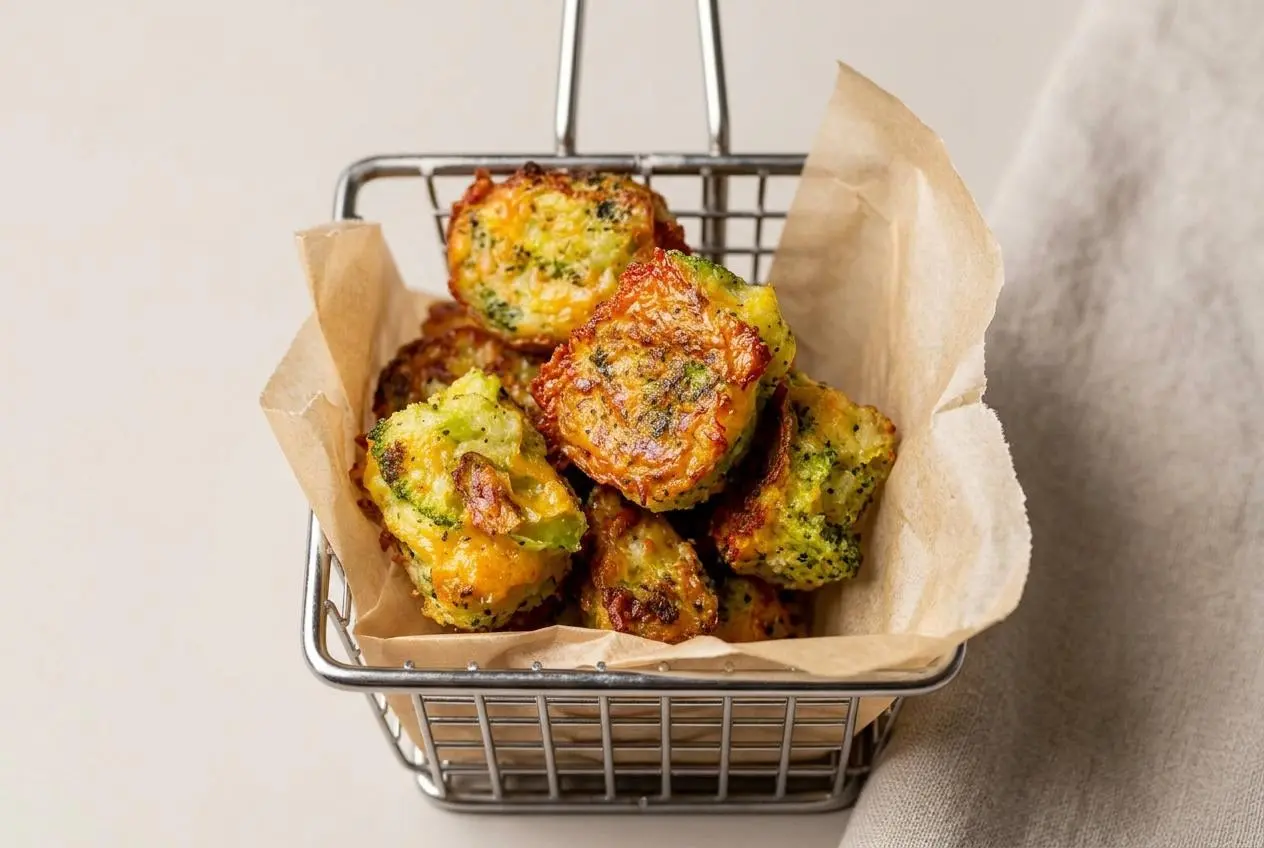
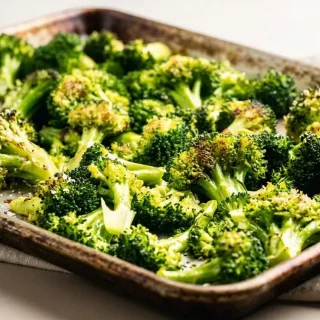
Remove it when the stems yield to a paring knife tip and the floret edges are lightly browned and slightly blistered.
A steady, gentle sizzle is a good sign that the broccoli is roasting properly. Pale, wet-looking florets need more space on the pan, while dark brown tips and tender stems signal the best texture.
Nutritional Highlights and Keto Fit
Broccoli is a cruciferous vegetable with naturally occurring carbohydrates and dietary fiber, making it a common choice for low-carb meals. Roasting concentrates its natural savory sweetness through browning without adding sugar.
The olive oil and Parmesan add richness, so the broccoli feels satisfying alongside a protein-focused meal. Individual carbohydrate targets vary, so consider the listed serving information in the context of your own eating plan. For another low-carb oven option, try these keto roasted vegetables.
Troubleshooting Common Roasting Mistakes
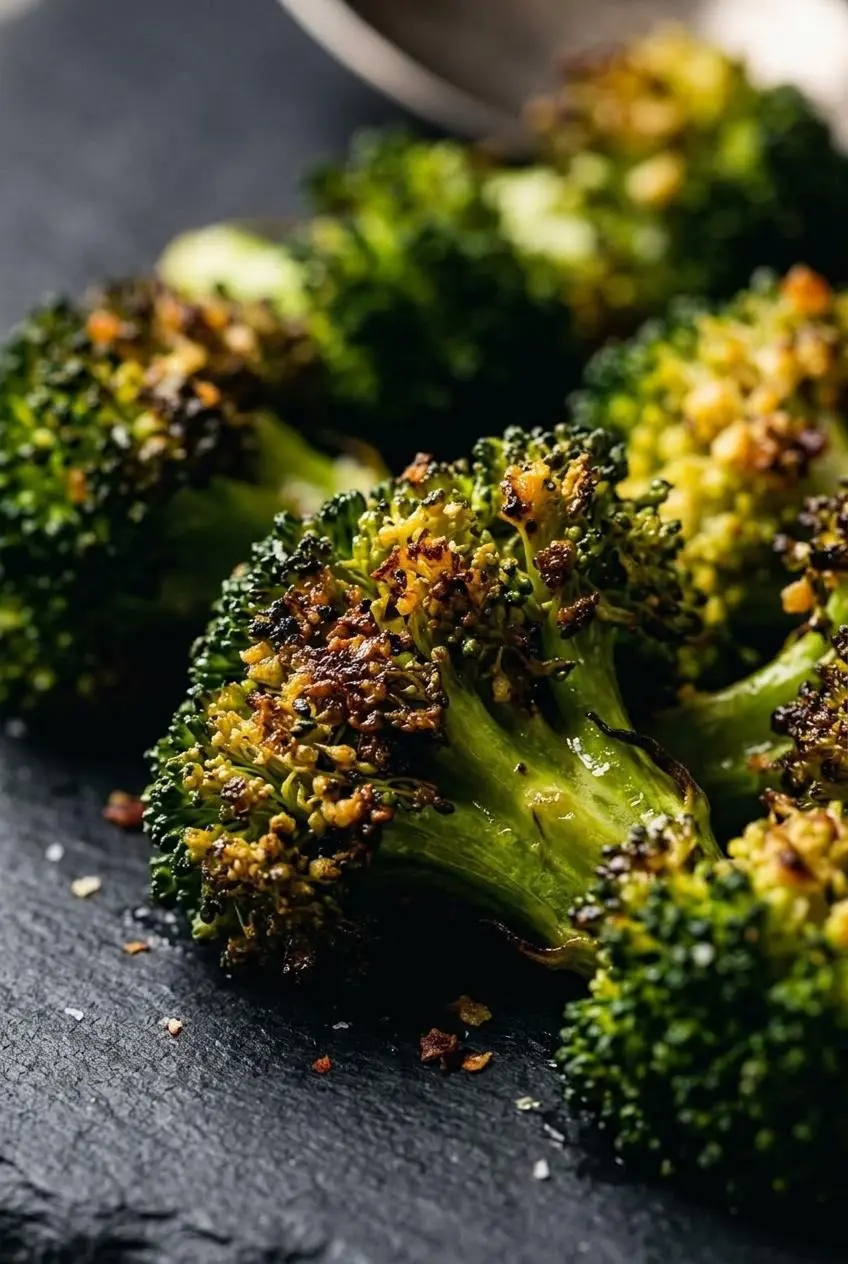
Preventing Steamed and Soggy Florets
- Problem: The broccoli looks soft and watery. Cause: Surface water or a crowded pan trapped steam. Fix: Dry the florets with a clean towel or salad spinner before oiling, then spread them out in one layer.
- Problem: The florets are pale. Cause: They did not have enough direct contact with hot pan space. Fix: Use a large sheet pan and avoid piling pieces over one another.
Avoiding Scorched Garlic and Cheese
- Problem: Garlic tastes bitter. Cause: Tiny exposed pieces browned too far. Fix: Keep the minced garlic coated in oil and tucked among the broccoli instead of scattered on bare metal.
- Problem: Cheese tastes harsh or looks overly dark. Cause: Delicate dairy stayed under high heat too long. Fix: Add an optional cheese topping near the end of roasting so it melts and browns lightly.
Achieving Even Browning
- Problem: One side is browned while the rest is pale. Cause: Heat is not reaching the pan evenly. Fix: Toss the broccoli midway through roasting and rotate the sheet pan if your oven has a hot spot.
- Problem: Small tips burn before stems soften. Cause: Uneven cutting. Fix: Keep florets similar in size and cut thick stem pieces smaller.
Flavor Variations and Seasoning Ideas
Garlic Parmesan Roasted Broccoli
Lean into the savory flavors already in the dish by adding the Parmesan during the final part of roasting. It melts into little golden patches while the garlic perfumes the broccoli without overwhelming it.
Lemon Pepper and Citrus Zest
For a brighter finish, add fresh lemon zest and cracked black pepper after roasting. The citrus aroma lifts the earthy flavor of broccoli and works especially well beside salmon or chicken.
Melted Cheddar Crust
For a richer optional variation, top the roasted florets with sharp cheddar near the end so it melts into a bubbly crust. If you enjoy that cozy broccoli-and-cheese combination, this broccoli cauliflower casserole offers another warm, cheesy dinner idea.
Spicy Chili Flakes
Add crushed red pepper flakes for a clean hit of heat, or use smoked paprika for a warmer, smoky flavor. Both options work best as optional seasoning additions rather than replacements for the garlic, salt, and pepper.
Pairing and Serving Suggestions
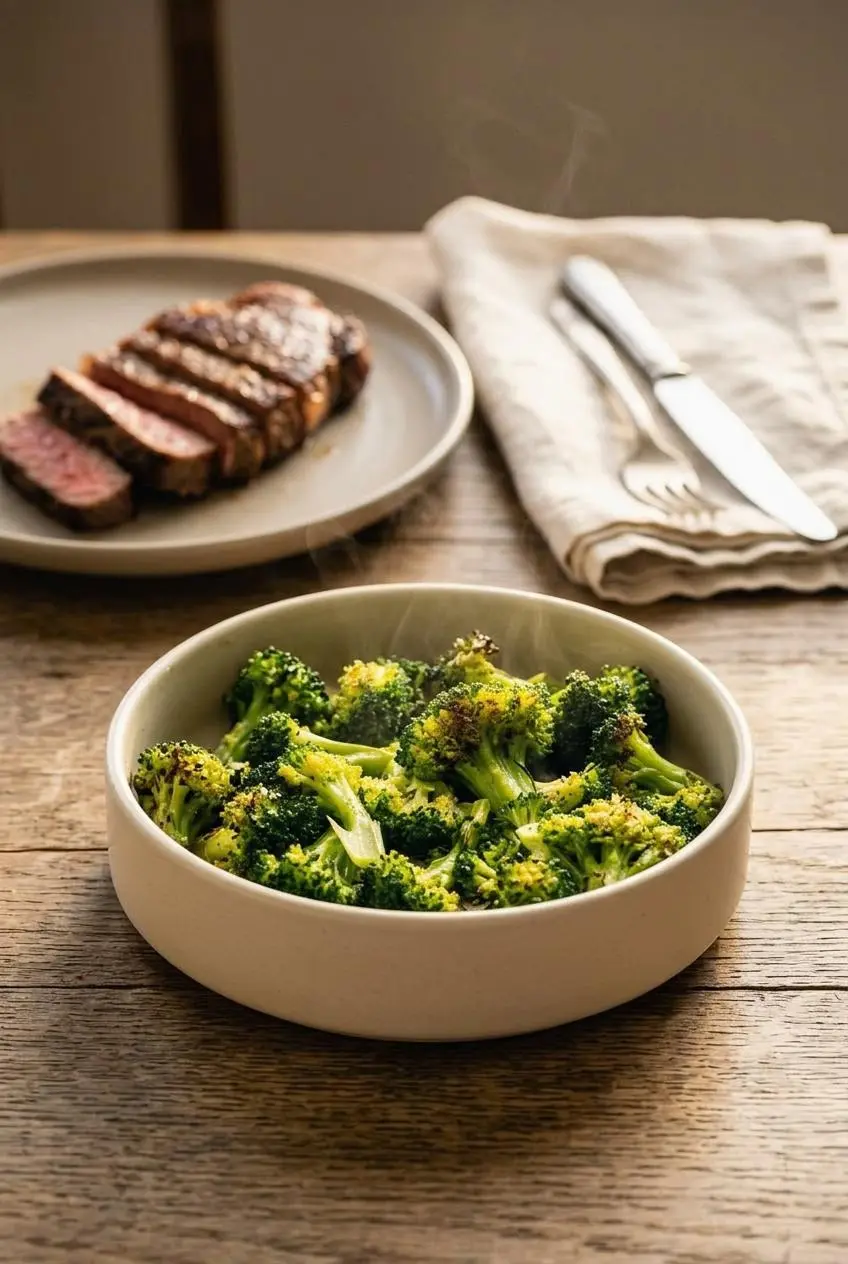
Serve the broccoli hot from the pan while the floret edges are at their crispest. It pairs naturally with grilled steak, roasted chicken thighs, pan-seared pork chops, or seared salmon.
- Build a hearty low-carb dinner with steak, roasted broccoli, and a cool salad.
- Serve it beside roast poultry when you want a vegetable with more bite than steamed broccoli.
- Chill leftover florets and toss them into a crisp lunch salad for a savory roasted element.
For a vegetable-forward dinner spread, pair it with keto baked zucchini alongside your main protein.
Storage and Reheating Guidelines
Proper Refrigerated Storage
Let the roasted broccoli cool completely before transferring it to an airtight container and keeping it chilled. Avoid sealing it while hot, since trapped condensation softens the browned edges.
For meal prep, keep any fresh salad greens separate and combine them with chilled broccoli only when you are ready to eat. This protects the greens and prevents excess moisture from spreading through the container.
Oven and Skillet Reheating Methods
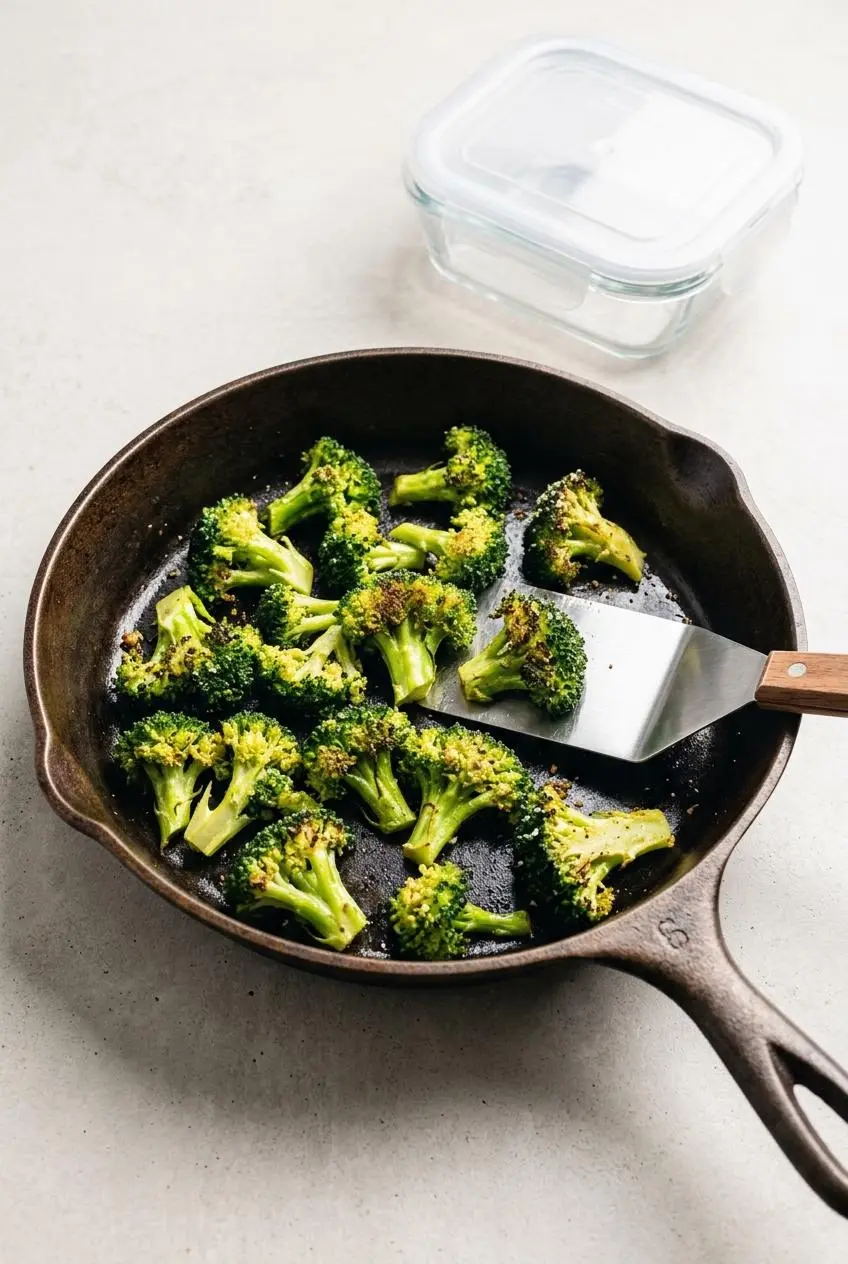
Use dry heat to bring back some texture. Spread the broccoli on a hot baking sheet or warm it in a dry skillet over medium heat until heated through and the edges regain a little crispness.
A microwave is convenient, but it tends to soften roasted vegetables. Reheat only the portion you plan to serve so the remaining broccoli stays in better condition.
Summary of Perfect Roasted Broccoli
The path to crisp roasted broccoli is straightforward: dry the florets completely, coat them evenly with oil and seasonings, and leave space around every piece on the pan.
Use the listed measurements and roasting time, then trust the cues of browned tips and tender stems. A hot, savory pan of broccoli can make dinner feel finished.
Frequently Asked Questions
Why Does Roasted Broccoli Turn Out Soggy Instead of Crispy?
Broccoli usually turns soggy when it goes into the oven wet or crowded together. Water on the florets creates steam, and an overloaded pan prevents hot air from circulating. Dry the broccoli well and use enough pan space for each piece.
Can You Use Frozen Broccoli Florets for This Recipe?
This method is designed for fresh broccoli, which gives the best chance of browned, crisp edges. Frozen florets release more moisture as they cook, so they tend to produce a softer result. If using them, spread them widely and expect less caramelization.
How Do You Prevent Fresh Garlic From Burning in the Oven?
Make sure the minced garlic is thoroughly coated with olive oil and mixed through the broccoli instead of left exposed on the sheet pan. Garlic powder is another optional choice when you want garlic flavor with less risk of dark, bitter bits. Fresh garlic can also be added later in the roasting process.
Is Roasted Broccoli Suitable for Maintaining Ketosis?
Roasted broccoli can fit into many ketogenic meal plans because it is a low-carb cruciferous vegetable with dietary fiber. Portion needs differ from person to person, especially when you are tracking carbohydrates closely. Use the listed nutrition information as part of your overall meal planning.
What Is the Best Way to Reheat Leftover Roasted Broccoli?
Reheat it in a hot oven or dry skillet rather than relying on the microwave. Dry heat helps refresh the browned edges, while microwave heat often leaves florets softer. Spread the broccoli out instead of warming it in a deep pile.
Keto Roasted Broccoli Recipe

Equipment
- Baking sheet
- Large mixing bowl
Ingredients
- 1 1/2 pounds broccoli, cut into florets
- 3-4 tbsp olive oil
- 3 cloves garlic, minced
- sea salt and freshly-cracked black pepper, to taste
- 1 tbsp balsamic vinegar
- 1/4 cup grated Parmesan cheese
Instructions
- Heat the oven to 425 °F and coat a large rimmed baking sheet with non-stick spray. The pan should be ready before the seasoned broccoli goes on it so the florets can start roasting right away.
- Combine the broccoli, olive oil, minced garlic, salt, and black pepper in a large bowl, tossing until the florets are evenly coated. Look for a light sheen over the broccoli with garlic distributed across the pieces rather than clumped in one spot.
- Arrange the broccoli in one layer on the prepared sheet pan and roast for 18-20 minutes, tossing halfway through. Remove it when the stems yield to a paring knife tip and the floret edges are lightly browned and slightly blistered.