Skip to content
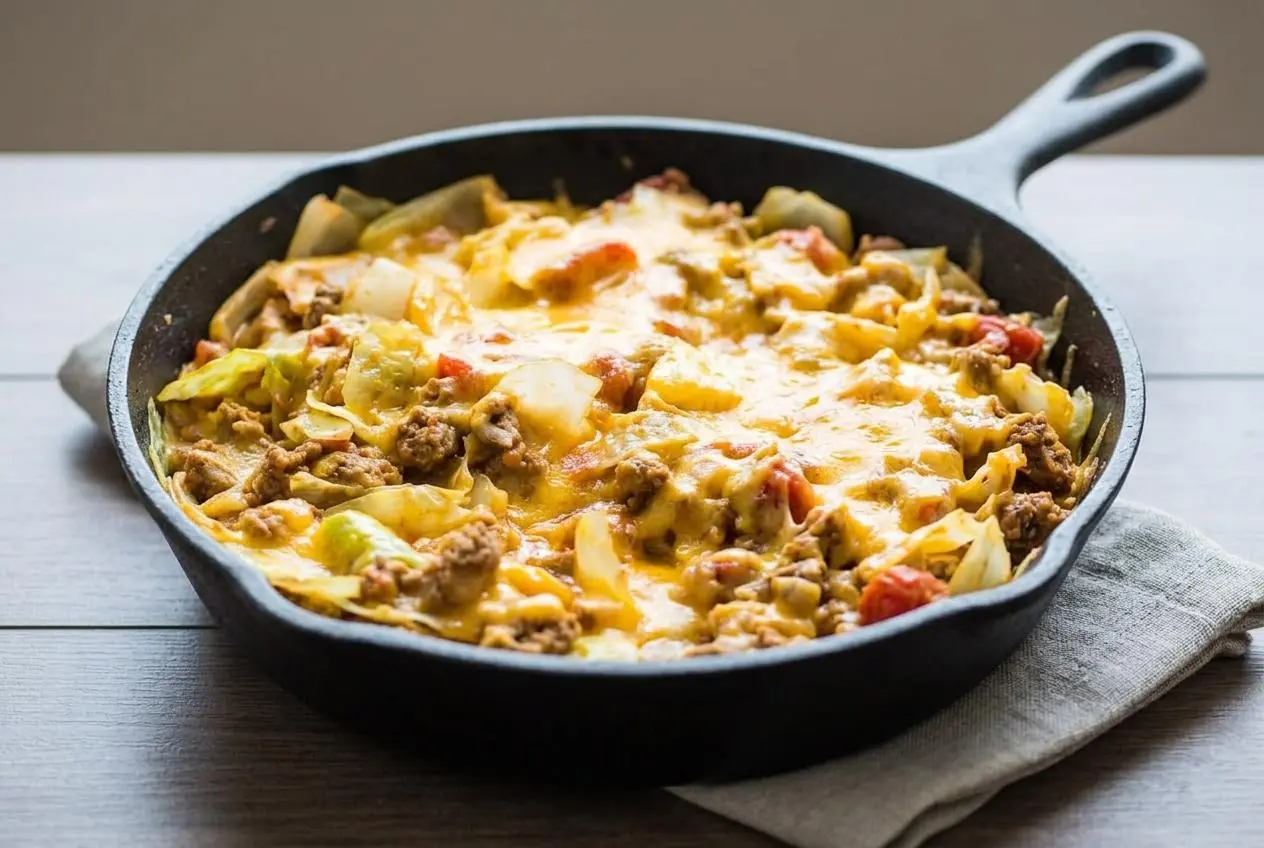
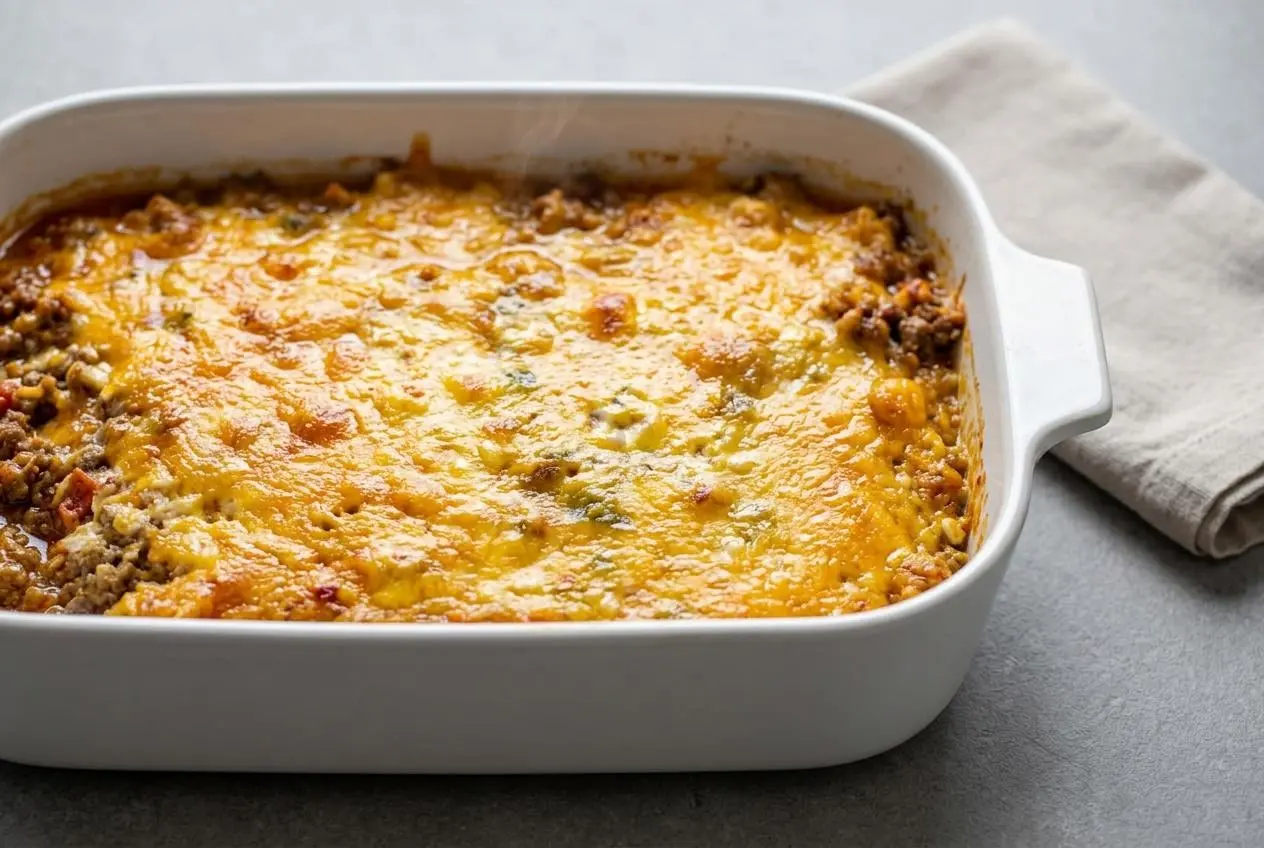
To make a low carb cheesy cabbage casserole, brown the meat, cook the onion, simmer chopped cabbage with tomatoes, tomato sauce, and spices for 15 to 18 minutes, then top with cheese, cover, and let it melt.
Low Carb Cheesy Cabbage Casserole is a skillet dinner that eats like comfort food but keeps the carb load lighter than pasta or rice based bakes. You get tender cabbage, savory meat, tomato richness, and a gooey cheese finish in under 30 minutes.
It’s especially good when you want something hearty without a sink full of dishes. The trick is handling the cabbage and cheese the right way so the final skillet stays rich instead of watery.
Use a large skillet so the cabbage has room to soften and release steam instead of trapping extra moisture.
Why Cabbage Is Perfect for Keto
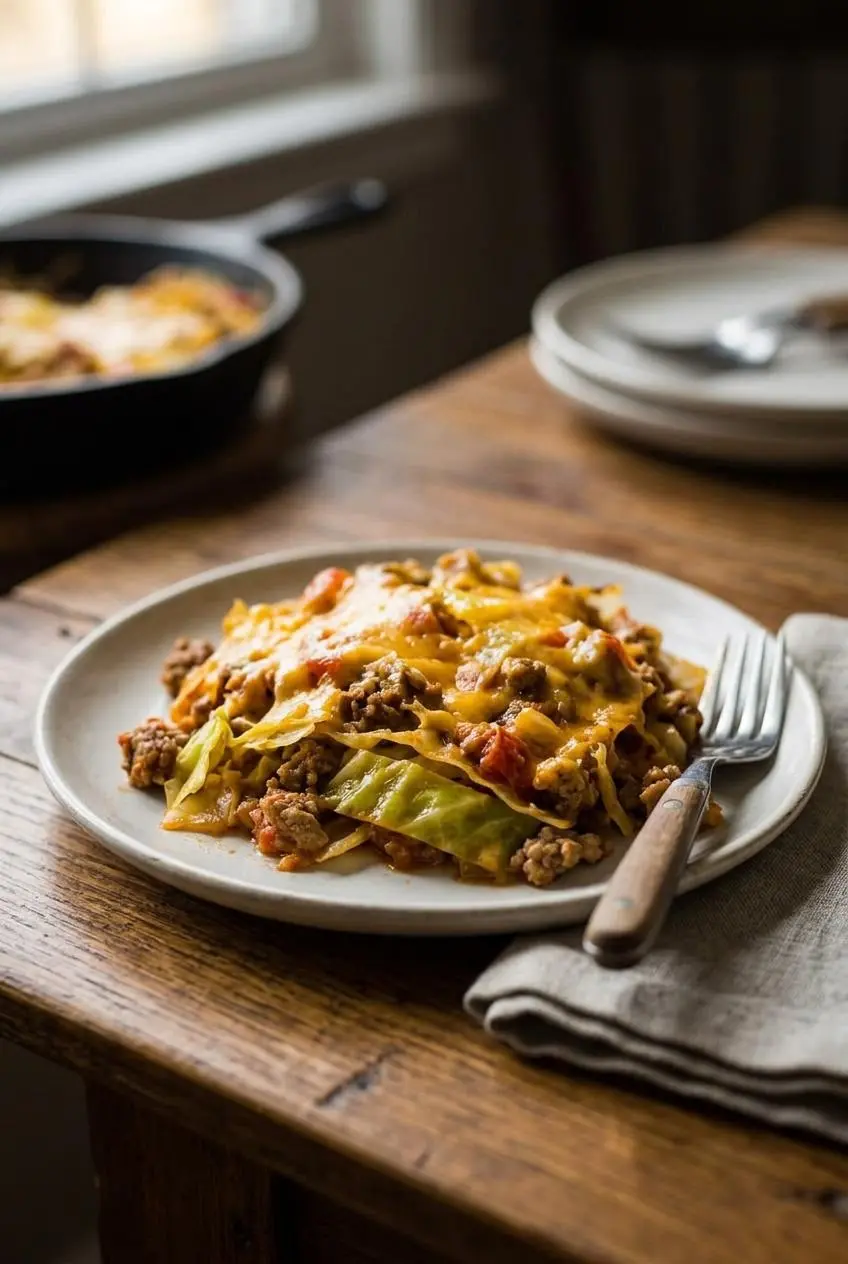
Cabbage works beautifully here because it gives the casserole body and bite without relying on noodles, rice, or potatoes. When it cooks down, it turns tender and silky around the edges while still holding enough shape to make the dish feel substantial.
It also pairs well with bold flavors. The slight sweetness of cooked cabbage softens the edge of tomatoes with green chilies, and it absorbs the savory juices from the meat and onion. That’s why this kind of skillet dinner feels satisfying instead of like a compromise.
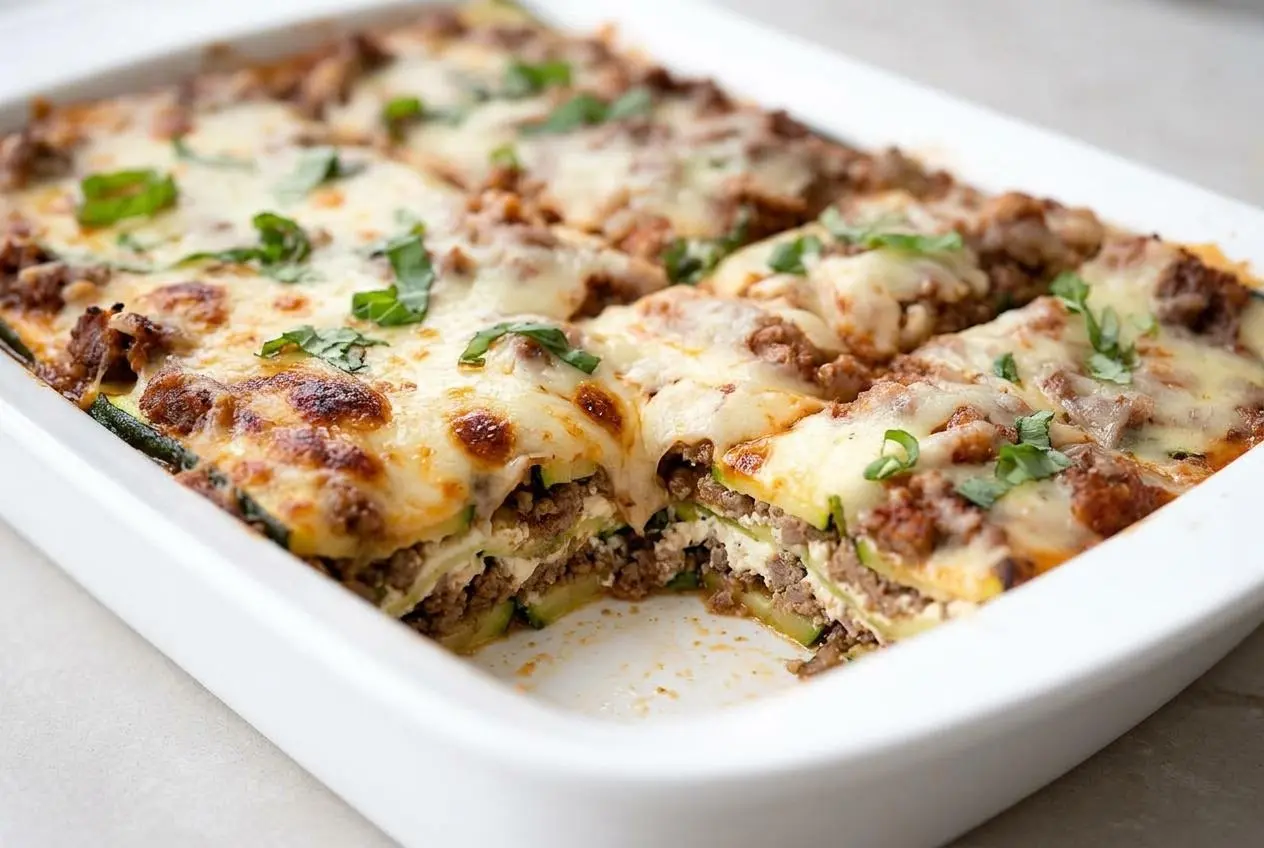
If you like vegetable based comfort dishes such as keto zucchini lasagna, cabbage plays a similar structural role here. It stands in for bulkier starches while still giving you a forkful with real texture.
Essential Ingredients for Low Carb Cheesy Cabbage Casserole
Each ingredient pulls weight here, from savory depth and gentle heat to moisture balance, color, and the melty finish that turns the skillet into a real casserole.
- 1 pound ground beef or turkey (browned and drained)
- 1 small onion (diced)
- 1/2 head of cabbage chopped into medium chunks (roughly 3 cups)
- 1 10 ounce can tomatoes with green chilies (undrained)
- 1 8 ounce can of tomato sauce
- 1 teaspoon chili powder
- 1 teaspoon garlic powder
- salt and pepper to taste
- 1 cup shredded cheese (cheddar or colby jack is our favorite)
Cabbage is the backbone of the dish. It acts like a low carb noodle replacement, giving the casserole structure and enough chew to keep it from feeling soft all the way through. Ground beef brings richer flavor, while turkey makes the skillet a bit leaner. If you use beef, a moderate fat level tends to work best because too much grease can make the finished dish oily unless you drain it very well.
The canned tomatoes with green chilies add brightness, acidity, and a little heat, while the tomato sauce rounds everything out and helps coat the cabbage evenly. That combo tastes deeper and livelier than plain sauce alone, and it keeps the skillet from tasting flat.
If you have cabbage left after chopping, the rest can go straight into a crisp keto coleslaw recipe for another meal.
I like to chop the cabbage into evenly sized, bite-sized pieces so some pieces soften at the edges while the centers stay pleasantly firm.
Why Block Cheese Matters
If you want that smooth, stretchy top layer, grate cheese from a block. Pre-shredded cheese is often coated to keep the shreds from clumping together, and that same coating can make the melt look grainy or slightly dry.
Freshly grated cheddar or Colby Jack melts faster and settles into the hot cabbage mixture more evenly. It’s a small extra step, but it gives you a gooier finish and better flavor.
Protein Swaps: Turkey, Pork, or Beef
Ground beef gives the casserole the richest, most classic comfort food flavor. Ground turkey keeps it lighter, but it can be a little less forgiving if cooked too hard, so stop browning as soon as it is cooked through and drain only what you need to.
Ground pork makes the dish richer and a little sweeter, while sliced smoked sausage brings a more pronounced smoky flavor. Pork and sausage usually release more fat, so give the skillet an extra moment to drain well before the cabbage goes in.
These swaps do not need to change the main method. The key difference is moisture and fat management, not a brand-new process.
How to Make Low Carb Cheesy Cabbage Casserole
- Heat a large skillet over medium heat and cook the ground beef or turkey until browned, then pour off the grease completely.
The meat should lose its raw color and smell savory instead of sharp, and the pan should not have a slick layer of fat left behind. - Stir in the diced onion and cook for 3 to 5 minutes until it softens.
The onion should look slightly translucent and smell sweet and mellow rather than harsh. - Add the chopped cabbage, tomatoes with green chilies, tomato sauce, chili powder, garlic powder, salt, and pepper, then stir until the cabbage is coated.
The skillet will look very full at first, but the cabbage starts shrinking almost right away as it heats. - Cover the skillet, keep the heat at medium, and cook for 15 to 18 minutes, stirring now and then so nothing catches on the bottom.
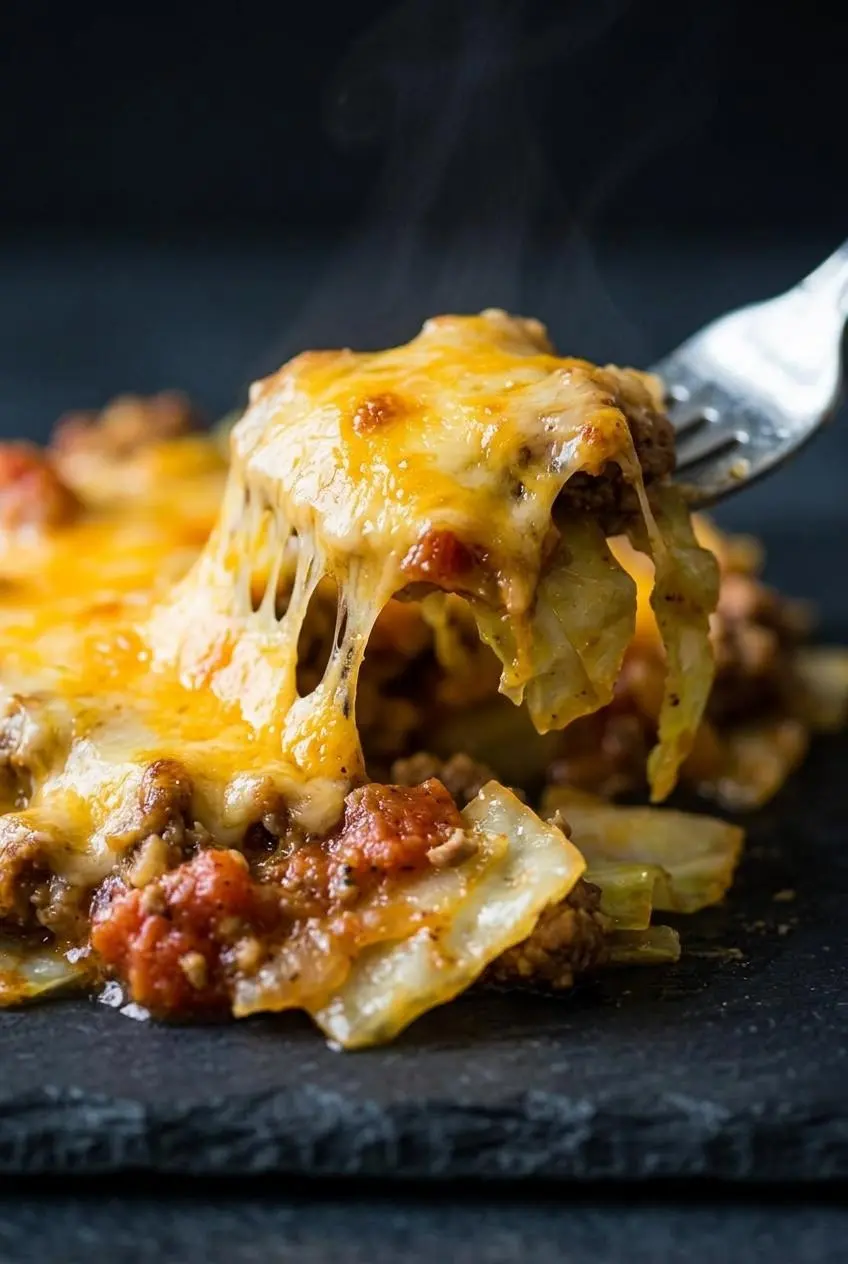
The cabbage is ready when it turns translucent and fork-tender but still keeps a little shape instead of collapsing. - Scatter the shredded cheese over the top, take the skillet off the heat, and cover it for about 2 minutes so the cheese can melt.
The cheese should look glossy and fully softened, with a gooey top layer that settles into the hot cabbage mixture.
This method works because each stage builds flavor fast. Browning creates the savory base, onions add sweetness, and the covered simmer softens the cabbage without washing out its flavor.
One-Pan Skillet Method
This is a true weeknight skillet dinner. Everything happens in one pan, and the timing stays tight because the cabbage cooks directly in the tomato mixture instead of being boiled separately.
Seasoning matters most during the simmer. Once the tomatoes, sauce, and spices hit the pan, stir well so the chili powder and garlic powder bloom into the moisture instead of sitting in dry pockets. If you want a slightly smokier edge, a pinch of smoked paprika can be added as an optional finishing touch in the skillet, but keep it light so it does not overpower the cheese.
How to Achieve the Perfect Texture
The best texture lands between crisp and soft. You want the cabbage fork-tender, with edges that have softened into the sauce, but it should still hold its shape when you scoop it.
If you simmer too long, the cabbage can turn limp and release extra liquid into the pan. Start checking it on the early side of the cooking window and stop when a fork slides in easily but the pieces are not falling apart.
How to Avoid a Watery Casserole
This is the part that makes or breaks the dish. Cabbage naturally releases moisture, so a few small choices keep the skillet rich and cohesive instead of thin.
- Drain the meat thoroughly after browning. Extra grease mixes with vegetable moisture and makes the casserole feel oily and loose.
- Cook the onion before adding the cabbage. That early sauté builds flavor without adding liquid.
- Use the skillet, not a pot of water. Boiling cabbage dilutes flavor and leaves you fighting excess moisture from the start.
- Keep extra liquid out. The undrained tomatoes and tomato sauce already provide enough moisture for the cabbage to soften.
- Stir occasionally, not constantly. The covered skillet needs some time to trap heat and soften the cabbage, but occasional stirring helps steam escape and keeps the bottom from sticking.
- Watch for the right doneness. Stop cooking when the cabbage is translucent and tender with a little bite left.
- Let the skillet rest for 5 minutes before serving. That short pause helps the juices settle so the casserole scoops up more cleanly.
Gourmet Variations to Try
The base skillet is satisfying on its own, but a couple of optional variations can take it in a different direction without changing the original recipe.
If this kind of cozy dinner is your thing, a ground beef casserole is another solid weeknight option to keep in the rotation.
Vegetarian Egg-Custard Style Cabbage Casserole
For a meatless version, use the same idea of tender cabbage and rich cheese, but turn it into a baked side dish with a custard style binder. Sauté the onion and cabbage first so the vegetable moisture cooks off and the flavor concentrates.
Then combine the cooked cabbage mixture with beaten eggs, cream, and shredded cheese, transfer it to a baking dish, and bake until the center is just set and the top turns lightly golden. The result is softer, richer, and more sliceable than the skillet version, almost like a savory cabbage gratin.
This variation works best as an optional spin, not as a direct swap inside the main recipe method, because the eggs and cream change both the texture and the cooking style.
Three-Cheese Scalloped Cabbage
If you want a more dinner-party style version, go with Swiss, Cheddar, and Parmesan. Swiss melts smoothly and adds nuttiness, Cheddar brings sharper flavor, and Parmesan gives the top a deeper savory finish.
For the sauce, stir a teaspoon of Dijon mustard and a pinch of smoked paprika into your cheese mixture. The Dijon adds tang and helps the sauce come together more smoothly, while the smoked paprika gives just enough warmth to make the cabbage taste even sweeter and more savory.
This variation is especially good if you like a richer, scalloped feel with a little more complexity in the cheese layer.
Storage, Reheating, and Meal Prep
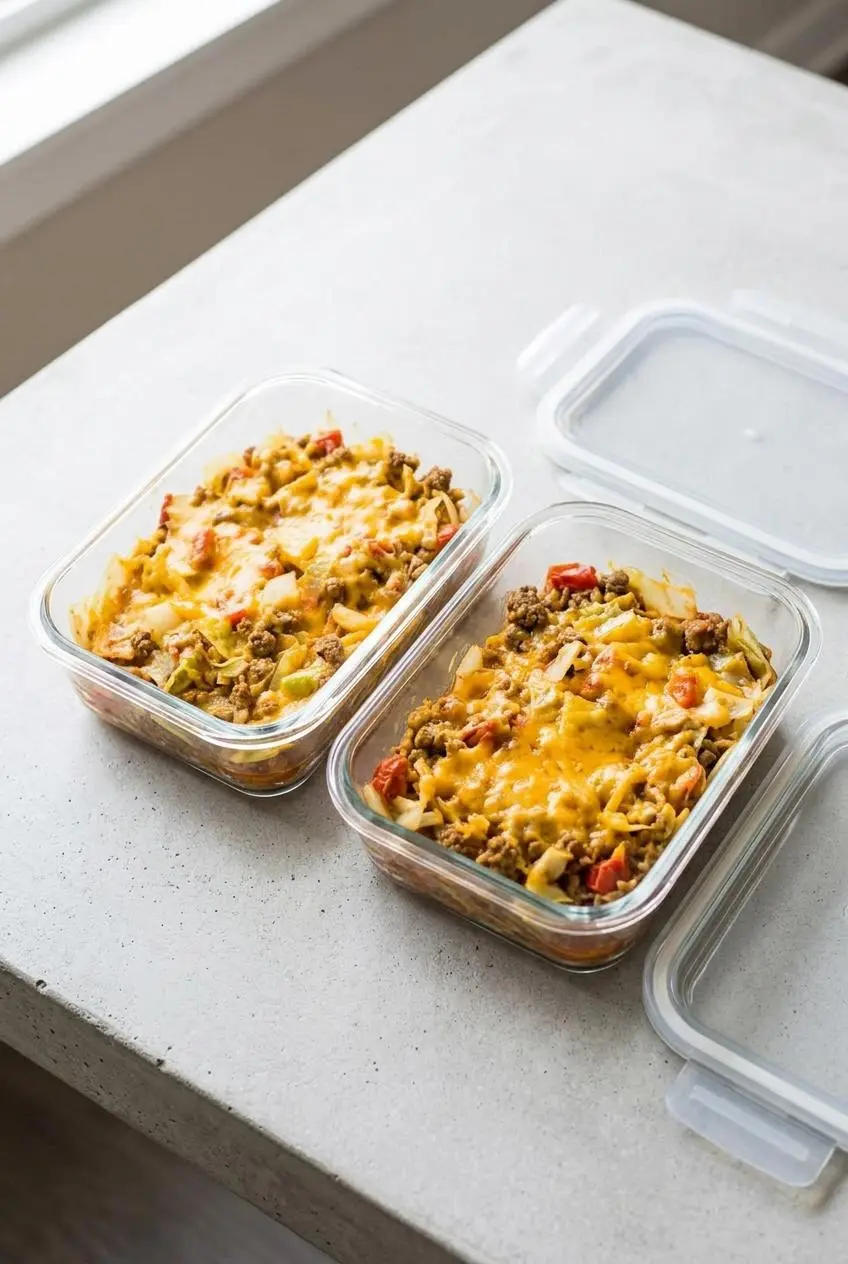
This casserole keeps well because the cabbage stays tender even after chilling, though the texture is best when you avoid overcooking it the first time. Let it cool before transferring it to a tightly covered container and keep it refrigerated.
For reheating, the microwave is quickest for individual portions. Heat gently until the center is hot and the cheese loosens back up. For larger amounts, reheat it covered in the oven so the top does not dry out before the middle warms through.
If you want to prep ahead, the easiest move is to chop the cabbage and onion in advance and grate the cheese from a block so dinner comes together faster. That keeps the texture fresher than fully cooking it far ahead.
Conclusion
This skillet casserole earns a spot in regular dinner rotation because it is fast, filling, and deeply comforting without leaning on heavier starches. The cabbage turns tender, the tomato base keeps it savory, and the cheese pulls everything together.
The two details that matter most are draining the meat well and using freshly grated cheese for the best melt. Get those right, and dinner tastes like cozy weeknight magic.
Frequently Asked Questions
How long can I store leftover cabbage casserole in the fridge?
Store leftovers in an airtight container in the refrigerator after they have cooled. For best quality, use them while the texture still looks moist and the cheese reheats smoothly. If the casserole smells off or the texture seems separated in an unpleasant way, it is better to discard it.
Can I use red cabbage instead of green cabbage?
You can, but it is usually not the best choice for this dish. Red cabbage tends to bleed color as it cooks, which can turn the cheesy tomato mixture muddy in appearance. Green cabbage stays milder in flavor and gives the casserole a more appealing finish.
How do I prevent my cabbage casserole from getting watery?
Drain the meat very well after browning so grease does not loosen the sauce. Cook the cabbage in the skillet instead of boiling it, which helps its natural moisture evaporate. Do not add extra water or broth. Let the finished casserole sit briefly before serving so the juices settle.
Can I freeze this cabbage casserole?
The texture of cooked cabbage can soften quite a bit after freezing and thawing. If you want the best result, refrigerating and reheating is usually the better option for this particular casserole. If you do freeze it, wrap it well and expect a softer texture after reheating.
Low Carb Cheesy Cabbage Casserole

Equipment
- Utopia Kitchen Pre-Seasoned Cast Iron Skillet – 12.5 Inch – Black
Ingredients
- 1 pound ground beef or turkey browned and drained
- 1 small onion diced
- 1/2 head cabbage chopped into medium chunks (roughly 3 cups)
- 1 10 ounce can tomatoes with green chilies undrained
- 1 8 ounce can tomato sauce
- 1 teaspoon chili powder
- 1 teaspoon garlic powder
- salt and pepper to taste
- 1 cup shredded cheese cheddar or colby jack is our favorite
Instructions
- Heat a large skillet over medium heat and cook the ground beef or turkey until browned, then pour off the grease completely. The meat should lose its raw color and smell savory instead of sharp, and the pan should not have a slick layer of fat left behind.
- Stir in the diced onion and cook for 3 to 5 minutes until it softens. The onion should look slightly translucent and smell sweet and mellow rather than harsh.
- Add the chopped cabbage, tomatoes with green chilies, tomato sauce, chili powder, garlic powder, salt, and pepper, then stir until the cabbage is coated. The skillet will look very full at first, but the cabbage starts shrinking almost right away as it heats.
- Cover the skillet, keep the heat at medium, and cook for 15 to 18 minutes, stirring now and then so nothing catches on the bottom. The cabbage is ready when it turns translucent and fork-tender but still keeps a little shape instead of collapsing.
- Scatter the shredded cheese over the top, take the skillet off the heat, and cover it for about 2 minutes so the cheese can melt. The cheese should look glossy and fully softened, with a gooey top layer that settles into the hot cabbage mixture.